Categories
Event

New Gandhi on the block

Mahatma Gandhi’s grandson Rajmohan Gandhi has recently become a grandfather – the child was born last month in the US.
by Humra Quraishi

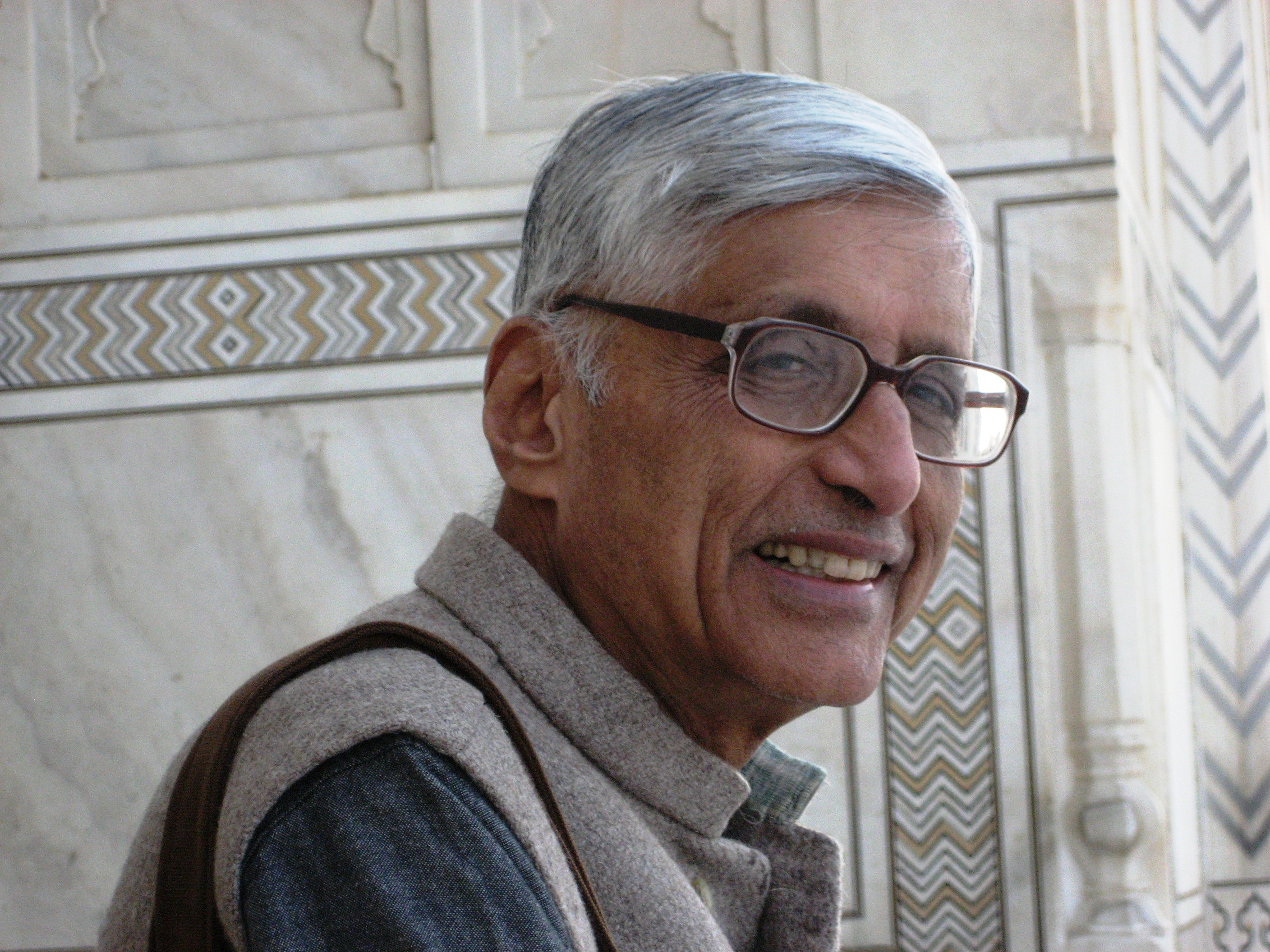
I have often wondered if the Indian political scene would have been any different if Mahatma Gandhi’s children, grandchildren and great grandchildren had stepped in and got into the thick of things. Sure, his grandson Rajmohan Gandhi (son of Devdas Gandhi) had been politically active for a brief while, but then he moved far away from it, taking to academics and writing on a full-time basis. But Rajmohan and Usha have now been blessed with a grandson! A new Gandhi is born.

I have known Rajmohan and his wife Usha for several years now. Their daughter Supriya  and my daughter Sarah studied together  in college and were great friends, and through the girls, we parents got to meet each other. They – Supriya and Sarah – were pursuing Philosophy honours at Delhi’s St. Stephen’s College. We’d resided quite close by on  Lutyen’s Delhi Shahjahan and Pandara Roads, so the interactions grew. And what struck me about the couple was the simplicity at Usha and Rajmohan Gandhi’s home – they believed in simple food, simple clothing, and the very basics required for living.

About 12 years ago, Usha, Rajmohan and their two children, Surpiya and Devadatta, shifted to the United States. Rajmohan is currently a Research Professor at the Center for South Asian and Middle Eastern Studies, University of Illinois at Urbana-Champaign, USA, but the family comes to India almost three or four times a year.

A few years ago, Supriya married an academic, Travis Zadeh. The wedding was a simple affair – just flowers and diyas dotting the lawns and  in the midst of it sat the guests. Perhaps in keeping with Mahatma Gandhi’s stress on simplicity, his great grand-daughter Supriya Gandhi’s marriage was one of the most austere marriage ceremonies anyone’s ever attended. There was no band, dholak, shehnai or music of any strain, no horses or elephants, no dolis or carts, none of the usual tamashas. Friends and close relatives were served vegetarian snacks and fruit juice. The same was offered to the baraatis who had come all the way from the US with the groom, Travis, who is of mixed American-Iranian parentage.

After all these years, it brings me a quiet happiness to know that Supriya, my daughter’s friend, is now the proud mother of a baby boy. The child was born last month in October in the US. They have named the child Anushirvan Gandhi-Zadeh. Anushirvan in Persian means ‘one possessing an immortal soul’.

Humra Quraishi is a senior political journalist and author of Kashmir: The Untold Story, and co-author of Simply Khushwant.

 

Categories
Overdose

The monkey and the cell phone

Jatin Sharma writes on the phone-picture trend that makes us tell the world ‘I was there’ even during a tragedy.

As a child, I heard my mother use this phrase a million times: “Bandar ke haath mein astara.” I always used to wonder how this line could apply in real life. How could someone be compared to a monkey, and how could a little astara in a monkey’s hand seem so wrong? My questions were answered 20 years later, more specifically, with the unfortunate demise of Balasaheb Thackeray.

I’m not debating the most controversial man of our political times. Certain ‘comics’ have joked about him after his death, pundits have spoken about his divisive politics, the layman has spoken about how his entertainment channels were blacked out. Balasaheb’s  funeral became the biggest news in the country and everyone in India was glued to their television sets.

But that is not my point. My point is about how indisciplined and insensitive we have become. I assume that everyone who came to Shivaji park came there because they wanted to pay their last respects to the ekta tiger. But I was amused and amazed by the insensitivity that we have started showing as a culture. In the aforementioned phrase, the astara is the cellphone we carry with us everywhere.

Most of those who attended the funeral were more interested in capturing the moment on their phone cameras, rather than just experiencing it live, quietly. Whenever a news camera passed through crowd, the sight of flashlights and video shooting by every person was evident of how the new age astara has turned everything into a big tamasha. Whether it’s a birthday party or a funeral, people have stopped segregating things in their minds. All they want is one big photo to show ‘I was there.’

Of course, a lot of people would want a picture as a memoir of their leader. But it’s not just about this particular incident, it’s about cell phones as a whole. People are more interesting in shooting videos than cherishing or taking note of their historic presence there. All they think about is capturing their daily lives in a few megapixels, without attaching importance to them being there in person. The things that they could have seen with their very eyes are being looked at through cameras to show the world later.

Their presence at the very spot is reduced to nothing, because they are watching that particular event through a glass that throws some electrons on a cathode ray tube or lights up some pixels.

And what is more stupid is when people take the very cell phones and click and video-shoot themselves at such events and smile and caption the pics as ‘At Balasaheb’s funeral, what great fun it was’.

When I die, my last wish would be that no one should carry a cell phone to my funeral – I would take it very personally if somebody was mocking me after I was dead. I would even haunt them later for doing it. But for now, let me just keep aside this astara and get on with celebrating my life in person.

Jatin Sharma is a media professional who doesn’t want to grow up, because if he grows up he will be like everybody else.

(Picture courtesy www.visualphotos.com)

Categories
Event

Bal Thackeray laid to rest

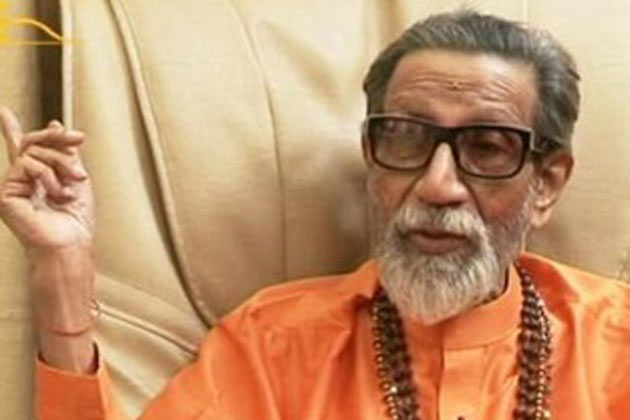
Shiv Sena founder and chief, who passed away yesterday, was laid to rest with full State honours on Sunday evening.

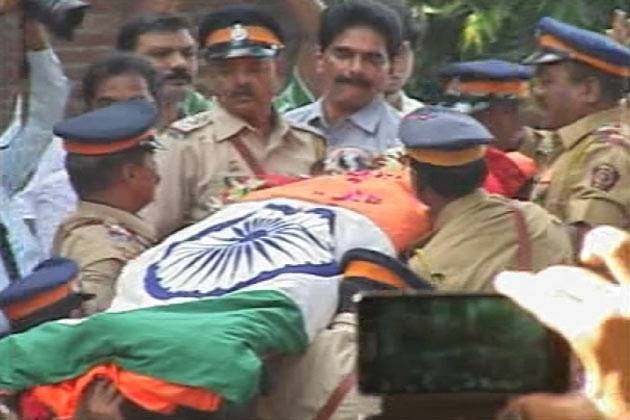
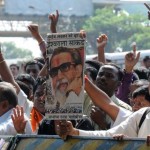
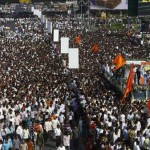
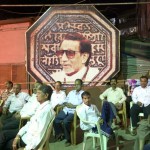
Mumbai city came to a standstill on the day Shiv Sena chief, and the city’s original Tiger, Bal Thackeray, was laid to rest at Dadar’s Shivaji Park. He was 86, and had been ailing for a long while from a pancreatic disorder. Over 20 lakh people thronged the streets of Mumbai, accompanying the funeral procession from Thackeray’s residence Matoshree at Bandra, to Shiv Sena Bhavan and finally to Shivaji Park.

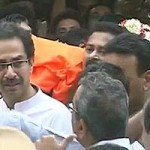
Shivaji Park witnessed a historic turnout that comprised mourners from the city and Maharashtra, State and national politicians, members of the Hindi film industry and of course, Thackeray’s own family. Uddhav, Thackeray’s youngest son and political heir, lit the funeral pyre at about 6.30 pm. Thackeray Sr was given a funeral with full State honours.

(Pictures courtesy ibnlive.com, hindu.com, indianexpress.com, manipalworld.com, intoday.in)


Categories
Big story

Forgive me, Saheb!

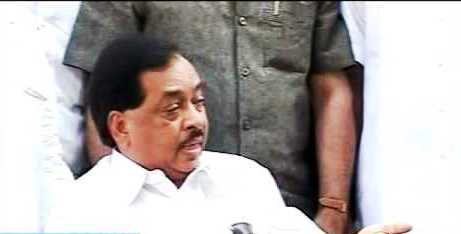
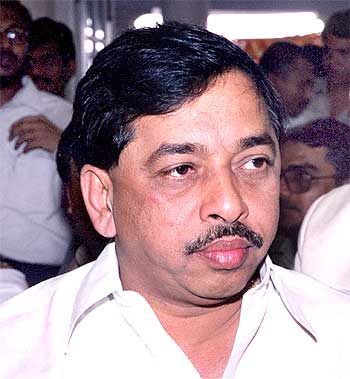
Ex-Sainik and current Congressman Narayan Rane writes a heartfelt obituary in memory of Bal Thackeray, the man who shaped him.

Narayan Rane left the Shiv Sena in 2005 to join the Congress. Since then, both Bal Thackeray and Rane wasted no opportunity to take potshots at each other on various public fora. However, as the news of Thackeray’s ill health spread last week, Rane publicly admitted that he wished to meet the man who had shaped his political career.

And with Thackeray’s demise on Saturday, November 17, Rane wrote an emotional tribute to Thackeray in his family-owned newspaper, Prahaar. It remains to be seen how Shiv Sainiks and even the Congress will react to the obituary, coming as it is from friend-turned-foe Narayan Rane. The piece is reproduced below:

I watched the news of respected Shri Balasaheb Thackeray’s demise on television, and my heart was struck by several emotions. The tears flowed from my eyes as I remembered the many times I had spent with him. (With this obituary) I have tried to express on paper the tumult of emotions I am experiencing at the moment.

Whether his party was in power or not did not have the slightest effect on him. He continued living and speaking the way he always had – in his trademark royal style and with the same zest for life. I don’t think there was ever another person like him. His working style ensured that he rose to prominence as a national-level leader. I felt pride when declaring that such a man was my guru. Saheb, I will always regret the fact that I could not meet you as your life was ebbing away.

Saheb was a fount of kindness. His intellect and nature ensured that he made friends and followers from every walk of life. A beacon of hope for the Marathi manoos and a staunch Hindutvavadi, he established the Shiv Sena in 1966 at a time when such a party was needed in the city. The Marathi manoos and several youngsters like me were instantly attracted to him. The love and kindness he showered on Shiv Sainiks while forming his party ensured that his party workers would pledge their lives for him as long as they lived. He took care of his people, asked after them in times of grief, and this made him the darling of his party workers and the state.

I got a lot of love from Saheb. He also trusted me implicitly. I have no qualms in admitting that he made me the person I am. Whatever political success I have earned in my life, a lion’s share of it is because of Saheb. ‘A man should be rich by his thought, and this richness should flow freely’ is the teaching I took from him. I have always said that my journey from shakha pramukh to Chief Minister to Leader of Opposition was possible only because of Saheb. If I was an effective Chief Minister in my eight-month tenure, it was only because of you, Saheb.

He was as courageous as he was insightful. He was and will be known among the cartoonist greats all over the world. Similarly, he proved his writing prowess as the editor of Marmik and Saamna. His wily political sense always pulled the Sena out of any crisis.

He never compromised on religion or nationalism. Despite his sharp speech and uncompromising nature, he had friends in all fields and he was a popular leader in all of India. I will run out of paper before I am fully able to describe the time I have spent with him and the love he showered on me for 45 years.

He was battling death for the last few days. I kept thinking that this time, too, he would cheat death and get better. But he passed away…I regret having taken the decision that caused him a lot of hurt, but in the circumstances then, I had no choice but to take that decision. Some people forced me to take that decision…but never mind that now.

Saheb, you loved me more than my own parents did. You called me on the phone twice after I had left the Shiv Sena. What a big heart you had!

I wanted to meet him when his health was suffering. I was very uneasy about not meeting him. But to my misfortune, he passed away before I could see him one last time. Saheb, forgive me!

Rest in peace, Saheb. I humbly pray to God to grant strength to Shri Uddhavji and Shri Rajji and the entire Thackeray family in this time of grief.

Narayan Rane is the Industries Minister in the current Congress-led government in Maharashtra, and served as the State’s Chief Minister for eight months when the Shiv Sena-BJP combine was in power.

Categories
Learn

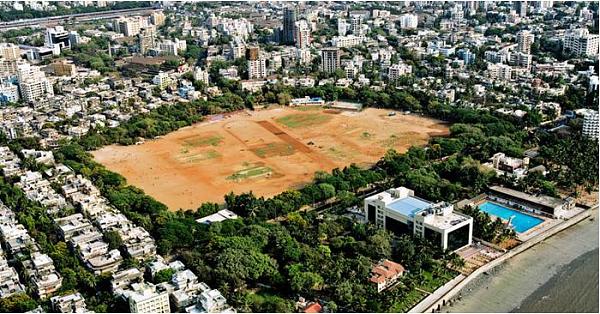
How Shivaji Park has shaped up for today

The famed park has been meticulously laid out for those who want to pay their last respects to Bal Thackeray.
by The Editors | editor@themetrognome.in

If you’re going to pay your last respects to Bal Thackeray, who died Saturday, November 17, after a long illness, you can head to Shivaji Park today. Thackeray’s body is going to be kept at Shivaji Park from 10 am to 5 pm today, Sunday, November 18.

Here are a few details of how Shivaji Park is gearing up to allow Bal Thackeray’s followers a last glimpse of the leader:

– Thackeray’s body will be brought to Shiv Sena Bhavan at about 6 am.

– His body will be kept on a large viewing stage erected on the Veer Savarkar Marg end of the Park. The stage will accommodate the Thackeray family, the party’s senior leaders and will also allocate space for the Press.

– The viewing stage will be at a height on a five-foot high, 10 foot long, and 20 foot wide stage erected near the Ganpati mandir just under the Shivaji statue.

– Access for the body’s viewing will be provided from two points, both from Keluskar Marg – one is the Meenatai Thackeray gate and the other is from MB Raut Road.

– There is an exit planned leading from the two access points and out on the road leading to Raja Bade Chowk.

– Barricades placed on two sides of the stage will ensure that nobody can get closer than 10 metres of the body.

– The Veer Sawarkar Marg and Lady Jamshedji Road will be closed to traffic. Alternative parking arrangements have been made.

– The BMC has set up over 26 mobile toilet blocks and has provided over 50 temporary drinking water connections for those who arrive for the darshan.

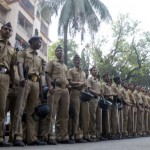
– At least 11 Senior Police Inspectors, 21 Sub Inspectors/Assistant Police Inspectors, and 310 other security personnel will be deployed for security.

– Over five lakh people and VVIPs are expected to attend the darshan today.

– The cremation is expected to take place at 6 pm at Shivaji Park, where members of the Thackeray family have previously been laid to rest.

(Source: BMC)

(Featured image courtesy www.thehindu.com) 


Categories
Big story

Bal Thackeray passes away

Shiv Sena chief passes away after cardiac arrest; his health had reportedly been stabilising after a scare four days ago.

Shiv Sena chief Bal Thackeray passed away in Mumbai today. He was 86 and had been ailing from a pancreatic ailment for a while. He is said to have suffered from cardiac arrest – his health had been stabilising after acute respiratory distress a few days ago.

As the news of his recent strengthening health started doing the rounds, the crowds milling his official residence – Matoshree – began to reduce slightly, though devoted Shiv Sainiks continued to wait for news. As the news of his demise was announced today, the waiting crowds broke into sobs and the area had to be cordoned off again.

Police presence has been stepped up in the area.

Thackeray founded the Shiv Sena in the 1960s; the party has largely been known as a Right-wing force that has been very vocal about the cause of the Marathi manoos in Maharashtra, apart from speaking out against minority communities in the state and the country.


Exit mobile version