Categories
Patrakar types

Don’t wanna miss a thing

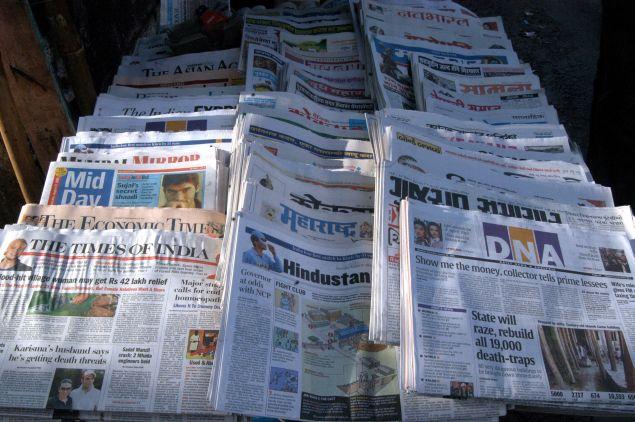
Why do papers and channels think people are interested in knowing who broke a news story ahead of the competition?
by Vrushali Lad | vrushali@themetrognome.in

When I was employed with newspapers full time, the biggest issue I faced was not that I hadn’t properly expressed myself in a story I wrote for the day’s edition, or that I hadn’t packed in enough detail. No, the one big issue, and it was the first thing that struck me when I woke up in the morning, was:

“Have I missed a story?”

Most reporters wake up and check their phones for messages and missed calls – with thoroughly guilty consciences – from potentially irate editors. The best feeling in the world is to know that the office did not call or text while you slept, and that the worst that happened to you was that you won the Coca Cola Lottery again this week.

The feeling of contentment lasts but a few seconds. Reporters then leap at the newspapers – of which, each serious journalist’s house will have at least seven, sometimes in more than two languages – and study the news sections as if preparing for a pop quiz. And while they’re sitting in a sea of newspapers, they’ll also check the TV news. I know reporters who read newspapers, hold the TV remote in one hand and their BBs in the other, and simultaneously check the news feeds on all three.

This enthusiasm serves three functions – one, you know what the competition has published and you haven’t; two, you know if your story really was ‘exclusive’ or not; and three, you can mentally prepare your arguments for and against a certain item in a rival publication or channel (“But sir, what do you mean ‘Why don’t we have that story? YOU told me not to write it!”)

In the event that a reporter has missed a story, a new drama unfolds. He has to first pick up the phone and confirm if the rival’s news is true or a random tweet. If true, he has to get to work and track a good follow up to the story. Meanwhile, he has to count to 100 while his boss tells him, in 10 different ways, that he is an incompetent ass. After that, he has to promise himself never to miss a story again.

I used to be part of these shenanigans myself, and when I would tell my mum about it (my mum is this erudite, painfully analytical woman who has often given me stories) about how I missed a story and what a big loss it was to my paper, she would shoot me a look that said: So?

Over the years, you learn to calm down about missing a story, because in the larger scheme of things, you find that people don’t really care if you missed reporting about a factory opening in Ulhasnagar, or if an aged actor was admitted to hospital for an ingrown toenail. But try telling that to your editor. The merest suggestion of, “But how is this important to our readers…?” has made many an editor foam at the mouth and throw furniture at the staff.

Similarly, readers do not care if you were the only one in the country to report something that the others didn’t. So claims of ‘We were the first to report that…’ or ‘Remember, you read it here first,’ only open you up to ridicule. Again, reminding an editor of this is akin to stealing birthday cake from the birthday boy’s plate.

People only want to be told the news truthfully and completely, in a way that doesn’t insult their intelligence. Readers can see right through a plug, they are not impressed with claims of ‘The Home Ministry took this action after our report’ and if you want to see a reader’s blood pressure shoot, put a chaddi-bra ad on the paper’s front page. While papers and channels are playing Hits And Misses all day, their readers are reading the line ‘We told you first!’ and thinking, So?

Vrushali Lad is a freelance journalist who has spent several years pitching story ideas to reluctant editors. Once, she even got hired while doing so.

(Picture courtesy www.thehindu.com)
Categories
Big story

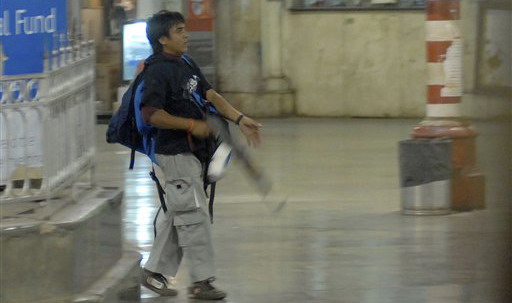
Ajmal Kasab hanged

Lone surviving terrorist of the 10 who struck Mumbai in 2008 hanged five days before fourth 26/11 anniversary, in Pune.

Ajmal Amir Kasab, the lone surviving terrorist who the brave Tukaram Omble helped nab in 2008, was hanged this morning at 7.30 am at Pune’s Yerawada Jail. He had been shifted out of Mumbai’s Arthur Road jail two days ago – he had been at the Mumbai jail since his capture.

The hanging comes just five days before the city and the country observed the fourth anniversary of the 26/11 terror attacks that took over 150 lives in three days of sustained terror operations. Kasab was shifted out of his cell in Arthur Road jail two days ago following President Pranab Mukherjee’s rejection of his mercy petition on November 8. However, Rashtrapati Bhavan had announced that the date for execution would be decided by the Maharashtra State government. On November 11, the time and date for the execution was decided by the Additional Sessions Judge; Chief Minister Prithviraj Chavan gave the orders to shift Kasab on November 13. The move to Yerawada was done in complete secrecy.

Kasab had earlier appealed against his execution even in the Supreme Court of India. He was recently struck by dengue while in Arthur Road jail.

Update: Maharashtra Home Minister RR Patil to address a press conference at 8.30 am.

Update #1: RR Patil starts the press conference with details of the 26/11 attacks.

Update #2: “This is a tribute to all innocent people and police officers who lost their lives during the 26/11 attacks on our nation,” says RR Patil.

Update #3: “Ajmal Kasab was hanged by the neck till dead this morning at Yerawada Jail at 7.30 am,” says RR Patil.

Update #4: Yerawada jail sources say Ajmal Kasab did not have a last wish.

Update #5: Yerawada jail sources said Ajmal Kasab did not have a will.

Update #6: Union Home Minister Sushilkumar Shinde said that Kasab’s body would be handed over if Kasab’s family demanded it, else it would be buried here.

Update #7: “We managed to keep the issue under wraps for two weeks, especially the shifting of Kasab from Arthur Road jail to Yerawada Jail two days ago,” said Maharashtra Chief Minister Prithviraj Chavan.

Update #8: “I had appealed to the President Pranab Mukherjee to reject Kasab’s mercy plea. He had written back saying that he would soon take a decision that would make the entire nation happy,” said Eknath Omble, brother of slain cop Tukaram Omble, who helped nab Kasab.

Update #9: “We had to maintain a high level of secrecy because we did not want any untoward incident to take place,” said Union Home Minister Sushilkumar Shinde.

Update #10: Kasab will be laid to rest in India itself.

 Update #11: Pakistan refuses to accept the letter from Indian Government informing of the death of Kasab. Pakistan has also not yet reacted to the news.

Update #12: Pakistan refuses to claim Kasab’s body. Kasab is buried at Yerawada.

Update #13: “Since there was no response to the fax we sent, we sent a courier to Kasab’s family,” said Union Home Minister Sushilkumar Shinde.

(Picture courtesy www.dayandnightnews.com)


Categories
Read

Bombay wanted to fight China in 1962

…as did all of Maharashtra. Secret report made by then Governor to President S Radhakrishnan reveals anti-China angst and jingoism.
by The Editors | editor@themetrognome.in

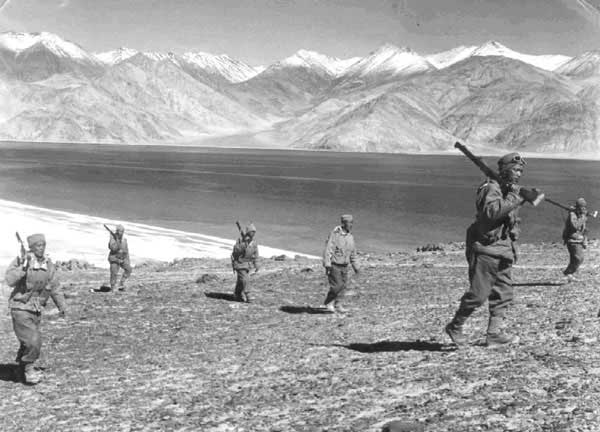
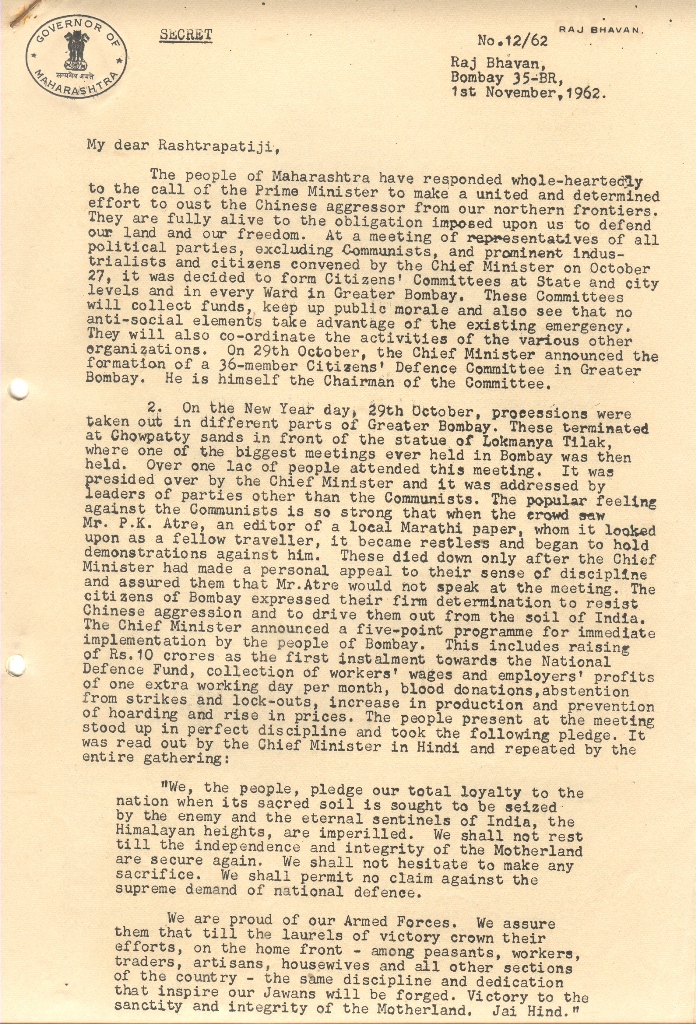
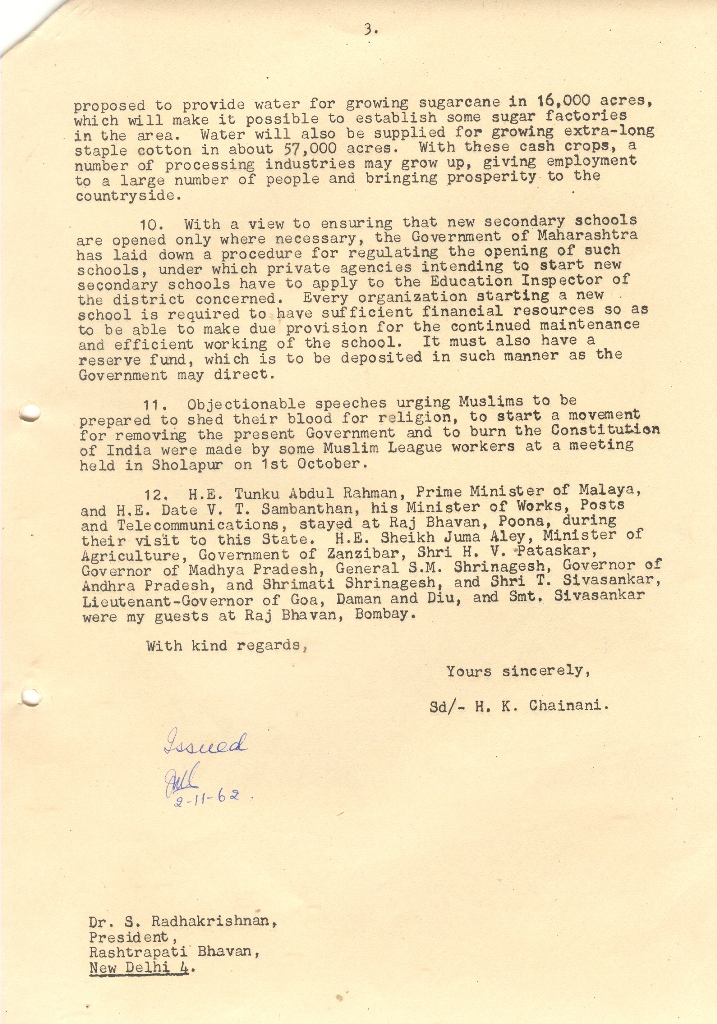
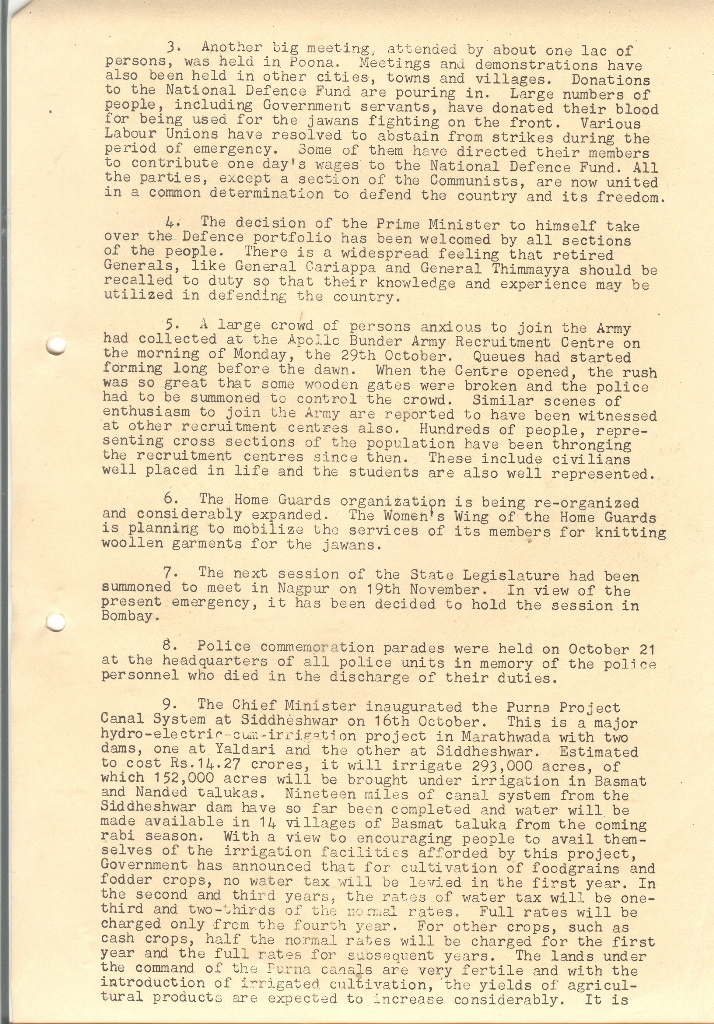
The Governor of Maharashtra has just brought a bit of history to you. Recently, a report filed by the Governor of the State in 1962, Justice HK Chainani, and submitted to the then President Dr S Radhakrishnan immediately after the Chinese aggression on the country’s northern borders, which resulted in the Indo-China war of 1962, was made available to the public archives of the Raj Bhavan. The report gives an insight into the unrest and nationalism brewing in Bombay and Maharashtra at the time.

As per the report, which is dated November 1, 1962, the citizens of the city and the State were fully committed to fight the Chinese in whichever way possible – whether through joining the Army, giving up a day’s wages, holding demonstrations, refusing to strike work, donating blood, signing up to knit jackets for jawans or contributing to realise the target of Rs 10 crore for the National Defence Fund.

The report writes glowingly of Maharashtra so willing to go to war against China, that thousands of people waited in queues to enlist at the Apollo Bunder Army Recruitment Centre; when the Centre was opened, the oncoming rush broke a few wooden gates and the police had to be summoned to restrain the crowd.

Apart from a strong anti-Communist feeling in Mumbai and the State, the rush to donate blood for soldiers fighting at the borders was also high, as was the desire to donate wages  and abstain from leaves at work. The report says, “Donations to the National Defence Fund are pouring in. Large number of people, including Government servants, have donated their blood for being used for the jawans fighting on the front. Various Labour Unions have resolved to abstain from strikes during the period of emergency. Some of them have directed their members to contribute one day’s wages to the National Defence Fund. All the parties, except a section of the Communists, are now united in a common determination to defend the country and its freedom.”

Further, the report adds, “At a meeting of representatives of all political parties excluding Communists, and prominent industrialists and citizens convened by the Chief Minister on October 27, it was decided to form Citizens’ Committees at the State and city levels and in every ward in Greater Bombay. These Committees will collect funds, keep up public morale and also see that no anti social elements take advantage of the existing emergency. They will also coordinate the activities of the various other organisations.”

Read the entire report below.

(Featured image courtesy www.indiadefencereview.com)


Categories
Achieve

How a Guinness World Record was created

2,639 women danced at Dombivali this year, and the event made its way to the Guinness Book of World Records. Here’s how.
by The Diarist | thediarist@themetrognome.in

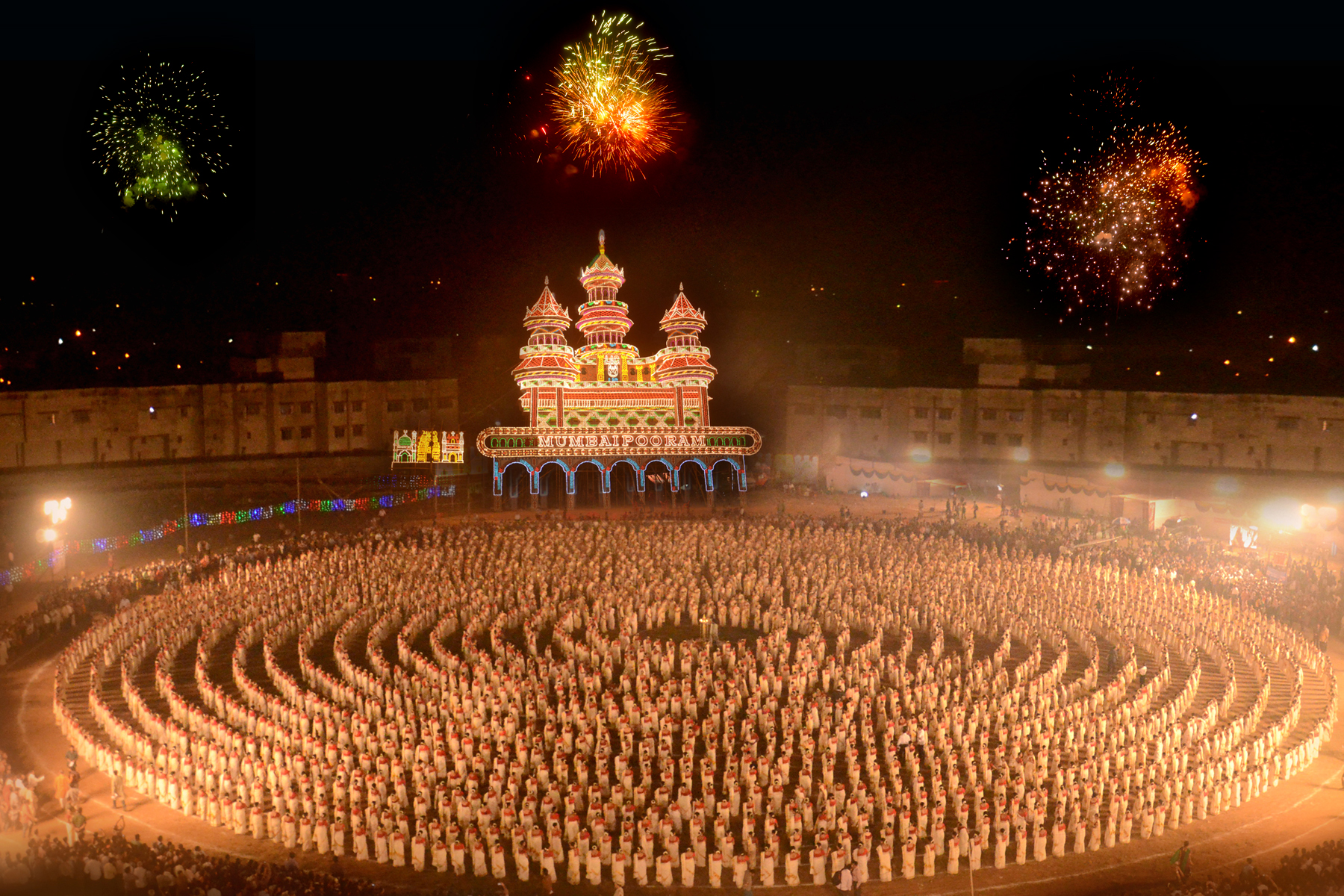
It was a sight for the Gods and those recording momentous achievements. On November 10 this year, the well-lit KDMC Grounds in Dombivli played host to a Kaikottikali dance event, in which a stunning 2,639 women danced to synchronised steps. The women – girls as young as 13, a woman as old as 74 and all ages in between – were dressed alike in traditional Kerala cream-coloured saris, and the performance, while astonishing in its scope, was good enough to qualify as an entry to the Guinness Book of World Records this year.

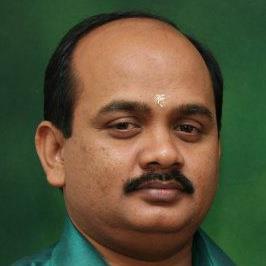
Speaking to The Metrognome, event coordinator Girish Nair (36, pictured at left), explained the logistical planning that went into making the record. “Last year’s dance (also at the Mumbai Pooram, a three-day annual Kerala festival) made it to the Limca Book of Records. After that, we decided to try for the Guinness Book of World Records. Accordingly, we started preparing for the event since January last year.”

The actual preparations involved making a video of the dance steps, so that all participants could study the video and learn the choreography. “We got the visuals for the dance set up, finalised the dress code for the dance, and then started meeting the Samajams in the city,” Girish explained. The Samajams are located wherever south Indians reside in reasonably large numbers, and apart from the big 30 to 35 Samajams in the city, there are several smaller ones as well.

“We asked them to spread the word about the event, and get women to participate,” Nair said. “We even went to temples to inform about the event. And not just Malayalis, but even Muslims, Biharis, UPites and Maharashtrians entered their names for the event.” However, despite a registration of 2,800 names, only 2,639 women participated – the dropouts were mostly college students appearing for exams.

Dancing to a new record

The managing committee registered on the Guinness World Records website. “We submitted the application, after which they scrutinised the entry and approved it. After this, they told us that an adjudicator would come down to see the event – we paid £4,500 for a team of five to come and see the performance. They came down to see the dance.”

And a Guinness World Record was made.

(Pictures courtesy Girish Nair)

Categories
Film

The Bollywood Book Club

Bollywood has been a good adapter – so many of our films come from classics by foreign or Indian authors.
by M | M@themetrognome.in

Life of Pi releases later this week, and it looks good. This got me thinking, how many books-to-films success stories does Bollywood have?  There are a few exceptions like Anurag Basu, who take a roundabout turn to inspiration – some portions of Barfi! were copied from the English film The Notebook, that was based on a novel of the same name by Nicholas Sparks.

Bollywood has largely been an early adapter. The first full-length feature film, Raja Harishchandra (1913) was adapted from the folklore and legends of the Ramayana and Mahabharata.  Many have since then followed suit – Dil Diya Dard Liya (starring Dilip Kumar and Waheeda Rehman) was inspired by Emily Brönte’s classic Wuthering Heights. Dev Anand’s Tere Mere Sapne was based on The Citadel, a novel by AJ Cronin. Angoor, starring Sanjeev Kumar and Deven Verma, was based on Shakespeare’s The Comedy Of Errors.

And while there have been several instances where filmmakers have failed to give credit to the author or even announce that their film is based on a book, most recent filmmakers have honestly included the name of the author in the opening or closing credits of their films. They even do some PR around the film’s release. Sanjay Leela Bhansali did this for Saawariya (based on Fyodor Dostoevsky′s White Nights) and Vishal Bharadwaj for Maqbool, Omkara, and The Blue Umbrella; the former two are based on Shakespeare’s Macbeth and Othello respectively, and the latter is a short story by Ruskin Bond.

Many times, you will also feel that the book has been wasted on the film; cases in point are Aisha, a bad adaptation of Emma or The Namesake, a film by Mira Nair and a book by Jhumpa Lahiri. But these have been few and far between.

Here’s our list of the best adaptations of books in Bollywood:

Guide: The RK Narayan classic was adapted with little difference, save for the end theatrics, for the silver screen. Dev Anand and Waheeda Raheman were brilliant in the film.

Black Friday: Undoubtedly Anurag Kashyap’s best work till date. S Hussain Zaidi’s book captures the essential details of the 1993 Bombay bomb blasts, and the actors in the film relive the characters from the book. The soundtrack by Indian Ocean is a hit!

Devdas:  Sarat Chandra Chatterjee’s masterpiece has been adapted to Hindi cinema four times over two centuries. The one to watch is Bimal Roy’s starring Dilip Kumar and Suchitra Sen.

Maqbool: Vishal Bhardwaj’s adaptation of Macbeth is very, very close to the original. The phenomenal cast of Pankaj Kapoor, Naseeruddin Shah, Om Puri and Tabu were all critically acclaimed for their performance.

Shatrang Ke Khiladi:  Adapted from Munshi Premchand′s story of the same name; the list would not be complete without Satyajit Ray’s work of art. This film was a nominee for the Golden Bear for Best Film at the 28th Berlin International Film Festival.

Note to readers: Chetan Bhagat was deliberately not included in this list. Don’t make me say why.

M is a media professional with an eye on entertainment.

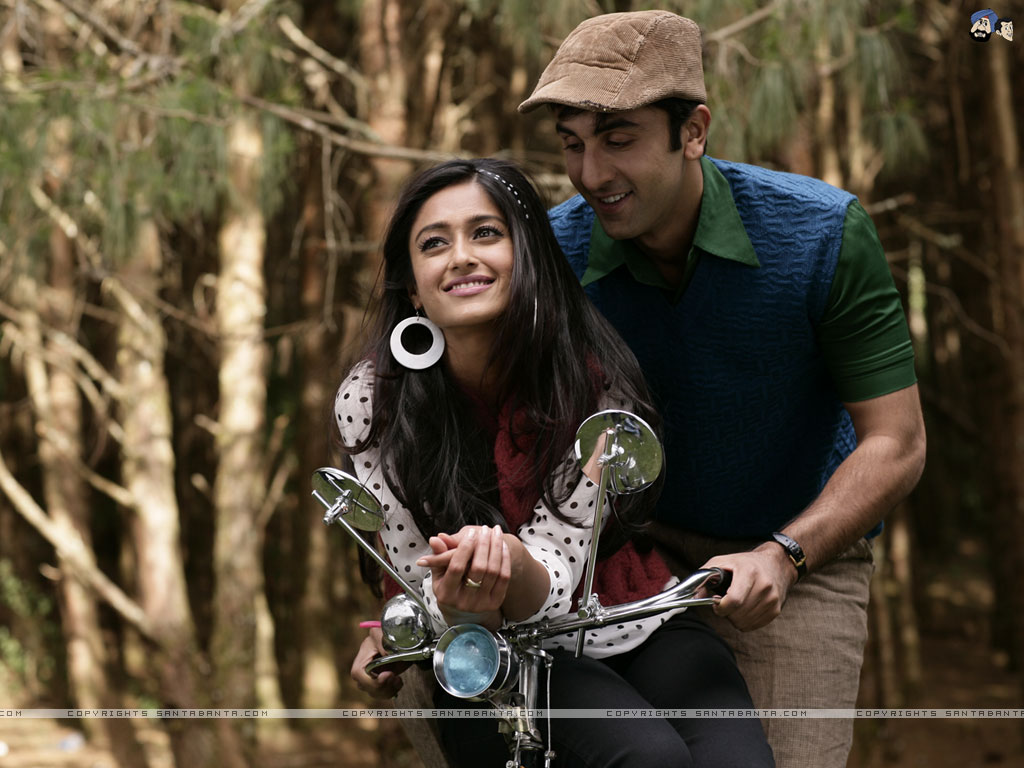
(Picture courtesy www.santabanta.com)

Categories
Wellness

Mumbai consumed 200 pc more sugar this Diwali

E-commerce site survey shows Mumbai bought up to 7 kg of sugar and stayed in more during the festive season.

Mumbai may have tried to have a quieter Diwali this year, but by no means did it have a healthier one, at least if we go by survey findings from e-commerce and shopping site EkStop.com. The site conducted a survey on its customer base (6,000+ sample size), which showed that Mumbai did not shy away from the season’s excesses.

The survey findings from the company are:

Home cleaning: ‘Cleaning out our homes is probably top priority before the festive season but in classic Mumbai style, we think of this about five minutes before we should be starting our cleaning! In the 10 days prior to Diwali, EkStop.com saw a massive 60 per cent jump in sales of cleaning agents such as Lizol, Harpic, Colin etc.’

Mumbai stayed in longer: ‘Delivery requests for time slots 12pm to 2pm and 5pm to 7pm increased by 30 per cent, compared to the usual 9 am to 11am and 8 pm to 10pm slots that working professionals tend to prefer.’

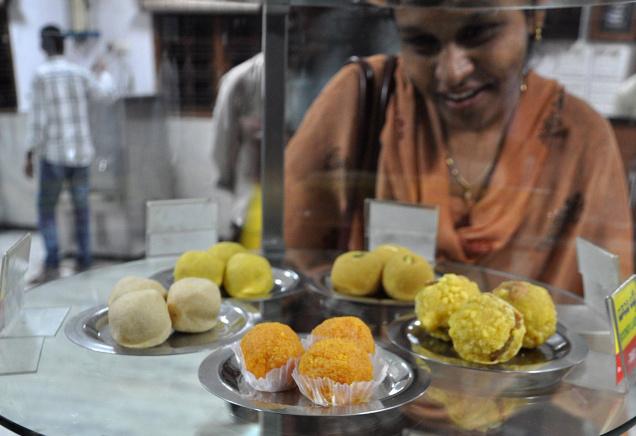
Sugar highs: ‘Mumbai’s sugar consumption spiked by a staggering 200 per cent from an average purchase of 2.5 kg to 7.5 kg this Diwali. This was coupled with a 60-80 per cent increase in besan and maida purchases.’

Eating healthy, too: ‘There was a 30 per cent spike in sales of healthy foods and snacks. EkStop’s ratio of Coke to Diet Coke sales is 15:1 in a typical month. This festive season, that ratio changed to 15:3.’

Bargain hunters: There was a 30 per cent increase in site traffic on EkStop.com during special discount periods. A Rs 29/kg sugar deal and a ‘Buy 1 Get 1’ promotions on certain products were a hit.

Gift packs: ‘On an average, Mumbaikars purchased four gift packs in the 10 days running up to Diwali.’

(Picture courtesy www.thehindu.com)
Exit mobile version