Categories
Learn

Why children must be (cyber)smarties

Three Mumbaikars are teaching school children in the city and outside it to be safe and responsible on the Internet.
by Vrushali Lad | vrushali@themetrognome.in

Renuka Sharma (name changed) met a boy on Facebook and decided that she was in love with him. A few months later, the 16-year-old ran away from home to be with him. Fortunately for her, the boy, who did not know that she was a minor, did not take advantage of the girl; instead, he escorted her home and explained the entire situation to her distraught parents.
Most children are not as lucky. Drawn to social networking and gaming sites that also help them stay connected with their friends and strangers over chat windows, young children are increasingly falling prey to Internet predators, or being drawn into unsavoury bullying online. Often, unsure of how to deal with the situation, and afraid to talk to their parents for fear of censure or being misunderstood, they allow the problem to escalate out of hand.

All of this can be remedied by children knowing how to behave online. But who will teach them Internet etiquette, and what constitutes bad online behaviour?

Cybersmartie will.

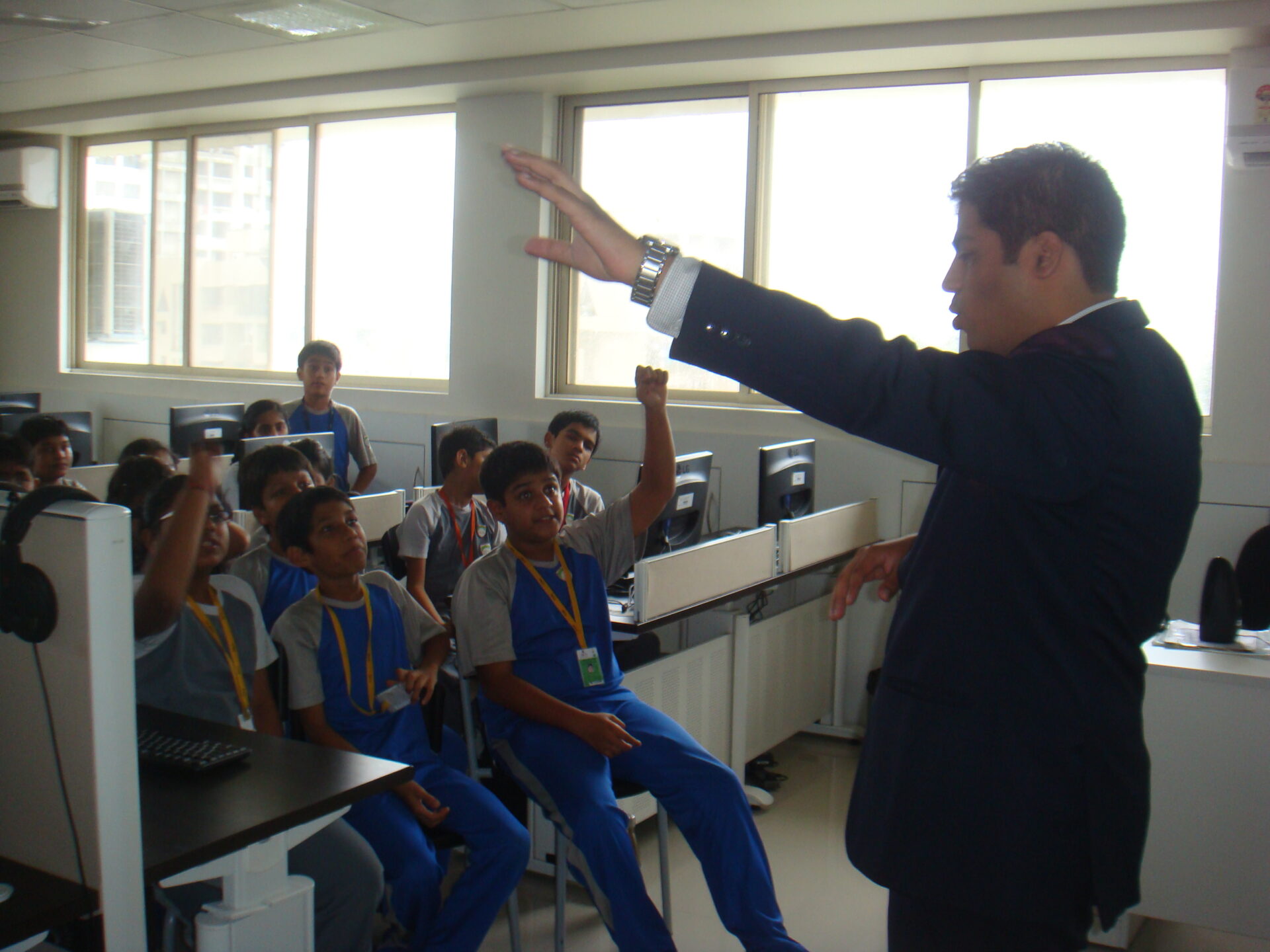
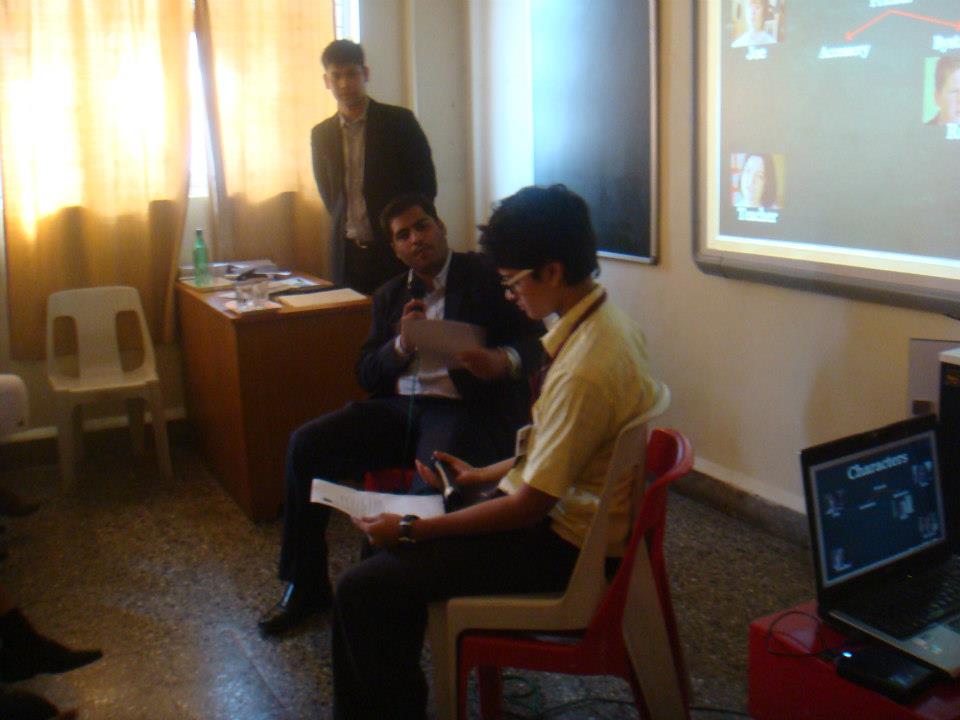
Conceived in 2011 and set up in 2012 by three Mumbaikars – Shekhar Tripathi (24), Sayantan Sen (30) and Neha Doshi (37) – the company aims to educate children on responsible Internet behaviour, in an environment known to them (their school) and in a way that engages them. Speaking to The Metrognome, Neha (in pic on right) said, “The thing is, today’s children get access to the Internet at a really young age. Soon, they spend long hours online, signing up for Facebook or playing virtual reality games. There comes a stage when children find it difficult to differentiate between their real and virtual lives.”

The first problem area is cyber bullying, says Shekhar. “It starts off as a fun activity, with several children ganging up on one child. But it soon crosses acceptable limits of social behaviour. The interesting thing is, several children do not know that this is cyber bullying and that it is wrong,” he adds.

What Cybersmartie does is impart this knowledge in an interactive manner. “We hold workshops for four different topics – cyber bullying, digital responsibility – what to post and what not to post, sexting and online predators – and make them really interactive. We cite current examples when we speak to them; for instance, there is no point discussing what email is and what it means, because children today have email accounts only to sign in to Facebook. We talk about the technologies they use and address their online behaviour patterns, so that the workshop becomes relevant to them,” says Shekhar.

Why Cybersmartie?

Shekhar and Sayantan first decided to embark on this project after they accessed the latter’s nephew’s FB page in 2011. “There was a child with glasses who was being bullied online,” Shekhar remembers. “We saw that eight comments had been posted at 2 am. By the time we checked again at 8 am the next day, there were over 40 more comments, which meant the kids had been at it all night on a weekday. And the comments were mean and abusive.”

The two friends – they used to work together at at Pricewaterhouse Coopers – started researching this behaviour. “We learnt that it was called ‘cyber-bullying’ and that it could have far-reaching repercussions for the victim. We realised that nobody taught children about this, and there was no discussion on preventing it or dealing with it. Our schools, even our Government, does not have a policy on Internet bullying,” Shekhar (in pic on right) explains.

Neha came on board the project a bit later. “We met clinical psychologists, teachers and school principals to understand what schools needed. After researching and interacting with experts, we designed a curriculum for the workshops we would conduct,” Shekhar says. Their very first workshops happened at Lilavatibai Podar Senior Secondary School, Santacruz.

The workshops include a short video on cyber bullying, and the trio make sure to get the children to talk and share as much as possible. “They are very receptive and quick to share their experiences. However, when dealing with older kids, we engage in role playing and a quiz game-like scenario to first get them involved, then to get them to share,” says Neha.

Some problem areas

Most teachers are not even aware of their students’ Internet habits, says Neha, who is a teacher herself. “Which sites are the students accessing? When they say they are on Facebook, what are they doing on it? What is the communication like on Whatsapp? Teachers must be involved in these things, so as to be able to help a child who is being troubled by his peers or a predator,” she explains.

She adds that a lot of children operate multiple FB accounts, apart from posting such information about themselves that can be exploited by miscreants. “We teach them not to declare their holiday plans, or reveal their whereabouts all the time. If a child comes to us and tells us that he/she is facing a problem, and several children have already done so during the workshops, we take the problem to the school authorities so that it can be resolved.”

Shekhar adds, “We must update ourselves all the time, because cyber bullying may also change its form every three months. Besides, we must recognise and accept that children will be exposed to pornography and violence on the Internet, but that they should possess the knowledge to deal with bullies or tricksters.” He cites the example of a boy who befriended another ‘youngster’ – who was actually 30 years old – and soon began confiding everything to him on FB. “The man started blackmailing the child, and started extorting money from him. Finally, the child was forced to tell his mother when the man demanded Rs 20,000 from him. Children must be made aware that they should inform their parents or teachers at the first instance of such blackmail,” Shekhar says.

What they teach

The workshops deal with such topics as plagiarism and how to use others’ material for project work, how to use FB’s privacy settings, hacking, why passwords should not be shared and what to do when you’re being bullied, among other things. “We send a family ‘tip sheet’ after the workshops are over, for parents to look at. We have a module for teachers and schools too,” Shekhar says.

For more details on the Cybersmartie programme for school children, write to shekhar@cybersmartie.com or call at +91- 96193 22618.

Categories
Film

Let’s sex it up. Not.

M wonders how, despite rampant sexual harassment within it, Bollywood will address the subject in this Friday’s big film release.

Bollywood never ceases to amaze me. The Friday release this week is Inkaar (starring Arjun Rampal and Chitrangada Singh) and it delves into the subject of sexual harassment at the workplace, and how a man deals with allegations of abuse from a female colleague. I am keen to see how the film explores this issue, coming as it is from the horse’s mouth. Okay, I’ll come straight to the point.

When the Hindi film industry releases a film on sexual harassment, I want to see a disclaimer at the start of the film stating: ‘This film is not a piece of fiction and is based on real life instances from the producer/director/executive producer, etcetera’s lives. Due to the brief duration of the film, all the victims and their stories could not be covered. Viewers’ discretion is advised.’

The following is a true story.

An executive producer (EP) of a major film broadcasting house was fired and immediately hired by another broadcasting company. Like they say, one man’s dirt is another man’s treasure. Well, this guy did have loads of dirt on him. To begin with, he was fired or to put it politely, “asked to leave” because of the constant complains of sexual harassment he meted out to his female colleagues. In fact, tales of his behaviour were known to all and sundry in the industry. This didn’t stop him from doing the same at his new workplace. He believed that when you work at a film production company, you are expected to flirt a little to keep the atmosphere ‘light’.

He also believed that wearing a skirt to work makes the female colleague ‘available’ and that she’s ‘looking for some action’. So, he thought he did the right thing by constantly passing nasty remarks about their appearance and their clothes at the workplace. He even told stories about how he was popular amongst starlets, and how they sent him titillating pictures of themselves on his Blackberry Messenger.

Sometimes, he would even tell his males colleague to “go for it” and ask the superiors if they were “screwing” their subordinates (of course, the subordinates were women). He would narrate numerous stories about how, at his previous organisation, he would conduct ‘screen tests’ at hotel rooms and put the tab on the production budget. Stories about him luring young, struggling actresses and taking advantage of them were aplenty. He would drool at new faces and purposely set up meetings at the office to prove he was the alpha-male of the pack; the other men in office would wonder what they had to do to be as charming with the ladies as he was.

Of course, he also had stories of the industry to tell. The most disturbing incident he narrated was of an industry head honcho. He didn’t name the Person, but said that he was once present at a party at this Person’s house. After the guests left at around 4 am, this Person, intoxicated, walked straight into the domestic help’s room and locked the door from the inside. He stepped out of the room a few minutes later and crashed on the couch in the living room. The Person’s wife, who had watched him step in and out of the help’s room, got up, walked into her bedroom, came out with a bundle of rupee notes and when to the help’s room. She walked out again without uttering a word to anyone.

Coming back to Mr EP; he didn’t stay in the new organisation for long either. The women in the new organisation also complained to the bosses. The reason for his exit is still unclear, with most reports hinting at ‘under-performance’. In one year, Mr EP had walked all over the production house’s already non-existent work culture; he was insensitive and loathsome and everybody knew about it and tolerated it. This is exactly what perplexes me; when Bollywood turns around and makes a movie on sexual harassment. The industry that sells dreams is also known for its debauchery and immorality, and men like Mr EP reinforce the cynical view one already holds against the entire fraternity.

I am very keen to know what the filmmakers have depicted in Inkaar and how far-off or close it is to the ground realities of  filmy battlegrounds. I’ll watch this one to gauge Bollywood’s point of view on the subject.

Sharp as a tack and sitting on more hot scoops than she knows what to do with, M is a media professional with an eye on entertainment.

(Picture courtesy sabhot.com)

Categories
Big story

Dhoble transfer issue hots up

Public support for recently-transferred cop increases daily; if probe absolves Dhoble of wrongdoing, he might be reinstated as ACP, Vakola.
by the Editors | editor@themetrognome.in

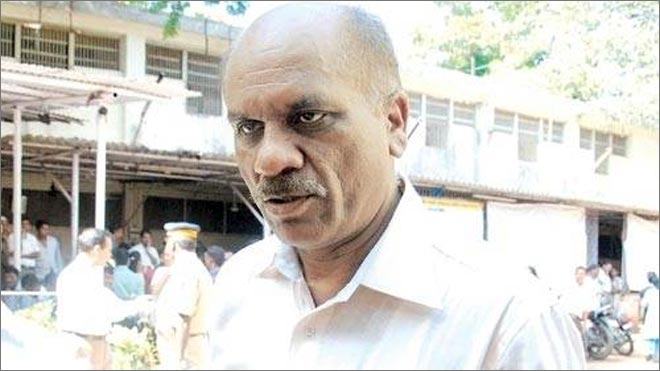
Vasant Dhoble is one lucky man. Transferred by the Chief Minister following the death of a hawker during a hawker eviction drive last week in the suburbs, the controversial cop is receiving tremendous support from all quarters – most recently from the Congress’ ally in the State, the Nationalist Congress Party (NCP).

Yesterday, NCP leader and State Deputy Chief Minister Ajit Pawar had jokingly agreed to support CM Prithviraj Chavan’s decision to transfer Dhoble from Vakola to the police control room following the hawker’s death – the post mortem report reveals he died of a brain haemorrhage, and not of cardiac arrest, as originally surmised – but today, Pawar took a different line altogether. “We should not transfer a person wrongly,” he said. “If the probe (initiated into the incident by the Home Department) does not show that Dhoble was responsible (for the hawker’s death), he will be reinstated with immediate effect,” he added.

Interestingly, Home Department chief RR Patil, who also belongs to the NCP, had said yesterday that the decision to transfer Dhoble was a welcome one, since it would “help in an impartial probe’.

Meanwhile, the rabble-rousing cop himself has chosen to keep a low profile since his transfer, refusing to comment even on the support from such parties as the Shiv Sena and the MNS, which surprised all by actually uniting over the issue of his transfer.

‘Bring him back’

Residents and local corporators of the area under Dhoble’s purview as ACP have reacted strongly to the cop’s transfer. This morning, two separate ALMs in Vile Parle had initiated signature campaigns in support of Dhoble. The signatures are to submitted to the Chief Minister. “We are extremely pleased with his performance as a cop in our area,” said Vile Parle resident Rohini Gupte (53). “I have lived in Vile Parle all my life, and after Dhoble came here and started cracking down on illegal hawkers, we saw the footpaths on our streets for the first time. It is wrong to transfer a police officer who is doing his job for the betterment of an area.”

Senior citizens, especially, profess to be more than satisfied with Dhoble’s stint as ACP. “Even before, when he was posted at Goregaon, he was very popular with the local residents because he came down very heavily on wrong activities,” said MS Prakash (69). “If a police officer is carrying out his duties and he gets punished for it, then why should the police do any work at all? I strongly feel that the Government should reconsider and bring him back, instead of deputing him to some ordinary post.”

(Picture courtesy intoday.in)


Categories
Deal with it

Mumbai’s Hockey India League team moved to Delhi

State promises security to Pak players who’ve moved to Delhi following Shiv Sena’s protests against their inclusion in Mumbai game.
by The Editors | editor@themetrognome.in

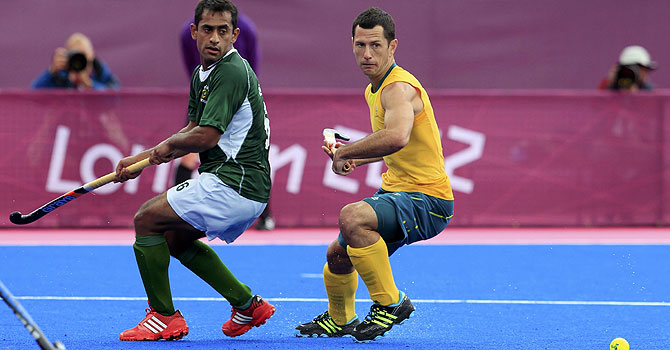
The ongoing fracas between India and Pakistan’s armies at the border has claimed its first victims in far-flung Mumbai. The  Hockey India League (HIL), an IPL-style hockey tournament which was scheduled to have a match in Mumbai on Sunday, ran into security tangles when about 100 Shiv Sena workers started protesting outside a stadium that the Mumbai Magicians team was practicing in. This team has four Pakistani players in its side; there are a total of nine Pak players in the League’s five teams.

Sensing that the protests could escalate and cause security issues for the visitors, the organisers of HIL decided to whisk the team away from the city. The team has been sent to Delhi for practice, and schedules are being reworked to accommodate the Sunday match at Delhi. As things stood, said the HIL, it was too soon to comment on whether other Mumbai matches featuring teams with Pak players on board would be cancelled or held elsewhere.

Following the protests, the Mumbai police reportedly swung into action and announced a security cordon for the team, but the  management conveyed its decision to move to Delhi.

“The players have left Mumbai. Once we hear what the management’s future plans for Mumbai matches are, we can discuss the necessary security arrangements at that time,” said Ravindra Shishve, Deputy Commissioner of Police (Zone I).

However, the State’s Home Minister, RR Patil, said that the Pakistani players would be given full security when they played in Mumbai and Maharashtra. “We assure them (the Pakistani players) of full protection for their matches so that nobody can disrupt play,” he said.

(Picture courtesy dawn.com)


Categories
Watch

VIDEO: Activist Sulaiman Bhimani attacked

RTI activist Sulaiman Bhimani’s office was attacked by a group of men two days ago, but they fled within seconds. Bhimani himself sustained a minor injury.
by Krishnaraj Rao

On the afternoon of January 12, at about 3 pm, eight unknown men entered Mumbai-based RTI activist Sulaiman Bhimani’s office located at Goregaon with sticks and swords, and smashed a laptop, a printer-scanner and a computer keyboard.

The attack ended within 10 seconds as Bhimani’s neighbours raised an alarm. While retreating hastily, they slashed wildly at the nameplate with their swords, and kicked at the wooden door frame, smashing it. Bhimani escaped with only an injury on his finger.

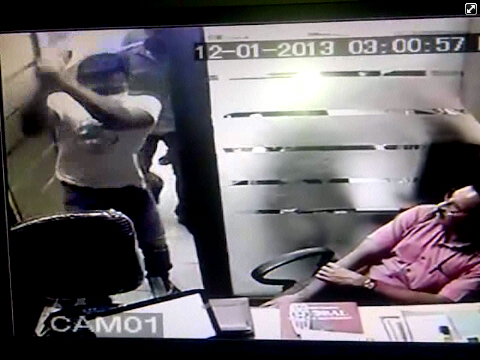
Fortunately, this entire episode was captured on two CCTV cameras installed inside and outside Bhimani’s office. (The man seen on the right in the pink shirt is not Bhimani, he is a visitor. Bhimani, being directly seated under the CCTV camera, is not visible in the footage below.)

A man wearing a T-shirt is seen entering from the main door into the office of Sulaiman Bhimani, and abruptly smashing a laptop, before dropping his stick and fleeing. The other assailants are seen through the glass, swinging wildly to damage the office equipment before they retreat. The attack ended within 10 seconds. Bhimani, who suffered only an injury on his finger, is not seen in the footage as he was seated directly under the CCTV camera.

The man in the blue shirt talking on the phone is a visitor, and he completely fails to react as the people wearing handkerchiefs and carrying sticks and swords walk into the cabin. (This man is the “rounder” of a well known security agency.) While retreating hastily, the assailants slashed wildly at the nameplate with the swords, and kicked at the wooden door frame, smashing it.

Bhimani feels that the men were sent by a local builder due to his expose that involved a builder, MMRDA and a plot of land at Gilbert Hill. (Read details of the case here). The builder and unlawful elements mentioned in this report suffered losses of several crores when MMRDA cracked down on them recently, evicted 50 tenants with police action, and served eviction notices on 102 others. They have criminal records, and have allegedly threatened Bhimani in the recent past.

An FIR was registered under IPC sections 452, 427, 323, 143, 144, 147, 148, 149 in the matter. The case has been made against eight men for rioting, criminal intimidation and unlawful assembly.

Krishnaraj Rao is an RTI activist.

(Picture and videos courtesy Krishnaraj Rao)


Categories
Event

A round table on inclusive development

Mumbai University hosted a discussion on inclusive development for Indians recently. One of the invitees gives us this pitch report.
by The Association of Muslim Professionals

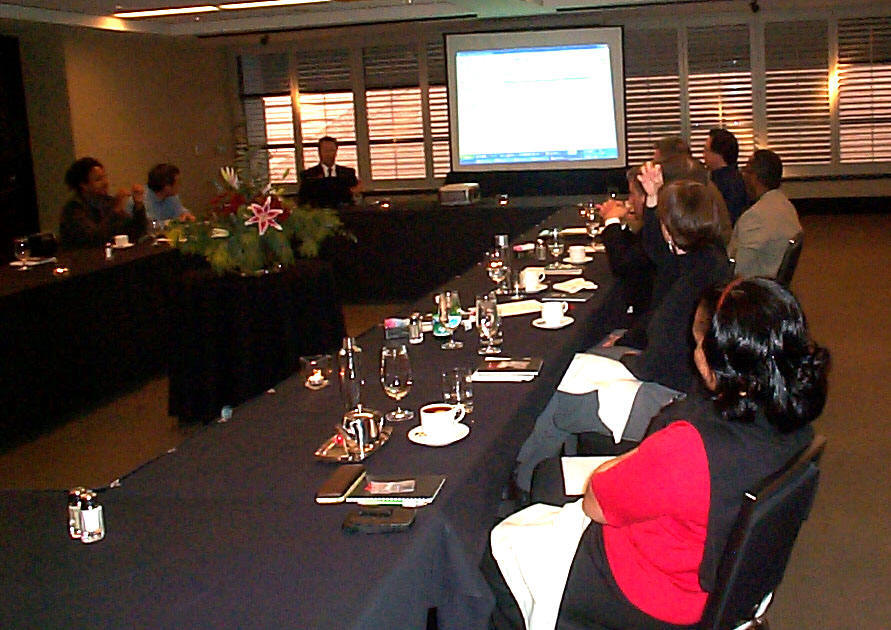
The Association of Muslim Professionals (AMP) was one of the exclusive invitees from the social sector participating in a round table brainstorming on ‘Indian Inclusive Development at the turn of the 21st century at JP Naik Bhavan, ICSSR, Mumbai University. The discussion was jointly organised by the Center for Research and Debates in Development Policy (CRDDP), New Delhi and the US-India Policy Institute, Washington DC, and was coordinated by Dr Abdul Shaban of the Tata Institute of Social Science (TISS), Mumbai and presided over by Professor BL Mungekar, Rajya Sabha MP.

This round table was for brainstorming to provide a framework and highlight key facts in the most simplified manner possible, so as to facilitate a debate for strategising policy engagement. A case was also made during the discussion regarding the need to have independent debating platforms in major States of India where regional issues can be articulated and policy papers prepared. Syed Najeeb, Head PR and Communications (AMP) represented the organisation at this significant event which also had high-ranking bureaucrats, political dignitaries and other members from the social sector in attendance.

Sharing his views during the discussion Najeeb said, “We need to have a two-pronged approach to tackle the current issues in the community. We need to work not just on the policies and schemes at the macro level but also ensure its proper implementation at the micro-level. Apart from that, we also need to do some self-introspection and there is a need to bring an attitudinal change within ourselves and then only can the communities prosper. Also, we need to take proper measures to put to rest the apprehensions of certain communities in the country.”

Some luminaries who shared their views at the event included renowned social activist Asghar Ali Engineer, NCP MLA Nawab Malik and Congress MLA Amin Patel.

(Picture courtesy bizforum.org. Picture used for representational purpose only)

Exit mobile version