Categories
Deal with it

It’s going to be a cold week

Brace yourselves and don’t pack away your sweaters. Weather department estimates that Mumbai’s current chill may last all this week.

The current chill you are experiencing in Mumbai is set to continue over the coming days. The Indian Meteorological Department (IMD) contends that the cold breezy conditions that the city is currently facing will remain for a few days owing to cold winds blowing from the North.

In fact, minimum temperatures in the city today are expected to touch 15 Degree Celsius – that’s even lower than last night’s temperatures.

The IMD says that an extra-tropical storm has just passed over Jammu and Kashmir, bringing sudden snow and sleet rain, but though the storm has passed, the cold winds continue to blow. Another cold spell is expected to hit next week, if similar weather conditions hit J&K again. As per the IMD website, maximum temperatures recorded on Sunday were 31 Degree Celsius at Colaba and 30.8 Degree Celsius at Santacruz, while minimum temperatures were 17 Degree Celsius and 12.6 Degree Celsius respectively. No major departures are expected in prevailing weather conditions for 48 hours.

You know what this means. Do keep your winter woollies at hand this week.

(Picture courtesy tcpalm.com)

Categories
Patrakar types

The devil wears (borrowed) Prada

…and throws her weight about like nobody’s business. Why do women bosses in the media model themselves on Miranda Priestley?
by Vrushali Lad | vrushali@themetrognome.in

If you’re anything like me – that is, a girl who likes to work because she likes to work and has no other girly interests, such as the latest fashions and whether brown is a colour Indian women would ever prefer whole-heartedly – do not ever work for a woman’s lifestyle or fashion magazine.

From personal experience, I can tell you that you will be expected to dress like a model. Wearing footwear other than stillettoes is a crime punishable by hanging from the ceiling by your toes. Using a scrunchie to keep away your unruly hair from your face is also a crime fit for the guillotine. Wearing denims to work will get you ostracised till you came back wearing linen trousers or a very expensive skirt. If you wear flats, they have to be ballerinas, not flip flops or something equally foul. You never repeat an outfit for at least two months, you eat at only the most expensive restaurants and you network only with those in your circle.

Speaking in any language other than English will get you transferred to the mail sorting department. And where I worked, you couldn’t speak to the boss at all, even when you were dying of a terminal disease and needed a day off to arrange for your own funeral, because the boss was too busy to look up from the computer screen where a furious game of Angry Birds was in progress. I am not kidding.

I find that women heading magazines catering to women consciously model themselves on Miranda Priestley. They would have modelled themselves on Anne Wintour directly, but most of them are not sure if Miranda Priestly is Anne Wintour, and Meryl Streep is more famous. Of course, Miranda Priestly is a bi**h, but she is a bi**h who is on top of her game, knows exactly how to produce issue after issue of stellar reading material, cannot be fooled by fancy story ideas that are essentially a rehash of last year’s covers, and who shows up for important events and photo shoots because all she cares about is that the magazine looks good.

The women I worked for in magazines ignored the rest of these qualities and concentrated only on being bit**es. It didn’t get them very far with the staff, but it got them the editor’s chair, so all was good. These women dressed fancy, spoke Oxford English, some accented Hindi when telling the office boy “thoda chai leke aana, bhaiyya,” never spoke to the staff unless to yell at them in front of the entire office, never showed up for magazine events unless they were covered by the Press (in which case they showed up only with their cronies) and were shameless enough to demand freebies such as jewellery sets and iPads from PR agencies liaisoning with the magazine for stories.

If only they cultivated Miranda Priestley’s class as well.

Compare this state of affairs with the few women editors in newspapers. I’ve heard glowing reports of Ranjona Banerjee as the boss at DNA a few years ago. I’ve found Sumana Ramanan (Senior Editor, Hindustan Times) to be soft-spoken and clear about her expectations from a story. Deepali Nandwani was a capable editor at Yuva, always taking the trouble to discuss each story idea at length before giving the go-ahead to work on it. Carol Andrade was a gem of a person to work under at Times Response. Several tales are still told of Dina Vakil’s class and good manners, and the woman’s not been around for quite a while now.

Nobody’s saying these women are/were perfect editors, but at least they didn’t make themselves out to be jerks. Which is what anyone expects from an editor in the first place.

I was once speaking to senior journalist Mrinalini Naniwadekar about the tendency of women bosses to throw their weight about, sometimes for no reason at all. Mrinalini thought it stemmed from an old struggle that the first women journos in the city faced when trying to get themselves assigned on important beats such as crime and politics, which used to be denied to them. Probably the resentment still lurks. Probably several women have been thwarted in their ambitions by men. But these situations don’t exist any more, at least not in the big cities – though most editors today are still men – and with so many women already in the profession and so many more joining the ranks every day, it is inexplicable that women bosses would still need to show any measure of ‘toughness’ by being total as***les.

And why be rude and unkind to appear tough? Is there any call to treat people like dirt just to show that you are the boss? Since when has it been cool to make ‘no’ your favourite word, not grant people you don’t like an audience, not sanction leaves that the employee is entitled to, and generally go on an unnecessary rampage against the world because you want to first cultivate, then reinforce the image of a no-nonsense go-getter who suffers no fools?

Worse, why try to be tough when your entire staff comprises women? If you were out to fight the men in a men’s world, why are you giving such grief to women as well? Or are you really just nasty?

If anyone’s figured this out, do let me know. *ties her hair up with a scrunchie and goes about her business in Osho chappals and last week’s clothes.*

Vrushali Lad is a freelance journalist who has spent several years pitching story ideas to reluctant editors. Once, she even got hired while doing so.

(Picture courtesy news.com.au)
Categories
Event

New stamp commemorates late Aditya Birla

State Governor released the stamp in the presence of the Birla family; slammed other family-run businesses for lack of ethics.

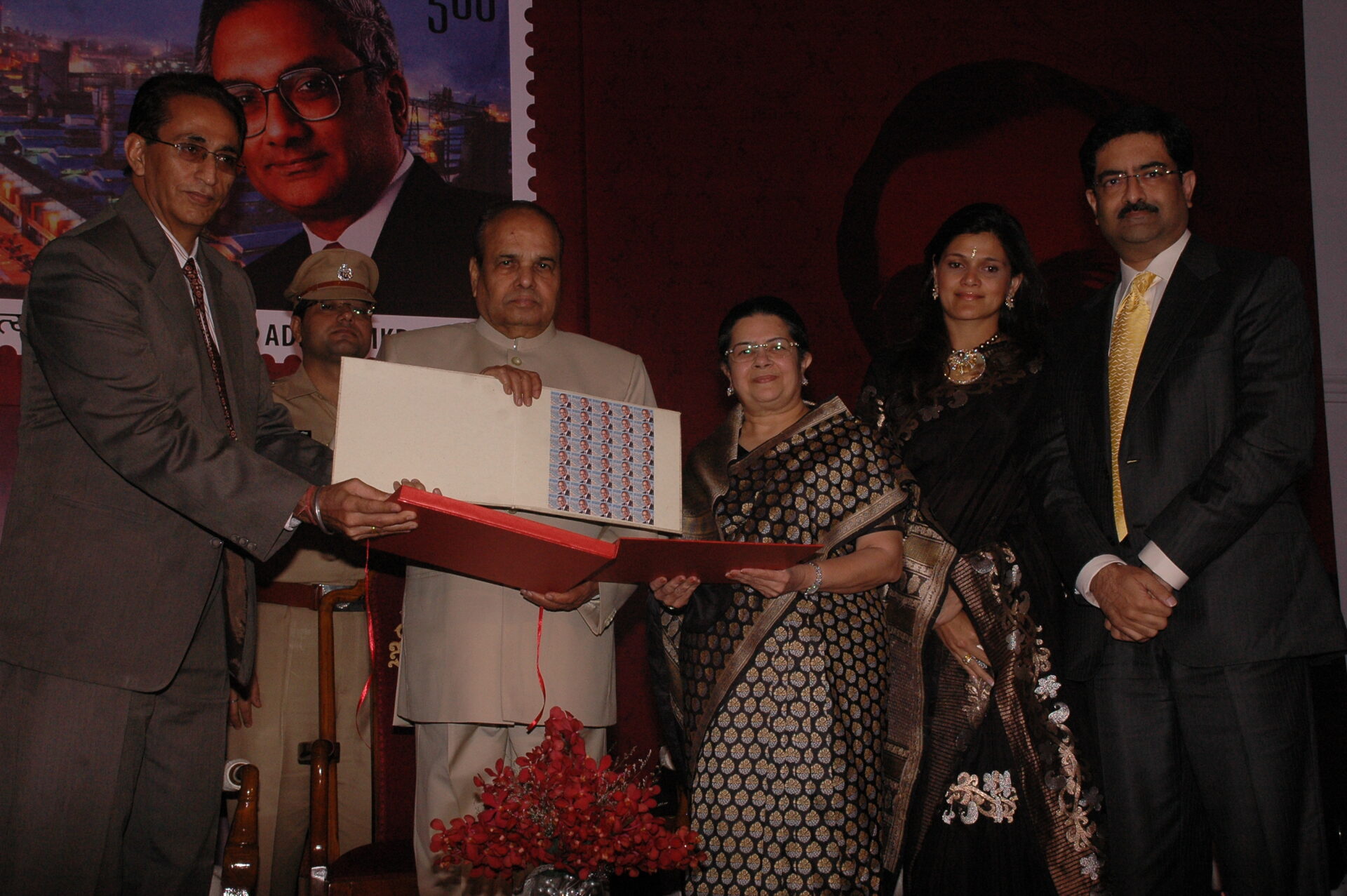
The Governor of Maharashtra, K Sankaranarayanan yesterday released a commemorative postage stamp on late industrialist Aditya Birla. The function was held at Raj Bhavan, Mumbai, in the presence of other prominent Birla family members such as Kumarmangalam Birla, Neeraja Birla and Rajashree Birla, among others. The Post Master General of India was also present on the occasion.

In his speech, the Governor said, “Only five days ago, the Honourable President of India had released the commemorative stamp on late Shri Aditya Birla at Rashtrapati Bhavan in New Delhi. I am happy that we are celebrating the occasion here in Raj Bhavan, Mumbai. Although belatedly, I am glad that we are honouring one of the greatest pioneering business leaders of India late Shri Aditya Vikram Birla in a befitting manner.”

However, while praising the late business icon, the Governor slammed other businesses in India. He said, “Unlike other family-owned businesses in India, the Birla Group definitely stands out as one of the most respected business groups for two reasons. The first and foremost reason is the association and involvement of the Birlas in India’s freedom struggle. The late Shri GD Birla (Aditya Birla’s grandfather) was a close confidante of leaders like Mahatma Gandhi, Pandit Nehru, Sardar Patel and many others.

The second reason why the Birla Group is a respected name is because of the integration of ethics and values by the Birla Group with business. The name Birla at once inspires trust and confidence because of the adherence of the Group to these values.”

The Governor went on to extol the virtues of the late business leader, saying that he was “a silent business revolutionary who foresaw the winds of globalisation coming to India much before others. He was not one to blame the system for the unfavourable business atmosphere prevailing in those days. He worked his way out to put Indian business on the global level as early as in 1969. He went on to set up 19 companies outside India in countries like Thailand, Malaysia, Indonesia, the Philippines and Egypt. The postage stamp is a just recognition of his formidable work for the Birla Group and for the nation at large.”

(Picture courtesy Raj Bhavan, Mumbai)


Categories
Enough said

Writing as therapy

Humra Quraishi explores why writers write – and why some of their best work comes out in times of stress.

While we hear of some new therapy being discovered or practiced in some part of the world on an almost daily basis, we have lost sight of the very word – therapy – and what it actually implies and means. In fact, each city in this country should host a regular get-together of authors and poets and writers. Give it any name of your choice; after all what’s in a name! Full credit should go to the Jaipur Literature Festival for taking the lead, and in these last couple of years, cities like Hyderabad, Mumbai, Chennai have also begun hosting their very own Literature Festivals.

Why can’t other cities and towns follow suit and host such meets? Probably they’d have to catch hold of a sponsor or two and a few willing writers who wouldn’t mind organising the event. They needn’t be large meets to begin with, and within a year or so, they could be broadened in scope and reach.

For years I been writing that if the jailor janaabs could try therapy on hapless jailed inmates, there’d be little need of those disciplining sessions that are sometimes conducted in prisons. In fact, if diary-writing be made available as an option to inmates in hospitals, jails, asylums, refugee camps, night or day shelters and other such places, then their stress-related symptoms would lessen, since writing has been proved to have the potential to heal.

In this connection, it is pertinent to remember the words of Mulk Raj Anand, who said that writing helped him recover from a series of severe nervous breakdowns. He’d once told me, “Each time my love affairs failed, I suffered a nervous breakdown and the only thing that helped me recover and brought me some relief was writing. My meeting with Sigmund Freud just after my first nervous breakdown in 1927 helped me to some extent, but it’s actually writing novels that helped me towards total recovery.”

Assamese writer and Jnanpith Award recipient Indira Goswami was also one of those writers who did not shy away from pouring out her heart into her writing, and from admitting that after her husband’s premature death that left her a young widow, the writing process anchored her and helped her regain the confidence to move on.

Writing has rescued several other writers as well. As poet-writer JP Das said, “Once, when I was going through terrible depression, I had engaged myself in translating some of my old love poems and it had a cathartic effect on me…I do not know if writing heals, but sometimes when I am not able to tell something which is weighing on my mind to anyone, I have written a poem or story about it and that has helped…”

Little wonder that JP Das is one of those bureaucrats who had the grit to take premature retirement from the Indian Administrative Service to become a full time writer. Recipient of the Saraswati Samman and the Sahitya Akademi Award, Das says that the  turning point in his life came around 1979-1980 when he was awarded the Homi Bhabha fellowship to do research on the paintings of Orissa, which he’d later published in the book Puri Paintings. “Those two years set me thinking along a broader perspective. I’d enjoyed that sense of freedom to the extent that I decided to quit the Administrative Service and take to full-time writing.’

During an earlier interview, Srinagar-based engineer-poet Syed Anwar Owais had told me that the best literature comes out of turmoil. “I have seen troubled times and my mind has had its share of trouble. Yes, the best literature comes out of social or personal turmoil. Doris Lessing wrote The Golden Notebook when she was under great strain. Poets such as Robert Graves were produced by World War I and were called war poets. Karl Popper’s The Open Society and its Enemies is a war work.’

On a personal level, I consider some volumes and the verses they carry as healers of a lasting kind. Some truly great works, some lovely poetry, all of them have helped me survive several everyday struggles, and some very harsh times.

Humra Quraishi is a senior political journalist. She is the author of Kashmir: The Untold Story and co-author of Simply Khushwant.

Categories
Event

An enCounter between art and the city

Nidhi Qazi catches up with Hong Kong-based artist Clara Cheung, who creates electricity using plastic bottles, metal waste and seawater.

Artist Clara Cheung from Hong Kong sees Mumbai’s sea water, used plastic bottles and metal waste as an opportunity. And how? She uses them all to unleash the Energy of Sea- the theme for her installation work at this year’s edition of enCounters.

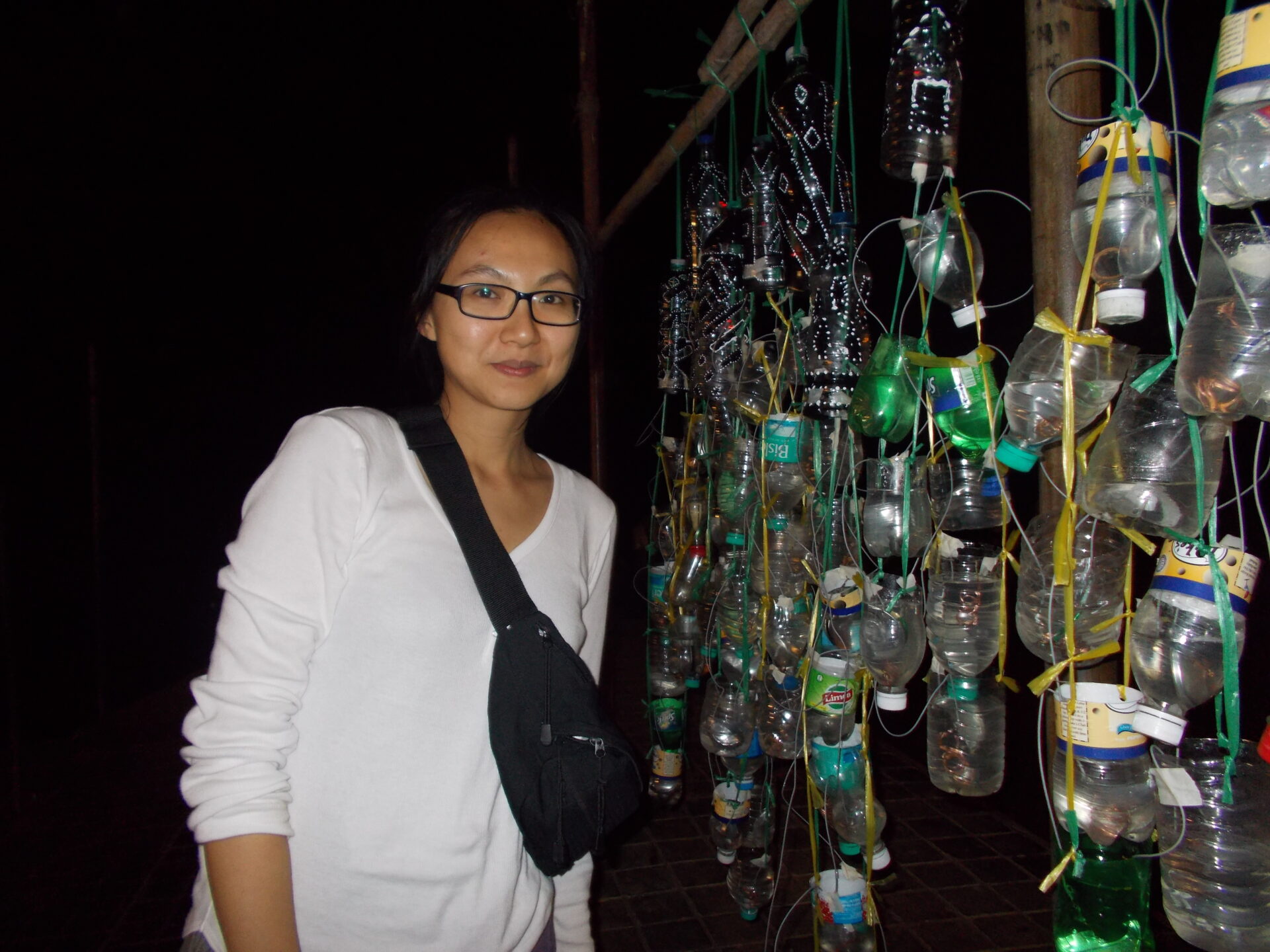
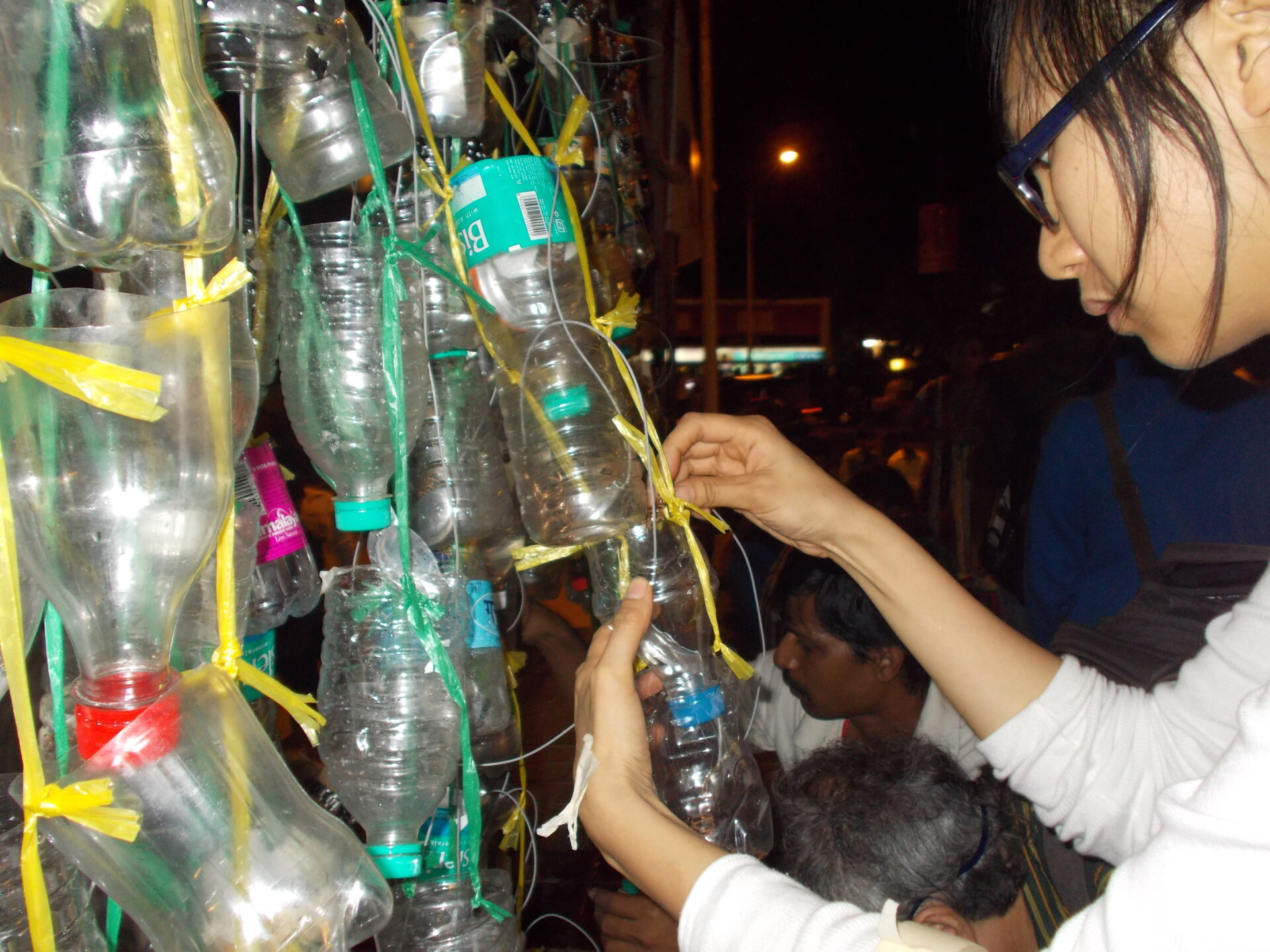
I catch Clara in action at Bandra’s Carter Road promenade, a hotspot for various cultural activities the city hosts. From setting up the panel for her installation to getting down to work all details, Clara is all smiles. “My work tests the idea of how sea water of Mumbai can be used to generate electricity and help people.” ‘Best of waste’ is a known practice internationally, and Clara’s work is a case in point. She uses plastic bottles, seawater, aluminium cans and copper wires to generate electricity.

A standing panel is hung with plastic bottles cut in the shape of a bowl, and painted. The copper wires and aluminium waste from the cans have been fixed inside the cups, which are filled with saline seawater from the sea. With the forces of physics and chemistry backing them, the cups emit a faint and feeble glow, thanks to the electricity produced in the tiny bulbs attached to the copper wires.

“The amount of electricity is not great but it still gives us hope that we can find alternatives all around us. We can use the existing resources and wastes to construct something that is needed,” says Clara. A curator with the C&G Artpartments, Clara is in Mumbai for the fourth edition of enCounters.

Celebrating art in the public spaces, Powerplay enCounters is a platform that brings artists closer to common people. “We want to create a connection between art, the people and their problems,” says Claudio, co-founder, ArtOxygen – the organisation behind this project.

Claudio adds, “Such events don’t aim at producing immediate outcomes. We use arts to generate curiosity among people. Through aesthetics, we want to trigger people to question their lives, surroundings, environment. They should not be satisfied with anything and everything around them.”

The week long event closes on Sunday, January 20. A collaboration of ArtOxygen and Asia Art Projects, enCounters is a Mumbai-based the art initiative. Its previous themes in the three editions were Identities, Water and Land.

During the week, various artists from India and abroad displayed their works with the theme of Energy as the backdrop. The event had a number of workshops and interactive sessions to help artists connect with the people. One such event was the floor painting by artist Wai lun Chung whose objective was to make people think from other perspectives, apart from the obvious ones.

(Pictures courtesy Nidhi Qazi)

Categories
Diaries

‘The body achieves what the mind believes’

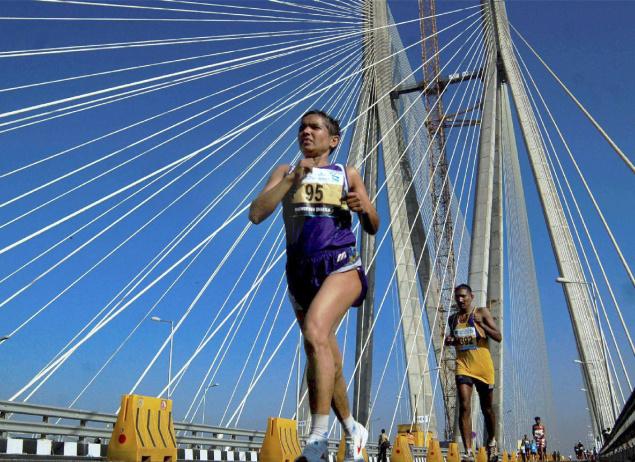
The Mumbai Marathon is here. A participant tells us how he’s been shaping up for the race that happens tomorrow.
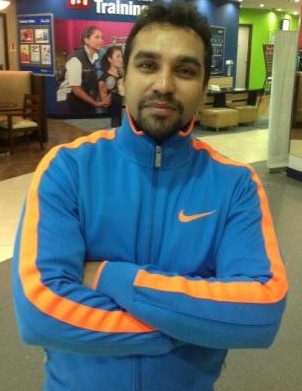
by Akshay Kapur

Concluding part of the ‘Mumbai Marathon’ Diaries

Though I’ve maintained an active lifestyle, I started training specifically for the Mumbai Marathon about four months ago. I trained both outdoors and in the gym.

Some people train really intensively for the Marathon, but I made sure that my normal training duration did not exceed one hour, six days a week. Prior to the Marathon training, I did a lot of compound activity and functional training. Training for the upcoming run on Sunday has had a very beneficial effect on me – it has helped me remain very focussed on my fitness goals. Running this particular Marathon has always been an amazing experience for me.

I modified my fitness regime for the Marathon a bit – I incorporated more of cardiovascular endurance and muscular endurance exercises. I have also been following a very good eating pattern, reducing my carbs and fat intake and increasing protein intake. I’ve been leading a very disciplined lifestyle overall. I didn’t hire a professional trainer to guide me for the training, but the team at my gym has given me a lot of guidance and motivation.

When I first participated, I wanted to push my fitness to the next level. And every time I have participated in the Marathon, I have crossed another barrier that I never imagined I would. I guess the body achieves what the mind believes!

Akshay Kapur is 30 and works as a sales manager.

(Picture courtesy Akshay Kapur and hindubusinessline.com)

Exit mobile version