Categories
Film

Vaajlaach Paahije – Game Ki Shinema

A story that tries to highlight the sleazy side of the film world, the film fails spectacularly at every level.
by Ravi Shet

Rating: 2 out of 5

As stories go, this one had the potential to be both a laugh fest and a thought-provoking critique on the ills of the movie world. However, this film does neither and is merely an excruciating watch for the audience.

Vaajlaach Paahije – Game Ki Shinema (directed by R Viraj) starts with struggling director Makarand Thokare aka Yash (Rajesh Bhosale) auditioning actors for an upcoming film. Sitting in on the auditions is Raj (Chinmay Udgirkar), a struggling actor himself. Yash and Raj are desperately looking for a producer who can finance their film. During their hunt for a producer, they meet moneybags producer Bhau Damdar (Bhalchandra Kadam), who is in the business only to get intimate with pretty girls.

Bhau agrees to finance the duo’s film on the condition that they get a beautiful heroine for it. He also hands over an advance payment to the duo so that the heroine can be brought in quickly.


Raj goes out to look for ‘suitable’ faces and finalises Supriya (Girija Joshi) – but Supriya has an ulterior motive up her sleeve. Pretending that she needs the role because she is poor, she also accepts that Raj is infatuated with her. Meanwhile, Yash is at his wits’ end because Bhau rejects each script he brings, before saying that he wants the film to be made on a truly terrible script, ‘Nal Damayanti – The Intimate Love Story’.

Bhau is excited about meeting the girl for the film, but there is a shock in store when Yash and Supriya turn out to be siblings. By this time, Yash has decided to make a film on the sly without their producer knowing about it, and also to save his sister from Bhau’s clutches.

R Viraj has tried hard to bring Dada Kondke’s style of cinema back with this film, however he fails miserably at the attempt. Bhalchandra Kadam delivers a good performance as a filthy producer. Apart from some funny moments, the film falls flat in every possible way. Also, the innuendo in the dialogues is forced and completely unfunny.

(Picture courtesy starblockbuster.com)

Categories
grey space

Why I refused to take care of my grandkids

Mandakini Mashelkar refused to become a full time babysitter for her grandchildren. What caused this refusal? This is her story.
As told to Reyna Mathur

Everyone says that as parents, we must do everything to protect our children. In India, we go to extreme lengths to ensure that our children are happy. Even when they grow up, we run to assist them and make their life easier. I was one of those parents, too.

My husband and I ran a garment business together in Pune, and we shifted to Mumbai in 1996. Since then, we settled into our life in the city fairly quickly. Ever since we had our two children – my sons Sangram and Sanket – we had been focussed on giving them the best life ever. And we did. Our sons grew up to become engineers, and both of them got jobs in US-based companies. It was just a matter of time before they went to work abroad. Five years ago, my younger son went to the UK with his wife, and a year later, Sangram went to Germany with his fiancee.

Two years ago, my husband and I went to Germany when Sangram’s wife, Maitri, gave birth to their son. We stayed there for four months to assist them while they took care of their baby. We had just returned home after this visit that Sanket asked us to come to the UK because his wife, Sonali was pregnant. On hearing this, my husband became silent.

A few days later, I asked him, “What’s wrong?”

“I don’t want to go,” he said.

“But they need our help!” I protested.

“I don’t want to go,” he repeated stubbornly.

A little digging revealed that he was uncomfortable doing ‘babysitting duties’ for our sons. As he spoke, I realised that what he was saying was true. Our trip to Germany had exhausted us. At our age, it was very difficult to care for an infant. While we were there, Sangram’s mother-in-law had also dropped in and she was to stay for six months. We were to go at the end of this period. “We can’t keep doing this,” my husband reasoned. “First Sangram’s baby, then Sanket’s baby. We can’t keep shuttling between countries like this.”

The mother in me protested against the wife in me – my sons needed our help while they took care of their young children and their jobs. But then my husband said the most important thing: “Whom did we call when we had our sons? You were managing our business with young sons in your lap. We did it. Our children will, too.”

When I told Sanket that we would not be coming, he was furious. He demanded to know why we could not help him after helping his brother. I explained gently that we would visit occasionally, but only for a few days. Staying at their homes, with nothing to do apart from taking care of the baby, came with its own problems: we did not have a car at our disposal, so we had to wait for our sons to come home and take us out. There was ample free time but nothing to do.

Both my sons were upset for a while. But my husband and I remained resolute. We will visit them both next year and stay for only a couple of weeks. In the meantime, we have travelled to five places in India and both of us have joined a gym. You could say that in our retirement years, my husband and I have a greater bonding and we are rediscovering our love for each other. Keeping active and living within our means has given us a good quality of life in our senior years.

My friends and our relatives think we are being selfish in not helping our children. I think we have already done enough for them. It is now our time to enjoy our retirement years.

Mandakini Mashelkar loves to cook, read and play chess. She lives in Thane with her husband, Anant. 

Note: Comments on this article are now CLOSED.

(Picture courtesy www.sereneretirement.comImage used for representational purpose only)

Categories
Swaad 'Anu'saar

Meat the ban

Does the upcoming ban on sale of meat make you crave meat more? Try out these wonderful non-vegetarian recipes today.

anurita guptaby Anurita Gupta | @myylittlekitchn on Twitter, @myylittlekitchen on Instagram

Anda, machhi, chicken! Naam bhi matt lo, ban hai!

Recently we have been ‘told’ what we should not be eating. The beef ban in Maharashtra was a ‘dream come true’ according to a senior minister. And now, all those who were supporting that ban are also in for a shock as the Government has again decided a four-day meat sale ban during the Jain paryushan. The ban was then reduced to two days – September 10 and 17 – after public and political furore.

While it is wise to be sensitive to all communities and cultures in our country, this ban is clearly pushing things too far. Politicians are now dictating what should be on our plates in the pious country of India.

Many ban-believers forget that Indian cuisine is the most popular in the world because of its ‘butter Chicken’ and ‘balti curry’ both of which are meat dishes. Popular or not, as free citizens we should not have to fight for our food choices! That is why I bring to you a unique way of ‘meating’ this ban by giving you some non-vegetarian recipes that you can make and enjoy albeit even more ravenously to make the point J

Butter Chicken

As I said, the pride of Punjab sadda butter chicken is one of the best and the most sinful creations that the world and its cousin loves.

Can you believe that butter chicken was invented by accident at Moti Mahal Restaurant in Daryaganj, New Delhi? I bring to you the same recipe:

Ingredients: 1 kilo chicken marinated in 1/2 tsp red chilli powder, 1 tsp ginger garlic paste, 1/2 kilo dahi (curd) and salt to taste. While the chicken marinates put together the following for the gravy.

175 gm regular or preferably white butter, 1/2 kg tomato puree, 100 gm fresh cream, 4 to 5 green chillies sliced down the middle, 1/2 tsp each of sugar, jeera, red chilli powder, kasuri methi and salt to taste.

Make sure that the chicken is marinated and refrigerated for at least 6 hours or overnight before you put it in the oven. A clay oven is ideal but I use a regular oven (preheated) at 180 degrees and full power to roast the chicken for 15 minutes until it’s just a little underdone.

Now add half the butter in a kadhai and pour in the tomato puree. Saute for 3-5 minutes and add all the masalas. Now add the roasted chicken, white butter, the fresh cream, chillies and kasuri methi. Now simmer the gravy until the chicken is completely cooked. Serve hot with naan. Life set!

Sali per eedu

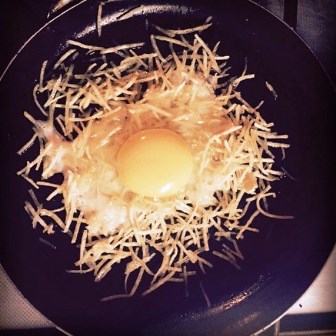
sali per eeduMumbai bawajis are known for breaking an egg in everything. But this eedu (egg) recipe is arguably the best in the Parsi bhona treasure trove. It’s simple yet a bit tricky. This recipe is essentially fried egg on top of fried potato chips/shavings. It’s tricky because while the egg cooks through, the sali must not burn or steam up to being soft instead of crunchy J

All you need for this is eggs and potato sali, the thinner the better. Now, heat 1 tsp of ghee/unsalted butter and add Sali –potato chips – in the pan so that they form a circle on top of which you break an egg. That would be just the same way as you would do when you make fried eggs.

Sprinkle 2-3 drops of water on the egg (not the sali) and cover the pan. In about 30 sec, the egg would get some colour and it’s ready to eat. Season it well and ensure that the potato shavings do not become soggy before you serve.

Tandoori fish

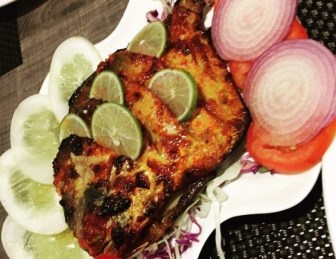
This fish recipe is by far my most favourite. It is also a hot favourite of fitness addicts, too. Low in calories, it packs in a punch of flavour. All you need is a wholetandoori fish big 1/2 kilo white fish, preferably a pomfret.

For the marinade: take 6-7 cloves of garlic, 2 tbsp coriander leaves, 2 inches ginger, 2 tbsp lime juice, 1 tbsp Kashmiri red chili powder, 1/2 tsp jeera powder, 1/2 tbsp garam masala, 1 ½ tsp salt, 50 ml refined vegetable oil, 1 tbsp ‘roasted’ gram flour, 100 gm thick dahi.

Take all the ingredients (other than oil and curd) and blitz in a mixer to make a fine paste. Add to the oil and dahi and make a thick paste. Now marinate the fish by giving it 3 slits in the middle. Make sure you rub the marinade in the fish as well for even coating. Keep the marinated fish aside for 1 hour.

Now pre heat the oven at 200 Degree C. Put the fish on the top rack for 7 to 8 minutes, turning it once after 3 minutes. If you don’t want to use the oven, you can simply put it on the tawa and oil grill it. Baste it well with the marinade during cooking. Serve will lemon segments stuffed between slits and some garden salad.

I hope you will explore at least one of these recipes during these ban day. It would not just add vivid aromas to your home kitchen, but will also reiterate your freedom to ‘meat the ban’ the way you like it J

Anurita Gupta is a media professional who is passionate about two things – food and radio. Her love for all things food makes her a foodie with a cause.

(Pictures courtesy Anurita Gupta)

Categories
Event

Attend: Launch of ‘Rest in Peace’ by Kiran Nagarkar

The celebrated author will unveil the the third book in the Ravan and Eddie trilogy this evening at Kala Ghoda.
by The Editors | editor@themetrognome.in

The phenomenal success of Ravan And Eddie after its publication in 1994 made its author Kiran Nagarkar one of India’s most celebrated literary names. He followed up this novel with Cuckold three years later, for which he won the Sahitya Akademi award.

The story of a Maratha Hindu and a Catholic boy growing up together in a Mumbai chawl, Ravan and Eddie was an incisive look into the city’s chawl life. Unrelenting in its grimness but laced with everyday humour and a generous amount of pathos, the story resonated with readers in a way that few city-based works had.

Today, Nagarkar will unveil the third book in the Ravan and Eddie trilogy – Rest in Peace. The book will be unveiled at Max Mueller Bhavan, Kala Ghoda. Actor Shabana Azmi will launch the book and read from it, while journalist Naresh Fernandes will lead a critique on the book.

The event is free and open to all. The launch starts at 6 pm, Gallerie Max Mueller.

(Picture courtesy kirannagarkar.com)

Categories
Enough said

If the Syrians came to India…

…they would most likely be banned. Which would be okay, considering how we treated last year’s Burmese refugees in Delhi.
Humra Quraishiby Humra Quraishi

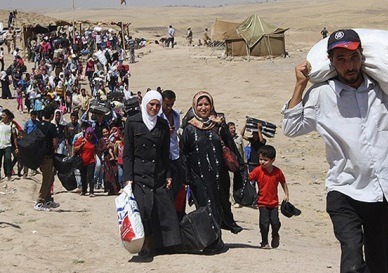
It is still hard to see the picture of little Aylan Kurdi and not cry. The three-year-old Syrian boy’s body was washed ashore after the dinghy he and his family were in capsized as they fled to Greece. Along with pain at the fate of a young life snuffed out through no fault of its own, is the numbness of knowing that all the Syrian refugees are actually fleeing into nowhere, with no future.

Though a few countries have acknowledged that they would take a few refugees, the fact is that nobody wants the burden of housing scores of people from another land. At least some European nations opened their borders; the rich Arab nations have still not done so!

Though there is no possibility of this happening, but I can’t help wondering what would happen in the Syrian refugees somehow found their way to our shores. I think their entry would be banned straightaway – after all, we are so fond of banning everything in sight. Even if they did sneak in, they would be constantly under the scanner as troublemakers, or worse, suspects connected to ISIS or similar outfits!

What is ironical is that though more than half of New Delhi’s population comprises refugees at some point – they themselves, if not their parents and grandparents – have fled from undivided Punjab during the Partition, their attitude towards migrants and refugees is completely deplorable. Last year, hundreds of Burmese refugees, the Rohingyas, fled their land to seek refuge in Delhi.

Not only was their condition hard to describe when they got here, their condition is even worse today. Neglected and shunned by the capital city, they continue to live in squalor. When they arrived here, they hadn’t eaten in days, and most were malnourished and about to die. Nothing has changed today – they live in a disease-infested ghetto near Kalindi Kunj in New Dlehi, close to the outer fringes of Okhla. I would say they are living like outcasts, worse than animals. I wish their entry had been banned instead.

Humra Quraishi is a senior political journalist based in Gurgaon. She is the author of Kashmir: The Untold Story and co-author of Simply Khushwant.

(Picture courtesy

Categories
grey space

Living and loving Mumbai and India

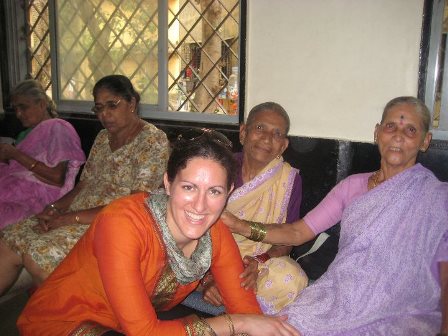
Robin Reister writes about how Indians view the concept of medicine, and how the idea of gratitude supersedes everything else.
Robin Reister

Part II

In Part I published yesterday, medical student Robin Reister had described her impressions of India.

I think the greatest benefit of students’ involvement in global health is the impact it has on the student herself. I would not be the person or doctor that I am if it wasn’t for my community service and global health experiences. My experience in India humbled me and took my breath away several times.

I noticed that people were not getting the primary care they needed. Indians would rather treat themselves at home, with naturopathic or Ayurvedic medicine or an antibiotic they picked up at a pharmacy without a prescription, than go to a doctor.


The family that I stayed with told me that instead of selling their printing company, they just gave it to their employers as a sign of gratitude for years of hard work. Both NGOs I worked with (Nightingale Trust, Bangalore and Silver Innings Foundation, Mumbai) were started by individuals who used a variety of self-funding for years to keep them alive. The fact that everything seems to work out so well in the face of so much constant chaos in India, I can only attribute to the amazing way everyone is constantly helping their fellow man. As my rotation had a large focus on human rights, I think this observation of hospitality, selflessness, and charity made the largest impression on me.

When I explored the Indian people’s perception of health care in their country, I was surprised at how little people complained, which was much less than I feel we do here in America. I found myself looking for problems, asking leading questions to get to the bottom of it. What I found is that most people say they get medical care when they need it, and at not too high of a cost. Very few people have insurance, and there is no Medicaid or Medicare equivalent for the destitute and elderly.

However, with the lower cost of health care due partly to the lack of insurance companies, most people get what they need.  I asked, “What if you get cancer?  What if you have diabetes? What if you’re the poorest of the poor?” Most of the responses were basically that if you have chronic diseases there are schemes available to help, and that there are good Government hospitals that are free to the poor.

But when I got to the bottom of it, I noticed that people were not getting the primary care they needed. Indians would rather treat themselves at home, with naturopathic or Ayurvedic medicine or an antibiotic they picked up at a pharmacy without a prescription, than go to a doctor. With this pattern comes many late presentations of disease. This problem is sure to get worse with the increasing levels of diabetes, and this does not seem to be being addressed as of now.

Having soaked in the sights, sounds, smells, and tastes of a country as large and busy as India gives me a great perspective on the rest of the world.  Almost 1/6th of the world’s people are on the subcontinent, and I have gained confidence after living how that huge chunk of the world lives. Like any time I leave the USA, I am reminded of the incredible luxuries that we have here. Potable water, roads that aren’t littered with garbage, potholes, cows, and unbelievably bad traffic, and decent access to health care.

Also, my freedom as a woman and as an American are something I take for granted. I was disappointed to see women in India not usually being treated as equals, and I constantly heard about the corruption of the Government with attitudes of hopelessness to change. But I will never forget the kindness and incredible selflessness I witnessed by my mentors, my hosts, and even strangers in India. Also there is great beauty in everything in India, from the temples, the delicious food, and the smells of jasmine and incense burning. This global health experience has enriched my education in medicine and human rights, and also personally enriched my life.

Robin Reister visited India as a medical student in 2011. Today, she is a practicing doctor in a hospital in New York. ‘Grey Space’ is a weekly column on senior citizen issues. If you have an anecdote or leagl information, or anything you feel is useful to senior citizens, caregives and the society at large, feel free to get it published in this space. Write to editor@themetrognome.in or on Facebook at www.facebook.com/Themetrognome.in and we will publish your account.

(Pictures courtesy Robin Reister)

Exit mobile version