Categories
Overdose

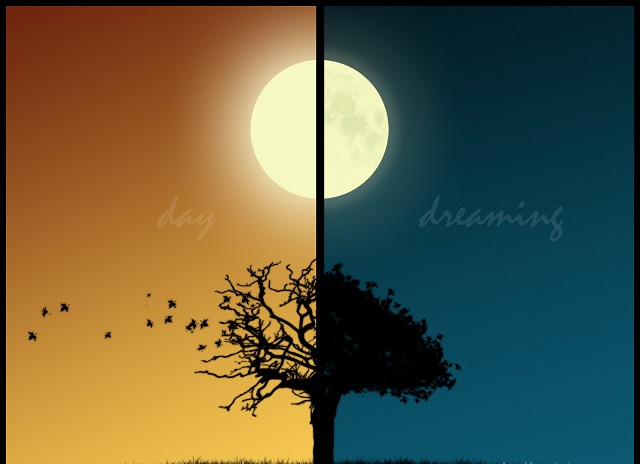
The reality of dreams

Our dreams are more real than our life’s starkest realities. If you fear failure, then you have no business dreaming at all.
by Jatin Sharma

Recently I have been part of the most interesting chats in my social circuit.

Everyone has been using this line extensively, “Mujhe na kuchh bada karna hai.”

When I dug deeper, I found a mine of dreams. Where someone who was in sales was a closet artist, where a person in programming person wanted to be a cricketer, a writer who wanted to be a director, and an architect who just wanted to be a potter.

At first, I was mighty impressed by their dreams. Their dreams had huge potential and a faith that was unshakeable. But when I asked them about making those dreams a reality, all of them postponed the dream. They postponed a dream because they had a reason today to not follow it. Or may I say, they had an excuse not to!

For me, a dream is a reality that is yet to be fulfilled. But procrastinating on following your dreams is just like letting a missed train go further away by not attempting to reach the next station, and watching it recede in the distance.

Of those who have gone ahead and chased a dream, one thing is certain: they would never have achieved their dreams if they hadn’t given those dreams first priority.

A dream is not a showpiece, it is a part of you.

A dream is a desire that is deep inside you.

A dream is an enslaved bird that wants to flap its wings and fly.

A dream is the real you. What you dream is what you wish to become, and if fear of failure stops you from being the real you, then it is really pointless that you dream at all.

The power of a dream is optimum when the word ‘failure’ goes out of your dictionary.

We all forget that the road between dreams to reality is covered just by making an effort. Dreams should always get the first priority in everyone’s life. If you are dreaming of something, just go ahead and do it. Don’t fear failure – just feel happy that you gave your dream a chance. That you tried and it didn’t work out. But at least you will be proud of yourself because for the first time, you respected yourself enough to face the unknown for the sake of a dream.

Don’t live a life that is not yours. Let dreams be your reality. A reality that you like and love. A reality that you always dreamt of. Don’t sell your dreams for a salary that you don’t really value. Don’t procrastinate on your dreams by making excuses. Don’t budget your dreams for no money that is spent on your dreams can be measured in terms of less or more.

Give yourself a chance.

Happiness is not the thousand achievements in the reality that you never wished for, it is the one failure that you go through while pursuing your dreams.

And don’t question your dream – will it work, will it not work, what happens if I fail, do I really want to do this? Question your reality. Your dreams are more real than your reality.

Follow and do what you wish to do. Do it right now.

Jatin Sharma is a media professional who doesn’t want to grow up, because if he grows up, he will be like everybody else.

(Picture courtesy helpingchurchleaders.com)

Categories
Learn

The afterlife of images

Rahaab Allana will give a talk today on the context and meaning of photographs in the absence of their creators.
by Medha Kulkarni

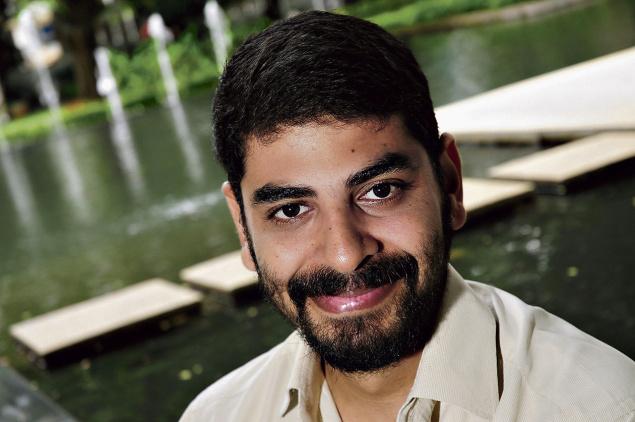
The Dr Bhau Daji Lad Museum, famed for its education programmes and talks for the public, is organising a lecture on ‘The Afterlife of Images’ by Rahaab Allana (in featured image above), curator of the Alkazi Foundation, today.

Exhibitions of photography have been understood in terms of the imperial, modern and post-colonial, and hence have been part of a collective enterprise, representing the complexities between past and present. Even the photographer’s subjectivity is questioned, together with the camera’s ‘framing’ of time: its ability to reveal, censor, alter and re-orient.

But how are these understood when dealing with images whose authors no longer exist? Allana aims to look at archives and its afterlife, where this depth of field haunts the photographs that have no living author. These photographs are often viewed as timeless: a world in which the temporal, spatial and historical form ephemeral links and express the fraught relationship between the personal, self-conscious and the aesthetic. Photography to this extent signifies a complex system: art-practice, visual mode, a process, a tool and hence, an absorbing, malleable means of representation. Allana’s talk will be a reflection through exhibitions curated and assisted by the Alkazi Foundation.

Rahaab Allana is Curator of the Alkazi Foundation for the Arts, New Delhi, where he has curated and co-curated exhibitions with essays over the last four years. He is also a Fellow of the Royal Asiatic Society in London.

If you want to attend the talk, do RSVP via email to ccardoza@bdlmuseum.org as seating is limited. Entry is free.

(Featured image courtesy thehindu.com)  

Categories
Enough said

Rahul for PM?

Humra Quraishi wonders why Rahul Gandhi does not grasp the several opportunities thrown his way at the best of times.

New Delhi is no longer just the rape capital of the country, but it is also the battleground for those desperate to grab much more than the proverbial pound of flesh. New Delhi is where one experiences the rush for unlimited power that comes with the two magic words – Prime Minister.

Of course, Mamata didi proved another again that she has no chance at this post, or indeed advance in Delhi’s political circles. Once again, she played her cards in her usual hysterical fashion, and brought down any aspirations she may have had of making inroads in Delhi. The latest killing in her State’s capital, of student leader Sudipto Gupte, can be seen as the very start of her political downfall. The rule of absolute power does not hold for long, and with this latest incident, Mamata hopefully has seen the light.

And then there’s Narendra Modi, who currently seems to be more interested in giving speeches to a select few in Delhi, than doing something for the semi-parched parts of his State. It seems his hosts double-checked the invite list for his speech venues, which included the movers and shakers in business and several rightwingers, but which curiously did not have a single name from the capital’s ‘outspoken’ lot.

For surely, if any of this group was present, there would have been uncomfortable questions on why his men had Ishrat Jehan and several others killed in fake encounters, why women were raped and killed in his State, and why a great majority of Muslims of Ahmedabad are forced to live in one big cluster in Juhapura, an underdeveloped ghetto.

And therein lies the question: why are we, as a collective lot, being swayed and fooled by our politicians? Why are we wilfully blind to the bigger picture?

If you are unable to go beyond politicians’ babble, I would suggest you watch the film Hotel Rwanda, to see what happens if two communities/tribes are pitted against each other. Civil war breaks out, with all possible crimes committed against all sections of society, cutting across all power structures, ultimately affected all citizens.

Unfortunately, those who have the mettle to take on these politicians are steadfastly refusing to bite the bait. Mahatma Gandhi’s grandson, Gopalkrishna Gandhi, who possesses all those attributes to take on Modi, refused even to be Vice President, much before the nomination stage! Also, it’s a complete no-no on the Yadav front – Akhilesh  Yadav seems incapable of running his own State, Uttar Pradesh, where even children are raped and jailed, so making any moves in Delhi’s direction would be furthest from his mind at the moment.

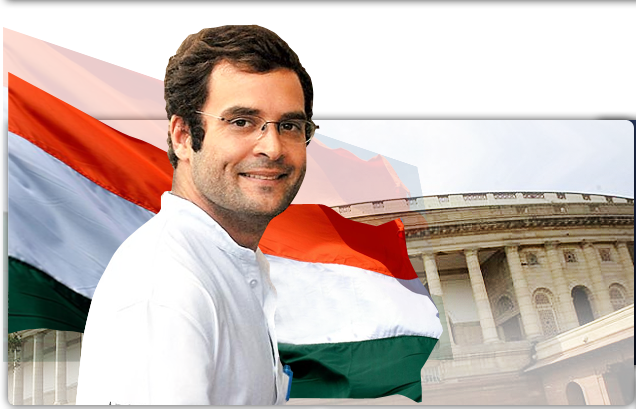
Do you see what this means? It so turns out that the only man who can probably take on   Modi at the moment is Rahul Gandhi. He isn’t much of a speech giver, nor does he cash in on any strong points – his own or his party’s – but he is earnest.

To quote N Ram, from the foreword this veteran journalist has written to the last book on  Rahul Gandhi, Decoding Rahul Gandhi, by Aarthi Ramachandran, “We learn that Rahul  Gandhi is an obsessive organisation man, who believes in applying business management strategies and methods, including the ‘Toyota Way’, to grassroots political organisation. He espouses meritocratic notions of seeking and nurturing talent and opening up opportunity for career advancement in Congress politics.

“While he has not been above playing the dynastic card, he has been candid about how he got to where he is today, declaring himself to be ‘a symptom of this problem’, which he wished to change. He does not seem to be good at building coalitions or dealing with existing or potential allies. He favours going it alone, but unlike, say BSP leader Mayawati, he has no core social constituency. In the heat of campaigning, he has made his share of political gaffes and over-the-top allegations against opponents. He has been an indifferent Parliamentarian, whose sporadic interventions on issues, including corruption, have impressed no one, except the political faithful. His secular credentials are not in question; in fact, he holds no known religious faith and has gone so far as to declare the national flag to be his religion.”

To me, Rahul’s earnestness is his strong point. But he seems to be surrounded by a bunch of advisors that is coming in the way of his connectivity with the people. It isn’t enough to spend an evening or eat a meal at a poor man’s dwelling, there has to be an ongoing, sincere connect daily, which does not seem contrived.

Dear Rahul, why can’t people visit your office and tell you their grievances?

Why can’t you see the right-wing nuts in your own party and have them thrown out?

Why can’t you focus only on communalism and corruption issues, and tackle them first?

Why can’t you use the whistle-blower cops of Gujarat – who had taken on Modi – to your advantage?

When will stop looking like you’re still waiting in the wings, and take centrestage?

Humra Quraishi is a senior political journalist based in Gurgaon. She is author of Kashmir: The Untold Story and co-author of Simply Khushwant.

 (Pictures courtesy adilmohdblog.com, travelindia-guide.com, mid-day.com)

Categories
Listen

Where music comes to the people

National Streets for Performing Arts (NSPA), after entertaining commuters on Western Railway, wants to spread the cheer at other Mumbai spots.
by Medha Kulkarni

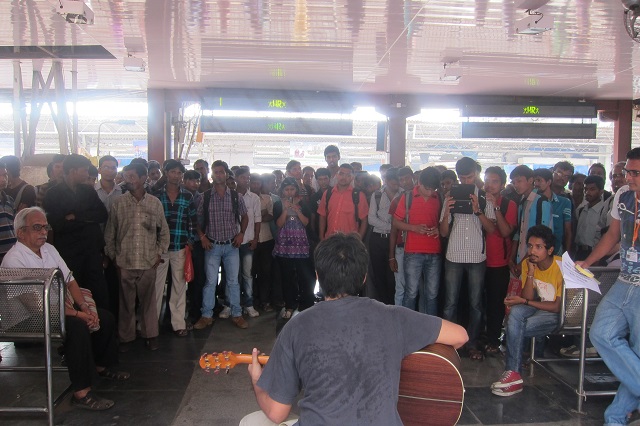
June 27, 2012 was an interesting day at Churchgate station. In the midst of this busy railway station, a group of musicians assembled for their first-ever performance. It was a small performance involving two buskers, Jishnu Guha from UK and Sureshji, an Uttarachali folk singer, (both talented vocalists) and within minutes, a crowd had gathered to hear them.

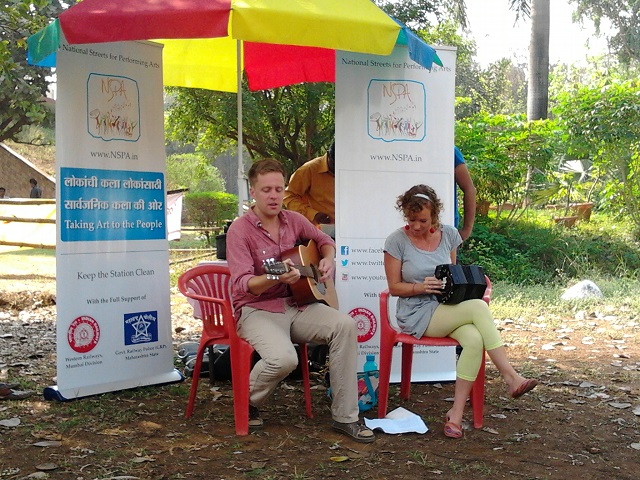
This group was the National Streets for Performing Arts (NSPA) at work. The NSPA was born last year out of the idea to take the performing arts to the people by reclaiming public spaces for street performances. By its own admission, the NSPA seeks to champion public spaces as an alternative platform for performance, encouraging greater interaction between artists and the community, creating spaces of cultural interaction and energising the very city and its people. It aims to support the livelihoods of less privileged and independent performers across diverse genres.

A big factor in starting the NSPA? “To rekindle an atmosphere of street performances in urban India (starting with Mumbai) that aims to bring some joy to the lives of millions as they go about their daily commute,” says founder Ajit Dayal,52, best known as the founder of Equitymaster, Personal FN and Quantum Mutual Fund, when asked about the inspiration behind this unique initiative. Recalling his childhood days of watching street performers in Mumbai city and noting how street performers continue to brighten the lives of residents of cities like London and Paris, Ajit says he wanted to “recreate that in an organised fashion in Mumbai.”


Following their debut performance at Churchgate station, the NSPA launched full time performances on October 8, 2012, with music performances at Churchgate station on Mondays, Borivli station on Wednesdays and Bandra station on Fridays from 9 am to 11am and 5 pm to 8 pm. NSPA chooses its locations with care, ensuring that the site would be frequented by large numbers of people but in a spot that doesn’t cause any trouble or inconvenience to commuters.

With a small team of eight members, each a passionate lover of art and performance, NSPA manages to pull off successful events each time and the response from the general public only acts as good encouragement. “The response has been encouraging, proving to both us and the artists that the city of Mumbai is receptive and open to an initiative such as this. We hope to continue the performances at the railway stations and soon expand to parks, gardens and bandstands in the city and across the country, thus weaving art into the very fabric of the city and making performances as regular an occurrence as the trains , the buses and the commuters,” says Shrishti Iyer, Performance Co-ordinator at NSPA.

Apart from the regular performances at Western Railway stations, the NSPA has been collaborating with major art festivals in the city like the Indikaleido Festival, Kala Ghoda Arts Festival, the BMW-Guggenheim Lab etc.

Encouraged by their initial success, the NSPA is now seeking to expand to Central railway Stations, Horniman Circle Gardens and bandstands across the city, apart from other public spaces.

If you want to keep track of their performance so you can catch the next one, all you have to do is ‘like’ their Facebook page at www.facebook.com/nspa.streets for regular updates and notifications.

Categories
Beauty

10 superfoods for super skin

Using expensive skin products but not taking care of your diet? Presenting 10 must-eat food items for super healthy skin.
by Beverley Lewis

What you put on your plate and in your mouth is way more important than what you apply on your skin. A diet rich in antioxidant vitamins and minerals (and plenty of water) will nourish your skin and give you a youthful appearance. So the next time you’re reaching for a slice of chocolate cake, you may want to think again.

Remember your mum telling you that if you wanted a clear, beautiful complexion, you would have to eat a lot of fresh fruits and veggies, and drink a lot of water? Guess what, like with most other things, she was right. Our skin is a direct reflection of our health, and as trying as it sounds, it is important for us to avoid eating food high in refined sugar, and salty and fatty foods.

So what should you eat for good skin? Just eat these skin-enhancing foods for a beautiful, glowing complexion:

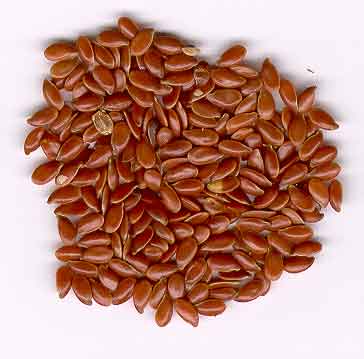
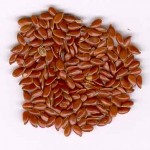
Flaxseeds: These tiny seeds (in pic on left) contain omega-3 fatty acids, which erase spots and iron out fine lines. If you consume half a teaspoon of flaxseeds a day, your skin will be better hydrated, as the fat in these seeds attract water to skin cells and plump up the skin and reduce wrinkles. So sprinkle some flaxseeds on your oatmeal, veggies, salads, or even in a small pot of low-fat yogurt.

Green tea: When it’s hot, this brew releases catechins, an antioxidant with proven anti-inflammatory and anti-cancer properties, so drink it when it is hot. Studies indicate that green tea may reverse the effects of sun damage by neutralising the changes that appear in skin exposed to the sun.

Spinach: The folate in these veggies may help repair and maintain DNA by bolstering your cells ability to renew themselves. This also reduces the likelihood of cancer-cell growth. The added bonus to Popeye’s favourite food, the water in these greens penetrates cell membranes, which makes for plumper and less wrinkled skin.

Sweet potatoes: These underground veggies, not only taste delicious, but they are loaded with vitamin C, which smoothes out wrinkles. Vitamin C is essential to collagen production and the more collagen you have, the less creased your skin looks.

Tomatoes: Sure, they taste yummy in salads, but cook them and these plump little beauties can help save your skin. How? Lycopene, the phytochemical that makes tomatoes red, helps eliminate skin-ageing free radicals caused by ultraviolet rays. Just half a cup of cooked tomatoes has 16 milligrams of lycopene; along with ample sunscreen, that daily dose should help keep your skin smooth and wrinkle-free.

Oily fish: Oily fish contain a little secret: selenium. This nutrient helps preserve elastin, a protein that keeps your skin smooth and tight. This antioxidant is also believed to buffer against the sun (it stops free radicals created by UV exposure from damaging cells).

Carrots: Think of them as thick magic wands – good for your eyes and great for clearing up breakouts. The credit goes to vitamin A, as it helps prevent the overproduction of cells in the skin’s outer  layer, which leads to clogged pores. Vitamin A also reduces the development of skin cancer.

Dark chocolate: Dark chocolate has flavonols, which reduce roughness in the skin and protect it against sun damage. Try and eat dark chocolate with at least 60 per cent cocoa in it. A square a day will help keep sun damage away.

Almonds: They are packed with vitamin E, a potent sun blocker. Vitamin E acts as an antioxidant that helps to protect skin cells from UV light and other environmental factors that generate cell-damaging free radicals. So try and consume a handful of almonds a day, which amounts to about 12 almonds.

Water: Since skin cells contain mostly water, if you’re dehydrated, your skin will look and feel parched, too. So aim to drink at least eight glasses of water a day, and you will be rewarded with a dewy complexion.

Beverley Lewis has worked with beauty magazines and has amazing tips to share. Have a beauty question? Send it to us at editor@themetrognome.in or tweet it @MetrognomeIndia and Beverley will answer it for you.

(Pictures courtesy tumblr.com, everythinghealth.blogspot.com, thedailygreen.com, technyou.edu.au, niagarashoptalk.com, riceplex.com, verybestbaking.com, timepass.info, truedrawing.blogspot.com, geninv.net)

Categories
Hum log

She cartoons around with history

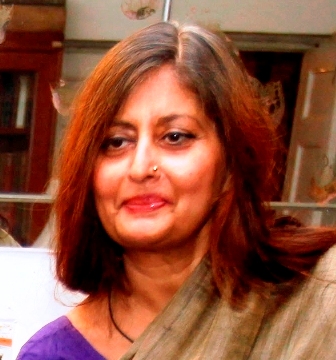
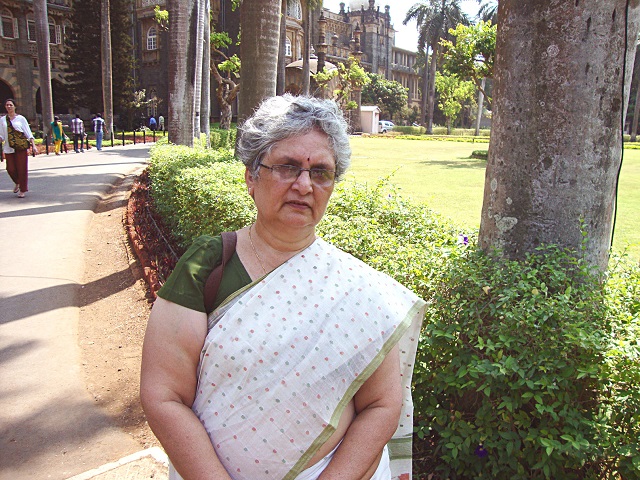
Former journalist, now writer and archaeology student Shubha Khandekar talks about creating archaeological cartoons and studying history with a sense of humour.
by The Editors | editor@themetrognome.in

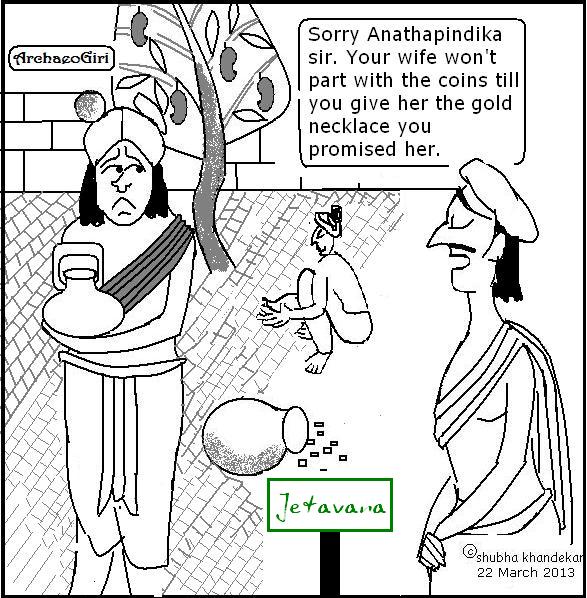
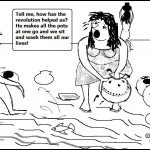
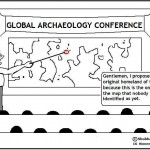
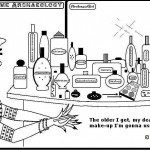
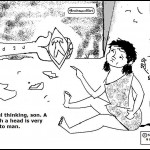
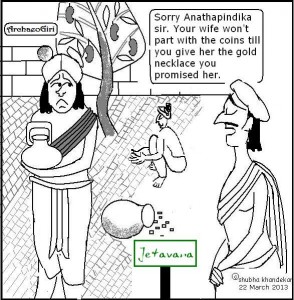
Let’s face it – we Indians are a ‘sensitive’ lot. Increasingly, everything hurts our feelings; unintended slights, a jokey reference to our history and culture, even a stray illustration about something Indian. But Shubha Khandekar loves taking a fond, humorous look at our history through cartoons – the former journalist and now writer and PR professional has been a dedicated archaeology student for the longest time, and wonders why we “can’t stick out our tongue at Kautilya, pull Anathapindika’s leg, make fun of the globe-trotting Aryans and the seafaring Harappans?”

In an interview, the 50-something Kalyan resident tells The Metrognome about being one of the few Indians drawing archaeological cartoons, how our apathy and callousness towards our archaeological wealth, why she wants a device that can see underground, and what those wishing to study archaeology should do.

When did you first develop an interest in archaeology?
I postgraduated in Ancient Indian History at Delhi University, after which archaeology was merely the next logical step forward. I did a one year PG diploma in archaeology from the School of Archaeology, Archaeological Survey of India, New Delhi, after which I went to the Deccan College Postgraduate and Research Institute in Pune for a Ph.D.

You’ve been a journalist for a major portion of your working life. How did you choose journalism when your natural inclination is towards archaeology?

I trained and worked as a journalist for over 25 years in Nagpur and Mumbai. Due to some domestic problems, I had to abandon my Ph.D. and take a short break from my studies. The break grew longer and longer and the opportunity to resume almost never came back until in 2012,  after a gap of 30 years – I came across Mugdha Karnik, director, Centre for Extra Mural Studies (CEMS), Mumbai University and Dr Kurush F Dalal, who teaches archaeology there.

And I simply got sucked into it, to join the one-year certificate course in archaeology with them!

Meanwhile, I’d taken up journalism for a living, and I am not too sorry about it as journalism gives one an exposure, vision and perspective that no other profession does. And come to think of it, journalism is reporting on the present and history/archaeology is reporting on the past: small difference!

How did you start making archaeology-related cartoons?

One tends to trivialise the art of cartooning till a cartoonist is thrown into jail! While at the Free Press Journal I had seen Pradeep Mhapsekar at work and had realised the enormous intellectual effort that goes into creating a single cartoon. I was fascinated by it and tried some amateur cartooning. In a contest for women cartoonists declared by the Marathi daily Loksatta I won a consolation prize.

Later, being in a PR company, I made some PR-related cartoons. What really triggered the archaeology-inspired cartoons was the robust, overabundant sense of humour with which Dr Kurush Dalal spiced up his lectures for us. Laughter began to burst through the cracks in academics and ArchaeoGiri (the Facebook page that Shubha uploads her archaeo-cartoons on) was born!

Are there many people who draw cartoons like you do?

No. At the international level, there are cartoons galore on Greek and Egyptian histories. Well-known characters – Noah, Moses, Cleopatra, Archimedes – all have meekly surrendered to the swish of the cartoonist’s pen. There is a whole Asterix series cocking a snook at the mighty Romans. Cartoons on the Stone Age and cave men too are plentiful, but none reflect the features that are specific to the Stone Age in India.

Why can’t we stick a tongue out at Kautilya, pull Anathapindika’s leg, make fun of the globe-trotting Aryans and the seafaring Harappans? Perhaps because we don’t know these people well enough, we need to. Familiarity will breed banter. Perhaps because we take ourselves and our past too seriously although nobody else does. Our ‘feelings’ get hurt at the drop of a hat. Through ArchaeoGiri I have tried to pull historical figures out of boring textbooks and seat them at a modern Indian’s chai-nashta table for a hearty gupshup session.

What are some of the excavation trips you have been a part of?

I’ve been to Sringaverpur in UP and Inamgaon in Maharashtra. Shringaverpur was identified as a ‘Ramayana’ site and excavation was undertaken there under BB Lal. Inamgaon is a pre-iron age site near Pune where extensive work was done by Deccan College for about a decade.

If one wants to study the subject, what are the research tools available as of today?

It is essentially a postgraduate course, being offered at several universities. For lay enthusiasts in Mumbai, I would strongly recommend the certificate courses being run by the CEMS.

What is your comment on the current state of archaeology studies and research? 

At a personal level, those who are teaching me archaeology today would have been my students, had I continued my studies, but I have no regrets there. With their knowledge and scholarship, I feel honoured to be in their company as their student.

At another level, however, no country could be richer than ours in terms of archaeological wealth, and no people could be more callous and apathetic towards it. So enormous is this wealth that it can become a perennial source of infotainment, jobs and revenues, but we treat it with the utmost contempt. The state of explorations, excavation, publication, conservation leaves much to be desired. There is a strong case for public archaeology, but that can’t happen without political will and financial support. Despite the excellent work being done at CEMS, it has still not been possible to set up a full-fledged archaeology department there.

What’s on your archeo-wish list?

I would like a James Prinsep for the Harappan script. An Alexander Cunningham for every bit of architecture-sculpture lying orphaned in the wilderness.

A small museum at every district headquarter. A job for every archaeologist. A tool that can date stone artefacts. And equipment that can see underground.

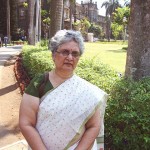
(Shubha’s picture courtesy Pradeep Mhapsekar. Cartoons courtesy Shubha Khandekar)

Exit mobile version