Categories
Trends

Dangerous on field, dangerous off it

His IPL antics put fear in the hearts of his opponents and made him the most ‘dangerous’ cricketer in cyberspace.
by The Editors | editor@themetrognome.in

The Indian Premier League’s (IPL) sixth edition was concluded very recently, and Mumbai Indians took home the cup after defeating the Chennai Super Kings. However, far from the on-field antics and off-field match-fixing scandals, the IPL’s cricketing stars proved to be dangerous in cyberspace as well.
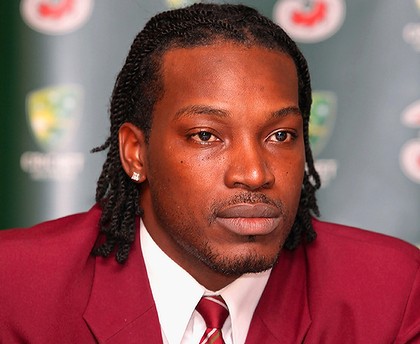
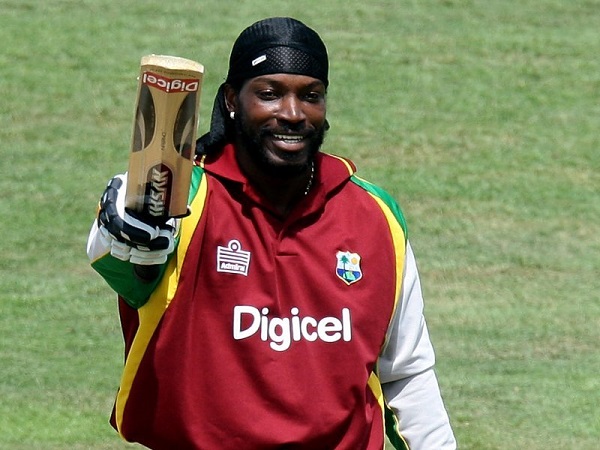
chris-gayle Yesterday, security technology giant McAfee unveiled results of its ‘India’s Most Dangerous Cricketer’ study which researched this season’s top celebrities of the cricketing world on their risk quotient in the Indian cyberspace.  Christopher Henry ‘Chris’ Gayle took the top slot in the survey, followed by Brett Lee and S Sreesanth.

Such studies are routinely conducted by McAfee; its last big survey a couple of years ago centred around Indian celebrities from film, music, sports and other fields, and found that Katrina Kaif was the most ‘dangerous’ celeb online.

Commenting on the findings of the present study, Venkatasubrahmanyam Krishnapur, Vice-President of Engineering (CMSB), McAfee India Centre said, “Cyber criminals constantly leverage famous personalities and very cleverly time their attacks to coincide with popular events in luring people to websites with malicious software.  In the context of the ongoing cricketing leagues, cyber crooks are leveraging famous cricketers for their nefarious gains. During such events, eager cricket crazy fans are highly motivated to search for photos, videos, scores and stories of their favorite cricketers online, and in that moment of weakness, they are lured into clicking malicious links that puts them at considerable risk.”

Cyber criminals follow the latest trends, often using the names of popular celebrities to lure people to malicious sites designed to steal passwords and personal information. Fans looking for results on search engines using strings such as ‘name of cricketer’ combined with words like ‘free downloads’, ‘hot pictures’, ‘wallpapers’, and ‘videos’ are at risk of running themselves into malicious sites, the study revealed.

The study for ‘Most Dangerous IPL Player’ used the McAfee® SiteAdvisor® site rating which indicates the sites that are risky to search for cricketing celebrity names on the web and calculate an overall risk percentage.

Other ‘dangerous’ cricketers included Yuvraj Singh, David Miller, Mitchell Johnson, Sachin Tendulkar, Dale Steyn, Kieron Pollard, Kevin Pietersen and Virat Kohli.

(Picture courtesy thecricketprofile.blogspot.com)
Categories
Big story

Revenue loss of Rs 25,000 crore to Maharashtra?

An RTI query reveals that Maharashtra loses a staggering Rs 25,000 crore per year through corruption on land lease deals.
Shailesh Gandhiby Shailesh Gandhi

[Background: Four months after the Maharashtra State Government revised its rates for leased plots in the city, 149 occupants of such plots in Mumbai’s suburbs have begun receiving notices asking them to either start paying the revised annual lease rent – running into several hundred times what they have been paying so far – or a onetime occupancy fee (ie one-fifth of the plot’s Ready Reckoner value). They will have until the end of 2013 to choose either option. Some of these names include actor Shahrukh Khan and industrialists Azim Premji and Ratan Tata. Till now, they had been paying nominal rents up to Rs 2,500 per year.]

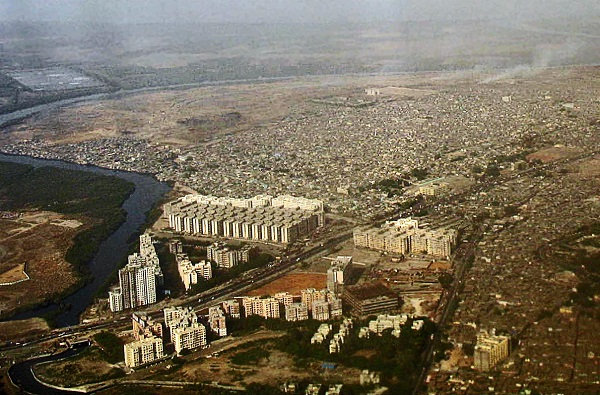
Would you believe that Maharashtra loses over Rs 25,000 crore annually because of carelessness/corruption, and this has not been exposed so far?

The recent scams which have been unearthed give me a feeling that we may actually be quite well off with enough resources. If the lakhs of crores of public resources being given away and snatched away by the few were to come to the public exchequer, we could be quite comfortable as a nation. I have been pursuing one such scam in Maharashtra in which I believe a few thousand crores of public money is being lost to benefit a few.

Maharashtra’s debt is about Rs 2.7 lakh crore, and we pay the interest for this. A State owns many resources on behalf of citizens. One of these resources is land. Governments sell some of the lands and give some on lease. The idea behind giving certain lands on lease is to basically have an inflation-proof investment and sometimes, to encourage  certain activities. Hence it offers lands on lease. It wishes to retain the land so that it may basically ensure that its revenue matches with the growth in inflation.

A lease is legal transaction which primarily lays down the area which is leased, purpose for which the land is to be used, period of lease, lease rent and certain other conditions. When the lease expires, it may be renewed with the lessor increasing the lease rent as per the market price which reflect the inflation in the intervening period.

When any individual or institution gives land or a property on lease and the lease expires, a fresh lease is drawn up at the prevailing market rates if the lessee wants to continue. This simple principle has not been followed in Mumbai and possibly in the State of Maharashtra. I have been told that this is true all over the country.  Some leases are renewed, while some are allowed to continue occupying the land at the old rates. What are the reasons for such irrational actions?

This may be due to carelessness or corruption.

From 2005 onwards

I had discovered this in 2005 and drawn the attention of the Chief Secretary to this in a letter titled ‘Arbitrariness and huge loss of public money in public lands given on lease’. I have now got the scanned copy of the file relating to this which has over 600 pages over the years, and has ended on a bizarre note. The Supreme Court in the 2G case has said, “In conclusion, we hold that the State is the legal owner of the natural resources as a trustee of the people and although it is empowered to distribute the same, the process of distribution must be guided by the constitutional principles including the doctrine of equality and larger public good.” The poorest man who may be starving is an equal and rightful owner of this land, and it is necessary that the appropriate revenue is obtained for him.

I looked at the list of leases of lands given by the two Collectors of Mumbai (obtained in RTI) and decided to calculate the worth of the lands where lease deeds have expired and unauthorised occupiers are allowed to continue.

Let me first share the route the Maharashtra Government has decided to adopt after eight years of confabulations: The Government has decided to offer the lands to the lessees at about 20 to 30 per cent of the value! I am shocked at this irrational action of the Government and think it is about time, citizens defend their revenue by telling the Government they will not accept this approach. The detailed calculations are given in the attached two excel spreadsheets. In the case of the information about leases provided by the Mumbai collector, in 103 cases there is no mention of the lease date and period of lease. Despite a specific query by me using RTI, the PIO has said they will need two to three months to provide this information!

How I arrived at my calculations

There are also other Government agencies like BMC which  have similar lands in Mumbai. My calculation estimates that there is an annual loss of about Rs 1,550 crore by Mumbai Collector  and about Rs 1,200 crore due to the Suburban collector, i.e. a total revenue loss of Rs 2,750 crore each year. The Government now proposes to give away ownership rights to the lessees for Rs 2,248 plus Rs 1,841 crore one time!

Citizens must protest before the Government dispossess us of our land and legitimate revenue. If we can get the Government to auction the leases in Mumbai and all over Maharashtra we could have a revenue stream of over Rs 25,000 crore each year. Citizens and media need to make the Government get the appropriate revenue by fixing lease amounts at current rates. Also this is a revenue stream which is a partial hedge against inflation, saving future generations from having to pay ever higher taxes. The revenue loss in Mumbai is around Rs 2,500 crores, without taking into account lands given by other agencies. The geographical area of Maharashtra is about 700 times that of Mumbai. It is most likely that the revenue loss on this account will be over 10 times that in Mumbai, ie. about Rs 25,000 crore. Is it likely that for the entire nation this figure may be upwards of Rs 2 lakh crore.

Shailesh Gandhi was the Information Commissioner, Central Information Commission, New Delhi and is a noted RTI activist.

(Pictures courtesy www.firstpost.com, www.stockpicturesforeveryone.com)
Categories
Tech

The best phones under Rs 30,000

A follow-up on our ‘Under Rs 15,000’ story lists the best smartphones available for a little bit of extra cash.
by Manik Kakra

If you look around the gadget world these days, you’ll see that a lot of smartphones are being launched left, right and centre, with hefty price tags attached. Sure, these are the most current launches, but phones which have been launched last year surely provide value for money if they are running on the latest OS with sufficiently good hardware. So, here’s a list of smartphones to get for a good on-the-go experience.

Nokia Lumia 720Nokia Lumia 720; available for around Rs. 18,000
If you are looking for your first Windows Phone device without spending a lot, this is the device you should be eyeing (in pic on left). With its solid build quality, an impressive 6.7 MP rear camera, and a decent 4.3-inch screen, this phone packs just what you need from a Nokia WP under Rs. 20,000.

LG Nexus 4; available for around Rs. 25,900
This Nexus phone was launched just a while back in India, and is definitely a good phone for those looking for a plain Android experience – with no bells and whistles on top. The device is suitable for those who want latest Android updates, and are not ready to compromise on build, quality and looks.

Samsung Galaxy SIII; available for around Rs. 26,000
This smartphone has been one of the best-selling smartphones ever. Not a surprise, considering that the phone packs in so much, and has got a lot going for it under Rs. 27,000. It has a great 8 MP camera, a bright 4.8-inch 720p screen, and is soon going to get updated to Android 4.2.

HTC One X; available for around Rs. 30,000 HTC One X
This is one of the underrated phones from last year (in pic on right). It has got the best screen from any phone that came out last year, and that is saying a lot. With its top-notch build quality, decent camera, and good looks, this one surely deserves to be in your list while choosing an Android phone.

Apple iPhone 4S (16 GB); available for around Rs. 33,000 (an exception here)
Yes, I know this phone goes above our Rs. 30,000 mark, but it has been included for a few imperative reasons. First, the phone runs one the latest iOS versions. Secondly, its camera can still give the latest smartphones a tough run. And, if you don’t know already, its crystal clear screen and design will surely get heads turning; so many users won’t mind stretching their budget a little to get this Apple device in their pocket.

Also read: The best phones under Rs 15,000


Have you recently purchased any of the above smartphones? Write to Manik in the comments section below and tell him about your experience with the new phone.

(Pictures courtesy www.nokia.com, blog.laptopmag.com, www.droid-life.com)

Categories
Enough said

Two Muslims, two stories

One was a liberal academic, the other was a feted Hindi film actor, but their lives were really quite similar.
Humra Quraishiby Humra Quraishi

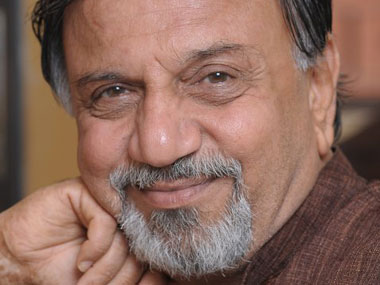
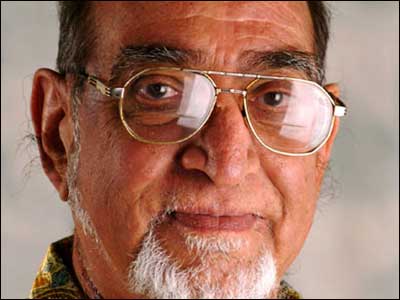
The passing away of Dr Asghar Ali Engineer recently saddened me, to say the least. Though I had met the scholar and academic several times in New Delhi and also in Sringar, I had met him just once in Mumbai. I was determined to catch up with him in Mumbai, because I have been to that city just once in my life and I wanted to meet him during that visit.

This was in the winter of 2006. From Colaba, I made my way to Dr Engineer’s Santacruz office, and it was lunch time when I got there. We spoke over lunch; his lunch, he said, was home-cooked and prepared by his daughter-in-law, who is a Maharashtrian. It was a simple spread – not the expected kormas or kababs or biryani, but two plain rotis, curd, curry, aloo gobi sabzi and some khichdi.

He spoke frankly of present-day realities. “Today, the government has to prioritise justice and security. I must emphasise that no Muslim group or individual wants to take revenge, even after the Gujarat pogrom. I have been talking to people, and everyone realises and knows that confrontation policies do not work, only healthy co-existence does. I have been going to Gujarat and talking to Muslims. They have been saying that all they want is security, so that they can live in peace. They’re worried about their lives, their livelihood, their children…”

He also said, “Our focus should be on how to clear those myths about Muslims. I’m trying my best to clear these myths by holding asghar ali engineerworkshops for the police, for college and school students. It’s only through dialogue that many misconceptions about Muslims can be cleared.”

I have read some really excellent research he had done on the communal riots. That afternoon, as he detailed and traced the history and potential of communal politics, it became apparent that it had peaked in the aftermath of the Babri Masjid’s razing.

Dr Asghar Ali Engineer always spoke calmly, with all the facts at hand. Probably this was what helped him reach out to so many people.

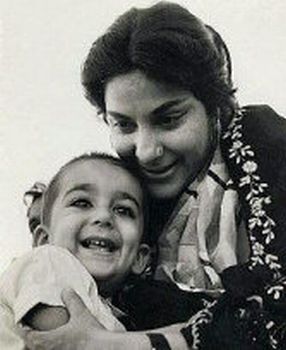
nargis and sanjay duttWith Sanjay Dutt going to prison, I have been reading this essay by writer Khushwant Singh on Nargis Dutt, Sanjay’s mother. I quote, “Nargis Dutt was introduced to me through the then editor of Femina, Gulshan Ewing. I’d seen her film Mother India, and I had met her when they (the Dutts) were not doing too well, and she had almost retired from films. She told me that two of her children were studying at the Sanawar School, not far from my home in Kasauli, and she asked if she could stay at my Kasauli cottage during the Sanawar Founders’ Week. With that I’d quipped, ‘Only on one condition, and the condition is that I have your permission to tell everyone that Nargis slept in my bed!’

She had a great sense of humour and laughed heartily on hearing this. Years later, when we were both nominated to the Rajya Sabha and given seats next to each other and whenever anyone tried to introduce us, she would say, ‘You don’t have to introduce us. I have slept in his bed.’

“…One thing that intrigued me was her (Nargis Dutt’s faith. Was she a Muslim or Hindu or both or nothing? She wore a bindi on her forehead, married a Brahmin, gave her children Hindu names and was often seen at Swami Muktanand’s ashram at Ganeshpuri. Nevertheless, she was buried with Muslim rites in a Muslim graveyard with her husband reciting the fateha. I can’t think of any Indian family which better exemplified the principle of Sarva Dharma Samabhav.”

Humra Quraishi is a senior journalist based in Gurgaon. She is the author of Kashmir: The Untold Story and co-author of Simply Khushwant.

(Pictures courtesy www.news24online.com, sitagita.com, www.hindu.com)

Categories
Swaad 'Anu'saar

Break that fast

There’s something called a ‘dashboard breakfast’ getting popular among busy people. And it’s not doing them a bit of good.
by Anurita Gupta

Subah ho gayee mamu’, the radio rings in a new day and you yawn back into a morning slumber only to ‘sleep think’ the deeds of the day. You mentally start processing your work day: files, Facebook, presentations, lunch meetings and before all that, What To Wear?

But between all this, are you also thinking: Breakfast? I am sure not. Robert Heinlein said, “One should not attend even the end of the world without a good breakfast.” Par log toh apni mummy ki nahin sunte, Robert ki kya sunenge!

No wonder then, I see so many people driving to work in the morning with one hand on the steering wheel and the other holding a sandwich. This phenomenon has become so common that psychology has given it a very apt term – ‘dashboard breakfast’.

vermicelli upmaDr Anjali Chhabria, renowned Mumbai-based psychiatrist speaks about this lifestyle trend thus: “The culture of ‘dashboard breakfast’ is very common in urban cities where there is no time to stand and stare. A leisurely breakfast is unfortunately considered a waste of time. In the morning, people have so many things to do. While driving the car, attending work calls and trying to have a breakfast at the same time gives you stress even before you start your day.”

This means that in our bid to be a Jack of all trades, we have learnt to robotically plan the day but we’ve forgetten to fuel it with a hearty breakfast.

To me, breakfast is a joy. It is merawala time with my choice of food that is guilt-free, with no added tension of counting calories. I start thinking of the aloo ke paranthe with home-churned white butter happily sitting on top, meethe dahi ki vaati, kaanda poha, vegetable upma, idli with fresh nariyal chutney, freshly-squeezed orange juice, French press coffee, and masala chai.

And then there are the firang days filled with fresh waffles with blue berry compote and maple syrup that the husband proudly makes, or lustrous cheese scrambled eggs with burnt garlic twirls and parsley on top, hot brown bread, soft butter in a dish, strawberry jam, and yummy sausages and ham.

I am so grateful that breakfast has always been a celebration in my house from the very beginning! Whether it is indoors while the July rains tap dance on the windows, or in the light winter sun enjoying the company of my extended family, it is one meal that really gets the ball rolling for the day, not just physically but emotionally as well.

Dr Chhabria very rightly explains, “The minute you start your day, you should spend some time with yourself. Breakfast is, in fact, a good time to gather your thoughts and be in touch parathewith your innermost feelings. That helps you to become a collective calm self which will make you rather successful, in comparison to someone who is always rushed like a headless chicken.”

So the effort to save those 15 minutes in order to spend them on a Powerpoint Presentation may not really be a wise decision. That is precisely the reason why I am not going to give you some quick fix, ready-in-a-jiffy breakfast recipes because I don’t think our first meal of the day deserves that. It is called breakfast because it comes after at least 10 hours of fasting after the night before dinner. It ought to be treated with respect otherwise, like our own shastras say, we become what we do while we eat. Just think – do you want to be a bag of nerves who is always pressed for time or a calm, positive and confident human being who enjoys life?

The choice is yours.

Anurita Gupta is a media professional who is passionate about two things – food and radio. Her love for all things food makes her a foodie with a cause.

(Pictures courtesy www.parentsociety.com, honestcooking.com, www.tarladalal.com)

Categories
Beauty

Pack it in

Check out five simple DIY facepacks to make from scratch at home and beat the effects of a scorching summer.
by Beverley Lewis

Summer has already knocked on our doors and you can literally feel the scorching heat when you step out of the house. Besides dehydrating the body, the extreme temperatures can also play havoc with your skin, leading to wrinkles, dull, tried and sallow looking skin. Fret not, we show you how to beat the heat and look as fresh as a daisy with these five simply DIY facepacks , with ingredients straight from the pantry.

Rose garden
Rose water refreshes the skin, cleans the oil and dirt from pores and prevents black heads. It is a natural cooling agent and aromatic astringent that helps tone and hydrate the skin. multani-mitti-face-packs

Take 1 tbsp of Fullers Earth or Multani mitti and soak this in water for 15 minutes. When it becomes moist and pliable, add a teaspoon of rose water to the mix. Apply this on the face and leave it on for 15 to 20 minutes (see pic on right). After this, clean it off with cold water and voila, you will have fresh and dewy-looking skin.

Fragrant beauty
Using sandalwood powder on the face has a softening effect. It helps get rid of patchy and rough skin, as well as helps in getting rid of a tan and provides relief from sun burns and blackheads.

Take 2 tbsp of corn starch, 2 tsp of neem leaf juice, 2 tsp of sandalwood powder and 2 to 3 drops of olive oil. Mix these ingredients together and apply them on the face with a brush. Leave it on for about 30 minutes, allowing it to dry well and then rinse with cold water. Do this three times a week and you will notice a remarkable difference in your skin.

Get minty fresh
mint leavesMint has a cleansing, soothing and cooling effect, which makes it perfectly suitable for most skin types. Mint has properties that make skin soft and supple and clear up blemishes, blackheads and acne. It also helps get rid of a dull, sallow complexion.

Take 4 tbsp of freshly ground mint paste, 1/4 cup of ripe papaya pulp, 2 tsp of gram flour and 1/2 tsp of lime juice. Mix the ingredients together to form a smooth paste. Leave this mixture one for about 30 minutes and then wash off with lukewarm water to reveal a glowing complexion.

Peaches ‘n’ cream
If your skin feels and looks lacklustre, use this simple trick and you can get a soft, smooth and radiant complexion in a matter of minutes. For this, the main ingredient you will need is fresh cream, which is packed with AHA acids, which hydrate the skin making it plump and soft. It also gently exfoliates the skin to reveal healthier, glowing skin, fades dark spots, reduces redness and evens out skin tone. It is also anti-inflammatory and has anti-aging properties to keep skin young looking.

Make this pack thus: mix 1 tsp of cream to 1/2 tsp lime juice to form a paste. Massage this well into the skin and leave for 3 to 4 minutes. Rinse with cold water.

Got spice?
Turmeric is excellent for reducing acne, scarring, clearing an uneven skin tone, sunburns, freckles, wrinkles and tans. Turmeric protects the skin from free radicals and has powerful antioxidant properties.

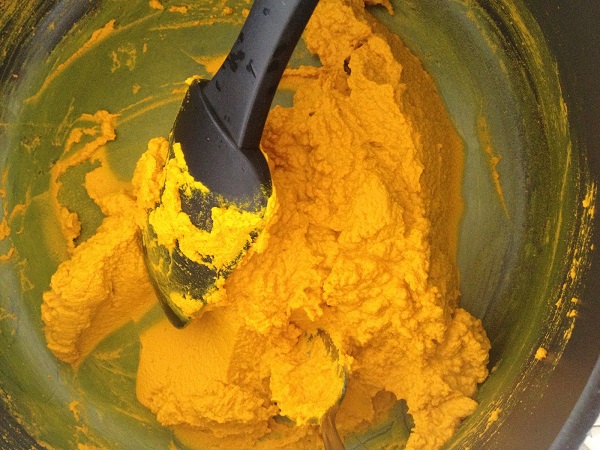
Make a paste with 4 tbsp wheat flour, 1/4 tsp turmeric powder and 1/2 tsp ghee. Apply on the face and leave it on until it dries, which could take about 15 to 20 minutes. Then, wash it turmeric pasteoff with cold water.

OR extract a thick layer of cream from cooled milk. Add a pinch of turmeric to this and apply this mixture on the face. Leave for 15 minutes and wash with warm water. If you use either of these facepacks daily, you will be able to hold back the wrinkles.

Beverley Lewis has written for beauty magazines and has amazing tips to share. Write to her with a homemade face pack recipe of your own, in the comments section below.

(Pictures courtesy lewolfemagique.blogspot.com, tamil.boldsky.com, beauty-health.in)

Exit mobile version