Categories
Wellness

Bottoms up? Or not?

Alcohol takes a toll on our bodies; it plays havoc with the skin and sustained consumption could even cause blindness.
by Beverley Lewis

Do you regularly enjoy a bottle or several bottles of wine? Or are you guilty of knocking back several rounds of tequila shots, only to wake up feeling and looking like you’ve been hit by a freight train? Well, the truth is that alcohol does take a toll on our looks and bodies, and the results aren’t pretty. Read on to see how consuming too much alcohol can play havoc with your skin and learn how you can minimise its beauty-zapping effects.

Alcohol ages you

alcohol ages youAlcohol accelerates the ageing process by dehydrating our bodies. That’s why, after a night of heavy drinking, you are likely to wake up thirsty.  Besides, it also forces our kidneys to work overtime to flush out all the toxins from the body. Excessive consumption of alcohol also leads to depletion of vitamin A within our bodies, which is needed by the skin for cell renewal. The result? Dry, greyish skin that’s prone to wrinkling.

“The dehydrating effect of alcohol and depletion of anti-oxidants makes the skin susceptible to free radical-induced damage resulting in dull skin, darkening (hyperpigmentation), dark circles, coarse texture, and development of wrinkles. So drinking too much alcohol can make you age at a faster pace,” says dermatologist Dr Rickson Perreira, Dr Minal’s Dermatherapie Centre, Mumbai.

Alcohol consumption = bad skin
Over time, drinking heavily can have other, more permanent, detrimental effects on your skin, like rosacea—red, irritated skin and sometimes even broken capillaries visible as unsightly spider veins on the skin surface and also in the eyes, leaving your eyes with an unhealthy bloodshot appearance.

According to Dr Apratim Goel, renowned cosmetic dermatologist and laser surgeon, Cutis Skin Studio, Mumbai, “Whatever the amount and the frequency of alcohol consumption, it Acnedoes affect the skin negatively, as it dehydrates the body of water as well as electrolytes, minerals and nutrients.”

Since it depletes the body of water and electrolytes, alcohol also causes bloating. Facial bloat is one of the most common side-effects of excess consumption of alcohol. It also leads to weight gain and cellulite. In addition, it enlarges the tiny blood vessels on the surface of the eye, which gives eyes the ‘bloodshot’ appearance. “Alcohol consumption also disturbs the REM sleep pattern, causing sleep deprivation, which can lead to puffy eyes and cause dark circles,” says Dr Goel.

You may lose your eyesight
How about the fact that you could lose your peepers? Because excessive drinking depletes the body of nutrients required to maintain eye health, it can also lead to a condition called ‘alcoholic optic neuritis’, which impairs eyesight and, over time, can result in blindness. Hair is also likely to suffer, as alcohol consumption can deplete the body of zinc, which can cause dry hair that is lacklustre and prone to breakage and split ends.

But if you must drink:

alcohol hangover– The next time you’re downing your favourite cocktails like they are going out of style, remember to have a tall glass of water between each glass of alcohol, as this will not only lower your chances of a nasty hangover, but will also prevent your skin from looking dull and lifeless the following morning.

– If you eat a small portion of complex carbohydrates and protein while binge drinking, you can slow down the absorption of alcohol into your bloodstream.

– Women also metabolise alcohol differently than men, as women get a higher concentration of alcohol in their bloodstream faster, which explains why they also feel the effects of alcohol much faster than men.

– Moderation is the key to limiting the damaging effects of alcohol.

– “B-complex and multi-mineral supplements help replenish some of the depleted nutrients due to excessive alcohol consumption, especially in those who follow a vegetarian diet,” says Dr Rickson. Foods rich in B-complex and minerals are lean meats, seafood, green leafy vegetables, fresh fruits, legumes and dry fruits.

So the next time you’re enjoying a night out of the town, be smart about the choices you make and your skin and body will thank you for it.

Beverley Lewis has written for beauty magazines and has amazing tips to share. Have you experienced the ill effects of alcohol? Write to Beverley in the comments section below. You can also refer to additional information on alcoholism treatment from your doctor or from a trusted medical resource. 

(Pictures courtesy vivekbarunrai.blogspot.com, www.myheadsup.co.uk, www.nydailynews.com, www.medicinenet.com)
Categories
Cinema@100

The boy who couldn’t dance

Everybody on the sets, including Hrithik Roshan, thought he couldn’t dance at all. Guess who turned that idea upside down?
by Jatin Sharma

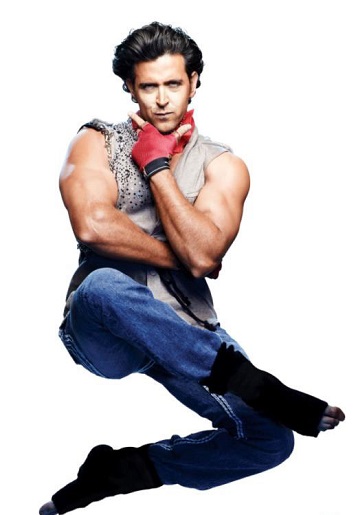
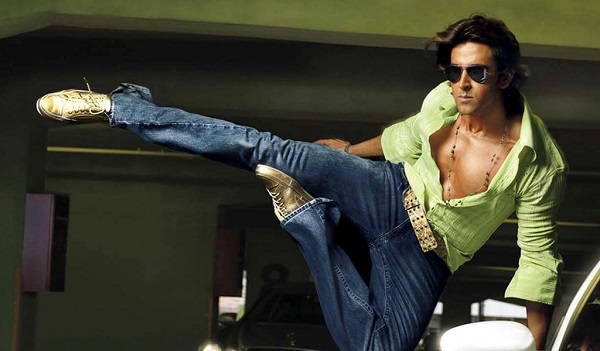
Hrithik Roshan

We all have our insecurities. Hrithik Roshan, the man now synonymous with breathtaking dance moves, had his own insecurities, too – he couldn’t dance!

From the age of 9 or 10, Hrithik Roshan believed that all the fathers in the world are actors. “I thought every person grows up and becomes an actor,” he says. “My father was one, everyone around me was one. I thought this was something you did, that you didn’t have a choice.”

But as he grew up, his dreams of becoming an actor were also supplemented with the long hours he put in helping his father, Rakesh Roshan, as an assistant on his shoots. He assisted during Karan Arjun and other films. Then, quite literally, a shower changed his life.

“My father’s best ideas have come to him while he was having a bath,” Hrithik laughs. “He was once having a shower. He was suddenly very excited and started talking about the central idea of Kaho Naa Pyaar Hai. I was hooked, but I said, ‘Shahrukh, Salman and others have done these things before. Why would they do it again?”

“And he said, ‘They won’t. But you will.’ And he gave me exactly two months to get ready for the role.”

Training days

Though he prepared meticulously for the role, he says he felt the pressure so much that he couldn’t sleep the night before the first shoot. “I got up and listened to music on my walkman till I calmed down,” he remembers.

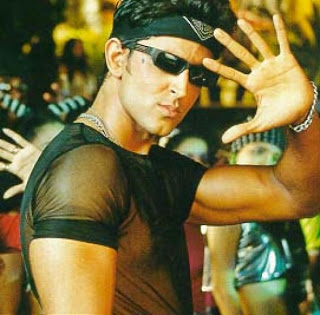
He was soon to become known as a dancing sensation second only to the legendary Michael Jackson, but his first dance shoot made it clear to everyone – including Hrithik – that he had two left feet. “The first song we shot for Kaho Naa Pyaar Hai was ‘Pyaar ki kashti mein’ and Farah Khan was furious with me for not getting it kaho naa pyaar hairight. Everybody thought dancing and Hrithik were two separate things,” he chuckles.

Horribly embarassed, Hrithik took Rishi, the assistant on the shoot, aside and practiced one dance step for about an hour. Then he came back and gave the shot. Suddenly, there was silence on the sets. “Then they all started laughing because they thought I was playing a prank on them earlier. Somebody even said, ‘Humko ulloo bana rahe the, ki aap naach nahin sakte!'”

Hrithik just nodded and the shoot continued. “I figured at that moment that dance did not come naturally to me, but it was something I could do if I worked very hard on it,” he reasons. Even today, he is known to rehearse a single step for about an hour or two and does not let the camera roll till he feels he is ready.

He still grins at the memory of how he was compared to Michael Jackson for his dancing after Kaho Naa Pyaar Hai became a blockbuster. “When I first read the news in a newspaper, I remember, Suzanne (his wife) and I were laughing!”

Jatin Sharma works in radio. 

(Pictures courtesy mvmsit.blogspot.com, www.myindia.raafatrola.com, www.suvarnaa.net)

Categories
Guest writer

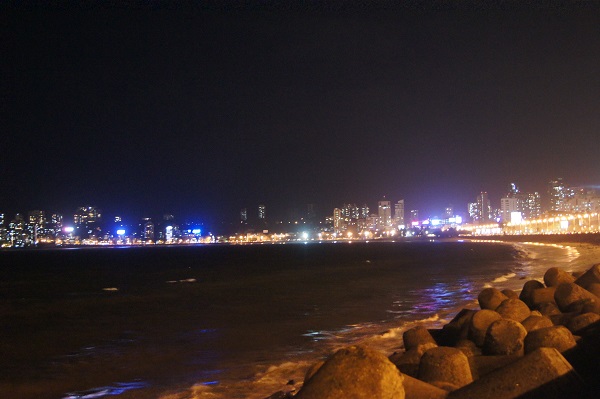
Midnight at Marine Drive

A whole ecosystem springs up at Marine Drive in the hours when Mumbai sleeps, and a day begins for others.
Shama Arif Patelby Shama Arif Patel

1 am.

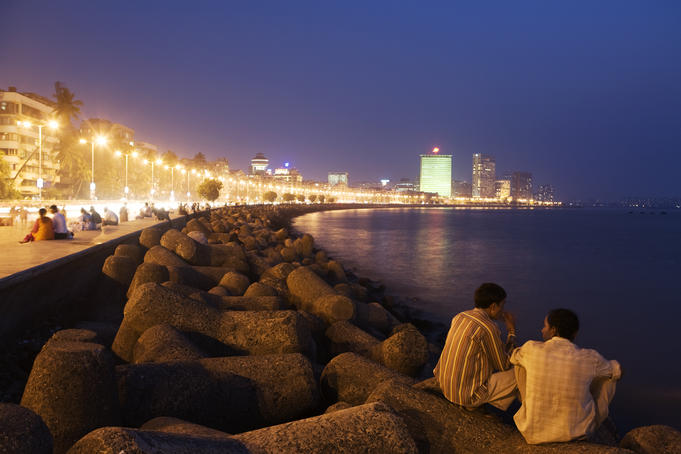
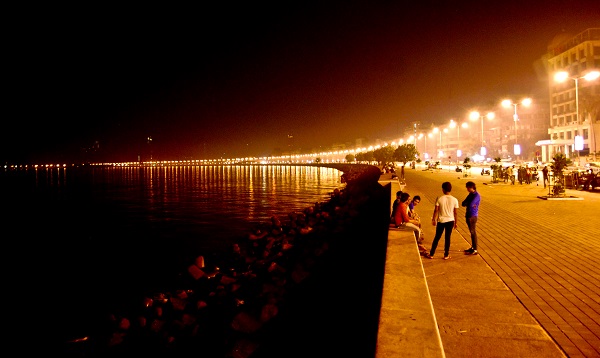
While it’s time for most of us to call it a day, the day begins for many at this hour. Right here at Marine Drive.

The day begins for a flower girl who gets a smile on her face after seeing the couples sitting hand in hand, for now she knows that it’s her time to earn her living. The day begins for her right then!

The day begins for an artist who hits Marine Drive at 11 pm every day. After keeping his belongings aside, he makes himself comfortable. Laying on the stretch, facing the sea, staring at the sky, he closes his eyes to let his exhaustion settle down. He takes drawing classes for children during the day and makes live sketches for people at night. After a good 45 minutes’ nap, he calls it a morning. Grooming himself and carrying drawing sheets in his hand, he gets going to earn his share of money.

A mimicry artist is thrilled to see a potential audience by the sea. He spots a group of people and begins an impromptu show right there. While some shower genuine praises at him, the others take this as their chance to mock him. While some offer him money, the others, like me, pray for his dream to come true. His hope begins right there!

It’s a new day for a chaiwallah who rides up and down several times carrying chai along with other eatables, making his bicycle a mobile basic grocery store. And this store manager marine-drive-seem to know exact need of the crowd visiting this place because this need becomes responsible for his family’s daily living.

The strength of tel-maalish (oil massage) men doubles as they seek to work their hand’s magic and release the tension in a lot of people sitting on that pavement! The onlookers may feel that people getting the maalish are stressed and tired with working hard and they remain completely ignorant to the life of that massager who is capable of relieving the stress despite his own stressful life. That maalish session which he executes with his whole heart becomes his blessing and earnings for the next 24 hours.

SONY DSCIt’s daybreak for those innocent street children and their mother, who roam around in search of food and money with a hope to get blessed with someone’s leftover snacks that becomes their only meal for the entire day. It’s a new day for another group of homeless children who walk around with naughty smiles and a twinkle in their eyes, accepting anything and everything that’s offered to them by people around – from a half-filled water bottle to the left over chana-chor garam.

Then, amidst these people are those who are filled with complains and whine about how nothing is going right in their life! People who are so engrossed in their problematic world that they become ignorant to these needs around them. And despite not having any of those fancy luxuries, these mid-nighters seem happy and content compared to those people who visit Marine Drive just to release their stress!

Would you trade your life to live someone else’s life? Would you be happy living the life of that flower girl or the artist or that stand-up comedian or those street dwellers? You may not want to live their life but you become a part of their life always. ‘You’ become a part of their new beginning every single day! And how wonderful would it be, if you offered a smile to these mid-nighters and gave them a happy start to their day!

We all are dependent beings trying to live independent lives. The kind of person you choose to become not only affects your life but also affects the life of people around you and that’s when you become the indirect support of many who begin their day at midnight. Life has many facets to it and each human being, I guess, is given a part to play. Make sure you play your part well, because now you know that you are touching lives every second just by playing your part in this life.

Shama Patel is a marriage and family counsellor by education, a writer by passion and a celebrity co-coordinator by choice. She also works part time for a telecomm company as a media and communication manager. In her free time, she loves to read, write and sketch. She gets enthralled by everything that nature has to offer. 

 (Pictures courtesy blog.jilllenafordart.com, www.lonelyplanet.com, www.hg2magazine.com)

Categories
Tech

Coming soon: A digital explosion

The Internet is truly set to explode, with number of connections in India expected to surpass 380 million by 2017.
by The Editors | editor@themetrognome.in

Our country is truly a haven for Internet service providers. Not only do we have a staggering number of existing connections, we are set to have about 35 per cent more in four years.

As per a report compiled by YES Bank in association with ASSOCHAM (Associated Chambers of Commerce and Industry of India) titled Driving Growth in New Media, “Growing at a compounded annual growth rate of about 35 per cent, the total number of Internet connections in India is expected to surpass 380 million by year 2017, from the current level of 168 million.”

The report attributes this phenomenon to “the mobile revolution [that] is being spearheaded by increasing sales of mobile devices and smartphones, as well as the rapid adoption of Android and 3G services.  Soon to be launched technologies such as 4G will allow mobile phone users to surf the Internet, video conference, download music, video and other content at a rate several times faster than 3G services.  It will offer services such as high-definition mobile TV and video conferencing, super-fast access to high definition (HD) video streaming, multiple chatting, instant uploading of photos and much more – all of which should further fuel the growth of mobile adoption and media consumption.”

The study further reveals that wireless connections will comprise nearly 90 per cent of all connections added over 2012-17.  “There are over 1 billion users worldwide on sites like Facebook, Twitter, YouTube and Google+.  As per the data, the number of social media users in urban India reached 62 million by December 2012, and it is estimated to reach 66 million by June 2013,” the study says.

These audiences largely consist of the youth segment and it is no surprise then, that digital advertising is capturing a larger share of ad spends.  Given the cost effectiveness of this medium in reaching the target segment and the increased measurability offered – companies are allocating increasing amounts of their ad budgets for the digital medium, points out the study.

The recent explosion of social media platforms has been their gradual adoption by content creators. Social Media is fast being recognised as a powerful brand management tool for targeted engagements with the consumer and is an essential marketing tool which provides valuable feedback mechanisms.

With its low cost and increasing adoption by the youth, content creators can engage and develop relationships with the younger audience while marketing content more effectively. These innovative content delivery mechanisms enable content to generate incremental digital revenue streams.

Additionally, a lot of popular film songs and scenes are now released first over the Internet medium as a teaser campaign. “Content creators are leveraging upon the interest garnered from pre-release social media campaigns to not only generate word-of-mouth publicity but also to use the traction and hype generated as a bargaining tool for better realisations from music, satellite, distribution and other ancillary revenues streams,” adds the study.

(Picture courtesy crackingtipsntricks.blogspot.com) 

Categories
Cinema@100

The painter who made films

An encounter with MF Husain before he made Meenaxi showed the artist’s love for women and his passion for films.
by Humra Quraishi

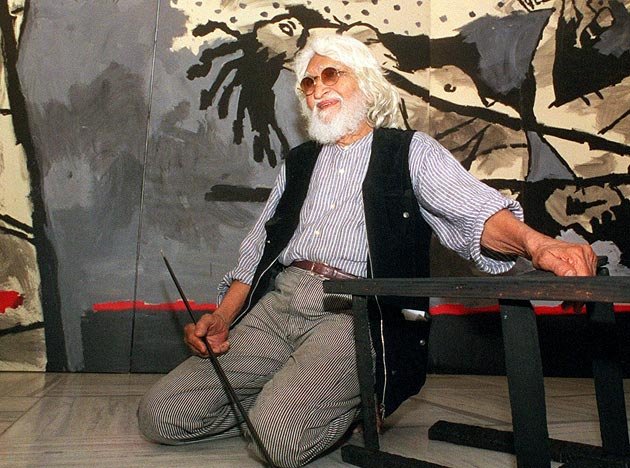
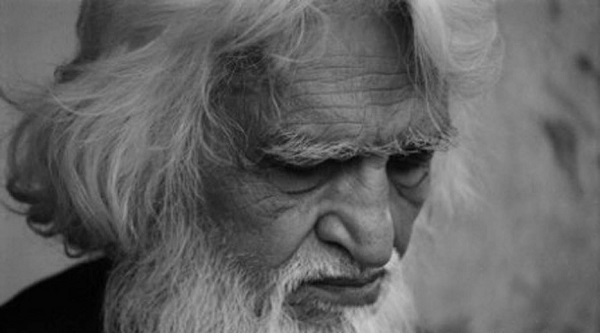
I last met MF Husainsaab here in New Delhi, during one of those crucial junctures in his life and times – his art works had been attacked by right-wing goons and he had also been talking about his deep passion for films; filmmaking, to be precise.

hussain When I tried asking him for his reactions to those attacks on his art work, he tried fobbing me off, waving his hands and mumbling impatiently, “Kuchh bhi chalta haitheek hai…” He didn’t want to comment on the matter or be drawn into further controversy. With that, I changed my questions, and diverted him towards his latest passion – film-making.

With the very mention of films, he relaxed and became quite forthcoming. “Film-making is my passion, and now I plan to make a comedy. (It’s) A lot of work, but anyway, I am not a lazy man. I work day and night. Yes, I work all through…get very little sleep.”

But can a comedy be a success, I asked.

He looked upset. “I’m planning to make a subtle comedy which will be a part of our culture. It’s a misconception, brought about by the media, that our people can’t appreciate comedy. I would say with great confidence that 80 per cent of the people in rural India do know and can appreciate comedy and those different aspects to our culture. Our people can sense and appreciate so much, because of our culture that is part of our very being, of our everyday life and living… It’s the elite living in big cities who are ignorant.”

But aren’t our rural folks more engrossed with their daily battles for survival? With that in the background, can they afford the luxury of watching films, I wondered.

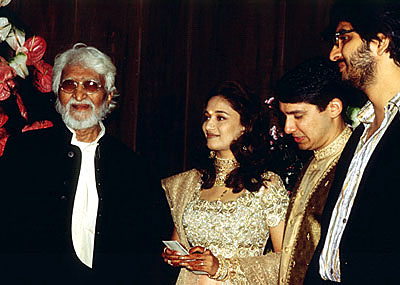
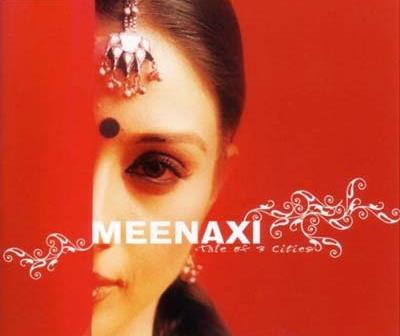
He was annoyed, to say the least. “What sort of questions do you media people ask me these days? Some of you ask me about Madhuri (Dixit)! Now you are asking all this! Talk to me Madhuri_Dixit_with_painter_MF_Hussainabout this latest film I’ve made. No, not a commercial venture for me, my latest film – Meenaxi: A Tale of 3 Cities. It has been my passion to make this film on this subject…I have shot it in three different cities; Prague, Hyderabad and Jaisalmer.

“The story revolves around this woman searching for love and this restless writer…the bond that is forged between them. See this film and you will know what I have tried to portray, that bond between the two souls. No, it isn’t a commercial venture for me, I just made it because I wanted to.”

I cautiously put in a question: “What about the distractions in your life?”

“What distractions? Here I’m working din aur raat, what distractions are you talking about?”

“Now that you are making films, so actresses and other women could attract or distract you…” I said.

“Show me one man who isn’t attracted to women. Let there be one thousand women and I can make each one of them happy! It’s all a matter or rapport.”

What attracts you in a woman, I asked.

meenaxi“I’m attracted to strong women…those independent types and definitely NOT the weak types. I find those weak, crumbling type of women just hopeless. In fact, the women in my paintings are inspired by the Shakti in a woman. I believe that our traditional Indian women carry a special strength. It’s that strength which can be termed magical and it can do wonders,” he said.

I had been studying his latest series of paintings on women; a combination of the Gupta Period and the folk form. He was more than happy to explain the details of his Tribhanga Series. “There’s an emphasis on the head, the shoulders and the hips of the woman. The way an Indian woman walks is so graceful, I love it! If you’ve noticed, the Western woman walks straight, without a sway, and the walk loses its appeal. Even Kalidas had written on the woman’s gait and he had compared it to the graceful walk of an elephant, calling her Gajagamini (she who walks with the languorous grace of an elephant).

“I am also attracted to a woman’s ear lobe, the very turn of her head, the movements of her hand. Actually, once you are in love, then everything about her attracts you…”

Have you been in love, I asked.

“I have admired many and loved several women,” he said at once.

“But doesn’t true love happen just once in a lifetime?” I persisted.

“Yes, it’s true, but the same love keeps shifting from person to person, from one woman to another.” Perhaps in response to my bewildered look on hearing this terribly strange, yet practical rationale on love, he burst into poetry:

Ek mere muhabbat ka itna sa fasana hai /

Simtai toh dil ashak /

Phailai to zamana hai…’

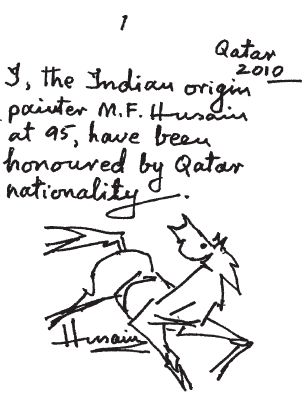
He was suddenly in the mood to talk further on this subject. “I love the naïve type of woman. She leaves a definite impression. But she should be naïve and yet strong.”hussain qatar nationality

“But isn’t that a strange combination? Naïve and strong?” I said.

“Then have two women!” he joked.

I had to ask him: “You are married, with children and grandchildren. With that in the background, didn’t you face problems falling in love/sustaining a love affair?”

“Nothing matters once you are in love,” he said. “Once a rapport is built, then nothing comes in the way…”

Then he gave me a sidelong glance and mumbled, “Par aap se woh rapport nahin ban pa rahi hai…(I am not able to build a rapport with you).”

“Thank God for that!” I retorted. “I don’t want any rapport with you.” 

Humra Quraishi is a senior journalist based in Gurgaon. She writes on politics, social issues and occasionally, on films. Cinema@100 is a series that celebrates 100 years of Indian cinema.

(Pictures courtesy vakkomsen.blogspot.com, realandfun.blogspot.com, quicktake.wordpress.com, cmaconline.org, starmusiq.com)

Categories
Become

Touring India today

Entrepreneurs Harsh Sonawala and Abbas Slatewala talk about going from being travel junkies to running their own travel start up.
by Swaraj Dhanjal

We all know how big a pain it is to plan one’s travels! And if the trip happens to be to a foreign locale, the task becomes even more tedious. Some people might take refuge in the service of major tour operators, but don’t we all know how it feels to be part of a herd, moving together in packs and doing things which are pre-planned by the tour operator?

Now imagine the plight of foreign tourists when they think about travelling to a diverse and complex country like India! The good news is that they need not spend sleepless nights any more, as two Mumbaikars have teamed up to solve their travel woes. ‘India Someday’ is a travel start up by Harsh Sonawala (28) and Abbas Slatewala (29) that offers customised India tours to foreign tourists.

The great idea
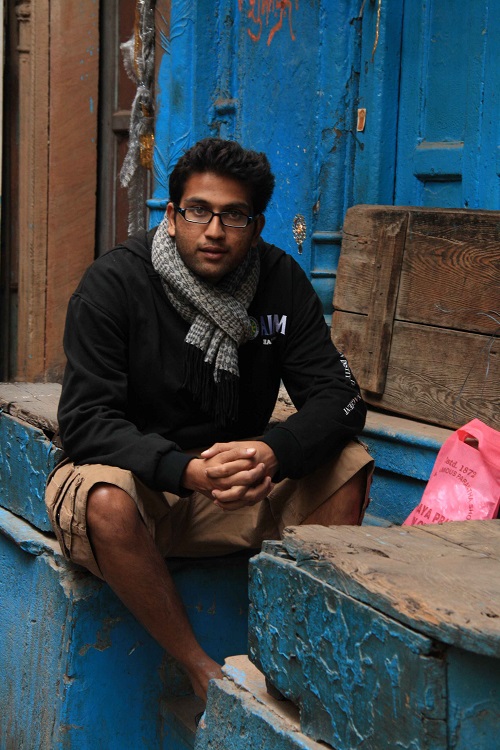
Harsh (2)Harsh (in pic on left), who has tried his hands at many crafts like advertising, film editing and eCommerce before starting India Someday, was always a traveller at heart. “I would pick one State and travel across it for like one month, mostly alone,” he says. On one of his travels, he met Abbas (28), also a hard-core travel junkie, in 2008. A common love for trekking and travelling brought them together. They planned a trip to Bhutan and got along a few friends, too. “All our friends loved the trip, the way it was planned and the overall execution!” exclaims Harsh. “Also, I was unofficially helping a lot of friends plan their travels, so all of this got me thinking that it was a good business model.”

Starting out
They started off by creating a structured process for the work they were already doing – assisting their friends with trips. One of the first things that they decided was to call themselves ‘Travel consultants’ and not tour operators. “We assist people in planning trips; the clients play an important part in the planning. We don’t simply hand them an already cooked plan as a trip,” says Abbas.

Having the process set up was just the first step. Next, they needed partners, so they began with hotels. “Getting hotels to acknowledge us was a big challenge,” remembers Harsh. Building relationships with hotels proved to be a tough ask; some hotels, initially, just wouldn’t work without upfront payments.

What so special?
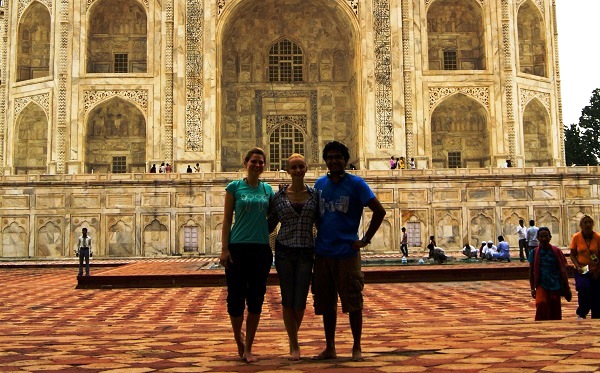
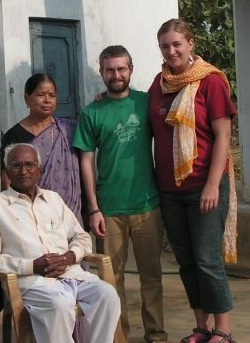
The USP of India Someday is that trips are all entirely customised, and the process is completely transparent, with a clear picture of services offered and the complete fee provided. “We even give people the option to book their own tickets if they want to,” says Abbas. The duo also does not recommend places or hotels to their Lauren and Kai used India Someday's servicesclients unless they have been to those places personally. “The biggest differentiating factor is that we are travel enthusiasts running a travel company and so our perspective matches that of our customers,” says Harsh.

Marketing the company
When asked about marketing India Someday, Harsh said that they haven’t spent a single rupee on marketing. “Our first customer was a friend’s friend,” he says. After that they set up a Facebook page and things just began to snowball!

The first year saw most of the customers coming in from their friends’ references. A unique and innovative step that they took was to give prospective clients the contact details of past customers so that they could get in touch with them and check about the service personally. “This helped us build a lot of trust with our clients,” says Abbas.

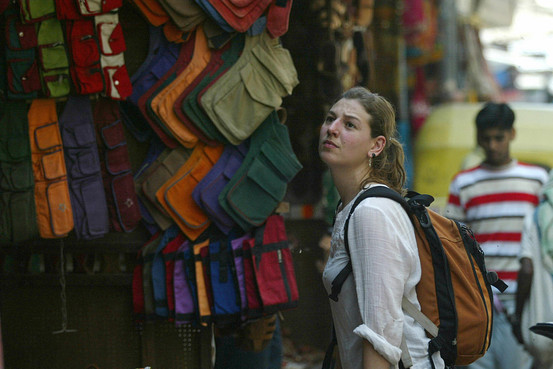
The decision to stay away from advertising was a conscious one. “We are a team of four and we don’t think that we would be able to handle all the traffic generated by any advertising,” foreigners travelling in indiasays Harsh. They say that they don’t need advertising right now as word of mouth has worked wonders for them thus far.

Harsh and Abbas, however, won’t just stay limited to word of mouth and are planning for international PR by hiring a few interns in France and Germany, countries which provide the bulk of their clients. They also plan to hire a few more interns to handle the increasing number of customers.

Going from strength to strength
Their three-year-old company has witnessed double digit growth, starting from 40 trips in 2010 to 100 and around 200 trips in 2011 and 2012 respectively. The company earned around $300,000 last year, a remarkable feat for a small start up.

The journey, however, had its fair share of problems. “We wish we could have expanded quicker but the nature of our business model doesn’t allow us to do that. And if we try to change the business model, try to become more formal, cut times, then we won’t be India Someday,” says Abbas. Finding good employees is another major challenge for them.
On the brighter side, meeting their clients and receiving positive feedback from them is very encouraging. “We recently met a large Columbian family and every member had liked something or the other about the trip,” says Abbas. It is always good to receive feedback and advice from clients, they add.

Many valuable lessons have also been learnt in these three years. “Partnerships are tough,” exclaims Harsh. He says they have learnt a lot about running a business in a partnership. “Finding the middle path is important, as is respecting each other’s thoughts,” adds Abbas.

What’s next?
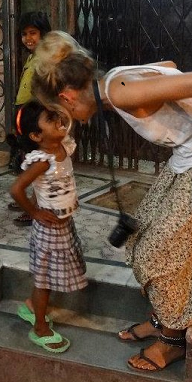
EmilyIndia Someday recently got itself a new office and the duo has been spending a lot of time planning the firm’s future plans. “We are targeting 350 trips in this financial year,” says Abbas. “We will be marketing ourselves and also hire new people,” adds Harsh.

The biggest trick up their sleeves, however, is their plans to start a travel consultancy for Indian tourists as well. “We are looking at Asia for this, as both of us have travelled a lot across Asia and it is also comparatively cheaper than the West,” explains Harsh.

Both Abbas and Harsh, after having worked for different corporates, seem to have found their calling in entrepreneurship. “I never had a problem working for someone, but I hated being just a cog in the wheel,” says Harsh. Abbas feels that, “All entrepreneurs will eventually end up doing something because it either makes business sense or because they are passionate about it!”

Check out India Someday at http://www.indiasomeday.com/

(Pictures courtesy Harsh Sonawala, blogs.wsj.com, www.indiasomeday.com )

Exit mobile version