Categories
Swaad 'Anu'saar

Eating out, Mumbai ishtyle – Part II

We continue tracing Mumbai’s gastronomic map, and present four true-to-the-city kinds of eating joints that serve the food we love.
anuritaby Anurita Gupta

Last week, we checked out five very Mumbaiyya eating styles and joints that have Mumbaikars scurrying to eat out at every opportunity. Today, I continue on the food trail across Mumbai with four more types of joints.

Indian Chinese food joints – Street side, take-away or restaurant, Mumbai boasts of the most amazing Chinese food that is remotely inspired by China but which suits the Indian palette. The most famous street-side Chinese is known as galla Chinese, and I’ve gobi manchurian rechristened the food available in restaurants as ‘Chinjabi’ (a combination of Chinese cuisine and Punjabi style of cooking, such as chowmein). We Indians are so happy with our brand of ‘Chinese’ food comprising chilly, garlic, ginger, Schezwan, and Manchurian that I doubt we would relish the bland ‘steamboat’ of Shanghai. Nelson Wang (of China Garden fame) is said to have started this Indo-Chinese blend – it seems like he put together the Indian ingredients of onion, ginger and garlic, but instead of adding garam masala he added soya sauce and cornstarch to the chicken. This is probably how gobi Manchurian came into existence!
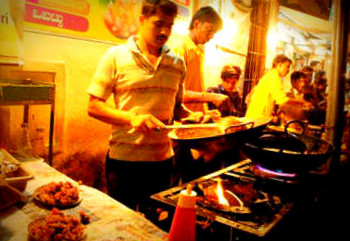
Hot tip:  Enjoy galla Chinese at China Man opposite St. Joseph High School, Wadala and Sherry’s next to Ruia College, Matunga that serves fabulous ‘triple schezwan rice’ and ‘crispy chicken’. Order Chinese meal combos from Mr. Chow at Worli. For a high-end food experience, visit China Garden in town that serves yummy Kungpao prawns and beef tepanyaki, while Royal China in Fort serves a delectable Peking duck in orange sauce.

Street side Mughlai food – Coming from the rich history of the Mughals, the Mughlai food we enjoy today is a rendition of the cooking styles typically found in Hyderabad, UP and Delhi, with Pakistani and Persian influences. Its street version is extremely popular in Mumbai.
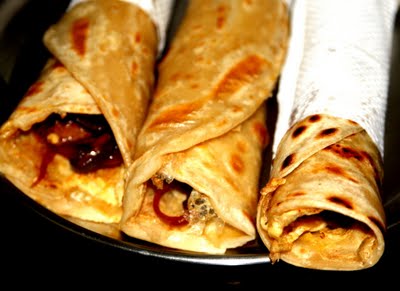
mughlai rollsTop of the charts are kebabs. Cooked on a charcoal grill, kebabs are made from minced meat and served with thinly-sliced onions and coriander chutney.  The Punjabi version of the cuisine, butter chicken and tandoori chicken, are hot favourites, too.

Hot tip: Enjoy succulent beef and mutton kebabs at Sarvi’s at Byculla, (best ordered in or ‘parcelled’). Mohammad Ali Road in town is perfect for kheeri kaleji (kidney and liver). Bade Miyan’s baida roti is to die for. Harpal’s biryani is the best for ordering in, and ITC Grand Maratha’s Peshawari has the best butter chicken and dal bhukhara.

Some of the less famous mughlai food gems are Maaroosh at Phoenix Mills for chicken tikka and tandoori chicken; Kebab Stall at Union park (next to MOD) for boti kebabs and Universal Kebab Kona outside Wallace Apartments, Slater Road, Tardeo. This last has two guys with very colourful personalities serving yummy ‘pockets’ of fresh bread with mutton or chicken kebab, and green chutney slathered with various cheeses that they make themselves.

South Indian joints: Thambi food joints find their origins in the British Raj when the South Indian ‘tiffin’ service was incredibly popular. Tracing its beginnings to the 1930s, the ‘tiffin’ meant a light meal between meals which used to be typically steamed idlis or crisp vadas made with a batter of rice and lentil, and enjoyed with coconut chutney and sambhar (a spicy and sour mix of lentils and vegetables boiled with tamarind and masala).

The tiffin trend is still a rage. Other than idli-vada, the most sought after are the dosa and uthappam. Many Udipi restaurants have the ‘Meals ready’ facility as well, which means that dosathey have a set vegetarian menu comprising vegetables, sambhar, rice, dahi (curd) and rasam.
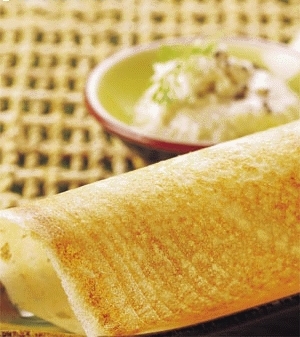
Hot Tip: Try the dosaye (dosa) at Anand Bhawan and the Kanchipuram idli at Mysore Café (both at Matunga), which is also famous because Mukesh Ambani heavily endorses it as his favourite breakfast joint. Nearby is the 70-year-old Ramanayak Udipi that offers ready meals.  Madras Café in the same vicinity is supremely popular for its tiffin and South Indian kaapi (coffee).

Mumbai meetha joints: Think sweet in Mumbai, and you think of Shahi Falooda. Made with vermicelli, tapioca pearls, sabza (basil seeds), a bit of rose syrup and milk or vanilla ice cream, the falooda finds its origins in Persia where it was known as faloodeh and became famous here with the Mughal Empire. Another wonderful dessert is the malai  kulfi and its various seasonal fruit versions. The most popular are sitaphal (custard apple), anjeer (figs) and mango. And of course, you can’t get enough of Mumbai’s trademark fruit with cream and ice cream.

FaloodaHot tip: Visit Bachelor’s opposite Chawpatty for the legendary strawberry cream and ice cream, and their mango and kiwi with cream. Badshah’s (at Crawford Market) Shahi falooda is very famous, but the best I have had is at Baba Falooda, Mahim which also serves yummy kesar pista ice cream. Kulfi is synonymous with Gupta Kulfiwallah all over Mumbai, but the best comes from the Kulfi Centre at Girgaum Chowpatty. Serving close to 20 different kulfi varieties, their Zaffran (saffron) flavour is the most popular one but their chocolate kulfi is really special. Haji Ali Juice Centre is also great for Ramadani laddoo and sitaphal cream and ice cream.

Next: We’ll enjoy the unique ‘Bombay sandwich’, explore our love for butter garlic crabs, relish the homely touch of zunka bhakar kendras, roll with Mumbai rolls and rediscover our love for pork sorpotel and other Goan delicacies that Mumbai loves.

Anurita Gupta is a media professional who is passionate about two things – food and radio. Her love for all things food makes her a foodie with a cause.

(Pictures courtesy www.desi-living.com, icetrail.blogspot.com, tarladalal.com, tamalapaku.blogspot.com, mumbai-magic.blogspot.com)

Categories
Beauty

Jhakaas skin and hair this monsoon

Some tricks to keep your skin and hair beautiful even as the monsoon tries to wreck havoc with your looks.
by Beverley Lewis

Don’t let the monsoon dampen your passion to look and feel great. Sure, the excess humidity in the air during this season can damage your skin and hair, making it look dull and lifeless, so it is very important for us to customise our skin and hair-care regime in the monsoon. Here are things to watch out for.

Clean up well: Start by cleansing your face twice a day with an anti-bacterial facewash to prevent skin infections and break outs, especially when you have been walking in the rain. “Water left on the skin for a long time acts as an irritant, making it itchy and easily susceptible to bacterial and fungal infections,” says dermatologist Dr Rickson Pereira, attached to Dr. Minal’s Dermatherapie Centre, Mumbai.

happy feetFungal troubles: The biggest skin complaint during the monsoon is fungal infections, since fungus thrives in humidity, and wet skin folds provide easy nesting places to fungi and yeast. “This can lead to itchy, circular, reddish, flaking patches on the body, especially in skin folds at the groin (known as a ‘Jock itch’), underarms and around the breast region for women,” says Dr Poonam Wadwani, D&T Medical Centre.

Blast fungal infections away with this routine:
– Dry your skin well after you get in from the rain and remember to sprinkle anti-fungal powder over these areas after a shower.

– Athlete’s foot is another common bacterial and fungal infection that affects people whose feet stay wet for hours, especially after exposure to dirty water. Prevent this by thoroughly washing your feet with soap and hot water after wading through stagnant water, and then dry them completely. Dust some talcum powder or antifungal powder especially between toes to absorb the excess moisture to prevent fungal infections.

– Change your socks frequently and dust the insides of your footwear with talcum or antifungal powder.

– When doing pedicures, do not soak your feet for longer than 10 minutes. Ensure the use of clean, sterilised instruments. Instruct your aesthetician to avoid pushing the cuticles, as toe infections can be common during monsoons.

Hair care: The monsoon can also play havoc with your hair, leading to greasiness and dandruff. The heightened moisture in the atmosphere makes hair flat and its texture, dull. The shampoo girlresult: dull and limp tresses. Dr Rickson explains, “Scalp can get itchy due to collection of sebum, sweat and exfoliated skin which can result in worsening of dandruff and increased hair fall.”

To avoid this, men should shampoo their scalp daily and women at least every other day, to prevent the build-up of increased sebum and sweat. Regular washing also reduces itching. Adds Dr Wadwani, “Use a light shampoo and conditioner to cleanse the hair and prevent frizziness. Also, use a silicone-based serum to give hair a smooth texture and protect it from heat caused by blow drying.”

Avoid excessive styling of the hair with instruments and styling products as the hairstyles tend to hold-on less due to the humidity. Instead, opt for a low-maintenance hairdo.

A final list of tips for skin and hair care this monsoon
If you’re simply looking for a checklist for skin and hair maintenance this season, look no further:
– Try to restrict the number of hair products you use to a shampoo and conditioner. Try, in particular, to avoid hair sprays.

– Use a mild shampoo and wash your hair regularly.

– Use conditioner after every wash.

– Drink plenty of water.

face scrub– Eat a balanced diet and include a lot of fresh fruit and salads.

– Use a face scrub twice a week to exfoliate.

– Avoid heavy moisturising creams or oily foundations. Instead, use a light mousse or a few drops of calamine lotion as a base.

– Use a toner each time you wash your face to close the pores and restore your skin’s pH balance.

Beverley Lewis has written for beauty magazines and has amazing tips to share. Do you have a monsoon beauty secret to share? Write to Beverley in the comments section below.

(Pictures courtesy 1000awesomethings.com, www.ladybugblessings.com, l-a-d-y.blogspot.com, www.laurakinch.com)

Categories
Cinema@100

Being Miss Universe’s boyfriend

Rajat Tara became famous when his girlfriend, Sushmita Sen, became Miss Universe in 1994. Then their relationship ended shortly after.
by Humra Quraishi

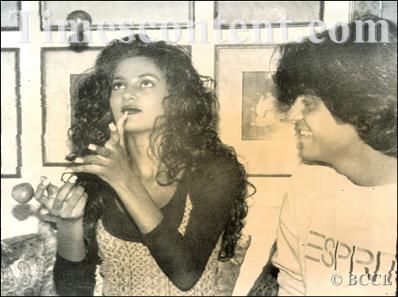
They went steady for a year before the universe opened its arms to her. Sushmita Sen was all of 18 and even then, unapologetic about her personal life. She had been seeing Rajat Tara, the son of a high-profile public relations man in a Government embassy in Delhi, and she had never hidden her relationship status even on winning the Miss Universe crown.

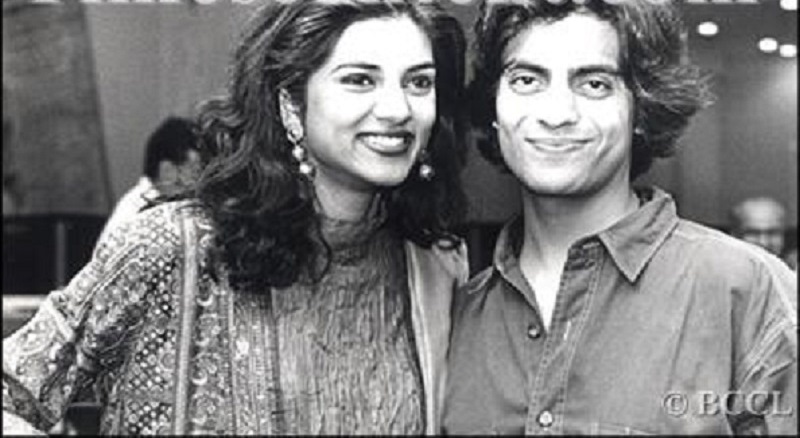
Sushmita-Sen-Rajat-Tara (1)Naturally, as the country sat up and took notice of India’s first Miss Universe in 1994, the spotlight was also turned on Rajat and the relationship. I had the chance to chat with him after Sushmita’s famous win and when she was on a world tour – he had been unable to accompany her “because of stupid MBA examinations” – and he had been friendly and honest, though he declined a face-to-face interview, preferring to speak over the phone.

They didn’t break up for a while after Sushmita’s big win. When she returned to India after being crowned, Rajat was there with her on all her outings. The breakup happened after Sushmita’s one year as Miss Universe was up. And after that, she seemingly never looked back as she entered the world of films.

Rajat sounded like a simple 24-year-old, cautious and to the point in his answers. Once in a while he became quite frank, but any slip-up was to be expected: here was a young man suddenly famous for no fault of his own, and answering personal questions is never easy.

Excerpts from the interview:

How long have you been dating Sushmita?

For about a year now.

Where did you first meet her?

At the Air Force Golden Jubilee celebrations. There was this fashion show where both of us took part.

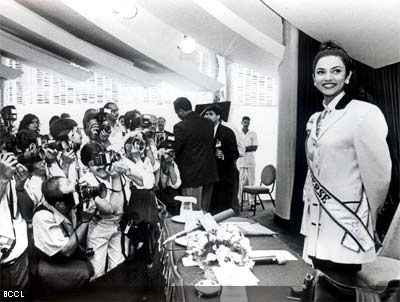
Sushmita-Sen press conferenceAfter her becoming Miss India and now, Miss Universe, has there been any difference in your relationship with her?

No, none at all. Why should there be a difference?

You haven’t felt even a bit insecure? She is travelling the world, meeting new people…

Not at all. I am not really bothered. We are very good friends. She has been calling me up daily. She calls, or if she doesn’t, I call her.

How long do your chats last?

For about five minutes or so.

Do you plan to marry her?

Marriage is a long way off, for both of us. We still have a lot to do in life. So we have no marriage plans for at least three or four more years.

Did she ask you to come along with her to Manila, for the Miss Universe contest?

Of course she did. But I had to take these stupid MBA examinations…

Do you feel that her parents would have been okay with your going with her?

Yes, her mother is very friendly. Her father, though, is a bit reserved.

It is being said that to any questions put to him about you, her father replies with “I don’t know”…

Yes, I told you he is a reserved sort. Fathers are like that. I suppose this is a normal human attitude. But her mother is very open and friendly.Winner By Sushmita Sen

Your examinations end on May 31. Would you join her after that?

No, because she would be busy travelling. She is the property of MUI (Miss Universe International) and she has to go to different parts of the world for charity shows, fund raising programmes. How can I afford to go along?

What attracted you to Sushmita when you first her?

She was great company.

What about her looks?

Yes, looks are important, but they are not everything. I really enjoy her company. In fact, what upsets me now is that I won’t be seeing her for quite some time. She will be back her for just a month, then she’ll be out for nearly 10 months.

Rajat I must again ask if you aren’t the tiniest bit insecure. Your special friend is Miss Universe, and you are here with your books…

No, and I have never felt insecure.

Even in the past one year when she has been modelling? Men must pass comments on her?

Yes, men pass comments, but then they pass comments about everybody. The best thing is to ignore all this.

Were you confident that she would become Miss Universe?

Yes, I was. And she was so confident herself.

sushmita and aishwaryaDo you think that her being Miss Universe could cause a strain on your relationship?

There can be no fun (in the relationship) without problems.

But too many problems can cause serious cracks in even the best of relationships?

Sure, but relationships can crack even without problems.

Is Sushmita the kind of person who does things her own way?     sushmita with her crown

Yes, she has her own mind. She is today’s woman.

Has she thought of a film career?

I’m not sure. But I don’t see why not.

Are you the only male friend in her life?     

Yes, I believe so.

With so much happening, with Sushmita being crowned Miss Universe and so much attention on you, how has this affected your studies?

To the extent that I’m finding it difficult to concentrate. And even this interview has disturbed my studies!

(Pictures courtesy www.timescontent.com, www.oocities.org, www.flickr.com)

Categories
Achieve

Our girl in the Big Apple

Mumbai model Scherezade Shroff was chosen from thousands of bloggers to represent India for Sunsilk Style Studio in New York.
by Vrushali Lad | vrushali@themetrognome.in

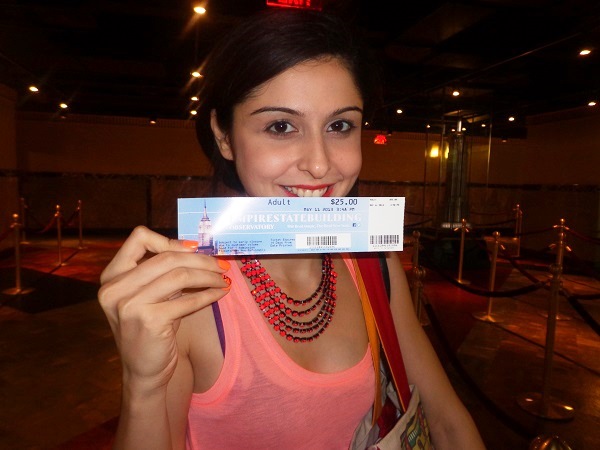
Sherry ShroffShe’s anything but just a pretty face – a lawyer by qualification, a model by profession (she started modelling at age 16) and a marathon runner by choice, Scherezade Shroff was recently selected to represent India as part of Sunsilk Style Studio, an initiative in which Sunsilk flew 20 international bloggers to New York in May 2013.

Sherry – as Scherezade is more popularly known – was selected to represent the country from among thousands of fashion bloggers. “The girl they were looking for in each country had to fit the brief of a woman who had written her own story in life, had several different aspects to her personality and who was a fashion blogger,” Sherry told The Metrognome.

The initiative brought together fashion bloggers from 20 countries to spend four days in New York, during which they toured the city, attended workshops with the Sunsilk experts from the profession and participated in a photo shoot. On Day 1, the girls had a meet-the-others session, which helped break the ice – each girl had arrived in New York at different times, so there hadn’t been a proper catch-up session. “On Day 2, each girl was assigned an expert as per her hair type, and I was very lucky to have Jamal Hammadi – Shine Expert. We had the photo shoot with Anna Wolf and met with our expert for a discussion on hair,” Sherry explained. Each girl was also assigned a make-up person and wardrobe stylist, and the hair experts designed the girls’ looks in keeping with their hair requirements and what the shoot needed.

Sherry to the rescue

None of the other girls had a modelling background, and though they were avid fashion bloggers, none of them had ever participated in a photo shoot as a model before. “The shoot The photo shoot itself was designed to be fun, with a party theme and lots of fun props like blow-up cupcakes and an actual photo booth,” she said. “It didn’t seem like a photo shoot at all. But before it began, many of the girls came to me asking for tips on facing the camera. Yet once it got underway, despite the cameras, everybody had a blast! It was very relaxed and I think it was the funnest shoot I’ve ever been a part of,” she laughs.

Working with Jamal Hammadi

“I was very lucky to get Jamal, because he understood the problems of my hair perfectly. My hair is thick and difficult to manage because it gets dry and damaged pretty quickly. Plus it gets bigger and bigger in the Mumbai humidity,” Sherry explains. “I used to try taming it with oil, but washing off the oil took several tries and the problem just got worse. Jamal understood the problem and gave me a great haircut. He also recommended that I try avocado oil – it penetrated my hair quickly, it helped keep my hair in check and can you believe it, I actually shot with oiled hair? I couldn’t have imagined ever shooting with oiled hair!”

Even after her return to Mumbai on May 18, she is still surprised that her hair is behaving itself despite the humidity. “I don’t usually leave my hair open, but with Jamal’s haircut I actually can! I used to be very anti-oil and serum, but now Jamal’s advised me on the right oils to use,” Sherry explained.

Post the New York sojourn

“While I was still at New York, I did a lot of video blogs and updated my regular blog as well,” Sherry explained. “I am now working on editing these videos and uploading them one by one.”

More from Sherry’s New York visit:

 (Sherry video blogs at www.youtube.com/fashiontube and writes here. Pictures courtesy Scherezade Shroff)

Categories
Learn

Studying coins as a job

You can turn your love for old coins into a profession. This knowledge comes in handy for archaeologists and historians.
by The Editors

At the heart of the University of Mumbai campus in Kalina, in Saroj Sadan, is located an institute that offers a fascinating glimpse into Indian and world history. The Dinesh Mody Institute for Numismatics and Archaeology (DMINA) houses a veritable treasure trove of ancient coins that give the visitor a history lesson he will never forget.

Museum Building 2Interestingly, the University of Mumbai has been conducting the Masters of Arts in Numismatics and Archaeology course through the DMINA for the last six years, and five batches of numismatists have graduated and are out practising. Says Mahesh Kalra, Assistant Professor and Curator, DMINA, “The Dinesh Mody Numismatic Museum is also located here, and was established by Dinesh Mody, a senior Mumbai-based advocate and an eminent numismatist with large collections of Indian and world coins.”

Why study ancient coins?

Numismatics, though a very important research tool in Social Sciences, has been till recently a neglected field in India as no University offered a structured course imparting the necessary skills for expert numismatists. “The biggest advantage of trained numismatists is in archaeological expeditions, where old coins found in excavations can help us date the other objects or structures found in the excavation. Additionally, Indian coins are collected and traded as highly valued objects of art amongst modern collectors and dealers spread across the country,” Mahesh explains.

There is a huge burgeoning market in trading of Indian coins, both nationally and internationally. “Students can expect to be absorbed by the increasing number of auction houses for coins as resource persons, and by the numerous museums both in India and abroad that require expert numismatists to catalogue their collections of Indian coins,” he adds.

The Museum

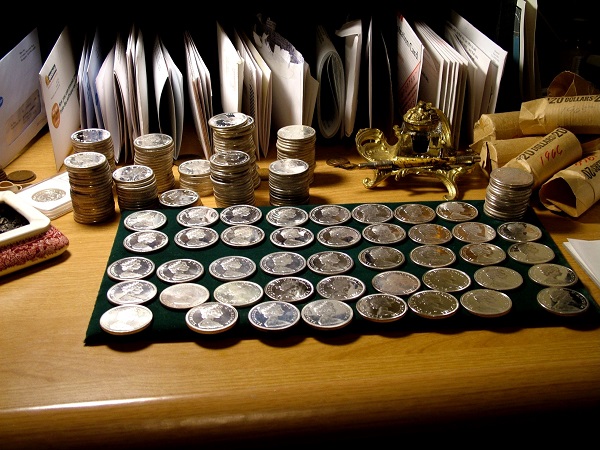
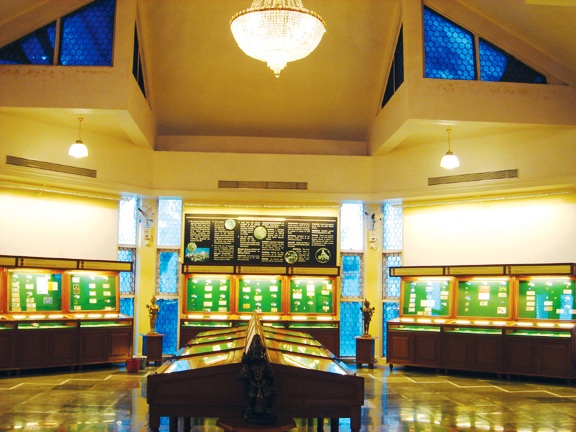
The in-house museum and the institute are spread over a sprawling 15,000 square feet area. The Museum was set up in 2002 and houses two large breathtaking museum galleries that house more than 25,000 coins of gold, silver, copper, bronze, lead and bank notes donated by Mody from his personal collection.

“The collection of Indian coins range from the most ancient (punch-marked coins) to the most modern proof sets of Republic of India, giving the visitor a kaleidoscopic view of the museum interiorentire range of Indian coinage including the coins of Guptas, Kushans, Satavahanas, Cholas, Pandyas, Vijayanagara Empire, Dehli Sultans, Mughals and the colonial coinage series,” Mahesh explains. The collection also includes coins and notes from various foreign countries, though these are not included in the syllabus of the Masters course.

Scope of the course

The institute has a team of full-time and visiting faculty from the fields of Numismatics, Archaeology, Palaeography (study of evolution of scripts), Numismatic trade and Archaeological legislations in an endeavour to make the course comprehensive. The syllabus of the course covers the gamut of Indian coinage, right from the ancient punch-marked coins of the pre-Buddhist era (8th  to 6th century B.C.) to coins of various Indian dynasties like Guptas, Kushans, Satavahanas, Cholas, Pandyas, Vijayanagara empire, the Delhi Sultanate, the Mughals and the British till the latest coins minted by the Republic of India covering the history of a period of 2,500 years.

In addition, students are encouraged to learn numerous scripts ranging from the oldest Indian scripts, Ashokan Brahmi and Kharosthi to Nagari (the precursor of Devanagari) to Greek, Arabic and Persian as Indian coins are inscribed in these indigenous and foreign scripts. Lastly, the students are instructed about the basics of Archaeology, its methodology and various findings to give them an idea of how various coin hoards are discovered during archaeological excavations conducted throughout the country.

The course also opens avenues for a host of foreign scholarships at foreign institutions with collections of Indian coins like the British Museum, Fitzwilliam Museum (Cambridge University), Ashmolean Museum (Oxford University), etc.

(Pictures courtesy gammillnumismatics.com, Dinesh Mody Institute for Numismatics and Archaeology and Dinesh Mody Museum Numismatic Museum)

Categories
Cinema@100

When Dharam paaji changed clothes on the roads

Up to the 1980s, Indian film stars would change in makeup rooms or people’s homes or even in secluded woods. Vanity vans didn’t exist till the late 1980s.
by Jatin Sharma

Vanity vans are an essential part of film stars’ lives today. Why just film stars, even starlets shooting for music videos or ads get their own vanity van these days, depending on the production house and its budget.

Shahrukh Khan’s vanity van costs almost the same as the budget for a small movie: a whopping Rs 3.5 crore. It has all the facilities that a little house can provide: an air conditioner, a refrigerator, an oven, a master bedroom, massage seats, and many more that one could never imagine were fitted inside what is, essentially, a vehicle.

Salman Khan’s vanity van took about seven months to be designed and finished as it had to be customised for the Khan. His van even has a ramp that allows his car to get in and out.

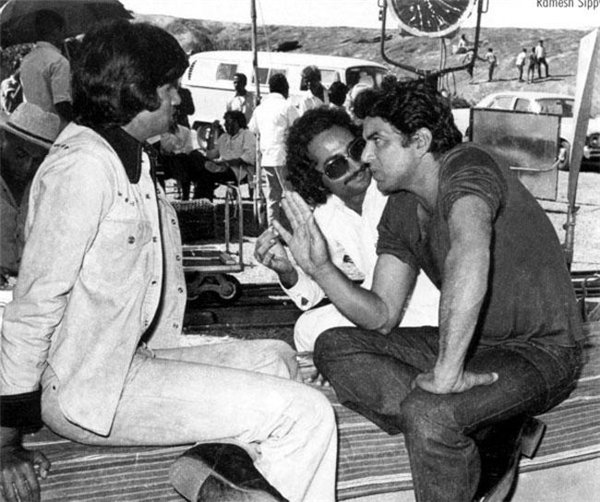
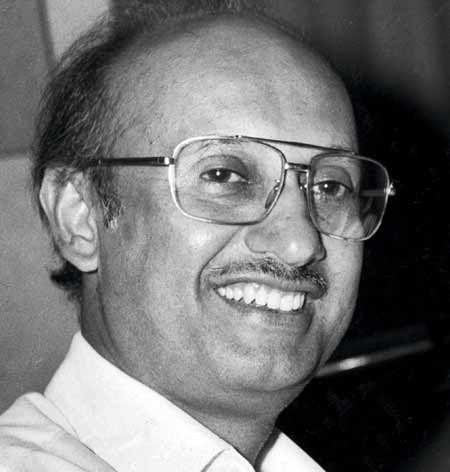
manmohan desaiThough you’d think that vanity vans have been around forever – after all, how would one dress and put on makeup and rest in between shots, if not for a vanity van – you would be suprised to know that yesteryear megastars like Rajesh Khanna, Madhubala, Dev Anand, Raj Kapoor, Hema Malini, Dharmendra and Amitabh Bachchan spent most of their careers without a vanity van. In fact, the first vanity van came to Bollywood in the late 1980s when Manmohan Desai (in pic on left) gifted one to Amitabh Bachchan.

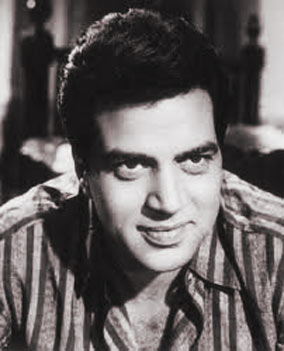
This information was shared by the ever-charming Dharam paaji when I interviewed him during the promotions of Yamla Pagla Deewana, in which he starred with his sons Sunny and Bobby. Dharam paaji revealed lot of things about the Hindi film industry, and one of them was interesting story about what stars and indeed, all actors, did before vanity vans became the norm in Bollywood.

I asked him, “How did the stars manage before vanity vans?”

He replied, “Whenever the shooting was in the studio, we would share makeup rooms. We would get an individual makeup room if we were that important. And whenever we used to go to shoot outdoors, we would ask the production people to form a circle and change our clothes on the roads or behind the trees, sometimes.”

In the case of female actors, he said, the story was even more interesting. “They would go to people’s houses in the vicinity of the shoot. And if the location was not closer to the shoot, then a four-pole tribal tent would be erected, where the actress could change. Five or six dharmendraproduction people would provide security for her.”

He added that makeup would be done on the road or in the production bus, whose actual purpose was to shift the film equipment and crew from spot to spot.

“It was Manmohan Desai, the director and producer who was a visionary. He got the first vanity van for himself as he had a back pain. (In it, he is learnt to have fit a bed, a television set and even a mirror to watch the TV even with his back to it!) And later he got the first vanity van for his star Amitabh Bachchan. All the other stars of Indian cinema then got exposed to the luxury of a vanity van, and realised they could enjoy some privacy if they had a vanity van of their own. Now, of course, everybody has one.”

(Pictures courtesy pawanpipalwa.blogspot.com, www.gomolo.com, www.funrahi.com)

Exit mobile version