Categories
grey space

Divorced, childless…but I got my life together

Girish Mohanty found inner peace after his son’s death and his subsequent divorce. Today, he lives a life of complete contentment.

It is the worst nightmare of any parent’s life – to lose a child. My son, Biplab, was a talented singer and a Grade A student. We moved to Mumbai from Kolkata in the early 1990s, because he wanted to study music and we found an excellent teacher here. My wife, Shoma, and I found jobs here and we lived in a beautiful rented apartment before finding our own home four years later.

Monu – as I called Biplab – fell ill one day. He must have been about 14 years old. He was nauseous, feverish and said his throat was raw. He recovered after resting for a few days, then fell ill again. This time, he developed pain in his joints. Doctors diagnosed it as a form of viral fever. He was better after medication, and there were no further episodes for a few months. Then one day, he fell ill again and became unconscious while playing.

We rushed him to hospital, but he never regained consciousness. The doctors told us it was a form of brain haemorrhage, that his chances of waking up were minimal. They also said that his earlier symptoms had nothing to do with his present condition. They could offer no proper explanation about his illness. My son passed away four days later. He was only 16.

I cannot even remember the months of agony that followed. I think I blanked it out from my mind. What I do remember is that Shoma and I had nothing to say to each other. It seemed like Monu had been our only link to each other for years now. I wonder what couples who lose their children talk about? Most of our conversations were about the house and our son before his death. With him gone, it was like two strangers living in a house.

She developed depression. She blamed herself constantly for the death, she also blamed me. She ranted at me, cried all the time, refused to come to terms with the death. I tried looking after her, but she seemed to have developed hatred towards me. In desperation, I asked her older sister to take her away for a while, so she could recuperate. I also wanted to deal with my own grief, I needed to clear out Monu’s belongings so that I would not go mad at the sight of them. I realised that I was becoming suicidal. My best friend in the city took me to a therapist so that I could talk about my grief. Those sessions helped a lot, but not completely.

Shoma was better at her sister’s house, especially bonding with their pet dog. But slowly I realised that she did not want to return. “I cannot live in that house,” she whispered on the phone. “I think of him constantly…I can’t come back…” I asked her if we should move back to Kolkata, since we had a house there. We tried it for a few months, but we argued constantly. I finally realised that she did not want to be with me – I reminded her of Monu.

Two years later, we were divorced. She continues to live in our home in Kolkata, I send her money for expenses, I call her on her birthday. Meanwhile, I have turned Monu’s room into a study and I take private tuitions for Class 10 students there. Every year, I honour 10 bright but poor students in Monu’s name by paying their school fees. I have found a public garden whose gardener lets me potter about and help him. My friend suggested I get a pet dog, and I did – Kulcha is now two years old and loves to boss me. I go out for drinks with friends, I started a small Internet-based business from home and I can say that I am totally content with my life.

Of course I think of Monu all the time. He would have been in his late 20s today. Some people say that I have been heartless towards Shoma, leaving her alone in Kolkata. But I realised that she needed to grieve alone. Monu was her entire world, and it is my duty to honour her wishes if she wants to process his death in her own way. I would love to have her back in my life and I have told her so. Till she returns, however, I am making the most of my time. I am a senior citizen who is totally alone. But I owe it to myself to be happy and content.

‘Grey Space’ is a weekly column on senior citizen issues. If you have an anecdote or legal information, or anything you feel is useful to senior citizens, caregives and the society at large, feel free to get it published in this space. Write to editor@themetrognome.in or on Facebook at www.facebook.com/Themetrognome.in and we will publish your account.

(Picture courtesy www.huffingtonpost.com. Image is used for representational purpose only)

Categories
Deal with it

Mumbai gets registry of organ donors

IMA Kalyan ties up with LH Hiranandani Hospital to compile data about voluntary organ donors and also record their consent letters.
by The Editors | editor@themetrognome.in

This one’s a great initiative to increase the numbers of organ donors in the city.

Indian Medical Association (IMA), Kalyan has come up with a plan with LH Hiranandani Hospital to create a voluntary registry of organ donors with details of people who are willing to donate their organs and their consent letters. The registry will contain the consent letters of those willing to donate their organs and their health status along with other details.

At the moment, about 7 kidney donations happen every month, and about 4 liver donations. These numbers need to be much higher – for this, more awareness is essential. During a recent programme at the hospital, around 350 doctors and more than 500 people came forward from various walks of life to give their consent letters to join the registry, said Dr Anjum Syed, President, IMA Kalyan and gynaecologist attached with various hospitals in the region.

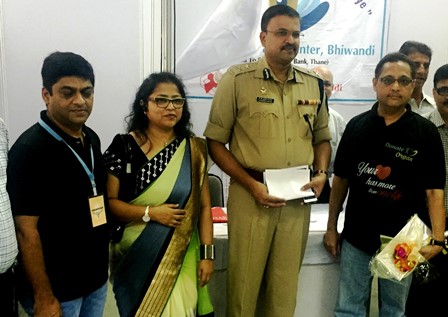
Traffic police, volunteers and others signed up to donate organs for the initiative

Heart Transplant surgeon Dr Anvay Mule said “There are thousands of patients who are waiting with hope. Such activities are required to create awareness and increase organ donation.”

Elaborating on the organ donation scenario in India, Dr Syed, said, “Figures show that India’s current organ donation is 0.05 per million populations (about 50 cadaver donors per year). The number of transplants per year is in the range of 3,000 to 3,500 with barely 5% coming from brain dead patients. The annual requirement is about 1, 50,000 donations. However, if we can improve it even to 1 per million donations, we could take care of some of the organ shortages in India. At 1 per million donation rate, we would have 1,100 organ donors which could take care of almost all current demands for organs in India.”

“The rate of renal transplants in our country is actually quite dismal, as more than 1,00,000 patients are waiting for renal transplants, and less than 5,000 happen every year. It is much worse for cadaver transplants as less than 1,000 happen per year. In comparison, Mumbai city does less than 300 renal transplants every year, of which only 30 to 40 will be cadaver donations. So the people requiring dialysis has steadily gone up, putting a lot of strain on the infrastructure to accommodate all these patients,” added Dr Syed.

ORGAN DONATION KIDNEY LIVER LUNGS CORNEA HEART
LIVE ORGAN DONATIONS FROM 1995-2015 8,061 202 NA
CADAVERIC (FROM BRAIN DEAD PATIENT) 546 150 2 19,285 (from June 2006 to June 2015 3

 Requirement in Mumbai and Thane

KIDNEY LIVER LUNGS CORNEA HEART
2800 210 10

Source: Maha Arogya Seva Mandal, Thane

“Aiming at increasing the number of donors by creating awareness on organ donation is required. From increasing the current 5,000 to lakhs and more, IMA Kalyan has joined hands with many private hospitals to spread awareness on importance of organ donation. This is the first step to reach among the educative society,” says Dr Syed.

Dr Pravin Shingare, ZTCC committee member, added, “Our aim is to remove misunderstandings among public regarding organ donation.”

(Featured image courtesy zeenews.india.com)

Categories
Little people

New age parenting: Frantic WhatsApp messaging

Parents are increasingly using WhatsApp to keep in touch with other parents and discuss their children. But is this wise?
Pooja Birwatkarby Dr Pooja Birwatkar

The red light on my phone flashed, indicating a new message on WhatsApp. It was a joke:

Mother: So what did you do in school today?

Child: Why are you asking? Didn’t your WhatsApp school group tell you what happened in school today?

It didn’t make me smile. Is it true that we are discussing our kids too much on social networking sites? It is possible that we have forgotten to draw boundaries around what we should and should not discuss.

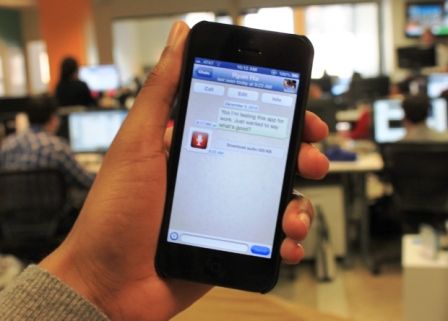
My son’s school ends at 3 pm every day and he is home by 3.30 pm. This is when my WhatsApp mommy group gets super active. It starts with questions about homework and what happened in school, then takes the familiar path to criticism and gossip about everything their children tell them. I don’t think any of these mothers cuddle their tired kids after a day at school – instead, they whip out their phones and start a post mortem of the school day.

Sometimes I feel that technology has brought us too close. I take care not to respond too often, but I do read all the chats carefully. Many times, this makes me question my own parenting skills. The other mothers know so much more about school and what their children do, than I do about mine. The parent-teacher meets further make me question myself. The other mothers have so many questions to ask, while I have to rack my brains to ask even one. Most of my interactions with my son’s teacher end in a minute. I can feel the eyes of the other mothers on me; they must think I am a bad mother, that I don’t even have a question about my son.

This charges me up to behave like them for a few days, prompting my horrified son to put his foot down and say philosophical things about his rights. Better sense prevails and I realise that too much intrusion in my son’s life can curb his freedom.

My kid sure knows his rights – the other day, I stopped him from doing something and he protested and said children also have a life and that I was stopping him from living that life. I was taken aback – I had always thought I was a great mother who encouraged him to enjoy his childhood in every way. And here he was, hinting that I was a dictator.

It’s true – we often don’t let our children do the things they want to do. Instead we tell them what they should do and discuss them obsessively over social media. I don’t any of my son’s classmates but I know so much about them from the WhatsApp chats. This makes me uncomfortable – would we like it if our children discussed our shortcomings on social media chats? Parents compare their own children to others, they put up homework pics, compare handwriting and even laugh at their own children’s foibles. Is it fair to laugh over a child’s shabby scribbles?

All children learn to read, write, speak and add sums eventually. Every child learns. How would we feel if our children revealed our salary statements, discussed how we were about to lose our jobs, our medical profile on social media? If that’s not okay, why do we think breaching our children’s privacy is?

I think all parents need to let schools do their jobs. We need to interfere less, keep our anxieties to ourselves, let our children learn at their own pace. They have their childhood just once in life, let them enjoy it to the fullest. Take a deep breath and don’t burden your child. Also, put away your phone and use that time to be with your children. Talk to your children, don’t discuss them with others.

Categories
Film

Review: Dagadi Chawl

Excellent performances and slick camera work make this film stand out, though the story and plot follow a predictable graph.
by Ravi Shet

Rating: 3 out of 5

Dagadi Chawl directed by debutant director Chandrakant Kanse not only focuses on gangster-turned-politician Arun Gawli (known as ‘Daddy’) but also highlights the story of a common man caught in the deadly world of crime and the era of gang wars in late 90s.

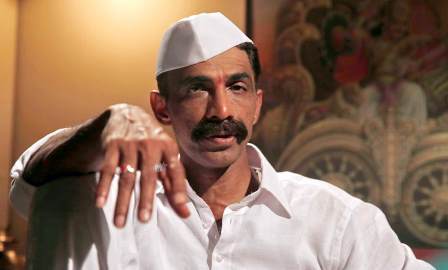
The film, based in Mumbai in 1996, starts with Daddy (played by Makrand Deshpande) performing a puja at Dagadi Chawl, while his trusted henchman, Chandu Mama (Sanjay Khapre) attacks a local politician who is set to contest elections against Gawli.

Suryakant Sadashiv Shinde aka Surya (Ankush Chaudhari) who works for Daddy collects extortion money from a builder named Desai. On getting a complaint from Desai, encounter specialist Inspector Kale (Kamlesh Sawant) picks up Surya and plans to bump him off to complete a half century of encounters. However, DCP Ashfaq Khan interrupts Kale’s vehicle and demands that Surya be transferred to him.

On interrogation, Surya reveals the story of how he chanced upon a life of crime: when a group of goons harasses his girlfriend, he gets into an altercation that ends with him beating many of them up. This lands him squarely in Daddy’s crosshairs, because the goons are his boys.

This film will remind you of the gritty Satya and Vaastav, since the backdrop of the plot is quite similar. Here too, an innocent man falls prey to an unforeseen situation and ends up in the murky world of crime. Some of the scenes in the movie are predictable; however some slick camera work clubbed with a good background score and sharp editing are the positives of the film.

Ankush Chaudhari as Surya justifies his role perfectly; however Makrand Deshpande as Daddy impresses the audiences a lot more through his body language and dialogue delivery. Sanjay Khapre and Yatin Karyekar play good supporting roles. Many in the audience will also love the ‘Morya’ song played during the Ganesh Visarjan scene.

(Picture courtesy marathistars.com)

Categories
Tech

Review: OnePlus 2

We review the newest OnePlus phone and find that it has some good features while it lags behind on some others.
by Manik Kakra | @Manik_K on Twitter

OnePlus has been among the most talked-about phone manufacturers in the last one year or so – whether for a good reason or a bad one is debatable. The OnePlus One helped usher in this new era of affordable smartphones that give bang for the buck when it comes to overall performance. Does the OnePlus 2 justify itself? Let’s find out.

The looks. OnePlus 2 (A2003) follows a similar form factor, but is noticeably narrower and denser. Its Sandstone rear panel is still there, and you get unique rear cover options like Kevlar, Rosewood to add if you like. This time, the company has also added a silent/notification switch on the left side, so that you can switch between silent and alarm (as per Android Lollipop’s changed notification system) where you can choose what alerts you and what doesn’t without having to turn the screen on.

On the right, you have volume rockers and Power/Lock key. Another change is the new USB type C port (more on it later) at the bottom around the mic and loudspeaker grill at the bottom. On the back, an annoying thing, at least for me, is the metal case around the infrared laser focus, camera and dual flash. The metal ring isn’t flush with the surface, and you keep hitting it with your finger.

The aluminium chassis around the phone and thinner bezel are definitely welcome changes. The phone feels a lot more solid in hand. It isn’t a small phone by any means, but that curved back, Sandstone back cover and rounded edges help in gripping a bit more comfortably.

Screen. The OnePlus 2 boasts a 5.5-inch full HD LCD with Gorilla Glass on top. I found the screen a little brighter than the OnePlus One, and has good viewing angles and decent colour reproduction, but some might spot washed out colours coming from a better panel. Visibility under sunlight is okay and full HD videos and high quality images look pretty good on it. It isn’t the best LCD on a phone today, but certainly not bad either.

Sound. The loudspeakers at the bottom are just about okay for videos and games, but not as punchy as the best out there. It has modes like time lapse for video, HDR and Panorama for images.

Camera. On the back, there is a 13 MP (OmniVision sensor) camera with dual LED flash and an infrared laser focus. Here are a few sample images.

The camera can take good detailed shots. It struggles in low-light conditions (improved with last two updates), giving grainy shots, but performs well enough in decent lighting condition. The camera app was a little sluggish to use and had some shutter lag in the beginning, but has improved with the last update, too.

Battery. The phone is equipped with a 3,300 mAh battery unit that is not user replaceable. I found its battery life to be decent – quite a few times it lasted me almost a day for light to moderate usage; while requiring to be charged in about after 20 hours (4 hours of screen on time) with quite heavy usage (single SIM card). It isn’t as good as the OnePlus One, but not below the average Android flagship today.

The phone has a USB type C port, meaning no more juggling which side of the USB cable goes up. On the contrary, there is no quick charging, which a lot of people will miss having seen or used it on many Android phones launched earlier this year. The phone takes almost two and a half hours to charge from 0 to full.

Software and performance. The device runs on Android OxygenOS 2.1 that’s based on Android 5.1.1. If you’re familiar with stock Android (mainly seen on Nexus and Android One devices, as well as Motorola phones), you should be at home while using this phone for the first time.

There is something called Shelf on the left-most Home screen that shows weather, your most used apps and contacts and you can also all widgets on it, not of much utility at this time. You can now change the phone’s screen colour temperature (added in the latest update). Customisations options include the option to change what LED colour for a particular type of alert; using any icon pack from the Play Store in the default launcher, which is same as the Google Now launcher in most ways. You can also decide between physical touch buttons or on-screen keys, and later assign which key does what function.

Under the hood, there is a Snapdragon 810 SoC (1.8 GHz octa-core processor, Adreno 430 GPU) along with 4 GB of RAM (that’s for the 64 GB storage option; 3 GB for 32 GB storage). I found the OS to be quite smooth and stutter-free. Leo’s Fortune, a popular game, runs smoothly on it and doesn’t drop frames. Having said that, I found strange issues like the default dialer lagging, or Home button not recognising a single tap, quite a few times. Though the fingerprint scanner itself works really quickly and about 8 out of ten times. Oh, and it certainly gets a bit hot around edges and camera module after a bit of gaming and watching HD videos.

All in all, the OnePlus 2 seems like a great device under Rs 25,000, but doesn’t leave a great impression that its predecessor once did. It has a good screen, decent battery life, one of the best cameras in this price budget, but lags behind a little due to its software issues. And while you might want to buy a OnePlus 2, you still need an invite to purchase one from Amazon.

(Pictures courtesy Manik Kakra)

Categories
Deal with it

Luv Thy Farmer: The Ek Glass Mosambi Juice Challenge

Mumbai’s Ranjit Pawar initiated the ‘Luv Thy Farmer’ movement under which an Aurangabad mosambi farmer reaches his produce directly to consumers.
by Shubha Khandekar

Weekends are no longer a breather for Ranjit Pawar from a hectic 10 hour job with a reputed multi-national corporation, where he works as a business manager. Rather, it’s a break for frenzied phone calls to volunteers, customers and transport operators who are pouring into his rapidly expanding loop of the Luv Thy Farmer initiative, launched to help Aurangabad’s mosambi producer Shivaji Gaikwad get respectable returns on his produce, against the backdrop of the farmers’ dismal plight in Marathwada.

“I have known Shivaji Gaikwad from before,” says Ranjit, whose father owns a farm in Satara district. “I’ve grown up on a farm and spent every vacation on one. Hence it was easy for me to feel his pain; he was being offered no more than Rs 15 per kilo by traders, which sells for anything from Rs 30 onwards in Mumbai. He can’t even break even on these terms.”

Having worked earlier in a mobile info system for farmers, Ranjit realised that the e-commerce platform for B2C transactions is available to a producer of every commodity, except to a farmer. The result is that both the producer and the consumer are being left out of the benefits of the e-commerce platform. He thought of tapping the Internet and the social media to address the issue. In less than a month, over two tonnes of mosambis have already been delivered in Mumbai and its suburbs and in Pune, purely through voluntary efforts of well-wishers who needed no persuasion to pitch in.

kids_mosambi“That’s all it takes,” he laughs. “Just the click of a mouse can place a farmer directly on a global e-commerce pathway, and open up unlimited vistas for marketing his produce.  Along with other volunteers I have merely acted as a facilitator and enabler,” he says, after having delivered some 1,500 orders to total strangers!

Ranjit found willing takers for his idea. He trusted Gaikwad for the quality of the produce while Gaikwad too was convinced of Ranjit’s intentions. Volunteers came forward and on September 6, he flashed the ‘Luv Thy Farmer’ page on Facebook, followed by the website of the same name created overnight by a volunteer from Germany. Prof Kurush Dalal in Kharghar, Anuradha Pawar in Prabhadevi, Varuna Rao in Thane, and Vaishali Narkar in Chembur kept their doors open for 24 hours as pick up points for the stocks rolling in every day.

“It’s a highly scalable, replicable model and volunteers can help without leaving their homes,” says Ranjit, who now has support from diverse quarters. “It’s not too expensive either, even though Gaikwad has arranged to pack the mosambis in 5 kg bags, and pays for the farm to city transportation. Hence, of the Rs 60 that the end consumer is paying for a kilo of mosambi, nearly Rs 30 to Rs 40 goes to the farmer, and transportation and labour costs take up the rest. Logistics players have come forward to help out and they are ready to work on a no-profit-no-loss basis. We are working on streamlining the transportation, using vans, bikes and even public transport, so as to further improve the farmer’s profit,” he says.

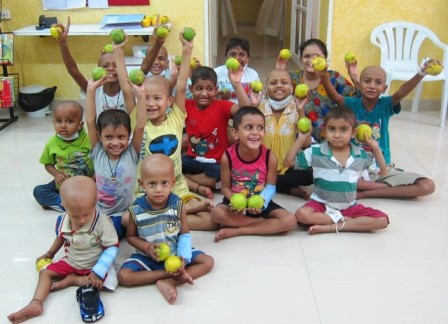
The ripple effect of Luv Thy Farmer has created beneficiaries in unexpected quarters. Hence, while one person in the US made an online purchase for donation to an old age home in Mumbai, a senior marketing manager at a pharma company donated a bulk purchase to a hospice for children in Mumbai.

Ranjit proposes to make the facility available to growers of strawberries, bananas, pomegranates, rice, organic jaggery, wild honey, tur dal and many other agro-products who are approaching him every day.

“The next challenge is to make Luv Thy Farmer self-sustainable,” he says.  “I wish to explore such options as angel funds and crowd funding for projects that many farmers cannot implement. This could give a boost to entrepreneurship in the agro sector, so that the farmer can thrive without depending upon a single market.”

Exit mobile version