Categories
Overdose

Politics bachao

Saying ‘I hate politics!’ does not absolve us of our duties as Indians. When are we going to demand change?
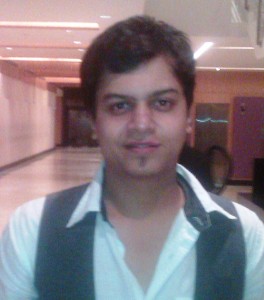
Jatin Sharmaby Jatin Sharma

Chanakya said that a country is not ruined by corrupt and evil ministers, but it is ruined by the youth that hates politics and doesn’t believe in the political system.

What the father of Indian politics prophesied a thousand years ago stands true today. Today we as the youth have completely given up on our political system. We just like to comment on politics and political statements that are fed to us by the media channels, several times out of context. Repeated exposure to the news makes us think that we are experts on the topics that are currently ‘hot’ in the newspapers, or are trending in the social media space.

Whatever side of the fence we’re on, whatever our political inclinations, we believe in shouting only when we can direct a hate message towards our politicians. Okay, so Narendra Modi may not have actually rescued 15,000 Gujaratis, but bhavnaon ko samjho. And why just Narendra Modi, we are cynical about any and every politician, even the small fry down the road who contests the corporation elections and loses every time. And whenever we come across a story that speaks about the positive actions of a politician, our first reaction is that of disbelief, and we justify our thinking by saying that he or she must have some vested interest in doing the good that he or she did. We, a supposedly educated bunch, are buffoons when it comes to understanding the systems and the people that run our country. We love playing a victim, helpless against the system, when secretly, we enjoy the political tamasha on Youtube or TV and enjoy the venomous hatred we and others spit.

We have stereotyped all our politicians (and anybody who disagrees with us deserves to be called the choicest names); while someone is a mute puppet in the hands of an Italian hateremote control, someone else is a gaai-bhains neta. Someone is a statue-making machine neta, and someone else is a regional North Indian hater. But have we thought of going to the roots of all these characters, who, whether we like it or not, are strong forces in today’s politics? Let alone anything else, have we questioned our own undying hate for our politicians?

Isn’t it because it is easier to hate our politicians than to love our country?
Isn’t it easier to blame someone for the mistake we are committing?
Isn’t it easier to pass on the guilt of our own actions and enjoy our lives without stress?
Isn’t it easier to be a stupid person with half-baked opinions (such as ‘All politicians are CORRUPT! If you don’t agree with me you are an idiot!’) than to become an intelligent one who cares enough to clean the mess?

What disheartens me the most is that the people today have actually started believing that no matter what, nothing can be changed. And what is worse is that they are not letting their negative energy express itself in positive ways. All of us choose to vent in our social groups, over alcohol and snacks or in tweets and status messages. We look at our own country and laugh at the ‘fact’ that nothing can be done, that we are not expecting a change. We are not remotely interested in being the change.

But think about it: the politicians that we accuse of corruption can also turn around and point a finger at us. How many of us can truthfully say that we have never paid a bribe? That we have not tried to influence our bosses’ minds by being sycophantic? That we have not told a lie in front of our children? That we have not used foul language towards a member of the opposite sex? That we have not had corrupt thoughts about an attractive person who is not our wife or husband?

If we have done any or all of the above, how different is our corruption from that of our politicians’? And what gives us the right to use profanities against politicians when our own moral compass needs correction?

people powerWe need to blame ourselves for becoming so helpless that we feel we cannot effect a change in our surroundings. We need to stop making fun of our mute PM when we ourselves are silent on several burning issues. We need to stop making excuses and start loving politics, start demanding the kind of politics that is inclusive and pro-development of society. Writing something clever and getting a hundred retweets is not a solution to any problem, and laughing at jokes on the falling rupee will not ease our economic woes. All of us need to become a force, a pressure point. Becoming an Indian in the real sense is the biggest favour that you can do yourself and your nation.

And who knows, we might just clean up our politics, too.

Jatin Sharma is a media professional who doesn’t want to grow up, because if he grows up, he will be like everybody else.

(Pictures courtesy www.facebook.com, thatswhatshesaid922.blogspot.com)
Categories
Hum log

A vacation well-spent

US student Rayna Srivastava spent her summer vacation volunteering for a Thane orphanage; says she will continue fundraising back home.
by The Editors | editor@themetrognome.in

What’s the one thing most students do when they’re staring at vacations after a hard year of study? Parties, overseas holidays, or just goofing around rank high on any student’s wish list. But some students are different. Some students defy the oft-repeated sentiment that today’s youth care only about themselves, that the only way they participate in current affairs is by hitting ‘Like’ on Facebook or retweeting a celebrity’s tweet.

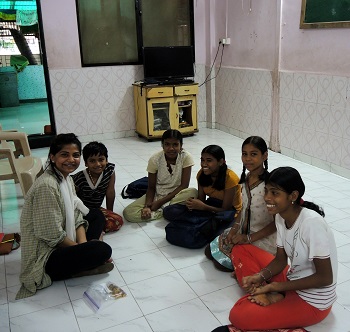
Take Rayna Srivastava, for instance. The student of Frisco High School in Texas did not slot her vacations into the usual party-holiday-goofing around routine, but she resolutely planned her summer vacation for several months before she put her plans into operation – Rayna (16) put in four weeks of volunteering service at the Divya Prabha Home for Girls in Distress, an orphanage in Thane. “I was in India last year, and I had had a lot of fun and learning doing volunteering work. I decided I wanted to come back, to give back to society because I am blessed and because others should also have some of what I do,” she told The Metrognome.

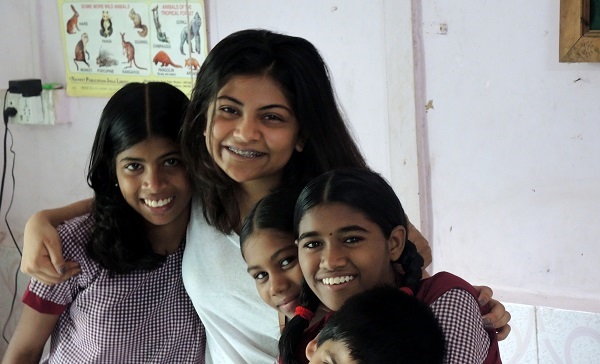
Rayna and her students at the orphanageInitially stunned, her parents Rahul and Waishali quickly agreed to her plans. “My parents were not completely sure about this, but then my father said that when he was younger, he’d wished he could have done the same. At that time, he didn’t have the chance to give back to society. Both my parents were very supportive,” Rayna says.

Doing good

Rayna was born in Mumbai and lived here with her parents for a couple of years after her birth before they all shifted to the US. Naturally, the bond with the country of her birth is very strong. What fuelled her interest in Divya Prabha was that the fact that her grandfather had a contact who put her in touch with Sister Deodita there. “I had heard very good things about the orphanage, about the noble work they do. Sister Deodita was more than happy for me to come down and work with the girls,” Rayna said, explaining that she worked with seven girls, aged nine to 16, and taught them basic conversational English, the environment and the use of the Internet – this last, so that she could stay in touch with them when she returned home. “These girls are orphans, and they were very excited and thirsty for knowledge. They had so many questions!” Rayna said.

She spent four weeks teaching and undertaking volunteering work such as planting trees. Other times, she would simply talk to them. “I taught them English because in today’s world, English is really important and it will help them when they go out to work. I was so grateful for the opportunity to get to interact with them. It was a wonderful experience overall.”

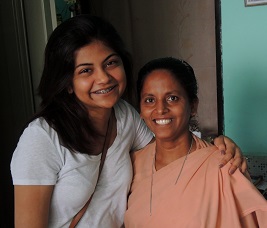
Sister Deodita (in pic on right), in a letter certifying Rayna’s volunteering efforts over four weeks, says, “Rayna gave us an agenda stating that Rayna and Sister Deoditashe wanted to teach English, environment and an intro to the Internet. In the 50+ hours that Rayna spent at the orphanage, she connected with our girls and built a bond with them. I strongly feel that the girls in our institution need friends like Rayna who can help to dream and aspire to look forward to life after the orphanage and understand the importance of education.”

What’s next?

“At this point, the orphanage needs repair work on two toilets, computers, books and laptops for educational purposes. I spoke to friends and family and we quickly mobilised Rs 33,000 for the orphanage. When I go back home, I will try and get two computers to send to Divya Prabha. In fact, that’s my next project,” Rayna said.

If you want to help Divya Prabha Home for Girls in Distress, contact Sister Deodita on 022 25854852 or email divyaprabhathane@rediffmail.com.


Categories
Uncategorized

Five ways to wear the dupatta

The dupatta is extremely underrated, though you can wear it over anything, and drape it in more ways than one.
by Anurita Gupta

Close your eyes and imagine a typical Bollywood setup. A gust of wind, dried leaves whirling around the heroine whose beautiful face is covered by her colourful, tie and dye dupatta that dances in the breeze. Fortunately, the dupatta and its romance are not just limited to the lovey dovey scenes in Hindi films.

Call it whatever you want – dupatta, chunni, odhni – the truth is that this Indian accessory is something else. Traditionally, if you want to elevate a simple kurta into something special, you can just complement it with a colourful dupatta and look great. However, there is a lot more that the dupatta can do. Drape it creatively and see it become the life of your wardrobe. Here are a few tips to add colour to your various looks with it:

Party bling throw: Want to add a dash of colour to your little black dress? Pick from an array of sheer dupattas, be it organza or net, in colours like hot pink or dull gold and drape around your arms. It will not just make you stand out in the crowd but can also provide a fashionable cover to your arms if your arms are heavy.

sarongSun ‘n’ sand sarong: Before you unleash your hot body on the beach, use a colourful, bandhni cotton dupatta or a bold floral chiffon one as a ‘modesty cover’ for the times when you aren’t swimming but lying on the beach chair with a book. Sure, you can’t necessarily do this in Mumbai, but do pack a colourful dupatta in your bag if you’re thinking of a vacation to a beach town. You can also try opening the dupatta completely, holding it from each end and arranging it in a cross drape covering your back. Knot it behind your neck to show off your shoulders. This look is really hot.

The sensual look: As much as it was used traditionally to cover the body, the dupatta can also be used to show off your curves. It can be draped to draw attention to the low backs and the plunging necklines that your blouse designer has worked so meticulously on. Just pick a light texture, say a crinkled stole (half-dupatta) and drape it suggestively around the nape of your neck and see the magic it creates!

Being arty: If you have been a comfortable, casual dresser, then there may have been times when you’ve found it difficult to put your look together for an arty event. From now on, try this: get a cotton/silk or cotton-silk blend, block printed, solid colour dupatta. Wear it on your black khadi kurta and churidaar, accessorise with some silver jewellery and a long bindi.

The wardrobe overhaul: A word of fashion advice to the heroines (reel or not) who have used a part of it as the miracle bandage which will plain outfitstop the hero’s fatal wound from bleeding; your ravaged dupatta is still useful. Cut it width-wise and use it as a stole to jazz up any drab dress or tunic. Or you can cut it length-wise and use it as a scarf for that plain outfit you’ve relegated to the back of your wardrobe. Don’t forget to match your shoes and clutch with it.

All in all, if you are looking at a serious overhauling of your wardrobe, the humble dupatta can add the much needed glitz, glamour and colour without burning a hole in your pocket. So go ahead, experiment!

(Pictures courtesy www.nycurchin.com, idiva.com, nakshatra.tumblr.com)

Categories
Do

Baulish delights

A total fun weekend awaits Mumbai’s music lovers, as the Bauls of Bengal perform at various spots in the city.
by Medha Kulkarni

This weekend promises to be an absolute treat for music lovers across the city. From July 13 to 15, different locations across the city will play host to an introduction to the Bauls of Bengal with Lakshman Das Baul.

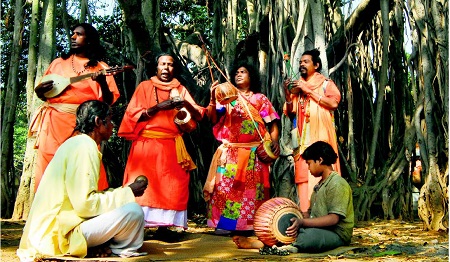
The word ‘Baul’ has its etymological origin in the Sanskrit words ‘Vatula’ (madcap), or ‘Vyakula’ (restless) and used for someone who is ‘possessed’ or ‘crazy’. The Bauls originally were a nonconformist people who rejected societal norms to form a sect where music was their religion. Baul is the name that is given to the genre of folk music developed by this sect.

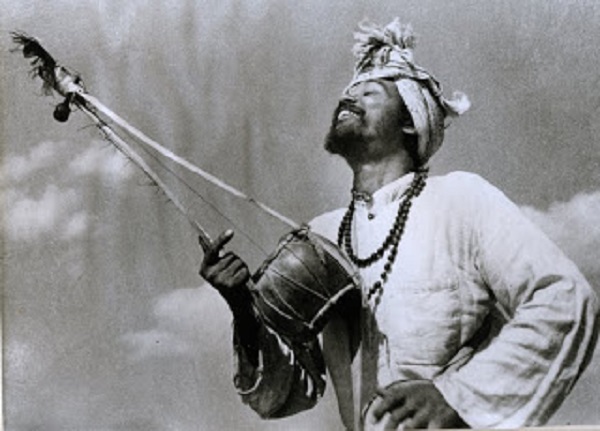
baulsLakshman Das Baul is a disciple and the adopted son of renowned Baul master and composer Shri Shudhir Goshai of famous Joydev-Tamaltala Ashram in Birbhum District. He is a young performer well known for his magnificent energetic performances. He accompanies himself with Anandalahari and Dotara while he sings. He has performed in many parts of India. After the demise of Shri Shudhir Goshai, he has looked after the Joydev-Tamaltala Ashram, where he lives with his wife and son and the Mother (the companion of Shri Shudhir Goshai). He has been collaborating with the renowned master Parvathy Baul.

The music of the Bauls is not only a stunning art form, but is also an oral documentation of history as the Bauls are storytellers at heart. The nomadic people travel the country singing and performing and enthralling and entertaining, but it is an art that is unfortunately increasingly under the threat of extinction. This is a wonderful opportunity to experience this art and also to support it and ensure it’s survival.A rich repertoire of knowledge, this art promises to mesmerize it’s audience.

Here is the itinerary for this event :

July 13 7 pm to 8.30 pm, Vivekananda Auditorium, Ramakrishna Mission, and Khar West.

July 14 11 am to 12.30 pm, New Acropolis Centre, A-0 Connaught Mansions, opposite Colaba Post Office, Colaba AND 6.30 pm to 8.30 pm, Sangeet Mahabharti,10th Road, Opposite Amitabh Bachchan’s Bungalow, Juhu.

July 15 6.30 pm to 8.30 pm, Comet Media Foundation, 301 Meher House, 15 Cawasji Patel Street, Fort.

(Pictures courtesy ushaharding.blogspot.com, epaper.timesofindia.com)

Categories
Swaad 'Anu'saar

The ultimate monsoon comfort food

What’s better than the monsoon in Mumbai, despite killing rains? Food that makes the season even more special, that’s what!
anurita guptaby Anurita Gupta

Mumbai without monsoons is a Mumbai without colour, without some of its spirit. But now that the rains are here, let’s celebrate!

While you must have completed your neon-colored-raincoat-and-gumboots-shopping routine from Linking road, there is a lot more to do while baarish sings at your window sill; for instance, figuring out some rainy season comfort food and drink. Here are a few of my favourites that make monsoons even more cozy and comforting.

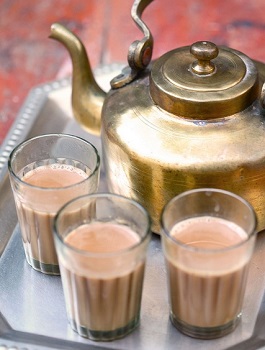
Kadak adrak chai: While it is the unofficial drink of India, Mumbai’s cutting chai with a dash of ginger is best masala-chaienjoyed during the rains. Not only does it enhance the taste of crisp mirchi and paneer pakodas, but ginger is good for us as well. Being a natural astringent, it aids in digestion and can actually cure the common stomach flu that tends to bother us in this season. Ginger is also known to sooth cold and cough and other allergies. So enjoy a cuppa while watching the rain soak the streets of the city. If you choose to make it on your own, then just add some thinly sliced ginger in regular chai before adding milk. Boil for two minutes and pour.

Kanda bhajji: There is no better snack that accompanies a kadak adrakwali chai in the monsoon than the Mumbaiyya kanda bhajji. These are onion and gram flour fritters. Enjoy it at a chai ki tapri near you or make them fresh at home.

Here’s how you do it: Make a thick paste of besan (gram flour) and water; add a spoon of cornflour, salt to taste, dry mango powder (aamchoor) and chilly powder, along with dhaniya powder and ginger garlic paste. Thinly slice onions. Dunk them in the batter and throw bit by bit in a heated kadhai of mustard oil. Deep fry until the bhajjis become golden brown, and enjoy with a nice sprinkling of chaat masala on top. Happy chomping!

Wonton soup: Pour yourself a bowl of soup while it’s pouring outside! All you have to do it to cook up some chicken or vegetable broth. You can make one yourself by throwing in actual chicken or some vegetables in a cooker. Give it a whistle or two, strain and serve. Or you can also pick up Maggi stock cubes to make the broth. Once done, open up a packet of frozen wontons, swirl in the hot broth for two minutes and serve with a spritz of lemon and a dash of ground black pepper.

Bhutta nimbu masala maar ke: At every nook and corner of Mumbai streets, you will find the delicious bhutta, i.e. corn on the cob. If it rains, it calls for a bhutta, that too with a genuine helping of lemon juice and chaat masala. The bhuttawala will happily give you the option of soft and hard, sweet and regular corn. Choose the one you like, watch it get grilled on coal and then relish it while taking a walk at Marine drive.

jalebi-samosaGarma garam jalebi samosa: If your sweet tooth takes a fancy to the rains, then the sweet dish that complements it the most is hot, crisp jalebi. These concentric circles made from flour and sugar and doused in chashni are heavenly when combined with crusty samosas. This combination is really one made in heaven. Enjoy it at a halwai shop near you or parcel it for a late monsoon night, when it tastes brilliant eaten cold with a glass of warm milk.

If you have firang taste buds, then chips and dips are a good choice with sizzling brownie and ice cream for those who love sweets. So go ahead, sing your favourite rain song as you sip hot chai and eat steaming hot bhajjis!

Anurita Gupta is a media professional who is passionate about two things – food and radio. Her love for all things food makes her a foodie with a cause.

(Pictures courtesy healthbeautyfitness.in, know.burrp.com, finelychoppedk.wordpress.com)

Categories
Watch

Let the world in, today

Volume II of the two-part film project ‘To Let The World In’ will be screened at the Films Division today.
by Medha Kulkarni

‘To Let The World In’ is a project that revolves around a significant period in the history of contemporary Indian art over the last three decades. The film feature three generations of some of India’s most iconic artists who share ideas, memories and concerns about their work.

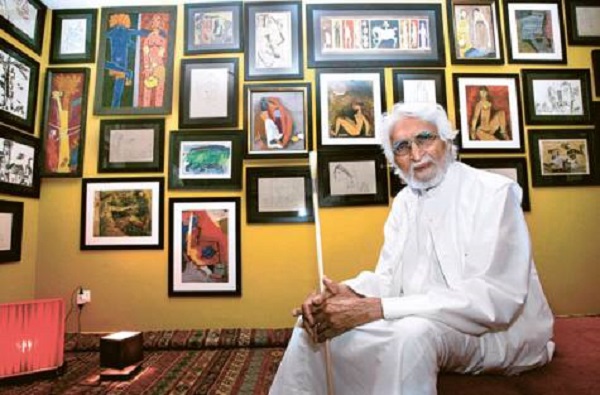
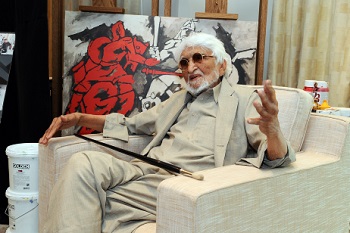
M F HussainVolume I was screened last week and Volume II showcases MF Hussain’s 1967 film Through The Eyes of a Painter. The conversations are intimate and the interviews are conducted by renowned art historian and curator Chaitanya Sambrani, and have been filmed by Avijit Mukul Kishore. The works are a visual documentation of some of the most important moments in Indian art history from the 1980s to the present day. Volume II explores the changing contexts in art production and the connections between art and political history and the evergreen questions of patronage and recognition.

The film starts with the volatile context of art practice when India was on the brink of economic liberalisation juxtaposed against the re-assertion of religious fundamentalism in Indian politics. The artists featured in this volume are Anju Dodiya, Archana Hande, Benitha Perciyal, Sharmila Samant, Parvathi Nayar, Riyas Komu, Tushar Joag, Shilpa Gupta, Josh PS, Gargi Raina, Sumakshi Singh, TV Santhosh, Nataraj Sharma, Anandajit Ray, Gigi Scaria, Reena Saini Kallat and Jitish Kallat.

The screening will be followed by a Q & A session panelled by Abhay Sardesai, art critic and the editor of Art India Magazine.

The film was produced by Art Chennai, to accompany the show ‘To Let The World In: Narrative and Beyond in Contemporary Indian Art’, curated by Chaitanya Sambrani, held in Chennai in 2012.

Head to RR Theatre, 10th floor, Films Division, Pedder Road, at 4 pm.

(Pictures courtesy www.thenational.ae, gulfnews.com)

Exit mobile version