Categories
Watch

Watch this film to read better

Film to be screened at Max Mueller Bhavan this evening discusses the challenges that the reading habit faces in Mumbai.
by The Editors | editor@themetrognome.in

Early last year, Sayalee Karkare, alumna of the Erasmus Mundus Global Studies programme (EMGS) received a fellowship from the Tata Institute of Social Sciences (TISS) in Mumbai to make a documentary film on books and reading culture in in the city. She collaborated with Matthew Sharp from the Mundus Urbano programme, who did the camera and sound work for the film.

The film, titled Books In The Big City, addresses the challenges that the culture of reading faces in a fast-changing city like Mumbai. As the city modernises and Mumbaikars shift their reading online, many small libraries and bookstores are closing down. What’s more, there are fears that mainstream magazines and news publications might also take their wares to the Internet.

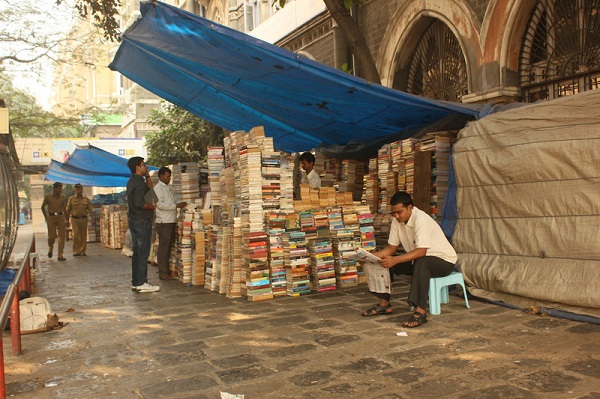
But is this really about to happen? Street booksellers, famous in Mumbai for selling everything from pirated to first edition books, are also feeling the pressure. While technology has opened up new avenues for reading, not everybody can afford access to the Internet and e-readers. This raises important questions about access to knowledge in general, and the need for reader-friendly spaces in overcrowded urban areas in particular.

Books In The Big City explores these issues through the testimonies of prominent locally-based writers, readers and booksellers, taking the viewer on a journey around the city, from the cramped living quarters of a bohemian bibliophile to exclusive members-only ‘public’ libraries.


The documentary is part of the ‘Urban aspirations in global cities’ research laboratory, an international collaborative project in which researchers from TISS (Mumbai), the Max Planck Institute (Germany) and Partners for Urban Knowledge Action and Research (Mumbai) are working together. The project aims to compare post-colonial mega-cities in Asia, including Mumbai, Singapore and Shanghai, and to understand how the urban community of rapidly growing mega-cities impacts the development of urban aspirations.

Head to the Library, Max Mueller Bhavan, Kala Ghoda today, July 19. The film begins at 7 pm, seating starts at 6.30 pm. A Q&A follows the screening.

(Picture courtesy Sayalee Karkare, video courtesy EMGS) 

Categories
Bombay, bas

A window to life in Mumbai

Mumbai locals are the creature that teach you several life lessons – all you have to do is play along.
by Reshma Doshi

First of all, a big ‘thank you’ to the British Raj – for giving Mumbai its ‘lifeline of commuting’, the Railways. Nobody’s a real ‘Mumbaikar’ if they have not travelled in the local trains and come home smiling or sometimes, frowning.

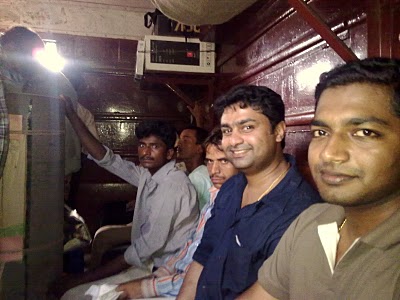
mumbai local train No transportation connects Mumbai as well as the Railways do. Some Mumbaikars literally live in these trains.

When I used to travel to college and then to work, using the Mumbai local, I would never trade my train ride for a free car ride.

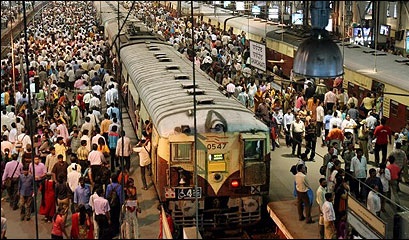
It sometimes frustrates you, but at the same time the train ride also gets a smile on your face. To know what I mean, one needs to sit at Churchgate station or Borivali station or VT or Virar and observe people. Here, people become marathon runners; they don’t want to miss that 9.25 local. It’s a matter of life and death to miss a train – even if the next train arrives in just 4 minutes.

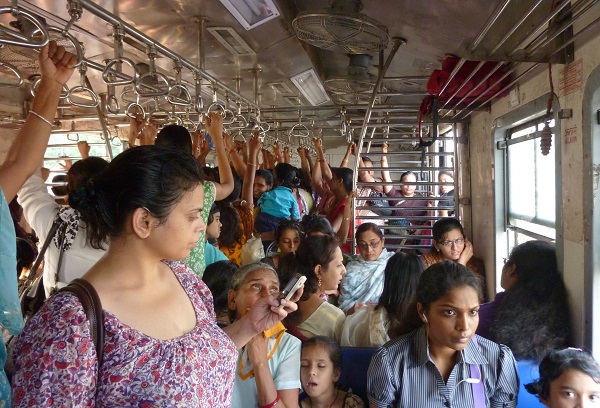
If you are a newcomer, the crowd will probably make you feel claustrophobic, but if you are a regular, it will make you feel everything is fine. Remember, a lack of crowd at Mumbai’s railway stations indicates either a public holiday or that something is amiss.

Local trains in Mumbai are the best place to learn life’s lessons. The train teaches you how to fight your own battles and make a place for yourself in the crowd, it teaches you how to make friends with people, strangers mostly, and adjust with all species of people – something we humans need the most for survival. It teaches you how to handle a dominating mother-in-law, how to love your naïve daughter-in-law, how mumbai local trainto cook, how to bargain, the inside and out of share markets, gold prices, and many many more things – and of course, it teaches you how to sing in front of strangers. The cost for all this is simple – bear the push and punches in the local trains, overcome claustrophobia in crowded places, get used to the crowd and noise around you and be ready to share, care and listen.

– If one wants to experience the thrill of Mumbai locals, one should travel between 9 am to 11 am from the North to South direction on the Western line, the best route being Andheri to Churchgate. Or try between 5 pm to 8pm from South to North on the Western line. Just get in, check for all limbs present, and enjoy the ride.

– But if you are a newcomer and want to travel by the local train with some time to spare, the best time to travel in any direction is between 11 am to 5 pm.

– The best way to secure seating space for yourself would be take a return jounery from the station before the train gets full in seconds. So if you want to get into the Borivali-Churchgate train in peak hours, you should board a Borivali-bound train from Kandivali or Malad, which will halt for a while in Borivali and then head back to Churchgate. But don’t think you are a smart cookie with the greatest idea in the world, half of Mumbai does this to get a seat.

In these local trains, you see the real face of Mumbai. It tells you about the kind of people Mumbai is made of. One could be a stern boss in the office, but he is a friendly person in the train. The nice woman who is always ready with a smile for a stranger could be a strict, dominating person at home. You get to see nice, caring, and friendly people – always ready to help and you also see scary, bitchy, frustrated people – who always want to pick fights.

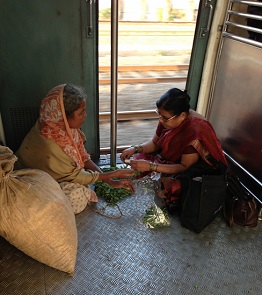
Mumbai local trainHere people make friends out of unknown people, share their life’s sorrows, and throw parties when they achieve something. People make these small train compartments and the people inside them their extended families, a part of their lives. Those 45 minutes to two hours of travel time become their welcome break from the hectic lives they lead. Movies and TV serials have been made on Mumbai locals. Very soon there would be a time, when Mumbai tourism will include a ride in a local train.

Hence it becomes a matter of life and death when people miss their regular 9.25 ki local. The Mumbai local teaches us Mumbaikars how to survive. Which is why I said earlier. Thank you to the British Raj for giving Mumbai its ‘lifeline of commuting’ – the Railway.

Reshma Doshi is a freelance consultant by profession and a writer by choice.

(Pictures courtesy blog.zanilhyder.info, benjamuna.com, wovensouls.wordpress.com. Images are used for representational purpose only)

Categories
Do

Bringing butterflies back to Mumbai

A new initiative by a city-based NGO, OASIS, hopes to attract butterflies – and colour – back to the city.
by The Editors | editor@themetrognome.in

In a city starved of green spaces and facing greatly diminished nesting areas for birds, any initiative that strives to welcome our feathered friends into the hustle and bustle of the city must be welcomed with open arms.

A few weeks ago, on June 5, World Environment Day, city-based NGO OASIS started a new initiative for Mumbai city, specifically targeting its public gardens, in an attempt to create ‘butterfly parks’ at various spots in the city. The initiative, called ‘Bring back butterflies’ aims to attract at least some of the 150 species of butterflies seen in Mumbai, to the city’s public gardens and parks.

Dr Puja SukhijaSpeaking to The Metrognome, OASIS’ (Organisation of Aware Saviours In Society) Dr Puja Sukhija (in pic on left), whose idea this initiative was, said, “In 2011, we had conducted a project on roughly mapping the flora and fauna of Mumbai. Under this, students took a survey of the birds in certain areas, and while the survey was being conducted, we all realised that we hadn’t spotted any butterflies.”

Cut to 2013. Dr Sukhija envisaged a plan to convert the city’s public gardens into butterfly parks, with the help of school children from the nearest schools. “The idea is to plant saplings of such nectar-rich plants as lantanas, that attract the Grass Jewel Butterfly and the Blue Mormon. The Grass Jewel is among the tiniest butterflies in the world, while the Blue Mormon is most commonly found in India and Sri Lanka,” she explained. “We submitted our plan to the Environment Department, State of Maharashtra, and they were very happy with the idea. We have been sanctioned Rs 3,00,000 by them to plant saplings in as many BMC gardens and public parks as possible. We already have upwards of 15 gardens and we are largely focussed on BMC schools’ participation.”

The initiative largely hinges on identifying the best gardens after contacting the BMC, then looking for schools in the vicinity and getting Sapling plantation drive at Kharstudents on board. “We first speak with the students in school, then we take them to the garden and show them the site,” Dr Sukhija says. The planting of saplings is done on pre-determined days, and monitoring of the outcomes is done regularly.

The funds generated by the Government are used for such activities as digging, paying labour, maintenance and purchasing saplings. “We also need funds to conduct educational talks in schools and create awareness. So far, the response has been great – children are extremely receptive to the idea. We are now looking at having college students enroll in the initiative, so that we can scale up the project to include data collection, monitoring and general maintenance,” Dr Sukhija says.

Would you like to be a part of the ‘Bring butterflies back’ project? Contact OASIS on 9820403344 or write to them at info@oasisngo.org.

 (Pictures courtesy commons.wikimedia.org, OASIS) 

Categories
Wellness

Five diseases your pet can give you

Our pets give us love – and skin diseases and other infections. Here’s how to protect yourself against five maladies.
by Beverley Lewis

We love them, cuddle with them and treat them like family. And these cuddly, furry creatures reciprocate in kind by showering us with unconditional love and affection. They lick our hands and faces when we are feeling low and offer us a friendly paw in greeting. But these furry bundles of joy are also carriers of germs that they unknowingly pass on to us, leading to skin rashes and infections. Here’s a list of five skin infections you can get from your beloved pets, and steps you can take to prevent them.

hookwormHookworm: It is primarily transmitted from animal faeces, dirt, or contaminated soil. Humans pick up the eggs or larvae on their skin from contaminated soil when walking barefoot in parks and gardens frequented by animals. Puppies and kittens can acquire hookworm from their mother’s milk. If the nursing mum has an infestation, this is then passed on to human beings.

Hookworm larvae have the ability to penetrate human skin and a rash forms on the skin where the larva enters. The most common area for a rash is on the feet of a person who has walked barefoot in sand or soil containing hookworm larva. It is also possible to acquire a hookworm skin infection in the form of a ‘travelling rash,’ where you’ve possibly been exposed to contaminated soil and have a mysterious rash moving around on your skin. It can also cause serve coughing, chest pain, wheezing, fever, epigastric pains, indigestion, nausea, vomiting, constipation and diarrohoea can occur early or in later stages as well, although gastrointestinal symptoms tend to improve with time. Signs of advanced severe infection are anaemia and protein deficiency, including emaciation, cardiac failure and abdominal distension.

Roundworms: They are large and spaghetti-like in appearance. And they can create a full-blown infestation in your pet before you are even aware of their existence. By the time you see signs of roundworms in your dog’s or cat’s faeces or vomit, he’s overrun with them.

Don’t count on seeing roundworms or hookworms to alert you to an infestation. If you suspect your pet has been exposed, you should collect a stool sample and drop it by your vet’s office for an analysis. Your pet will typically acquire a roundworm problem by eating infected faeces. The infection can also be passed from a female to her unborn puppies or kittens across the placenta. The babies develop their own infection while still in the uterus and are born with roundworm.

Roundworm infections in people are most commonly transmitted through ingestion of contaminated soil. For example, if you pull vegetables from your garden and don’t wash them thoroughly, you could ingest soil that is contaminated with roundworm eggs. Because humans are not the perfect host for roundworms, they tend to travel through the body and create problems like organ inflammation. In fact, they are known to migrate through the eyes of small children. It is not uncommon for an eye doctor to discover roundworm larva at the back of a child’s eye.

Obviously, it’s very important that puppies and kittens be de-wormed if they are carrying a worm parasite like hook or roundworm. An infected pet new to your family creates an unacceptable potential for exposure – especially when it comes to young children.

Toxoplasmosis: This is a zoonotic disease any warm-blooded vertebrate can acquire, however, infections are most common in cats and humans. Most at risk are pregnant women taxoplasmosisand people who are immunosuppressed. For example, an AIDS patient runs a much greater risk of acquiring a toxoplasmosis infection than a person with a healthy immune system. Children are also at higher risk.

If you are pregnant, avoid cleaning your cat’s litter box. If you feed your pet a raw food diet, freeze fresh meat for three days to kill off any toxoplasmosis living in the tissues. This will make the meat safer for you to handle and healthy for your pet to eat.

Lyme disease: This is a vector-borne illness; a vector is the vehicle of transmission, in this case it is the Ixodes tick, also known as the deer tick or the black-legged tick. The tick transmits the Lyme organism to a dog or a person and both can become infected.

Acute Lyme disease causes fever and lethargy. People also tend to get rashes, and dogs tend to develop transient amenesia along with the other symptoms. Chronic Lyme infection in people can lead to polyarthritis, an immune-mediated degenerative disease, which can lead to kidney disease.

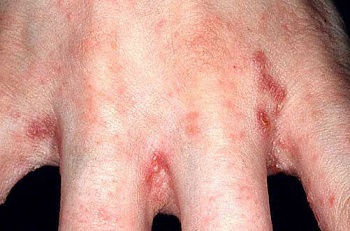
scabies on the handScabies: This is caused by tiny spiderlike mites that are transmitted through contaminated grooming equipment and kennels. Scabies will cause your pet to scratch and bite at its skin. The severe itching is caused by female mites tunnelling a few millimetres under the skin to lay their eggs. The eggs hatch in three to 10 days. The immature mites develop into adults and begin to lay eggs of their own.

The entire life cycle occurs on the dog’s skin, and takes just 17 to 21 days. When transferred to humans, it can produce an itchy rash around the belt line. Scabies mites, however, do not live on human skin for longer than three weeks. If the problem does not disappear in three weeks, look for a continuing source of infestation.

Stay parasite-free
– Wash all vegetables thoroughly before you serve them to any family member, human or pet.
– If you garden, wear shoes and gardening gloves. Wash your hands and other exposed skin if you come in contact with soil.
– Practice good tick protection. Do regular tick checks on your kids and your pets. If necessary, use safe tick repellents to prevent tick attachment.

With inputs from dermatologist Dr Poonam Wadwani, D&T Medical Centre, Mumbai.

(Pictures courtesy www.thefastertimes.com, hubpages.com, saludable.infobae.com, www.visualphotos.com)

Categories
Cinema@100

Saira Bano and the summer of ‘99

She felt that the film industry never stood by anyone. Sairo Bano has been Dilip Kumar’s ‘voice’ for years now.
by Humra Quraishi

She has been the unofficial spokesperson for her illustrious husband for years now. And this was a role probably given to her by him in the first place.

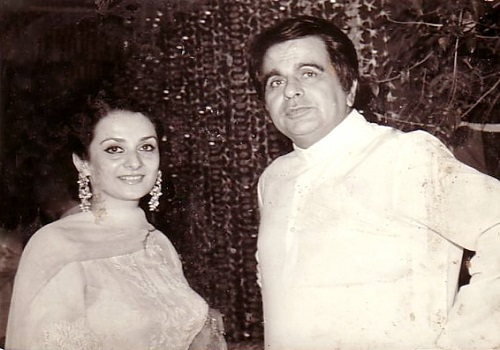
dilip kumar and saira banoIn 1999, I knew that the yesteryear golden couple of Hindi cinema – Saira Bano and Dilip Kumar – were in New Delhi. I was keen to interview them, so I tried all the possible sources that could connect me with them. But the closest I could get by way of a source was a homoeopath who was treating the couple. And the closest he could get by way of helping me get an appointment with them was to tell me that they were staying at the Le Meridien Hotel, in a particular suite.

I landed at the hotel lobby, but before I could move towards that particular floor, I could see Saira Bano and Dilip Kumar in the glass lift descending to the lobby.

I rushed towards them, heart beating fast, but before I could begin with my well-rehearsed lines, introducing the homeopath connection by way of introduction, I could see a frown spread across Dilip Kumar’s face. It was obvious that he hated this intrusion, and in chaste Urdu – well, Urdu so chaste that it seemed out of place and filmi – he said that I should have come only and only with a prior appointment, and they being so very busy here in New Delhi, did not have the time to say even a word.

What’s more, he said, if any words had to be spoken, only Saira would do so, not he.

He continued out of the lobby, with his wife and several others who had gathered around to hear him. I believe the two were meeting several important people in Delhi at the time.

It was the summer of 1999. It was a crucial and tense phase for the couple – that was the year of the big political controversy surrounding Dilip Kumar and the Nishaan-e-Imtiaz, which the Pakistani Government had bestowed on him, and which he refused to return. I remember this meeting in great detail even today, particularly in the current political climate.

When I next got a chance to speak to Saira, this was my first question to her. “Why doesn’t your husband return this award? Why keep it when it is causing so much tension?”

She’d replied, “Return it? Are we living in a democracy or is it some sort of dictatorship? How much we are being bullied! Tell me how much of a mess can you take in your life? After all, this award was not given to him now, but it was given last year, in March 1998. Even then, Dilipsaab was so cautious, that he first took permission from our Government and from the Prime Minister.”

I said, “But your critics are crying themselves hoarse, saying that this is 1999, there’s a war with Pakistan so the scenario has changed…”

To that, Saira Bano said, “Tell me, do we now go looking for all those trophies, awards and citations that our cricketers and sportspersons received when they had played in Pakistan? saira and dilipShould we ask them to give back all those awards they’d received earlier? I’m  told that even LK Advani sahib had got some citation from Pakistan…all this talk of returning awards seems petty.”

“Your husband’s critics also point out that Rabindranath Tagore had returned the title that the British had bestowed on him, and in keeping with that action, Dilip Kumar should return this Award,” I said.

“Rabindranath Tagore returned it on his way on a certain occasion. He wasn’t labelled anti-national, nor was he bullied and threatened, like we are being bullied and threatened,” was her terse reply.

“It is said that certain Right-wing political parties in Mumbai are not happy with the social service work you undertook after the Bombay riots of 1992-1993. Is this why you are facing this backlash?” I queried.

She said, “There is a communal trace to the whole issue, but let me add that I do social service for all people, people from different communities. I try to reach out to whoever is in need…And I do so with a group of close friends who belong to different communities; in fact, most of my friends are Hindus. We are not high profile at all, but try to serve in a quiet way…I feel very upset by what’s been happening. Witnessing those riots was a nightmare, and the growing fascism and communalism has hurt me, shattered me. I feel grieved, as though my dream has been broken, my glass been shattered. One hopes that common sense prevails and this growing communalism gets controlled, so that we can all coexist in peace.”

dilipsaira-dec11I mused on this for a while, observing the still beautiful woman who gave interviews in place of her husband, who spoke with such eloquence about facing censure. She often spoke of him as a “man of honour who was bound to be honoured.” Then I reflected, “Usually film stars stand united in times of crisis, but in this present crisis that you and your husband are facing, film stars are maintaining a studied silence. What do you think of this?”

“Have they stood by anyone? Nobody takes a stand these days! Even when Sanju (Sanjay Dutt) was being harassed, the only two people who spoke for him were Shatrughan Sinha and my husband. Even when the film Fire was in trouble, only my husband spoke out on the matter,” she said.

(Pictures courtesy www.merepix.com, ibnlive.in.com, www.bollywoodshaadis.com, photogallery.sandesh.com)

Categories
Deal with it

Fake ransom calls and a bigger crime

Demanding ransom for a kidnap, man arrested and found to be a habitual bag snatcher with a past police record.
by The Editors | editor@themetrognome.in

Mumbai sure does witness a lot of strange goings-on. Sizeable unemployment and the lure of fast money prompts several to take up a life of crime in Mumbai, and it is often while investigating a certain crime that another crime or criminal surfaces.

Take, for instance, the case of Yogesh Jaiswal (26). A few days ago, he saw the posters of a missing 20-year-old from Borivli. Studying the posters and the boy’s photo on them, Yogesh had a (or so he thought) bright idea to make some quick money. So he dialled the phone number listed on the poster, and finding that the number belonged to the missing boy’s father, demanded a ransom of Rs 10,000. He is said to have told the man that he had kidnapped his son, and that the money was to be deposited to an account in a bank located in Uttar Pradesh, if he was to see the boy alive.

A case had been registered at MHB police station, and police were suspicious about the fact that despite repeated pleas, the ‘kidnapper’ had not allowed the missing boy to speak with his father. A round of investigation later, Yogesh was arrested from Borivli railway station on July 13, and the mobile phone he had made the calls from was seized from him, as well as an ATM card.

Surprise!

But though Yogesh confessed to not knowing anything about the missing boy and having made the ransom call only to make some money, cops looked up his name and found a bigger story. “We found that he specialised in stealing bags from Government offices,” said an official connected with the investigation. “He would try to use the ATM cards he would find in the bags to steal money. Previously, he had stolen bags from the Income Tax building at Marine Lines and the CST Railway office. In 2010, the Azad Nagar police station had arrested him for stealing bags, and he had been to jail for the theft.”

Yogesh was out of jail a few months ago, and is not a permanent resident of Mumbai. As per police records, his native place is in Sambarkata, Gujarat.

Meanwhile, the whereabouts of the missing 20-year-old are still not known.

(Picture courtesy www.huffingtonpost.com)

Exit mobile version