Categories
Kharcha paani

5 reasons to shop online

With a credit card and access to the right websites, online shopping is the smartest way to save time, effort.
by Dipen Tewari

What would you rather do – make your tired way to the shopping mall to pick out a dress by a reputed brand, or save time and pick the same dress online? As our spending power increases and more and more people get connected to e-commerce, shopping online for a variety of products is becoming the norm, rather than an exception.

Earlier, people were cautious about sharing their credit or debit card information on the Internet. However, with sites enhancing their payment gateway security, shoppers slowly started buying such items as books, perfumes and movies online. Slowly, as sites started offering photographic views of such categories like clothes, shoes and bags, people ventured into buying even these items online. Now we have reached a stage where shoppers are buying expensive diamond jewellery, home appliances, and even furniture online.

If you’re still one of those people who are not shopping online, here’s why you need to check out this option:

Save time. Let’s face it, most of us really don’t have the time to trudge to the nearest mall or department store to check out the sale for a brand that’s been advertising in the papers. We can’t say when we will be done with work, and after facing the long day in the office, how many of us are really in the mood to shop? Instead of checking out products in a physical store, we can save a lot of time by checking out the same merchandise online, comparing the best prices and placing our orders. It’s often that simple, and you save yourself a lot of precious time.

Save the effort. Bibliophiles buy books by the dozen at times, and after browsing for the correct titles and buying the books, they have to cart the heavy purchases home by themselves. Or, there may be people who are scouting for an attractive dining table and who are haggling with the store owner over the transportation costs of their new furniture. Both these categories of shoppers can benefit from shopping online. Not only do many e-commerce portals offer different views of such product categories as clothes, shoes, bags, furniture, even crockery and household utensil sets, they also ship the merchandise to your doorstep for free. It’s really not worth the effort to go to the shops to buy what is so easily available for sale on the Internet.

Save money. Shopping sites like Flipkart have regular discount days every week, if not finite sale periods where customers get very heavy discounts on products. By merely sitting at your workstation or scrolling on your mobile, you can shop on the go for a wide range of needs, compare your spends and make the best purchases. Most reputed portals these days also have tie-ups with banks for cash back offers on selected categories and brands, or on all purchases. Ultimately, you end up saving quite a lot of money with no extra associated costs of travel borne by you.

Change what you don’t like sitting at home. Most e-commerce sites in India offer a ’30-day return’ option for purchases, even for such items as clothing and bags that you may have used during this time. As long as the product is not being returned to the company in a mangled condition, it is taken back with either a full or partial refund (depending on company policy on returns, condition of the product and reasons for returning). This normally happens with categories such as shoes and clothes, where people can mistakenly pick the wrong size or colour; however, jewellery companies such as Caratlane also take back sold merchandise. The best part is, just as the product is delivered to your doorstep, so is it picked up from your home, thus making the entire process convenient for you.

The entire shopping universe at one go. Sure, a mall offers you the widest possible range of products in one spot, but no mall in the world can stock all the brands and services that you require. This is where online shopping portals do the trick – on one gadget, you can access every possible product category, the corresponding brand selling the product, the price range for it and the delivery system. What’s more, these days there are sites that even compare the prices and products across a spectrum of other e-commerce sites, so the shopper is not confused by the wide array of options.

(Picture courtesy www.kgns.tv. Image is used for representational purpose only)
Categories
Achieve

Underprivileged children put up photo exhibition in Mumbai

Click Rights, a photojournalism initiative, returns in its 2015 edition with photographs taken by street children of their younger siblings.
by Child Rights and You

The first five years play a significant role in a child’s life. But for thousands of children, a healthy start to life continues to be a distant dream. Long before they turn five, their physical, emotional and cognitive growth is hampered by the lack of adequate nutrition and healthcare. Child Rights and You (CRY) aims to change this by launching its ‘Get Healthy. Give Healthy’ campaign that will give 2,81,045 children a healthy start to their lives.

One of the primary features of the campaign is CRY’s annual photo journalism initiative called ‘Click Rights’  that is in its 4th year.  Click Rights 2015 will highlight through the power of photography the health and nutrition challenges faced by children under the age of 5 years. A large number of the photographs have been contributed by children from our supported project areas in the States of Maharashtra, Gujarat and Chhattisgarh, with training from esteemed photographers and CRY volunteers. These children were given cameras to photograph the daily lives of their younger siblings. Many of the elder children had in fact never stepped into a school because they were entrusted to look after their younger siblings.

Their photographs will be showcased at exhibitions across the country, in malls, parks, colleges and as part of projections on prominent buildings.

In Mumbai, the first exhibition will be at Phoenix Mall, Kurla (West) from October 17 to 18.

“The real health of a country can be measured by how we look after our children. Hence it is alarming that in India today, 13 million children are un-immunised, making them susceptible to deadly diseases, and 40 per cent of these children are underweight. With Click Rights, we would like to highlight the health related issues confronting children in India. We hope it will build awareness, start conversations and motivate people to take action for children,” says Kreeanne Rabaddi, Director, Western Region, Child Rights and You (CRY).

PHOTOVOICES

This is what 12-year-old Raj clicked.

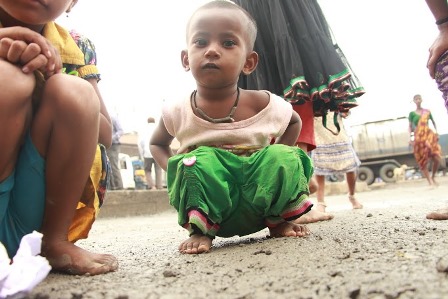
Photo by Raj“This is my two-year-old brother Manas. He is quite naughty and plays with mud all day. We are three brothers and one sister. We live on the roadside and spend our whole day playing. We have no school in our area. We don’t have any toilets as well. I want to see my brother happy. I want to build him a home one day.”

This is what six-year-old Anjali clicked

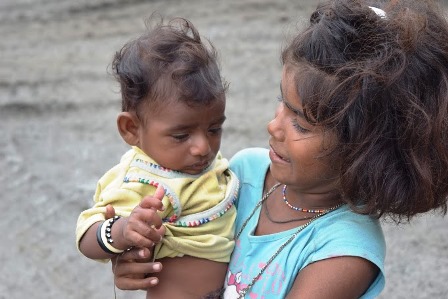
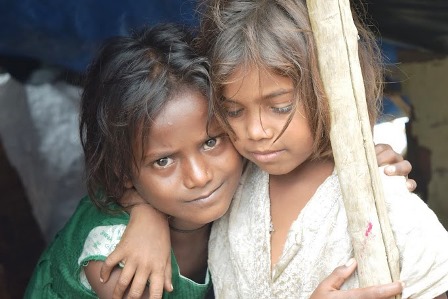
“My little brother Ajay (name changed, in featured image above) stays with me all the time and plays with me. I take care of his needs. He is one year old. My parents are labourers, they leave the house early in the morning and come back only after dark. We live on the street, sometimes it is difficult to manage him, but most of the times I do it with ease. I love my brother very much and think of him as an angel. If he weren’t there in my life, I don’t know what would I do the whole day.”

This is what 12-year-old Umesh has to say of his photo…

“These two girls are my best friends. They are more like my sisters. Many of the kids don’t go to school, so we play all Photo By Umeshday on the road. Some people give us food to eat, on Sundays so many bhaiyas and didis come to visit us and we have fun sessions with them. I wait for Sundays, that’s the only day I feel loved and cared for.”

Categories
Deal with it

How to make a good impression at work

You don’t need to suck up to the boss. Healthy work habits, promptness and good manners will get you far.
by Reyna Mathur

Shashwati Agarwal (33) vividly remembers her first job at a magazine office in Bangalore. “As an editorial assistant, I had to ensure that all functions in the office happened smoothly, nobody’s work got held up due to scheduling mistakes, all advertisement dummies came in at the right time. I was also in charge of ensuring smooth production.” She says the biggest compliment came from her boss, who called her when Shashwati was on a month-long break owing to an illness. “My boss said, ‘We can’t handle this without you. Please come back soon!’” she laughs.

All of us crave for approval and confirmation that we are doing our jobs so right that the office will suffer if we are not there. But the practical reality is that nobody is indispensable at the workplace – if you quit today, the office will simply replace you and work will go on as before. However, there are always a few employees who are so impressive at the office that when they decide to quit, the management normally tries to talk them out of it. Contrast this with other employees, whose resignations are accepted at once. This means that the former are doing something that the latter are not.

Here’s how you can come close to being indispensable at the office:

Always be ahead of schedule. If you are in charge of a certain task which has to be completed in a week, start on it the moment the assignment is given to you. People make the mistake of starting work at the last minute and then handing in shoddy work. If you give yourself enough time to work out your assignment, your focus will be greater and the quality will be top notch – a sure way to get noticed. If you are in charge of a regular task, ensure that you are ready with the final product before deadline.

Cultivate good manners. Always be ready with a smile and a genuine compliment for colleagues and your immediate seniors. Your composure will be tested in times of stressful high-pressure situations, so handle yourself with dignity and calmness. If you find a colleague panicking over an issue, try to calm them down and offer assistance. If you see your boss looking tired or stressed, tell him or her in a polite, non-intrusive way that you have noticed them looking worried, and that they should let you know if you can help in any way. Extending a helping hand always works, but be genuine in your interactions.

Display initiative. If you have a solution to a problem, don’t be afraid to offer it. Many employees don’t offer solutions fearing that others will think they are showing off, or that it will annoy the boss if they speak out of turn. Unless you are being brash and arrogant about it, there is no harm in revealing that you have something to say. Make your point and don’t gloat if your suggestions are taken on board, and don’t sulk if they are not. You are not there to display one-upmanship; you are there to work with a team. Don’t try to stand out in a group and never claim credit for the group’s success even if it was your hard work and ideas that won them the success.

Be organised. Understand how the office operates on projects, and follow that system religiously. If necessary, add your own tips and tricks to the system to optimise it further. If you are left to work out your own system, start by making progress charts of an ongoing project, and if necessary, tack them on to the soft board at your work station. This brings a semblance of order to the job, especially if it helps you to keep track of all deadlines and summarise the project satisfactorily. Your seniors might adopt this system and you will be credited with introducing it to the office.

Don’t badmouth anyone in the office. Even if your immediate colleague is highly irritating or your boss is irrational, refrain from speaking ill about anybody in the office. Since everybody gossips, the person who doesn’t immediately sticks out and gets noticed by the seniors. Your office management will understand that you are discreet, mature and capable of not giving in to the temptation to gossip.

(Picture courtesy www.morganmckinley.com. Images used for representational purpose only)
Categories
Uncategorized

Works your building society must carry out

There is no excuse to not carry out regular repair works – insist that your building society carries them out.
by Dipen Tewari

The building you stay in collects monthly dues from you in lieu of maintenance charges, lift charges, parking fees, open space maintenance, amenity maintenance etc. This money collected goes into the society’s coffers, and is to be used in times of repair work and painting and plastering jobs.

However, many buildings default on carrying out these repair works. As such, they do not have the option of not conducting safety and structural audits (especially for old buildings) and getting the premises repaired every five years, since they are legally mandated to do so. Many buildings even fail to furnish receipts of the collected money, and do not even hold obligatory general body meetings to discuss the need to increase charges and other matters of common interest.

Apart from these, building society managing committees also have other important obligations:

Intervene in disputes. If a house is affected by leakage from the house above, and the second party refuses to carry out repairs and painting to provide relief to the first, the managing committee must intervene in the matter. They can call for a special meeting for members to air their grievances face to face, and ask the offending parties to rectify the situation. The committee performs an important arbitrator’s role in this way.

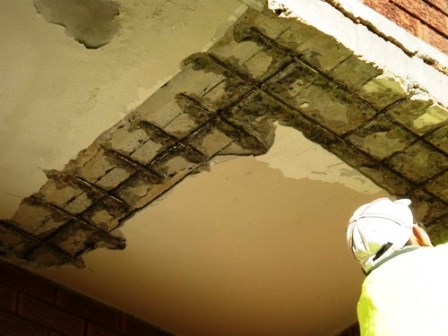
Stop unauthorised repairs. Some members may decide to knock off important construction elements like columns in their houses. This is the number one reason for building collapses. As such, members are required to inform the committee of the nature and extent of repair work they are about to undertake, and the committee is legally bound to object if the proposed work will endanger the overall structure.

Conduct regular repairs. As buildings age and face wear and tear, it is necessary to optimise their overall life by carrying out periodic repairs. These may be as simple as re-plastering and repainting the external walls, or as tedious as replacing crumbling water lines and sewage systems for the entire building. The building is duty-bound to conduct necessary repairs, spanning from rebuilding broken compound walls to replacing old tube lights in the premises, to getting the water tanks thoroughly cleaned at least once a year.

Initiate action against defaulters. Some members of the society regularly default on their monthly dues to the building, for various reasons. The committee is fully empowered to initiate proceedings against such errant members if they do not respond to written intimations or pay up the dues within 30 days of being informed to do so. The committee can approach the Registrar of Societies for redressal in the matter.

Maintain essential services for the building. It is the managing committee’s job to ensure that water and electricity are being provided to the society without interruption, that garbage collectors go to all the flats in the building and dispose off the trash safely, lifts are running smoothly, the swimming pools are cleaned periodically, that gardens and potted plants in the premises are being trimmed regularly, and that no stagnant water is collected in the building’s open spaces, among other duties. The committee must maintain a log book of all service staff such as the building watchman, garbage collectors, plumbers, electricians, construction and repair staff, etc.

Cannot take decisions without members’ consent. The managing committee cannot take financial and other decisions for the building premises on behalf of the members and without consulting with them via general body meetings. Similarly, the managing committee must change every year via a fair election process. Some societies levy arbitrary charges for parking, or increase maintenance charges without adequate reason or notice. Members can refuse to comply with any diktats that have not been arrived at after proper consultation with all residents.

(Pictures courtesy www.indiamart.com. Image is used for representational purpose only)
Categories
Wellness

Maharashtra skateboards for breast cancer awareness

Skateboarders from across the State convened recently at Bandra to spread awareness about rising incidence of breast cancer in India.
by The Editors | editor@themetrognome.in

October is known as Breast Cancer Awareness month. In India, however, despite rising numbers of breast cancer victims, many women are still shying away from speaking about the disease. There is also widespread ignorance about the disease and its symptoms, which renders it undetectable for long.

Understanding that breast cancer continues to the leading killer of Indian women, the DS Research Centre came up with the idea of spreading awareness about breast cancer. They decided to do this with a skateboarding rally, which would travel the length and breadth of the country all this month. The rally kicked off in Mumbai at Bandra with over 50 skateboarders from across Maharashtra participating in it.

The next phase of the rally goes to Bengaluru.

Some facts about breast cancer:

– Breast cancer accounts to about 29.7% of all cancers in women.

– Approximately 2,000 to 2,500 new cases of breast cancer are detected every year in Mumbai, and the number is increasing.

– Presently, breast cancer is more common in the younger age group and 52% of all women suffering from breast cancer in Mumbai are below 50 years of age.

– A significant number of patients are below 30 years of age.

– Men can get breast cancer too.

– 1 out of every 2 women detected with breast cancer is in the terminal stages of the disease in India.

Categories
Trends

Low women’s education leads to early marriages?

A fact finding report reveals links between the level of women’s education in India and their subsequent status in life.
by Child Relief and You (CRY)

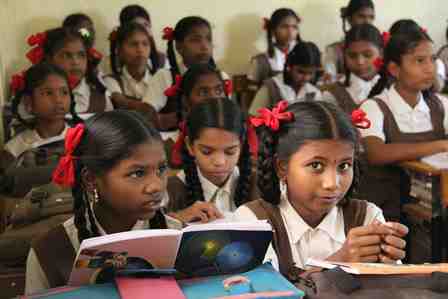
In India, all issues related to girl children ranging from female infanticide, domestic child labour to prevention of girl child trafficking are all enormously challenging tasks requiring sustained efforts on part of all duty bearers. Like all other rights viz Right to Nutrition, Development, Protection and Participation, a girl’s Right to Education continues to remain a critical and seemingly insurmountable challenge.

Last few years have seen a significant improvement in school enrollment at primary education, however, the same is not the case with secondary and higher secondary level. The Net Enrollment, which is a measure of the percentage of girls who attend school age-appropriately, is 89% at the primary level, and it drops to a meager 32% in higher secondary education (Source: Unified-District Information System on Education (U-DISE) 2014-15).

The link between low education and early marriage

Today India is leading in the total number of child brides globally. There is abundant documented evidence linking lack of education to early marriage, particularly for girls. There are also available studies showing the link between low education level of mothers and the early marriage of their daughters. NFHS-3 (2005-06) revealed that more than 85% of the surveyed girls who were married before the age of 18 had mothers who had received less than 10 years or no education.

We also have a high number of girls working as domestic workers and those who constantly face issues of protection. At a micro level the work demands convincing parents of the girl child to continue her schooling; changing attitude and practices of communities and closely tracking that no girl child drops from school. The need of the hour is to invest adequately in secondary and higher secondary education for this segment of population, so that our girls stay away from these multiple vulnerabilities.

The figures on the ground

The RTE Act (2009) covers children between the ages of 6 to 14 years, and enables free and compulsory education at the primary and upper primary levels. However, in absence of any legislation for children above the age of 14 years the scenario at the secondary and higher secondary level unfortunately remains dismal. The average annual dropout rate for girls rises from 4.14% at primary level to 17.8% at secondary level (Source: U-DISE 2013-14). Access to education post the elementary level continues to be a huge challenge, considering only 15.4% of schools in India offer secondary education and further still only about 7% of the schools offer higher secondary education.

Year % of Privately Owned Secondary Schools % of Privately owned Higher Secondary Schools
2010-11 54.8%
2011-12 Data not available
2012-13 52.38 54.04
2013-14 54.76 55.57
2014-15 55.52 58.79
Table-1 showing share of privately owned[1] schools in India (U-DISE statistics)

Back in 1966, the education commission (1964-66) chaired by DS Kothari recommended that India should allocate 6% of its GDP. Later this figure was challenged and revised by many scholars but the fact still remains that India is nowhere close this figure in terms of spending on education. More than 55% of schools offering secondary and higher secondary education in the country are not State-owned which renders them unaffordable to children of low income households (Source: U-DISE 2014-15). On the other hand the share of State owned schools have not seen any significant increase over the years.

STATE % OF PRIVATE SECONDARY SCHOOLS % OF PRIVATE HIGHER SECONDARY SCHOOLS
Maharashtra 92 94.8
Uttar Pradesh 90.44 94.1
Gujarat 86.65 91.78
Karnataka 64.94 68.32
Kerala 67.92 64.72
Table -2-Top 5 states having private ownership of secondary and higher secondary schools (U-DISE 2014-15)

Only in 10 out of 36 States in the country does the Government currently have an ownership share of two thirds or more of both secondary and senior secondary schools. The issue of privately-owned schools needs further attention in States such as Maharashtra and Uttar Pradesh where the percentage of private schools is more than 90% at the secondary and higher secondary level.

According to the 12th Five Year Plan (FYP), household expenditure for children going to private schools is higher (Rs. 893/- per month) than for Government schools (Rs. 275/- per month). The lack of access to secondary and higher education coupled with this challenge of affordability certainly impacts the girl child most since traditionally, families are more likely to invest in the education of the male child and girls tend to be married off early. There are over 4.6 million married children in India the age group of 15-17 years (eligible for secondary and higher secondary education), of which more than 70% (3.35 million) are girls.

Kreeanne Rabadi, Regional Director, CRY – Child Rights and You adds, “Mindsets to educate girl child are changing in India. Even in the most remote villages, many parents want to send their daughter to school. We need to drastically increase resources to meet these demands of making secondary and higher level education, affordable and easily accessible to girl child.”

(Picture courtesy www.realyouth.org. Image is used for representational purpose only)

 

Exit mobile version