Categories
Do

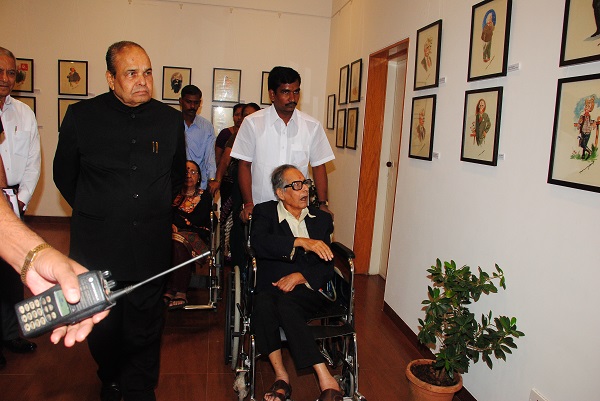
RK Laxman, in an exhibition

Over 200 of the legendary cartoonist’s works are being displayed at Worli’s Nehru Centre Art Gallery till January 5, 2014.
by The Editors | editor@themetrognome.in

Journalists and students of the profession will often remark on the role and importance of the political cartoonist in the newspaper’s overall scheme of things – and lament at the absence of the cartoonist in contemporary media.

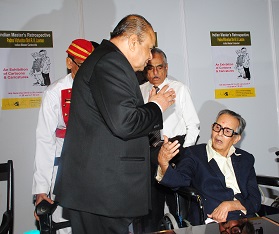
Hence, it is heartening to visit an exhibition of works by India’s best-loved political cartoonist, RK Laxman. The exhibition, the 21st in the ‘Indian Master’s Retrospective’, was inaugurated by Maharashtra State Governor K Sankaranarayanan at the Worli-based Nehru Centre Art Gallery, and the works have been curated by the Gallery’s Assistant Director, Nina Rege. The showing includes over 200 cartoons, old and new, made by Laxman.

RK Laxman exhibitionSpeaking at the inauguration, the Governor said, “Few cartoonists have held forth such a long sway over readers as RK Laxman has done with his remarkable work, day after day and year after year for 60 long years. He has been a ‘people’s representative’ in the real sense of the term for all these years.  He gave face to the aam aadmi in our country. Through his cartoons, he has represented the silent millions of the country, voiced their real problems and raised their issues forcefully in the corridors of power.

“Very importantly, Shri Laxman has explained to the readers a range of complex political, national and international issues using his master strokes and a few simple lines. Personally, I rate the cartoonist a few notches higher than the Editor.”

The Governor exhorted the public to visit the exhibition as it “brings to light some of Shri Laxman’s best and yet less known works.  It has also brought out Laxman, the artist. His sketches of personalities and landscapes are outstanding and prove his brilliance as an artist.”

A new book,  Finely Exaggerated, will also be released during the exhibition period.

Head to Nehru Centre Art Gallery, Worli, from 11 am to 7 pm. The exhibition is on till January 5, 2014. Call 022 24963426 for details.

(Pictures courtesy Raj Bhavan, Mumbai)


Categories
Beauty

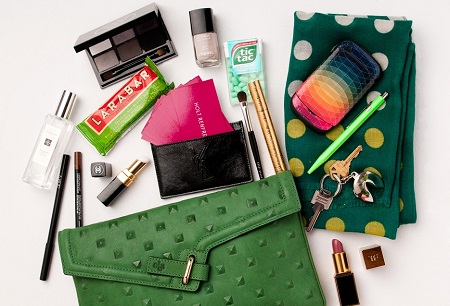
10 must-haves for your clutch

A handy list of 10 beauty essentials and practical items that your clutch must have, especially in the party season.
by Ankita Pathak

This is the season for holidays and parties. But hours of eating, drinking, and making merry can have an ugly side—smeared mascara, smudged lipstick, unflattering shine on the face. So how do you repair the damage quickly?

We’ve found a pretty solution: ten beauty essentials tiny enough to tuck into your clutch, perfect for retouches, refreshes, and any fashion or beauty emergency.

Concealer: If your concealer fades before you do, stash this easy-to-use stick in your purse. It camouflages dark circles, redness, and zits in just one swipe.

Perfume:  After a night of dancing, it’s perfectly natural to want to reapply your perfume. And we love anything that comes in a small package or is a solid perfume!

Band-Aid: Are those high heels of yours giving you a blister? You don’t need to sacrifice style if you have the right first aid materials.

Compact: Want to check your eye make-up in a pinch? Make sure you have a compact handy. There’s nothing worse than oily skin, but luckily, compacts will take care of it with one quick swipe. Just make sure you don’t cake it up!

Lipstick:  When you’re busy having fun, you don’t have to worry about your lip colour rubbing off. Carry the lip colour you’re wearing that night for an instant dash of fresh colour.

Bobby pins: Flyaways, sticking-out strands and out-of-place bangs can ruin your look, and your evening. To keep this from happening to you, toss a few bobby pins into your purse – they’re easy to carry and extremely useful in a hurry.

Comb: A mini pocket hairbrush is just as effective as its full-size counterpart. The boar and nylon bristles     tame static and smooth snarled strands. You can opt for a foldable one to make extra room!

Gum: Because it tastes good and smell good, too. A little spearmint is a nice way to offset the smell of your martini-soaked tongue, or the garlic stink after a Chinese takeaway.

Quick snack: It could be a chocolate or some salty biscuits; they are perfect to carry around in case of a hunger emergency. It’s instant energy and a yummy fix for all hunger games!

Emergency cash, ID proof and business card: Carry some extra cash in case you need to take a cab home. It’s worth having back-up cash in case you can’t find an ATM. An ID proof is a must-carry. At the very least, so that whoever finds your clutch that you left at a party can track you down and return it the next day. Carry your business card with you because you never know who you might just bump into!

Categories
Achieve

How the Mumbai Rail Map was conceived

Their IIT-B class project has thrilled commuting Mumbaikars, but Snehal and Jaikishan’s Rail Map is still a work in progress.
by The Editors | editor@themetrognome.in

It is easier for a newcomer in Mumbai to lose his way than find it, says Jaikishan Patel (26), a first year student of Visual Communication at Industrial Design Centre, IIT-B, Powai. Says the Chhatisgarh native, “I first came to Mumbai in 2010, and I was thoroughly confused by the three suburban rail routes – Western, Central and Harbour. Now I have been here since last year, and I still find them confusing! Nothing has changed at all.”

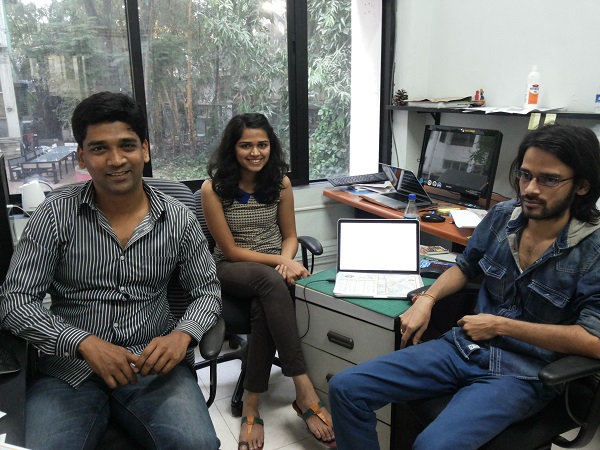
This thought was uppermost in his mind when he and a fellow student of their 12-student class, Snehal Patil (24), opted to map Mumbai’s local train network. Jaikishan (extreme right in pic above) says, “It is easy for people to lose their way on railway stations, particularly on the Harbour Line. There are no signages, activity and movement patterns are not planned. People get from one spot to another by asking others for directions. Even the indicators on Western line are different from the Central line. This is not ideal for a rail network that is probably busier than the Indian Railway network.”

Adds Snehal, “Though I stay at Thane, and I know all the lines and stations, I still get confused. The existing rail maps are very badly designed. That’s why both Jaiki and I opted to design an easy rail map for Mumbai residents.” The duo started working on their project five weeks ago, and started by studying the main junction stations such as Kurla and Dadar. “We found that the only maps that do exist are to be found next to ticket windows, and even these are ticket fare guidelines. Other than these, we went on the Internet to look up the existing routes and for exact names and chronology of stations.”
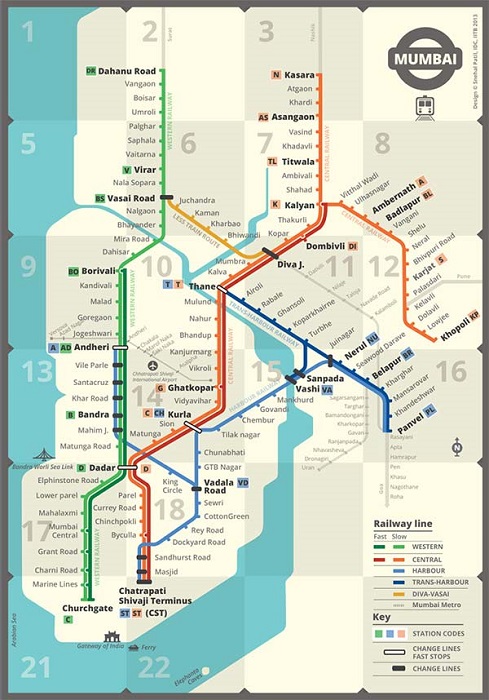
rail mapThe map is now ready and very easy to navigate – three steps help you locate the station you want. 1) Select the desired station from an alphabetical list with a corresponding box number. The map is divided into a grid of 22 squares, and each square carries a box number. 2) See the box number (of the selected station) on the list and locate that number on the grid. 3) Your station can be located in the square marked with that particular box number on the grid.

The box number is also tagged with a line and station code for easier route navigation and understanding. Besides this, there is a simple legend that explains the colours and the icons used.

This is not the first time that IIT-B students have toyed with redesign for the Railways – last year, student Deepali Karanjavkar came up with a standardised design for railway indicators, using the Devnagari font. Deepali also developed the font for the easy-to-read LED indicator after testing it for sizes and spacing. Sadly, the proposal never took off.

How the map took shape

After a fair amount of legwork and Googling existing rail routes, the rail map began to emerge. “The most challenging aspect was putting the grid together. I started with a linear diagram at first, while Jaikishan worked on another map,” Snehal says, adding that the maps were later merged to form a single map.

Three weeks later, the first draft of the map was ready. “We decided to put the map out for people to study and give feedback on,” says Mandar Rane (extreme left in pic above), the duo’s professor who is helping shape their project. “After the initial mapping, tracks were added. Colour demarcations were made for fast and slow trains. Some people wrote to us pointing out locations where the tracks merged with Indian Railways. The idea was to simplify the map, but not to the extent that details would be lost,” Mandar says.

Work in progress

At first, there was a barrage of feedback on the map, with several people suggesting corrections. “Now, we receive about 12 emails a day. We need a reliable source to authenticate the feedback,” Mandar says. He remarks that the map should ideally be viewed by the Railway authorities before it is finalised. “The Central Railway has shown an interest in looking at it, but we are yet to hear from Western Railway,” he reveals.

Crowdsourcing helped in correcting the design. “We have made about 30 revisions to the map already,” Snehal says. “After launching the map, too, there have been about 10 revisions.”

The trio will freeze the design at some point, but “if there is a mistake, we have to correct it,” Mandar says. “We want this map to reach the users of Mumbai railway, so that their commute becomes easier. If you understand the network, your travel turns out better,” Jaikishan says.

The point of the whole exercise, Mandar says, is to make the travel model clearer. “After seeing the map, one man wrote to me saying, ‘Now I know how my daughter travels to Vashi!’ We want the map to reach people, ideally as a permanent display at stations. If not, it should be available in a portable form so that it can be folded and put away in a wallet or purse,” he explains, adding that they are toying with the idea of creating an app that will cover the gamut of rail travel in Mumbai.

The map, at this stage, only needs endorsement and support from the Railways. “It is ready, it needs to be reviewed, and then it needs to be installed. It is a very clear model, actually – any corporate would be happy to sponsor it. It’s a win-win for all concerned,” Mandar signs off.

 If you have suggestions to make about the map, write to idcrailmapfeedback@gmail.com. View the map on mrane.com/railmap.php

(Map courtesy Snehal Patil, Jaikishan Patel and Mandar Rane)

Categories
Trends

Medical Association debunks harmful cell radiation theory

Is radiation from cell phone towers harmful or not? Indian Medical Association says the Sun causes more harm to humans.
by The Editors | editor@themetrognome.in

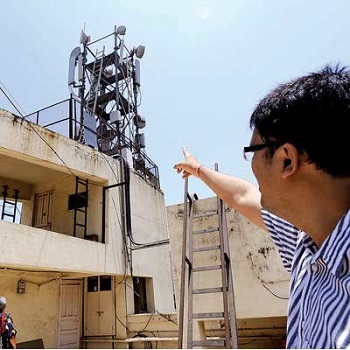
The clamour against cell phone towers in residential areas, and worse, atop residential buildings, is growing louder by the day. Activists are up in arms against cell phone towers, citing harmful cancer-causing radiation and a spate of other illnesses in humans.

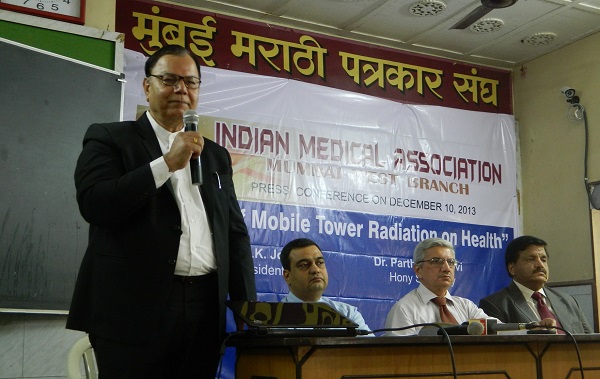
However, the Indian Medical Assocation’s (IMA) West branch yesterday declared that the fear over harmful effects and health hazards from these radiations and emissions is “an unwanted and unfounded one.”

cell phone towersThe IMA Mumbai West addressed a press conference in Mumbai, during which doctors declared that “cell tower radiation is lower compared to RF emissions from radio FM and television, and is not hazardous to human health as has been perceived so far in some quarters.” Dr SK Joshi, President, IMA Mumbai West, said, “Radiations from the mobile towers poses no threat to health or cause cancer, as is commonly believed. There are no empirical findings to establish that mobile tower radiation causes cancer or any such diseases. Radio and TV have been in operation for over 50 years without any known health consequences. Cell tower radiation is lower compared to RF emissions from FM radio and television, hence it is not alarming. The radiation emitted is just too weak to be harmful. Across the globe, these emissions are monitored by UN bodies like World Health Organization (WHO), which comes out with fact sheets from time to time.”

He added, “We understand that the emission levels are prescribed and monitored by WHO in consultation with other UN bodies like International Telecommunications Union (ITU) and an academic body of physicists, International Commission for Non Ionising Radiation Protection (ICNIRP). The Government of each country adopts these standards to the best of their knowledge addressing public health concerns. These organisations monitor the situation across the globe in this sector and come out with fact sheets and advisories from time to time.

“A person absorbs five times more RF from FM radio and television than the base station tower. Radiation from mobile towers has also been found safe internationally and if the Government of India-prescribed levels of radiation limits are observed, then the fear of health hazards from radiation of mobile towers is merely hysteria.”

Other doctors explained that cancer, of the kind mediated by radiation, is known to be caused by mutations in the cell-division machinery—a clear bond breaking process—which results in uncontrolled multiplication of the cells. X-rays are well known to cause such mutations, which is why X-ray technicians are required to wear lead aprons. UV rays from the sun, those which are not stopped by the ozone layer, can cause skin cancers in people who do not have enough pigmentation to block them. “Any electromagnetic wave whose frequency is smaller — such as infra-red, microwave, radio waves, and the typical cell tower waves (900 MHz) used for cell phones – do not have enough energy to cause a mutation in our DNA. The AIIMS building (in Delhi) itself has cell phone towers, which clearly proves that the medical community trusts the WHO-prescribed emission levels. Though only a few epidemiological studies have been conducted, it has found no evidence of cancers in children,” Dr Joshi said.

“Radiation emitted by the Sun is thousand times stronger than ones emitted by a tower. A microwave oven heats up the food inside by bombarding it with microwave photons. The energy inside an oven in one second is multiple times stronger than the cell phone tower emissions. When people are comfortable with such ovens, then they should not have fears about telecom tower emissions,” he added.

(Pictures courtesy IMA Mumbai West and www.dnaindia.com)

Categories
Big story

Understaffed Mumbai Police not able to complete investigations: Survey

But overall, Mumbai residents have faith in the policing systems and most use the police helpline numbers to report crimes.
by The Editors | editor@themetrognome.in

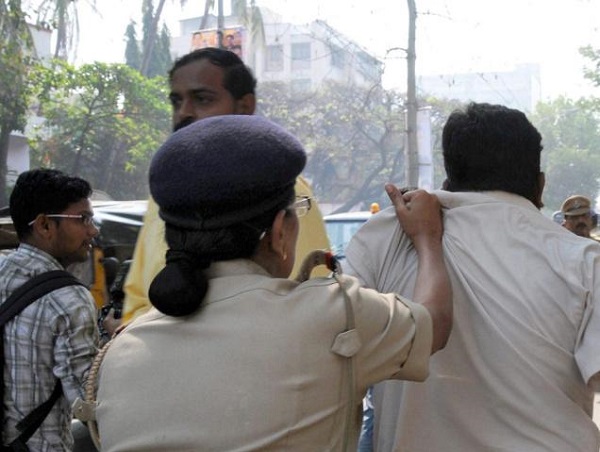
All is not lost when it comes to dealing with crime in Mumbai – it seems that while crimes against women and children are on the rise, citizens’ awareness about reporting crimes has also gone up. However, with Mumbaikars not entirely favourably disposed towards the Mumbai Police when it comes to solving crimes, there is a large majority of people in the city that feels insecure about living in Mumbai.

As per a survey commissioned to Hansa Research by city-based citizen empowerment organisation Praja Foundation, 29 per cent of respondents from South Central Mumbai feel unsafe in Mumbai. This region also felt most insecure about the safety of women, senior citizens and children (27 per cent) and travelling from one place to another in the city (30 per cent). The survey included responses from 24,694 households in all of Mumbai.

Mumbai policeState of policing in Mumbai

However, the survey found a large number of respondents having faith in the Mumbai Police’s investigations. “About 70 per cent respondents said they were satisfied with police’s response to reported crimes,” the survey reads. “Overall, 11 per cent respondents did not report a crime because they did not have faith in the police.”

Higher rates of reporting crimes – whether witnessed or personally experienced – have revealed a grim picture: there has been a sharp increase in the numbers of rapes and molestations in Mumbai, over the past two years. “In the last two years, 2011-2012 and 2012-21013, rapes have gone up by 57 per cent (294 cases) and molestation cases have gone up by 43 per cent (793 cases),” the survey says. Correspondingly, the conviction rate has gone down to 7 per cent in 2012 from 10 per cent in 2011.

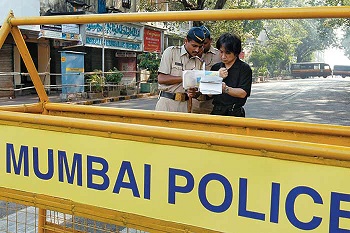
The lack of investigations is not merely down to lack of intent, however – the Mumbai Police force continues to be understaffed and overworked, thus hampering quality of investigation. “As of July 2013, Mumbai Police has a strength of 35,761 officers out of the sanctioned 41,398. The police control room is short by 140 officers. The resultant gap [in manpower] severely affects not only the quality of investigations but also causes delay in completing investigation,” the survey finds.

For the entire survey and past white papers from Praja, visit www.praja.org.

(Pictures courtesy www.thehindu.com, www.outlookindia.com)

Categories
Swaad 'Anu'saar

Nashta bole toh, sirf Mumbai mein – Part II

We continue with our gastronomical journey to discover Mumbai’s favourite chai and nashta items and what makes them so special.
anurita guptaby Anurita Gupta

Part 2

Last week, I outlined a few tea time snack items that Mumbai absolutely loves. In this column, I continue in the same vein.

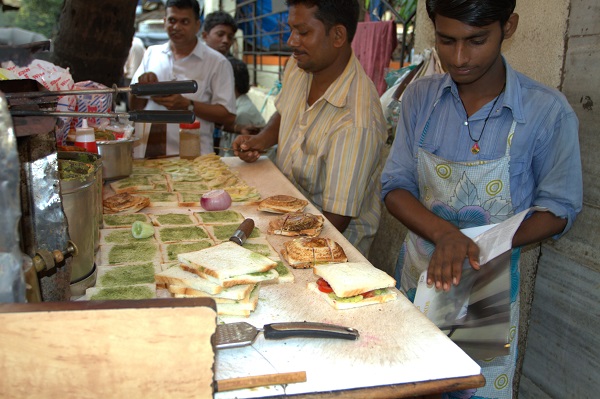
Mumbai street sandwich: Tired after a meeting and heading to another with no time on hand? There would surely be a sandwichwala just within sight, making an enticing list of gharelu sandwiches. The small tapri will normally have surprisingly high standards of hygiene, with vegetables nicely peeled and ready for dicing stacked on one side. Masalas and chutneys will be placed in steel boxes on the other side, and in between will be an assembly board which would also have butter and cheese sticks on it.

The most famous sandwich is the veg grilled sandwich, stuffed with such popular veggies as tomato, onion, cucumber, beetroot and capsicum that are thinly sliced and placed between three slices of bread buttered liberally. It is served grilled or with a nice helping of mirchi green chutney and ketchup. The other famous street snack in the sandwich category is chutney cheese toast. As the name suggests, it has a slather of coriander and aamchoor chutney on a crisp toast which is then loaded with a mountain of grated processed milk cheese. This is then grilled and then served with some more green and red chutneys.

My favourite chutney cheese toast is to be found next to Matunga station. The guy really puts cheese dil khol ke. For the true blue Mumbai sandwich experience, try Swastik Sandwizza, Santacruz market. Their veggie sandwich has crowds swarming outside this tiny shop to get a bite.

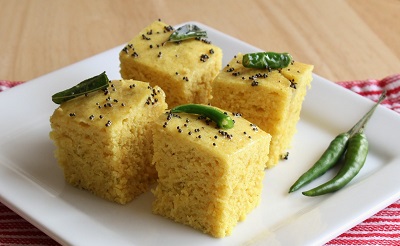
Khaman dhokla: The most known Gujarati snack after jalebi-phaphda is the fluffy gramflour tea time snack, khaman dhokla. Most Mumbaikars relish the khaman or gram flour khaman dhokladhokla with pickled chilies during breakfast or tea time. While the basic garnish is tempered mustard seeds and coriander, there are many inventive versions available with dressings of sev, three kinds of chutneys, and coconut.

You must try khaman dhokla with a strong chai – your day will get a bit lighter. In fact, while on Gujju snacks, the other Mumbai favourite is sev gathiya, which is a deep fried gram flour creation. Mixed with masala roasted dal, it is also known as farsan that is either served with tea or had as an accompaniment with misal pav.

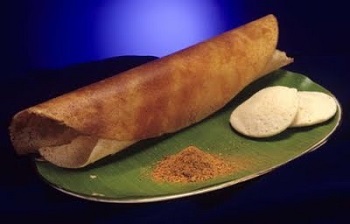
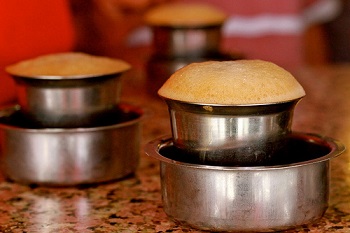
idlis-dosaDosa and idli: There is one more meal between meals that Mumbai happily gorges on, especially in the South Indian part of Mumbai, i.e. Matunga. While the small tapris of these South Indian savories are a common sight everywhere in the city, they take a bit more time to make than the sandwich or the bhel, but it is worth the wait for sure. Put it down to my ‘corrupt’ taste buds, but I think no one makes dosa like Mumbai does, not even the South of India.

I love South Indian food in Mumbai and therefore choose to snack on saada dosa or cheese masala dosa very often. For morning Nashta, it is a plate of idli and crisp vada doused in teekha tangy sambhar. The tapri usually comprises a big rectangular hot tawa on which 4-5 dosas or uthapams are made together. The fermented batter made of white urad dal and rice is loaded in big patelas and kept right next to the fire.

I think the most enjoyable part, other than eating the dosa itself, is to see it getting made. Catch the cook putting a ladleful of batter on the hot skillet and vigorously spreading it into a round shape. I also love the small katories of pumpkin and nariyal chutneys served with hot sambhar along with dosa. This snack is enjoyed well with a nice south Indian kaapi.

South Indian kaapi: The South Indian filter coffee or kaapi as it is popularly called is the best accompaniment to fresh vadas and idlis, or in fact, just about any time of the day that South Indian Filter Coffeeneeds a bit of extra zing. Made from coffee beans coming from various plantations in South India, kaapi is more than just a drink for your breaks or tired evenings. As much as the chai is celebrated as the iconic beverage of India, the kaapi is the ‘cultural icon’ of South India. It is a ritual of sorts to offer coffee to a guest in South Indian households.

Coffee came to India in the 17th century and became a popular beverage under the British Raj. Today, it is so ingrained in our food culture that one can’t think of starting the day without a cup of coffee.

Coming back to South Indian filter kaapi, the only sight that comes to my mind after the strong aroma is the thambi pouring a hot cupful from one steel glass into the other like a juggler. That’s what gives our own Mumbai kaapi the much-loved froth and foam. Try it at Madras Café, Matunga and you shall bid Starbucks goodbye J

With that, I come to the end of my list of Mumbai’s must-try nashtas. Make sure you never let a day go by without relishing one or all in your chai break or while walking through the streets of the city. After all, why go for pizza-pasta when you have Mumbai ka tasty nashta?

Anurita Gupta is a media professional who is passionate about two things – food and radio. Her love for all things food makes her a foodie with a cause.

(Pictures courtesy www.oishiirasoi.com, www.uma-culinaryworld.com, www.vegrecipesofindia.com, heavenlyblisssalonformen.wordpress.com)

Exit mobile version