Categories
Tech

Lenovo launches Vibe X

Lenovo’s latest offering in India is an Android smartphone that costs Rs 25,999, marking the launch of the Vibe series.
by Manik Kakra

Lenovo today unveiled its new Vibe X Android 4.2.2 smartphone in India. The device marks the launch of the company’s new Vibe series of handsets. Weighing 121 grams, the Vibe X sports a 5-inch full HD screen with Gorilla Glass 3 on its edges. Under the hood, there is a 1.5 GHz quad-core MT6592 chipset and 2 GB of RAM. It comes with 16 GB of on-board storage, and is powered by 2,000 mAh non-removable battery.

On the back, there is a 13 MP (AF) camera (with LED flash); while the front side has a 5 MP camera. Connectivity-wise, the phone is equipped with 3G, Bluetooth 3.0, microUSB 2.0, WiFi b/g/n WiFi Hotpsot and A-GPS.

The Vibe X comes in only silver colour, and is priced at Rs 25,999. It goes on sale on December 21, 2013, and can also be pre-ordered here, where you will also get a free flip cover along with the phone.

“Our ultimate goal is to use innovation to differentiate Lenovo and become a leading PC + brand. We are confident that the Vibe X will be a popular choice in the Indian market where consumers crave for intelligent performance in a slim and light package. With this launch, we strengthen our focus on the smart connected devices segment,” Amar Babu of Lenovo explained.

Lenovo has been quite aggressive in the Indian market for quite a while now. It has been doing great in the PC market, and is now looking to get a larger share of consumer phone market with this offering, and six other Android smartphones it had launched a few months back. It will be interesting to see how they differentiate their products, and if we get to see OS upgrades from them or not.

Categories
Swaad 'Anu'saar

Cheat your tummy this Christmas

We wish you a ‘belly Christmas’ with five easy variations of the most loved Christmas eats and drinks this season. Bon appetit!
anurita guptaby Anurita Gupta

Ho ho ho! Christmas is round the corner. Wondering how time moves at the same pace as Santa’s sledge in the month of December? Me too. That’s why I have come up with the cheat’s guide to celebrating Christmas. After all, what’s a celebration without food? So here’s my guide on preparing yummy food at the last minute for friends, family and of course, Santa himself.

Cheat’s mini quiches. Mini quiches (in picture above) are such desirable finger food on a busy Christmas party night! But you don’t have to sweat over making the pastry and then the quiche. Just a slice of wholemeal bread should do it for you.

Here’s how you do it: take 6 slices of whole meal bread cut with a pastry cutter and pin rolled into a size that occupies 1/3rd of a muffin hole. Brush each slice with a little butter and line the muffin holes with the bread. Now add any ingredients of your choice – small cubes of ham and cheese, green onions, mushrooms and caramelised onion or any other topping you like. Just make sure that there is nice grated cheddar liberally put on the topping. Finally, top each of the muffin holes with lightly whisked eggs. Bake in an oven preheated at 160 Degree Celsius for 15 to 20 minutes until golden brown and the egg topping is just set. Serve hot or cold as per your preference.

Cheese platter. There is nothing like soft cold cheese on a warm Christmassy night. All you need is 250 cheese plattergrams of block cream cheese that is nice and soft, some finely chopped fresh dill leaves and chives, and a spoonful of grated orange zest. Mix all the ingredients in a bowl and season with some fresh pepper and salt to taste. Now divide the cheese in two equal halves. Put on baking sheets or plastic foils and wrap tight into a roll while twisting the ends. Refrigerate for 3-4 hours and then serve with crackers, lavash and breadsticks. This zesty cheese flavour is only a suggestion from my end – you can go wild with your choice of ingredients that you think would go well with the cheese. It can be roasted garlic, basil leaves, chili flakes and oregano or even strawberry relish and bell peppers…whatever your heart desires.

christmas party wineCheat’s Christmas party wine. While Christmas is the big cause, one cannot deny that the nip in the air also calls for a celebration. When winter dances into our Mumbai, there is nothing comfier than a swig (or several!) of mulled wine. Much on the lines of a hot toddy, mulled wine is a traditional holiday drink. It is made with red wine that is sweetened with various spices. While there is quite a lot of prep work that goes into making a traditional mulled wine, here is my cheat version.

In a cooking pot, take a litre of red wine, preferably Merlot, Bordeaux or Cabernet Sauvignon.  Add a sliced tangerine along with the zest in order to add more flavour. Now put 2 spoons of good quality brandy, 3 spoons of brown sugar, 2 to 3 cinnamon sticks and a pinch of dry ginger powder or grated fresh ginger (optional) and let it simmer for about 10 minutes. Serve hot with the whole ingredients intact for more effect. After all, one’s got to have wine in style.

Cheat’s Christmas party mains: Grilled quick fix chicken. When there is shortage of time, chicken always grilled chickencomes to rescue. All you need is about 2 kg of neatly cut chicken breasts. Now put together 2 cups of sour cream or hung yoghurt, 2 spoons of whole grain mustard, 2 tbsp of cumin powder, freshly ground pepper and salt to taste. Drizzle about half a cup of olive oil as well. Give the chicken a good rub with this marinade and let it sit for about 2 to 3 hours. Actually 20 minutes is good enough, but the chicken comes out more tender if you let it stay for a longer time, may be even overnight in a plastic zip bag. Once done, heat the grill or a flat skillet. Drizzle some more oil with a rosemary fig and place the chicken breast. Give it 2 minutes a side and then serve with a relish or sauce of your choice.

Christmas pudding with custardAnd finally, Cheat’s Christmas pudding… No Christmas celebration can ever be complete without a Christmas pudding or cake. But instead of putting in days of labour into a cake or pudding, you can achieve a stylish Christmas dessert in a jiffy. All you need is one kilo of good quality readymade Christmas pudding. Now a night before, simply add 4 big tablespoons of rum or brandy to the pudding. Cover it and wait for magic until the next morning. In the morning or afternoon, make a ready mix custard as per directions on the packet. The flavour should ideally be vanilla, to which you can add a sprinkle of cinnamon powder. Now assemble the dessert with a slice of rum or brandy soaked pudding at the bottom. Drizzle the custard and some assorted candied fruit. You can also top it with a dollop of whipped cream. Serve and watch them go YUM!

Next week, right before Christmas, I’ll serve up some ideas on Christmas giveaways that your guests would go gaga over. Till then wish you a ‘BELLY CHRISTMAS’!

Anurita Gupta is a media professional who is passionate about two things – food and radio. Her love for all things food makes her a foodie with a cause.

(Pictures courtesy amomknowsbest.com, www.winebuzz.hk, ezeliving.com, www.kidspot.com.au, janieskitchen.com)

Categories
Tech

Just in: XOLO Play Tegra Note

XOLO’s new tablet, the Play Tegra Note, was launched in the country yesterday; carries a price tag of Rs 17,999.
by Manik Kakra

XOLO yesterday launched its new Play Tegra Note in India. The tablet sports a 7-inch (1280×800) LCD, and comes with a stylus for writing and drawing purposes. Under the hood, there is a Tegra 4 SoC (1.8 GHz quad-core A15 and 40S GPU), along with 1 GB of RAM.

The Play Tegra Note features WiFi a/b/g/n, WiFi hotspot, Bluetooth 4.0, microUSB 2.0 and GPS for connectivity options. On the rear, there is a 5 MP camera; while the front has a VGA camera. It is powered by 4,100 mAh (15.`7 Watt) battery. Running Android 4.2.2 (near stock), it is said to be upgraded to Android 4.3 soon. Other usual features include Light Sensor, Gyroscope, 3.5mm headset jack, and Proximity Sensor.

The tablet has been launched at a price of Rs 17,999, and comes in only one colour. You can also pre-book one here, which will get you a smart cover worth Rs 2,499 (as per the company website) for free.  Looking at its price, it is quite clear that the company wants to get some consumer attention, with the Nexus 7 and iPad mini Retina currently in the top two places; it will be hard for XOLO to compete if they price their devices at par with these known contenders. This new tablet seems good on paper, but can only be described once tried for a fair amount of time.

Categories
Overdose

What happened a year later?

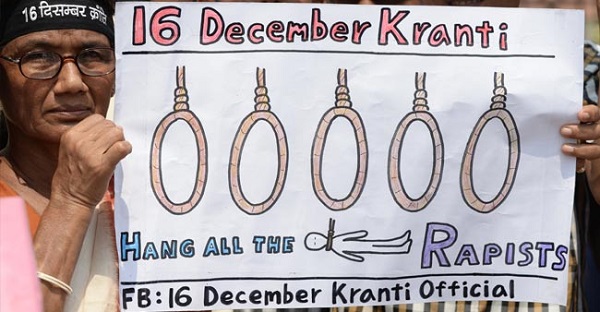
A young girl was brutally raped and a nation revolted. A year later, what did we achieve for that girl?
Jatin Sharmaby Jatin Sharma

One year!

One year is a long time. A long time when a country is still asking for justice and still questioning the faith and seriousness of a Government in punishing the guilty. One year is a long time if you have lost your daughter to devils who have invaded the streets because of a system where law is not feared much, or not at all.

One year from December 16, 2012, we are still waiting for lots of answers. From questioning the feasibility of a juvenile’s age in a crime, to questioning safety of women or bringing justice to the family that lost everything that fateful day in Delhi; we are still asking questions. Isn’t that what we as a country love to do? Just ask questions?

Will we ever be safe? Will we ever get good roads? Will we ever see the Indian rupee’s value rising? Will we ever become a superpower?

That’s all we do – ask questions. Even today we will see the whole country asking lots of questions. We will trend on Twitter with #Nirbhaya, even #IWantToBeNirbhaya, we will hold candle marches to show solidarity, we will write impassioned letters to editors of newspapers. And all of this, simply to ask questions. We will repeat the old story for a day today, and by tomorrow, we will be tired of asking questions and move on to something else.

India as a country has always just kept asking questions. And the politicos very well know that we don’t move beyond a few questions and a few more shouted arguments. They become more powerful with the number of questions we ask, because they know that our repeated questions (that lead to no answers) reflect a state of mind showing confusion, even despair. If you are the one asking questions, you always end it with a question mark. And the one who has the power to put forth a statement with a full stop is the one with the maximum power. India has let its leaders enjoy the power of ending our questions with a full stop.

Yes yes , I know people in Delhi have started a revolution. They have voted for a political party that has just made its debut, that is very clean. But please ask a question where you really need to ask. Till now, this party just had to attack others as they have never tasted power before. Now is the testing period for them. They are faring well. But to give you the facts, only 41 per cent youth voted in Delhi. People who voted for these Delhi elections are still the same people who have always voted. The voting percentage has risen, but the citizens have not. Mumbai also is very good at questioning, in fact it is the best at focussing on logical loopholes, but are we really up for listening to an answer or is it just that we love to hear ourselves ask questions?

It’s time to finally condition our brains to ask the questions that will get us the answers. We should not ask if a juvenile criminal is of a particular age. We should agree once and for all that any person who can rape a woman should not be considered a juvenile. We should not ask whether being gay is unconstitutional or not. We should just pressurise the Government to bring the change in the Legislature. We have to show a little display of the common man’s power more often, just like we did in Delhi by demanding for a cleaner party and getting it, too. Last heard, the AAP wants to amend the law and include the gay community now. Likewise, they can bring a hundred changes that we want, within the ambit of law and sound reasoning.

My point is, that any change takes place when we start providing the answers ourselves and not just keep asking questions. If you can arrive at an answer, your thought process is clear enough. And if you can dream of something happening, rest assured there is always a way to make that dream come true.

Imagine, if we all start thinking of the answers, we can do the thinking for the nation, too. Our politicians will have 120 billion options to choose from, rather than answering our questions with the answer that they think is best.

Jatin Sharma is a media professional who doesn’t want to grow up, because if he grows up, he will be like everybody else. ‘Overdose’ is his weekly take on Mumbai’s quirks and quibbles.

(Picture courtesy post.jagran.com)

Categories
Deal with it

‘Police harassment has already started since the verdict’

Three gay activists tell us what the recent SC verdict criminalising gay sex really means for them and the community.
by Nidhi Qazi

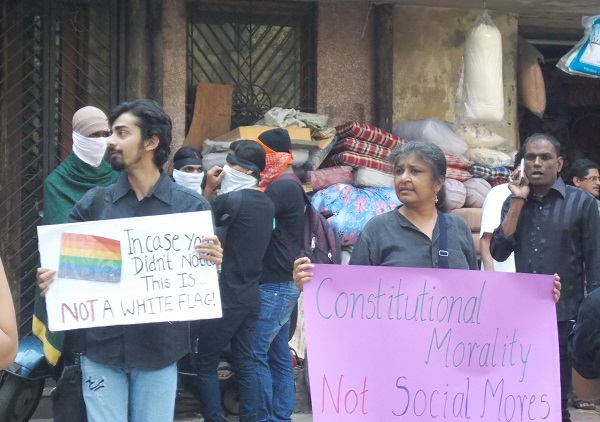
The Supreme Court judgement on Wednesday, December 11, 2013 prohibiting “carnal intercourse against the order of nature” came as a shock to everyone. This came four years after the Delhi HC’s 2009 judgment that decriminalised homosexual intercourse as provided in section 377 of the Indian Penal Code (IPC), and ruled that such sex between two consenting adults in private would not be an offence.

In the wake of this, there has been an outcry in the media, academicians and the community of the LGBTI (lesbian, gay, bisexual, transgender, inter-sex). To closely understand the issue from the community’s perspective, The Metrognome spoke to Ankur Srivastava, researcher with The Humsafar Trust (HST); Priya, Co-editor of queer blog, The Gaysi Family and Ankit Bhuptani, Founder, Gay and Lesbian Vaishnav Association, Mumbai.

Q: What does the verdict mean to you?

Ankur: Well, I would like to answer this on two levels. The first is me, as a professional and a student who has been engaged on sexuality studies and aligned with the movement. In this space I feel that we all have been pushed many years back in the struggle; and the now need of the hour is to re-strategise and ensure all subgroups of the LGBTI community fight this together. I also feel disappointed with the judiciary, where I had my hopes and faith on. Secondly, at a personal level though I see my friends standing by in support; I also feel more conscious of the fact that how the continuous telecast of this news is impacting the ways in which my family who is aware of my sexuality is interpreting it. I do not feel scared or threatened by it rather my commitment towards working on the issue is strengthened.
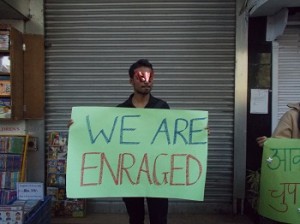
Priya: This verdict only means more work because there is no going back. When one has seen the blue blue sky, one cannot go back to the dark tower. SC made two points that impacted me the most. A) Only 200 cases of discrimination and harassment of LGBT people by the law have been recorded in the last 150 years. B) LGBT only forms a miniscule part of the population and hence, should just be ignored.

This verdict also means the law of this land – India, has no standing or bearing or representation of its people for it has chosen to ignore and subjugate one minority in the name of another.

Ankit: A ‘LOT’. It was a key for me to getting acceptance from each individual who believed in the Indian Constitution.

What are the implications of the verdict?

Ankur: The verdict has created more spaces of vulnerabilities for the LGBTI community. The journey for many which began with Delhi High Court judgment may find it astray now. Young people who in the spirit of confidence and pride came out at their workplace or other spaces few might start feeling more vulnerable. Similarly a lot of men who aren’t confident about their sexuality or are in closet would resist taking health services for fear of stigma or discrimination. This verdict will impede in the work towards HIV prevention, impact psychological health, and may also result in an increase in the cases of abuse, violence and harassment; or even misuse of this Section.

Priya: It has given a lot of impetus to people to raise their voices even louder. The protests across 20 plus cities in India is just a small sign of what the people are feeling on being denied their fundamental human rights.

On the negative side, it opens up the path for millions of queer Indians to be oppressed in the name of sexuality and does away with years of progress towards opening up spaces, mindsets and opinions.
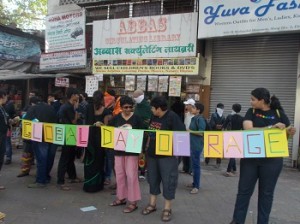
Ankit: It will be very negative. It will be used by the Police against homosexuals in a very wrong way. It will bring depression on Indian youth, especially in small cities.

What is the next step for organisations like yours?

Ankur: I don’t think it is any more of an individual organisation’s response that matters or rather is of any consequence in relation to national response to the judgment.

At The Humsafar Trust, currently we run six targeted interventions for prevention of HIV with men who have sex with men and transgender persons in Mumbai, supported under Maharashtra District AIDS Control Society (MDACS). One of the key tasks is of distribution of condoms and lubricants to the population and talk for safer sex practices. Since the verdict, a few of our outreach workers have already reported cases of police harassment.

What really seems like a response to me, is what we intend to do by being part of Queer Azadi Mumbai (QAM) collective. The call for a meeting on December 15 to protest against the verdict was to discuss the next steps in the presence of the larger community. This meeting is the first step that converges into a national meeting with LGBTI persons in Delhi next week to finalise the plan of action. A collective national response and strategy is what we are looking forward to.
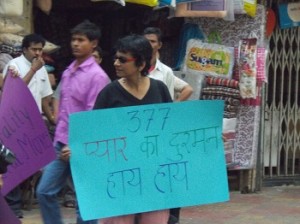
Priya: The idea is to gather, inform and campaign more and more and more until somebody responds! This verdict has brought people far closer than even the glorious High Court verdict in 2009! We plan to engage and encourage people for continuous on-the-ground public action.

We are also at heart a media platform – we will continue to share voices, thoughts, opinions on the issue and also curate all possible news and information so we stay ahead of the way the Indian and global community has reacted and continues to react to this development.

Ankit: We are going to fight for our rights. And apart from our judicial fight we will also do more of social awareness programmes. It’s about time that the society understands that Gay rights are all about basic human rights.

Why do you think the 2009 HC decision was quashed?

Ankur: Well, I would refrain from answering this question. We all know the judgment by Delhi High Court in 2009 was a historic judgment not because it favoured LGBTI rights, but more because the judgement called upon ‘constitutional morality’ above everything, and an essence Indian constitution. It stated that Judiciary in a democracy has to ensure equal rights and justice to all the citizens of this country and in particular to safeguard the rights and interests of marginalised and vulnerable populations. Supreme Court’s verdict has weakened trust and hope of a lot of citizens like me, who always thought Judiciary as a key to realize rights and justice.

Priya: We seriously do not know. Common sense fails us here. The current judgment lacks clarity in the arguments on which the conclusions are based. It seems to have completely ignored the fundamental constitutional promise of equality and dignity to every citizen of the world’s largest democracy. It is just the extreme opposite of the HC judgment. There are multiple speculations – owing to the shaky and political nature of India’s decision-making but otherwise we have no reasons as to why this may have happened. Prior to the decision, we were highly optimistic.

Ankit: Because SC mostly speaks about the technicality of law, about how the court cannot do much about it and we need to approach the Parliament for the same. This judgment is without heart. I personally think that the SC should also consider human feelings as they are dealing with human rights.

Irrespective of the verdict, do you think that the society is prepared to respect the choices and decisions of the LGBT community?

Ankur: Though it saddens me to look at the verdict, I am happy to see the massive support that is coming from the general population. I like the fact that many straight friends, allies
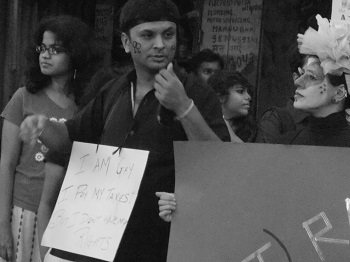
and supporters are coming in front to condemn the judgment. This is a result of the efforts that have been put in all these years to mainstream and create awareness on this issue.

I thought that irrespective of social acceptance, I want my rights to be in place. I believed that my legal rights will help me fight more rigorously and more importantly to fight back any abuse, violence or harassment from homophobic persons or institution. But now, I sincerely hope that we consider this unfortunate event as an opportunity to talk and discuss more about the issue with people, and gain from their support. There will always be homophobes like there are racist, sexist people, but what I look forward to is a space where I have a right to protest and ask for a justice when I am being denied; and I am many more allies and supporters to outnumber the homophobes.

Priya: We think so. The last four odd years have seen many individuals stepping out and expressing their identity, gender and sexual diversity. Many public spaces have been created to promote a dialogue between the LGBT community and the mainstream. Enough literature has been produced that reflects the queerness in the lives of straight people and the stories of LGBT resonating well with the majority. We think the society is making an attempt to understand the LGBT community, and is supporting us through all this in spirit, in heart and in kindness.

Ankit: Well, I personally feel that society is ready to accept anything which you can make them understand. So, the question is not whether the society is prepared to respect the choices and decisions of the LGBT community. But is the LGBT community ready to make people understand why they need to accept and respect themselves? And the answer is, the LGBT community has somewhere failed to prove it. The reasons for this can be many. But indeed there is a lack of effort from community work for their social acceptance.

Has the media played a supportive role in advancing the rights of the community or has the gesture been purely symbolic?
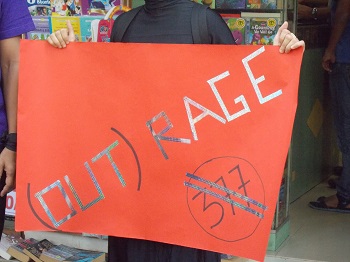
Ankur: I think it has been really supportive, in fact better than ever before. Look at any of the news channels and you would see journalists stating their clear position on the judgment and also advocating the rights of the LGBTI community. I also would like to believe that these people who have a large viewership in the country would impact and also create a positive change in the viewer’s perspective. Similarly for two days in a row, many of print media (English and vernacular) have covered extensively the news on the judgment and have dealt with the subject with sensitivity and in solidarity.

Priya: The media has been really supportive in advancing the rights of the community. Every newspaper, magazine, online platforms and television have done their part in promoting, sharing, and informing the mainstream about LGBT and other minorities. The onus of causing a shift in the social acceptance, mobilisation and sensitisation also lie heavily with the media. It is through them that people have heard of the lesbian couple who committed suicide in Nandigram, Bengal or the famous wedding of another lesbian couple in San Fransciso.

We like the fact that the media creates a lot of noise, picks up on nuances, details, small issues and plays to social causes these days. We’ve seen it for other issues in the country before and now there is no better time to play to the cause of the Gay rights issue.

Ankit: Yes, the media has been very supportive about this. I observed very effective support of media in last few days, English as well as regional. Lastly, I would just like to say that it’s not an end, we have very long way to go and we are going to walk ahead and make this country and world a better place to live.

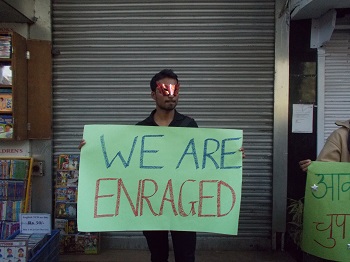
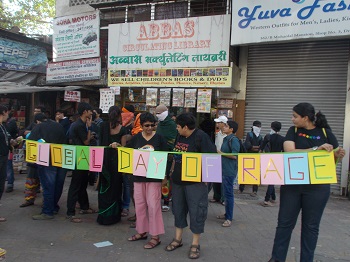
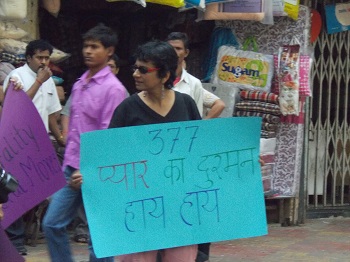
(Pictures courtesy Nidhi Qazi. All images captured on Sunday, December 15, during the Global Day of Rage)


Categories
Enough said

“If there is a re-election, we will get more votes”

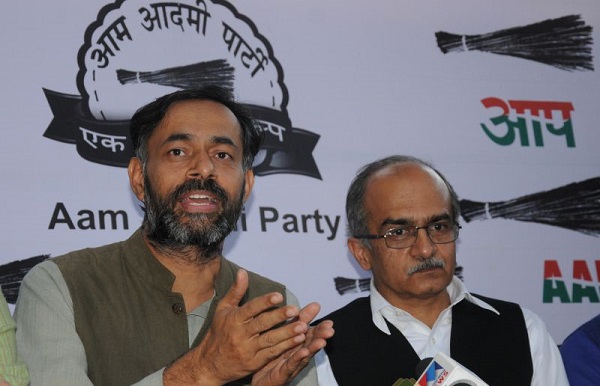
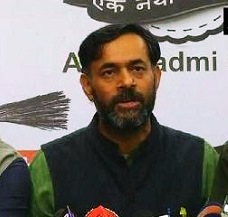
Yogendra Yadav, strategist and one of AAP’s key leaders, talks of getting more Muslim support if Delhi goes into reelection.
by Humra Quraishi

In 30 years of my journalism career, I have had the toughest chase on my hands only lately – I have been trying for the longest time to get an interview with the Aam Aadmi Party’s (AAP) Arvind Kejriwal, and also Yogendra Yadav, but the party’s functionaries have been working round the clock. Finally, I managed to get Yadav for an interview, and though the interview happened on the phone and well past midnight, he was his usual affable, forthright self.

I spoke to him after he and other members of the AAP had just finished their crucial meet ahead of Saturday morning’s meeting with the Lt Governor of New Delhi. It now transpires that the AAP has sent the Congress party, which is willing to support it, an 18-point conditional letter prior to deciding on forming a Government with them.

Excerpts from the interview:

Late night TV news informed us that the Congress had decided to offer your party support to form the Government here in New Delhi. Will AAP form the Government?

Even we came to know of this news (of Congress’s support to AAP) through the television! Anyway, you will soon come to know of our decision. As of now, all I can say is that we are not following those old political games, we are not into that type of politics. In fact, our strength lies in the fact that we are not following the usual rules of the game. AAP has already brought about a change.

Yogendra Yadav Comment on this latest spat between Anna Hazare and your AAP colleague, Gopal Rai. It’s said to be one of those distracting strategies by your political rivals.

It could have been an avoidable distraction. Gopalbhai and our other colleagues had gone from here to lend support to Anna’s fast, but after this incident, we advised them to return.

The general perception is that AAP is softer on the BJP than on the Congress…

Where does this perception come from? In fact, because of AAP’s presence, it’s the BJP which has suffered the most in the capital city. They are more angry with us because we have spoilt their game!

Will AAP take on Narendra Modi?

We will. We have been carrying out exposes vis-a-vis Narendra Modi, of his links with certain industrialists of Gujarat. Also, don’t overlook the fact that in these Delhi elections, Modi was not a factor, but let the general elections come…we will bring out more exposes.

If there is a re-election in Delhi, will AAP have an advantage?

AAP will have an advantage on two fronts – lots of people who did not vote for us in these elections would now vote for us and we will get more Muslim votes. Also, we will be able to reduce the Congress to the position that it is reduced to in UP and Bihar and then we, the AAP, will take on the BJP.

Do you think the Muslims of Delhi voted for AAP in a major way?

Earlier, the Muslims of Delhi had no choice but to vote for the Congress but this time, the AAP made inroads. It takes time to make a dent or an inroad in a traditional stronghold, but a lot of the young and educated Muslims voted for the AAP.

(Pictures courtesy www.aninews.in, www.prokerala.com)

Exit mobile version