Categories
Swaad 'Anu'saar

A corny picture party

Most of our movie-time snacks are made of corn. If you’re watching movies at home, make these fantastic corn snacks.

anurita guptaby Anurita Gupta

“Picture abhi baaki hai mere dost!” If that be your state of mind, then I am sure you are not just thinking movies but movie snacks, too. While going to a movie hall in Mumbai can set you back by a 1000 bucks or so, here are some movie hall recipes that will surely enhance your at-home ‘picture party’ with friends!

After all, this ‘movie going’ is clearly a corny business! Look at the number of movie snacks that are made from corn. Be it popcorn, nachos (that are actually corn chips), or even boiled sweet corn, everything finds first preference in a movie buff’s list. Let’s make them…now!

Cheese popcorn: Movie and popcorn always go hand in hand. While butter popcorn is delicious, the tricky ones are its cheese and caramel counterparts. For cheese popcorn, the trick is to NOT put processed cheese on the popcorn. Yes, most people make this mistake and land up with a messy goop instead of a crackling pot of pop.

Here’s how you do it – these days, you get microwave or cooker pre-mixes of popcorn in the market. Just make the popcorn as per the directions on the packet. The secret ingredient is the pre-processed cheese powder that you can easily get in the ready to eat mac-n-cheese packet. Unfortunately, it is a bit difficult to find the cheese powder as a stand-alone product in the market, but then I’ve told you what to do instead.

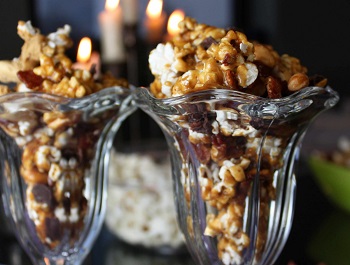
Caramel popcorn: Movie or not, sweet, crunchy caramel popcorn is a sure shot hit at any party. The tough part is to keep yourself from eating the entire batch while making it. Once you put all the ingredients together, it is fairly simply to make.

Once the corn kernels have popped (say three big bowls), you have to make the caramel sauce. The ingredients are 3/4th cup (or one-and-half sticks) unsalted butter, 1 cup packed caramel popcornbrown sugar, 1 teaspoon vanilla extract, 1/2 teaspoon salt, 1/4 teaspoon baking soda. Melt the butter in a saucepan over medium heat and mix in the sugar till it is completely soaked in the butter. Now increase the heat and bring it to a boil for 3 to 4 minutes along with vigorous stirring using a wooden spatula. Remove from heat and add the vanilla, salt and baking soda. Please note that now the caramel sauce will bubble up fiercely. But once the bubbles settle, you will have an amber caramel sauce that should now be slowly poured over the popcorn, coating them uniformly. Once done, spread the popcorn equally on two baking trays and bake for half an hour, keeping a watch every 10 minutes or so. Let it cool. Serve immediately or store in an airtight jar for up to 10 days.
Boiled sweet corn: This one is fairly simple but a true favourite with the weight watcher gang that visits the cinema frequently. All you need is a 250 gram frozen packet of sweetcorn and some chaat masala and lemon juice. Toss the packet in the microwave for 5 minutes. It will come out steaming and crunchy. Now add your choice of masala or dash of butter along with a spritz of lemon juice and mix. Serve in disposable glasses for no-mess movie viewing.

Nachos with salsaDost ghar aayein toh hum saara time kitchen mein bitayein? Kabhi nahin! That is why I am not going to give you a recipe for nachos (which you can and should conveniently buy packets and packets of) but that of the salsa dip.

nachos with salsaThere are two reasons why you should have this recipe. One, nachos can only be a lot of fun with salsa sauce. Two, ready-made bottled salsa sauce can burn a hole in your pocket. So here goes: you need 2 large, finely-chopped tomatoes, 1 small, finely-chopped onion, 4 big cloves of garlic, 5 to 6 small pieces of jalapenos, 8 ounce can of tomato sauce, 1 big cup chopped coriander, salt to taste, ½ teaspoon roasted cumin powder, 1 teaspoon lime juice and some black pepper. Now, to a food processor add tomatoes, onions, garlic and jalapenos, and whizz to make a coarse mixture. Open and add the remaining ingredients and pulse until everything is mixed well. Cool and serve with nachos. Enjoy!

Here’s hoping that you and your friends manage to squeeze in at least some bit of the movie in between all the tasty munching! Happy picture party! 

Anurita Gupta is a media professional who is passionate about two things – food and radio. Her love for all things food makes her a foodie with a cause.

(Pictures courtesy canadacheeseman.wordpress.com, www.fatandhappyblog.com, parentedge.in)
Categories
Watch

Screening: French film ‘La Fille du 14 Juillet’

The French film will compete for ‘My French Film Festival’, the world’s first online film fest that is currently underway.
by Medha Kulkarni

Today, January 20, 2014, the Institut Français will present the film La Fille du 14 Juillet as part of the ‘My French Film Festival’.

My French Film Festival is the first online French film fest in the world, and is currently underway, having started on January 17, 2014. It will conclude on February 17, 2014. During this month, cinema lovers from the world over will be able to access online 10 feature films and 10 short films in 13 languages. On this occasion, Alliance Française de Bombay will present a film in competition.

La Fille du 14 Juillet is a 1988 film by Antonin Peretjatko. The films tells the story of Hector who encounters Truquette at the Louvre on July 14, he’s had only one thing in mind: to seduce this girl whom he’s mad about. The best way to do so is to take her to the seaside. His pal Pator agrees wholeheartedly, particularly if she comes along with her friend Charlotte…

The film is lighthearted and playful. The cinematography is beautiful, filled as it is with stunning vistas of France.

The film is subtitled in English and entry is free although seating is limited. Head to Alliance Française Auditorium, New Marine Lines today at 6.30 pm.

(Picture courtesy www.20minutes.fr)

Categories
Enough said

‘People who live without history are no better than animals’

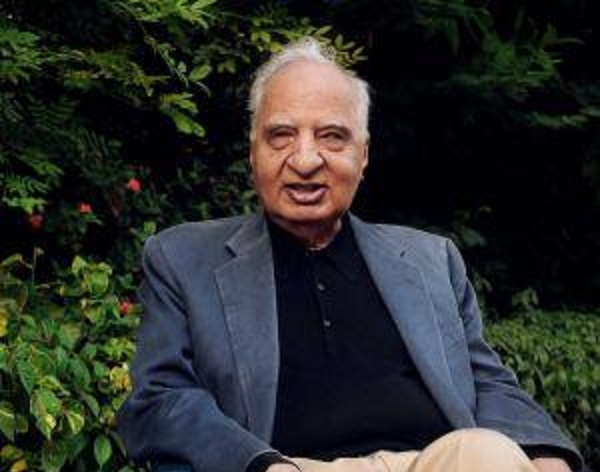
Noted Indian writer Ved Mehta recently launched his newest book in the national capital. Humra Quraishi revisits an old encounter.

This week, I received an invite from Penguin Books for the launch of Ved Mehta’s latest, The Essential Ved Mehta. I marveled at this writer’s determination and his grit to go on – today, he is 80 years old, but he is still writing, and when he is visually impaired.

Five years ago, I had the chance to interview him here in New Delhi, when he was here at the launch of another of his books. He had spoken then of a meningitis attack that had left him visually impaired at the age of four, but that he had never let this setback get in the way of his writing.

His is an inspirational survival story. He received an early education at the Arkansas School for the Blind, Dadar (in Bombay), then moved to the Pomona College, Balliol College and finally to Harvard University. What is amazing is that he managed these major moves, especially one that meant shifting to the West in his early teens. He got American citizenship in 1975 and visits India regularly.

The 80-year-old writer has written 26 books, as also numerous short and long stories. For over three decades, from 1961 to 1994, he was a staff writer at The New Yorker. All along, there were murmurs about his ‘colourful lifestyle’, till the time he decided to marry. Marrying in 1983, at the age of 49, he chose for his life partner a woman much younger than he – probably on the lines of Aristotle’s philosophy, that for a marriage to be happy, a man must marry a much younger woman.

I had the chance to first interview him in 2009, and even today I remember the meeting fondly. This is how it went:

Are you currently working on some new book and what is it going to be about?

I am writing a new novel but I don’t like discussing my work till it is published. As of now all that I can say is that the protagonist is an Indian settled in the US. And no, it isn’t along autobiographical lines.

You are settled in the US and American foreign policies have triggered changes in the world scenario. What do you feel about this?

America should get out of Afghanistan, and Iraq was a total disaster, totally a fantasy of a kind, along the lines of what the US did in Vietnam and in Korea. I’m for non-violence and all for the policy of tolerance and I do believe in Aristotle’s philosophy vis-à-vis democracy, “You can only have democracy if a majority of people belong to the middle class.”

What changes have come in the world of writing and publishing over the years?

We are living in an odd world. In the publishing world the editors are playing musical chairs and as regards writing, I’m from the old school and thoroughly believe in the principles of integrity and honesty to oneself and to one’s readers.

Your wife seems much younger than you. Where did you meet her and how it all happened?

I married late when I was 49 years old and Lill is almost 20 years younger than me…Actually, Lill is a friend’s niece and I had first met her when she was about 11 years old. Years later, I had met her again at a party and this time I was drunk and kissed her. The very next morning, however, I wrote an apology note to her and she told me that from her side, too, there were feelings involved. It was then that we decided to marry. We married in 1983. And today she is my wife and we have two daughters.

Why did you re-launch your earlier books, Daddyji and Mamaji? You wrote these two books years ago, why the re-launch now?

Yes, I wrote these books decades back but I feel our history is important for today’s generation. People who live without history are no better than animals. History is important for today’s generation as it adds a dimension to life, just as children and wife add that extra dimension to a man’s life. Also, I feel that we should realise that our parents are not some authoritative figures but are as human as you and me. My parents – Shanti Devi Mehta and Amolak Ram Mehta were very private people and I wrote these out of affection for them and focussed on the everyday life of a family in the late 19th and early 20th century India.

Humra Quraishi is a senior political journalist based in Gurgaon. She is the author of Kashmir: The Untold Story and co-author of Simply Khushwant.

(Pictures courtesy www.thehindu.com)

Categories
Beauty

Band, Baaja, Bride!

D-day is nearing and you want to look your best. Try these tips to look great on your big day.
by Deepa Mistry

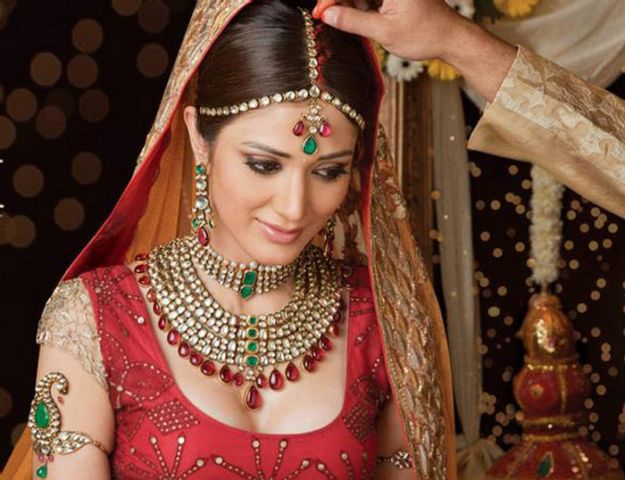
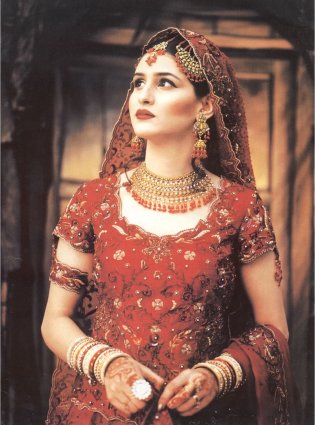
Most girls dream of growing up and having a fairytale wedding or a filmi wedding and to top it all, no one does it like we Indians do! Weddings in India are always an affair to remember, especially with all the band-baaja, dancing and a wide spread of cuisines from around the world!

Anyone in the midst of their own wedding fever will know the number of arrangements and tiny details that need seeing to in that last fortnight before the wedding. Till the last moment it can be utterly overwhelming for the bride. A bride needs to look her best all the time and the most basic and simplest trick is to stay relaxed. We know you’ve heard this a million times, while thousands of thoughts circle round your head, but remember it’s your big day and all you need to focus is on yourself.

10 tips to look stunning on your D-Day:

Face: Make sure you invest in a great skin treatment weeks before the date. A day or two before your wedding, fix an appointment and spend a good amount of time getting a facial, a haircut (nothing drastic), and a body massage, and you will shine for the next few days. Moisturise your skin well even the night before the wedding day and avoid too much sunlight exposure. Use a cleansing lotion to clean the skin pores, and an eye cream would be great for your dark circles. Keep your body and skin hydrated.

hands and nailsHands and nails: Not only will everyone want to look at your wedding rings or henna, but your hands will be photographed as well. You’ll definitely want your nails to look your best! While getting your wedding manicure, be sure to take someone with you. Your friend can assist with the little things that can possibly ruin finger nails, such as taking money out of your wallet and opening doors or driving. Give your fingernails at least 30 minutes to dry completely before you try to do anything else.

Hair: Get your hair trials done well in advance. If you plan to get a haircut, try to avoid something new. When you have your hair styled for your wedding, don’t let your stylist pull it back so tightly that it hurts. You may think you’ll get used to the tugging feeling on your scalp, but more likely you’ll end up with a headache. Start prepping months before the day, and then have final colour done a few days before. Never make a drastic change for your wedding day, and remember that your colour should enhance the way you look, creating a soft halo of beauty. It should not be the standout feature. Get deep-conditioning treatments leading up to the wedding day, and ask your hairdresser to use a shine-enhancing gloss on your final colour treatment.

Skin: Most of your blouses are going to be backless or the wedding gown will be a deep or backless one. Make sure you get a good treatment if you suffer from back acne. Back or body polishing would be ideal for your wedding day.

Eyes and lips: You can take a few extra steps to make regular lipstick more long-wearing. Before applying lip colour, smooth a bit of foundation over your lips – this will make your lipstick go on more evenly as well as help it stay on longer. Outline your lips with a lip liner, then fill in lips with the liner as well. Using a lip brush, apply one coat of lip colour.  Don’t go overly dramatic with the eyes by mixing colours. Ask your make-up artist for options before finalising the eye makeup. It’s your wedding day and you’re going to cry. Wear waterproof eye-makeup, and in particular, waterproof mascara.

Dress: The most important thing is dress fittings. Even if it’s last minute, check all your outfit fittings, and pick the correct dress fittingslingerie – you don’t want to be uncomfortable on your wedding day.

Shoes: Buy two pairs of shoes. Try them out at home because you are going to be on your feet for the entire day and you don’t want to be tired because of painful shoes. If you aren’t used to wearing very high heels, don’t buy them. Keep an extra pair handy in case you have trouble with the former one.

Personal care: Avoid any kind of waxing just before your wedding. Plan it days in advance so you don’t have last minute breakouts. If your skin is sensitive, don’t go for facials with heavy products, use milder or natural ones. Brighten your smile; visit your dentist for the best treatments for pearly white teeth.

Emergency kit: You never know what will actually happen at the wedding so it is advisable to be prepared with a touch up kit. Pack lots of tissues and wet wipes, an eye liner, a lip liner, a lip gloss and a compact powder, lipstick, blush and eye colours in a convenient case so someone around you can keep it handy always.

Smell good: You don’t want to wear just any old scent on your wedding day. Pick the best because the one you pick is always going to remind you of your special day. Take a girlfriend to a fragrance shop with you – but only try three at any given time.

So get ready to put your best foot forward and dazzle everyone with that gorgeous smile and stunning looks!

(Pictures courtesy www.sayshaadi.com, www.sheknows.ca, giigoo.org)

Categories
Watch

Screening: Have You Seen The Arana?

Alliance Française Auditorium is screening 2012 documentary that examines the relationship between man and nature, today in partnership with Vikalp.

What happens when we finally manage to wipe out our natural resources, especially our farmlands? A 1973 documentary by Sunanda Bhat, Have You Seen The Arana? attempts to answer this question.

A traditional healer’s concern over the disappearance of medicinal plants from the forest, a farmer’s commitment to growing traditional varieties of rice organically and a cash crop cultivator’s struggle to survive amidst farmers’ suicides, offer fresh insights into shifting relations between people, their knowledge systems and the environment. As hills flatten, forests disappear and traditional knowledge systems are forgotten, the film reminds us that this diversity could disappear forever, to be replaced by monotonous and unsustainable alternatives.

Sunanda worked on the film for over six years, looking for ways to capture and represent the complexity of the people and place. Much of the film rests on the relationships she was able to build with the characters over this period.

The film is presented in partnership with the Vikalp Film Archive. The screening of the film will be followed by an interaction with the filmmaker.

Head to Alliance Française Auditorium, New Marine Lines, today at 6.30 pm.

(Compiled by Medha Kulkarni. Picture courtesy dearcinema.com)

Categories
Read

Review: ‘The Diary Of A Reluctant Feminist’

This book is, without doubt, one of the most awful books to come out at the start of this year.
by Vrushali Lad | vrushali@themetrognome.in

Not all books one reads are good reads. Most of them are average, even tedious reads. But then you come across a book that is so bad, so futile, that every other bad book you’ve read in your life actually shines brighter in comparison.

Bhavna Bhavna’s The Diary Of A Reluctant Feminist is one such book. A look at the synopsis promised several good things, which prompted me to start reading it in the first place. The excerpt on the back cover goes thus:

‘The problem in my struggle for a divorce was in the small print – as with everything in my life it read “subject to my mother’s permission.” And since my mother was never going to allow me to divorce I was relegated to being an armchair divorcee…So I decided, after two years of being separated, to stop waiting for my parents’ elusive permission, and to take the initial steps in the painful journey myself. In this process, I was also branded a “feminist”, which in their view was marginally worse than being a “terrorist”…’

So far, so good. The problem actually began when I started reading it.

The problem with the book is: the whole book.

What could have been a (as promised by the publishers) “profoundly funny chronicle of a young woman’s attempt to get divorced…” is anything but. If anything, it is a whiny, outrageously cliched, lacking-in-the-essentials kind of book, with extremely lazy storytelling. In fact, subject to a few revisions and rewrites, this book could have been a bit closer to what it actually aims to be.

So the author brings out the entire jing bang of a large Punjabi family – a domineering matriarch heading the household, her obedient sons and their wives and children, how the arranging of marriages is a competitive sport, how traditions and customs set by the family’s elders are unquestioningly followed even after the elders’ deaths, how individual wishes of girls and women are never important, but the men get to exercise their rights, and so on. Unfortunately, the story does not rise about these elements at all.

I’m not saying nobody will like this book, it may find its fair share of admirers. Why I am not one of those admirers is because when I read a book, I want to be told something I don’t already know. I don’t mean I should be told an entertaining account of the Higgs Boson, for instance, but when I pick up a book about a woman wanting to tell her overbearing Punjabi family that she wants to get a divorce, I want to be a told the story that makes me 1) Sympathise with the protagonist, 2) See the (promised) hilarity in the several (often banal) exchanges between the woman and her strict parents, 3) Feel the woman’s tension as she tries and fails to save her marriage before deciding to separate from her husband, and 4) Most importantly, find a non-cliched representation of a loveless relationship of the kind we see often in the till-death-do-us-part milieu of Indian marriages.

Instead, all the reader gets is a series of cliches thrown at him one after the other, in a rambling account of the protagonist’s increasingly failing marriage, how her opinion has never been solicited even on matters affecting her life, how her family and indeed, all of society, gangs up on her once her singleton status is established, and how nobody gives her a chance at doing good for herself. Well, boo hoo. What is even more annoying is the sweeping assumption that this is what all girls in large Punjabi families go through – I’m not saying these things don’t happen, but since they do happen fairly regularly, what is the point of telling us just that? And while we’re on the subject, when will be stop caricaturing Punjabi families in this fashion? Aren’t there good, wholesome, uncliched stories about Punjabis to be told at all?

In short, I do not recommend this book at all. If you still want to read it, knock yourselves out here.

Rating: 1.

Rating scale: 1 = Awful; 2 = Slightly rubbish; 3 = Tolerable read; 4 = Good; 5 = Paisa vasool

(Pictures courtesy www.flipkart.com, www.theatlantic.com)

Exit mobile version