Categories
Big story

Cult classic: At a PVR near you

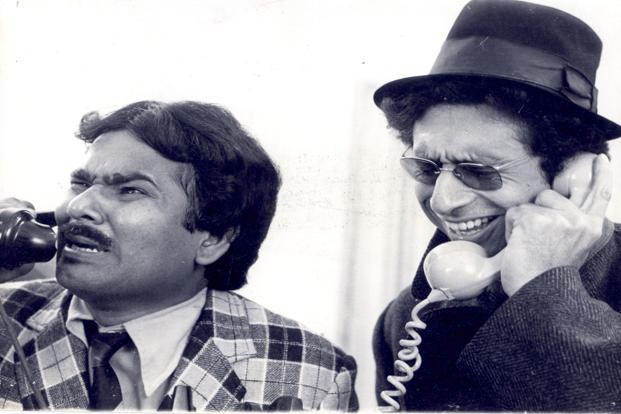
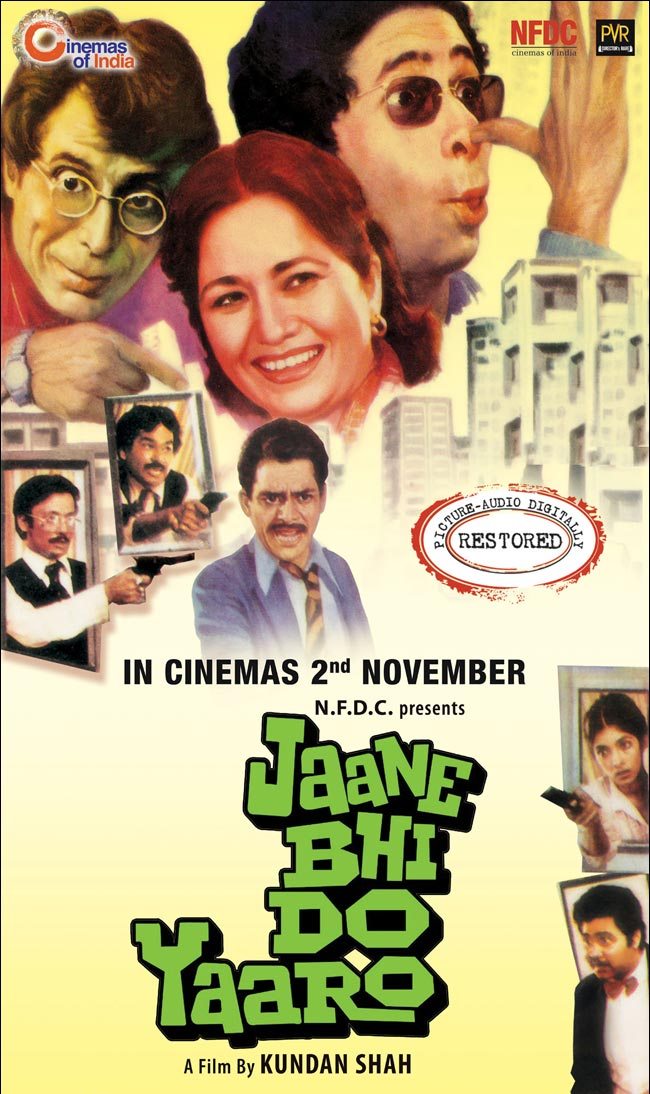
Digitally restored Jaane Bhi Do Yaaron opens for the public today at PVR Cinemas in 10 cities. Go watch it!
by The Diarist | thediarist@themetrognome.in

Jaane Bhi Do Yaaron is the classic. You remember most of its dialogues, you chortle at all the jokes you’ve already replayed in your head, and you just can’t get that iconic Mahabharata play (and what really happens to it) scene out of your head, ever. But most of us have watched this film on TV. If you want to relive this gem of a film on the big screen, today’s your big chance.

The Worli-based National Film Development Corporation (NFDC) has re-released this film in association with PVR Cinemas in 10 cities in India – Mumbai, Delhi, Kolkata, Chennai, Bengaluru, Pune, Surat, Chandigarh, Vadodara and Ahmedabad. The film – directed by Kundan Shah and starring Naseeruddin Shah, Vivek Baswani, Bhakti Barve, Om Puri, Satish Kaushik, Neena Gupta, and Pankaj Kapur in his first film role – has been digitally restored and can be played on a 2K projection. This is NFDC’s first film restoration project for a theatrical release – previously, the organisation has only restored home videos.

“It took about six months to restore the film entirely, and this included cleaning up the sound, colour and picture quality, too,” said a member of the team that worked on the project. The entire restoration work was done in-house. “We had to be careful to select the film – it had to have a mass appeal, it had to have a connect with today’s audiences, and it had to be entertaining. Jaane Bhi Do Yaaron ticks all these boxes.”

However, NFDC is only testing the waters with the release of this film, and will wait to see audience response to the experiment before turning to other, equally important films. “The thing about these films is, and especially with Jaane Bhi Do Yaaron, is that the current generation has not seen it and don’t know what it is about. It is important for the youth to watch this film in the present time – not only have they missed out on a fantastic film, but they must see it because it is so relevant in today’s times as well,” the official said.

In Mumbai, Jaane Bhi Do Yaaron will be showcased at PVR Juhu, PVR Phoenix Mills, PVR Goregaon and PVR Mulund.

(Pictures courtesy www.boxofficeindia.co.in, NFDC)

Categories
Eat

Meet Sachin Tendulkar, Master Foodie

Sachin Tendulkar’s food knowledge, and that he can rustle up fish curries in his own kitchen, had us going ‘Aila!’
by Vrushali Lad | vrushali@themetrognome.in

What Sachin Tendulkar has shown us of himself thus far, has all happened on the playing field. He is fiercely private about his private life. There are hardly any pictures of him partying the night away. There have never been any controversies pockmarking his personal life. When somebody says something negative about him, he chooses to maintain a dignified silence.

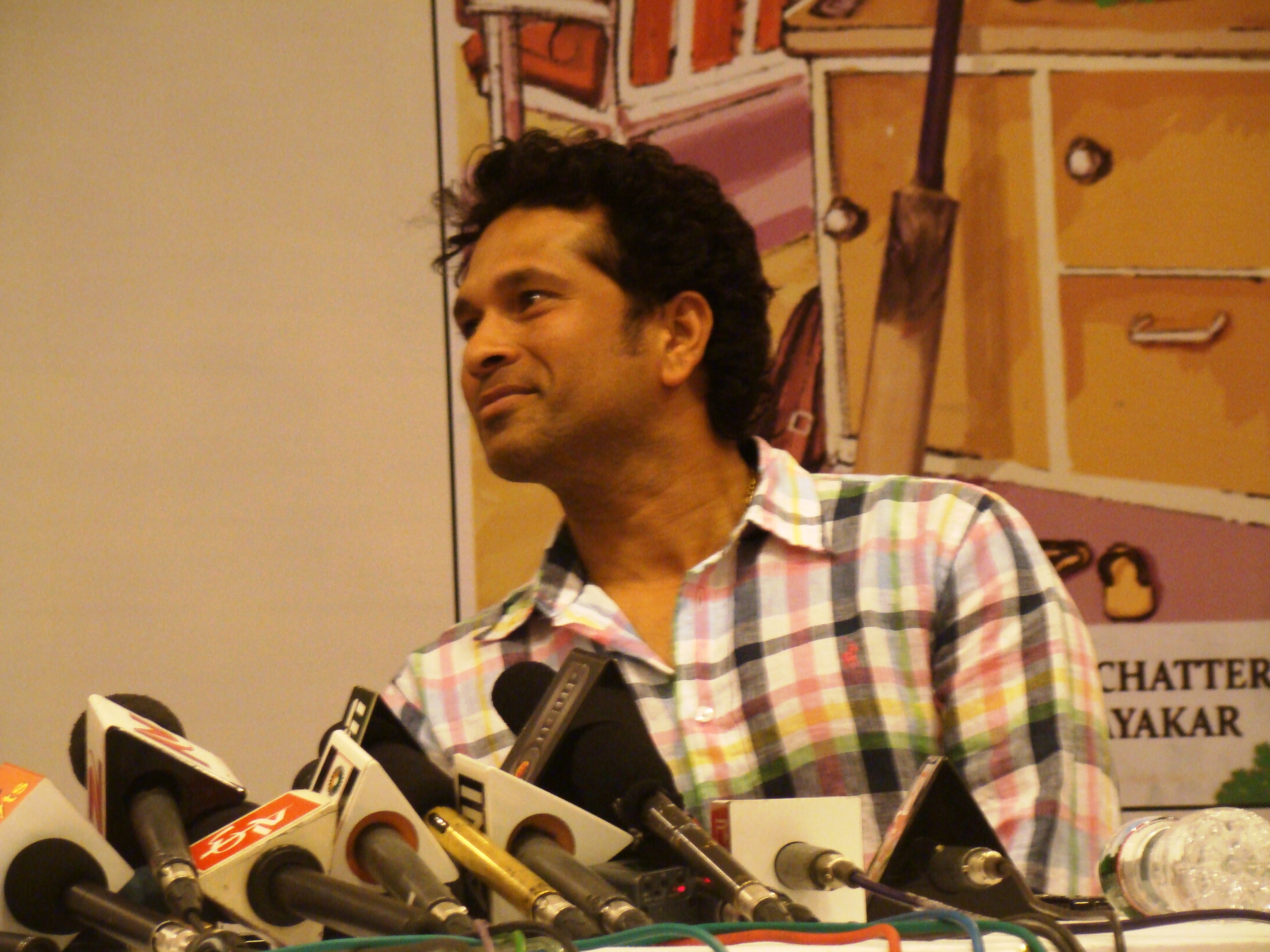
All of this combines to give the impression that Sachin Tendulkar the man, must be very much like Sachin Tendulkar the cricketer – breathing and thinking cricket alone, not very chatty, extremely reserved – a myth he shattered spectacularly at the launch of writer and journalist Boria Majumdar’s book, Cooking On The Run, at the Cricket Club of India, yesterday. After Boria requested journalists to restrict their questions for the Master Blaster only to food, he started the conversation with the cricketer about his food experiences, then invited journalists to ask Sachin questions. The legendary batsman candidly answered a volley of reporters’ questions about his experiments with cooking, why he loves trying different cuisines, and how his teammates are not as adventurous as him.

How important is it to experiment with food and different cuisines?

It’s very important to experiment. Trying out different cuisines gives you an idea of what others are eating around the world. Three years ago, I went to a Japanese restaurant with Suresh Raina, and we had some very good food there. I don’t know if he pretended to like it, but he seemed to enjoy the sashimi and sushi. We had also ordered burnt garlic rice, so that was great as well.

Tell us a bit about Harbhajan Singh’s taste in food.

I remember when we were touring South Africa, he told me he wanted to eat and become tagda (laughs). I took him to the Butcher’s Grill, a restaurant in Johannesberg, and he enjoyed what we ordered. But he seems to like Thai and Chinese cuisines the most.


What has been the weirdest thing you’ve eaten?

It would have to be snails! They were prepared in garlic sauce, and I thought they were a bit difficult to digest. They were not good at all; I ate them with Anjali and we didn’t like it. I don’t think I’ll ever eat them again.

How does tasting different cuisines enrich you?

I think it is relaxing to both eat good food and also to cook it. It gives you a sense of satisfaction to cook for somebody, especially when you’re in a big group and you’re trying different things. There’s no stress to cooking at home, unlike in Masterchef Australia that my son Arjun watches, where everyone’s competing against one another. When you’re cooking for friends and family, you’re not competing, you’re just enjoying yourself.

You’ve spoken about entrees, you’ve spoken about main courses. Which desserts do you like?

I love them all! Anything and everything. Occasionally it’s good to be fussy about eating sweet things when you’re trying to lose weight or trying to maintain the kind of physique you want, but I love to eat all kinds of desserts, Indian as well as Western.

You’ve cooked for your teammates. Which teammates have cooked for you?

Nobody (laughs) The only one who has consistently cooked for me is my mother, and I love her food the most. She cooks on various occasions even today, especially seafood, and I have told my cook to learn those recipes. He is slowly beginning to cook like her.

What kind of diet do you follow during a gruelling series?

I remember, during the World Cup match when we were to play Australia in Ahmedabad, the weather was really hot. So for three days before the match, I drank a lot of fluids, ate bland food like curd rice. Eating spicy food in that weather would have caused me problems. I thought I should flush out all the masalas and spices already in my system and eat things that are easy to digest. Eventually, you have to trust your gut feeling – you have to know what to eat and what to avoid in a situation.

Again, after you play a really exciting one-day match, you can’t immediately go to sleep. After we played Pakistan in the World Cup, we were so pumped up by the win, we couldn’t sleep! But we had pasta that night, and the night before, it was pad thai noodles.

Which country has offered you the best food experiences?

It would have to be England, and more specifically, London. London has a great variety of restaurants serving so many different cuisines.

Which is the most awful thing you’ve eaten?

Spoilt seafood. Also, if you’re trying to lose weight, spoilt seafood will do it for you (laughs).

What kind of food are you currently having?

I’m avoiding the fatty stuff. Like I said, you need to know when to eat, what to eat. I’m following a particular diet for the upcoming series. At this stage, I know exactly when I can afford to eat certain kinds of food.

Why do you think some people are vegetarians? Have you ever tried to be vegetarian?

Yes, I’ve tried to be vegetarian, but it has happened only in patches (smiles). It’s difficult for me. I was brought up on non-vegetarian food, so I find it difficult to give it up. But I don’t mind eating good quality vegetarian food.

Which is the best Maharashtrian food you’ve eaten?

My mother’s home made food. I love everything she makes. I love her varan bhaat the most, especially after a long overseas tour, because you don’t get it anywhere outside. I prefer varan bhaat with a bit of lime on it.

Has there been any coach who was not very disciplined with your food habits?

It’s not the coach’s responsibility to look at what players are eating and not eating. It’s the player’s responsibility to know what is good for him or not.

Are your teammates as adventurous about food as you?

Not all of them. Zaheer Khan, Ajit Agarkar and Yuvraj are quite adventurous; we always try out different restaurants and different cuisines. Most of the other guys prefer Chinese or Thai food.

Do you watch any food shows?

Only Masterchef Australia with Arjun.

Are you superstitious about certain food? Do you think eating something will bring bad luck?

Now you’ve put one more thing in my head! (laughs) No, I’m not superstitious about food at all.

 

Categories
Diaries

Of chemistry and flashbulbs

It’s not enough to change your FB status to ‘Engaged’; you need a perfect photo. Pre-wedding shoots are the answer.
by Ritika Bhandari

Part I of the Shaadi Mubarak series

As the cool November air brings with it the whiff of an upcoming wedding season, you will see the shaadi shenanigans begin in every household of your building society. Open the newspaper, and the pink-and-yellow advertisements scream Shaadi Utsav 2012. Everyone seems to be in a hurry to marry, and once the preparations for the final wedding day begin, there is little room left for the blissfully-engaged couple to enjoy a few quiet moments.

As photographer Raphael Das says, “A pre-wedding shoot gives the couple a collection of pictures, which they may not be able to capture at a later date. After the wedding, life gets busier. As time passes on, their first anniversary approaches and the couple realises that it doesn’t have a collection of its own pictures.  So people prefer to do a small shoot of very personal pictures.” Based in Malad, Das has done quite a few pre-wedding shoots already. He feels that a couple of hours spent together can become moments which shall be cherished for a long time.

While photographer Deepa Netto believes, “It’s (a pre-wedding shoot) the perfect chance to get some amazing casual portraits and the perfect excuse to get away from the wedding preparation chaos.”

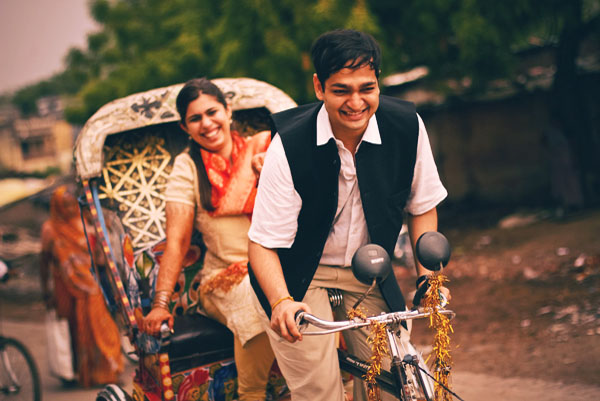
The concept of pre-wedding shoots has its roots in the West, where couples send wedding invitation cards with a picturesque photograph of the soon to-be married duo. The colourful frames aim to reveal the chemistry in a jovial, tender and candid style. With locations that epitomise special moments, the idea of a pre-wedding shoot is now trending in Mumbai.

When 28-year old Dipshika Das, a software professional, decided to take the plunge with her lover Novin Vathipatikkal, she wanted him to feel special. “After five years of being together, I wanted the shoot to be something which was ‘not normal stuff’. So with nothing pre-decided, we took Deepa to Kharghar and got a collection of personal moments clicked,” says the happily-married Das.

Be it a couple living in our concrete jungle or another whose head-over-heels love story started with a glance at the Mumbai airport, the shoot not only ushers in a sense of hushed intimacy, but also prepares the bride and groom to face the arc lights at their wedding. Das reveals, “The shoot even works as an icebreaker with the photographer, and increases the comfort level of the individuals in front of the camera.”

Deepa, a Navi Mumbai resident, says that themes for the shoot are usually dependent on client ideas. “What I really look forward to is capturing the couple’s story with a fun element. Sometimes they can be absolutely goofy, while others tend to be romantic,” she says.

So where do our Starbucks-loving, new generation couples wish to be clicked? “It is mostly out of Mumbai, they like to drive down to Karjat. The Vasai fort and the Madh Island beach are also popular,” says Raphael, who refrains from pushing any themes for the shoot. He believes that the comfort level of the couple matters the most.

Deepa’s shoots have taken her to South Mumbai locales like the Gateway of India, Flora Fountain, Marine Drive, Colaba, Worli Seaface as also the Manori beaches and the rocky, quaint areas of National Park, Aarey Colony and Kanheri Caves.

For Ian Gallyot, the shoot with Raphael at Silver Beach in Juhu captured the spirit and essence of getting engaged to his wife, Melissa. He says, “We used his brilliant and wonderful snaps to make a coffee table book. Also, we designed our wedding invitations with our favourite photograph of us walking on the beach.”

So if you are bitten by the social media chromosome, share your chemistry with a pre-wedding shoot.  Or use your creativity to make a wedding website to invite your nearest and dearest.

After all, it is the photographer’s helpful remedy to the pre-wedding jitters of the flashbulb.

(Pictures courtesy Raphael Das, Chasing Dreams Photography)

Shaadi Mubarak is a series that captures the essence of weddings in Mumbai. Watch out for Part II.

Categories
Beauty

Sun-proof your skin

There’s a nip in the air, but your skin still needs to be protected from the sun. Follow our easy skincare guide.
by Kavya Kolli

You can always count on the heat to test your survival skills in Mumbai. Every day before stepping out, you have to wonder to what degree of melting you will be subject to. Whilst indoors, we shamelessly plonk ourselves right under or next to the AC vents. But the humidity outside and the shift to a cool and dry temperature indoors takes a heavy toll on skin.

After soaring temperatures last week, this week we’re looking at dry, cool air in the night and dry heat in the day. Even ordinarily dry skin turns oily with these weather changes, feeling sticky and dirty. By the end of the day, your face feels like a canvas, painted with the city’s dust and pollution.

Protect your skin

First and foremost is protecting your skin from the sun. A good sunscreen is extremely important and must be a part of your beauty regime throughout the year. A good SPF (sun protection factor) of 15 and above is what you will require to combat the side effects of sun exposure on your skin. Even if your routine has you mostly indoors, sunscreen is essential because your skin is still exposed to UV rays. Sunscreen lotions tend to feel oily and sticky once applied, so it’s important to find one that doesn’t feel like a layer of oil on your skin and is absorbed well. A well-known skin or beauty brand will have one that suits you.

Nowadays, a lot of body lotions and moisturisers also come with SPF, which is ideal since we do end up exposing our arms and legs also to the sun.

Using a good cleanser is another vital part of skin care. The pores on our skin enlarge with heat so the amount of dust your skin accumulates is unimaginable. Plus the humidity makes the skin oily, making it that much easier for skin problems like acne and blackheads to arise. So at the end of the day, a good cleanser must be used to wipe off all the dirt and grime for your skin. The heat makes almost every skin type oily, so a gel-based cleanser will work well. If you find it too drying, you can go for a foaming cleanser or cleansing lotion that isn’t too rich or heavy in texture.

Cleansing should ideally be followed up by toning. A facial toner will soothe your skin and tighten the pores. An alcohol-free toner is preferable because alcohol can excessively dry out your skin. Rose water happens to be an excellent all-natural toner. You can even try freezing rose water in an ice tray and rubbing a cube all over your skin. It feels heavenly in such weather.

While we cannot avoid the use of a certain number of products to maintain good skin, we also need to realise that these cleansing products do take away some of the skin’s natural moisture. So it’s important to moisturise skin daily and keep it well hydrated. Drinking lots of water goes a long way and the rest, a good day cream for your face will help with. Again, choose one with your skin type in mind.

Keep in mind, that while using a moisturiser and sunscreen, the moisturiser goes on first and then the sunscreen. You can even apply makeup over the sunscreen.

You will also find day creams with SPF which can be an alternative to applying a face cream and sunscreen separately.

While picking out soaps, face washes or shower gels, opt for ones with aloe vera or honey in them because they help soothe skin from the heat. Even ones that have fruit essences like citrus fruits, strawberries, peaches, melons etc will refresh your skin.

Adding few drops of essential oils like tea tree to your bath water will have a cooling and relaxing effect on skin. It  smells great and is also a disinfectant, so it’ll protect you from prickly heat.

While maintaining a healthy beauty regimen, your diet must also be equally healthy. Include lots of fresh fruit and veggies in your meals and stay away from oily food. And because this weather is dehydrating, make sure to drink lots of water throughout the day.

Kavya Kolli is a Mumbai-based fashion stylist and avid writer, with an obsessive interest in fashion and beauty.


(Pictures courtesy www.humana.com and Kavya Kolli)


Categories
Big story

Free to go but nobody to take them home

Women languishing at Mankhurd shelter home despite release orders, because police personnel have not yet escorted them to their homes.
by The Editors | editor@themetrognome.in

Three days ago, Mumbai Mirror broke the story of how a woman, after escaping with 35 others from the Mankhurd-based, state-run Navjeevan Mahila Vastigruh spoke of rapes and ill-treatment of inmates. While all hell broke loose at the Government level – the Chief Minister and Home Department immediately ordered inquiries into the incident – another, bigger fact came to light after Rajendra Pokharkar, Divisional Commissioner, Women and Child Development department, submitted a preliminary report of an inquiry initiated by his department.

“Let us go home”

In his report, Pokharkar said that as per his findings after the incident, “Prior to this (mass breakout on October 27), about 17 other girls had run away from the institution on September 10, 2012. That time, the girls had had one persistent demand – they kept saying that the court had ordered their release, that they were free to go, and that they should be allowed to leave because they had not committed any crime. At the time, they were told that once suitable police escorts were arranged for them after the festive season was complete, they would be sent home to the addresses they had provided in writing to the court.”

The procedure followed by shelter homes is that once the court ratifies a person’s release, that person cannot leave of their own volition, but must be escorted to their residences by police personnel. Pokharkar added in his report, “The shelter has space for 100 inmates, but on the morning of October 27, there were 212 women at the shelter. There is overcrowding of inmates at the shelter. Also, there are some inmates who have been languishing in the shelter for over a year now, despite release orders, because the police escort has still not been provided to them. This had led to a growing unease and frustration among the inmates, and with 93 additional women, a big group of old and new Bengali inmates was formed. This group then hatched the plan to escape from the shelter.”

How the women got away

On the night of October 26, he said, this group spread the rumour that there was a stranger on the building’s terrace. “Taking advantage of the feeling of insecurity among the other women, the next day this group went up to the institution’s gate and picked a fight with the security guard and the women constables posted there. A lot of confusion was caused at the gate, and about 100 of the inmates pushed the gate hard from the inside, and about 25 of them bent the gate grilles. Some other women threatened the guards and constables with pieces of broken glass, and when the inmates physically attacked the guard and constables, 36 of the women escaped outside the gates.”

However, 13 of the runaways were caught by Govandi police station cops a day after the incident, while the others are still at large.

(Pictures courtesy

Categories
Listen

Music at a railway station

We catch up with Neeraj Arya as he performs at the Borivli railway station and quickly draws a big crowd.
by The Diarist | thediarist@themetrognome.in

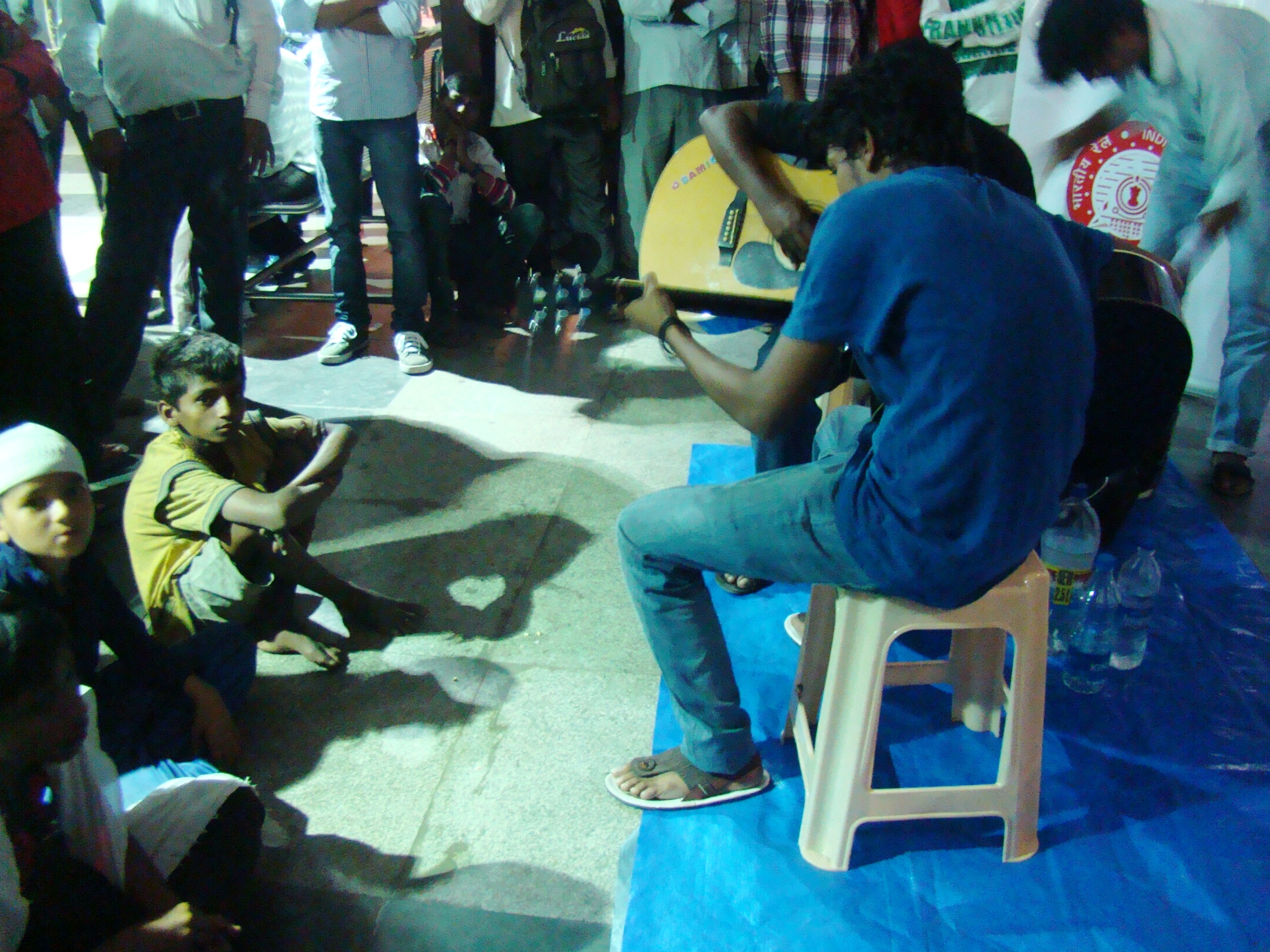
It is 6.15 pm, and Borivli railway station’s platform number 1 is expectedly buzzing with commuters on their way home. But at a space near the main indicators, the unmistakable strains of a man singing to the accompaniment of a dholak fill the busy air. Edge closer, and you realise that you can no longer hear the passing trains.

I catch up with the next performer in line, Neeraj Arya. “What’s the time?” Neeraj asks me, clearly distracted. He is a few minutes away from his performance – he sings and plays the guitar – but he stops to chat and offer details. “I am a resident musician with the National Streets for Performing Arts (NSPA), and so far, we’ve played at three railway stations this month, every week. I have performed on at least 15 occasions,” he grins, adding that he also fills in for musicians who are scheduled to play but who cannot turn up at the last minute.


Arvind Ekrupe, coordinator at NSPA, joins us. “We perform at railway stations because train travellers are an extremely stressed lot, and live music helps bring their stress levels down. Besides, musicians and good artistes perform only at galleries and closed auditoria, so the common man on the street doesn’t get access to good music. This is our effort to make music accessible in a community space,” he explains, adding that with local trains being a mass transit travel mode, the initiative gets all kinds of audiences.

“We perform at Churchgate station on Monday, Borivli on Wednesday and Bandra on Saturday,” Neeraj chips in. “We have two artistes performing from 9 am to 11.30 am, and two others from 5 pm to 7.30 pm. And there is a good mix of music played out. So far, the response has been fabulous.”

He leaves us to prepare for his own act. By now, several curious commuters have stopped to watch, and listen, as Neeraj and a friend start tuning up their guitars. Three beggar children are the audience members closest to Neeraj, but he doesn’t seem to mind them.

And then he begins to play, and we forget the trains once more.


Exit mobile version