Categories
Deal with it

City’s conservancy workers will get their own flats

BMC moves proposal to construct flats on ownership basis for its almost 35,000 conservancy workers using an FSI of 4.
by The Editors | editor@themetrognome.in

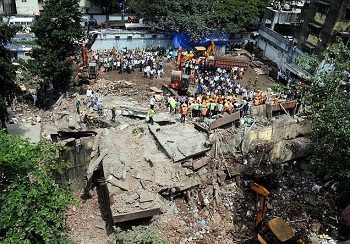
Dockyard road collapseA horrendous building crash at Dockyard Road in September last year killed 61 people. The spotlight fell on the state of the building – it was 33 years old – and the fact that it was owned by the Brihanmumbai Municipal Corporation (BMC). The building housed employees of the BMC’s Markets Department.

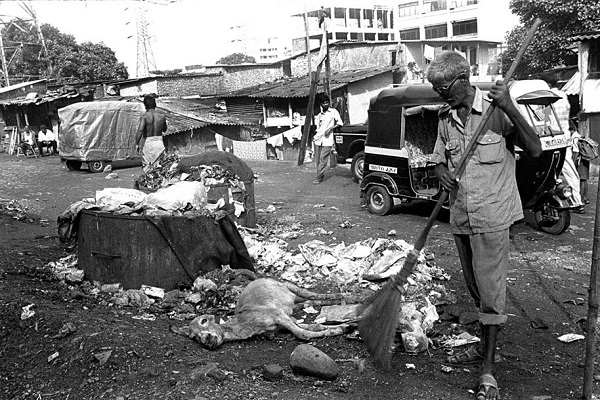
After the uproar over the crash, the BMC swung into action and fast-tracked a proposal seeking to build flats for the Corporation’s 35,000-odd conservancy workers under the ‘Ashray Scheme’. As per the scheme, conservancy workers in the city would get permanent homes that the BMC would build and hand over to the workers along with ownership rights. The Improvements Committee of the BMC first approved the proposal to use 4 FSI in the construction; the Standing Committee soon followed suit and approved the proposal as well. It has now been sent to the State Government for approval.

As per the scheme, redevelopment or reconstruction of old buildings will be done to provide homes for the BMC’s about 35,000 employees working in solid waste management. “The huge numbers of conservancy staff have always carried out their duties of keeping the city clean,” says Rahul Shewale, Standing Committee Chairman, BMC. “However, so far their own living quarters were not adequate. The city’s health is affected if their financial and social lives are unhealthy. We feel that a large part of their issues will be solved if they have their own houses.” He added that the BMC could not build these houses because of existing FSI rules and unavailability of plots. But if an FSI of 4 was granted, the project could get underway and the surplus units could be developed for Project Affected Persons (PAPs). The overall project cost is pegged at about 1,800 crore.

Currently, the BMC’s conservancy workers stay in 39 staff quarters located all over Mumbai. Most of these dwelling units are in a bad condition.

(Pictures courtesy Sudharak Olwe [part of his award-winning ‘In search of dignity and justice’ series], www.thehindu.com)

Categories
Overdose

Do din se ‘Like’ nahin mila hai, sahab…

What prompts this crazy obsession with our virtual selves, where we are begging Likes and Shares from all and sundry?
Jatin Sharmaby Jatin Sharma

It’s no secret that our virtual lives are overpowering our real ones. People are so submerged in the wave of social networks and gadgets that slowly and steadily, we will replace our real emotions with emoticons forever. It is very easy to find a family that is sitting in an urban living room, with all four of them engaged with their gadgets. This is the ‘virtual bonding’ that is becoming more important than emotional bonding for many of us. And it’s also a nice way to cheat your mind – you can say that you were ‘spending time with your family’ when actually, you were having a conversation with seven other people on Whatsapp.

This kind of behaviour has made us so sick mentally that gradually, we have all started to believe that our standing in the virtual world is way more important than out standing in reality.

Imagine this. Earlier, people used to take photographs and post them to Facebook. If that picture got a few likes and comments, it was all good. But now, people have actually started begging for ‘Likes’. I kid you not: this tribe of ‘virtual beggars’ is growing by the day. A simple conversation between friends is now:
“Hey, did you see my party pics?”
“Yes, I did.”
“How can you have?”
“I did!”
“Then why didn’t you Like them?”

I have personally experienced my friends forcefully extorting ‘Likes’ and ‘Comments’ on their posts in lieu of my loyalty to them 😐

Some people have reached an advanced stage of virtual begging, where they tag people and then even message them on the phone to ensure that there are maximum Likes and Shares received. This is going on all around us. I suspect Mumbai will soon become the capital of Internet-beggars.

What amazes me is that the accumulating of these Likes and Comments going “Aww…” and “Woww!” make the world a happier, shinier place for certain people. And the animosity that is being reflected when someone expresses an honest opinion, is quite disheartening. Socially, such behaviour is just going to contribute to the rise in fake feelings and words that have no emotions attached to them. The senses of individuals are now being switched continuously towards appeasing a certain FB friend or a Twitter follower.

There are some individuals who also take great pride when their Tweets are retweeted. Sure, it may be a minor achievement of sorts, because you got others to agree with you. But the problem starts when you take your retweets so seriously that you go on an anshan when your friends or followers don’t retweet you. It has become so serious, that from being an idea board, Twitter has now evolved into this space where people mould their thoughts according to the most retweetable idea. And again, to push the whole thing further, some people adopt the strategy of asking others to retweet their tweets from office.

I think that those inventing Twitter and Facebook came up with these social networking platforms to create an enriching experience. But these social network websites have just created a parallel world peopled with virtual beggars. This is a world whose inhabitants have no qualms begging for a Like, Share, Comment, Retweet and Favourite. Dear All, please remember: begging is against the law. Sure it won’t get you arrested in the virtual world, but do shun begging there too.

Jatin Sharma is a media professional who doesn’t want to grow up, because if he grows up, he will be like everybody else. ‘Overdose’ is his weekly take on Mumbai’s quirks and quibbles.

(Picture courtesy techcrunch.com)

Categories
Film

Film screening: ‘Baandhon’ at The Root Reel

Friday evenings are perfect for watching films. Head to Churchgate this evening to watch ‘Baandhon’, a critically acclaimed Assamese film.

If you happen to find yourself in town tomorrow and you’re in the mood for some good cinema, make your way to the Theosophy Hall at Churchgate to catch the screening of Baandhon, the award winning Assamese film by Jahnu Barua.

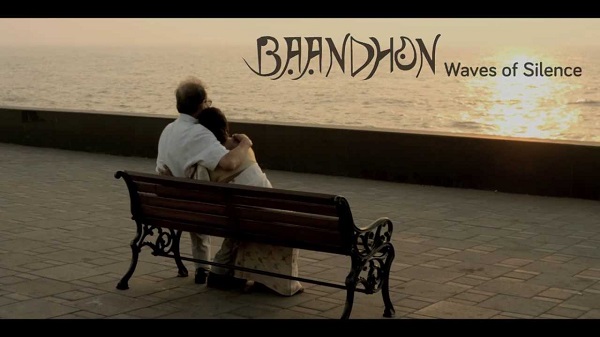
Baandhon (Waves of Silence) is a gentle paced, minimalist film about an elderly couple leading a sheltered existence in a town in Assam. It’s a bare-bones story that is literally just this: a perennially-bickering old man and his wife are unexpectedly visited by the harsh realities of the outside world when their grandson Pona – an IIT Bombay student who is the centre of their universe – goes missing on the night of 26/11.

The film’s director Jahnu Barua is a multiple National Award-winning director and this stark, moving film has won the Opening Film Indian Panorama at the 43rd International Film Festival of India, Best Feature Film in Assamese Award at the 60th National Film Awards and the Best Film, Indian Films Competition, Bengaluru International Film Festival.

The film is presented by The Root Reel as part of the chapter where they celebrate the best of regional cinema from India, often unfairly ignored due the overshadowing presence of Bollywood.

Head to Alliance Francaise de Bombay, New Marine Lines, Churchgate. The screening starts at 6:30 pm sharp and entry is free but on a first-come-first-seated basis.

(Compiled by Medha Kulkarni)

Categories
Overdose

This is why Mumbai is not Shanghai

It is through its consistently stupid decisions that the BMC is holding Mumbai back from being a truly international city.
Jatin Sharmaby Jatin Sharma

It’s true that the tongues of our politicians and of those in authority have always been slippery. Or rather, there doesn’t seem to exist a filter between their brains and their tongues. From blaming chowmein for rape to shutting down bars at 1 am to make the city safer for people, our authorities have, to be fair, always worked overtime to come up with the most innovative solutions to problems that plague us all.

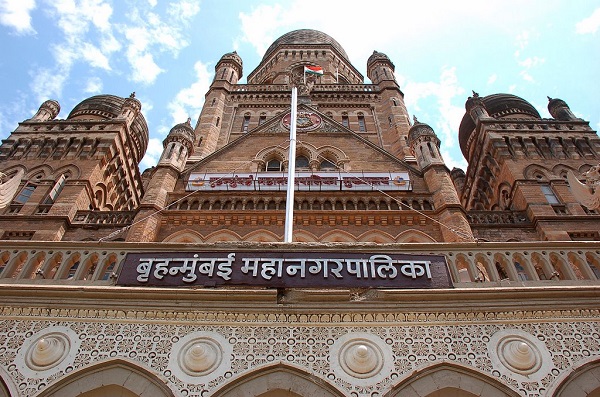
But the BMC’s newest decision takes the cake. I continue to be amazed by how the biggest municipal corporation of India consistently comes up with highly original solutions for cost cutting. But before I get into really praising them, I would like to throw light on the fact that these are the same people who have been claiming to turn Mumbai into Shanghai or a world class city that would be lauded by all.

What did the BMC do now, you ask. Well, the Corporation has had a task at hand: that of cutting costs that go towards paying its drivers. The BMC hires drivers for all official works, and these may range from driving their bosses around, to even manning ambulances at all hours. These drivers, like other Government employees, work within an eight-hour schedule, and any overtime is to be paid for in their salaries. However, the BMC found that it was paying highly ridiculous amounts of overtime, because most drivers were working way beyond their eight-hour schedule. The problem of overtime pay was escalated such that the drivers were found to take home more salaries than their bosses!

And so the good folks of the BMC hit upon an easy solution: get retired drivers back to work so that costs do not escalate further.

Dear BMC, I would like to bring your attention to a couple of points. One, the retired drivers retired for a reason. That reason could be age, failing health, failing eyesight. Ultimately, it all leads to safety, or the lack thereof. There is every possibility that you made them work round-the-clock when they were still in service, so it makes me wonder if they are really up to Round 2 with you again.

Second, I assume you are going to pay your retired drivers some salary, right? So why are you not hiring young blood, instead? Also, what extra provisions are you making for these retired-but-back-to-work drivers? Are they contractual employees liable for benefits and leaves? Besides, have you considered the costs if these drivers are unable to drive properly (due to health reasons) and bang your cars into other cars or, worse, people?

I am sure this latest decision was given as much thought as the earlier ones that even considered covering up mannequins peddling underwear. Or refusing to fine their engineers for the city’s bad roads instead of making them accountable for the same. Or lowering the rates for hoardings that featured politicians. Or still not inaugurating a park in the city 11 months after its completion, because there’s nobody to inaugurate it. We could go on and on…

What else can be expected from a Corporation that wants to improve Mumbai’s look and standard by travelling to foreign countries and coming back with ideas to ‘cut and paste’ what works there? A city becomes a world class city when the municipal corporation is committed to identifying its real problems and coming up with local, workable solutions. It’s time that people in the BMC realise that the city has suffered for long because of such harebrained ideas. I wonder if the BMC will soon outsource its think-tank to a foreign agency as well.

Jatin Sharma is a media professional who doesn’t want to grow up, because if he grows up, he will be like everybody else. ‘Overdose’ is his weekly take on Mumbai’s quirks and quibbles.

(Picture courtesy www.panoramio.com) 

Categories
Overdose

So when will you stop playing judge?

By saying ‘These things happen’ in the context of the Tarun Tejpal case, we are sanctioning sexual predators’ ‘small’ crimes.
by Jatin Sharma

Mumbai has always been contradictory. It is known as the city of dreams, but it is also the city that never sleeps. From the 1960s on, people have been howling about the lack of space in Mumbai and how noone can find a house here, but the builders keep making houses and buildings by the hundreds. A city that is considered to be the most aware in India is still a laggard when it comes to voting. The financial capital of India also houses the biggest slums. Some members of the ‘elite’ janta will shudder in horror at the prospect of partying at not-so-happening joints, but will come out to eat anda bhurji on the bonnets of their BMWs. Mumbai is and always will be about contradictions.

I was reminded of this fact today when I heard people talking about Tarun Tejpal’s sexual assault case. Straining to hear a discussion about the case on a Mumbai street, I was sure I was going to see the city’s contradictory side again. And sure enough, there it was: “It’s not that bad, yaar. These things happen all the time in offices, everywhere,” was a statement often repeated amongst the group.

And so it happens.

sexual assault issueThis is the same city that simmered with fury last year in December when a girl in Delhi was raped. This was the same city that went on protest marches and endlessly discussed rape and how women were unsafe when a journalist was raped in the Shakti Mills compound by, er, ‘poor people’. Today, during a discussion with my colleagues, someone mentioned that in the Tarun Tejpal case, the victim must have wanted to get into the ‘good books’ of Tarun Tejpal and “that’s why must have done it. This happens all the time and in all sectors,” was the explanation.

Even if a girl is alone with you in your room, that doesn’t mean she wants to sleep with you. Sure, women are difficult to figure out, but understand one thing: when a woman says ‘no’, don’t take it to mean ‘yes’ or ‘maybe’.

A recurring point being made by several people is: ‘This crime is not so bad’. My question was and remains: Why? Why is it not ‘so bad’? What makes a crime ‘bad’? Must the victim cry incessantly and refuse to come out of her house to convince us all that the matter is serious? Why is molestation a ‘smaller crime’ than rape or murder? Why don’t we see this as a problem? On the one hand, we want a society that is free from malice and then we start to define the degrees of malice ourselves. A crime cannot be bigger or smaller in comparison to others. A ‘small’ case of molestation that goes unnoticed and unaddressed empowers the criminal to attempt a a more serious crime.

What’s more, I can’t digest this idea of delegating a professional or personal sphere to a crime. The journalist who is fighting for justice right now was certainly an employee and may have partied with the boss, but that doesn’t make her ‘that’ type of girl. Even if a girl is alone with you in your room, that doesn’t mean she wants to sleep with you. She might be drunk and it may be 3 am, but that doesn’t mean she is allowing you to make overtures. If you read that last line and thought that I was wrong, then maybe you need to adjust your thinking a bit. Sure, women are difficult to figure out, but understand one thing: when a woman says ‘no’, don’t take it to mean ‘yes’ or ‘maybe’.

With respect to this case being discussed endlessly in newspapers and on news channels, all I can see are judges around me, dissecting the girl’s moral character. What gives us the rightTarun Tejpal to demean an individual who has the courage to go against someone as powerful as Tarun Tejpal? What gives us the right to say, “Oh, but these things happen at the workplace,” so casually? Yes, these things must be happening around you, but not all the victims are as courageous. Most victims let the bosses who took advantage of them during weak moments go scot free. With examples like the Tejpal issue, maybe figures in authority will realise that employees are to be appraised on the basis of their professional skills alone, and they cannot threaten an individual and force themselves upon any girl just because the girl is on his payroll.
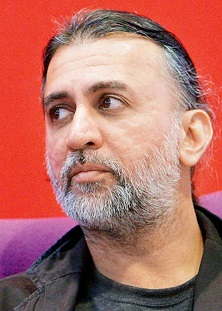
Jatin Sharma is a media professional who doesn’t want to grow up, because if he grows up, he will be like everybody else. ‘Overdose’ is his weekly take on Mumbai’s quirks and quibbles.

(Pictures courtesy onwardstate.com, thebodypacifist.wordpress.com, www.mid-day.com)

Categories
Event

Palestine, in a lecture

When was the last time you pondered over Palestine’s ground realities and when the violence would stop? Do it today.

Today, November 29, Jnanapravaha gives Mumbai the chance to engage with the realities of life in occupied Palestine through the work of well know Palestinian conservation architect and writer Saud Amiry.

Saud AmirySuad Amiry has lived most of her life between Amman, Damascus, Beirut and Cairo and now lives in Ramallah, Palestine. Amiry is the founder of Palestinian NGO RIWAQ, a winner of the 2013 Aga Khan award for Architecture. Riwaq documents, conserves and rehabilitates historic buildings and centers in rural Palestine. She is also the author of Sharon and My Mother in Law, which won the prestigious Premeo Viareggio award.

“Reality or non-fictional life in Occupied Palestine is the biggest fiction and hunting fantasy,” Amiry says. In this visual presentation, she will share with the audience her two worlds: the architectural world of her organization RIWAQ and the private and very personal world of her writings. Using “black and white” humour, Amiry brings to life the absurdity of everyday life in Occupied Palestine. Amiry’s talk co-incides with the launch of her new book, Golda Slept Here, published by Women Unlimited in India.

The presentation will be followed by a conversation between Saud Amiry and Anil Dharker, Founder, Literature Live! The Mumbai LitFest.

Head to Jnanapravah, Queen’s Mansion, G Talwatkar Marg, Fort. Tea will be served at 6.30 pm, followed by the lecture at 7.00 pm. Seating is limited and entry is on first come first serve basis, so be there on time if you don’t want to miss it.

Compiled by Medha Kulkarni

(Pictures courtesy www.facebook.com/JnanapravahaAtMumbai and www.umbriajournal.com)

Exit mobile version