Categories
Wellness

How a 12-year-old’s renal cyst was removed in 30 minutes

From treating only minor ailments, doctors in the city are increasingly turning to laparoscopy to excise cancerous tumours and cysts.

Dhaval Desai (name changed) was playing in his Govandi home with his younger brother a few days ago, when the younger boy jumped on his abdomen. For the next few minutes, the 12-year-old experienced excruciating pain in his flanks, and told his parents about it. “He complained of severe pain so we took him to our family doctor,” said his father, Vinod.

Their family physician prescribed medicines for stomach ache, but the pain persisted. Alarmingly, Dhaval was seen to pass blood in his urine. “Our doctor told us to get a sonography and CT scan done. We were told that he had a kind of tumour above his kidney. I was stunned to hear it, because Dhaval had never complained of any pain or discomfort before,” Vinod explained.

Dhaval had a seven-centimetre cyst in the upper regions of his right kidney. The fall brought to light this cyst, and had to be immediately removed.

Dr Roy PatankarDr Roy Patankar (in pic on left), noted gastrointestinal and laparoscopic surgeon, treated the case. He said, “The conventional procedure in this case would have been to cut open the abdomen and remove the renal cyst. But we find that cutting patients open does several debilitating things – you have to cut all muscles open, there is the possibility of high blood loss, and there is a long recovery time. It is best to avoid invasive procedures especially in young children, whose recovery and short-term mobility may be compromised.”

He added that with conventional surgeries, the patient would also be exposed to a higher risk of hernias later on, since a lot of flank muscles would have to be cut into to expose the kidney before excising the cyst.

In Dhaval’s case, Dr Patankar tried a less invasive approach – laparoscopy. “We got the cyst with just a tiny incision on his abdomen. Where the boy would normally have spent at least a week in hospital, followed by post-op care, Dhaval was able to go home in two days and he resumed school in just five days.” On his part, Dhaval says, “I do not feel any pain at all after the operation. I am now waiting to go to school.”

Laparoscopy in cancer surgeries

Though surgeons in India have largely confined laparoscopy as a surgical tool to such treatments as gall bladder removal and uterine procedures, Dr Patankar says that in the last two years, doctors are using laparoscopy in cancer-related surgeries, too. “There is too much tissue injury and blood loss in conventional surgeries, and after the operation, about 80 per cent of the patient’s pain is caused by the surgical procedure used, than the actual surgery or ailment itself. With laparoscopy, the component of pain attached to surgery is removed.”

Apart from being minimally invasive, which leaves no scarring post-operation, laparoscopy also helps the surgeon get to the root of the issue faster and in a way that is safe for the patient. “While operating, since a camera attached to the probe magnifies the area significantly, it helps the doctor navigate the area better and faster. We have been able to operate on several cancer patients successfully with the use of laparoscopy when removing tumours and cysts,” Dr Patankar says.

He says that doctors in India are increasingly finding takers for cancer-related laparoscopic surgeries from such countries as Sri Lanka, Tanzania and Nigeria. “However, most patients from the West flying to India for laparoscopic surgeries are still opting for bariatric surgeries. Their insurance doesn’t cover the costs of the operation back home, and we do it at a fraction of the cost.”

(Pictures courtesy www.lapsurgeon.in, www.evergreensurgical.com. Feature image is used for representational purpose only) 
Categories
Deal with it

A second home for our seniors

Mumbai gets first assisted living facility for senior citizens at Nala Sopara, under the aegis of the Silver Innings Foundation.
by the Editors | editor@themetrognome.in

Walkway leading to the houseLast weekend, we made the trip to A1 Snehanjali, an assisted living facility for senior citizens at Nala Sopara. At that point, it seemed difficult to believe that anybody would send their aged parents so far away from the city; the facility itself is about four kilometres away from the railway station.

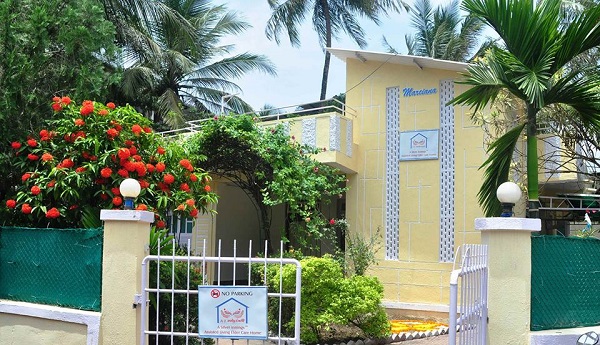
But once we got there, we saw why not just their families, but the senior citizens themselves would like to give Snehanjali a try. Located inside a villa on a chowk that is in close proximity to a school, a market and a hospital, the place is not cut off from the rest of the area and is well-equipped to both house and handle residents.

“We were very clear that we are not opening an old age home. This is a space for assisted living,” says Sailesh Mishra of Silver Innings Foundation, which has started A1 Snehanjali. “People don’t need old age homes, which are essentially dumping grounds for our elders. They need services which may be both short term and long term. For instance, some people need to travel for a few weeks and need their parents to be taken care of. Or they may be based abroad but would want their parents to have medical attention and to be monitored. Many times we blame families for sending their elders away, but at times, they have no choice.”

Why assisted living matters

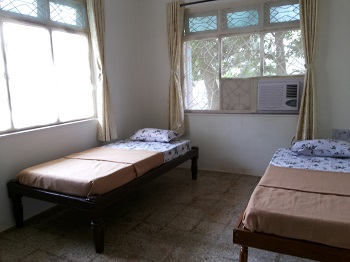
For a city that has hardly any facilities for senior citizens, an experiment like A1 Snehanjali is a worthwhile one. “There are five bedrooms, and we areBedrooms at Snehanjali able to take in only 13 people at the moment. There are several applications, but we select the residents carefully,” explains Sailesh. “We are trying to ensure that the space is interactive, and that it feels like home.” He adds that the selection process includes rejecting applications where it is clear that the family is banishing the elder from the home, or if the person needs daily nursing.

Silver Innings has tried very hard to make the space a welcoming one. Walking surfaces are provided in the compound, with specially-paved areas and lawns for residents to walk on barefoot. Flowers, herbs and vegetables have also been planted; the produce is to be used in the kitchens. “We provide vegetarian food, low on salt and spices, but once a month, a resident may eat non-vegetarian food brought from home,” Sailesh says. On-site medical facilities are available round the clock.

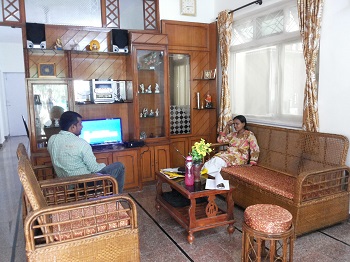
About seven CCTV cameras monitor the premises constantly, and the gates are always locked. “Those suffering from dementia or Alzheimer’s have the tendency to wander,” Sailesh explains. “We have to keep them occupied, so we have TV and recreation roomplanned daily activities that they can be a part of if they wish to. Otherwise, they can watch television or listen to music or simply stay in their rooms.” Sundays is a day of eating whatever the residents wish, and they are permitted visitors on any day of the week. “We don’t have a lights-off rule and in fact, there are no rules for residents,” says Sailesh.

Who can make the cut

The NGO is very clear on who can be admitted. “We meet the person only through a referral, to gauge the need to send the person to us in the first place. We take in people who are suffering from Parkinson’s, Alzheimer’s, those bed-ridden by paralysis but not needing constant nursing, and people over 80 with mobility issues,” he says. But people suffering from TB and AIDS are not admitted as of now.

“There is a Rights of Residents charter that must be signed. We insist on families visiting them once a month, or if they can’t, we’ve provided Skype too. Besides this, we allow the residents to network outside with the local community. The idea is to let the resident have a good life here.”

If you want to know more about A1 Snehanjali and if you think you should send an older family member there, contact Sailesh Mishra on silverinnings@gmail.com or a1snehanjali@gmail.com.

Categories
Wellness

Be kind to your tummy this season

It’s the time to make merry, even as your digestive system cries for help. Read on for some natural remedies.
by Sharad Panjwani

painful tummyMinutes after you finish your meal, you experience mild aches or heaviness in your stomach. You may even experience flatulence, and though it is not a condition that seriously affects your life, it is irritating and sometimes embarrassing.

Too often we rely on OTC drugs and quick fixes when dealing with random stomach pains or even long-term digestive issues. But with natural remedies, you can say goodbye to your digestive maladies and you won’t suffer any side effects either. Says general practitioner Dr Vaibhav Shetty, “People tend to ignore conditions like flatulence or stomach pains and bloating after meals. They feel that it isn’t something serious – but even if it is not serious, it should not happen at all. Many times, wrong eating habits, or eating the wrong foods, or even a sedentary lifestyle may cause digestive problems.”

Pay attention to any changes in your body’s responses to food, drink and lifestyle, Dr Shetty says. “Our digestive system normally rings the first alarm bell in response to deeper issues. Ignoring a problem only makes it worse,” he says.

But natural remedy practitioners believe that treatments begin at home. “Our ancestors knew what they were doing when they used herbs, flowers, leaves and roots in medicine,” says holistic practitioner Deepali Udhas. “There are many herbs that can treat our digestive ailments simply and without causing harmful side-effects.”

Herbal infusions: These are extremely useful for those suffering from gas and bloating. They absorb the extra gases arising in the intestines during digestion, calm the stomach and lemon teaalso remove toxins from the blood. Those suffering from irritable bowel syndrome and intestinal infections can benefit from infusions of lemon, basil, ginger, peppermint and chamomile. Simply steep for 10 minutes in hot water, strain and drink at least twice a day, generally an hour after meals.

If your problem is a chronic one, you might have to take a supplement comprising the herbs triphala and guggul twice a day, apart from taking a herbal infusion.

Candida in the digestive tract: Candidiasis, if left unchecked, can cause havoc with your digestion. Though it is not very serious, it can be difficult to control, especially with a poor diet.

Instantly eliminate sugar from your diet, even sugars from fruit such as chikoos and mangoes. Yes, this can be tough in this season, when everybody’s making and offering you sweets, but in the long run, your system will only thank you for resisting sugar. Stay away even from honey and sweeteners.

Cleanse your system with a cup of green tea first thing in the morning. After every meal, chew on fennel seeds and drink a glass of warm water. If you have been suffering painful stools, it is a good idea to stay away from processed foods altogether, as also red meat and egg yolk. Try a stomach cleanse treatment from a recommended Ayurvedic or panchkarma practitioner.

yoghurt for gut healthSuperfoods that help: Following a practice of eating a cup of yoghurt with every meal will go a long way in alleviating your digestive problems. Avoid mixing sugar or salt in your yoghurt when you eat it. For those with loose motions connected to drinking milk or eating processed foods, a bowl of yoghurt on an empty stomach will calm the system to a great extent and help digestion.

Also add a dash of lemon juice to your sabzi or even your morning omelette – the enzymes in lemon break down toxins in the system and aid digestion. Other foods to help digestion are onions, garlic, flax seeds, papaya, pineapple, pumpkin seeds, cabbage, oily fish, leafy vegetables and steamed broccoli.

Keep your kidneys happy: Doctors recommend that a glass of warm water first thing in the morning revs up the kidneys to start working efficiently. If you can, try and eliminate sugar from your first cup of tea or coffee of the day – sugar makes the kidneys work harder. Also try cutting down your intake of salt for the same reason. The best way to keep your kidneys working well is to drink lots of water throughout the day and not hold the urine in for more than a few minutes after you feel the urge to use the restroom.

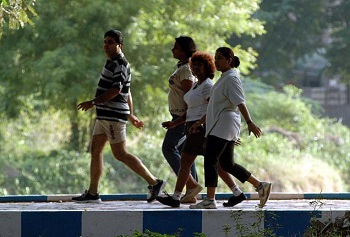
Exercise: Even a brisk walk will eliminate toxins from the body through sweat. Every morning, before the sun rays become too harsh, go for a brisk walk after drinking a glass of warm water to which is added the juice of one lemon and a teaspoon of honey. Not only will this drink attack the fat cells in the abdomen area, combined with physical activity, it will get your brisk walkingsystem up and running for the meals that are to come later in the day. After every meal, take a short leisurely walk so that your digestive system doesn’t become sluggish.

Do not sleep on a full or empty stomach: The number of hours that we sleep, our timings, and whether we sleep right after a meal, all determine how our food will get digested.

Ideally, you should sleep two hours or later than the time you have your dinner. After you wake up, you should consume breakfast within an hour. Putting too much food into your stomach or eating too little or too late can all disturb your digestive rhythms. Not paying attention to these details will cause gases to develop in the stomach.

Stay happy: Research has shown a direct link between a person’s mood and his or her appetite and digestion. Try to remain calm even under stressful situations, and never take work home. Your meal times should not see you stressed or anxious, because it causes the system to slow down. Switch off your phone when you’re eating, hang out with positive people that make you laugh, or if you are alone during meal times, read a good book or listen to peppy music.

Have a question? Want a diet plan for the season? Write to us at editor@themetrognome.in or in the comments section below, and we’ll get your query answered by a doctor.

 (Pictures courtesy www.divavillage.com, www.ectopic.org.uk, juliequilts.blogspot.com, www.thehindu.com)

Categories
Beauty

Banish those dark circles

Don’t let ugly dark circles ruin your good looks. Try these tricks to let your eyes really do the talking.
by Deepa Mistry

With stress and bad lifestyle choices taking a toll on our skin, it is but natural that dark circles appear under our eyes and refuse to go away. Add to that the fact that most of us don’t get as much sleep or good nutrition as we need, and dark circles become a permanent bane.

remove dark circlesBut don’t let those ugly dark circles tarnish your beautiful looks. We all go that extra mile to get rid of them with tons of makeup, but there are simple ways to get rid of them.

The bony structure of the skull into which eyes are deeply set can develop shadows, typically called ‘dark circles’. They are caused due to a variety of reasons; heredity is a big reason, or they can happen to people who are born with thinner skins under their eyes. Fatigue, shortage of sleep, shortage of essential nutrients, sinus problems, hormonal imbalances as a result of menstruation, pregnancy or menopause are some other reasons. Age is also a factor.

If you suffer from dark circles, try these remedies:

– Grate some raw potato and soak a cotton ball in the potato juice. Close your eyes and place these cotton balls on your eyes. Make sure they cover the dark circles under your eyes as well as the eyelids. Leave them on for 10 minutes and wash off with cold water. Similarly, cucumber is a very good astringent and skin toner. Follow the same procedure with cucumber.

– Excessive smoking and drinking cause dark circles, so cut down on these habits.

– Cotton balls dipped in rose water and placed on the eyes and left for some time may cure or remove dark circles.

– Almond oil has been a time-tested remedy for dark circles. Apply a paste of almonds mixed with milk on the dark area on the affected area before going to bed, and wash it off with cold water the next morning. Alternatively, apply almond oil before you sleep for a few days till you see visible results. This will lighten up your skin.

– Application of cold tea bags on the affected eyes and leaving them on for a few minutes is an effective way of removing dark circles.tea bags over eyes

– Vitamin C and iron are known to be essential food supplements for removing dark circles. Try applying a cream rich in Vitamin E and C for reducing under-eye circles.

– Apply a paste of crushed mint leaves under your eyes and leave on for 10 to 15 minutes. Wash off gently. This will relax your eyes.

– Wash your eyes with cold water at regular intervals, this will help soothe them. It also cleanses the eyes.

– Lemon juice, orange lentil flour, puree of tomato and turmeric paste when blended and applied on the eyes and left for 15 minutes is a very good remedy for dark circles.

If beautiful eyes top your wish list, we hope these home remedies will work wonders for you.

(Pictures courtesy www.eternesseclinic.com, www.beautyhows.com, darkcirclesguide.com)

Categories
Guest writer

Why should I keep a constant vigil?

The conclusion to yesterday’s ‘rape calculator’ story comes with a question to ponder on: is constant vigilance a viable option?
by Adithi Muralidhar

Part II  (Read Part I)

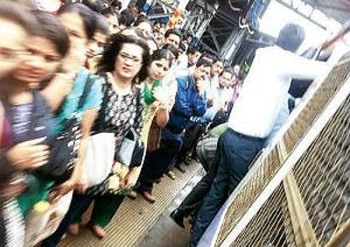
There are a few things that run in my mind, on a daily basis 24/7. It is something that I tend to keep myself aware of, at all times. And then I think, there might be so many like me…we sex pests in Mumbaihave these thoughts constantly guiding our every move while we take on our daily duties, be it at work, college, home or anywhere. We make important decisions at work, we are creative, we calculate and do other math, we manage households, we are caregivers, we love, we run businesses, we teach kids, we treat patients, we sing and dance, we manage accounts and finances, we travel and study, write and act…and then we deal with male chauvinism and family matters, and all this we do when something apart from our body functions (like breathing) is continuously working inside of us.

All the points listed in my previous post – these are things that most girls come to learn either on their own or are taught. It, of course, very subjective and depends on the individual girl and how violated she feels if something happens to her. Some women are the kind who would probably do everything opposite to what is listed, either because they are much more brave, or just to prove a point to society that it is not her problem to tackle such issues, which is as valid a stance that can be! While others can be the non-confrontational kind; and they will go to any lengths to avoid or prevent such incidences from happening. In fact, they may do so to such an extent that it would lead to putting themselves in a permanent state of discomfort. Similar efforts are also made by women who are maybe under peer pressure and worry constantly about society and “log kya sochenge”, and tend to just go with what is considered ‘good Indian girl’ behaviour.

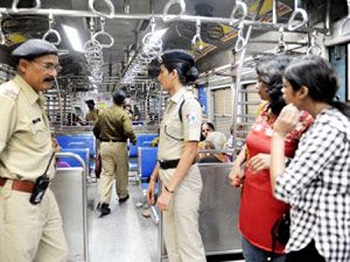
unsafe mumbaiAnd then I think of those unfortunate incidences where the terrible act of rape occurs and I cannot help but think – ‘Oh, was it because she let down her guard for one moment? Was it because for five minutes, she was carefree and forgot to do her calculations correctly, or worse, was she so preoccupied with some other ‘really important’ work, that she let the calculator’s battery run low for a while…and what a terrible consequence she had to face! Imagine, carrying that weight around your head the whole time.’ What does a mother go through? She not only has that calculator set for herself, but she also has it set for her daughter(s). Every time she says – “Yes, you can go to the party, but be careful. Yes, but please be back home by midnight. Yes, but please get dropped home by a guy. Call me when you reach there…” she is doing all those calculations in her mind.

Why does a woman even have to be worried about these things in the first place? Isn’t it enough that they already have to deal with other kinds of inequalities and oppression in society? The worse thing is that most people think, ‘What can you do, this is how it is. This is normal.’

Well, it is not. No one deserves to live a life like this. Constant vigilance can drive a person insane. Previously, the scientific community viewed vigilance as something that is mentally undemanding. But recent studies in psychology tell us otherwise.

“… physiological and subjective reports confirm that vigilance tasks reduce task engagement and increase distress and that these changes rise with increased task difficulty”.

(Warm, Parasuraman & Matthews, 2008, p. 433)

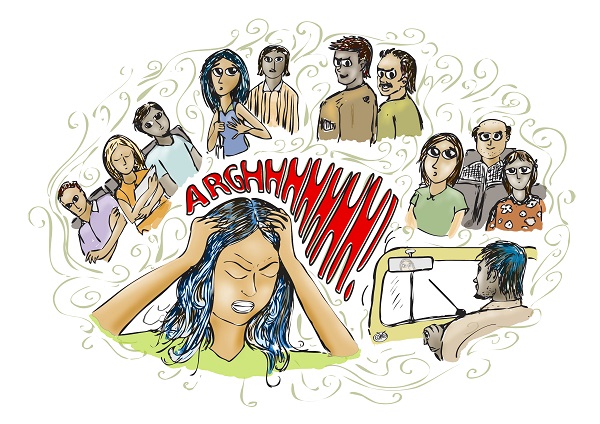
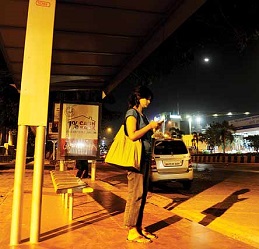
The authors of the above paper of course extend their conclusion to occupations that involved being constantly vigilant, like being involved in military surveillance, air traffic mumbai by nightcontrol, cockpit monitoring, seaboard navigation, quality control, long-distance driving, and agricultural inspection tasks, etc. But having to constantly worry about what you do requires a high amount of energy, even though it seems that women have been and are doing this effortlessly (and unfortunately, innately) for ages.

Also, many psychologists are of the opinion that the impact of chronic stressors are usually ignored and are in reality much more insidious than even the extreme (non-chronic) stress symptoms. There have been studies on gender differences in stress and many studies report that women have been found to have more chronic stress than men. In fact, there are studies that even explore gender specific stressors for women – like violence, sexist discrimination, etc. – all of which can be detrimental to their physical and mental health.

Coming back to the real question – why should we even be doing this? I have to admit that it would be idealistic to think that I can keep my guard down in today’s society (be it in Mumbai, or be it any town in India or even in the world). Personally, I am not willing to take the risk. So what would I prefer? Keeping all those antennae alive and ticking seems like the only option right now. Is it okay? No. It is not OKAY. I just have my hopes set on the fact that education and more awareness among people will help to change the society for better and such crimes against women would eventually stop one day.

Till then, my calculator beeps on.

Adithi Muralidhar currently works in the field of science education research, in Mumbai. Apart from that, she works in areas related to environment and sustainability and also has a keen interest in social issues. 

(Pictures courtesy www.mumbaimirror.com, www.indiatvnews.com. Sketch courtesy Manoj Nair. Adithi has referenced ‘Matud, M.P. (2004). Gender differences in stress and coping styles. Personality and Individual Differences Vol 37(7), pp 1401–1415’ and ‘Warm, J.S., Parasuraman, R., and Matthews, G. (2008). Vigilance Requires Hard Mental Work and Is Stressful. Human Factors, Vol. 50, No. 3, June 2008, pp. 433–441’ for the writing of this story)

Categories
Guest writer

My rape calculator’s always working

A Mumbai woman explains how her mind is on constant auto-alert for signs of sexual pests and even worse, rapists.
by Adithi Muralidhar

Part I of II 

To all my girlfriends, I am sure you will be able to relate to some of the thoughts (if not all) that I have penned down here.

To all my guy friends, this is to give you a vague idea of what runs through the mind of a woman, living in a society such as ours.

Thanks to new age media, nowadays, rapes get reported more often than before. You open the newspaper each morning and you can be guaranteed to come across at least three rape reportings.

Being brought up in a relatively liberal household, I was allowed as a child and a teen to go out for as long as I wanted, stay out late with friends, go to far-away places. These ‘privileges’ came with some rules. But my parents never forbade me from going out.

Also, my parents never told me what I should and shouldn’t wear. They let me judge for myself and as long as I was comfortable with what I was wearing, they did not question my choice of attire. I was lucky that my parents even allowed me out at all, since I know of households (even in the so-called urban educated society) where they do not let their ‘girl’ children (only) have a stay over at a friend’s place, or party, or socialise with the opposite sex.

scared to walk on the streetsWhile I am extremely grateful for having such cool parents, I can’t help but question the need to have rules in the first place. People now are advocating new-age thinking. Previously it was, ‘Don’t get raped’ (meant for girls only) but now, the message is, ‘Don’t rape’ (meant for boys only). This should be based on the fact that, women for generations have been taught at home to not attract attention and invite rape, when in fact men need to be taught to keep their aggression and power-frenzy in control. But is that happening? Are men actually paying heed to this message? Unfortunately statistics show otherwise. Rapes still happen all over the country (and the world). So what does one do to prevent such a crime? Tell your daughters and sisters to not get raped? And so, I feel most of the girls in India have either been brought up in a household where they are downright refused freedom of everything, or given restricted freedom. Getting complete freedom would probably be the rarest of rare cases!

On closer introspection, I realised something else…like several women, I have a ‘Rape Calculator’ at work all the time. This is how it computes things for me:

– I am more comfortable in loose clothes, than in tight fitting ones.

– I tend to hunch, and not keep my back straight when I walk, in order to ‘not attract’ attention to the chest area! Invariably, when travelling, I cover my front with a dupatta, shawl or stole (irrespective of whether it matches my attire or not).

– I look down when I walk, avoiding eye contact with people on the street.

– When I walk on streets and I see a shady person walking in my direction, I cross the road and then cross back again.

– When I walk on main roads or smaller lanes, I do so in the direction opposite to that of the vehicles on that road, so that I can keep an eye on people on bikes/ cars; and to avoid segregated for safetyanyone touching/groping/ attempts.

– When I use public transport like buses, I sit towards the edge of the seat (which is terribly uncomfortable) to avoid the person behind from touching my back with their knee!

– I am paranoid about my shirt/kurta, and constantly check if it rides up (while getting up from any seat, standing in a public place on a windy day etc).

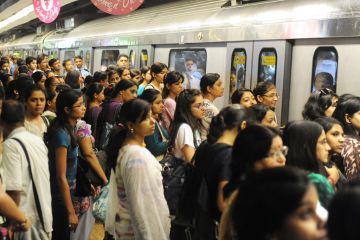
– When I am walking through crowded places (like railway platforms), I walk in front of women, so that my arms are free to be used for ‘frontal defense’.

– When I don’t get a seat in public transport and I have to stand, I look for a spot where my back is towards a woman, and I cover my front with my backpack and my arms gear up as side-defense lines.

– I walk with my elbows jutting out in a crowded place.

– I put on a disgusted look on my face to repulse stares.

– I check the rear view mirror from time to time in an auto, to check if the autorikshawwallah is staring at me.

– I make fake calls to fake friends and loudly tell them my location when I am traveling in an auto alone, either at night or in unknown lanes.

respect women– I think twice before smiling and talking with a man (shopkeeper, autorickshaw driver asking someone for directions, istriwala, watchman) because I don’t want them to misinterpret basic good values and manners.

– I once lied to a cab driver that I was a married woman, as it made me feel safer (I had to do this in Goa, and I observed that he asked fewer questions once he knew I was married).

– I plan my vacations around ‘safe’ travel timings (day-time journeys) and ‘decent’ locations.

– I spend extra cash in order to travel more ‘luxuriously’ (according to some) while in reality I am just avoiding skywalks, subways, foot-over-bridges, shady lanes…and end up travelling by a longer route to my destination, using main road and cabs.

– I am careful about what I talk with other people/neighbours, so that passersby do not hear my personal information (like who is in the house, how many people live in the house etc.)

Finally, I believe that many of us have a ‘rape-calculator’ (I came across this term recently somewhere and I think it is a fantastic term to describe what is happening in a woman’s mind) working in our head. It never runs out of battery and it works during the day and night, when we are sleepy or when we are wide awake.

It involves a complex algorithm that takes into consideration multiple factors like time of the day, what we are wearing, where we are going, the roads that lead to where we are going, what will be our mode of transport, who is our company, what day of the week is it, what occasion it is, etc. And it tells us this is a relatively ‘less dangerous’ outing, we are less likely to get raped, we can go out  today. Also, we tend to make quick impromptu adjustments in the calculations when we take into account the age of cab driver/autorickshaw driver, his mannerisms and body language (as these are factors that you can take into account only when you are out).

Part II: ‘Constant vigilance can kill‘. Look out for the next part of this story tomorrow.

Adithi Muralidhar currently works in the field of science education research, in Mumbai. Apart from that, she works in areas related to environment and sustainability and also has a keen interest in social issues. 

(Picture courtesy newsreporter.com, www.5minute5.com, www.globalpost.com, www.france24.com)

Exit mobile version