Categories
Event

Art Night Thursday is back

Visual Disobedience, a collective that makes art accessible to people, will let you hop along for an art gallery tour.
by Medha Kulkarni

It’s that time of the month again. Art Night Thursday is back, when some of Mumbai’s best art galleries throw open their doors (past closing time) to share,with art enthusiasts, works by some of the best/newest artists from India and abroad.

However, for most people, an art gallery tends to be an intimidating space. With artworks that spill out of the conventional art definitions and the general stream of heady chatter that seems only to be full of fancy words and concepts, most people tend to give art galleries a miss.

If you’re among those who really want to visit these galleries and have an interest in art but shy away due to lack of company, then the Visual Disobedience hop is for you.

Hop to it
Visual Disobedience is a collective formed by young,upcoming artists and other creative people who believe in breaking rules and essentially questioning the way society perceives art. The idea was born out of a simple desire to make art more accessible to the general public. Your guide for the hop will be Ramona D’Mello, who used to organise these gallery hops as part of Artinfo, but has now recently shifted to be a part of the Visual Disobedience.

“It’s all about making art accessible to everyone, irrespective of background, age or profession. We’re loosely-knit; there’s no upper limit on how many people can join us and no need to be absolutely punctual. If you can’t make it right from the start (of the hop), people can join us at different points during the art hop,” says Ramona.

The hop starts at Project 88 at 7.00 pm and winds its way from there through all the participating galleries. It’s free and open to all.

After a quick briefing, Ramona will take you through the different galleries. At every gallery, either the gallerist themselves or the curator give a short note about the works on display or the ongoing show.

“It might seem like an educational walk/talk, but it isn’t,” insists Ramona. “We usually have a lot of fun and make new friends this way.”

The hop happens today at 7.00 pm, and starts at Project 88, BMP Building, Ground Floor, Narayan A Sawant Road, Colaba, near Colaba Fire Brigade. Contact Ramona at 9892536558 or Kevin at 9769930240.

(Pictures courtesy Visual Disobedience) 

Categories
Tech

Apps and games for your Android phone

Presenting a new list of apps that will make using your Smartphone a more incredible experience than it already is.
by Manik Kakra

So you just bought that shiny, new Android smartphone after reading about it and getting feedback from your friends? Great.  But do you know what would make your device better? Apps and games, that’s what.

Apps will help you get the maximum out of your smartphone and make it convenient to use. Let’s get started with our list of apps to install after booting up your Android smartphone for the first time (Note: Google’s apps like Gmail, GMaps, etc. are pre-loaded, so we are not going to mention those apps here.)

Llama

This is an automated-tasker app, and works really well. You can set events and triggers in this app to have a particular app or function started all by itself – for example, switching off your phone’s WiFi as soon as you leave your office. There are tons of settings, and yes, it takes quite a while before you actually get it running on your tips.

The alternative? Tasker

Tweedle

Are you active on Twitter? Well, this free app is the one you should try. It has smooth scrolling, many features, and a nice UI. This Twitter client has it all covered.

The alternative? Falcon Pro

JuiceDefender

This app is quite handy if you are using your phone for one thing or another. JuiceDefender allows you to tweak the settings on your phone to help you get more juice out of your phone without re-charging.

PowerAmp

It is a music player, which looks good, plays multiple formats, has got EQ settings – yes, all of them are covered. You can try its free version, and its paid version  for Rs 120 is worth your money for a good, one-stop music player on your phone.

The alternative? N7 Music Player

Pixlr-O-matic 

Click too many pictures from your phone’s camera and want to edit and upload them straight from your phone? This app’s got your back. Frames, effects, cropping, resize – you name it, and it has it. This is a simple editing app that is a must-have for you photo junkies out there.

The alternative? Pixlr Express

Nova Launcher 

Bored of your phone’s UI and design? Try this fully customisable launcher. You can make folders, add icons, bring widgets on your home screen, change icons, and have as many home screens you need. Apart from nice 3D-ish effects, this is a smooth launcher which is definitely worth giving a try.

The alternative? ADW Launcher

Any.Do 

Any.Do is a to-do list app that works the way its name says. It allows you to list tasks that you have to yet completed on a day, and you can mark them as and when done.

The alternative? Astrid Task and Evernote

Dropbox

This cloud storage app, a cross platform service, is a must-have for Android users, too.

The alternative? Box

Pocket

This is a read-it-later service where you can add URLs for reading them later, either in the app’s own format, or going to the original webpage through the app. It is a cross-platform app available for Web as well.

The alternative? Readability

Flipboard News 

Flipboard allows you to make a virtual magazine of your own. Choose content as per your liking, and add the sources from Web you prefer. It is a very nice app that works without any hassles, and gives you a lot of content to without wasting your time.

The alternative? Pulse

And some games:

Death Racing 2 

Subway Surfers 

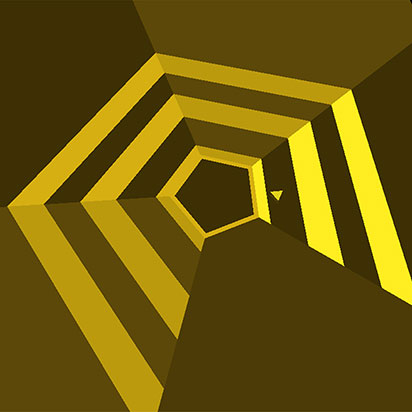
Super Hexagon     

Ruzzle

Hill Climb Racing 

Did you like Manik’s recommendations? Write to us in the comments section below with any apps or games that Manik may have missed.

(Pictures courtesy www.101hacker.com, galaxypocketpirates.blogspot.com, switched-on-tech.pricerunner.co.uk, mplayer.pastemagazine.com) 

Categories
Film

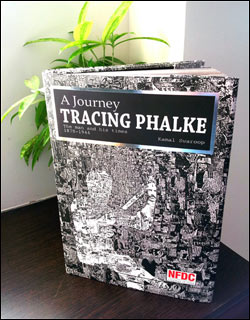
‘Tracing Phalke’ to celebrate 100 years of cinema

NFDC releases coffee table book on life of Dadasaheb Phalke; the book contains rare details of the cine genius’ life.
by The Editors | editor@themetrognome.in

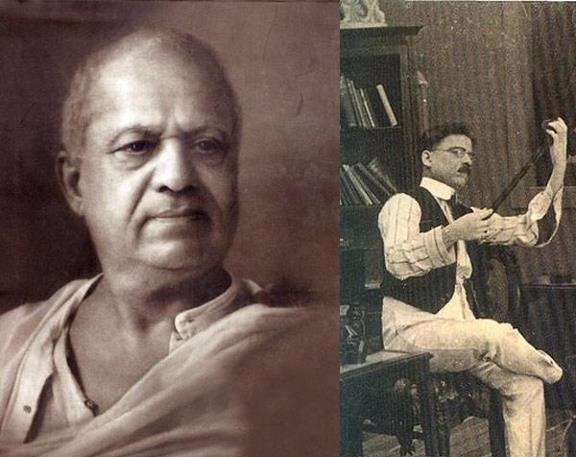
What better way to celebrate 100 glorious years of Indian cinema than to celebrate the life of the father of Indian cinema? Carrying this idea forward is Tracing Phalke, a book that chronicles the life of Dadasaheb Phalke.

“Celebrating the completion of an action-packed cinematic century of Indian cinema and the genius of Dadasaheb, NFDC (National Film Development Corporation) is pleased to announce the release of the limited edition of Tracing Phalke – researched, written and compiled by Kamal Swaroop, a film, television and radio director and screenwriter, more popularly known for his masterwork Om-Dar-B-Dar (1988),” a release from NFDC said.

The book is a “text-based visual treat that lends a magnified view into Dadasaheb’s life, the iconic coffee table book is an eponymous compilation tracing the life span of the Father of Indian Cinema, with rare details right through his schooling, places he visited, people he met and experiences that lent value to his innate genius and imagination that eventually lead to the birth of Indian Cinema.”

Speaking on the occasion of the release of the book, Swaroop, said, “I am happy that Tracing Phalke will be re-released this year just around the date of Indian Cinema completing a glorious century. And considering that NFDC is a harbinger in fostering and promoting Indian Cinema, associating with them couldn’t have been more apt for this initiative.”

Tracing Phalke is a very insightful compilation of Dadasaheb Phalke’s life by Kamal Swaroop and we are delighted to present this visual treat for film aficionados and the fraternity in this centenary year of Indian Cinema,” said Vikramjit Roy, General Manager- National Film Development Corporation.

(Pictures courtesy facebook.com, NFDC)

Categories
Tech

Review: BlackBerry Z10

Our tech reviewer tests the new and interesting BlackBerry Z10, and explains some of the fuss behind Blackberry’s newest offering.
by Manik Kakra

BlackBerry has been in a lot of trouble for the last two years or so. Their loyal customers have shifted to iOS and Android, and their financial statement doesn’t look impressive, either.
In an effort to overhaul its whole mobile business, BlackBerry has come up with its new operating system, built again from the ground up, BlackBerry Z10. BlackBerry Z10 is the veritable messiah to take this OS into the market. We take a look at this device and the new OS, and how it differs from the existing players in the market.

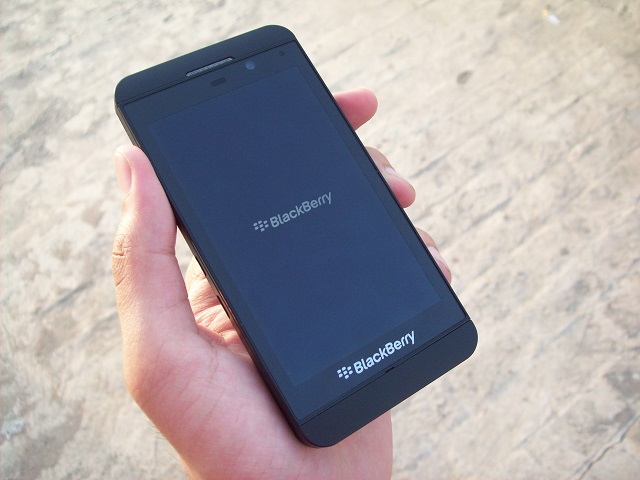
What it looks like: The BlackBerry Z10 sports a 4.2-inch (1280×768) screen, and has a rubberised back. The phone feels like a premium piece as soon as you hold it, and fits in your hand very nicely. There are no cheap materials or colours on its body.

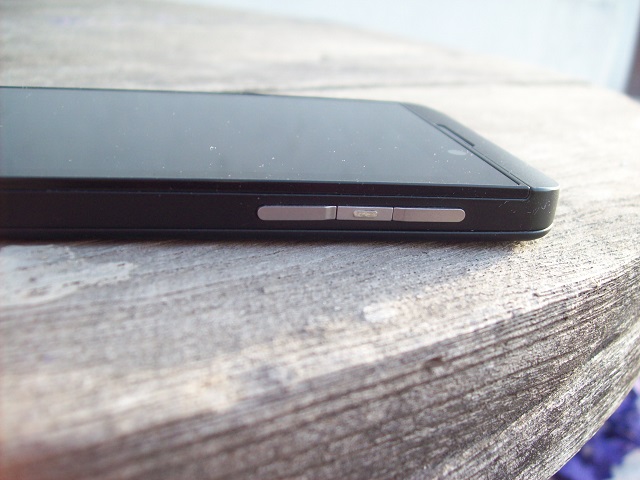
On the right, there are volume rockers and a voice control button in between (see pic on left); the left side has an HDMI port and microUSB port. The front is dominated by that screen. On top of the screen, there’s a 2 MP front-facing camera, LED light and speaker + sensor. On the bottom of the screen, you get a bold BlackBerry branding and primary mic. On the back, there is an 8 MP camera with an LED flash, and BB logo in the middle. On the phone’s top, there is a 3.5 mm headset jack, Power/ Lock key, and secondary mic. The bottom side has just a loudspeaker.

There are no physical buttons on the front, making it a full-touch device like the Nokia N9.

Screen test: The phone’s screen is quite bright and colours look very vibrant on it. There is not much chance you would see any pixels, and usually videos look impressive on it. The buttons on the side are also of high quality – you get a good feedback on pressing them. BlackBerry has done well in the construction of the phone as there are no rough edges. The call quality and network reception on the device we tested were top notch.

Camera quality: The 8 MP camera isn’t something extraordinary. It performs well in daylight conditions but the images aren’t the best from among the high-end smartphones out there. Although the lowlight images were really bad, most of the images in natural light should satisfy an average smartphone user. The focus works quite well, too. You can either tap on the screen to take a picture, or press the volume up button.

The camera UI is quite interesting. BlackBerry has overhauled it and made it quite convenient for the user to change settings within camera like TimeShift (burst mode), and frames.
Hear this: The audio quality on the phone through loudspeakers was disappointing. You get distorted sound even when playing on 70 per cent volume, and the loudspeakers, at the bottom, may get muffled while using the phone. Having said that, the in-ear sound was noticeably better. It was loud, clear, and the basic earphones, though no match for dedicated audio earphones, seem good.

Battery life: Battery life on the phone was average. I was able to get 16 hours on a single charge with regular usage.

Software brouhaha: Let’s now talk about the software – BlackBerry Z10. The software is nothing what we have seen from the company earlier. The BB10 OS is based on full-touch interface. The outlay is quite interesting. As soon as you switch on the phone, you get to see the Menu (or App tray). By swiping left from the first menu screen, you go to Hub, and swiping right takes you to other Menu screens.

Hub, as the name suggests, is one-stop umbrella for all your messages – Email, Twitter mentions, BBM, and SMS. You get all of them neatly placed in the Hub. Whenever there’s a new message, the LED notification light starts blinking, just like in the older BB devices. When you go into an app from the Menu, you have to swipe up from the bottom of the screen (ahem, webOS) to come out of the screen, and you will get to see multitasking view, showing you all the opened apps. All these preview panes have a small close ‘X’ button in order to close as well as remove the app from the multitasking page.

At the end of it all: The phone performs really well, and the UI is very fluid and quite intuitive to use. With its 1.5 GHz dual-core S4 Pro processor, and 2 GB of RAM, the phone almost never lagged and performed smoothly. The app switching works brilliantly and there were no app crashes.

Talking of apps, the BB AppWorld is seriously a downside to the OS. Though there are nearly 1 lakh apps available, there are too less good quality, important apps. BlackBerry has tried to give several native apps – Twitter, Facebook, FourSquare, Dropbox – but most seem half-baked. Take Twitter for instance; there’s no way to change font size, you cannot remain on your timeline position, and so on.

Email, which has been a strong point for BlackBerry, remains a solid point. The Email experience is one of the best you could get. That, along with the keyboard, are the best things about this OS. The keyboard is quite different from what we have seen on touchscreens, but once you start using it, you realise how nicely it works and how the prediction gets better. The Web browser is also very nice, and loads pages without showing too many weak links.
The OS doesn’t bring something new to the table for users which iOS or Android don’t already have. Yes, the gesture-based UI is good, but it could mean a new user has to learn how to use his new BlackBerry phone.

It is clear that BlackBerry has made a serious effort in the past one year. The BB Z10 is a really nice phone, but it may well be a little too less for users who are already used to iOS, Android, or Windows Phones. Having said that, if BlackBerry keeps providing updates and brings the Q10 to the market quickly, it could mean better time for BlackBerry in the Indian market.

Categories
Read

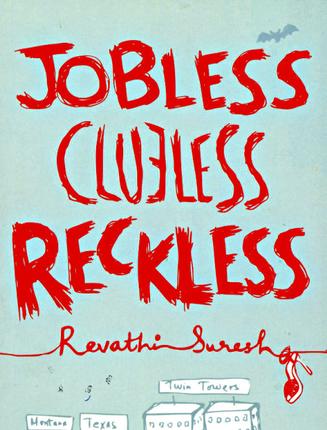
Review: Jobless Clueless Reckless

Debutant novelist Revathi Suresh tells us about writing a book for young adults ‘with exactly no story in mind’, among other things.
by Vrushali Lad | vrushali@themetrognome.in

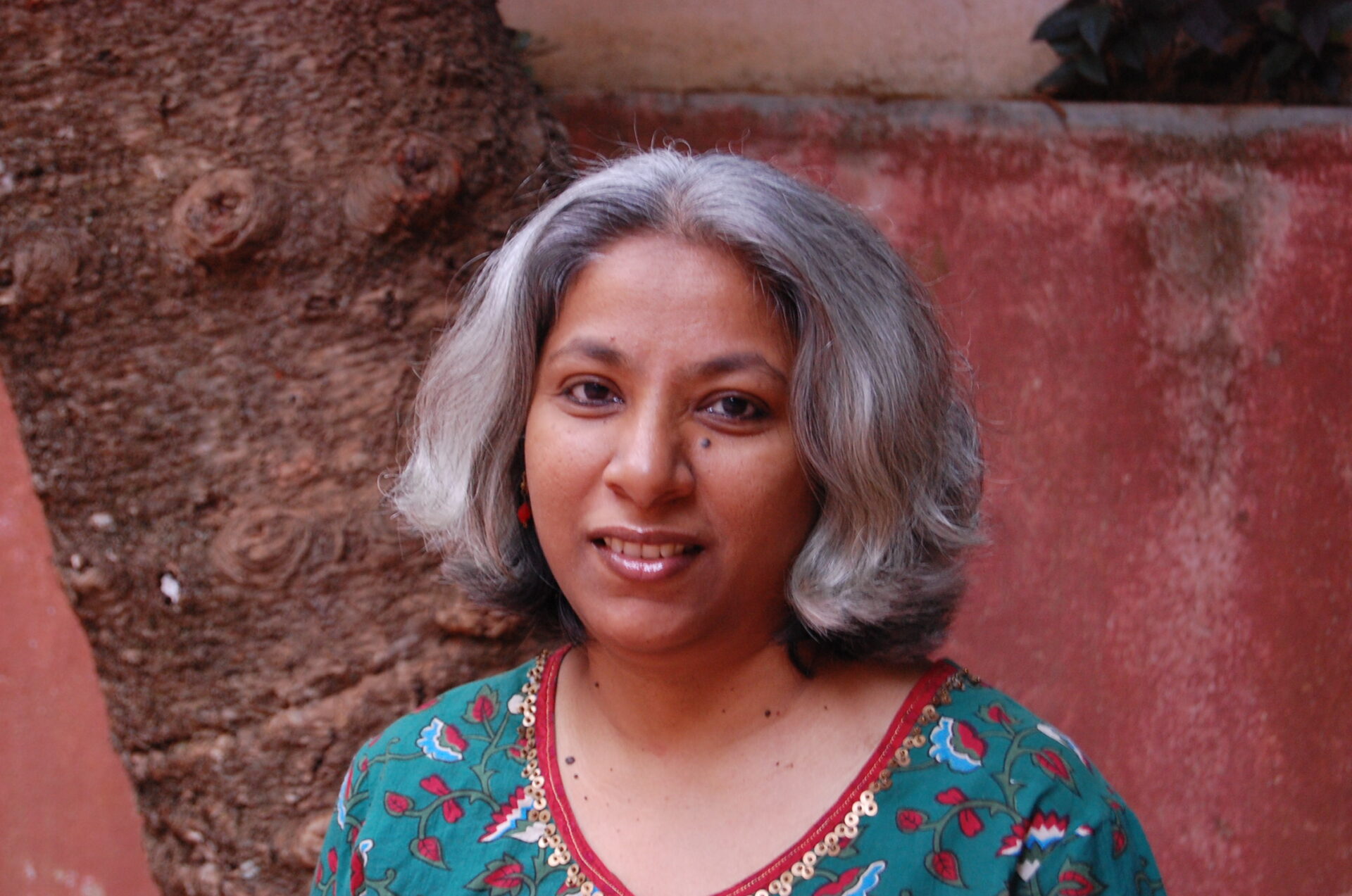
Writer Revathi Suresh’s book, Jobless Clueless Reckless, was released very recently. It’s a sweet little story of a teenaged girl living in an (apparently) dysfunctional family  her father and mother are almost separated, neither have enough time for their two children, her brother is strange, to put it mildly, and her life is as different from her friends as could possibly be. (see review at bottom).

In an interview, the author tells The Metrognome about  writing her first novel, how a story was born out of nothing at first, why she thought writing would be ‘easy-peasy’ and why the suspense of not knowing what she’ll write next is killing her.

Excerpts from the interview:

What inspired this story?
I don’t know about inspiration, it was more that I was at loose ends. Or at least that’s what the people around me seemed to think and I sort of fell in with their idea of me, you know? I had quit my last part-time job and had plans to retire and be a stay at home mom-wife and swing on a swing because housework gets done on its own magically, right? Luckily for me, everyone else around me had better plans for me and kept going, ‘So what are you planning to do now?’, and brushing aside my claims of being a homemaker.

I guess their hopeful looks got to me at some point until I gave in and decided one fine day that I would write a book because that’s what the whole world and its mom are doing right now. Have you been to bookstores lately? (There are) So many new books by so many new authors. I think even the guys who work there moonlight as novelists. So what I’m saying is, I thought writing would be easy-peasy and so cool because I wouldn’t even have to change out of my night clothes to open my laptop. And that’s how I started banging away at my keyboard one fine day with exactly no story in mind. Somewhere along the line it became a book, so I guess magic does happen after all.

How long did you take to write this book?

Two years. Mostly because I didn’t write for a good part of that time. About 40 pages into the first draft I gave up and decided I was never going to finish it, so what was the point. It took me around six months to get the courage to open that particular Word file again. Then I took another I-can’t do-this-anymore break around page 117 or 118 and returned after many months. I’ve figured out that’s my style. Ditch, don’t write. I must say it works spectacularly well.

How close is the central character to you or someone you know?

Kavya is no one I know and she’s every teen I know, if you get what I mean.

The Manisha angle is very interesting, especially since there is no happy ending to it. What was the inspiration for this part of the story?

Again, no inspiration as such. I wanted a first chapter that would suck a reader into the book right away. Only, having created that mysterious opening I struggled for a bit to close that story. I had a few options and I tried them all out. One was that I leave it open-ended but that did not go down well with some of my draft readers. Two was to make her out to be what all Kavya’s friends think she is. But that would mean agreeing that Kavya’s delusional and I wasn’t happy with that at all.

Three was to actually follow through and write a mystery, but that requires some clever planning and plotting and I wasn’t up to that. Finally, I managed to conclude the Manisha story with the help of another hanging thread I need to tie up  Kiran. In an earlier draft, Kiran kind of faded away but that wasn’t working out either, so it’s nice that one chapter took care of the two of them in the end.

What are you working on next?

Nothing right now. But who’s to say what I might cook up in a year or two from now? It might just be the family dinner or another of these I-want-to-escape-writing-so-badly-that’s-why-I-keep-going-back-and-doing-it-all-over-again-books.The suspense is killing me.

What have you written prior to this book?

This is not the first book I’ve written but this is my first novel. I have written commissioned books for IETS and a few years ago I worked with them on this really exciting UNICEF-Karnataka government sponsored Sarva Siksha Abhiyaan project for reluctant readers in rural Karnataka. Many years ago I also wrote a commissioned biography of an industrialist (and it wasn’t as boring as it sounds) which was particularly challenging because he’d been dead twenty years and trying to get a picture of his childhood and early life was pretty difficult because none of his contemporaries were around. In another lifetime (I really am a relic) I was an editor at a Chennai-based publishing house where I worked with Subashree Krishnaswamy to bring out a magazine called Indian Review of Books. The two of us also edited fiction (mostly translation) and non-fiction for an EastWest imprint called Manas.

Why I suddenly became a teen, I don’t know.

Review of Jobless Clueless Reckless:

Not being a writer myself, I’ve always wondered about something: how does one write about a subject or develop a story around a character without a) The subject being autobiographical and b) The writer being even a little bit like that person.

I wondered this especially after I read books like Khaled Hossaini’s A Thousand Splendid Suns, the story of which revolves exclusively around women. Hosseini’s written that story with such sensitivity and dignity, it seems astounding that such a tale – of suffering in silence, of hiding great secrets in an aching heart, of gracefully submitting to a terrible fate, all because one is a woman – could be told by a man. That might sound childish in an increasingly gender-neutral world, even insensitive to some, but that’s just my opinion.

I wondered this again while picking up Jobless Clueless Reckless by Revathi Suresh. By her own admission, Revathi is ‘well into her dotage’. So how has she written about the life of a teenager?

The answer? Quite well.

The book is about Kavya, a teenager living at an embarassing address – Kansas, Grand Canyon, Bangalore, India – with, according to her summation of the matter, an embarassing brother and workaholic mother. You expect a teenage crush, some catty friends, trivial incidents blown out of proportion, and even a ditzy pair of parents, and Revathi gives the reader all of these and more.

Kavya’s parents have very decided ideas for their children, one of which includes homeschooling Kavya and Dhrittiman, her younger brother. The parents have all but divorced each other, and the two children live with their mother in a home that doesn’t encourage much intimacy – largely owing to the fact that Kavya’s mother has seemingly abandoned her earlier, jollier self for a career-driven woman who works at all hours to the exclusion of everything, even her children.

Several twists and turns later, while Kavya battles the ‘weirdo’ label imposed on her by peers who think she is quite possibly dangerous, to a wild night out with a seemingly demure behenji types who shows Kavya a wild night on the town, to finding out who her real friends are and what her heart tells her about Kiran, the big crush of her life, the story resolves itself to an almost satisfactory (for Kavya) end.

I thought some parts of the story dragged on a bit – the bitchy interactions between the girls, for instance – and the characters of Lara (Kavya’s best friend) and even Drittiman are slightly hazy around the edges. But I thoroughly enjoyed Kavya and Drittiman’s relationship – it is both gruff and touching – especially the way they unconsciously cling to each other in a crisis, and the missing Manisha, who Revathi opens the story with (plus the unresolved nature of her disappearance) is all too real. After I finished the book, I realised I actually didn’t want to know where and why Manisha vanishes, though I wanted to know at the beginning.

Revathi also touches on the subject of older children becoming unwitting ‘parents’ to younger siblings, the pitfalls and pleasures of homeschooling a child in system-obsessed India, and how it is possible to lead a double life and keep the two comfortably separate. All of this is done very well, without sermonising.

All in all, this is a good book to recommend to young adults, especially if you’re trying to wean them away from such horrors as the Twilight series. Jobless, Clueless, Reckless is a good read because it is frank, humorous and does not pretend to be something it is not – much like its heroine.

Duckbill Books, Rs 175

(Pictures courtesy Revathi Suresh, thehindu.com)

Categories
Do

Asha Bhosale gives Rs 5 lakh for drought relief

The Maharashtra State Government has already received upwards of Rs 116 crore via donations from within the State and without.
by The Editors | editor@themetrognome.in

The State of Maharashtra has responded well to the Government’s call for help to supplement its efforts in combating the drought situation that the State is currently facing. Hearteningly, a little over Rs 116 crore has been collected already, via donations from students, artists, businesspersons, banks, NGOs and Trusts, and private individuals.

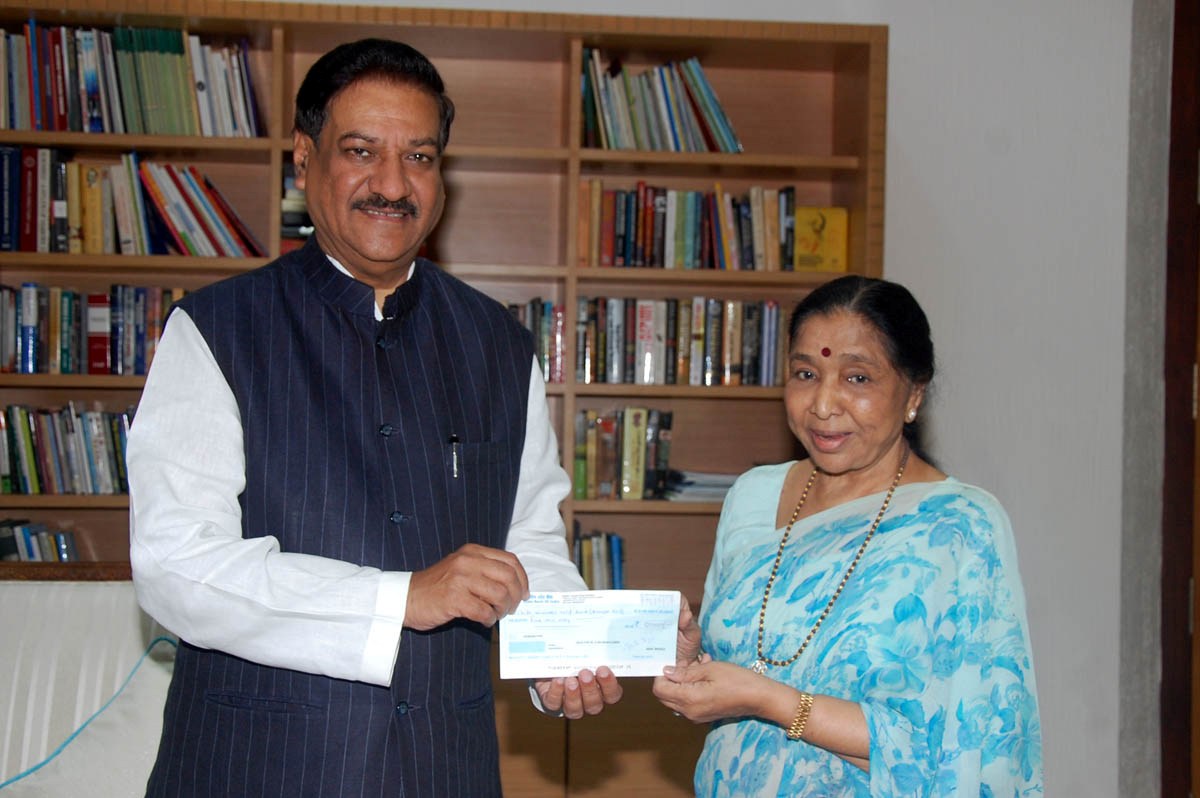
Today, noted playback singer Asha Bhosale visited Maharashtra CM Prithviraj Chavan at his official residence, Varsha, to hand over a cheque of Rs 5,00,000 towards drought relief. Of this, Rs 1,00,000 was the prize money she won at the recently-held Hridayesh Arts event, which commemorated her contribution to the film industry. The rest was contributed by Bhosale.

“It is our fundamental duty to contribute for those who are affected by the ongoing drought crisis in the State. All of us must help the Government in the relief efforts it is carrying out,” she said while handing over the cheque to Chavan.

The biggest donations thus far – both Rs 25 crore each – have come from the Mumbai-based Siddhivinayak Trust and the Shirdi-based Shri Saibaba Sansthan.

(Picture courtesy DGIPR, Mantralaya, Mumbai)

Exit mobile version