Categories
Tech

On the (sur)face of it

What is the ‘Surface’ that’s got everyone’s attention since yesterday? Our tech writer gives the dope on Microsoft’s newest offerings.
by Manik Kakra

Microsoft’s previous Surface efforts did not prove to be very fruitful. Their sale figures were not very impressive, and the company had to write down a huge loss from the devices. Yesterday, in its Surface event, Microsoft released two new tablets – Surface 2 and Surface Pro 2 – to take on the iPad as well as make some efforts to better Microsoft’s position in the mobile space.
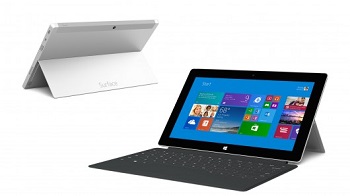
Surface 2Surface 2: The Surface 2, like the original Surface, is meant for Microsoft’s RT platform. The tablet runs on Windows RT 8.1, and comes pre-loaded with apps like Outlook RT and MS Office. Under the hood, there is a 1.7 GHz quad-core nVidia Tegra 4 SoC, along with 2 GB of RAM. It boasts a 10.6-inch ClearType full HD screen, and comes in 32 GB and 64 GB storage options. While the rear has a 5 MP camera, the front has a 3.5 MP camera, and both can do HD videos. Other features include Bluetooth 4.0, WiFi a/b/g/n, 3.5 mm headset jack, dual stereo speakers, card reader and USB 3.0. Among freebies, users will get a year of free Skype call and also 200 GB of cloud storage on SkyDrive for two years. The tablet can be pre-ordered on Microsoft’s website (http://www.microsoft.com/surface/en-us/pre-order), but not for the Indian market. The 32 GB model costs $449 and the 64 GB model $549.

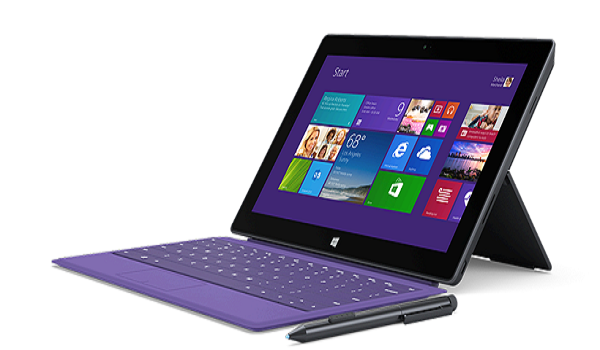
Surface Pro 2: The Surface Pro 2 (see main image above) is the tablet to get if you need full-fledged Windows 8 functionality. The tablet is powered by Intel’s 4th generation Haswell chipset, along with 4 GB (or 8 GB, depending on model) RAM. Having the same 10.1-inch HD screen, the Surface Pro 2, and comes in 64 GB, 128 GB, 256 GB and 512 GB storage options. You also get a Pro Pen to be used on the tablet’s screen. You can buy one ffrom $899 up to $1,799, depending on the model.

Microsoft has also introduced Type Cover 2, which can be used with both these Surface devices. It has got backlit keys and comes in black, blue, pink and purple. Apart from that, a new Power Cover was also shown. This one is meant to be attached with your tablet in order to increase its battery life (MS claims two and a half times the original battery) without adding too much bulk.
Categories
Tech

Two new APUs by AMD

We preview two new APUs launched recently by AMD for the Indian market, and what their specs and features mean.
by Manik Kakra

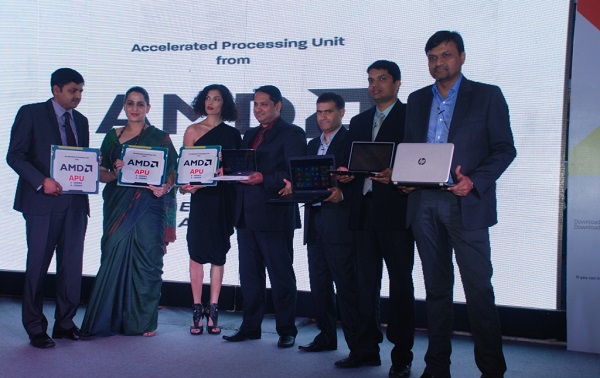
AMD has launched two new Accelerated Processing Units (APUs) for Indian costumers. Both – Mainstream APU, Elite APU and Elite Performance – are quad-core (or dual-core in Lenovo G505some cases) x86 SoCs.

Coming to the 2013 Elite Mobility (also known as Temash), it’s a 28nm SoC — dual-core A4, quad-core A6, which is mainly designed for tablets and hybrids. Concentrating on the graphical side, this chipset has got AMD’s Radeon 8000 Series graphics, which, as per the company, gives five times of better GPU performance than its competition. For consumers, this chipset is for Windows laptops, tablets, and hybrids which have full HD (1080p) screens. From the battery point of view, Temash could provide twelve hours of battery life, and that’s what OEM heads confirmed to us. What’s more, AMD says this SoC is ready to be used with laptops running Microsoft’s upcoming Windows Blue OS.

The 2013 AMD Mainstream APU (Kabini) is targeted at low-end, small-form tablets and notebooks. Here, the focus is more on decent performance within a small budget. Having dual-core and quad-core options, this SoC is already used in touch notebooks. Promising 33 per cent better peformance from what the competition provides in this segment, the Maintream APU also claims to give 11 hours of average battery life on your Windows device.

The 2013 Elite Performance is the company’s top-of-the-line product that provides best computing and graphical performance from them. Talking about its power efficiency, the company claims it should give you a battery life of 13 hours on a full single charge, and about 40% better gaming performance that what the competition has got.

Here’s a list of some of the laptops, with their configuration in brief, showcased at the event:

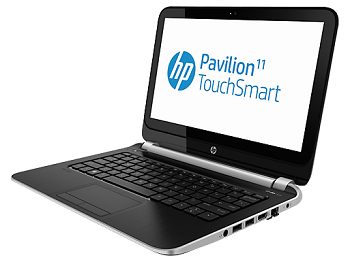
HP TouchSmart 11– HP Touchsmart 11 – APU A4-1250, Radeon HD 8210, 4 GB RAM, 11.6-inch touchscreen, Windows 8

– HP 1000 – APU E1, Radeon HD 7310, 14.1-inch screen, 2 GB RAM, 500 GB hard disk, Windows 8

– ASUS X552 – APU E1-2100, Radeon HD 8210, 15.6-inch screen, 2 GB RAM, 500 GB hard disk, DOS

– ASUS X102 – APU A4-1200, Radeon 8180G, 10.1-inch touchscreen, 2 GB RAM, 500 GB hard disk, Windows 8

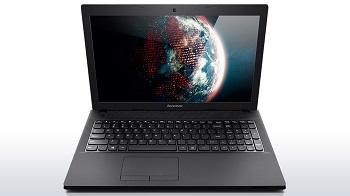
– Lenovo G505 – APU E1-2100, Radeon HD 8210, 15.6-inch screen, 2 GB RAM, 500 GB hard disk DOS

– Acer Aspire – E1-522 – APUA4-5000, Radeon HD 8330, 15.6-inch screen, 2 GB RAM, 500 GB hard disk, DOS

Looking at AMD India’s effort in the last two years, the company seems to be making a lot of progress, and these new offerings in the market could well give them even more loyal buyers.

Categories
Tech

Sony launches Xperia Z, QX100, QX10 and SmartWatch 2

Here’s a lowdown on the new Sony launches for the Indian market and what their different features mean for users.
by Manik Kakra

Sony today launched its new phone – Xperia Z1, smartphone-attachable lenses – QX100 and QX10, and SmartWatch2.

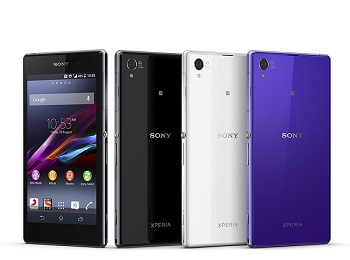
Sony Xperia Z1_ GroupLet’s first talk about the Xperia Z1. This is Sony’s new flagship model, successor to the Xperia Z. The phone runs on Android 4.2 Jelly Bean, and has a full HD 5-inch screen. Under the hood, there is a quad-core Snapdragon 800 SoC (MSM8974), clocked at 2.2 GHz, along with 2 GB of RAM. One of the USPs of the phone is its 20.7 MP rear camera (f/2.0). It packs in Sony’s G Lens, and has got a BIONZ image processing chip just for the imaging function. There are no keys on the front, as all are onscreen keys, and there’s a 2 MP camera. This water-resistant and dust-proof phone packs 3,000 mAh battery and 16 GB of on-board storage (expandable via microSD).

Other features include Bluetooth 4.0, WiFi, A-GPS, NFC, microUSB port (with MHL), LTE connectivity and DLNA. Available in black, white and purple colours, the Xperia Z1 goes on sale today and is priced at Rs 44,900. Sony has partnered with Vodafone to provide a 3G data bundle. The Xperia Z1 also comes loaded with Sony Jive app, which allows you to have unlimited song downloads and streaming for free, for first six months. Similarly, the Sony LIV app allows you to stream Sony QX10_1movies right on your Xperia device for no cost.

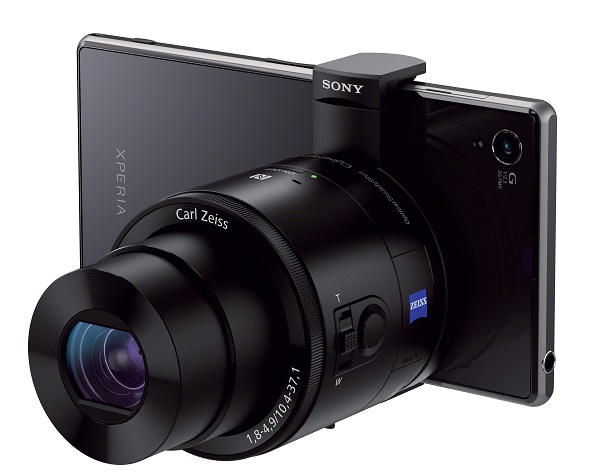
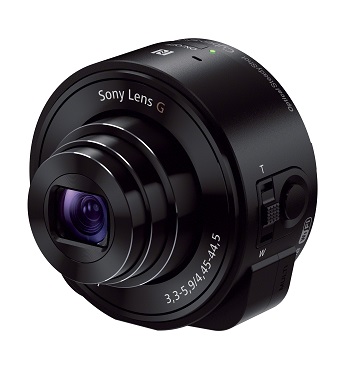
The QX100 and QX10 (in pic on right) are two unique kinds of lenses that could be attached with most smartphones. You can choose to shoot videos and photos on your phone through these lenses, without doing much else. You can also connect these lenses with your smartphone using WiFi or NFC. The QX100 sports a 20.2 MP CMOS sensor, with keys for dedicated controls like zoom and shutter release. The lens can do 3.6x optical zoom, too. The QX10 has got an 18.2 MP sensor, which can do 10x optical zoom. While the QX100 costs Rs 24,990, the QX10 is priced at Rs 12,990, and both hit the market today.

sw2-one-touch-smartwatch2Last but not the least, the Sony SmartWatch2. This is a water-resistant NFC-enabled watch that can be paired with your smartphone or tablet to give you notifications and allow you to message from your watch instantly. Sony claimed that there are already a few dedicated apps for this smartwatch, and they expect to see the number rising soon. It sort of works as a second screen to your main device, at least for a few functions. The watch is equipped with a 1.6-inch (220 x 176) screen and USB port. It goes on sale starting next month, and will be available for Rs 14,990.

What do you think of Sony’s newest offerings? Tell us in the comments section below.

Categories
Tech

Just in: Samsung Galaxy Note 3 and Galaxy Gear smartwatch

Today, Samsung launched the Galaxy Note 3 and Galaxy Gear smartwatch devices in India. Read on for a quick review.
by Manik Kakra

Samsung launched two new devices in India today – Galaxy Note 3 and Galaxy Gear smartwatch.

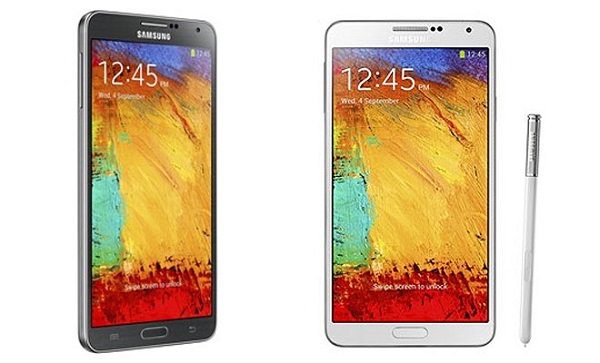
First, let’s talk a bit about the Android 4.3-powered Note 3. Unveiled at the recently-concluded IFA 2013, the Note 3 boasts a 5.7-inch Super AMOLED screen, with size almost identical to the Note II, but slimmer. The phablet is powered by an octa-core  Exynos (quad-core 1.9 GHz A15 + quad-core 1.3 GHz A7) chipset, along with 3 GB of RAM.

Accompanied by a stylus (S Pen), the Note 3, just like its predecessor, comes with a host of S-features, some of which are based on the use of stylus. Connectivity-wise, there is Bluetooth 4.0, NFC, WiFi a/b/g/n/ac, DLNA, microUSB +(MHL). Its back sports a 13 MP camera that can shoot full HD videos as well as 4K videos at 30 FPS. The front side has got a 2 MP camera that can also do HD videos. A part of Samsung’s S-features, the cameras can do duals-shoot, meaning you can shoot from both the camera in a single video simultaneously. The Note 3 is equipped with 3,200 mAh battery, and 32 GB and 64 GB of on-baord storage options (expandable via microSD card).

Samsung had previously made the phablet to be pre-ordered for Rs 2,000. The device comes in black, white, and pink colour options. Samsung has priced the Note 3 at Rs 49,900 (32 GB) at the launch, along with a data bundle for Vodafone users.

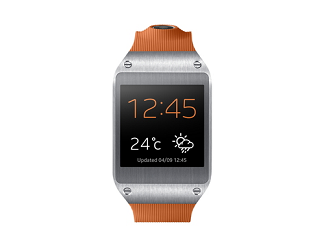
Galaxy Gear smartwatchComing to the Galaxy Gear smartwatch, this is a connected watch that sports a 1.6-inch Super AMOLED for showing all the notifications and some other bits while it’s connected to your Galaxy device. As of now, you can only pair one to a select few Galaxy devices, and get all the supported data right from your wrist. It is also equipped with a 1.9 MP camera on its strap, and a built-in speaker. What else, this watch has got voice control and a Twitter app, too (sixty pre-loaed apps). Weighing about 2.6 ounces, the watch has is powered by a single core 800 MHz SoC, and has got 315 mAh battery and 4 GB of internal storage space.

A few functions it is capable of includes showing missed calls, messages, email alerts, and instant messaging. Once connected with your supported device, you can check your contacts, messages, emails, etc. right from the watch. The smartwatch has been priced at Rs 22,990.

Which of these devices would you buy? Tell us in the comments section below.

Categories
Tech

The dope on the new iPhones

Apple’s long-awaited iPhone event is done, and here’s what you need to know about the two new iPhones they launched.
by Manik Kakra

The iPhone event was expected to give two new iPhones – iPhone 5S and iPhone 5C. Apple’s new phones will obviously run on its new OS, iOS 7. The OS will be available for iPhone 4, iPhone 4S, and iPhone 5 from September 18, and a little later for iPad and iPod Touch (5th Generation) users. We will cover the OS when it’s out for consumers, but right now, let’s talk what these two new phones have in store for us.

Both the phones have a 4-inch (1136 x 640) screen, and are equipped with Bluetooth 4.0, WiFi a/b/g/n, 3G, and 4G LTE.

iPhone5C-iPhone 5C: Many people were expecting Apple to come out with a cheap model, which was basically due to the ‘C’ in the name. Turns out, this phone is Apple’s first attempt where colours are given some attention. We have seen iPods in loads of colours, and now we have an iPhone that comes in blue, green, pink, white and yellow.

The phone has a polycarbonate (a type of plastic material) body, and has the same internal metallic structure like the iPhone 5, which is no longer available. The hardware inside is pretty much the same as the iPhone 5 – A6 processor, 8 MP camera, and 1.2 MP front camera. The company’s main focus here is on the colour options. Maybe that ‘C’ stands for ‘colour’, and Apple now wants to expand its iPhone portfolio in a different direction.

While the phone will be available on contract, starting September 20, $99 for 16 GB, $199 for 32 GB, there is no official word on its launch in India, but it is expected to cost somewhere around Rs. 37,000 for 16 GB.

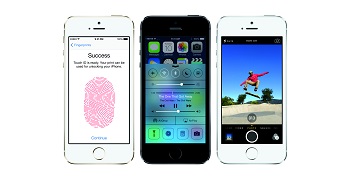
iPhone 5S: This is Apple’s new flagship phone. This new iPhone is the first smartphone that comes with 64-bit architecture. What this means is, there’s more raw power, and apps can iPhone5s_now be built on 64-bit platform to run even more smoothly. Powered by A7 SoC, the new iPhone is expected to be more powerful on the graphical side and visual effects.

Also, the iPhone 5S comes with M7 motion co-processor. What it does is, it takes all the load from gyroscope, proximity sensor and accelerometer. So, the co-processor will hopefully make battery last longer without having to put a lot of load on the main SoC.

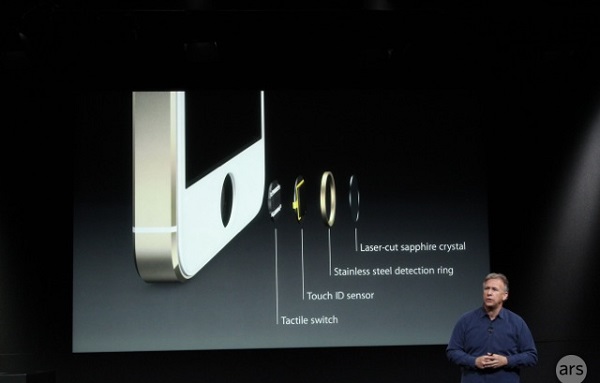
Another thing the iphone5S brings to the table is the TouchID fingerprint sensor. There is a fingerprint sensor right on the Home button, so you have to press the button with your finger (which has previously registered in the phone), and it will get unlocked. You can change the Touch ID from Settings – a very interesting move from Apple.

Apple has also done quite a few things with the camera. The phone comes with a 1.2 MP front-facing camera, and a better 8 MP (ƒ/2.2) camera, and there’s a lot more in the interface part. You can now shoot 1080p videos at 30FPS, and 720p videos in 120 FPS. Thanks to the dual LED flash on the back, the phone automatically processes the colour temperature, and takes a shot according to light conditions. There are also Burst mode, Panorama mode, and addition of five element lenses in the camera app.

The iPhone 5S comes in Champagne Gold, Space Grey, and white and silver colour options. On contract, it starts from $199 for 16 GB, and goes to $399 for 64 GB. Again, there is no official word on its Indian availability or price.

Apple has also made the iPhone 4S (8 GB) free on contract, along with discontinuing the production of the iPhone 5. Apart from these, Apple also announced shell cases for the iPhone 5C, which cost $29, and the iPhone 5S, which cost $39. These shells are available in black, blue, brown, yellow, and white.

What are your thoughts on the new iPhones? Tell us in the comments section below.

(Feature image courtesy arstechnica.com)

Categories
Do

The sound of music…in Mumbai

Lower Parel’s got a world-class contemporary music school at Sun Mill Compound recently. Mumbai musicians, get your groove on now!
by The Editors | editor@themetrognome.in

It’s a bright red building with a purple signage, in the heart of the bustling market area on Lower Parel (west). The cacophony of the various chaiwallahs and various sandwich stalls and paanwallahs sets the mood for the area, a space where offices jostle for space with Hanuman temples, and where everybody moves quickly through tiny lanes, since there’s not much place to dawdle.

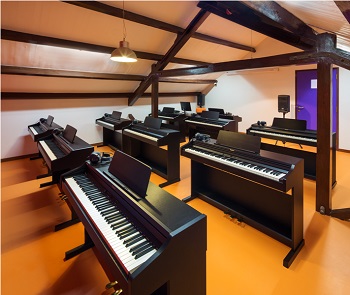
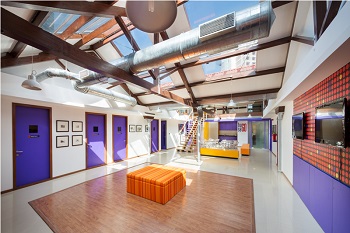
So the True School of Music (TSM) comes as a bit of a shock in these dreary surroundings, and not just because of its violently red exterior. On the inside, the 15,000 square feet of space is sunny (the central courtyard being lit by natural light through skylights), plush and completely world class. TSM was formally inaugurated last week on September 5, Teachers Day, by its founders, renowned music composer Ashutosh Phatak and sound engineer Nitin Chandy.

Ashutosh Phatak, Founder, TSMThe duo decided to start the first-of-its-kind music facility “to educate everybody in music.” Ashutosh (in pic on left) explains, “We want to provide music education of the highest calibre, and at a fraction of the cost that one would incur if one took admission to a music school abroad. We’ve already got over 30 students enrolled and we’re raring to go. We want to discover, educate and empower people in music with the skills necessary in their music careers.”

What’s so special?

For starters, TSM is set up in association with the Manhattan School of Music, the Academy of Contemporary Music (UK) and the Trinity College of Music, London. Besides, the school has “employed some of the world’s best professional tutors and claims that all graduates will be given professional placements.

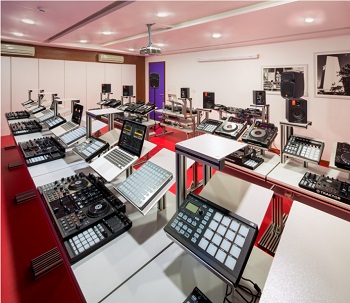
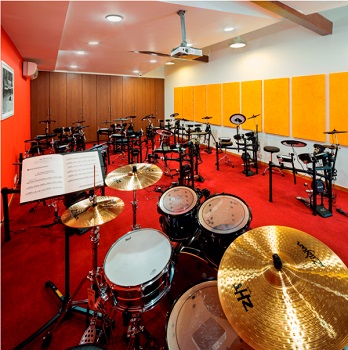
“We got the facility done in three months, and there are two schools within it – the Foundation School and the Professional School,” Ashutosh explains. “The Professional School will feature five Western instruments (keyboards, bass, guitar, drums and vocals) as well as music production, composition, DJ and live sound engineering. Whereas, the Foundation School will have the same five Western instruments plus the five Indian instruments of tabla, sitar, flute, harmonium and vocals,” he adds.

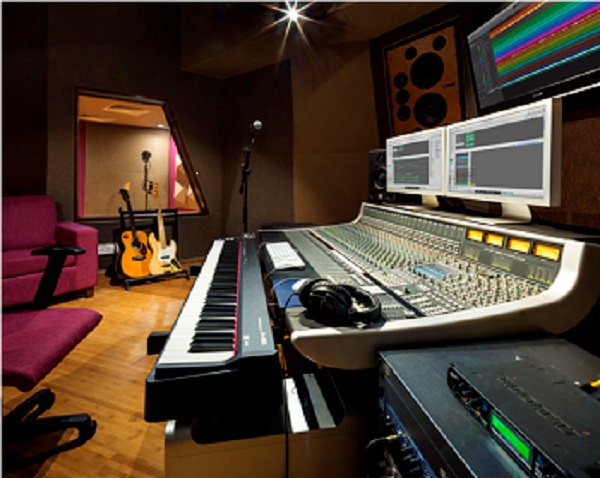
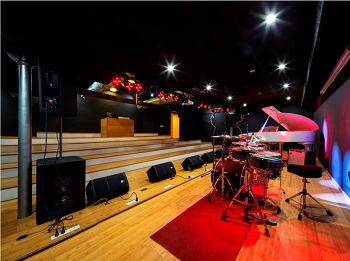
There are classrooms, practice rooms, jam rooms, a recording studio and a world-class auditorium on the premises, for a well-rounded musical experience. “TSM will give employers like clubs, filmmakers, ad agencies and production houses the luxury to choose from a wider range of talent in music,” Ashutosh says.

If you want to know more about the courses TSM offers, log on to www.trueschool.in. You can also take a tour of the facilities till September 12, 2013. TSM is located at Sun Mill Compound, near Lower Parel station (West), close to the Hanuman temple. Classes begin from September 23, 2013.

(Pictures courtesy TSM)

Exit mobile version