Categories
Tech

Oppo’s Find 7 and Find 7a launch in India

The Android smartphones are priced at Rs 37,990 and Rs 31,990 respectively; are the company’s flagship devices after N1, R1.
by Manik Kakra | @Manik_K on Twitter

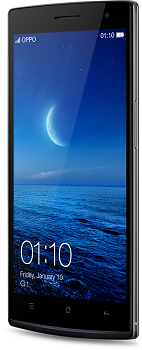
Oppo recently launched its two new Android 4.3 smartphones in India – Find 7 and Find 7a. The two devices, already available in Indonesia and China, are the company’s new flagship devices after the N1 and R1.

Oppo Find 7Both these devices pack Qualcomm’s Snapdragon 801 chipset (2.5 GHz MSM8974AC for the Find 7, and 2.25 GHz for the Find 7a, with Adreno 330 GPU), and 2 GB of RAM for the Find 7a and 3 GB for the Find 7. The phones have ColorOS 1.2 on top and come with Oppo’s new VOCCo charger technology, which allows them to be charged from zero to full in about an hour. They are equipped with 13 MP (SONY Exmor BSI) cameras; and 5 MP wide-angle front-facing cameras.

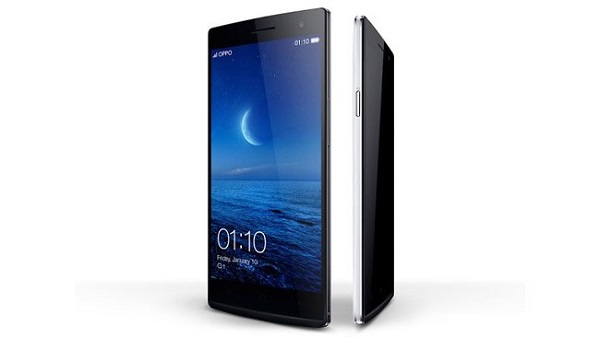
Talking about the Find 7, it boasts a 5.5-inch 2560×1440 screen, making it the first 2K phone to be launched in India. It is powered by 3,000 mAh battery, and will be available starting early next month. It also has a unique skyline notification LED under the screen

The Find 7a on the other hand comes with a 5.5-inch full HD panel, and is powered by 2,800 mAh battery. The phone goes on sale this week.

Other features include Bluetooth 4.0, WiFi b/g/n/, NFC, microUSB 2.0 (USB OTG), GPS, 3G and 4G connectivity supported for India network operators. While the Find 7 will be available for Rs 37,990, the Find 7a has been priced at Rs 31,990, available in white and black colour options.

Categories
Event

Theatre comes alive on the Internet

Here’s some good news for theatre: Astitva and Mumbai Theatre Guide launch eNatya Chaupal, a web hangout for theatre lovers.
by The Editors | editor@themetrognome.in

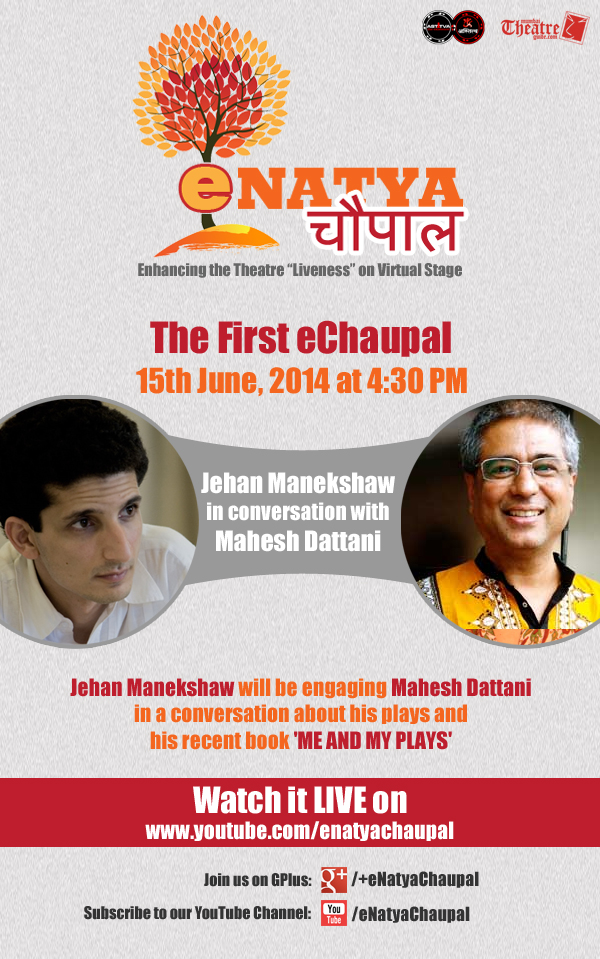
Astitva and Mumbai Theatre Guide have recently launched ‘eNatya Chaupal’, a unique web hangout for all those who love and enjoy theatre. This initiative aims to bring the ‘liveness’ of theatre online. 

The first e-chaupal will see Jehan Manekshaw of ‘Theatre Professionals engage noted playwright and director Mahesh Dattani in dialogue about theatre and a discussion on the latter’s recent book, Me And My Plays.

“eNatya Chaupal will enable all those interested in theatre to participate in a manner that’s engaging, convenient and interactive. It will host play readings, conversations and talks related to theatre. ‘Chaupal’ is a meeting place where it’s possible to engage in debate and in discussion and this is what we hope eNatya Chaupal will facilitate. Given its format, eNatya Chaupal will not only easily connect theatre lovers in India and from around the world, but will also bring an added value to the ongoing discussions about theatre in India. We strongly believe in strengthening the online resources that our theatre community in India can avail of. We hope that eNatya Chaupal will be a significant step in that direction,” says a release from Mumbai Theatre Guide.

The first ‘chaupal’ will take place on June 15, 2014 at 4.30 pm and will feature Jehan Manekshaw in conversation with Mahesh Dattani at www.youtube.com/enatyachaupal

Categories
Eat

Street food and the Mumbai diabetic

Are you a diabetic looking for a snack on the street? There aren’t many options, but here’s presenting seven items.
by Mamta D | @silverlightgal on Twitter

Indian food is considered to be among the best in the whole world. While many countries are content to consume meat, fish, and vegetables in bland form, India prides itself on its rich, tasty and spicy cuisines. Owing to the diverse communities inhabiting India, our food has become all the more rich, sometimes even fusing two or more cuisines together. Besides the regular home-cooked varieties and food that is available in hotels and restaurants, India is also famous for its street food.

From the chhole bhatures of Delhi’s streets to the aloo paranthas of Chandigarh, to the dosai of Chennai and the ubiquitous vada pav of Mumbai, you will find sumptuous spreads right on the street, all at throwaway prices.  Moreover, the roadside stalls are open most of the day and people from any walk of life can consume their wares. Thus, you have a daily wage laborer eating steaming hot vada pavs alongside a well-dressed office-goer. Street food stalls don’t discriminate between their customers.

If at all there are any drawbacks to street food, it is that of hygiene and that they are not diabetic-friendly. The matter of hygiene is a controversial one, but once you have taken the plunge, there’s no looking back. People often jokingly claim that eating street food over the years has made them more immune to illnesses.

As for diabetic-friendliness, sadly there’s not much to cheer. Most of the popular street food is loaded with carbohydrates and/or sugar. For instance, a single vada pav serving is packed with 300 calories and includes 55 gms of carbs. The dabeli which is an import from the street sides of Kutch has approximately 197 calories and 26.5 g of carbs.

Besides vada pav, samosas, and dabelis, there are umpteen roadside idli and dosa stalls. Idlis are high in carbs and have a high glycemic index of 77, so they can hike your blood sugar. Likewise for dosas. If you’re a diabetic, stay away from the nimbu pani and gola carts and the sweet lassi counters.

Neither can you indulge in the paani puri. Even if you bravely attempt to consume the paani puri foregoing the sweet chutney, you will not be able to go beyond one attempt. The sweet chutney is meant to serve a purpose and doing away with it does not make sense.

But being a diabetic doesn’t have to mean giving up on your taste buds, especially, if you are prone to hypoglycemia and there’s no homemade food at hand.

So what are the good street food choices for a diabetic? Try these:

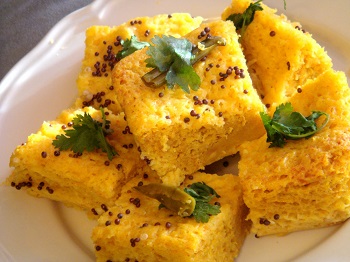
dhokla#1) Dhoklas: Dhoklas are made of besan (Bengal gram flour) and so offer a decent alternative to the carb-and glucose-rich foods. Dunk them in the fiery green chutney and voila! You have a tasty healthy snack.

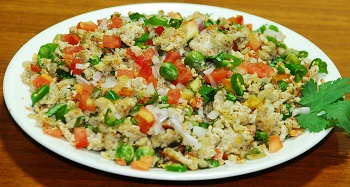
#2) Kanda pohe: Made of flattened or beaten rice and often served warm or hot, this street side food is mostly available during the morning hours as a quickie breakfast. Ensure, however, that there are no potato slices or wedges in the pohe.

#3) Bhel puri: Bhel puri that is mixed without the sweet chutney can be a tasty and yet healthy snack. It has puffed rice, peanuts, finely chopped onions, tomatoes, green chillies, and coriander leaves.

#4) Upma: This rava dish is a perennial favourite across many communities. From South Indians to Maharashtrains, everyone loves upma for its taste value and simplicity. A simple onion upma can be ravishing when you’re super hungry.

#5) Misal/Usal Pav: Dipping thick chunks of bread or pav into the fiery red steaming missal that has an array of boiled sprouts floating in it and consuming it before the missal cools down can either be a blissful or a scary experience, depending on how weak or strong your stomach is.True blue Mumbaikars swear bythe missal pav.

#6) Egg bhurji and other egg items: Many roadside corners boast of an anda pav or bhurji pav stall. The bhurji is made in a jiffy with finely chopped tomatoes, onions, slit bhurjigreen chillies and scrambled with raw eggs. The hot bhurji is then slid on to your plate with a slick movement and a slice of pav is scraped on the tava, finally landing on your plate on top of the bhurji. On a cold winter evening, taking quick bites of this hot and spicy combination can be quite orgasmic. These stalls also serve boiled eggs and omelettes with pav.

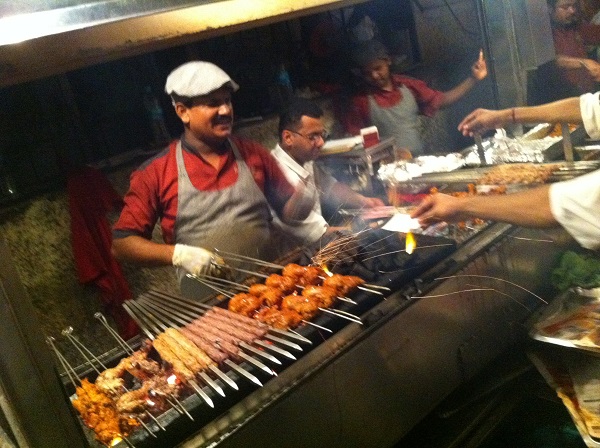
#7) Kebabs and other items: Street food is not limited to the vegetarian varieties alone. There are kebabs, shawarmas, tandoori nuggets, and so on. Bade Miyan’s at Colaba, the umpteen stalls at Mohammed Ali street or Abdul Rehman street are the places to go to for these.

As you can see, unfortunately, the number of street food choices for a diabetic are quite low in number.  ‘Make do with what’s available’ will be the best policy here than to give in to temptations and have your blood glucose levels shooting up sky high!

(Pictures courtesy asiaexpatguides.com, kiransrecipes.blogspot.com, www.mapsofindia.com)

Categories
Event

‘Come out and Play’ concludes with a bang

Mumbaikars turn up in large numbers to participate in The Metrognome’s maiden event at Mahalaxmi Racecourse on Sunday, June 1.
by The Editors | editor@themetrognome.in

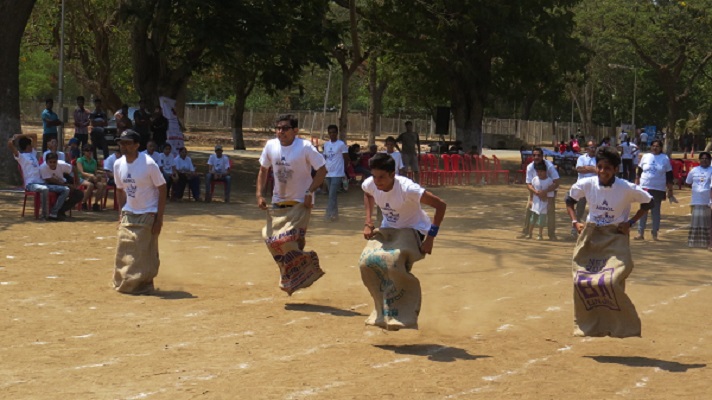
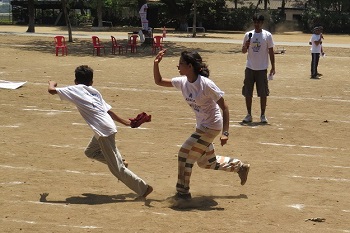
It was all that anyone had hoped for – a fun Sunday with the family, spent playing traditional Indian games at a beautiful ground, and with loads of laughter and friendly camaraderie to help. The Metrognome’s maiden event in Mumbai – Come out and Play’ went off with a bang amidst much cheering and competition among participating Mumbaikars.

At stake were family passes from Adlabs Imagica, apparel vouchers from Libas, and a bumper prize for the best performing family of the day – the Suranas – who won a helicopter ride from Shhaawn Aviation. Other families present to the end received gift packets from Hakim Masala.

Said Sajid Shaikh, who registered for the event with a family of 22, “We had been looking forward to this event excitedly, and we even cancelled a family trip for it. It was great fun reviving memories of our childhood, with games like langdi, lagori, sack race and dog and the bone. I hope the organisers host this event again.”

The event was jointly hosted by The Metrognome and I-deators Events.

(Pictures courtesy Urvashi Seth Ranga)

Categories
Tech

Review: Moto E (XT1022)

We check out the latest Motorola device and come away more than impressed with a phone that is budget friendly.
by Manik Kakra | @Manik_K on Twitter

Motorola has been making quite a stir in the Indian market of late, and rightly so. Making its comeback solely via the e-commerce route, the company seems well determined to capture its lost glory, and to do this, has been on a spree of launching budget, yet good, smartphones.

First it was the Moto G – terrific performer for a phone under 14k – and now it’s the Moto E, going into the sun 8k category. Motorola has essentially taken on all the low-end Android smartphones, which haven’t been very good so far, and the likes of the popular Lumia 520. With its pricing and offering in place, let’s check out of Motorola delivers this time.

Hardware and design

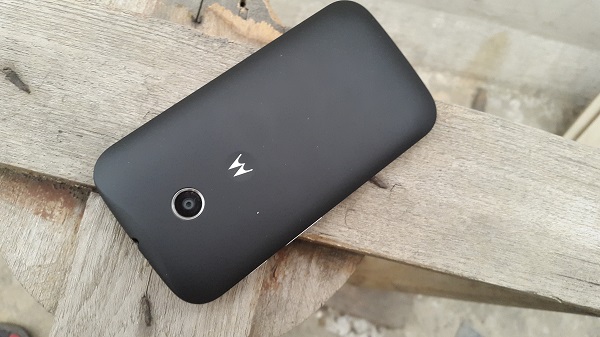
Motorola’s Moto E (XT1022) follows similar design and material like the Moto G. It has a curved, soft rubberised back, fitting pretty well into your hands. You get the Moto logo right under the 5 MP camera on the back. Once you notice the front – 4.3-inch screen (Corning Gorilla Glass 3 on top), thick bezel, and chrome rays on both the sides of the screen – forming the speaker and mouthpiece,  the similarity with the Moto G ends.
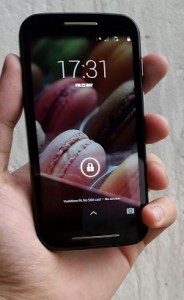
The phone feels sturdy and hefty to hold. Motorola could have done a better job keeping the phone’s bezel thinner for making it even more compact to fit in your hand, but this doesn’t mean you won’t be able to operate this phone with just one hand. Coming to the right side panel, the volume button, raised just enough from the body surface, again sports a chrome finish. The Power/Lock button sits on the same side just above the volume rocker. On the top is the 3.5mm headset jack; while the microUSB port sits right at the bottom.

Screen

Talking about the screen, the 4.3-inch (960 x 540) is pretty much what you would expect. It’s quite bright, just decent for day-to-day use and nothing outstanding to talk about. The colours do look quite good, but you will quickly realise the difference if you have been using a higher resolution phone screen for some time. Also, the phone doesn’t play full HD videos natively, but you could install a third-player app to play one. All in all, this is just a decent screen, and not a bad one for the price.

Audio

On the audio side, the phone performs well. The loudspeaker is loud, but tends to distort sound when played at the highest volume level. There was no problem in hearing or speaking during calls, and I didn’t notice any network reception issues with this phone, either.

Camera

Now for the bad – Moto E’s camera. The 5 MP snapper on the back is…well, just not the one you would really like to use. The fixed focus sensor gives average and out-of-focus shots more often than not, and this seems to be one part where Motorola has saved on cost, and the user would be disappointed if he/she would like to use the phone’s camera a lot. Only once in a while, in good light conditions, you may get a nice shot with this camera.

Battery

Coming to the phone’s battery life, it is much better than what I expected it to be. The 1,980 mAh battery unit lasted more than a day mostly, and with light usage could even touch two days. Good to see a budget handset scoring high on the battery side. The usage included lots of emails, Twitter, watching a few YouTube videos, 5 to 10 minutes of calling (single SIM). When using both the SIMs in place, the battery life is bound to take a dive, though.

Software and performance

The Moto E has got Qualcomm’s Snapdragon 200 SoC – 1.2 GHz dual-core processor, Adreno 302 GPU, along with 1 GB of RAM. The phone runs smoothly for most parts. I didn’t find any stuttering when moving from one app to another. However, with a few heavy webpages opened and a couple of apps running in the background, you will see some lags here and there compared to, say, Moto G. Having said that, this is probably the best performance we have seen from an Android phone at this price point, and Motorola deserves some credit for providing a smooth operating phone for what the phone costs.

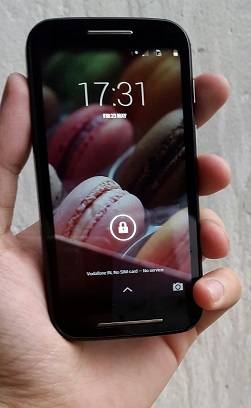
Running on Android 4.4.2, the phone is untouched for most part, just like the Moto G. Adding a few own apps and services, like Motorola Migrate, as with the Moto G, Motorola has also built in something called Assist. This is basically an app for your assistance regarding putting your phone in silent mode when you’re in a meeting or during your sleep hours, etc. There’s also something new called Alert, which allows the user to quickly send an SOS-like message to a pre-defined number in case of an emergency. Sounds useful, doesn’t it? Retaining almost all of what we have been seeing on stock Android – lock screen, app launcher, fonts, notification center, Motorola hasn’t touched most of these aspects, and also guarantees users at least one update to this phone.

Concluding the review, the Moto E is a great phone for the consumer, not just from buying an Android phone for this price, but also for making other manufacturers pull up their socks and offer better phones and not just the ones that appear fancy in advertisements. Motorola’s Moto E scores well with respect to battery, build quality, audio experience, even though it is not outstanding when it comes to the camera or even the screen, this is certainly a phone to watch out of you’re looking for a budget smartphone, or maybe buying your first smartphone. This, along with Windows Phone devices under 10k, makes for the low-end smartphone segment to become more interesting, better choices for the buyer, which will hopefully bring more phones that do not compromise on the experience side.  That is why this phone is important for this segment. The likes of Micromax and even HTC will probably gear up to bring phones that provide a richer experience under Rs 10,000 in the Indian market.

Categories
Event

Kashish Film Festival registrations currently on

The festival’s theme this year is ‘Dare to Dream’ and recognises progressive movements for equality, dignity for the LGBT community.
by The Editors | editor@themetrognome.in

The Kashish Mumbai International Queer Film Festival – arguably South Asia’s and India’s biggest LGBT film festival – is back for the fifth year, with a huge collection of 154 films from 31 countries. India’s only mainstream lesbian, gay and transgender film festival and one of the first to receive clearance from the Union Ministry of Information & Broadcasting will take place between May 21 to May 25, 2014, at the iconic Liberty Cinema, New Marine Lines and Alliance Française de Bombay.

The festival’s theme this year is ‘Dare To Dream’ and recognises the progressive movements for equality and dignity for gay, lesbian and transgender persons across the world, including India. “Kashish 2014 will highlight, reflect upon and celebrate the people, communities and movements that ‘Dare To Dream’”, says a press release by the organisers.

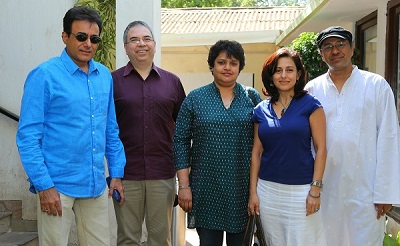
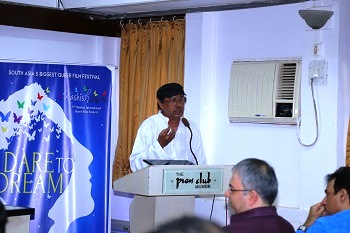
Kashish jury membersThe festival’s jury this year comprises trailblazing actors and filmmakers with multiple National Film Awards between them. National award winning actor Sarika, filmmaker Onir whose film I Am won the National award in two categories, actor and former Member of Parliament Nitish Bharadwaj, costume designer Pia Benegal, actor Avantika Akerkar and Wadia Movietone director and LGBT rights activist Roy Wadia will judge the films in competition at the festival for the seven award categories. (See pic of jury members on left)

“Equality is the foundation of a peaceful society and equal rights is what Kashish is all about,” said Bharadwaj, who is still remembered for his role of Krishna in BR Chopra’s Mahabharata, at a press conference to announce the festival. “When I was asked what I feel about the LGBT community, I said that they are human beings just like me. The respect that I get, they too should get. The day when Kashish no longer needs tags and labels, only then can we say equality has been achieved. One of the main reasons I agreed to be on the jury was the hunger as an artist to see and appreciate good cinema.’’

Akerkar said that initially she had questions about the word ‘queer’’ in the film festival’s name. “I was told that there was nothing wrong with the word and was in fact, a way of appropriating words to empower,’’she said. “It’s great to see that Kashish will have 11 world premieres. I haven’t even seen this in many mainstream festivals and speaks volumes about the status that this film festival has achieved.’’

“This year’s Jury reflects once again the diversity and richness of professional experience that the Jury panel brings to Kashish every year,’’ said Sridhar Rangayan, festival Festival Director- Sridhar Rangayandirector (in pic on right). 

“At a time when LGBT rights are under attack by powerful players in India and overseas, no doubt in response to the gains we have made in recent years, it’s more important than ever for Kashish and similar events to prosper,” noted Roy Wadia, LGBT rights activist and Director of Wadia Movietone.

Key highlights for this year:

* 154 films from 31 countries.

* 11 World, 17 International and 39 Asian premieres.

* New venue is India’s finest art deco theatre – the iconic Liberty Cinema with over 1,000 seating capacity.

* Crowd funding to raise part of the funds to put up the festival – the first film festival in India to do so.

* This year, the ‘Country Focus’ will be on Canada with more short and feature films including Winter Kept Us Warm (1965).

* ‘Filmmaker in Focus’ is Canadian actor Charlie David.

* Special focus on Transgender lives

* Films on HIV.

* Queer films from Turkey, Srilanka, Uganda, Bangladesh will be screened.

* Opening Film Out In The Dark from Israel and Palestine.

* Closing Film is John Apple Jack from Canada

* Tribute to late filmmaker Rituparno Ghosh and screening of the movie Memories in March.

* Indian Showcase: 28 films from India – some in regional languages including films in Marathi and Bengali.

Register to attend Kashish at www.mumbaiqueerfest.com. Offline registrations are currently on at Liberty Cinema, New Marine Lines and Humsafar office in Vakola and Khar.

Exit mobile version