Categories
Do

Have you made a short film? This contest is for you.

The Vasundhara Short Films Competition 2014, initiated by the MPCB, invites films made on environmental themes after January 1, 2012.
by The Editors | editor@themetrognome.in

With our natural resources depleting daily and the environment facing increasing threat from man, it is time that awareness is created far and wide about environmental issues. And what better way to create awareness than to make a short film about it?

The Maharashtra Pollution Control Board (MPCB) has recently announced the Vasundhara Short Films Competition 2014 for all documentary and other filmmakers. This competition will allow filmmakers to shoot and submit short films made on a variety of environmental issues. As per a release from the MPCB, “Any short film or documentary on any environment related theme, made after January 1, 2012 in Marathi, Hindi or English language (or a silent film) is eligible for participation in this competition.” The MPCB has directed that the submitted entries should largely focus on nature and wildlife, environment and conservation issues, or nature and people.

The entries should be made on DVD PAL, and participants must also send a synopsys of the film, the film’s trailer, director’s bio data, and still photographs (digital preferred) from each production for promotion of the film.

Entries are to be submitted to The Member Secretary, MPCB, Kalpataru Point, 3rd Floor, Near Cinemax, Sion Circle, Mumbai 400022 before August 19, 2014, 5 pm.

Rules for application and conditions for the contest are posted at www.mpcb.gov.in.

For details, contact Sanjay Bhuskute on +91- 9869440185 or Raviraj Gandhe on +91- 9820378448.

(Picture courtesy www.thefilmmakersworkshop.com)

Categories
Tech

Review: HTC One (M8)

Has HTC lost its mojo? It would appear that its newest phone might bring the company back in the reckoning.
by Manik Kakra | @Manik_K on Twitter

The smartphone race is a hard one to win and retain in today’s day and age. Companies need to bring up something new or improved to the table and make sure they don’t miss out on support for their customers, otherwise they’re going to switch quicker than you can act. HTC’s recent story has been a bit like this. The company, known for their differentiated Android devices, seems to have lost its mojo for the last 18 months or so. It has produced several good phones, but just hasn’t quite been able to do what it takes. With the One (M8), HTC tries to capture more and deliver better. And does it succeed in doing so? Let’s try and find out.

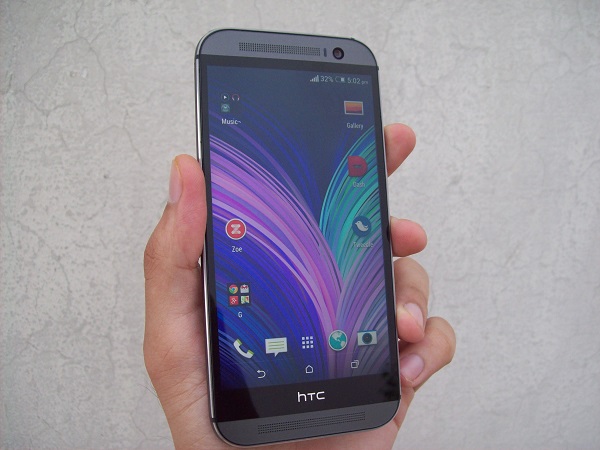
HTC’s One (M8), as the moniker suggests, is the successor to the One (M7). HTC continues to drive its ‘One’ series, which should probably help them identify better and longer with the buyer. In addition to that, HTC hasn’t changed too much when it comes to design ad form factor of its new flagship device. The One (M8) sports an aluminum unibody, claimed to be about 80 per cent of the whole body by the company, with a little usage of plastic here and there.

As soon as you hold the phone, you will notice its curved back and round edges, which fit quite nicely into your palm and it is similar in front design to the One (M7). The device feels very nice to hold and has a premium feel to it, but you might find it hard to grip it at times as it is still a bit slippery, especially while sliding it out of your pocket.
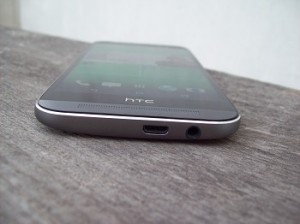
Dominated by the 5-inch full HD S LCD 3 panel, you get the popular BoomSound loudspeakers grilled very nicely on top and bottom of the screen while the front-facing camera, and sensors are placed on their usual places. The LED notification light is hidden inside the top front speaker, and now, in a bit of a change from their previous flagship, the HTC logo in imprinted right on a strip between the screen and the rest of the bottom part of the body.

This space reserved on the outside just for the logo, may not be liked by many because you lose out on space and it makes the device bigger, but on the internal side, there are a lot of components and screws in place, which, HTC, says, is the reason they had to give some space to this plastic strip.

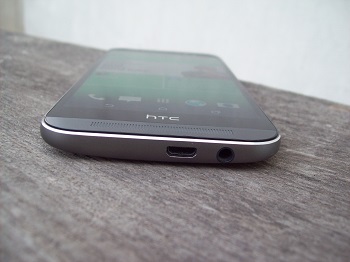
On the top, you get the Power/Lock button and the Infrared port, both are placed on a plastic black strip. On the bottom, you have the 3.5mm headset jack and the microUSB port. On the right, there’s microSD card slot and volume rockers, which gives a nice clicke-ty feedback when pressed. The nano SIM card slot is placed on the left side panel.

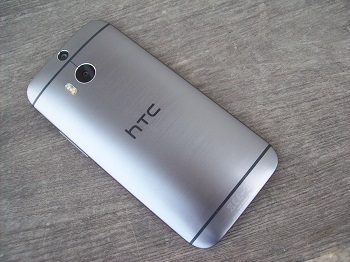
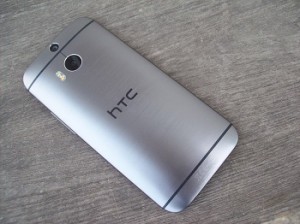
On the back, there are now two camera sensors (more on that later), and a dual LED flash, bifurcated by a thin plastic strip, which is used to ensure there are no network reception issues. The HTC logo is bang in the middle, with another plastic strip toward the bottom half.

Screen

HTC is known for their great display panels, and the One (M8) doesn’t disappoint, either. The 5-inch (1920 x 1080) S LCD 3 panel, with Gorilla Glass 3 on top, is fantastic to work on. Colours look rich, images appear sharp, detailed and viewing angles are also good. While watching full HD videos or reading text, you’ll realise how well HTC has put the screen in place. It is certainly one of the best phone screens out there, and one of the best things about this device.

Audio quality on phones is mainly pertained to their in-ear sound and in-call voice, as the loudspeakers are usually not that great to listen to. But HTC decided with its M7 that it needs to bring more and delivered with the M7’s speakers. The case is similar with the M8. These BoomSound dual front-facing stereo speakers are loud, crisp and clear. It is quite surprising that nobody after more than a year has been able to give HTC’s speakers any tough competition. The more you try them – whether for videos, games music or podcasts – the more you’ll see how much of a difference having a good pair of loudspeakers on your phone can make, and for good.

The in-ear quality is pretty good and not much to complain about. I didn’t counter any network reception throughout my usage and found call quality to be top notch.

Camera

HTC has again used what it calls ‘Ultrapixel’ technology for its camera. This time, we have dual sensors on the back, which are done to capture better depth for an image, so that you100_5088 could change the focus in an image as and when you like in your photo. As a result, you miss out on the OIS functionality and are still getting a 4 MP ‘Ultrapixel’ F/2.0 (and 2 microns) sensor. Here are a few sample images.
As you can see, more or less, the pictures look nice and you can use the camera in low-light conditions, too. You may get some noisy images in low-light, but they’re decent for your phone. To get consistent and clearer pictures, you may want to tone down the sharpness level from settings, though. Zoe, which are short video clips (also available in Gallery), can also be made, but I couldn’t find any dedicated Zoe-sharing service like there was the last time. As far as UFocus is concerned, it works half the times because it requires favourable conditions. The camera UI is even better and quite intuitive to work with. Credit to HTC for making it simpler without missing out on needed setting options. Oh, and the 5 MP front-facing camera is actually good, giving good detailed shots in decent light conditions.

Battery

The phone carries a 2,600 mAh non-accessible battery unit. I found the battery life to be average. I was expecting it to be a bit more than what it usually got, which was around 18 hours on an average, and you could stretch it by using the power-saving mode or the Extreme Power-saving mode, which only allows you to make and receive calls, messages, check the native Email client or alarm, can give you several days of standby time. The phone supports QuickCharge 2.0 (can be seen on a few devices now), but you don’t get the supported data cable and charger in the box.

The HTC One (M8) runs on Android 4.4.2 (4.4.4 should be out soon) with HTC’s proprietary Sense 6 on top. Under the hood, there is a Snapdragon 801 (MSm8974) SoC (2.5 GHz quad-core processor, Adreno 330 GPU), along with 2 GB of RAM. The phone performs very well and is smooth to work on. I didn’t come across any frame rate drops, lags or app crashes to complain about. The Sense Ui seems to have been tweaked and made a bit lighter on the inside. It feels a bit more colourful, and more cohesive to work around.

If there one OEM skin I would have to pick, it would still be HTC’s Sense. Having said that, it is far from being flawless. BlinkFeed continues to exist and sits as the leftward-most Home screen. You can now add a lot more content to it. HTC has also equipped the device to make “double tap to wake” work and work well. Swipe left to get to the last Home screen; swipe right to arrive straight to BlinkFeed; when in portrait mode, click the volume rocker to open the camera app directly. It’s neat and works well, but I wish I had been given the option to double tap on any Home screen to lock it.

HTC sense TV has also been updated and it now supports Indian channels. It does help to have an extension of your smartphone as a TV remote, especially if it displays some relevant content. FitBit is now supported natively in Sense UI; it gives you a proper count of your calorie burn, steps taken, run, etc., but do keep an eye on the app and service hogging battery. More or less, these are the main changes in the Sense UI, and you will find yourself at home if you’ve used Sense 5.5 or even 5 last. The phone comes in only the 16 GB (11.8 GB available) variant for the Indian market, and you can expand it up to 128 GB using a microSD card, plus, the user gets 50 GB of free storage on Google Drive for two years.

All in all, the HTC One (M8) seems to deliver in a lot of areas. HTC seems to know what its potential users want – except for may be that camera in place – like sporting a microSd card slot or providing a different style of Dot View case or making exceptionally great speakers on the front. This is a serious contender to be the best smartphone out there, as there aren’t too many places you could put your finger on and say I expected much better. Apart from an average battery life and a camera that needs some tweaking to be done, you get a great full HD screen, premium material on the phone, and a smooth software that doesn’t isn’t a letdown, the phone has got a lot going for it, and it may just be what HTC needs to be back among the top phone manufacturers.


Categories
Event

Attend: Photography exhibition by students

Bharati Vidyapeeth School of Photography presents ‘Albus Atrum – 14’, an exhibition of photographs by its second batch of students.
by The Editors | editor@themetrognome.in

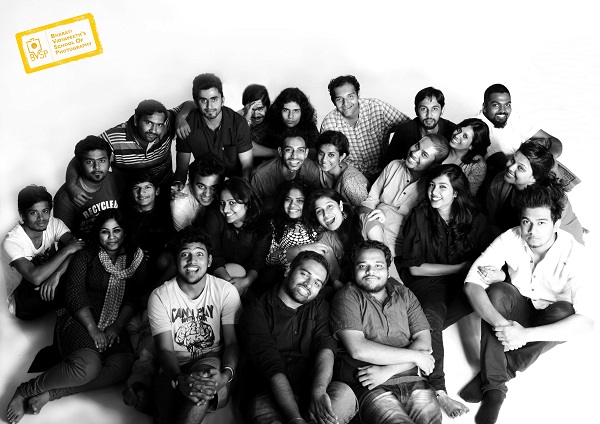
Photography as a subject fascinates most of us, but some take their passion for the subject to quite another level. Ask the students of Bharati Vidyapeeth School of Photography (BVSoP) – the second batch of the institution is putting up a three-day exhibition starting today, July 4, 2014.

Titled ‘Albus Atrum – 14’, this is BVSoP’s second photography exhibition, and was put together using 150 images from its second batch of students that graduated from the school’s Diploma Programme in 2014. The exhibition will be on till July 6, 2014 and prominent personalities like Bharat Dabholkar, Avinash Gowarikar, Subhash Awchat, and Sudarshan Shetty, will inaugurate the exhibition.

The photographs on display span disciplines like fashion, portraiture, still life, food and beverage, automobiles, travel and people, among others. Says celebrity photographer Avinash Gowarikar, “I am very happy to be closely associated with BVSoP for the last one year. The students have really worked hard at gathering knowledge and expertise required to be good photographers. I wish them the very best for this exhibition.”

Head to Tao Art Gallery, Worli, from July 4 to 6, 2014.
Categories
Eat

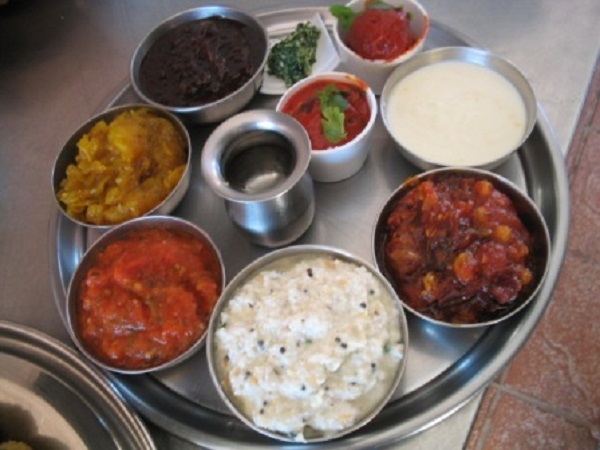
10 chutneys you can find in Mumbai

Mumbai is home to some awesome cuisines and the secret ingredient that rocks even the dullest fare – the humble chutney.
by Mamta D | @silverlightgal on Twitter

In 1990, when an NRI woman entrepreneur, Namita Panjabi, opened her first Indian restaurant in Chelsea, London, she named it Chutney Mary to commemorate the humble Indian condiment that is today making waves all across the globe. Originally called chatni, this ubiquitous condiment has its roots in Eastern India as early as the 16th century.

Basic chutneysAs you move from one region to another in India, you will come across a variety of ways in which chutney is prepared.

Chutney may be raw or cooked; the former is a concoction of vegetables and the latter a mixture of chopped fruit, vegetables, vinegar and spices.

An Indian housewife can transform an otherwise drab meal into an interesting fare simply by using her imagination and producing innovative varieties of chutneys. Raw radishes, tomatoes, onions even boiled gourd peels and dried orange peels have their own special chutneys.

Chutneys have exceptional medicinal benefits too. Chutney prepared from fresh green curry leaves is said to be an excellent source of iron and protein. Though they were never allowed to go outside frequently in the early days, Indian women nevertheless had extreme ingenuity and skill and demonstrated this in churning out one variety of chutneys after another.

When it was found that these raw chutneys could not last more than a day, the ladies applied further ingenuity and came up with yet another trump card – chutney powder. Spices were roasted and ground with bits and pieces of dried vegetables, peels or leaves. For instance, curry leaves were dried in the sun and finely powdered with roasted spices. The end result – a long lasting, tasty, tangy chutney powder.

Here in Mumbai, we can come across these 10 types of chutneys:

The fiery red lasoon or garlic chutney

The ‘lasoon chutney’, a concoction of garlic and red-hot chillies, garnishes meals to add a fiery dash or to just the local dialect, ‘mirchify’ the meal, be it a dal rice or a simple fare of bhakar. The lasoon chutney is also popular with vada pav makers, who liberally spread it on the pav before dumping the potato vada on it.

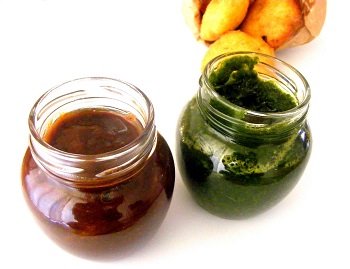
The green pudina/dhania chutney

The green chutney typically made of fresh coriander leaves (dhania) or mint leaves (pudina), ginger, garlic, salt and chillies is often used in preparing sandwiches. It can also make a drab chapati tastier when spread over it.

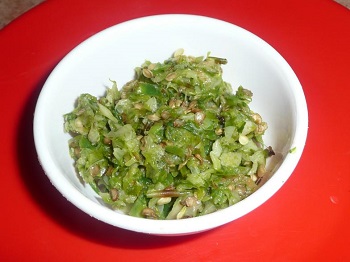
The mirchi thecha

A coarsely ground mixture of raw green chillies, roasted peanuts, salt and garlic and optionally, a few drops of lime juice, this is a quickie, in the sense that it can be made within Mirchi thechaminutes, with the slightest of efforts (in pic on right).

The coconut chutney

This goes well with sabudana wadas, steamed idlis, dosas, and the like. It’s often made of freshly grated coconut, salt, green chillies, and a little bit of tamarind, with a slight variation here and there.

The sweet-sour chaat chutney

Every streetside chaat vendor swears by this. From the bhel puri to the sev puri to the paani puri, this chutney is a given in every chaat dish. In swanky restaurants, there is a more elegant version on offer, but when it comes to lip smacking, finger licking taste, the street side version wins hands down.

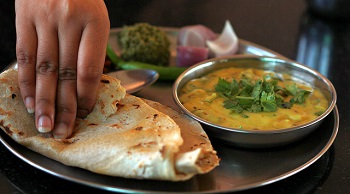
pithlaPithle (also called Bombay chutney)

A typical Maharashtrian favourite, this one is made of besan or gram flour paste, and is served as an accompaniment to poori, chapatis, and so on (in pic on left). Though, unlike the other chutneys, this one is not entirely made of raw stuff but requires some amount of cooking on the stove; it can be made in a jiffy and requires very few ingredients.

Raw mango or kairi chutney

This is a seasonal chutney and is made only in the summer. The spicy tangy combination of raw green mangoes (kairis) with red chillies, topped with a seasoning of mustard seeds, is set to be a mouthwatering winner when served in any menu. People eat it with dosas, pooris, chapatis, and even mix it with plain steamed rice.

Tomato chutney

Though originally a South Indian delicacy, today it has been well adopted into the Maharastrian palate. Made from ripe red tomatoes, cooked for long hours on a slow flame with lots of oil and spices, this one can last a whole year and is often stashed away in bottles for a rainy day.

Radish or mooli chutney

Again, this is an import from other States, which has slowly made its way into Maharastrian homes. Ideal for the chill winter months, this heat-inducing radish chutney is made of raw radish, garlic, salt, jaggery, and either red or green chillies.

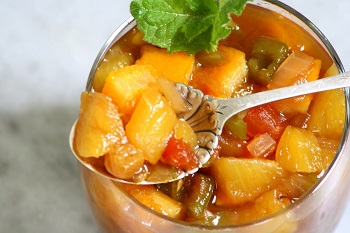
Pineapple chutneypineapple chutney

Yet another outlander to the traditional Marathi cuisine, this one has probably been smuggled into the State by the Maharashtra-Karnataka (food) border outlaws. It is sweet, spicy, and tangy in parts, because of the pineapple chunks, the red chillies and the tamarind that goes into its making.

Did we miss any chutneys that are commonly available in Mumbai? Tell us about them in the comments section below.

(Pictures courtesy www.iskcon.net.au, vegetarianzest.blogspot.com, www.madhurasrecipe.com, www.saffronsunshine.com, whatscookinginyourworld.blogspot.com)

Categories
Event

Umbro Cup comes to Mumbai

Tournament moves from Mumbai to Kolkata, Bengaluru from July 4 to 13; this is the 5-a-side Cup’s debut in India.
by The Editors | editor@themetrognome.in

As part of its global commitment towards development of football and its focus on popularising grassroots football in India, UK-based soccer brand Umbro is hosting the ‘Umbro Cup’.  A 5-a-side football tournament is to be held in Mumbai, Bengaluru and Kolkata.

Adding to the excitement of the ongoing FIFA World Cup, Umbro wants Indians to join in the celebration and be a part of the `Umbro Cup’. The tournament will take place in Mumbai from July 4 to 6, July, and in Kolkata and Bengaluru on July 12 and 13, 2014, simultaneously. The tournament will be held at the Cooperage in Mumbai, Gitanjali Stadium in Kolkata and XLR8 India Indoor Sports Arena in Bengaluru.

Says Ajay Chablani, Business Head, Planet Sports, which has brought Umbro to India, “We hope the ‘Umbro Cup’ serves as a platform for talented football players in India to showcase their skills and talent and encourage more and more people to play football.”

About the tournament

About 2,000 players will compete in the tournament across five categories i.e. Under-12, Under-14, Under -16, Open and Corporates. Over 80 teams are expected to participate across the categories in each of the three cities.The ‘Umbro Cup’ will include participants across categories  and would have school children from prominent and well known schools like Don Bosco, Hume High School, and St Theresa, to name a few.

Besides school children, college students and students from other faculties can also participate in the Open category.  In the Corporate Category, there would be participants from blue chip companies like Intel, JP Morgan, Standard Chartered and many others.

This is a knockout tournament and is divided in to four rounds. Round One is a round of 16 teams, Round Two is the quarter finals, Round Three is the semifinals and final round is Round Four. SportzConsult, a leading sports management company based out of Mumbai will be managing the tournament.

Categories
Tech

Samsung launches Galaxy Tab S 8.4 and 10.5

The devices are priced at Rs 37,800 and 44,800, and will go on sale in the country next week onward.
by Manik Kakra | @Manik_K

Samsung yesterday launched its brand new tablet series in India, Galaxy Tab S, with the showcase of the Galaxy Tab S 8.4 and 10.5. Both are touted to be entertainment devices, and are being differentiated from the company’s Galaxy Note series, which, Samsung says, is made with productivity in mind.

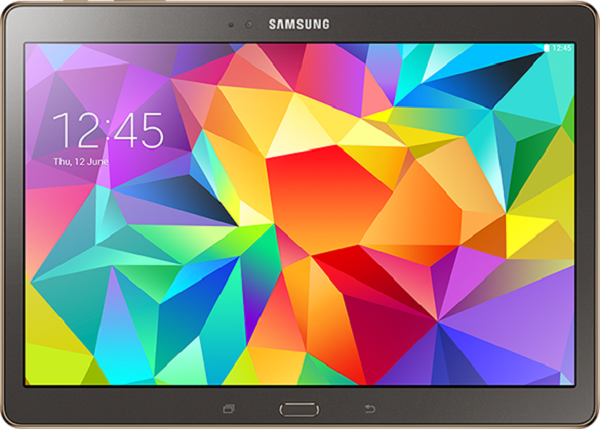
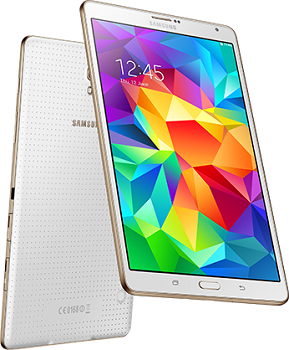
Galaxy Tab S 8.4Weighing about 298 and 467 grams respectively, the Galaxy Tab S 8.4 and 10.5 sport (2560 x 1600) Super AMOLED panels and have been launched in WiFi + 3G models, while the 4G LTE variant will be launched quite soon. On the back, there’s an 8 MP camera (with an LED flash) while the front carries a 2.1 MP camera.

Under the hood, there is an Exynos 5 chipset (octa-core processor), coupled with 3 GB of RAM, and 16 GB of internal storage space, which is expandable up to 128GB via microSD card. Connectivity-wise, there is microUSB 2.0, Bluetooth 4.0, WiFi a/b/g/n/ac, 3G (voice and video calling available), Fingerprint scanner, Infrared, 3.5mm headset jack, and GPS. While the 8.4 model packs a 4,900 mAh battery unit, the 10.5 model has a 7,900 mAh battery unit.

Just like the Galaxy S5, these Android 4.4.2 tablets come with premium services for users, including Kindle, Magzter, MyPlex, Marvel Comics etc.You can pre-book these Samsung devices till July 11, 2014, and the tablets hit the market in the second week of the month. Available in titanium bronze and dazzling white, the tablets have been priced at Rs 37,800 for the 8.4-inch model, and Rs 44,800 for the bigger 10.5-inch model.

Exit mobile version