Categories
Event

Attend: Iyengar Yoga event at NSCI

On International Day of Yoga, you can be part of a masterclass on Iyengar yoga and learn a variety of asanas.
by Ravi Shet

On December 11, 2014, the United Nations General Assembly declared June 21 as the International Day of Yoga. To celebrate this day and also to pay tribute to the much feted Yoga exponent Yogacharya BKS Iyengar, his students have conceptualised an event, ‘Experience Iyengar Yoga’.

This will be an open public event where they will have a presentation, a practical class and an inspiring film for the attendees. This event will be held at the National Sports Club of India (NSCI) stadium (Worli) and the session will be from 5 pm to 7 pm, on Sunday, June 21.

Yoga is derived from Sanskrit word ‘yuj’ which means ‘union’ or ‘to join’ – a union of individual self with the cosmic consciousness. The benefits of various yoga asanas for health disorders have been observed not only in our country, but also in western countries and widely accepted throughout the globe. By performing simple yoga asanas on regular basis, one can achieve peace of mind, improved focus, instant contentment and long lasting transformation. Yoga is not restricted to any age or generation; everyone, from a small child to a senior citizen, can practice it and keep themselves physically and mentally fit.

New entrants will be taken through the Iyengar Yoga class along with precise and synchronised instructions to get an experience and feel of the Iyengar tradition.

Registration for this event is free and starts at the venue from 4:15 pm. Interested participants must carry their own yoga mat, while people with major medical problems can observe the class.

(Picture courtesy blog.janoindia.com. Image is used for representational purpose only)

Categories
Listen

Attend: Sawani Shende performs in Mumbai

Vocalist Sawani Shende will lend her rich voice to rain themed ragas this evening at the NCPA. Do not miss.
by The Editors | editor@themetrognome.in

The rainy season is richly celebrated in Hindustani music. While there are ragas specific to the monsoon, semi-classical genres of thumri and allied forms such as kajri, sawan, jhoola also express myriad shades of emotions, from pain of separation to the joy of union with the beloved, in the months of Sawan and Bhadon.

Born in a musical family, Sawani Shende has trained in classical and semi-classical music under Kusum and Sanjeev Shende, her grandmother and father, respectively. She also received guidance from vocalist Veena Sahasrabuddhe. Sawani’s music is an aesthetic blend of Kirana and the Gwalior Gharanas. Having made a debut at the age of 10, her musical journey is replete with performances and awards. She has a number of commercial albums to her credit, and has sung for several Marathi films and TV serials.

This evening, she performs in ‘Meghranjani’, with a song selection picked from traditional repertories of classical and semi-classical compositions celebrating the splendour of the rains.

Head to the NCPA at 6.30 pm. 

Categories
Tech

Review: ASUS ZenFone 2

Priced at Rs 24,000, the phone has some great features and some minor quibbles, but is a good device overall.
by Manik Kakra | @Manik_K on Twitter

ASUS has been slowly and steadily climbing up the smartphone ladder in the Indian market. The tech company got rave reviews with the original ZenFone. Continuing the trend after the ZenFone 5 and 6 is now the ZenFone 2 that has a lot of things going for it – 4 GB RAM, 5.5-inch full HD screen, 3,000 mAh battery, among others. Let’s find out if this Intel-powered device can hold its own in its price segment.

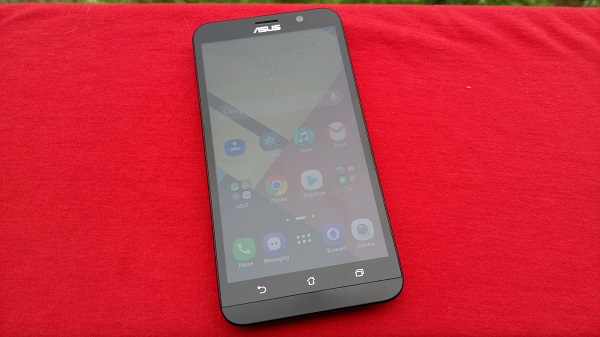
The looks. The ASUS ZenFone 2’s (ZE551ML) unique design is not massively different from the Zenfone, but is sufficiently different. The phone has volume rockers (similar to those on LG G3 and now the G4) on the back right next to the camera sensor and dual tone LED flash; other than the loudspeaker and ASUS, Intel and ZenFone logo complete the rear. The back has a nice brushed (almost faux aluminum) plastic material.

The phone’s back has a noticeable curve and with the smooth dual shade plastic sides and curved edges, it is comfortable to hold and carry. Having said that, its sheer size, bezel and weight (about 170 grams) will be a bit too much for some. On the front, the phone has a nice brushed aluminium chin just below the three capacitive touch keys — Back, Home and recent Apps key.

Right above the screen, other than the ASUS logo (second one) you have LED notification light, ear-speaker and 5 MP front-facing camera. The microUSB port and primary mic are placed right at the bottom. Plus, those slim volume keys are not the most tactile ones, but you will get used to them. The Power/Lock key is at the top along with the 3.5mm headset jack and secondary mic. The Power button placed, at the top right, located in the middle, is also hard to press.

Asus ZenFone 2Display. The phone features a 5.5-inch full HD (1920 x 1080) IPS LCD. On paper, it is on par with most other smartphones in this price category today. The screen looks sharp and, while it is not the most pixel-dense display, does a good job for most tasks. I thought the phone performed well with videos and images. You can change the screen’s colour calibration using the inbuilt colour temperature app.

Battery. The phone has a 3,000 mAh battery unit. On most occasions it lasted me over 20 hours on a single charge (with a little over three hours of screen on-time). The usage included one SIM card inserted, two Email Accounts on sync, about half an hour or HD YouTube videos and music playback each. The phone takes a little under two hours to get fully charged from zero using the bundled charger. The battery is a solid point for the ZenFone 2; it hardly drained more than usual.

Audio. The loudspeaker on the back (designed to look longer than the speaker actually) isn’t very punchy for videos and games output and you would often have to use your hand to cup the speaker and get better sound. I didn’t any bundled headsets, so I can’t about in-ear sound. Call quality and in-ear sound were on par, and there were no problems with voice or sound during calls. One SIM card slot has 3G and 4G LTE supports, while the other has just 2G. Basics like WiFi, Bluetooth, GPS, and network data didn’t require any troubleshooting.

Camera. The ZenFone 2 boasts a 13 MP rear camera with dual tone LED flash. Here are a few sample images.

The camera can take detailed, sharp photos, especially in broad daylight. The camera app has loads of options, in particular HDR and Depth mode work well and can be pretty useful at times. In low-light, the camera gives noisy photos and you may want to opt for low resolution photos. Having said that, it usually gave bright coloured shots better than most smartphones in this price range. There’s also a software feature called Super Resolution that lets you take 50 MP photos – by combining four shots and stitching them together.

Software and performance. The ZenFone 2 comes with an Intel Z3580 chipset (2.3 GHz quad-core processor, PowerVR G6430 GPU) and whopping 4 GB of RAM, which is surely one of the USPs of the phone. It runs on Android 5.0 with ASUS’s own ZenUI on top. The phone feels a lot smoother and snappier to work on than its predecessor. There are not too many Intel-powered Android phones, but this one certainly does its job without lagging.

ASUS has loaded plenty of options in every nook and corner of the OS. With a dedicated themes center, you can now choose the overall look of the phone – from wallpaper, lock screen, scrolling effect, option to change how your Menu launcher shows app icons or arranges them, to even changing icons from one of the icon packs from the Play Store, yep. Contacts app allows you to select certain contacts under the tab VIP, for whom you may contact frequently or just want to view separate from the rest. There are dozens of ASUS apps pre-loaded as well as annoying third-party apps, which you can uninstall. There is a dedicated ASUS support app you can use to chat and get help from the company’s customer support, so that you don’t have to wait holding calls.

ASUS has done a really good job with the ZenFone 2. With a good camera and screen, feature-heavy and relatively smooth OS, decent battery life and innovative design, the phone seems to be up there with other heavyweights when it comes to phones under Rs 24,000.

(Pictures courtesy Manik Kakra)

Categories
Tech

Review: Coolpad’s Dazen X7

The new Chinese smartphone is a good buy at its price, but needs to sort out a few software niggles.
by Manik Kakra | @Manik_K on Twitter

We recently reviewed the Coolpad Dazen 1, which is the company’s sub Rs 7k smartphone, just a few days back and now we take a look at Coolpad’s flagship device, the Dazen X7. The Dazen X7, priced a little under Rs 18,000, comes as a direct competitor to the popular Xiaomi Mi4 and Lenovo Vibe X2. This price segment is already full of a lot of good options, so how good is the Dazen X7?

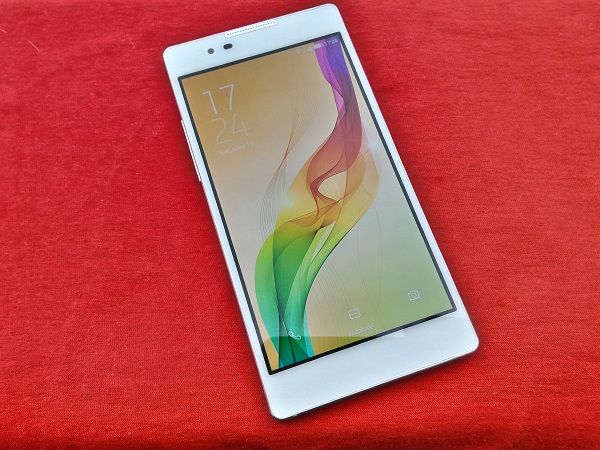
The looks. The Dazen X7 has a glass back and front and metallic sides. The front has a noticeable metal-clad earspeaker grille above the 5.2-inch AMOLED, sensors and an 8 Mp front-facing camera. At the bottom, you have the microUSB port with loudspeaker on the one side and primary mic on the other. The top houses the 3.5mm headset jack and secondary mic. The right side consists of two SIM card slots (nano or microSD card and micro SIM card slot as well the Power/Lock key towards the top; while the left side has the volume rockers, both keys are just a little sharp for my liking, but have decent tactile feedback.

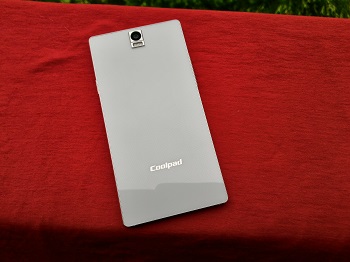
The back has a 13 MP camera with a protruding broad metal cover that might get a bit scratched a bit with usage; then there’s the Coolpad logo near the bottom. The phone is light to hold but it is a bit slippery and sides and glass back mean it may not be very comfortable to hold.

Display. The Coolpad Dazen X7 features a 5.2-inch full HD (1920 x 1200) AMOLED. There are not many companies who use AMOLED and especially not at this price range. The display is pretty nice, actually. While it doesn’t have vibrant colours like a high-end Samsung device would, colours are still quite sharp and bright. It is noticeably less mellow than an LCD, has good viewing angles, full HD videos appear well on it and it does a decent job under sunlight.

Camera. The company has been quite vocal about the camera experience and how well they have tweaked its software for better shots. Here are a few sample images.

As you can see, the phone can take pretty detailed photos. While I wasn’t too impressed with how laggy the camera app can be at times, it does have a lot of options including a Pro mode, which gives you options to choose from various ISO, exposure settings to select from. In daylight, the app performed okay, but when shooting in low-light, it really struggled to keep up. It may struggle with exposure and take a really long time capture shots. To say the camera is among the best would be wrong, but it isn’t bad; it just needs some software tweaking to make it fly in low-light conditions.

Dazen X7Sound. Audio quality fared well. The bottom-facing speaker does a decent job for videos and games, but thanks to its placement, you may shut them with your hand while holding the phone in landscape. You don’t get earphones bundled with the phone.

Battery. Powered by a non-removable 2,700 mAh battery unit, the phone’s battery life seemed just on par with most phones. The company claims they have done some hardware-software optimisation to give 33 per cent extra juice from the phone. It lasted me around 18 hours when used moderately, but went below 14 hours when used heavily. Putting a high-quality all black wallpaper helps a bit considering this is an AMOLED.

Software and performance. The device runs on Android 4.4.2 with CoolUI 6 on top. It’s equipped with a MediaTek 6595 SoC (1.7 GHz octa-core processor, PowerVR Series6 GPU) as well as 2 GB of RAM.

The phone handles most tasks quite well. Going in and out of apps doesn’t lag, videos play without stuttering and scrolling is good. Having said that, at times Settings and the pre-loaded Cool Store (still don’t know why have they bundled it) struggle to provide smooth performance, but it is not so frequent. The phone does heat considerable once you play games for about 20 minutes, or simply put it on charge and the phone’s back heats up in matter of few minutes.

The whole OS is pretty much identical to what we have on the Dazen 1, except for the multi-window feature. If enabled, you get a small arrow on your Homescreen. In pressing, it gives you a list of apps that you can open – two at times – and you can edit this list. I found every app I installed could be put into multi-window. It can be a handy feature for some for sure, but I didn’t find much utility for it. Having said that, it does work fairly well and there wasn’t any performance issues with multi-window switched on under Settings.

You get about 10 GB of available storage space. There are four onscreen keys – Back, Home, Recent apps key, and one key to make the navigation bar disappear. In order to make the navigation bar reappear, you have to swipe up from the bottom of the screen. The phone still runs on dated Android KitKat and the company has said its Lollipop upgrade should be out soon. This is one obvious shortcoming of the phone as of now, had it been updated to Android 5.1 (or even 5.0), it would have given this newcomer a significant lead over quite a few players.

All in all, the Dazen X7 seems like a capable smartphone. It has a great screen, average battery life, good camera and fine design. While the software side could certainly be improved, the hardware department if the phone is decent enough at about Rs 18,000.

(Pictures courtesy Manik Kakra)

Categories
Film

Review: Jurassic World

A complete edge of the seat thriller, this film will keep you engaged till the end if you suspend disbelief.
by Ravi Shet

Almost 14 years after the release of Jurassic Park 3, director Colin Trevorrow carries the legacy of our beloved dino series on his shoulders in the fourth installment of the Jurassic Park film franchise.

The films starts with a baby dinosaur trying to come out of an egg. Jurassic World is now a fully functional dinosaur theme park owned by Masrani (Irrfan Khan) and managed by Claire Dearing (Bryce Dallas Howard). As a business person, Masrani feels that innovation is required to attract more visitors to his park; hence, along with Dr. Henry Wu (Wong) they furtively play with the genes of the dinosaurs to create a new genetically-modified mega dinosaur – the terrifying Indominus Rex. The Rex is monitored by creepy military consultant Hoskins (Vincent D’Onofrio).

Gray and Zach Mitchell are brothers who have come to visit their aunt Claire and also the theme park under the supervision of Claire’s assistant Zara. Meanwhile, Owen Grady (Chris Pratt), works at Jurassic World as a Velociraptor expert and trainer. He has trained four Velociraptors – Blue, Charlie, Delta and Echo. When his ex-girlfriend Claire asks him to train the Indominus Rex, he does so reluctantly.


Owen and Claire discover that Indominus Rex has escaped from the enclosure, while Gray and Zach leave Zara and start exploring on their own. By this time, the audience has guessed the graph of the story – Indominus Rex creates chaos around the park while Owen and Claire try to rescue the boys.

The pace of the movie is well maintained and keeps the audiences engaged. The special effects and background score of the film are stunning. Rexy, the female dinosaur from the first Jurassic Park is seen in the end moments of the film, where she fights Indominus Rex. The film’s last scene shows Rexy climbing on top of a helipad and inspecting the havoc caused by Indominus Rex – this ending shows the possibility of the next installment from this franchise.

Rating: 3 out of 5

(Picture courtesy www.jurassicworld.org)

Categories
Film

Review: Sugar, Salt Ani Prem

A story of love, kindness, sacrifice and friendship, this Marathi film boasts of some stellar performances and a well-balanced plot.
by Ravi Shet

Producer and director Sonali Bangera brings a star studded ensemble in this film which tells the story of three women who are looking for their respective paths and the relationship they share.

The film starts with Aditi (Sonali Kulkarni) adding a sugar cube to a cup of tea, Ananya (Shilpa Tulaskar) picking up a packet of salt from the supermarket and Soumya (Kranti Redkar) picking up a greeting card from the Archies store – they are in the same mall and leave one by one in three different directions.

Aditi lives with her husband – Rahul (Sameer Dharmadhikari) and adopted son Om, who is autistic. Rahul is a wealthy financial expert, while Aditi was a high-achieving working woman with a lot of accolades and trophies marking her professional life. However, she chooses to stop working so that she can take care of her son – this creates a rift between her and Rahul. He tries hard to send their son to a boarding school for autistic children, so that he can get back his wife’s attentions.


Meanwhile, Ravindra (Prasad Oak), owner of Robo Tech lives with his wife Soumya and is busy building his dream – a robotic chair that can help the needy. The film also introduces his ex-colleague Pradhan (Yatin Karyekar), who wants to hijack Ravindra’s dream project for commercial purposes.

Ananya stays with her daughter and husband – Ajay (Ajinkya Deo), a well-established businessman in awe of status and money. He hardly has the time for relationships; this becomes a point of friction between him and his wife, who is always willing to help a person in need.

Ajay and Ravindra are friends; however when a financier pulls out of Ravindra’s project after Pradhan manipulates the deal, even Ajay offers no help. Ravindra gets killed in a car accident and his project gets stuck. This results in a meeting of the three women – Aditi, Soumya and Ananya – who are also struggling in their respective lives. The story then develops their relationship and how their friendship gels with sugar, salt and love (prem).

I loved how the film portrays the many dilemmas and the small happinesses of today’s women – a lot of women will relate to this. The plot is well-balanced and the performances – especially by Sonali Kulkarni, Shilpa Tulaskar and Yatin Karyekar – are top notch. Musician Siddharth Mahadevan has scored all the songs, and also appears in one of them. Overall, this one’s worth a watch.

Rating: 3 out of 5

(Picture courtesy marathistars.com)

Exit mobile version