Categories
Tech

Review: Xiaomi Mi 3

Most Chinese smartphones in India are providing high end hardware at mid-range prices, but Xiaomi Mi 3 goes one better.
by Manik Kakra | @Manik_K on Twitter

We have seen a few China-based smartphone players enter the Indian market in the last one year or so, and now there’s Xiaomi. Most of these companies compete on providing high-end hardware at mid-range prices, and Xiaomi, to add to it, bets at selling units near to cost and playing on sale units. The Mi 3 is Xiaomi’s first device to be officially available in India, creating a quite a lot of online buzz – whether it’s for the limited supply, or for their India launch – so, let’s try and see if the phone actually delivers or not.

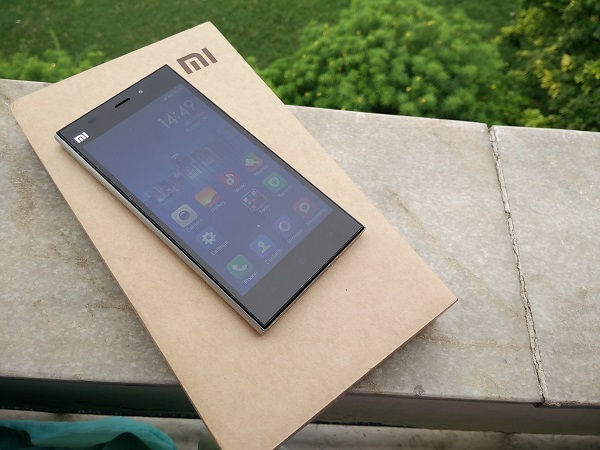
Xiaomi’s Mi 3 (MI 3W) is a full-fledged mid-range Android 4.4.2 smartphone that tries to compete with its near-cost market price. The device follows a similar form factor that we are used to seeing these days. It sports a nearly all-black front and silver back and sides. Alongside the MI logo and sensors, are the speaker grill and the 2 MP front-facing camera on the other side.

The looks
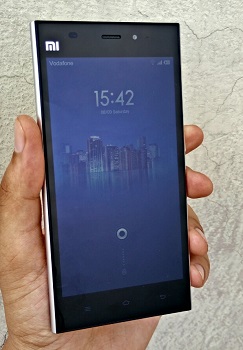
Other than the 5-inch full HD screen, the front has three touch keys – Menu, Home, and Back (from left to right). The keys are well spaced, but are a bit too dim relative to what we have been used to. The right side panel houses the volume rocker and Power/Lock key (near the middle); while the left side is completely plain.

The microUSB port and speakers sit at the bottom, and the 3.55mm headset jack and SIM card (normal mini SIM) slot are located right at the top. The first thing you notice on holding the device is that it has no aluminium build but hard plastic, which doesn’t feel cheap or doesn’t creak anywhere. There seems to be a decent effort taken to make the device grip well in your palm, thanks to the slight curve at the back and edges. It may not be a premium-built device, but it is definitely not something to complain about, either.

At the back, other than the logo and product ID, you have the 13 MP camera with twin LED flash and the secondary mic (sitting near the top left). One more thing you may realise is that the phone feels a bit heavier towards the bottom half, which may well be due to the battery unit placement (non-user accessible), but this isn’t something you see in many other phones these days.

The screen

Coming to the phone’s 1080p LCD touchscreen, this is a good, bright display. Videos, text, web surfing are nice and readable on the screen. On one hand, it is hard to see it toppling the high-end screens on the Ones and S5s, but on the other hand, this is pretty much the best screen on a phone at this price. So, we could say that the screen delivers and doesn’t disappoint keeping the price in mind.

Battery

The phone houses a 3,050 mAh battery unit. I mostly got 22 hours from the phone with a good amount of usage, which included a few videos streamed (around half an hour), a lot of Twitter and emails, a few calls and about half an hour of music. Connectivity-wise, Bluetooth 4.0, GOS work well with no real qualms in pairing or locking the position.

Loudspeakers and audio

The phone’s loudspeakers are placed right at the bottom. The speakers are single unit and are not at all loud. In fact, they are probably the worst unit I have seen on a smartphone for a long time. Forget multimedia, you won’t be able to hear your phone ringing if it is a few feet away from you; due to this, I missed quite a few calls within a day of using the phone. I was sent a Chinese unit, so I am not too sure if this issue is particular to the Indian mode, too. In-ear audio and call quality reveal a different picture, though. Call quality is good, audio is loud and clear, plus, in-ear audio quality is also pretty decent and would be even better with your third-party headphones.

Camera

The Mi 3 boasts a 13 MP (EXMOR RS) camera on the back, along with twin LED flash. Here are a few sample images: http://imgur.com/a/7qBdU

The snapper on the Mi 3 doesn’t disappoint. It is fast to focus and use in general. As you can see, the photos look detailed, quite sharp and colours come out pretty well, too. But, when used in dark conditions, the camera shows its weak spot. Photos come out noisy and dark enough to not be considered good by any means. The default camera app is smooth to operate with a lot of options to choose from. It is safe to say you won’t be disappointed by the native app. Just to add, the front-facing camera isn’t much to write about. It looks like a cheap 2 MP sensor, which does about its job just for the sake of it.

Software

Now let’s talk a bit about the software on the phone. The Mi 3 runs on MIUI 5 (buil number 23.0), which is based on Android 4.4.2 KitKat. A lot of you who are into flashing custom ROMs and putting mods on your phones would be familiar with the name MIUI. The software has grown and improved a lot since its first version came out four years back. Xiaomi has done a lot of work on the OS, and the community, with an increasing number of moders and users, has been shaping up well.

The OS doesn’t have separate app launchers and all your apps are placed on Home screens (something we have used on a couple of other OEM skins as well). The overall feel and look of the MIUI 5 OS is different from stock Android. Indian units come with Google services and apps loaded, but this isn’t the case for Chinese users. App icons, UI, etc., all are well-thought out and appear they are not rushed into.

Long-pressing the Menu key brings up recent app view (horizontally put in the bottom half of the screen), long-pressing the Home key takes you to Google Now. You can change these settings, even add for the Back key, as per your wish, from Settings. There are a number of nifty tools like Permission Manager, which allows you to set which app can access what, cleaner to keep a check on traso and temporary items. , and so on. The notification center can be pulled down from any part of the screen and not just its top. Overall, MiUI seems a reasonably good and usable custom skin to use and the recent history is to be believed, you can expect a lot of updates and improvements from Xiaomi for the same. Oh, and for those interested, Xiaomi allows you to flash official MIUI ROM zips on the phone on your own without having to void your warranty.

Under the hood, there is a Snapdragon 800 SoC (2.3 GHz quad-core processor, Adreno 330 GPU), along with 2 GB of RAM. The phone is smooth and fluid to work on. I didn’t see any lags for the most part, and there wasn’t any stuttering or any noticeable drop in frames while playing games or high quality games on the Mi 3. Overall, the phone breezes through general usage and handles a few apps running in the background just well.

Concluding our review, the Xiaomi Mi 3 is a very attractively priced Snapdragon 800 smartphone that delivers for most part and doesn’t disappoint when keeping its price in mind. Good screen, decent battery life and camera, above average design, there isn’t much to pin point where the phone lags behind. It will be safe to say that with Xiaomi and maybe a few more players in the market, the price wars have become more interesting, but, without having to compromise on performance, experience and design. The Mi 3 seems like the best phone (if you’re okay with no storage option beyond on-board 16 GB) for a price around Rs 14,000 with no major shortcomings, which can only mean better choices for the user in the near future.


Categories
Deal with it

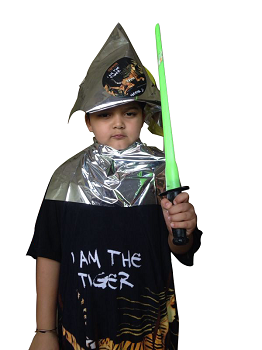
This actor, activist says ‘I am the Tiger’

An environment-entrenched initiative by actor and activist Shivani Wazir Pasrich is garnering a good response and discussion wherever it travels.
by The Editors | editor@themetrognome.in

Shivani Wazir PasrichActor Shivani Wazir Pasrich is going great guns with her IATT (I am the Tiger) initiative. Most recently, IATT performed for 800 students at the Maharashtra National Park, Mumbai, and the following day, to a packed auditorium in the city. ‘I am the Tiger’ is the story of Taqdeer (or ‘Destiny’), raised in the forest of Sarhi. His sister, Bachi, is forced to fight for food to feed her cubs and is branded a ‘man- eater’. After seeing his uncle Banka cruelly killed by hunters, Taqdeer is shattered. Love changes everything and Trisha, his mate, and he make a family of their own.

However, the good times are short lived and Taqdeer ends up in a zoo in Delhi. Here a life of barren captivity, inhumane conditions and loneliness force him to the very brink of existence and madness.

Says Shivani, “The initiative seeks mass involvement. As you are aware, tiger numbers have fallen steadily each year since 1990. India now has fewer than 1,800 tigers alive in the wild. India is losing the tiger, and with it, the natural abundance the nation needs to survive. We can’t just sit there counting numbers, we have to do our bit.” For this, she envisioned IATT to encompass a variety of conservation activities. “‘From tree planting in the immediate future to setting up a conservation dome in the long run (a green area in the capital city where people can feel the forest, hear the forest, smell the forest), the initiative will be a one stop where there will be performances, lectures, seminars and interactions on conservation. It is where you will find the answers to waste management like disposal of batteries, CFL bulbs, e-waste and so on. It’s also a place you will call when you want to know how to stop someone from cutting a tree or when you want to share your simple innovation with others.”

She adds that for the past two and a half years, this project has been a focal point in her life. “My vision for this project is that it will bring together people who feel for the cause and will influence other people to look at issues of concern in an empathetic way, as they are directly impacted. Hence the use of “I”. Perhaps, in time to follow, there will be an, ‘I am the Elephant’ , ‘I am the Leopard’ and eventually ‘I am the True Conservationist’.”

She says she would like to create a version of this work to showcase at conservation and climate change conferences and drive policy decisions. Further, she hopes to showcase the initiative on the Bio-diversity Train, where 16 bogies carry the story of India’s bio-diversity and stop at platforms where people can board the train free of cost and experience first hand what responsible tourism means. “The effort is to use innovative existing platforms and make them effective with a dose of creativity,” she says.

(Pictures courtesy Shivani Wazir Pasrich and www.delhievents.com)

Categories
Trends

About 35% couples took a trip this weekend

Survey reveals that about 5 lakh travelers from the metros went to nearby tourist spots over the long I-Day weekend.
by The Editors | editor@themetrognome.in

The long weekend, starting from Friday, August 15 (Independence Day), and ending on Monday, August 18 (Pateti, Janmashtami) certainly allowed several people to take short trips to nearby locations. If a quick survey by ASSOCHAM (Associated Chambers of Commerce and Industry in India) is to be believed, about 35 per cent working couples of 500 couples surveyed in the metros of the country took planned an extended weekend trip during this time. 

About 5 lakh travelers made the journey to renowned weekend destinations, as per the survey based on feedback received from various working couples and tour operators in metros. “The weekend, starting this Independence Day on Friday, was extended up to Janmashtami on Monday (August 18) and about 35 per cent of working couples in metros planned to make it an extended holiday and escape to the nearby tourist destinations,” highlighted the survey.

ASSOCHAM representatives interacted with about 500 working couples to gauge their mood and plans for the Independence Day weekend in five cities of Mumbai, Ahmedabad, Bangalore, Delhi-NCR, and Kolkata during the last fortnight.

While about 35 per cent respondents conceded they had planned their itinerary in advance, about 55 per cent said they would relax at home and enjoy some good quality time with their family and the remaining 10 per cent said they have not made any plans so far. “With work schedules getting hectic by the day, working couples in India impatiently await weekends and thus make the most of extended weekends,” said DS Rawat, secretary general of ASSOCHAM.

The survey also took into account inputs from representatives of leading travel portals, travel agencies, and hoteliers who came up with various packages, as they had received a good number of bookings for traditional picturesque destinations located around the metros.
 
Certain respondents even said that their companies enabled the ‘work from home’ facility for their employees so that they could spend the weekend comfortably and complete their tasks as per their convenience.

Ashtvinayak, Goa, Khandala, Lonavla, Mahabaleshwar, and Matheran were the top destinations for about 30 per cent working couples in Mumbai, while almost 40 per cent respondents from Delhi-NCR rated Agra, Dharamshala, Haridwar, Jaipur, Jim Corbett, Khatu Shyam, Landsdowne, Mathura and Vrindavan, Manali, Mussoorrie, Nainital, Rishikesh, Shimla, Vaishno Devi and other spots among their favourite spots. 

Ambaji, Gir, Kutch, Mount Abu, Daman and Diu, Dadra and Nagar Haveli, Udaipur and others were significant getaway destinations for about 45 per cent working couples planning a quick holiday this weekend in Ahmedabad. Meanwhile, Chikmagalur, Coorg, Madhugiri, Mysore, Nandi Hills, Ooty, Ramanagara, Shivanasamudra Waterfalls, Wayanad and others were most sought-after weekend getaway destinations for 35 per cent working couples in Bangalore.

Bakkhali, Darjeeling, Digha, Mandarmoni, Murshidabad, Navadivpa, Raichak Santiniketan, Sunderbans, Tajpur, Tarapith and others were preferred weekend getaways for about 25 per cent respondents in Kolkata.

Also read: ‘Four-day holiday causes six-hour traffic snarl on Mumbai-Pune Expressway‘, TOI

(Picture courtesy www.planmoneytax.com)

Categories
Enough said

Books are our only pleasure

In times as turbulent as the ones we live in, only the reading habit can divert us and provide much-needed hope.
Humra Quraishiby Humra Quraishi

There is so much to write, so much to think about even as I write. I wasn’t even too sure about where to begin this column – should I write about the few positives in our country, or talk instead of the destruction in West Asia?

Then I thought – I’ll write on the positives. God alone knows we need to focus on the positives in these turbulent times.

This year is Mulshi Premchand’s 134th birth anniversary, and there is a series of events lined up to celebrate the life and times of this writer, here in the national capital. Even as I muse over Premchand’s contribution to the collective Indian psyche – he wrote endlessly on human relationships amidst an unchanging social fabric – I realise that the biggest source of happiness and positivity for us humans today, is reading.

New Delhi is witnessing at least one book launch a day, and this trend is sure to accelerate with the onset of September, when literary festivals will slowly begin. Recently, the capital was witness to the launch of two new books – a volume on Khushwant Singh to mark his 99th birthday (he would have turned 99 on August 15), and aptly titled 99. The book is a collection of his essays, stories and poems.

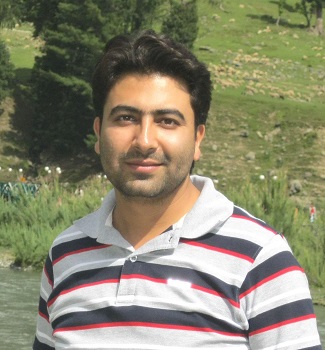
The other event was the launch of Srinager-based writer and academic Shahnaz Bashir, who has written his debut novel, The Half Mother. I spoke to the author (in pic on right) Shahnaz Bashirabout the book and its title, and he said, “The story grew up within me. I had always been thinking of writing a small non-fiction piece on disappearances in Kashmir. I thought that every loss in Kashmir was getting lost in the general database of facts and statistics.

“The loss was, and still is, becoming dangerously normal, that, for example, if people do not die, the way they die here, it will be abnormal. That if you write the stories of the disappeared as small newspaper reports maybe a hundred times over, it would look like a normal daily report, and then this normality enters into our psyches. It seems somewhat normal that this person disappeared, that that mother is looking for her son, that a wife is going to be remarried because her husband and couldn’t be found, so forth.

“And then this is my writerly politics to expand the fact as much as possible because I think that so much that is happening to us is not only unheeded but also internationally ignored. We have only statistics, you know, so I believe it is really important to expand it as much as possible and that expansion can largely be done with fiction. In fiction, you would not only write about what actually happened but you would be able to write it much better, that how it happened that happened. And that is how The Half Mother happened,” he explained.

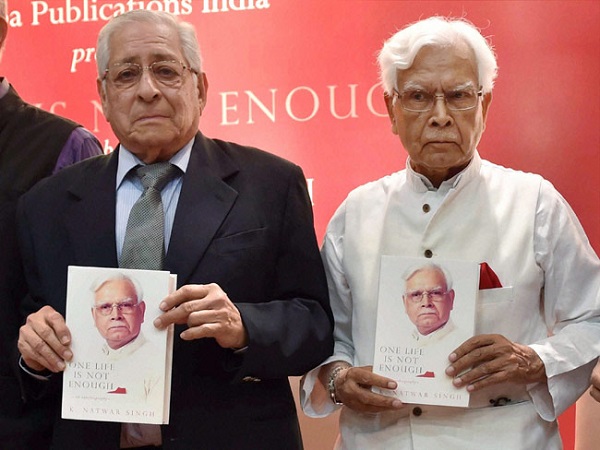
Then there was the launch of Kunwar Natwar Singh’s book, One Life Is Not Enough. The autobiography was bound to create a stir. Given Singh’s background as India’s former External Affairs Minister and a diplomat who had interacted with the Who’s Who in international politics, he obviously has had a long career in Indian politics. He was part of the Congress Government till the Volcker Controversy erupted in 2005, which led to his resignation from the Manmohan Singh cabinet. The man’s writing lineage is also an interesting one – over the years, he has authored several books, such as The Legacy of Nehru, Tales From Modern India, Yours Sincerely, My China Diary, and The Magnificent Maharaja, among others.

At the launch, Natwar spoke at length about the significance of the Congress party in a secular democracy as ours. I am still pondering over this view that there is no alternative to the Congress party for this country.

Humra Quraishi is a senior political journalist based in Gurgaon. She is the author of Kashmir: The Untold Story and co-author of Simply Khushwant.

(Pictures courtesy indiatoday.intoday.in, Shahnaz Bashir)

Categories
Trends

Are these Mumbai’s best MLAs?

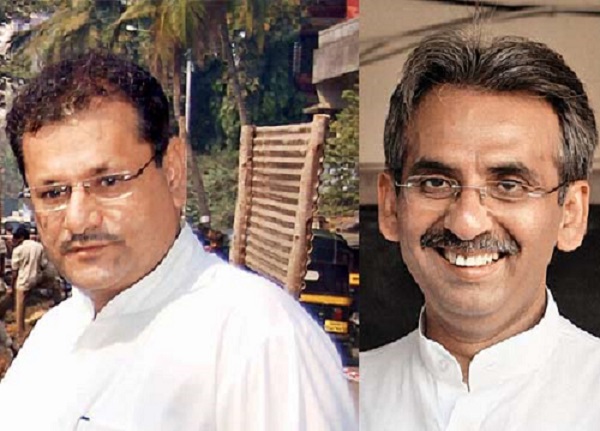
Praja Foundation rankings for 32 Mumbai MLAs put BJP’s Yogesh Sagar in top spot, followed by the Congress’ Amin Patel.
by The Editors | editor@themetrognome.in

Mumbai is well out of the Lok Sabha election fervour, but in a few days, when the Election Code of Conduct sets in prior to the Assembly Elections later this year, the city will once again reel from election fever.

Before a new Government is elected, however, city-based Praja Foundation deemed it fit to release a ‘scorecard’ for the 32 city-based MLAs. Mumbai elects 36 MLAs in every Assembly, however, since four of the current MLAs are ministers in the current State Government, they were excluded from the ratings.

The findings revealed that 68 per cent people who voted positively for their MLA thought they were less corrupt; while 53 per cent people who voted against their MLA felt they were corrupt.

Releasing the Report Card, Nitai Mehta, Founder Trustee, Praja, said, “The current report card is going to be the last for the 12th Assembly and fourth in the series. This report card which we publish every year gives the citizens, elected representatives, political parties and the Government valuable feedback on the functioning of the elected representatives. We hope that it will set standards and benchmarks for the performance of the elected representatives.”

The number one MLA this year, too, has been the previous two years’ topper, Yogesh Sagar of the BJP. Also retaining their ranks from last year are Amin Patel of INC on second position and Madhukar Chavan, again from INC, on third position.

Rating methodology

The MLAs have been rated on four quantitative parameters and three qualitative perception-based parameters: 1) Quality of questions asked in the assembly, 2) Number of questions asked, 3) Attendance, 4) Clean criminal record 5) Perceived least corrupt 6) Perceived accessibility for the public from relevant constituency, and 7) Perceived performer for the constituency.

Said Mehta, “We collected quantifiable data through RTI applications over the year. We also commissioned Hansa Research to do a scientific-statistical survey from among over 22,580 people of Mumbai to gauge the public perception of the MLAs on the above mentioned parameters.”

Milind Mhaske, Project Director, Praja, added, “The appraisal is based on the constitutional role and responsibility of the elected representatives and opinions of their electorate.” The Report Card covers the working and performance of the 32 MLAs during Winter 2012, Budget 2013, Monsoon 2013 and Winter 2013 assembly sessions. It also covers the Local Area Development funds spent by the MLAs for the period between December 2009 and March 2014.

Mehta added, “There is no standard rule for establishing the performance of elected representatives. Voters have voted on traditional factors to expectations or perceptions to ideologies; few have attempted a scientific approach, mainly due to lack of standardised data and the humongous efforts involved. Hence, Praja made its first MLA report card in 2011.”

Changes in rank

Mangesh Sangle, who got the first rank in the 2011 report card dropped to 20th in 2013 because of low attendance and a new charge sheet, then recovered to the 6th position due to improved attendance and consistency in his other parameters. Sardar Tara Singh’s rank has gone down from 3rd in 2011 to 15th in 2012 due to a new charge sheet, then recovered to 10th in 2013 due to increase in overall perception and quality of questions and is now down to 24th due to drop in attendance, questions asked and overall perception.

On the other hand Yogesh Sagar has remained in the top four in all years and number one for the last three years due to his consistent scores in all parameters. Similarly, his party colleague, Prakash Maheta, has remained in the bottom five in all the years. Bala Nandgaonkar who has asked 4933 questions i.e. 12 per cent of all the questions asked by Mumbai MLAs, has had above average ranks but has never been in the top three as asking questions is just one aspect of the gradation system but there are many more parameters on which this system grades performance.

Mhaske shared that 50 per cent MLAs not only have criminal cases registered against them, but some of them are also charge-sheeted and some also have new criminal cases.

In the survey, respondents were asked to comment on whether they will vote for their current MLA and the score was matched with whether they find them to be corrupt. The findings revealed that 68 per cent people who voted positively for their MLA thought they were less corrupt; while 53 per cent people who voted against their MLA felt they were corrupt.

(Featured image courtesy dnaindia.com)

Categories
Tech

Oppo launches N1 Mini

Launched recently in India at Rs 26,990, this phone is a smaller version of the company’s previous flagship, the N1.
by Manik Kakra | @Manik_K on Twitter

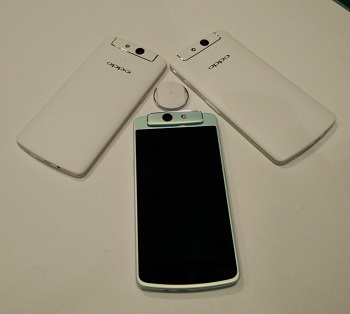
Oppo recently launched its new Android 4.3 smartphone in India – N1 mini. As the name suggests, this is a smaller avatar of the company’s previous flagship, the N1.

The phone boasts a 5-inch 1280 x 720 LCD touchscreen, and supports various gestures that we have seen on other Oppo phones. Under the hood, there is Snapdragon 400 (1.6 GHz quad-core processor) SoC and 2 GB of RAM. Running Oppo’s ColorOS 1.4, the phone has a 13 MP f/2.0 (Sony Stacked CMOS sensor) rotating camera (with an LED flash) similar to the one we saw on the N1. The phone comes with 16 GB of on-board storage but there is no expansion slot. The N1 mini packs a 2,140 mAh battery unit, and supports the O-Click accessory.

Connectivity-wise, there is Bluetooth 4.0, WiFi b/g/n, NFC, DLNA, microUSB (with USB OTG) and GPS. The phone comes in white, light blue, and mint colours, and has been priced at Rs 26,990. Looking at the price tag, it does seem a steep price to pay for what is being offered, especially after considering what the likes of Xiaomi, and Motorola before that, have been up to for the Indian market.

Exit mobile version