Categories
Enough said

Where we reward those who must be punished

Honest voices trying to shed light on atrocities are muted in our country, while blatant criminals are given Z Security.

Humra Quraishiby Humra Quraishi

This sure is a strange phenomenon. What is the logic that prompts successive Governments to reward criminals with immunity and protection?

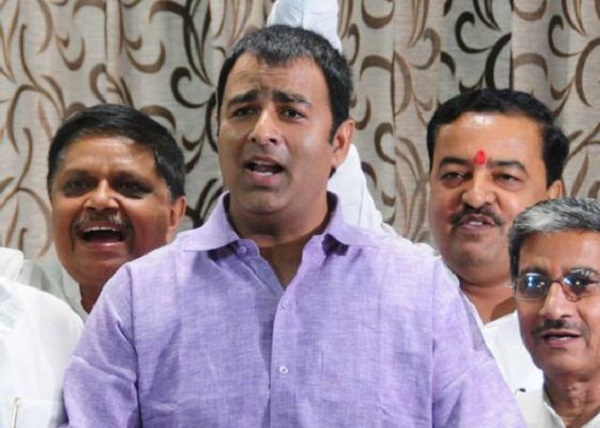
Take the case of Sangeet Som (in picture above), one of the main accused in the 2013 Muzaffarnagar riots. The newspapers say he is due to get Z Security by the establishment. It seems to me that today, all one requires to be protected is to belong to a Right Wing organisation.

Does this mean that our laws are to be used only for commoners such as you and I? If you’re a politician in India, you could commit abominable acts of criminality and not just be left untouched, but also subsequently garlanded!

And then there is the story of Shubradeep Chakravorty.

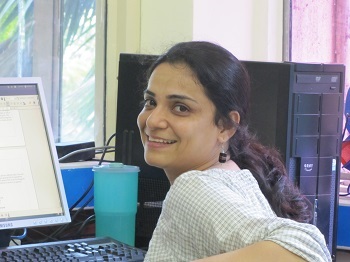
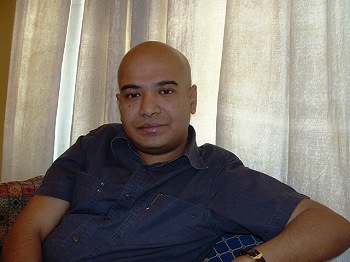
Shubradeep (in pic on right) was a New Delhi-based journalist who later became a documentary filmmaker. He passed away here on Monday this week.Shubradeep Chakravorty I had met him and his wife Meera soon after he had made the controversial documentary After The Storm. The documentary focussed on seven young Muslim men who had been jailed on terror charges, only to be proven innocent and later acquitted from various courts. However, by then, they had been ruined on every possible front.
The documentary also highlighted how the men did not receive any compensation from the Government. I remember a comment that Shubradeep made on the sidelines of the film, “These seven (in the film) are a small number. At one 1,000 innocent young Muslim men could be jailed in India, implicated with terror charges on their heads…”

Last autumn, soon after the Muzaffarnagar riots, he and Meera had travelled extensively in the area, making another startling documentary, In Dino Muzaffarnagar, on the ‘political truths’ behind the incident. As was to be expected, the documentary ran into trouble from the start – it was banned after an initial screening at Mumbai’s Prithvi Theatre, then refused clearance for screening by the Central Board of Film Certification (CBFC). He applied to the Film Certification Appellate Tribunal (FCAT) against the CBFC decision, but that was also turned down.

Shubradeep was not one to give up, and he was determined to fight the “gagging order on the film by the Modi establishment.” However, the stresses of the case caused him to suffer a brain haemorrhage and he slipped into a coma, finally dying at a young 42 years of age this week.

I hope his widow, Meera, carries on his legacy and tries her best to show his documentaries to a larger audience.

Humra Quraishi is a senior political journalist based in Gurgaon. She is the author of Kashmir: The Untold Story and co-author of Simply Khushwant.

(Pictures courtesy www.thehindu.com, www.flickr.com)
Categories
Bombay, bas

What does Ganesh Chaturthi do for us city slickers?

It is a festival that brings the community together. And we sorely need community spirit in our busy city lives.
Pooja Birwatkarby Dr Pooja Birwatkar

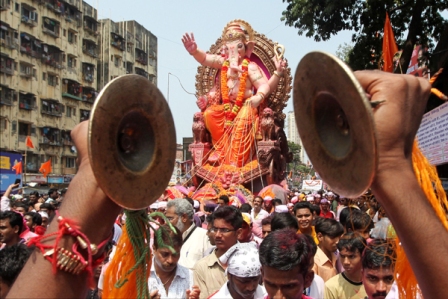
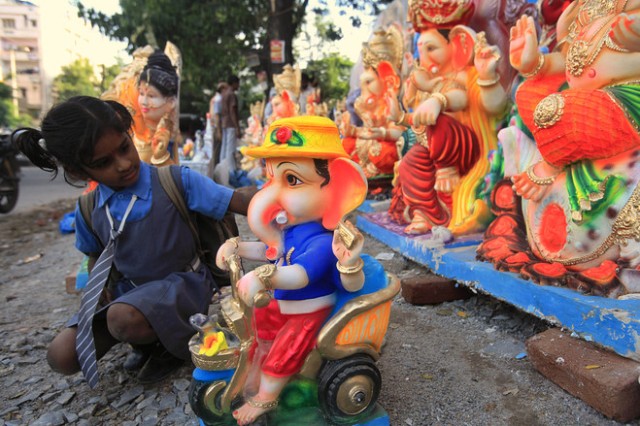
The festival season has begun and Mumbai is in the grip of preparations for its most spectacular festival – the Ganesha festival.

The building where I stay keeps Ganpati every year. However, till the last moment every year, it is a dicey situation for all concerned, as we debate on whether we can host the Elephant God this year or not. Most people are too busy to take the initiative and fear the responsibility. Our ultra-busy lives do not give us the confidence that we would be able to not just welcome Ganpati but also actively participate to make the festival a success.

And every year, things fall into place at the last moment and we manage to have a beautiful celebration. Once the preparation begins, everyone joins in with full enthusiasm. It makes me reflect on one fundamental fact: we actually want festivities to happen.

Sure, celebrating festivals leads to spending a lot of money, harming the environment and myriad other things, but you can’t deny that our festivals also offer us some much-needed solace. Despite our busy lives, or despite being atheists or being strongly opposed to wasting resources, we always look forward to festival season.

Why do you think this is?

The patterns of our lives have dramatically changed over the years. Our channels of socialisation have slowly reduced. We Ganesh Chaturthi in Mumbaihave lesser and lesser people to interact with. As the daily grind goes on, we hardly know how to celebrate our relations, be it our immediate families, friends or even neighbours. Naturally, all of this leads to feelings of loneliness, and a sense of longing for a simpler time, when life was less structured. Our emotions haven’t dried up; it is just that we now struggle to find channels of expression.

Community festivals like Ganesh Chaturthi provide a platform for socialisation. The beauty of our festivals is that we become very humane when celebrating them. Everyone is welcomed in the home of God. The beats of the devotional music, the chants, prayers, the entire gamut of rituals evokes the pious and humane sides of our personalities. As we stand and pray, we solemnly resolve to become better humans. We reflect on our past conduct and examine our follies, decide to transform and for some moments, reach a meditative state. Even if we don’t work on half the things we resolved to work on, those few moments help us reach a stage of self-actualisation, and move away from the usual  Maslow’s need hierarchy tiers of fulfilling basic needs and bothering about safety needs.

Days before our festivals actually begin, most of us have a purpose in life and we are thrilled with thoughts of the upcoming festivities. It’s a great time to bond with family as well. Besides, we clean up our homes thoroughly before festivals before decorating our homes, making sweets and shopping for clothes.

So like every year, Ganesh Chaturthi will mean bringing the Elephant God in our building and also opening up communication with our neighbours. As we all gather for the daily aarti, we also get a chance to interact, make new friends, catch up on gossip with our neighbours. We can definitely use festivals like Ganpati for community experiences. Give your building kids a chance to make a team and organise events and games. This way, they will learn not only how to plan and organise, but will also learn about group dynamics, leadership and other soft skills like communication.

I agree that amidst all this we do harm our ecosystems through the bursting of crackers,blaring of music and wasting of resources, but on the positive side, our festivals give us a break in our monotonous lives. Whatever said and done, festivals do make our lives joyful, happy and something to look forward to year after year.

Dr Pooja Birwatkar is currently pursuing post doctoral research and working in the area of science education. She has been associated with the field of education in the past as a teacher educator, and her area of interest is research in education. 

(Pictures courtesy archive.indianexpress.com, blogs.wsj.com)

Categories
Tech

Flipkart launches three new Intel-powered tablets

Yesterday, Flipkart launched the Digiflip ET701, XT811, and XT 911, tablets that run on Android 4.2.2 and come with freebies.
by Manik Kakra | @Manik_K on Twitter

Yesterday, Flipkart launched as many as three (five, if you include WiFi-only and 3G variants separately) in India. All the tablets run on Android 4.2.2, and the company says that the tablets should get updated to Android 4.4 within the next two months.

The Digiflip ET 701 is a 7-inch 1024 x 600 tablet that has Intel’s Atom Z2520 chipset (1.2 GHz dual-core processor and PowerVR SGX544MP2 GPU), along with 1 GB of RAM. On the back, there is a 2 MP camera; while the front has a VGA one. It is powered by a 2,800 mAh battery unit, comes with 8 GB of internal storage, expandable up to 32 GB, and comes in four colour options — blue, grey, red, and white. This tablet has been priced at Rs 5,999.

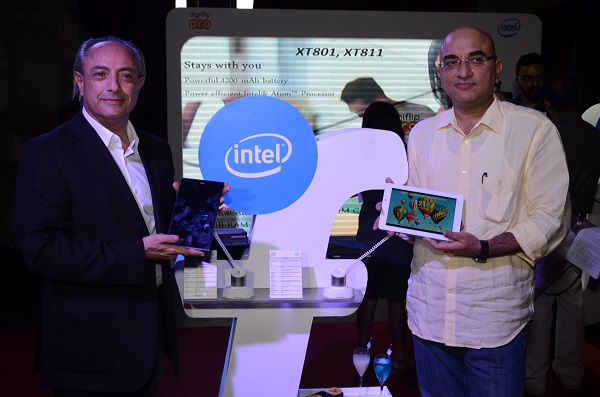
The Digiflip XT 801 (XT811 for 3G + WiFi) sports an 8-inch 1280 x 800 IPS panel. This tablet has a 2 MP front-facing camera; and a 5 MP rear camera. With 16 GB of on-board storage and the option to expand up to 32 GB, it has a higher total storage capacity than the ET701. Under the hood, there Intel’s Z2580 SoC (2 GHz dual-core processor and PowerVR SGX 544MP2 GPU) as well as 1 GB of RAM. Packing in a 4,200 mAh battery cell, the company claims it can give more than a day of battery backup with decent usage. The XT801 and 811 come in blue colour, and priced at Rs 8,999 and Rs 10,999, respectively.

XT911The biggest tablet of the lot is the XT 901 (XT911 for 3G + WiFi). This tablet boasts an 8.9-inch 1920 x 1200 HD IPS touchscreen. The chipset is same as the XT801, but the RAm capacity has been upped to 2 GB. With 16 GB of internal storage space and the 32 GB of expandable storage option, the device is powered by a 6,500 mAh batery unit. The XT 901 and XT 911 come in only white and are available for Rs 13,999 and Rs 5,999, respectively.

There are few goodies on offer with these tablets from Flipkart. Buyers will get 35 per cent off when buying products from the pre-loaded Myntra app. They will also get some discount on India Today magazine, and top 15 ebooks for free. The official covers can be bought from Flipkart, which start from Rs 699.

Categories
Tech

Two Firefox OS smartphones launch in India

The Intex Cloud FX and Spice Fire One Mi FX1 were launched recently at Rs 1,999 and Rs 2,299 respectively.
by Manik Kakra | @Manik_K on Twitter

A wave of ultra low-priced smartphones seems to have hit the Indian smartphone market, with new Firefox OS smartphones being launched by Indian companies Intex and Spice.

Talking about the Intex device, the Cloud FX is currently the lowest-priced smartphone available in the Indian market with a price tag of Rs 1,999. This phone runs on Firefox OS, which is an HTML5 and other Web technologies-based operating system that aims to cater to low cost hardware platforms.

Under the hood, there’s a single core 1 GHz Spectra SPD6821 processor along with 128 MB of RAM. The phone sports a 3.5-inch HVGA screen and supports two SIM cards (GSM + GSM) at once. It is powered by a 1,250 mAh battery unit, and comes with 256 MB of on-board storage expandable up to 4 GB.

On the back, there is a 2 MP camera, but the device has no front-facing camera. Connectivity-options include 2G, Bluetooth, WiFi, and microUSB port. The phone comes in black and white colour options and is available exclusively at Snapdeal.

Spice Fire One BlackComing to the Spice Fire One Mi FX1 (in pic on left), the phone sports a similar 3.5-inch screen. This dual-SIM phone comes with a 2 MP rear camera, and a 1.3 MP front-facing camera. It packs a 1GHz processor and 128 MB of RAM. The phone supports Bluetooth and 2G (EDGE), and will be available for Rs 2,299 (includes a cover) later this week from Snapdeal and later from various other stores as well.

Categories
Wellness

Indians are suffering from more cavities than before

We don’t have the time to take care of our teeth. Worryingly, this is increasingly causing cavities like never before.

‘You are what you eat’ goes the age-old adage, which simply means that good health and fitness depends on eating healthy. However, our ever-changing lifestyles mean lesser time to pay attention on what to eat, how to eat, and if it is affecting the overall and oral health. In fact, our increasing affinity for modern foods not just affects the overall health but has implications on one’s teeth as well.

This is leading to an increased prevalence of cavities and other oral health problems. This concern was further affirmed by a recent survey conducted by the market research firm GFK Mode. The survey confirms that 88 per cent dentists agree that the incidence of cavities nowadays is higher than before.

Increasingly, the survey brings to light the fact that today, ever changing food habits and modern foods are leading to the prevalence of cavities. Commissioned by Colgate-Palmolive (India) Limited, the survey found that not only modern day foods but also everyday foods like rice, dal, dalia and fruits produce sugar acids that are responsible for cavities.

According to the survey, 94 per cent dentists agree that modern foods like burgers and pizzas cause cavities. Dr Sandesh Mayekar elaborates, “It’s interesting to know that in addition to modern foods, everyday foods like dal, dalia – otherwise considered healthy – can cause cavities, too. Cavities are a result of both modern and everyday foods.  Therefore, the use of a clinically proven oral care solution, which will help eliminate the root cause of cavities, is a must.”

Also, cavities are not just restricted to sweet and sugary food items. Most foods that we consume on a regular basis have the potential to cause cavities. This is because regular and modern foods contain sugars, which get converted into harmful acids inside the mouth. These acids – known as Sugar Acids – are the primary cause of cavities. The sugar acids eat away the external surface of the tooth, destroy the enamel and lead to the formation of cavities. If not neutralised in time, they can cause demineralisation, which can ultimately lead to tooth damage. Therefore, neutralisation of sugar acids is the key to fighting cavities.

(Picture courtesy health.howstuffworks.com)

Categories
Achieve

First commercial seaplane flight takes off from Mumbai

The Mumbai to Pawana dam flight is operated by MEHAIR in cooperation with the MTDC; multiple destinations are also being planned.
by The Editors | editor@themetrognome.in

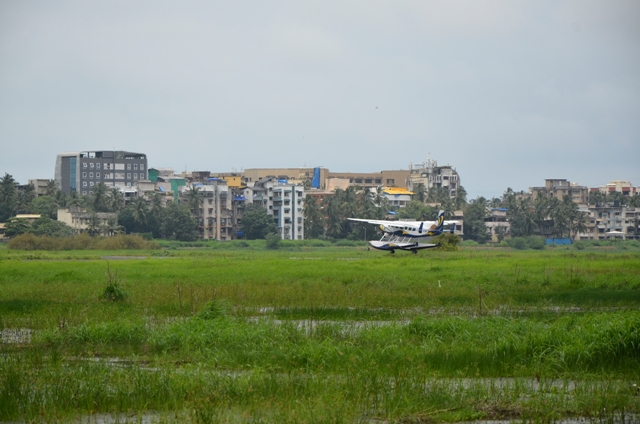
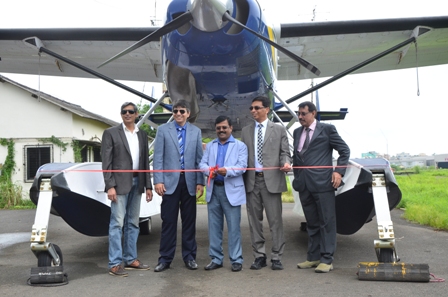
Today, August 25, 2014, the Maritime Energy Heli Air Services Pvt Ltd (MEHAIR) and Maharashtra Tourism Development Corporation (MTDC) flagged off the first commercial seaplane flight from Mumbai to Pawana dam (in Lonavala). The seaplanes will eventually connect Mumbai with multiple state tourist destinations adjacent to four suitable water bodies, even though there are no runways at these destinations.

As of now, the flights from Mumbai to Pawana Dam are priced at Rs 2,999 per person, one way.

Speaking at the launch, Siddharth Verma, Co-Founder and Director, MEHAIR said, “It gives me great pleasure that the first seaplane service in the mainland of India is taking off from Mumbai. It is the first step towards covering India with a seaplane network over the next three to five years. I am sure Mumbaikars will find the service extremely useful and exciting and the service will become a vital cog in the tourism initiative of the State and both tourists as well as pilgrims will benefit from it given that its connecting tourist as well as religious centers.”

The service is expected to save a lot of travel time for users, given that the aircraft will take far lesser time to connect two points, as opposed to road or rail journeys. The MTDC has entered into an understanding with MEHAIR to launch the service in the State by extending its full support. Jagdish Patil, Managing Director, MTDC, said, “These services will boost tourism greatly. Seaplanes will turn vacation destinations into weekend destinations. The fatigue involved in reaching these destinations will also come down drastically.”      

The seaplane service is being launched in Maharashtra with Cessna 208 Amphibian aircraft (9 seater) and Cessna 206 Amphibian (4 seater). These two models can accommodate 9 to 4 passengers respectively. “This is a new and exciting mode of transport which will provide the last mile connectivity to those areas where there is no airport but are popular tourist destinations,” Verma added.

(Pictures courtesy MEHAIR)

Exit mobile version