Categories
Do

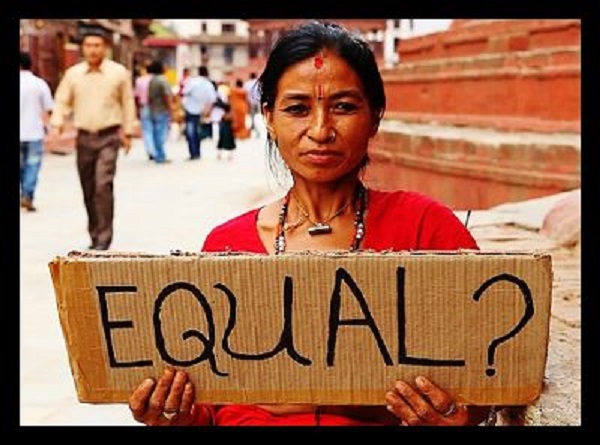
Shoot against gender violence

This photography contest entreats you to stand up against gender violence with positive pictures of individuals, community or organisations effecting change.
by The Editors | editor@themetrognome.in

This is a photo contest aimed at gender violence awareness. And it asks you to not stand by, but stand up.

SPAN’s ‘Don’t Stand By! Combat Gender Violence’ photography contest is open to all Indians aged between 16 and 30 years. The contest invites positive images of people or institutions combating gender violence, through the efforts by an individual, community or an organisation to effect change and give dignity to women.

Up for grabs as prizes are iPad Air, iPad Mini, Nikon Coolpix L830, and SPAN hampers for entries with the most likes, the most creative quotient, the most faithful to the theme, and which scores the highest on originality. The contest closes on December 1, 2014.

For a list of rules, visit this page.


(Picture courtesy southasiainstitute.harvard.edu)

Categories
Places

Kuchh ‘Kaas’ hai…

A Mumbai boy went to Kaas Pathar and was thankful for the beauty and the clean air. And the flowers, of course.
by Salil Jayakar | @Salilicious on Twitter

I first heard about Kaas ‘Valley of flowers’ some months ago when I met @neetakolhatkar over lunch. She was off on one of her trips (yet again) and Kaas was where she was headed. I didn’t register much about the place except that it was near Satara in Maharashtra. Come August and a friend messaged to ask if I was keen on doing a day trip to the Kaas ‘Valley of flowers’… and I jumped at the opportunity.

kaas 14 - koyna lakeContrary to its popular nickname – Valley of flowers – Kaas is actually a plateau and is known as Kaas Pathar. Situated in Maharashtra’s Sahyadri Hills, about 25 km from Satara, the Kaas Plateau is fast becoming a must-visit place for nature lovers. In September, as the monsoon nears its end, the entire plateau is covered with a carpet of flowers in every possible hue – from red and purple, to blue, yellow, orange and white. Kaas Pathar is part of the Western Ghats and a UNESCO Biodiversity World Heritage Site.

Since Satara is a fairly long drive from Bombay, I decided to head to Pune on Saturday and spend the night there. The next morning, I joined a bunch of enthusiastic nature lovers and we were off to Kaas by bus. Pune to Kaas is almost five hours – so be prepared for a longish, uncomfortable bus ride over some not-so great roads once you hit Satara city.

As you approach Kaas you can’t but be taken in by the beauty of the Sahyadri Hills and Western Ghats. The September sky was clear with just a hint of grey and rain, the countryside was bursting with shades of green and the air was crisp and clear. A rare experience for the city-born-and-bred me. We stopped along the way to rest our legs and look at some pretty yellow flowers that had bloomed on both sides of the road. In the distance, the Koyna River gently meandered through the valley below.

The main Kaas plateau has been divided into two distinct zones – the tourist zone on the right and the protected reserve area on the left. A fence marks off both and you can see why this is needed – the tourist zone has several areas of barren land where any kind of growth is just not possible due to the constant footfalls. This habitat destruction has increased over the last couple of years and the local Forest Department is doing all it can to minimise the damage. Since we were there mid-September, all the flowers were not in bloom yet. So except for scattered patches there wasn’t a ‘carpet’ of flowers as such. A beautiful sight, nonetheless.

Once you’re on the plateau, follow the local guide along the marked out paths and try to keep up as they talk about the various flowers and plants. I’m ashamed to say that though I studied Botany kaas 13 - the tiny shield-tail snakeat Uni I couldn’t recognise more than a couple of flowers… *hangs head in shame*. By far the more exciting flowers are Sita’s Tear (I think), a type of fly-trap and the Utricularia – a lovely purple flower that dominated the landscape. I was more excited when a naturist spotted and caught a tiny Shield-tail snake! (in pic on right)

The guided tour over, you’re more or less free to walk around take pictures and watch the world go by. On the way back, if time permits, stop at the Thoseghar Waterfall, which can be seen from a viewing area nearby. Don’t forget the mandatory selfie with the Falls as a backdrop.

Heading back to Mumbai via Pune, I was glad I made the weekend trip to Kaas. After all, it’s not often I get a chance to head out of the city and breathe in some fresh country air.

Categories
Tech

This just in: Samsung Galaxy Note 4

The new Samsung Android smartphone launches in India at Rs 58,300, and will be available for sale later this week.
by Manik Kakra | @Manik_K on Twitter

Note 4_Samsung has launched its new Galaxy Note 4 in India. The series, popular for its bigger screens and stylus use, has been among the most popular crop of Android smartphones out there.

The Note 4 features a 5.7-inch (2560 x 1440) Super AMOLED making it the first Samsung smartphone with a Quad HD screen to be available in India. Equipped with the S-Pen, the phone, for the Indian market, is powered by the Qualcomm Snapdragon 805 SoC (2.7 GHz quad-core Krait 450 Processor, Adreno 420 GPU) along with 3 GB of RAM. Running on Android 4.4.4 wth TouchWiz on top, the phone comes with 32 GB of on-board storage, which is expandable up to 128 GB via a microSD card. There is a 3,220 mAh battery unit that is user-replaceable.

On the back, there is a 16 MP (Fast AF) camera (with an LED flash) that can shoot ultra HD videos and OIS capabilities; while the front has a 3.7 MP camera that can take full HD videos. Connectivity-wise, this Note sports Bluetooth 4.0 (LE) with A2DP, Infrared port, 3G, 4G (LTE), NFC, WiFi a/b/g/n/ac, GPS, microUSB 2.0 (with MHL 3.0), and DLNA.

The phone comes in blossom pink, bronze gold, charcoal black, and frost white colour options, and has been priced at Rs 58,300, to be available starting later this week.

Categories
Tech

Clarion launches its Android-based car stereo system

Launched at a price at Rs 55,990, aims to provide infotainment inside your car and is based on Android 2.3.7.
by Manik Kakra | @Manik_K on Twitter

Clarion, one of the popular car audio companies, has launched the AX1 in the Indian market. This car stereo system is based on Android 2.3.7 Gingerbread, and is aimed at infotainment inside your car.

Clarion AX1The system has a 6-inch (800 x 480) LCD capacitive touchscreen (mouth) that supports multi-touch. Under the hood, there is an 800 MHz processor along with 1 GB of RAM. Supporting external and internal microphone support, you can view its contents on another supported device or use it for viewing the other device’s content after paring them together. It can be paired with an Android device, iPhone or iPod or a Bluetooth-enabled smartphone. The device is equipped with Bluetooth, WiFi, miroSD card slot and 6-channel RCA output.

The Japanese company says the device has been tested for ESD tests, transportation, and is certified for in-car use. You can use theAX1 for navigation through the pre-loaded Navteq and iGo apps. They can be updated via downloading latest maps and data on the microSD card inserted in the device.

Users will also get access to a lot of Bollywood as well as international content on Infogo. The AX1 comes in Black colour and is available from Supreme Audiotronics for Rs 55,990.

Categories
Enough said

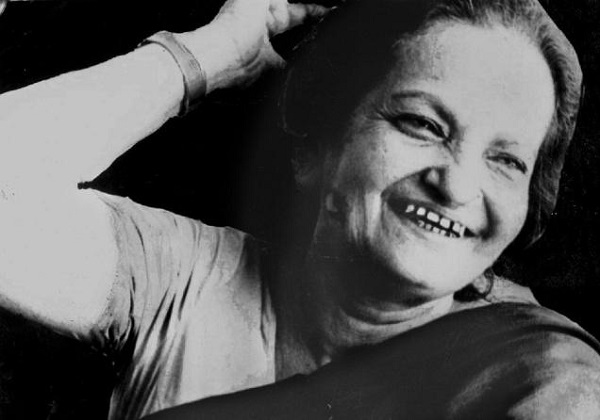
If Begum Akhtar had turned 100…

October 7 would have been legendary singer Begum Akhtar’s 100th birthday. A fascinating woman, her marriage had caused much furore in Lucknow circles.

Humra Quraishiby Humra Quraishi

Legendary singer Begum Akhtar would have turned 100 on October 7. The interesting thing about the woman, to me, is that a lot of information is available about her professional life and her remarkable voice, but not much about her personal life.

Years before I heard her live in concert, I had heard about her from an unlikely source. In my parents’ home in Lucknow, an aged man would come selling lemons, cucumbers, ginger and garlic. Before placing his basket on the floor, he would loudly announced, “Akhtaria ke bagh ke hain!”

It was a popular story during that time that this old man had originally belonged to a wealthy family, but had lost his mental balance after Begum Akhtar ditched him. Unable to bear with the strain, he had been reduced to selling lemons and the like.

In fact, several rich men of Avadh had fallen in love with her, with her voice, with her andaaz. One of them was the man she eventually married. He was a Lucknow-based barrister, Ishtiaq Ahmad Abbasi. His first wife had died and after a couple of years, he had married Begum Akhtar. It is said that he’d fallen in love with her after hearing her perform at one of the local mehfils. Apparently, his family had revolted against the match – after all, she was a courtesan and he belonged to Lucknow’s aristocracy.

The marriage finally took place and the couple started living in Lucknow but Abbasi sahib had imposed a condition – that she would no longer sing or hold concerts. She had agreed to this initially, but the no-singing clause took a toll on her health a few months later and she fell ill. Abbasi, besotted with his talented wife, relented and took away the condition, with the rider that she could sing anywhere but in Lucknow.

If you were to ask her relatives details of her everyday life, her marriage and the adjustments she had to make, they will tell you several things not many people know about the late singer. In an earlier interview, Rafia Hussain, Abbasi’s niece had told me, “Begum Akhtar was a person with strong likes and dislikes. She lived much beyond her means, wearing heavy jewellery and expensive saris. She loved food, especially bhuna kheema and roghini tikkiya. Her marriage was smooth, but the credit for that must go to her husband.

“He sacrificed a lot for her. He could not even become a Judge because of his marriage to a courtesan. Also, when she travelled to Lucknow, she would not allow him to accompany her, so he would stay back. He was extremely lonely and yearned children – he did not have children from his first marriage, nor from his second.”

Rafia further went on to say that he was so much in love with his wife that his entire clan had to accept her. “But once they accepted her, the bonding was good,” Rafia said. “She gave the family a lot of respect. But she brought along so many of her relatives to stay with her, they stayed on even after her death, even after the death of my uncle!”

Lucknow would often buzz with talks of her being depressed and in pain, and there were rumours that she would inject herself with morphine. “It was a well-adjusted marriage,” Rafia repeated. “Even I had heard of the injections, but I can’t comment on that because I never saw her injecting herself. I remember she was addicted to tea and smoking. She would smoke one cigarette after another, may be that caused her death. When she died, her husband was shattered and even more lonely. He died ten years later, a broken man.”

Humra Quraishi is a senior journalist based in Gurgaon. She is the author of Kashmir: The Untold Story and co-author of Simply Khushwant.

(Picture courtesy hindubusinessline.com)

Categories
Achieve

Mumbai boys give mallkhamb an Agra spin

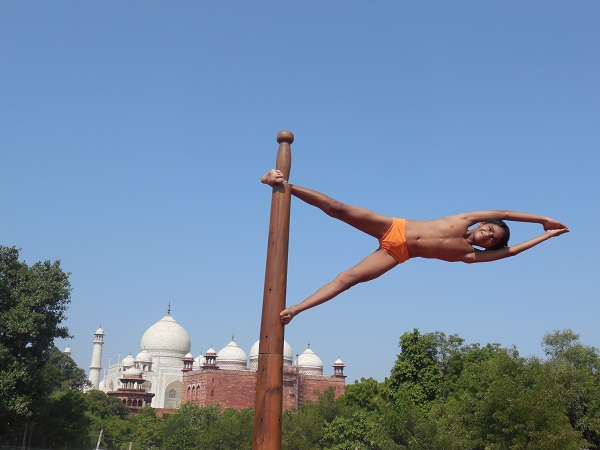
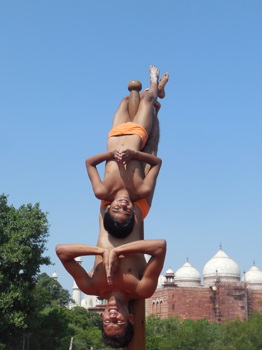
Two Mumbai boys recently gave an enthralling mallkhamb demonstration in Agra, with the stunning Taj Mahal serving as the backdrop.
by The Editors | editor@themetrognome.in

It is a sport that traces its origins to ancient Maratha history, but today, there are very few active practitioners for it. Mallkhamb is not just difficult to practice, it takes an optimum level of fitness to practice it. But it is also the father of all workouts – just practicing mallkhamb can give a full body workout like nothing else can, since it combines a variety of exercises.

In Mumbai, Uday Deshpande’s Shree Samarth Vyayam Mandir at Shivaji Park, Dadar, is doing much to not just keep mallkhamb alive, but also to gain acceptance among the younger generations. Every year, students of the academy participate in mallkhamb competitions around the country and the world, and come out tops.

The academy has now added another feather in its cap – two of its star performers put up a mallkhamb demonstration in Agra, with the Taj Mahal as a backdrop. Said Deshpande, “Shantanu Lohar and Manik Paul performed exceptionally well. Shantanu is a three-time National mallkhamb champion, and Manik is an aerial acrobat.” The boys performed their act as part of Jashn-e-Taj, a programme organised by the Rotary Club of Agra, Tourism Guild of Agra and Agra Vikas Manch.

The programme was choreographed by noted choreographer Sudarshan Chakravorty of Kolkata. The programme theme was ‘Atithi Devo Bhava’.

(Pictures courtesy Shree Samarth Vyayam Mandir)

Exit mobile version