Categories
Eat

5 must-visit chai places in Mumbai

The rains have arrived in Mumbai, and it’s time to have hot, piping chai. We give you 5 excellent options.
by Ravi Shet

Today, you probably woke up to sheets of rain and gloomy grey skies – the perfect setting for a hot cup of chai! There’s nothing more soothing to the palate than a lovingly made cup of tea flavoured with ginger and elaichi or just lightly brewed.

If you’re looking for a good chai place this season, let us help you out – in no particular order, we bring you a mix of five old and new places serving authentic Indian and international teas.

  1. Cafe Colony Stores and Restaurant, Dadar East
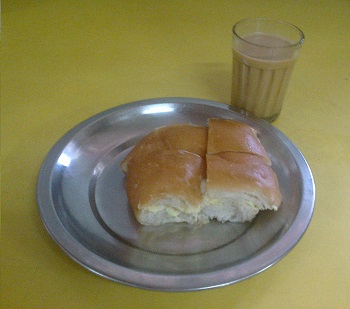
Irani Chai n Bun Maska, Cafe ColonyWooden furniture, glass jars filled with mawa cakes, khari and loaves of fresh brun pao…this Irani cafe is located near the corner of Hindu Colony and close to Tilak Bridge. Agha Nazariyan, owner of the place had bought this cafe in the 1960s; however the cafe has been in existence from 1933. Agha is very well supported by his children, the trio of brother and sisters – elder sister Bibi Sadhat, followed by Mirza and younger sister Bibi Fotehmeh. Mirza says, “We are open all days from 6 am to 10.30 pm to serve authentic and quality Irani food. My sisters man the counter and running the show makes me proud.”

Bibi Fotehmeh says that the milk comes from Parsi Diary Farm and Amul butter is used for bun maska. “Our food is not so expensive, which helps us cater to all sections of people,” she adds. Their Bun Maska (Rs 20) generously loaded with butter and dipped in Irani Tea (Rs 15) is an awesome combination. Also try their Kheema Pao (Rs 70).

  1. Madina Hotel, Mahim West

Founded in 1975, this eatery with yellow benches and tables opens at 5.30 am and downs its shutters by 11:30 pm. It is located opposite Paradise Cinema. Their Appam (Rs 8) clubbed with well spiced and flavoured Vegetable Stew (Rs 25) is great, along with Special Tea (Rs 20) made from tea powder, sugar and milk without any added water. You will not leave the place without having two of their Special Teas. Krishnan, who has been running the eatery for the past 33 years, says, “Regular customers or new ones, everyone loves our Special Tea. Plus, I am serving good quality food at a reasonable price.”

  1. Tapri Tea Lounge, Sion

This place situated at TV Chidambaram Marg is a short walk from Sion Railway station. Co-founded by Priyanka Bhutra-Milak and Mayur Milak in September Truck Driver's Chai_Tapri Tea Lounge2013, this place has been serving different varieties of tea to its customers from 10 am to 11 pm on all days. Mayur says, “Despite being known as a tea nation, we hardly find dedicated tea cafes in the city. Hence we came up with this place to serve tea lovers a wide range of authentic tea.” He adds that all their preparations are made from mineral water and Tetra Pak milk to enhance quality. I loved their Kulhad Masala Chai (Rs 64), served in authentic kulhads, as also their Truck Driver’s Chai (Rs 64), a strong ginger-clove tea. Also try their Kashmiri Kahwa (Rs 85) are really worth trying, as also their air fried French fries (Rs 76). The place has a good collection of imported teas such as Ceylon Tea and Blooming Tea. In addition to this, they have a free Wi-Fi service along with Archie’s comics, Uno cards and other indoor games at each table which help you dawdle at your table while sipping your chai.

  1. Tea & Tea, Juhu

This little place in Juhu near the ISKCON Temple is the brainchild of the husband-wife duo –Gaurang Vora and Viya Vora. Viya says, “We both were in the Masala Tea, Tea & Teahospitality industry and saw that over the years, only dedicated coffee outlets were mushrooming. There were very few tea cafes, so we started Tea & Tea in May 2014.” The place is open on all days from 10.30 am to 10 pm. “People in this city should have access to Indian and international teas, and they must also know the benefits of consuming tea,” Viya adds.

Do try their hot selling items Mom’s Special Tea (Rs 70) which has home-made tea masala prepared by Gaurang’s mother, and Cleopatra’s Champagne – Cammomile (Rs 150), sourced from Egypt, which relaxes you with every sip. If you are health conscious, try their Detox Tea (Rs 110) which comprises green tea, ginger, lemon grass and burdock. If you prefer your tea cold, try their Passion Fruit Iced Tea (Rs 120). Parle-G biscuits are served with Indian teas while butter cookies are served with other teas. Play Uno or read books available here in between sips.

  1. Tea Villa, Vile Parle East

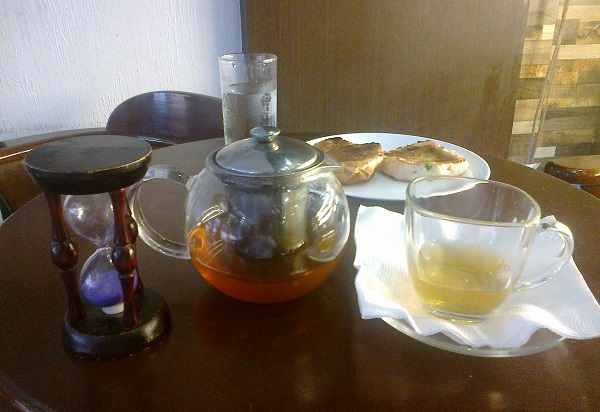
Micky Panjwani and Roopanshi Bhatt, both event management professionals, founded this place in August 2014. It opens at 10 am every day and is a short walk from Vile Parle railway station. Micky says, “When we used to work, we never found good tea places where you could relax while you have your chai. So we started this place, where you could come with family and friends.” Roopanshi adds, “We started out serving Indian teas as well as premium ones such as Berry Blush Tea, Moon White Tea and side dishes; however customers demanded milkshakes, pastas, waffles and so on.” Their Mint Tea (Rs 120, in main picture above) and Kashmiri Saffron Kahwa (Rs 220) are really worth trying owing to their fresh ingredients. Also savour Bun Maska (Rs 70), Punjabi Samosa (Rs 75) and Peri Peri French Fries (Rs 120) if you’re hungry as well. They offer free Wi-Fi too.

(Pictures courtesy Ravi Shet)
Categories
Hum log

Talking translations

Writer and translator Mira Desai talks about venturing into translating regional writing quite by accident, and her important new work.
by Mamta D | @silverlightgal on Twitter

In May 2015, Harper Perennial  brought out a new book Hon’ble Minister Jagubhai originally written in Gujarati by Pravinsinh Chavda and translated into English by Mira Desai. While many Gujarati readers have read the varied works of Pravinsinh Chavda, this is the first time that English-speaking readers will read his novel. This has been made possible because of the diligent efforts of Mira Desai. Translation, especially of a regional Indian language, is a long and cumbersome process.

Mira has not just successfully translated but has also had her translations featured in national and international publications such as 91st Meridian, Indian Literature, Pratilipi, Muse India, Calque and The Brooklyn Rail. Besides working on translations, she has also written fiction and has contributed to a number of journals. She resides in Mumbai.

Here, we talk to Mira about translation, her new book, and more.

How does the translation process work? How do you usually begin?

After I’ve selected the text – which is a process in itself—I begin with a paper and pen draft.  There is something liberating about writing on paper, it lets you explore alternatives and mark sections in a way that a cursor on a screen cannot. The next stage is the typed version, where I edit and move words around as I type. I then send the prints to the author or poet for their comments. I’ve found poets quite liberal in the freedom they grant you. Story authors tend to be particular and it is not uncommon for them to change words around, or even change line by line! So this is a test of patience at times.

For how long have you been doing translations?

I don’t have a formal Arts education—my degrees are in pharmacy and marketing. I began translating quite by accident. In 2003, a fracture forced me to rest for a month. Those were the days of boring dial-up Internet. So on a whim I began translating. Dipak Doshi, the editor of the literary magazine Navneet Samarpan, was generous with the author’s address—and that’s how it started.

I believed, quite erroneously, that if I had a collection of short stories I would be able to interest a good publisher. 12 stories and many standard rejection slips later, I gave up. For a year or so I fumed, not knowing what to do. Then a chance search on Google led me to Indian Literature, the journal of Sahitya Academy—they were prompt to accept. I decided I would address magazines, not book publishers. Calque was the first online journal to accept these stories, and Brandon Holmquest, the editor, was patient with his suggestions. Pratilipi, MuseIndia followed, and in due course the crème – 91st Meridian, Words without Borders, Massachusetts Review and others.

So far I’ve translated short stories, a book of verse and now, this novel.

What made you choose Pravinsinh Chavda’s novel, Hon’ble Minister Jagubhai?

I’ve worked extensively on his short stories—I like his concise style. Yet he is comfortable using fantasy to take a leap into the unknown—all his stories have this off-the-page element. After working on his stories, translating his novel was the logical next step.

What’s the most difficult and the most exhilirating aspect of working on a translation?

The most exciting part is getting close to the original and having experts say it reads like it is written in English. The most difficult part is capturing the nuances of culture and manner- things that would be assumed as ‘known’ by someone reading the work in the original language. At times, editors want introductory essays, and that gets daunting if one hasn’t written any essays after high school!

Your bio says you have also written your own works, besides translations. Are they in English or Gujarati?

My own writing, all in English, grows out of weekly practice exercises at the Internet Writing Workshop—IWW. My stories and creative non fiction essays have been published in print and online. I keep my journal in Gujarati, though.

Mira’s book Hon’ble Minister Jagubhai is available on Amazon in print.

Categories
Tech

Review: Dazen 1

The Chinese phone has a satisfactory performance but it will face stiff competition from the other phones in its category.
by Manik Kakra | @Manik_K on Twitter

Coolpad is one of the latest entrants into the Indian smartphone market. The Chinese firm came out with a couple of phones a few weeks ago – Dazen X7 and Dazen 1. Today, we check what the Dazen 1 have to take on the already competitive budget smartphone category with the likes of the RedMi 2, YuPhoria, and Lenovo A6000 Plus.

The looks. We have the phone’s white colour, it also comes in complete black. The front looks pretty similar to any touch slab phone you pick today with the sensors and ear-speaker grill above the screen, and three capacitive touch keys — Option/ Menu, circular Home and Back — below it. The Volume rocker is placed on the left, and the Power/ lock key is on the right side at the same height as the volume rocker. On the top, there is just the 3.5mm headset jack, and the bottom gets the microUSB port and primary mic. The back has the Coolpad and Dazen logos, apart from the camera and, secondary mic and loudspeaker.

The device’s matte, smooth finish from the back to sides gives you a comfortable grip. You can remove the back cover to reveal the removable 2,500 mAh battery unit, two SIM card slots (both micro SIM cards), and microSD card slot.

Display. The phone sports a 5-inch HD LCD, which has become a standard display for phones in this price range. It is good to see more and more users aware about a phone’s screen aulity, including resolution, and not just blindly going by its sheer size. The Dazen 1’s (1280 x 720) IPS LCD comes as one of the best in the price segment. It can handle 720p videos well and colours and sharpness are not lost when viewing high quality images. While it struggles a bit when used under direct sunlight, overall impressions, including text, are good.

Camera. The phone is equipped with an 8 MP rear camera. Here are a few sample images.

The camera on this phone can take detailed shots and is capable of sharp pictures in daylight.It tends to over-expose at times, but daylight performance and general experience is good. Its low-light photos are subpar – noisy and not worth looking at.

The camera app also includes a Pro mode, which gives you more control over your picture settings like ISO, exposure and White Balance.

Sound quality. There are no earphones inside the box. The audio quality from the loudspeaker on the back seemed just okay to me. You will have to regularly cup your hand on the phone’s back in order to get slightly better audio for videos or games. It is one of the low points of the phone’s hardware.

Battery. On the other hand, battery life of the device scored better. The company claims its software enhancements stretch the device’s battery life 50 per cent. While I didn’t really find it to stretch this long, the phone quite often lasted me over 20 hours with normal to heavy usage. Its idle standby time for overnight saw battery going down by about 5 per cent, which was good to see. As soon you start watching videos or playing games, the battery takes a beating, but I didn’t see less of a drain than usual.

Basics like network connectivity, call quality and WiFi, Bluetooth were never a problem while using the phone.

Software and performance. The phone runs on the dated Android 4.4.4 OS with Coolpad’s CoolUI. Under the hood, there is a Snapdragon 410 SoC (1.2 GHz quad-core processor, Adreno 306 GPU) as well as 2 GB of RAM. You get about 3 GB of storage space, so you should insert a microSD card as soon as you start using one of these.

With scrolling, closing and opening between a couple of apps or documents, the phone fared well. Having said that, don’t expect it to handle tasks like watching an HD video on YouTube video and going into Chrome with multiple tabs, smoothly. I was quite satisfied with its scrolling in Settings, Chrome with a couple of tabs, but found it stuttering every now and then when trying a couple of heavy apps back and forth.

Talking about CoolUI, it follows a bit of colour shades between MiUI and iOS. All your apps and shortcuts appear on Homescreens. The notification bar and toggle buttons have a translucent background, showing you shades of what’s running in the background. Long-pressing the Options’ Menu key brings up toggle buttons (haven’t sent them here before) and your list of recent apps in that can be scrolled horizontally or cleared all at once along with clearing memory.

The OS’s biggest letdown on the looks was how it changed native apps’ icons like Play Store, Twitter into its own weirdly-shaped icon. For instance, the Play Store icon is still the old one and seems odd to look at, at least to me. The lockscreen gives you direct shortcuts to dialler, camera and messaging. With a shortcut named Rock Wallpaper, you can change your Homescreen wallpaper with a single tap. Themes are supported, but there are not many available in the store right now. There’s also a Private mode in which apps and content that you don’t want anybody else can access, say Gallery or WhatsApp, would be hidden, which might come in handy when giving your phone to somebody else.  CoolUI is decent otherwise, but it’s high-time they upgrade the phone to Android Lollipop.

All in all, if the phone gets updated to Lollipop soon, I wouldn’t mind recommending it to somebody looking for a budget smartphone provided the company is working hard on its after-sale service centre and support.With a good screen, satisfactory battery life, software that can get better at performance and certainly requires some update work, the Dazen1 has an uphill battle in this price range where the likes of Motorola, Yu (Micromax), Karbonn, and Lenovo are getting a lot of attention from consumers today.

(Pictures courtesy Manik Kakra)

Categories
Swaad 'Anu'saar

Finish your Maggi packs in style

We give you three quick, yummy ways in which you can dispose off your leftover Maggi noodles packets. Tuck in!
by Anurita Gupta

The whole point of cooking Maggi noodles is that they are so easy to make – and hence, they’ve made cooks out of most of us! But alas! Our lovely 2 minutes of joy have come to a halt.

There’s no comfort food more delightful than our bowl of instant Maggi noodles. Whoever is a regular Maggi noodles eater in this country buys more than one pack at a time. But with this commotion over lead poisoning and high levels of MSG in each pack, we are left wondering what to do with the extra packs we’ve purchased.

Let me present three ways to finish off your Maggi noodles packs in style. May be with these, you will feel a little less guilty enjoying them!

Maggi ki bhajiya

Maggi noodles bhajiyaThe rains are arriving in the city, and what better way to welcome them than with crisp Maggi bhajiyas? At our home, this used to be the recipe to follow for some leftover, mushed down Maggi sitting in the fridge.

Simply make the bhajiya batter with besan (chickpea flour), water, season with salt, pepper, ajwain, heeng and of course, some nicely chopped onion, green chilly, and coriander. To this batter, add the cooked Maggi and fry in hot oil. You would be surprised to see how much more delicious Maggi bhajiyas taste in comparison to the usual onion and potato ones.

Maggi masala omelette

This is my original recipe that came into being with just an egg remaining in the fridge and half a packet of Maggi in the kitchen on a hungry afternoon. Masala omelette with Maggi? Ho sakta hai!

Simply whisk the egg and add the Maggi tastemaker to taste. Try not to put all of it in at one go. In a wok, heat up some oil and fry the uncooked Maggi noodles to a crisp. Once done, in a pan make a bed of this crispy Maggi and pour the egg on top. Leave it on medium heat so that the base doesn’t burn while the egg cooks. Once the egg is done, take it off the heat and enjoy this crispy crackly omelette!

Maggi ka Chinese pulav

Instead of fried rice, enjoy Chinese Maggi instead. For this dish, fry up some chillies, chopped onion and capsicum along with some finely cut boiled potatoes, Noodles pulavgreen peas and French beans. To this, add some soya sauce and vinegar. Now boil Maggi as per instructions and add to the mixture. Lastly add the tastemaker as per taste. Mix everything very lightly so as to not make a mush out of the noodles. Serve in a bowl and enjoy with chopsticks.

While the above are some interesting twists to Maggi, one cannot deny that we all have some wonderful memories attached to this bowl full of happiness. My most cherished memory is from one of our trips to the hills. My cousins and I were on our way to Manali from Delhi and on the way it started raining. The rain brought with it sudden hunger pangs, and we started looking for a place to eat on the road. Finally, we found a small shack with a Himachali lady making Maggi in a dented aluminium pan. I found out that day that Maggi noodles with elaichi chai is a brilliant combination. The combined aromas wafting around us instantly put us all in a super happy mood and ensured that every speck of the noodle was cleaned off the plate.

While we bid adieu to that wonderful taste, let’s hope the memories it has created over the years would make up for it! So long, Maggi!

Anurita Gupta is a media professional who is passionate about two things – food and radio. Her love for all things food makes her a foodie with a cause.

(Pictures courtesy greatermalaysia.com, khanakhazana-1.blogspot.com, foodfactory.amit4u.com. Images are used for representational purposes only)

Categories
Deal with it

Hurrah for separate Investigation Units in police stations

Praja Foundation reviews the implications of the new order which stipulates that all police stations will have one Investiation Unit.
by Praja Foundation, Mumbai

Congratulations to Mr Sanjeev Dayal, Maharashtra’s Director General of Police for the long awaited announcement to separate Investigation Units (IUs) from law and order police. The Standing Order No. 24 of 2015, which follows the Supreme Court directive, means that IU officers and constables will not be assigned to duties under any other category of investigation and will be exempt from extraction for law and order duties as well.

The order stipulates that all the police stations and district police will have at least one IU; numbers will increase depending on the average number of serious cases registered over three years. According to Dayal’s order, which will come into effect on July 1, 2015, each IU will investigate a maximum 15 cases a year. According to the Director General’s order officers in charge of the investigation wing will supervise the investigating as well as pairavi units, who follow up on the cases being tried in court. The order also mentions that that women police officers and constables will aid IUs. There is a stipulation that Mumbai needs 691 personnel for investigation, pairavi and women units; and these will be chosen from already existing personnel in the police force. There are also provisions for a fixed tenure for IUs with fully equipped legal, forensic, scientific and technological resources.

Praja has been consistently taking up the issue of separation of investigation and law and order personnel in its White Papers on the issue Law and Order and Policing in Mumbai. According to Nitai Mehta, Managing Trustee, Praja Foundation, “One of the urgent steps to address the issue of lack of IUs has been laid out by the Supreme Court directives on Police Reform in the Prakash Singh case of 2006, i.e. the separation of investigation from law and order. According to experts, this does not even require a legislative intervention. Even the office of the Police Commissioner or the Home Minister of the State has the power to introduce this much-needed change in the policing policy of the city, and perhaps the state as well.”

The gap between sanctioned and available IOs (Investigating Officers) needs to be bridged; a total of 4,301 IOs are sanctioned, but only 2,904 are working, a gap of 32 per cent! Although this gap has reduced from 50 per cent in 2013; total of 1,397 officers are still needed to bridge the gap completely. Due to this gap, investigations have not been conducted in an organised manner. Mhaske contends, “A study of acquitted cases shows that the chief reason for acquittal has been ‘lack of evidence’. This, in turn, showcases the performance of the IO, the public prosecutor and the lack of coordination between the two.”

Praja’s crime White Papers also present some startling data regarding conviction rates in criminal cases. Milind Mhaske, Project Director, Praja Foundation says, “Conviction rates in Class II serious offences (cases involving bodily harm, murder, rape, grievous hurt, kidnapping, abduction etc.) has been an abysmal 8 per cent in 2013 – 92 per cent of those charge-sheeted have got away scot-free! Overall, the conviction rate remains at a low 22 per cent”. To maintain law and order in the city, it is imperative that these figures rise.

Low conviction rates lead to thriving crime and, consequently, an unsafe city. These figures highlight the lack of IOs in the city. Mehta says, “Understaffing and multiplicity of tasks in the Mumbai Police Force is compromising investigation and there by leading to low conviction rates. A fully manned force will mean that the officers handling criminal cases will focus solely on these investigations, rather than being called on to man roadblocks and performing bandobast duties. Consequently, cases that make their way to the courts will be watertight and there will be an assurance that the guilty will be convicted”.

(Picture courtesy www.mahapolice.gov.in. Image is used for representational purpose only)

Categories
Wellness

Your nostrils can help prevent migraines, exhaustion

Did you know that breathing through a particular nostril can cure a headache and relieve exhaustion? Read on for more.
by The Editors | editor@themetrognome.in

If you’re struck by a migraine in the middle of your working day, don’t pop a painkiller. What your doctor has probably never told you is that painkillers don’t help migraines – just a 5-minute breathing exercise will help.

Hold your thumb firmly against your right nostril and breathe slowly through your left nostril for five minutes. Keep the rest of your fingers straight but relaxed. Focus on your breathing, counting as you inhale and exhale. In a couple of minutes, the intensity of the headache reduces. Five minutes later, it is completely gone!

Another good technique to try on the days you’re feeling really exhausted is to hold your left nostril with your thumb and breathe slowly and deeply through the other. Five minutes later, you will feel more energetic and your tired limbs will feel better, too.

How are the nostrils connected to pain relief?

Yoga believes that our breathing is connected to our emotional and physical health. Ancient Chinese and Indian healing systems are firm believers in the power of deep breathing to heal many internal disturbances. Yoga stresses that breathing and the body’s ‘vital force’ are in tandem with each other. Thus, the deeper you breathe, the deeper is the flow of your body’s vital force. This helps in self-healing.

Also, the emphasis on deep breathing is accompanied by breathing through one of the two nostrils for specific healing. It is said that air coming in from the left nostril promotes a ‘cooling’ of the body’s nerve centres, thus lessening pain. On the other hand, air coming in through the right nostril causes warming up of the body, which relieves exhaustion and energises one to perform tasks better.

So don’t grab your medication for a headache – just breathe right!

(Picture courtesy www.lexiyoga.com. Image is used for representational purpose only)

Exit mobile version