Categories
Beauty

Simple remedies to remove under-eye wrinkles

Do you suffer from tired, puffy eyes? Grappling with wrinkles under your eyes? Read on for some simple fixes from the kitchen.
by Rohit Soni

Wrinkles are a big problem. Many people think that wrinkles occur only at an old age, but wrinkles start appearing around the eyes even when one is young.

Wrinkles under the eye look terrible and also affect one’s confidence. Squinting, over exposure to sunlight and smoking are some of the most common causes for the problem. However, it is easy to combat these wrinkles with quick fixes from the kitchen. If you suffer from wrinkles in the eye area, you need to use these tips:

Cucumber
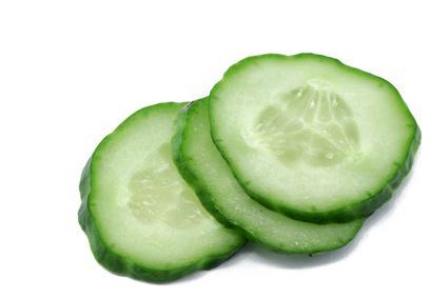
Cucumber slicesCucumber is very beneficial for your skin and the hydrating and repairing properties of cucumber effectively treat the problem of eye wrinkles. Grate a fresh cucumber and apply it over and around your eyes for about 10 to 15 minutes, followed by rinsing off with cold water.

Tea bags

Almost everyone has tea bags at home. This little bag is a potent weapon in the prevention and treatment of wrinkles. Soak a tea bag in water and apply it over your eyes for some time. This simple trick tightens the skin around the eyes and prevents further wrinkling. Use a green tea bag for added benefit.

Honey

The sweetest way to get rid of eye wrinkles is to use honey. Honey is beneficial and improves the overall health of your skin. Mix some rice powder and honey to make a paste. Apply this mixture over the eyes for about 5 to 10 minutes, then rinse off with plain water. Repeat 3 to 4 times a week for best results.

Strawberries and yogurt

Mash strawberries in yogurt. The nutrients in strawberries tighten the skin and yogurt helps remove dead skin cells. Let it sit on the skin for half an hour, then Strawberries and yogurtclean it off with rose water. Apply daily.

Potato juice

Potato juice helps in reducing the stress and puffiness in the skin around the eyes. All you have to do is apply potato juice over and around the eyes and let it dry. Wash off with cold water.

Ice cubes

Too lazy to try the above tips? Grab some ice cubes and rub directly around your eyes for about 5 minutes. This simple tip is very effective in reducing the appearance of eye wrinkles. Do this at least twice a day.

(Pictures courtesy blog.luminessair.comhealthyeating.sfgate.comeatdrinkbetter.com. Images used for representational purpose only)

 

Categories
Hum log

One book and the taste of India

Soon after the Delhi launch of his travelogue ‘India on a Platter’,  chef Saransh Goila talks about travel and Indian food.
by Ritika Bhandari Parekh

He trends on Instagram as the #SadakChef and has a special place in his heart for Butter Chicken. Meet Saransh Goila, the youngest celebrity chef to come out with a unique travel book interspersed with recipes. Titled India on a Platter, the book amalgamates the assorted experiences from his signature show Roti, Rasta aur India.

Prologue to the book

India on a PlatterThe 100-day travelogue saw him travelling 20,000 kilometres across 25 States in India to taste the delicacies of every nook and corner. “The show changed my life. It was not at all easy, but we completed it. Hard work is one thing, but there was also the pressure of being answerable to a channel making it,” he remembers.

It was aired in 2012-2013, after which Goila started grooming himself as a food personality. He says, “After winning the FoodFood Maha Challenge, I was lucky enough to get the show. And I took this opportunity to develop content for print, visual and digital media and made it my forte.

“The book is a by-product of Roti, Rasta aur India. When we were travelling, we would shoot 50 minutes of content every day. But what I experienced was much more. So after it was aired, I realised that the smaller details missed out in the television format. I wished to bring out the unexplored treasure that is India,” he says. In 2013, the Delhi boy struck a deal with publisher Om Books.

Memorable feasts

“In India, everyone is very emotional about food. One such brilliant and remarkable experience was on the eighth day of my trip. It was a meal in Kullu, where we trekked 4 kilometres uphill. There we were invited for a meal in a traditional Kullu house built on a stone.

“Their kitchen was a frugal one made of clay and mud. The women of the family were kind enough to make food for all 20 members of my crew. They made a meal that I shall never forget. It was a simple dish of red rice, a pickle out of a local fern, ghee which was organically made. Then there was kodra ki roti, which was made from local flour. Half a roti provides energy to sustain an entire day. They also had bhallas, but those were very different. They were like steamed momos, but were stuffed with dal inside,” he says.

“This experience made me aware that I have a great opportunity to touch the lives of so many people and enrich myself,” he adds.

His beginnings

Having started cooking at the young age of 12, Saransh particularly recalls how aloo paratha was the first dish he ever cooked. “It started with a mehndi night, Saransh on travelwhere my chacha and I volunteered to cook some parathas. Everyone laughed, but after eating my parathas – they loved them and I became popular. So then my family and friends would set aside dough and boiled aloos and always encourage me to add masalas and make parathas. The image of my grandfather trying his hand in the kitchen fascinated me,” he says. “Sanjeev Kapoor’s Khana Khazana show was my inspiration to become a TV chef.”

A theatre student, Saransh always hoped to be an actor. While his mother hoped he would do Biotech Engineering, he ended up getting a Bachelor’s degree in the Culinary Arts. In Mumbai, he had a stint with famed adman and foodie Prahlad Kakkar, and took acting lessons at Barry John’s Acting Studio – as he believed that his destiny was on the screen.

And screen it was, but with the twist of food. He says, “The best part about my job is that I get to live both my passions of acting and cooking. I am a creative person who enjoys whipping up new recipes. I can write, present myself and talk well, so being on screen gives me a sense of satisfaction.”

A taste of the future

His latest venture is making ‘his’ style of Butter Chicken readily available to the consumers. He signs off with, “I wish everybody revisits India via road. I want them to travel and soak in the atmosphere and not just skim through the touristy places. The view changes every 200 kilometres. Be it culture, language, weather, dressing styles, accents…it is a highly diverse range.”

(Pictures courtesy en.wikipedia.orgtwitter.comwww.indiantelevision.com. Images are file pictures)

Categories
Kharcha paani

How to start a home-based bags business

Try these simple steps to operate a steady and flourishing bags and purses business from the comfort of your home.
by The Editors | editor@themetrognome.in

Many people are fond of bags, and some are extremely fond of making bags for sale. Changing patterns, the introduction of many new blends of fabrics, offbeat styles all combine to make this a very exciting industry indeed.

Here’s how you can get started on your own ‘bags to riches’ journey:

Research your market. With so many established brands already leading the market in sales and design, you don’t want to end up as just one of many others in the business. You will have to do something different to stand out. For this, you will have to take the time to thoroughly research the market that you wish to target, what are the new innovations and what customers look for in a bag or a purse. This research will help you zero in on your line’s USP.

Do not rush this process, and gather as much information as possible. If needed, speak to a person already in the business to gather more inputs.

Select the right name for your products. The name of the product is everything. It must be quirky, memorable and reflective of your personality. After all, you are going to put a lot of yourself in the product’s design and make, so it should define you. Take sufficient time to think about the name of your proposed line of bags. If it is going to have an ethnic theme, you can experiment with a name from an Indian language that embodies your ethos.

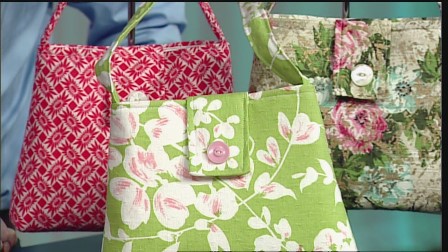
Bag componentsScout around for raw material and labour. You must find a vendor who will supply you with raw material for your venture. Make an arrangement to purchase in bulk at wholesale rates. If you are going to venture into the cloth bags category, tie up with a few local tailors who will sell leftover cloth at nominal rates. For a rexine or leather bag business, you must tie up with a tanning company and fix your rates. In the initial days, and if you are adept at patterns and stitching, you could put the bags together yourself. Ideally, you need to find a low-cost vendor who will do this job for you, and he or she should be located near your home so that you save on transport costs. Your job should be to prepare as many designs as possible, and run them past the person who will stitch the bags. Both of you should be on the same page as regards finish, patterns, and design.

Experiment with design. This is a crucial step, because customers are first attracted by a bag’s design before they start looking at details of stitch and functionality. Try for a completely different, never-seen-before design in the niche you are catering to, while keeping the basics intact. For instance, you might design a radical new line of clutches, but you will still have to provide enough space for a wallet, mobile phone and car keys. Also, if you are designing a range of formal office bags and totes, you cannot have very garish colours and childish designs on the product.

Be meticulous about details. Customers are quick to complain if the zips on your bags break quickly, or if the stitches start coming apart after, or if the Making bags at home for a livingclasps don’t work. The big danger is that negative reviews get around very quickly, and you might lose both current and future customers. Instead, test each prototype yourself. If you don’t like the straps of a certain bag, junk them. If you feel the space you created for coins inside a purse is inadequate, create a whole new compartment for loose change. If a clutch tends to change shape after a while, reinforce its base.

Don’t introduce any new product to the market which has not passed your scrutiny.

Price fairly but lower than the competition. Pricing is crucial and mostly instinctive. The basic way to price is to take into account the cost of material, labour, transport and shipping that you bear for each bag, plus your profit margin. While all other factors cannot be changed, you can take a cut on your margin when you launch, so that your products are priced cheaper than your competition’s. The starting days should be about creating a solid customer base, not making profits. Start a points-based customer loyalty programme or have attractive discounts on bulk purchases. When you get more customers, you can increase the prices once a year and even think of shipping out of the city or country.

(Pictures courtesy www.youtube.comfree-stock-illustration.comwww.seasonedhomemaker.com.)

Categories
Learn

New lens takes the sting out of cataract surgery

Pharma company Abbott has developed a new lens that corrects presbyopia and inferior quality vision problems after cataract removal surgery.
by The Editors | editor@themetrognome.in

The term ‘cataract surgery’ often conjures up scary images of elders and grandparents wearing spectacles, straining to read small text and having trouble with bright lights at night. Cataract surgery is one of the most common surgeries in India, with over 6.2 million procedures done in 2013-14.  The condition is also the leading cause of blindness, according to the National Programme for Control of Blindness (NPCB).

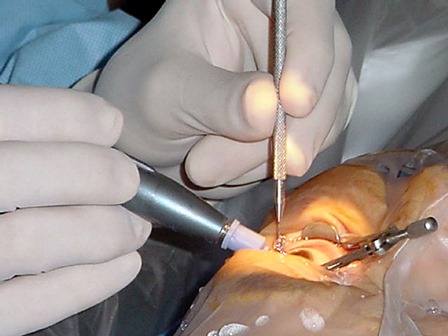
Cataracts require replacing the clouded natural lens in the eye with an intraocular lens (IOL). Intraocular lenses (IOLs) today may correct presbyopia (poor ability to focus on near objects), or offer quality vision only at distinct distances, such as near and far, while vision between these distances may be reduced. With almost a third of the world’s cataract procedures estimated to be occurring in India, and with elders having more active lifestyles, the demand for newer technologies that offer better functional vision and independence from spectacles is increasing.

Intraocular lensHowever, the problems associated with cataract surgery cannot be ignored: patients often complain of experiencing a ‘halo’ around light sources, or a glare in bright lights. This does not allow them to see as clearly as they should. .

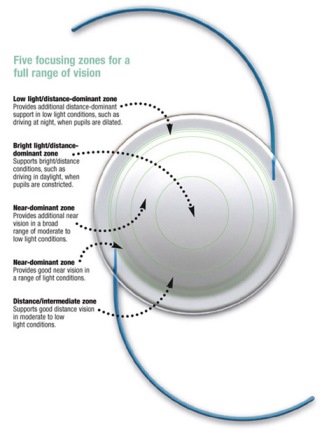
Help is now at hand to combat these issues. Yesterday, the pharma company Abbott announced the launch of its revolutionary technology, the TECNIS Symfony® Extended Range of Vision IOL in India, enabling doctors to offer people with cataracts a continuous range of high-quality functional vision for far, intermediate, and near distances, with a reduced incidence of halo and glare, comparable to a standard monofocal lens.

The TECNIS Symfony® IOL is a first-of-its-kind presbyopia-correcting lens designed to reduce the need for spectacles and provide a significant advancement over traditional IOL technologies. The lens is designed to increase the distance over which an object appears in focus across a continuous range of distances, without sacrificing a person’s visual clarity or contrast.

“As people age, the inability to focus and see clearly is a major challenge. Constantly handling glasses can be cumbersome. This new technology offers vision correction for life. Post cataract surgery, patients have reported getting back vision which mimics the vision they had in their youth,” said Dr Ramamurthy, Chairman, The Eye Foundation, Coimbatore.

Studies in Europe and New Zealand have demonstrated significant improvement in visual acuity with this lens, where a majority of people reported being able to perform daily activities without spectacles, at far, intermediate and near distances.

“The people who come to us for cataract surgery are mostly in their 50s and 60s. They still have an active lifestyle, drive regularly, use computers every day and rely on mobile devices. For them, this technology provides better clarity at near, intermediate and far distances, without having to wear spectacles.” said Dr Sri Ganesh, Chairman and MD, Nethradhama Super Speciality Hospital, Bangalore.

(Pictures courtesy Abbott, en.wikipedia.org)

Categories
Wellness

5 natural medicines for dengue

Mumbai is currently grappling with dengue. Here are 5 natural ways to lessen the impact of fever and body pain.
by The Editors | editor@themetrognome.in

Dengue is currently claiming many victims in Mumbai. While the causes and effects of dengue are well known, what is not known to a lot of people is that the fever and body pain associated with dengue can be minimised with natural remedies.

Look for answers in your kitchen. Certain herbs and fruits can lessen the impacts of dengue. They may bring down fever, increase immunity and even step up platelet production in the blood. Here are 5 natural remedies in case you or a loved one are suffering from dengue:

Papaya for dengue1. Papaya for platelets. Research shows that papaya and its leaves have curative properties. The fruit is especially beneficial in the treatment of dengue. Raw papaya is said to be an excellent remedy for increasing the platelet count in the blood. It also enables the removal of toxins through urine, so that fever may reduce.

2.Purify with neem. Neem has the potential to purify the skin and system. It is potent in any form – when chewed in leaf form or added as an extract to oil. Neem has blood purifying properties, so it helps in bringing down fever, clearing out toxins that cause disease and even rashes on the skin. To use, add unscented neem oil to a damp cloth and place it on the forehead of the person suffering from dengue fever. Alternately, you can put neem leaves in hot water and inhale the steam. The patient can even take a wash of neem-soaked warm water every day.

3.Warm tulsi tea. Basil has unique cleansing properties that remove toxins, fever and infection from the body. Ayurvedic doctors recommend adding a sprig of tulsi leaves to warm water, letting them steep in the water for 3 minutes and then drinking the tea at least twice a day to fortify the body from within. You canOrange juice for dengue also boil tulsi leaves in water, strain the water and add a teaspoon of honey before drinking the tea.

4. Coriander for fever. Though unpleasant to taste, coriander leaves may be used to bring down dengue fever. Chop finely and blend to a juice, with half an inch of fresh ginger and some turmeric. Drink this juice twice a day to reduce the severity of fever.

5. Orange juice for immunity. Dengue strikes more severely when the patient’s immunity is compromised. Increase immunity with the intake of Vitamins A and C. Chew on raw carrot pieces, or have a glass of orange juice (with the pulp intact) to get your vitamin fix.

(Pictures courtesy www.wikihow.comwww.urdumania.netenglish.alarabiya.net. Images are file pictures used for representational purpose only)

 

Categories
grey space

Simplify your financial health in your senior years

A senior citizen explains how he cuts down the hassle in banking and investment to focus on his health and hobbies.
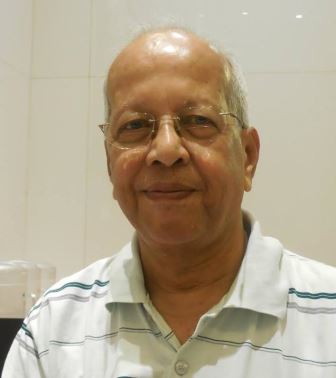
Gopalkrishna Bhatby Gopalkrishna Bhat

As one advances in age, there is more need to simplify one’s life. I am now nearing 80 years and my wife 74; we lead an independent life, since our children are well settled. Our policy has always been to allow them to lead their own lives.

Simple financial practices

The two main problems confronting senior citizens are management of finance and health. Earlier, I used to look out for instruments yielding the highest rates of interest. Watching movements of share prices was a daily routine. I also maintained meticulous records of dividends and interests received for each investment. The portfolio was spread over shares, mutual funds, bonds, PPF and fixed deposits with banks.

Now I have restricted my investments to minimum number of portfolios viz. bank FDs to ensure a regular cash flow for monthly expenses, shares and PPF. No chasing for the highest rates of interest and no following of share price movements. The existing share portfolio is maintained to ensure tax free income. Investments are all in blue chips for appreciation and there is minimum churning of the portfolio. No elaborate records maintained. Bank accounts are restricted to minimum number of banks. FDs are clubbed wherever possible to minimise visits to banks.

All payments for Gas, Electricity and telephones are made by ECS and debited to my bank account. Similarly, all dividends are credited to my bank account. Internet banking facility is availed of for each bank account, to enable monitoring of accounts and making certain payments via internet banking from home. For this, familiarity with computers is essential. It is not difficult at all.

Focussing on health

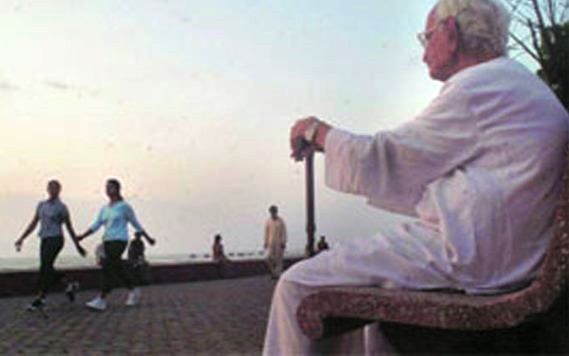
Health is a major problem for senior citizens. Health insurance is a must and should be taken when one is young since insurers do not view favourably granting cover to old people. Despite all precautions, here can be a host of complaints as one advances in age. Some are to be borne with equanimity e.g. failing eyesight, a sign of old age, though one has to take care in case of serious complaints. Diabetes is a life partner and needs control of diet with mediation. Tremors can be a hindrance, though it may not be a sign of Parkinson’s disease in every case. Annual health check-up is a must and at more frequent intervals, if required.

Keeping oneself occupied is most important; it may be in the form of reading, solving crosswords and word puzzles, Facebook etc., which may help in keeping Alzheimer’s at bay. Reading newspapers and keeping oneself up to date with current events is necessary but one should not be swayed by political events. Walks and discussions with friends can be stimulating.

One can thus hope to lead a stress- free life by simplifying daily chores.

Gopalkrishna Bhat has been an insurance professional who loves reading, scrabble and Hindustani classical music. He is fluent in several Indian languages and has been published in several print and online publications. He lives in Goregaon with his wife, Prabha.

‘Grey Space’ is a weekly column on senior citizen issues. If you have an anecdote or leagl information, or anything you feel is useful to senior citizens, caregives and the society at large, feel free to get it published in this space. Write to editor@themetrognome.in or on Facebook at www.facebook.com/Themetrognome.in and we will publish your account.

(Picture courtesy indianexpress.com. Image is used for representational purpose only)

Exit mobile version