Categories
Big story

Dear celebs, don’t endorse tobacco and alcohol

Maharashtra government to appeal to celebrities to stop endorsing products that promote addiction. Celebs can expect an open letter soon.
by Vrushali Lad | vrushali@themetrognome.in

The Maharashtra government is now going to appeal to celebrities – from film, television and sports – to not endorse products that promote addiction,  particularly among the youth.

Shivajirao Moghe, Minister for Social Justice and Deaddiction Activities, Maharashtra, said, “The youth are very attracted to film actors and sportspersons, particularly cricketers. Naturally, advertisers cash in on this popularity to sell the products that cause addiction among the youth. Celebrities should refrain from endorsing these products.” This appeal comes after a resolution to this effect was passed at the first of its kind, state-level deaddiction conference held in Pune last week.

The conference saw participation from a bevy of deaddiction experts, apart from state ministers. A total of eight resolutions, including this one, were passed during the conference.

Moghe, who also participated at the conference, said, “The resolution will now be placed before the state government.” He added, “I am going to write an open letter asking that celebrities do two things – one, that they should not endorse such products, and two, they should come out with ads that help in our deaddiction initiatives. They should actually do advertisements that tell the youth that drinking alcohol or chewing gutkha is bad for them.”

He contends that if youth icons take this essential step, it will go a long way in making the state addiction-free. “Celebrities exert tremendous attraction on the youth, so if they say a certain thing, young people do it blindly. The government wants influential persons like celebrities to make a positive difference to society, especially the youth.” Incidentally, stars like Sachin Tendulkar and Marathi actor Bharat Jadhav, Moghe said, have refused to endorse tobacco products in the past, while a daily newspaper had mentioned that actors Sanjay Dutt and Malaika Arora Khan had “vowed to stop endorsing” gutkha brands and tobacco products.

Early this year, the state government ran into controversy when, as part of its deaddiction initiatives, it proposed that the legal age for drinking should be 25 years in Maharashtra. Interestingly, this appeal could largely address gutkha advertisements, since alcohol is promoted through surrogate advertising. Additionally, Maharashtra banned gutkha consumption in June this year.

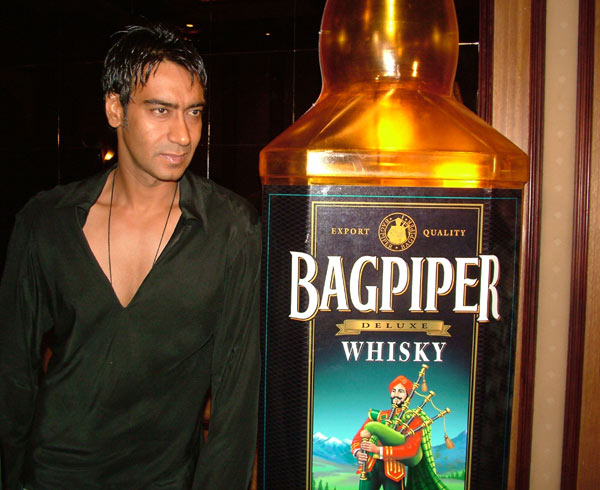
(picture used for representational purpose only)

Categories
Hum log

Two men for the great outdoors

Starting today, two Mumbaikars will travel across India to plant trees, speak to students and create awareness about environment conservation.
by The Editors | editor@themetrognome.in

Hari Chakyar is 26, and a Borivli resident who on September 28 took a sabbatical from his content writing responsibilities at Jack in the Box Worldwide to fulfil a long-held dream with Worli resident and friend Anthony Karbhari (24) – starting today, the duo is set to travel all over the country to plant trees, a project they’ve titled ‘Project 35 Trees’. The Metrognome chatted with Hari to find out more about the project and what it entails.

What is Project 35 Trees about?

Project 35 Trees is about planting trees in all 35 states and union territories of India. It is also about educating students about the need to plant trees and other environmental problems that the world faces.

What is the genesis of the idea?

This project is a succession of my previous initiatives. I am immensely influenced by Proffesor Sudhakar Solomonraj of Wilson College who would take his students from the Wilson College Nature Club for treks to nearby forests. In 2009, I did a campaign in Ambarnath (where I used to live then). In the campaign, along with friends there, I put up a street play called Nature Baba Ko Gussa Kyon Aata Hai? and planted trees all over Ambarnath.

How long have you been working on Project 35 Trees?

Project 35 Trees began in October last year. The idea took a lot of time to form. I started thinking about this some time in early 2011. I found a name and created the Facebook pagefor it in October 2011. This is a community project that belongs to everybody…where Anthony and I play initiators.

Take us through the preparations you’ve made before you start on the trip.

We are finding schools or colleges in each of these 35 places we are going to visit. We have already found hosts to stay with in almost all these places. We are and will be collecting funds for the trip. People can contribute via the Wishberry.in page. Currently, we are ticking things off our list of things to take for the trip.

What equipment are you carrying?

A projector, a laptop, cameras and so on, apart from a few digging implements. On our person, we’ll carry enough cash to last us in a particular state. The rest will be safe in our accounts. If you ask about our budget, we need Rs 5 lakhs.

What other preparations does one need for a trip of this kind?

Both of us have never travelled continuously for such a long time. The most we have done is travel for a month. Anthony (who is a freelance filmmaker) travels more frequently than me. For now, we are preparing ourselves mentally for this epic four-month trip. We also continually tell each other that we have to wash clothes for four months. Anthony is fitter than I am. I am also watching my diet for now and cycling regularly.

How did you decide on the places you plan to target?

We decided the route we wanted to take and then started finding hosts who are mostly friends, friends of friends or relatives of friends. We have hosts who are related to friends. We don’t know most of them personally. It helped if they also had a school nearby. A few people even offered to put us up after they read about us in a magazine. I have only travelled to Kerala, Ahmedabad, Daman and Hyderabad, apart from a whirlwind tour of the northeast. Seeing a lot of new places and meeting a lot of interesting people is also what we are thrilled about.

In the past, you have been known to cycle to work and be involved with unusual green initiatives. How did the awareness for these come about?

I cycle for fun. I rode the bicycle to work on World Environment Day because I thought that would be a nice way to promote Project 35 Trees.

Have you ever faced ridicule about the ideas you’ve had?

Never. People have always been supportive. Personally, and even from strangers on social media. We get a lot of free advice, though.

What has been your family’s reaction to Project 35 Trees?

They too have been very supportive of all my initiatives. Every parent must encourage their children to support environmental causes. Even though my parents are concerned that I’ll be away for four months, they haven’t stopped supporting me.

What is your expectation of the Project?

I would love it if even a few students I speak to decide to take up initiatives to know more and act for the conservation of the environment. We will be ready to help these schools set up a nature club in their schools or colleges, like for a class assignment. It’ll also be awesome if people could plant trees on their own.

For us, Project 35 Trees is also about understanding what environmental problems the country faces. Meeting people who are doing good work in conservation will also help.

Your opinion on general awareness (from society, NGOs, government, media) about green initiatives.

Awareness programmes must be included in the scholastic syllabus. Students must be encouraged to participate in awareness and conservation programmes. This will help them make informed, sensitive choices as adults.

A lot of simple human actions affect the environment adversely. When you purchase shells and conches from Kanyakumari, you don’t realise that those creatures are caught live in the waters and boiled in the hundreds to ‘clean’ and beautify them for your showcase. Some women want ivory jewellery made from the tusks of painfully-slaughtered elephants. Did you know that sharks will soon join the ranks of endangered creatures because some of us want shark fin soup for dinner?

It’s time to stop taking the world around for granted and finding out which of our actions are causing great distress elsewhere.

The project:

The duo will visit educational institutions across the country and plant trees with students to create awareness about

fighting global warming and climate change together. The session will last about 60 minutes, and will include a documentary film screening, a talk about the Project and a Q&A session. The session will ideally be followed by a tree-planting session, and is aimed at students of class 8 and above.

Categories
Read

‘Book distribution is tougher than film distribution’

Author Naomi Datta gets candid about the business side of book-writing, and the things authors and publishers don’t normally discuss.
by Vrushali Lad | vrushali@themetrognome.in

Naomi Datta is funny and fresh, constantly peppering her comments on writing and getting noticed for her first book, with a healthy dose of self-deprecating humour. We’re sitting at a suburban cafe and all I’ve told her about the interview is that I want to know about how she came to write her first book and the progress she’s making on her second. Her first, The 6 pm slot, was a no-holds barred look into television and dealing with its ecstasies and agonies, all in the back drop of a reality show featuring a hot host.

“I’m not making much progress on the second book,” she grins, only revealing that her next offering is a non-fiction work. “I don’t want it to be just another book. In India, we’re always labelling fiction – it’s either literary or commercial fiction. My first book immediately got slotted as a work of commercial fiction, and unfortunately, such books are not taken too seriously. Our idea of literary fiction is to write about really serious themes, such as NRIs and their existential crises, or a war situation in some obscure part of the world. Everything else is commercial fiction which is not to be taken seriously.”

She adds that it is very easy to be published today, in what she cheekily terms as the post-Chetan Bhagat era. “Before he wrote about call centres and IITs, it was a very big deal to be published. If you had a book coming out, people knew about your book and you, even if they hadn’t read it. But Chetan wrote about Indian issues, things we could understand and relate to. And then so many young Indian authors had books coming out after Chetan and Amish Tripathi’s books. My book would probably not have been published in the earlier, staid market. There was no way anyone would publish an Indian book that didn’t have angst, which did not have an international appeal, and which was about television. So I guess Chetan has made it very easy to get published today.”

But she admits that it is that much more difficult to stand out in the crowd of new authors today, especially because commercial fiction in India tends to take the ‘FMCG mould of writing,’ as she puts it. She says, “With writing that is not always of great quality, commercial fiction today is trying to be as ‘massy’ as possible, catering to the lowest common denominator. The use of satire and irony may not appeal to everyone. Which creates a problem for writers like me, who do well with satire.”

Despite The 6 pm Slot being reviewed and written about extensively, and with Naomi being interviewed by all and sundry, the book garnered only about 10,000 copies in sales, she says. “The marketing of the book was great – we had a launch at Crossword and it was all well done. Also, Random House took a lot of effort on the manuscript – about six months were spent in editing and proofing alone. But because of the cover, people thought it was chick lit. I have nothing against chick lit if it’s written well. But my book wasn’t about a girl trying to lose weight or a woman looking for the right man; it wasn’t about women’s issues.” She adds that several readers thought that the protagonist of the book (Tanya) was ‘not very proactive’. “But she wasn’t the protagonist at all. I guess people wanted her to be a ‘heroine’, but the book was about everyday people like you and me, and what we would do if put in the same situations.”

But a bigger issue than formulaic writing and readers’ usual expectations from plot and language, Naomi says, is the problem of book distribution and how it is being handled in the country.

“I think book distribution is more difficult than film distribution in India. When my book was launched, everyone spoke about it, but barely two weeks later, there were hardly any copies to pick up at any of the book stores. Other authors have also told me about this problem. May be one or two copies of your book would be tucked away in some remote corner of stores. If people can’t see it, why will they buy it?” She laughs as she recalls that she would send out Flipkart links for her book to friends and others wishing to buy it. “I even had a list which told me which stores had how many copies of my book at the moment: Two in one, five in the next, and so on!”

She cites Chetan Bhagat and Amish Tripathi again in the context of cracking the distribution puzzle. “Their publishers flood the market with their books, with the result that Chetan’s books are sold even in the country’s small towns. But not every body has that kind of reach, nor such phenomenal print runs, so a lot of debut authors are having to make the effort to market their own books themselves.”

Naomi adds that these days, with so many books flooding the market each month, authors may have to enlist the help of a good PR machinery and use social networking as much they can. “When I was writing my book, I had only about 90 followers on Twitter. Today I have over 4,000, and I wish I had harnessed Twitter to create a buzz about my book.” Naomi tweets daily and often updates her Facebook status messages. “But I think that social networking is also distracting authors today, because we are constantly tweeting and spending time on FB, when we should be investing time in writing our novels. So while it’s great for an author to be connected to many people, it can also affect your output as a writer.”

About The 6 pm Slot

Tania has a dream job as supervising producer at YTV, a leading entertainment channel. But things are not what they seem – YTV’s ratings and fortunes are dipping, and Tania is the one assigned to resurrect the 6 pm slot with a new talk show and a scantily clad host. But when a dying girl calls on the show, the fun and games come to a screeching halt and it gives Rajneesh Tiwari, the demi god of Indian news television, one of his most explosive ‘human interest’ stories of the year. Will life ever be the same for Tania or anyone involved in the doomed 6 pm slot?

The idea for the story came from Naomi’s real-life experience of putting together a show for a popular music channel. The programme was to feature a busty, seriously sexy female host, but two weeks before shooting began, the femme fatale developed chicken pox. “She had marks all over the famous cleavage that we wanted to flaunt, and the biggest issue was that she couldn’t wax her arms or legs. I was the only woman in a roomful of men to bring up the matter of the girl’s inability to wax. They said things like, ‘But what about Anne French?’ Someone else suggested shaving. When I thought about it later, it seemed really funny and bizarre. My friends suggested I should write it down as a story. When I took a break from television last year, this was the story I started to write,” Naomi remembers. The story was written in four months.


Categories
Watch

What’s the parrot got to do with it?

Irrelevant additions to Bigg Boss this year include a parrot and a goldfish. Want something more? There’s also a Panic Room.
By M | M@themetrognome.in

I would talk about the first episode of Bigg Boss Season 6, but this column is not a paid press plug. My point is simple – I want to talk about how absurd this show really is.

But first, rewind to Season 5, particularly, to one of the hosts.

In the last season, the Withering Action Heroes broke the stage down the middle when they shook a leg. They not only laughed at each other’s jokes, but also gave us a crash course on detecting the early signs of a Botox job gone wrong, with their perpetual frown lines and sunken eyes. And who can forget the disturbingly scarlet music video with a bunch of goris dancing in the background, and our bhai and baba working their fingers in time to the music? That was actually a choreographed dance move, devised especially for our heroes, where they have to interlock their fingers, wiggle, separate and repeat! Oh, the challenges of choreography.

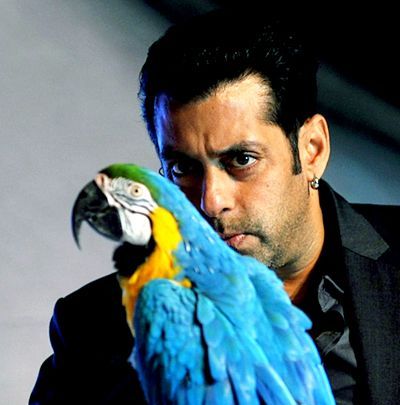
Clearly based on the audience response last year, the channel wanted a host that could at least walk without making it look like a task from Roadies. So they replaced baba with a Macaw parrot. Now, Macau parrots are magnificent, beautiful creatures that walk and fly, so naturally, the bird would fly right into the Bigg Boss house when the show began. The parrot is called Radhey, and has been hired to draw the most giggles from the audience by mimicking human speech. Radhey does more than this mere act of mimicry. Radhey can talk. Radhey can hold an actual conversation with Salmanbhai (not that that takes much doing). Radhey can sing, and on the sponsors’ demand, Radhey can dance.

Actually, it’s a great move to replace Sanjay Dutt with Radhey. Not only is Radhey, in his own words, (I never imagined I would ever quote a parrot) “smart, talented aur bahut intelligent,” the chances of a parrot turning up on the sets with a hangover are fairly squat.

After replacing one host with a parrot, the channel got further carried away and brought in a goldfish to be the other host. Now, was this a strategy to replace Salmanbhai with a less complex life form? (I am yet to classify Vivek Oberoi under human species). This would be the perfect show, with a flying, singing and talking parrot and a lovely goldfish. A show to break all barriers of family entertainment and change the face of Indian television forever. Just then, in the channel office, a tunnel of light shone on the creative team and reminded them of the harsh  truth – no such substitutions could happen for the bhai of the show – there was a contract to be honoured, or else the channel could be dragged to court. Or at the very least, be run over by a car or two.

So the goldfish is now a house guest on the show. Meanwhile, Radhey will supposedly spy on the housemates.

Also, Fishy Kapoor is Bigg Boss’ alter-ego. The fish will whisper to housemates in a ‘fish voice’. Not all the housemates will know that the fish can talk, and having the fish give the rest of the housemates tasks to do will be great ‘fun’ to watch.

The marketing gurus for the show strongly believe that the house pets – tried and tested with Chiquita, a dog that featured in Big Brother UK a couple of years ago – will become a surrogate child to many, on and outside of the show, thus making this season family-oriented.

Spoiler alert! The housemates do not know that soon, each one of them is to be replaced with an animal like a dog, a fox and a raccoon.

Joke alert! I’m kidding.

As if the animals weren’t enough, this season of Bigg Boss also features a Panic Room – not to be confused with safe havens in the house, concealed from the enemy.  The Panic Room on this show is supposed to create panic for the housemates. Don’t even ask how this idea was thought of. Each time the panic alarm goes off, one of the contestants is nominated to enter the Panic Room, stay in it for the longest time and complete a panic-inducing task, lifted straight out of Fear Factor. They could eat disgusting food or scream as long as possible or watch Ek Tha Tiger on loop, who knows? And if the situation gets too much for them, they can buzz themselves out.

Moral of Bigg Boss 6: Pets on the show make it a wholesome family entertainer. Never mind that the host flashed a T-shirt on the very first episode of the season that read ‘Tere Maaki Youth’.

Sharp as a tack, sitting on more hot scoops than she knows what to do with, M is a media professional with an eye on entertainment. 

Categories
Become

A rags to bags story

We chat with Bhairavi Malkani, whose ‘waste to wow’ bag business literally started from scratch. And the stuff is pretty!
by The Editors | editor@themetrognome.in

So many people, so much waste. On a daily basis, we generate more waste products than we can sneeze at, and what’s more, we unthinkingly throw away scraps of paper, metal, cloth and other materials after using a major chunk of them. After you cut out a large portion of cloth for a dress, you throw the rest away, right? But what if somebody, somewhere, could use that extra discarded portion you just chucked away? If you could productively use that discarded portion to create something, and what’s more, make money out of what you just created, you could potentially be sitting on a great business idea.

That’s exactly what Bhairavi Malkani thought of, 10 years ago.

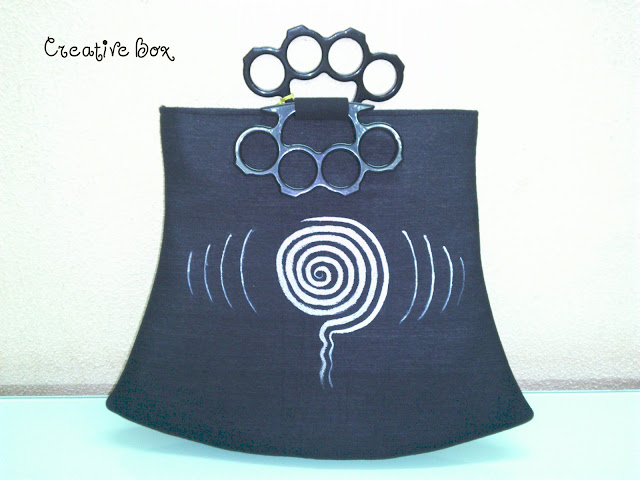
Who is she? Bhairavi is 29, an Andheri resident, and the creator of Creative Box, a kickass solution to what she calls ‘upcycling’ those materials that have been discarded. She was studying at Jai Hind college when she started aligning with several social causes, primarily environment-related. “Environment and its conservation were not as big as they are today,” she says. “When you’re in college, you get really involved with such subjects.

Later I started doing small arts and crafts workshops with children, which were mainly about drawing and painting. Later I expanded to glass painting, paper crafts and tribal arts. I once took a batch to a village in Palghar, where we met a very interesting community and learnt about their art. I discovered that their art was very unique, but people were commercialising their work, so I started direct selling for them. But more than selling, I started teaching their art and creating awareness about it.”

What’s the big idea? “Through our workshops, we moved on to conservation of paper and then went on to upcycling. Conservation can happen at a basic level – after using a sheet of paper for craft, don’t throw away the bits and pieces. Upcycling is when you use the discarded bits to create something entirely new. So we started by collecting stuff around the house, like wooden spatulas, tissue rolls, bits of wood, etc. I met a lot of people to get ideas on how to reuse these items,” she explains. Basically, the idea is to create, from materials that would otherwise have been thrown away, entirely new things for resale.

It all started when… “Things went to the next level when I was doing promotion work for the World Fair Trade Organisation two years ago. Fair Trade supplies organic materials for reuse around the world, and we had put up a small exhibition to sell bags made of organic cotton. Surprisingly, I got a very good response, considering that I had produced the bags at home.

But I actually got the idea for my business after a visit to my tailor. All tailors have a mound of material left over after cutting out the required portion of cloth. He told me that the leftovers go to the dump yard, and I found that all tailors in the area also gave away the excess for throwing away. If you consider all the tailor shops in your area, it adds up to a huge volume of discarded material that is just thrown away. I realised that you could make a complete dress out of all the discarded material. I tied up with my tailor at first, explained the entire concept to him, telling him that I wanted the scrap. Now I have a network of tailors, shopkeepers, family and friends who keep reserve material for me. I have about six regular donors a month.”

Look out for: “Shops dealing in clothes have accessories to spare. These accessories, like laces, buttons, some decorative element, are either stuck or stitched on the cloth, and they come from China. Stuff from China comes very regularly, and the excess accessories have to be dumped pretty quickly, which can be used in your own designs when you make bags or clothes,” Bhairavi explains. “The shop will throw away half a metre of a two-metre lace, but that half metre can make a nice handle for a bag, for example.” Look for places that you can source your add-ons from, Bhairavi counsels.

Getting your act together: “After this, I got a karigar, who is a tailor with his own shop but who is so good at his work that I just have to explain my concept to him once and he understands exactly what I want. I haven’t hired him exclusively for my work; that way I can save on daily wages. Plus, I’ve given him the freedom to reinterpret a design, because he knows how to get the best result. And that makes the end result better because he is going to involve himself with the creative process. All I have to do is give him the material, the design and the measurements. I pay him about 20 per cent of the retail price of the final product.”

Low investment, great returns: Bhairavi was sure that she did not want to start a business with a high initial funding. “You can have a great idea and get it started without much initial investment. Besides, retailing on the Internet works out well for people who start small because you don’t need to spend too much money setting up your wares, and people are taking to online shopping in a big way, so sales happen quickly, too.”

What kind of marketing and advertising has she done for her business? “It’s mostly been word-of-mouth,” she says, adding that she channels social networking sites to spread the word as well. “A lot of people come to me not through my site on the Internet, but because they’ve heard of my range of products from my students and their mothers. Besides, there is a lot of awareness these days about ‘being green’ and using eco-friendly stuff.”

The price is right: She is intelligent enough to judge the psyche that makes customers pick one product over another. “If you have a bag priced under Rs 1,000 and another priced Rs 1,500, most people will opt for the lower-priced one,” Bhairavi explains. “I price my products below Rs 1,000. And I put up exhibitions all the time, where I find that a lot of people add bags and other things to their shopping cart without checking the price tags, once they’ve understood the overall cost range. Pricing is important because it drives sales directly.” She also explains how shipping costs charged to the customer can make or break a deal. “Customers are reassured when they see that shipping is free. Some people might think twice before purchasing an item that comes with an additional shipping cost.”

Where she’s at today: “It took a long time, but things are looking up. People are catching up on trends and actually demanding to see quirky, sometimes weird designs. Today, there is no ‘popular’ or ‘fast selling’ design, because there is a market for every creation. Also, I find that I most enjoy the workshops I take with children, because that’s where many brilliant design ideas originate. After a point, you get into this rut where you’re constantly thinking only of selling, and this can mar your creativity.” Bhairavi admits that her business alone makes her about Rs 1.5 lakh per year. She also holds regular workshops and exhibitions.

Bhairavi’s tips to start a green business:

­– Start small. If you can’t devote time every day, work on your business over the weekends. Try and invest a bare minimum of money.

– You will have to be very patient. Your business may not pick up right away, and you might get sidelined into trying to make as much money as you can. Don’t lose focus of why you started the business.

– You will have to make people aware of what you are doing and why. Do a lot of self-promotion, talk to friends and family, leverage social networking sites.

– Save on production costs and time by reducing customisation wherever possible. Though I do customise products on demand, I request customers to first browse through the designs I already have. If they select an existing design, it saves time and effort for me.

– Have a day job or an alternative career if you can, because your business may not yield immediate money. It may not be something you or your family can immediately bank on. Besides, income from other sources can fund your business. A good way to generate income and keep in touch with your business is to hold regular exhibitions and run creative classes at home.

– If you can create simple things at home, do it. The ability to create things without always having to depend on hired help will get you through emergency orders.

– Retail with shops that align with your design philosophy.

– Most importantly, ensure your family’s support. If you’re going to work from home, they will need to be very understanding about your work and that it is important to you.

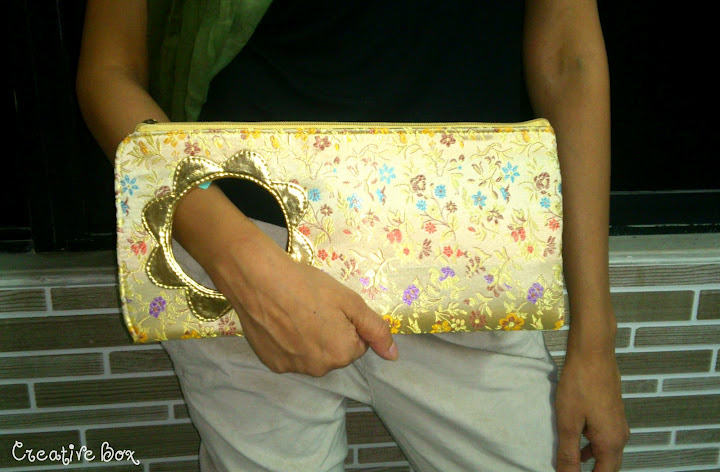
Bhairavi Malkani runs Creative Box that sells bags, clutches, potlis and travel pouches of all descriptions. 

Categories
Big story

Unbreak your heart

Want to keep your sanity while going through a messy break-up? This city-based break-up helpline will help you move on.
By the Editors | editor@themetrognome.in

Are you going through a bad breakup; moping about the house in day-old clothes and thinking that all that was best and brightest about the world dissolved in one heartbreaking moment? Did you contemplate suicide, and then head to bed to sleep off the nightmare? Looks like you hadn’t heard of www.breakuphelpline.com.

“We started this helpline in July this year because we wanted to lend a virtual shoulder to those who had suffered a break-up. The plan is to help a person tide over the heartbreak in a month’s time. We thought that our target audience would comprise young adults, but we started receiving e-mails from older age groups and senior citizens too. It is the only help line of its kind in the world,” claims Ankit (25), the brainchild behind this site.

“The logic driving it is simple – when you’re going through a break-up, your recovery might be quicker if you reach out to a stranger rather than a friend who cannot always offer you comfort and encouragement,” he explains.

Ankit should know. Over a year ago, his relationship with his then girlfriend ended. “After three bad weeks, I focussed on myself again,” he remembers. “I love to run, so I registered for the Mumbai Marathon and started training in earnest. I love to cook, so I spent a longer time in the kitchen. Slowly, the healing began,” he says.

But it was in December 2011 that the idea for the helpline fell into his lap – literally. “I was at the Kala Ghoda Festival for a book reading. The author was an IITian, and I anticipated a ChetanBhagat kind of story, but browsing through the book, I read one line where the protagonistponders, ‘I wish there was a breakup helpline.’ That got me thinking, as a breakup helpline would actually be a great idea!”

He sounded off the idea to a close friend and two other friends and they all felt that such a site had amazing potential. “There is so much pressure on you after a break-up. Questions such as ‘Can you still hang out with the group that your ex hangs out with?’,‘At what point do you avoid each other?’,‘Whose side are your friends on?’all of this only makes the person go into a shell. We thought, let’s give such people a chance to talk it out, and help them move on by just being there for them.”

Starting up

The term ‘help line’ conjures up images of rows of telephones manned by operators all talking at the same time, and Ankit and his crew – Ayushman, Nainy and Sandeep – also toyed with the idea of starting a call centre. “We finally settled on the Internet to get it running. I designed the site myself, and we tested it from February to July,” explains Ankit, the face of the company.

Ever since they started, they received increasing numbers of emails every day, and from the unlikeliest quarters. “There was a 66-year-old who contacted us, as also a class seven girl who was heartbroken over losing her boyfriend, a classmate. Older people deal with extra-marital affairs, divorces. They insist on direct meetings, since they are not always comfortable Skyping or e-mailing, but mostly everyone e-mails us,” says Ankit.

Dealing with it 

Two of the group’s members are psychologists, so tricky problems are dealt with in a scientific fashion. But mostly, the four trust their instincts. “It’s about common sense,” Ankit says. “You see a problem, you get the details, understand where the fault lies. Then you tell the person what you think of the issue,” he adds.

But it’s not as easy as writing to them and getting a solution. “People are cagey about sharing personal information. We respond to every e-mail within 24 hours,but we don’t directly jump at the problem because they are already in a fragile head space and a stranger probing too soon will only scare them off. We start the conversation on e-mail. We let them build their confidence about talking to us, ask them to tell us what their hobbies are, what they like, and we initially connect on that level,” he explains.

Entering the person’s comfort zone breaks the ice. “We get an overall view of their background, after theytell us briefly about the break upwe ask them: ‘Why did you break up? What happened?’ At this point, we receive a four- or five-page e-mail where they pour their hearts out,”Ankit says. He adds that people want confirmation on their actions. “A girl may have broken off a relationship, but she wants to know if she did the right thing. We analyse what happened. The emotional turmoil has to be resolved before the person can move on.”

They also receive e-mails from people hovering on the verge of a break up. “A girl wrote in saying that her boyfriend was cheating on her with her best friend. We don’t advocate an immediate severing of the relationship because we are not jodi breakers. We ask them to talk it out with their partner, because communication is the most important component of any relationship. If all else fails, we tell them to move on from the person.”

A question of perspective

It’s not like opening a bag of instant solutions.“It’s a question of perspective. People who are breaking up or have broken up very well know what needs to be done, but they’re not able to get themselves to move on. We just ask them: ‘Do you think this relationship is workable for you? Do you really see yourself with this person in the future?’ It’s a hard decision to make, but it must be made, and we hold their hand when they make it,” he explains. Ultimately, he reasons, a person will do anything to get over the negativity he/she is experiencing, so he/she will go ahead with the plan made for them.

Want it done? Consider it done

It’s not just about answering e-mails or going on Skype to talk or meeting a person directly. “We’ve seen movies with people, gone out for art tours or wine tastings, even written to a woman who wanted to communicate only via written letters. Once a person in Gujarat wanted to fly a kite, so Nainy, who was in Kutch for work, bought a kite and went to meet him. Basically, they must go back to enjoying the things that they love.”

It doesn’t end there. Ankit elaborates, “After the one month of counselling is over, we send out mailers. We encourage people to even get back to us with new problems.” He adds, “Sometimes, we offer simple tips to get through the day, some easy things for the person to ponder over.”

Dealing with the negativity

The four have their own coping mechanisms to deal with the negative energy and emotions dumped on them daily. “I run, Nainy does suryanamaskars and Sandeep and Ayushman are big on yoga. Also, we don’t wallow in the negativity but we troubleshoot. At the end of the day, it is very satisfying to know that you are helping somebody take one step out of their current crisis. And it all becomes worthwhile when somebody writes in to say, ‘Thank you for starting this website,” Ankitgrins.

The help line, in short

– There are both free and customised packages, depending on what the person needs and demands

– The customised package costs Rs 2,500 for a month (please visit the website to see the services offered)

– Ankit, Sandeep, Ayushman or Nainy will deal with your case from start to finish

– Anyone from the country can contact the help line

– The team responds to requests and questions at any time of the day

– Be prepared to open up and accept that you have a problem. If you don’t, no amount of hand-holding will help.

Exit mobile version