Categories
Places

Out with the X-Men

A scenic Rajmachi trek became a screaming free-for-all as Prashant Shankarnarayan shared his trip with the loudest people on Earth.

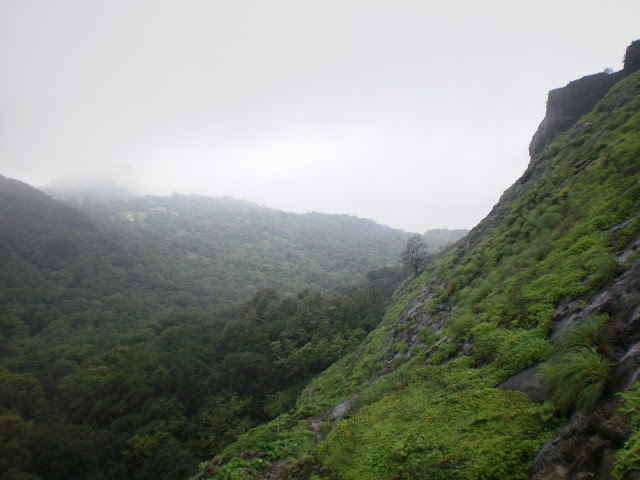
So I went to Rajmachi recently. It’s a village situated on a hill that is part of the Sahyadri range. The itinerary was clear – Mumbai to Lonavla by bus, then an uphill trek from Lonavla, reach Rajmachi, roam around and stay overnight in a villager’s home, next morning trek downhill to Kondivade village where the bus would wait for us, head to Mumbai.

Everything would have gone as per plan had it not been for one aspect, a pretty important one – the company. When my friend told me to hop on with him, his wife and just a few friends – the reason why I even tagged my girlfriend along for the trip – I never realised that his definition of ‘a few friends’ meant a cluster of families who will henceforth be referred to as X. (Hint to decode X: the loudest families to frequent Mumbai’s restaurants and theatres).

Anyway, we set out from Mumbai to Lonavla in a private bus and no, I am not going to share the details of my bus journey, lest you mistake me for a 16-year-old girl armed with a dairy in one hand and her teddy in another. So what hits you first in a bus filled with X? The sheer noise, damn it! How could someone be so loud?

All the way, X maintained that we will ‘trake’ from Lonavla to Rajmachi. Soon enough we arrived at the spot in Lonavla where our trek  and their trake would begin…with a prayer! Let’s not even go there – I have stopped commenting on people’s religious beliefs, but I couldn’t help but stand at a distance from the prayer session. So we started walking uphill around 2 pm. It was the usual out-of-Mumbai-everything-is-green-and-we-should-do-this-often experience. But soon I realised that it wasn’t a trek. I tried correcting the Xs by explaining the difference between a hike and a trek, but eventually trake won hands down.

After an easy hike that lasted a few hours, we reached Udewadhi village in Rajmachi at around 6.15 pm. The lone toll-collecting guy (still don’t know why you need one there) said that it was better to trek to Shrivardhan Fort atop the hill the next morning. Although I wanted to go on, I opted to stay with X just to thwart unwanted attention.
Udewadhi village has accommodation arrangements, provided that sleeping on bare floors without sanitation facilities counts as arrangements at all. Being a regular trekker, I had no issues with this aspect of the matter, although the women in our group were soon mumbling about how they wouldn’t feel comfortable about defecating in the open. Thankfully, our room owner has constructed one toilet just for women. The villagers provide homemade Maharashtrian staple food and you can have pure vegetarian as well as Jain variants, provided you inform them as soon as you reach.

So after a tiring hike, just when my girlfriend and my friend’s wife thought it was time to doze off, the X-Men uncorked their bottles and started yelling. In some parts of the world, they call it singing. Then the X-Women joined in. Then the X-Kids. Not a single person could sing in tune, and there were around15 of them. Their unflinching loyalty to Kishore Kumar songs for almost two hours moved me…to the next room. By the way, did I tell you that a bunch of youngsters from another random group were sharing the house with us, and yet the Xs kept bawling without a thought for the poor strangers?

Post a decent dinner at the villager’s home, we crashed for the night. This is where you make a note – get your own sleeping bags, bed sheets and mattresses. Post dinner, the Xs continued howling Kishore Kumar hits, while the others tried to sleep in the  heat. The great Kishore Kumar’s soul could finally rest in peace as the X-Men went to sleep.

And then…it happened. In the dead of night, we awoke to strange noises. We were exclusive witness to an orchestra featuring natural wind percussion, or farts. The X-Men just went on with their fartestra without even considering that they were sleeping in a room filled with strangers (Hint #2 to decode X: the loudest in Mumbai’s local trains.)

Anyway, let’s cut the crap and talk about the one that everyone takes. Like the early bird that gets the worm, the early riser gets to take a crap in the loo reserved for women, instead of defecating in the open. So if you are staying overnight at Rajmachi, the trick to evade defecating in the open is waking up early. As X stayed put in the rooms, some of us trekked to Shrivardhan Fort, and needless to say, it’s a must-visit. It just takes around half an hour to reach the top of the Fort and the view is like that from any other fort, but it is still something the serious traveller must do.

After clicking few photographs we came down and headed for a dip in the nearby pond and it was serene, especially without a single X-Man, Woman or Kid in sight. It was soon time to head back.

The ‘real’ trek – the descent to Kondivade village, is not easy. Okay, it’s pretty tough, and really tough if you are a novice. The downward trek includes manoeuvring uneven rocks, random thorny plants as you pass by streams and waterfalls. Do carry enough water, unlike us – we set off with just one bottle between us. Every trekker worth his/her salt would love this part of the trip.

We were trekking silently, when an X-Kid repeatedly started shouting for her papa. We trekked faster just to avoid that kid, then we added pace to avoid the entire X cluster and soon enough we were way ahead. We trekked in peace for about four hours to Kondivade, where the bus was waiting to drop us back to Mumbai.

I used to cringe on hearing clichés about how its not about the destination, but the journey and blah blah blah. But this is the first time I understood it. I am someone who prefers to trek in silence, observing keenly whatever meets the eye and exchanging gyaan with other trekkers. But on this trek, I was put outside my comfort zone, and that changed the entire perspective of my trip. Maybe if I had been with a different group, this account would have turned out different. Maybe if someone from X had written this, they would have branded me a misfit because I was aloof and never mingled with them. I guess that is the idea behind any journey – knowing where you fit in.

Do you have a travel story to tell? Write to us at thetraveller@themetrognome.in and we’d love to feature your experience.

Categories
Patrakar types

Whatchoo talkin’ ‘bout, Willis?

Do those who condemn the media’s standards really know what their own expectations of the media are?
by Vrushali Lad | vrushali@themetrognome.in

In a train to Churchgate recently, gaggles of giggly collegians on every side were mighty excited about the fact that a senior and her two friends had been featured in the entertainment supplement of a daily newspaper. Both groups tore away the main newspaper and made a grab for the supplement inside it, which they pored over as if studying for their exams. When one group got up to alight at Dadar, the newspaper lay forgotten on the seat, while the supplement was still being tossed about.

Meanwhile, a portly uncle in the gents’ first class compartment was reading the Shiv Sena mouthpiece Saamna. Half of the front page carried an ad of some sort, while the other half had news of national and city interest, all content similar to any other newspaper that day. Two young men seated opposite him scanned the headlines before declaring, “Main yeh bakwaas paper kabhi nahin padhta.”

If a survey were to be conducted, we would find that one of every two newspaper readers thinks The Times of India is a yellow, crappy piece of paid-for newspaper that is shitty beyond words. Both these people surveyed would be The Times of India readers. When asked what they found crappy, the answer invariably is, “What nonsense news they publish, yaar!” No details are ever given, but yet, on Twitter, TOI headlines are routinely tweeted and retweeted.

A leading daily newspaper in the city, (not The TOI) routinely rehashes its own stories and publishes them in a pretty form. Readers can never tell the difference.

Only one daily broadsheet in Mumbai publishes pocket cartoons even on Sundays, when the usual norm is to have a large editorial cartoon on the edit or Op-ed page. It also carries the editorial cartoon. Five marks for knowing which newspaper this is.

Readers routinely diss the media for pandering to advertising. Then most of them participate in contests run by those media and those same advertisers, and rejoice when they win prizes.

Judging from most readers’ responses to news content, all politicians are thieves, Mahesh Bhatt is a slimeball, Aamir Khan is a better actor than Shahrukh Khan and Priyanka Chopra’s debut music album is doomed before it releases. Similarly, all heritage structures in the city are to be wrapped in cotton and preserved for eternity (“It is our history, after all”), those bowing to union leader Sharad Rao’s wishes receive ‘cuts’ from him, and the Ganesh celebrations were very really noisy, particularly this year.

Readers often start slanging matches with each other on online forums when somebody has the nerve to have an opinion contrary to theirs.

Lastly, this column was written by a pro-Congress, paid writer who has never done an honest day’s work in her life. All journalists are like that – they write false news, they take bribes from everybody, and they are heartless, microphone-carrying robots. I tell you, nothing good will happen in our country if this media is there.

Vrushali Lad is a freelance reporter who has spent several years pitching story ideas to reluctant editors. Once, she even got hired while doing so. 

Categories
Big story

College boys preach gender equality

Students from six Mumbai colleges are doing their bit to stop the war between sexes and bring about gender equality.
by Vrushali Lad | vrushali@themetrognome.in

It normally isn’t easy for a bunch of boys, or even one boy, for that matter, to talk to a girl they’ve just met, about menstrual cycles and breasts. But when this group of boys talks about this and more, none of us flinch or avoid eye contact. There’s no nervous giggling among the group and I don’t think they’re ganging up on me and deliberately talking dirty. They’re not over 22 years old – some of them are still in college – and though they’re interested in girls, their thoughts are more focussed, more centred on gender equality.

What’s more, they’re empowering women by empowering men.

“I used to watch my father getting drunk and beating up my mother. As a child, it was a normal sight for me. Growing up, I decided that I would beat my wife, too, if she didn’t do what I said,” says Sagar Gamre (21) from DG Ruparel College. “But now I realise that women also have the same rights that men do. Who are men to ‘give’ women anything? Who are men to grant them ‘permission’ to live a certain way, to study further, return home late?”

This realisation didn’t come all at once – in fact, it wouldn’t have come at all if Sagar would not have associated with Men Against Violence and Abuse (MAVA) and its honorary secretary Harish Sadani, who has been running gender-sensitisation camps among the youth for several years now. Sadani’s annual camps that address gender, sexuality, men-women roles and other such issues have resulted in several participants, like Sagar, becoming dedicated volunteers to the cause of gender sensitisation. Hearteningly, this year’s camp at Mangaon (Raigad district) has resulted in 30 young men coming back to spread the word in their respective colleges through an initiative titled Yuva Samvad. That’s five or six ‘leaders’ to a college. Not bad at all.

But the bunch wasn’t sure about the camp and what it would turn out to be. “Frankly, I wasn’t too interested in going, but I went because my friend Ashish went,” laughs Viplav Niwas, a student of Ruia College. “But the sessions held there put a lot of things in perspective for me. For instance, I remembered how my neighbour would beat up his wife regularly and everybody felt that it was okay for him to do so. Or how my own mother, an independent social worker, would come home every day and do the housework, and let my father take all the decisions at home.” His friend Ashish Date chimes in, “Growing up, I had not felt that there was anything wrong with our patriarchal systems, and if some men chose to dominate their wives or tell women in their families what to do, nobody could do anything about it.”

He adds that the camp and his association with MAVA changed his thinking so much, that he began questioning his family members as well. “In our family, if a woman is menstruating, she has to sit in a separate room and not touch anything. I said that this was wrong, that if they believed that God was pure, then touching God would make the ‘impure’ woman pure,” he grins. “Indian society trains men to look down on women in a hundred little ways. I hadn’t thought of these things before.”

Says Ajinkya Nimbare from Kirti College, “The problem is a lack of communication. What is a man trying to say when he is violent towards a woman? What is a woman trying to say when she refuses to have sex with her boyfriend or husband? Society makes men believe that women must do what they say, and if women refuse, they must be punished.”

Vivek Kumbhar, who graduated from D G Ruparel College last year, has been associated with Yuva Samvad for three years now. “I began to look at girls differently. In the camps, we were told that all the swear words we use address mothers, sisters and their body parts. We were told that every time we used a swear word, we were swearing at our mothers and sisters. That put an end to all swearing,” he laughs.

He has an interesting story to relate. “My mother had finished her schooling, but then she got married. My father didn’t let her study further. I didn’t think she needed to study as well – after all, women are safest in the house, right? But after working with MAVA, I began to wonder if we all hadn’t done her an injustice.” He proudly relates how, a few years ago, his mother did a balewadi course and is now a social worker.

Suraj Pawar, student social worker currently studying at TISS and associated with MAVA for a year, has already started taking sessions for college kids. “Sadly, people think that women’s studies (his subject at TISS) is not for men. I am the only man in the class,” he says. “I was in Class 12 when my sister got married. I was so heartbroken at her going away, that I cried for three days. I kept asking, ‘Why must women be the ones to leave their homes? Why do we burden our women with all of life’s tough decisions?’” A move to social work with an NGO was a natural transition for him.

The initiative

Through a series of interactive talks with college students, the selected youth leaders discuss gender, sex, sexuality, roles, expectations, sexual health, and other related topics. “The objective is to change men’s mindsets. We depend on women to empower themselves, but women would not need empowerment if men’s attitudes change,” explains Harish Sadani. “We target this age group because these boys will soon become men that constitute a decision-making society. The initiative involves using different, innovative media like street-plays, essay and poster-competitions, radio plays, poetry reading sessions, and talks and discussions by veterans in the field.”

All of the selected boys are NSS students. “They have to choose four to five projects in a year as part of their curriculum, and we thought that Yuva Samvad was a great project that would also make them socially aware,” says professor Pradeep Waghmare, coordinator-NSS Unit, Ruia College. “It is under the University of Mumbai and is aided by the state government and the UGC.”

Yuva Samvad currently takes place in these colleges: Ruia, D G Ruparel, Siddharth, Guru Nanak, GTB Nagar and Dr T K Tope (night college in Parel).


Categories
Learn

Kids talking money

Jigisha Shah’s pint-sized protégés invest in gold, understand the share market, and know how to make the best money choices. And that’s not all.
by Beena Parmar | beena@themetrognome.in

Does your child save his pocket money? Does he keep an eye on silver and gold prices? Have you found him scanning the financial pages of your daily newspaper?

Do you think children and money don’t mix? You obviously haven’t met those trained by Jigisha Shah.

Robert Kiyosaki, financial guru and author of Rich Dad Poor Dad, which continues to rock the financial world even today, teaches people to become millionaires. Jigisha Shah 37, a Kandivali-based educationist, read Kiyosaki’s financial teachings comprehensively while doing her CA internship. “I realised that the subject of financial literacy has been widely ignored in our society. Most people struggle to take quick and correct financial decisions due to financial illiteracy. As a result, we see economic and social challenges in the country,” she states.

Following Kiyosaki’s teachings, firm in her belief that imparting financial education to children at an early age builds a strong foundation for their future, Jigisha started her FLP (Financial Planning Programme) in 2006, to help bring up generations wise in real life education. “My goal is to train people, especially children, with true knowledge and power to take control of their financial future to achieve their goals and dreams,” she informs.

But why deal with children, not adults? There’s an interesting back story. Jigisha initially started taking money seminars for adults. These produced excellent results, as some of her participants effectively saved thousands of rupees. However, during a seminar for women, a mother shared her concern about her son not valuing money and over-spending, and Jigisha was hit by the urgency to take programmes for kids.

“This mother’s concern was not an isolated case, but a reflection of slow and steady change in the behaviour patterns among children in double income families. In cities, where both parents are working, they are unable to give sufficient time to children. They usually compensate this feeling of guilt by fulfilling the material demands of their children. As a result, their children do not learn to value money,” Jigisha explains.

In just three months, she created a detailed programme for kids. Her biggest challenge was to make money interesting for kids. Hence, she created the Money Education Plan, which was realistic and fun to learn. The programme immediately became popular with children and Jigisha took it forward.

One of the modules is ‘Build money IQ’ which enhances children’s financial IQ. Another one is ‘Smart Kids Score’, which she has planned keeping numeric ability, relative analysis, value demonstration and accountability of money in mind.

So far, Jigisha has educated more than 600 students through seminars in public and private schools, and summer camps. “These children are now aware about money and are empowered to take conscious money decisions from their formative years,” she claims. Initially it was challenging to make parents understand the need for such a programme for kids. But she now feels that things have changed.

“Our country is being influenced by western culture, where loans and borrowing are fast becoming a part of life. Now more and more disposable income in the hands of the younger population is becoming a matter of concern. Educated parents with young kids have begun to understand the situation. They are getting into proactive thinking mode and so can relate to my programme,” she explains.

The kids are all right

While Ajit Mhatre, a 13-year-old student admits that he learnt about goal-setting, pyramid of life, saving and investments, how money travels and about banks, coins and currencies, Jigisha was amazed by the learning of 12-year-old Kunal, who participated in her workshop two years ago. “Last month, he came to me and said that he had collected Rs 6,000 in two years, and bought silver to invest the saved money. I was happy at his thoughtfulness about his first ever investment at the age of 10,” she beams.

But she was even more stunned when Kunal said, “I bought silver now, and when silver prices go up, I will convert it into gold, because gold will give me lots of money in the future.”

Parents are thrilled with Jigisha’s programme. “She needs just five minutes with your child, and she can exactly tell you which area your child needs support in. Her workshop has made my daughter Pari so aware about money, that when asked what she learned from Jigisha aunty, she answers in Marwari, our mother tongue, ‘Paisa waste ni karma’ (don’t waste money),” says Anita Bafna, an advocate and Pari’s mother.

Jigisha has two sons, Vatsal (10) and Jayaditya (9). Both have participated in her seminars, are money smart and have made different money investment choices. While Vatsal  has bought 100 grams of silver, Jayaditya has been investing his money in bank fixed deposits for the last three years.

Over the years, Jigisha has noticed some gender-specific behaviours among her participants. “Girls wish to save for buying things that give them emotional satisfaction, like jewelry, clothes and gifts. Boys mostly opt for sports gear and electronic gadgets,” she smiles.

Schools benefit, too

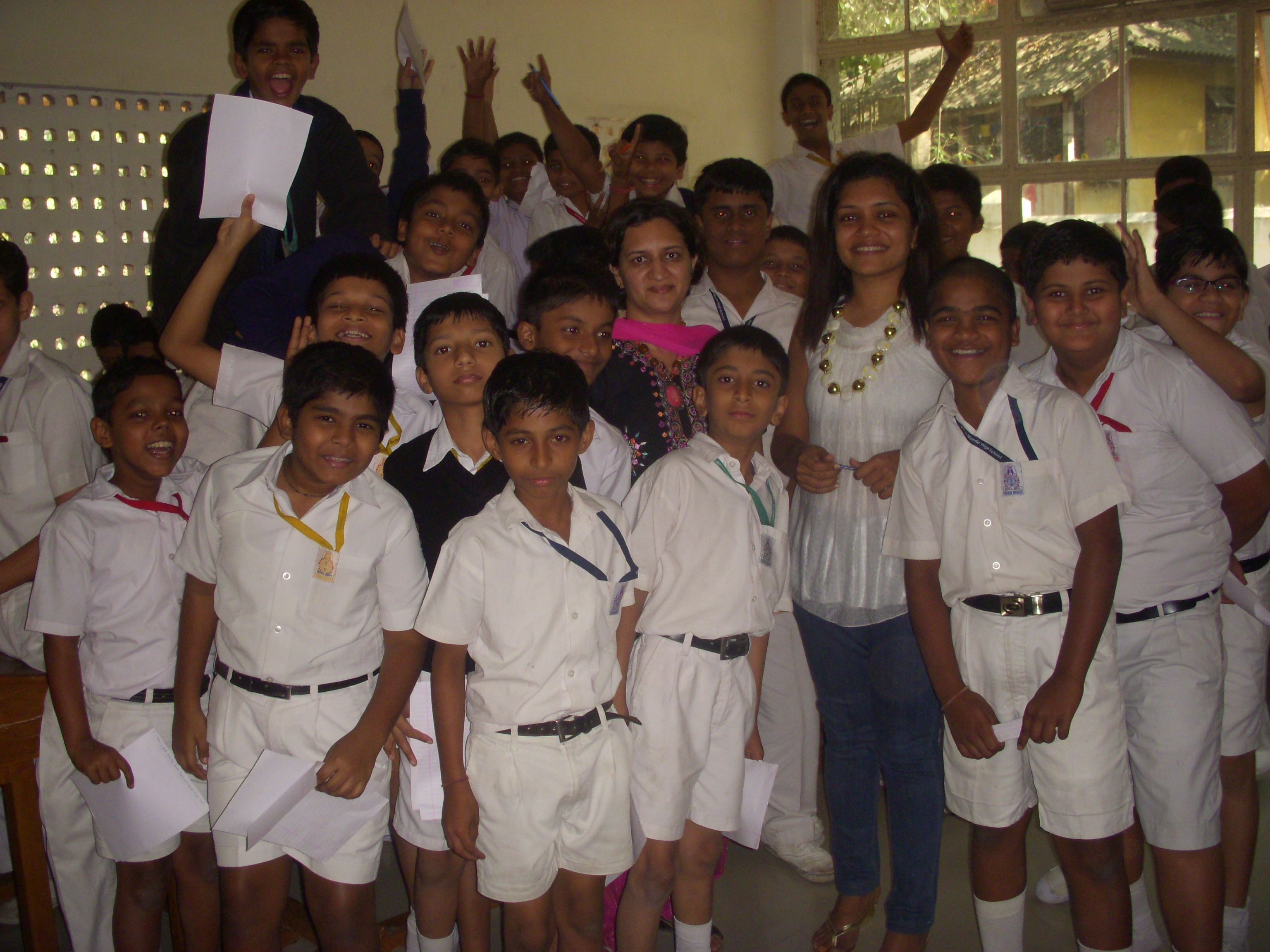
Jigisha has taken her FLP to two BMC schools inGrant Road, where almost 300 children participated. “I got a great response from the children. They were eager to learn. I emphasised on saving early and its benefits, and everyone in the programme promised to start saving,” she shares.

Iravati Mane (name changed), principal ofManavMandirSchool, Grant Road, was delighted with the FLP. “If I had the opportunity to learn from such a programme in my childhood, my life today would have been more fulfilling,” she says. But though Jigisha would like to continue such programmes in BMC schools, the lack of coordination between schools and students is keeping her from implementing her programme in a bigger way.

“It is necessary that we consciously impart money education to kids at an early age. Parents should not hesitate sharing financial information with their children,” she concludes.


Categories
Film

Dear fans, go to hell

A superstar was to speak with fans for his film’s promotion, but he stopped the activity after just two calls.
by M | M@themetrognome.in

This is a true story.

We all grow up idolising that one person we often see on the big screen. He means the world to us. Once glance from him, or if you are lucky, a full second of eye contact, can translate into moments that are cherished for life. Such is the status of most Bollywood stars in India. But some stars just don’t care if they are the centre of their fans’ universe. And when they don’t care, they just don’t care.

Towards the end of 2010, the producers of a film were facing a difficult, but not unusual, task – they had to promote a run-of-the-mill slapstick comedy. The cast comprised a series of nightmares – an out-of-work balding actor with a border-line alcohol addiction; a Superstar with very few scenes in the film (so of course, he refused to promote the film); an actor-turned-producer  of the film (who was the ringmaster of the circus when the film was being shot); two passably average actresses and a seasoned comedian.

The film’s promotions had the usual harebrained marketing strategies backing them. That apart, nobody had thought about how awful it would be to work with this jamboree of ‘stars’. Of the several marketing activities planned around the film’s promotions, one was to get the Superstar (the only decent name in the cast) to talk to his fans. This activity is called Celebrity Voice Chat and is, to put it mildly, a money-making racket.

This is a voice-based activity, where the mobile user calls a given number to speak to a celebrity. The numbers of subscriptions are huge, but not all of them can talk to the celebrity. Thus, the mobile operator selects 10 or 12 subscribers out of a pool of lakhs of hopefuls, who then get a chance to briefly talk to the star. Other subscribers can listen in on their conversation. The crazed fans pay as much as Rs 30 for this slim chance of a lifetime.

Executing this activity was no cake walk. After multiple tantrums and several ego-hassles, complete with games of Chase-the-Manager, the Superstar agreed to do this activity “for his fans”. Finally, the activity date was fixed and the promotions kicked off. Within just three days, lakhs of users had subscribed to talk or just hear their favourite Superstar’s voice. The producers were happy with the film’s promotions, and the mobile operator was laughing all the way to the bank.

On the morning of the activity day, the Superstar who was “doing this for his fans”, decided to call it off. An inane reason – “Today I am shooting and I can’t promote some other film on the sets” – was given for the decision. Mobile users had already paid for participation, and if the mobile operator was unable to get this going, he would face an enquiry by the Telecom Regulatory Authority of India (TRAI).

The producer of the film was called to handle the situation. Begging and pleading, and singing paeans to their friendship, he finally persuaded the Superstar to go through with the activity. The Superstar agreed. Skipping off happily, the team readied for the activity at Mehboob Studio later that afternoon, on the sets of another film.

The clock struck 2 pm, and the calls stared pouring in. But our Superstar was nowhere to be seen.

Subscribers had dialled in and were eagerly waiting to hear his voice. After all, this was the day they would remember for the rest of their lives. This was no ordinary man – and they would hear him in person. But where was He?

At almost a half hour after 2 pm, our Superstar walked out of one of the shooting floors and went straight to his vanity van. 15 minutes later, he was out of his van, but then he wanted to do the activity after he had had his lunch – and to hell with the fans waiting for over an hour on their phones across the country.

After a two-hour delay, the Superstar decided to honour his commitment towards his fans. He took the first call and heard his fans’ jubilant voices – despite the wait – at the other end.  But he cringed and quickly pushed the handset away from his ears. A curt “Hello” was said into the phone and he gestured to the team to drop the call and take the next one. The next caller was a woman, so she got a cursory “How are you?” and “Do watch my upcoming movie,” from him. But the pressure of talking to these excited strangers got to him. He gestured again, this time to say, “Stop the activity”.

Handing over the handset, he walked back to his vanity van and shut the door behind him.

The producers and mobile operator were relieved that he at least spoke to two people; they wouldn’t have to face any legal hassles. The paid subscribers were informed that due to technical difficulties, the activity could not be completed. Subsequently, the movie was a disaster at the box-office.

Moral of the story: For a Superstar, facing two euphoric callers, spending millions of other people’s rupees and disappointing lakhs of fans is all in a day’s work. No Problem!

Sharp as a tack, sitting on more hot scoops than she knows what to do with, M is a media professional with an eye on entertainment. 


Categories
Trends

Oh no. Ketchup again.

Do not put ketchup over everything you eat. Please treat it like it should be  treated – like a base.
by Rakshit Doshi

The single worst invention of mankind, in my opinion, is ketchup. There, now I have offended 1.2 billion people who can’t live without it. But it’s true.

We are conditioned to add ketchup to anything western – pizza, pasta, bread, sandwich, burger… some people even mix it with (I’m cringing as I type this) daal and rice! Without understanding its taste or purpose, its use is lethal.

In case you didn’t know, ketchup came from the far east Asian culture of salted/pickled fish that was used as an accompaniment (the Malay word for the sauce was kĕchap). Today, it is essentially tomatoes cooked with salt and a large quantity of vinegar, which is what makes it sour. Then there is sugar and an assortment of spices, the use of which depends on the maker. It can have even onion, garlic, oregano, the sky is the limit.

What ketchup can be used for is a base for sauces – like a lazy man’s Arrabbiata can begin with ketchup, or maybe when you want to cook up a quick dip for those potato wedges.

I guess I was a little harsh on ketchup at the beginning of this piece, but hey, I stand by my opinion on how we use it. So the next time you handle that bottle, check if you really need it. Okay? Okay.

Rakshit Doshi writes for broadcast media to earn his bread and butter but also is a foodie who loves to make a fat club sandwich of it.


Exit mobile version