Categories
Learn

A Superman even in death

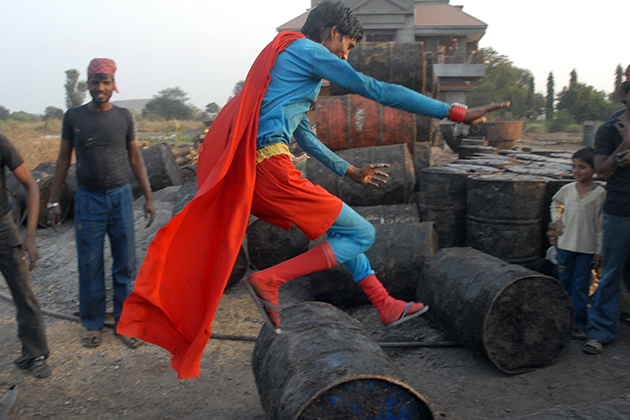
Shafique Shaikh, the ‘Superman’ in ‘Malegaon ka Superman’, is the new poster boy for the Voice of Tobacco Victims campaign.
by The Diarist | thediarist@themetrognome.in

Some people inspire even in death. Shafique Shaikh (28), the actor who got rave reviews for his entertaining portrayal of Superman in the film Malegaon Ka Superman, died an untimely death last year after a battle with mouth cancer. However, he is now the poster boy for the ongoing Voice of Tobacco Victims, a country-wide campaign by doctors and victims of oral cancer caused by chewing tobacco.
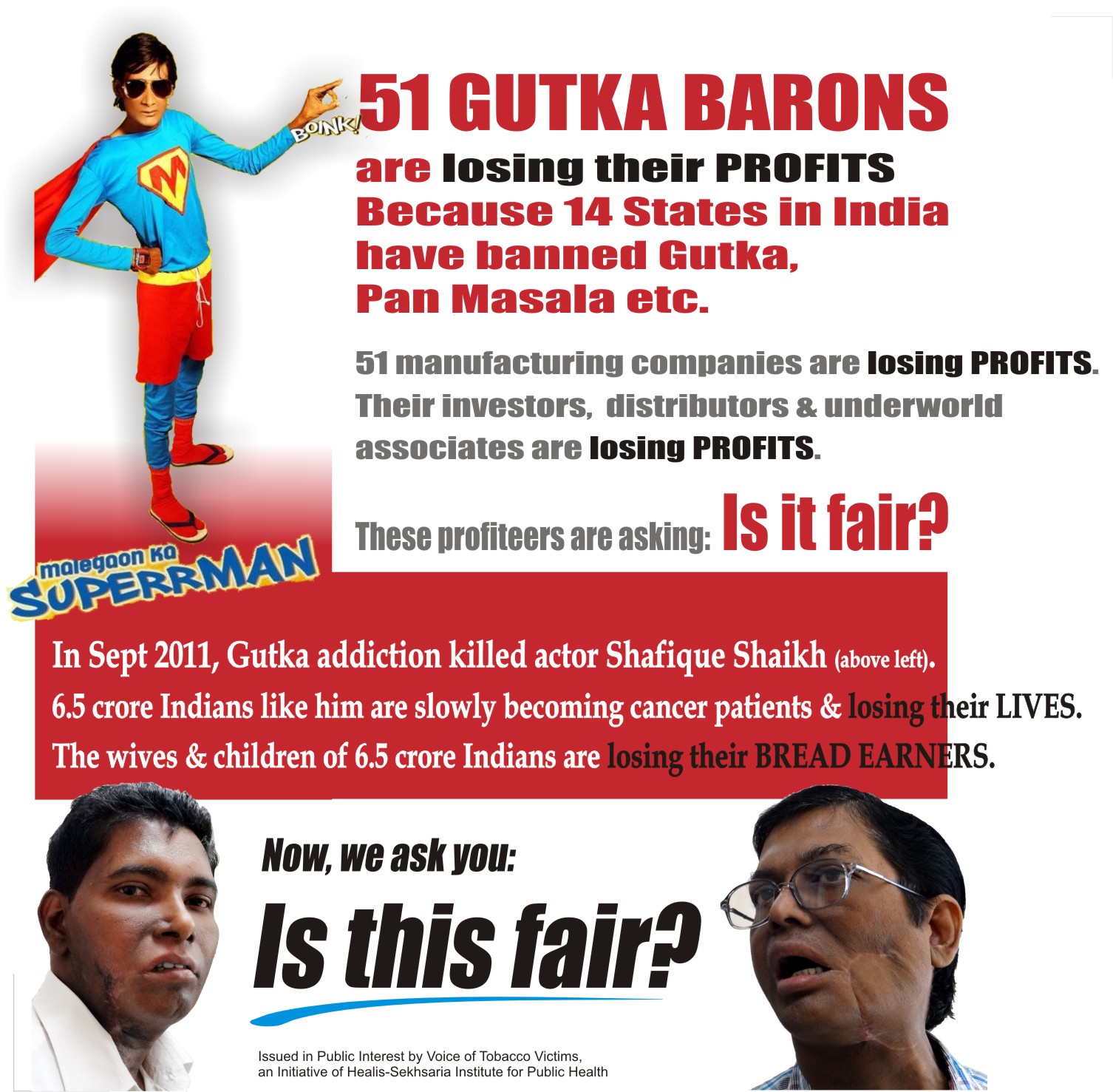
The campaign yesterday released its new public awareness poster, featuring Shafique in his best-remembered Superman avatar. The poster attacks the gutka lobby, which it says is upset with the ban on sale of gutka in 14 states in India, of which Maharashtra was the first to implement the ban. The poster (see pic) displays Shafique and identifies him as a victim of gutka addiction, and states that 6.5 crore Indians like the late actor are slowly becoming cancer patients.

Speaking to The Metrognome, Dr Prakash Gupta, of the Mumbai-based Healis Sekhsaria Institute for Public Health (which launched the campaign) and who is affiliated with Action Council Against Tobacco India, said, “In the film, Shafique was shown fighting tobacco, but in real life, he lost the battle to cancer. His story inspired us to take the campaign forward and let more people know that an individual like him was also lost to the evil of gutka. Gutka manufacturers are asking if it is fair to ban gutka in 14 states when other substances causing addiction are still being sold. We ask: is it fair that crores of Indians are losing their lives due to cancer caused by gutka?”

The campaign was initiated in May 2008, and is the brainchild of Dr Pankaj Chaturvedi, who is an associate professor at Tata Memorial Hospital, Mumbai. The campaign is driven by victims of tobacco themselves, who the campaign projects as the face of its initiatives. “Our most notable success has been in getting gutka sale banned in 14 Indian states. We made representations to all major Parliamentarians, Chief Ministers of several states, such important politicians as Sushma Swaraj, and several Cabinet Ministers. However, we plan to use this latest poster to strengthen the Tobacco Control Policy in India,” Dr Gupta explained.

Know more about The Voices of Tobacco Victims campaign here. As of now, over 30 renowned cancer surgeons, doctors, about 30 institutions and tobacco victims from all across the country are an active part of the campaign. 

(Featured image courtesy newsbeats.in. Poster courtesy Healis Sekhsaria Institute of Public Health, Mumbai)
 

Categories
Wellness

Coming soon: A park for birds

Ex-Mayor Dr Shubha Raul has planned a birds-only park in Dahisar. No humans will be allowed entry into the park.
by Vrushali Lad | vrushali@themetrognome.in

Given her background as a doctor of Ayurveda, and her fruitful stint as the city’s mayor from 2007 to 2009, Dr Shubha Raul is also lucky to be councillor of R North ward that has large pockets of greenery and naturally-occurring dense foliage. Combining her acumen as a doctor and the fact that there wasn’t a single bird park in the city, Dr Raul proposed a bird park on a plot of land in Dahisar, and the BMC agreed to her plan.

If all goes as per plan, the city will have its first birds-only park within a year.

Speaking to The Metrognome, Dr Raul explained how she hit upon the idea. “We developed the Geetanjali Garden in Dahisar, and there is a small plot of land behind it, measuring about 4,000 square metres. I noticed that it was lush with trees and bushes, and that a lot of birds would come there to build nests.” Luckily, the plot of land also got merged with the rest of the garden a few months ago, so Dr Raul decided to build a bird park on the green bit of land. “It seemed like a good idea because the vegetation required for the birds was already there. The place also has a sturdy compound wall, and we would close access to it.”

Explaining the need for such a park, she says, “It is a scientific fact that the chirping of birds has a calming effect on humans, especially those suffering from cardiac problems. Besides, we need to create as many green pockets for birds in the city as we possibly can, and you would be amazed at the sheer variety of birds one can spot over here. The birds are already familiar with the place, and we will be adding bamboo plants and other trees that provide the maximum shade and cover.”

Interestingly, people cannot access the park, but they can watch the birds from the perimeter of the park. “We will put up stout grilles over the existing compound wall, so that nobody can climb over the wall and disturb the birds. There will be a security man’s cabin; one guard will be appointed to see that nobody tries to break in even at night. Besides this, there will be secluded cage for birds that fall ill or are injured, where a vet can give them medical attention, and a designated water space.”

She has already got Rs 40 lakh sanctioned for the project, and the park will be readied in a phased manner. “Not much construction is required, apart from setting up the grilles. I am taking the opinion of experts from the BNHS as to the best way to prepare the park so that maximum numbers of birds can come there. These experts will also advise us on on how to provide nests for birds, and which kinds of trees and small potted plants to provide.” At the entrance, she says, will be a plaque explaining the concept of the park and its need, apart from a statue of a bird to signify that a bird park is in existence at the spot. Which bird will be put up there in statue form? “I’d like a flamingo,” Dr Raul grins.

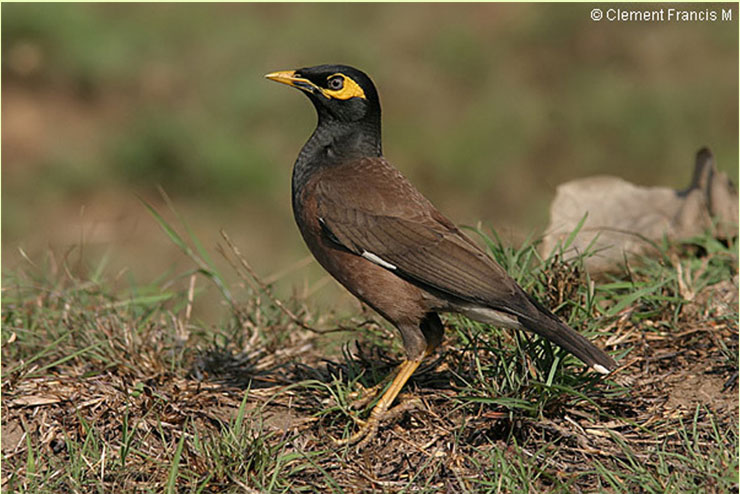
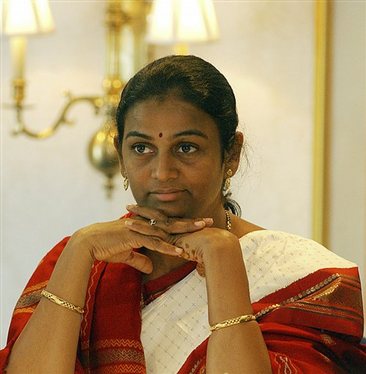
(Featured image courtesy Clement Francis. Dr Raul picture courtesy article.wn.com)

Categories
Guest writer

Shiv Sena at the crossroads

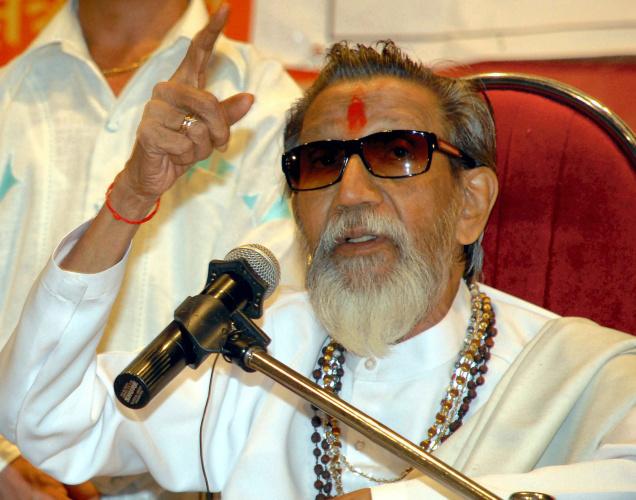
Prakash Bal Joshi analyses Bal Thackeray’s recent speech, and if Uddhav and Raj will combine forces for the next elections.

For the first time in the last 46 years, Shiv Sena chief Balasaheb Thackeray addressed the Shiv Sena rally at Shivaji Park through a pre-recorded video of his speech, indicating clear sings of ageing. His absence may have disappointed the Sainiks, but his speech, which lacked the usual Tiger roar, touched an emotional cord. Not only Sainiks present at Shivaji Park, but also those who heard him speak were moved. It was one of the most effective speeches he has ever delivered.

A cartoonist who mesmerised generation after generation, and kept addressing them from Shivaji Park without fail, the Shiv Sena chief today stands at a crossroads. He clearly indicated who the heir apparent is, and made an emotive appeal to his followers to take care of his son and acting president of Shiv Sena, Uddhav, and his grandson Aditya, who leads the youth brigade of the party. He made the appeal with folded hands, and showed how deeply wounded he was due to split in the party when Raj Thackeray left the Sena camp a few years ago.

It was not a speech but a dialogue in his typically aggressive, derisive and most graphic style – as if he is talking to his followers in person. Anybody who listened to him was convinced that the Sena is currently down but not out –  there is still hope if his supporters keep their faith in the organisation and the leadership of his son, who is leading it from the front.

The demographic profile of Mumbai has changed drastically during the last four decades, but Thackeray is not willing give up his Marathi domination over the metropolis. He lashed out against his pet object – NCP president Sharad Pawar – for eulogising the multilingual culture of Mumbai, warning him that the Sena will not allow political power to slip out of Marathi hands in the state capital. His next target was the Gandhi family leading the Congress Party – Sonia, Rahul, Priyanka, Robert and their political advisor Ahmed Patel.

Though it was basically an emotional appeal where Thackeray Sr talked about becoming an 85-year-old and described his physical condition, he also talked about some hard facts of politics. He reiterated that the Sena would continue its Sons of the Soil agenda, but at the same time, it will pursue politics of hard Hindutva – a strategy which helped catapult the party to power in Maharashtra in 1995.

He touched the most crucial and dominating issue of corruption by attacking Sharad Pawar on Lavasa, lambasting the Manmohan Singh government for Coalgate and other scams, and describing the situation by talking of India as a ‘country of cheats’. In his inimitable style, he also criticised people for ‘taking notes for giving votes’ and later joining anti-corruption agitations.

Thackeray has been adjusting his strategy from time to time to take note of the changing socio-political climate in the State, though his focus always remained the Marathi manoos and militant Hindutva. His concern appears to be an anxiety about whether Uddhav would be equally quick and sharp to navigate the Sena, since he is now almost out of action due to his age.

The coming elections will be test by fire for Uddhav’s leadership, who proved his mettle by reasserting the Sena’s position in the last Brihanmumbai Municipal Corporation (BMC) elections, where his detractors tried their best to upstage him. Will he be able to capture power with the help of the BJP, which is facing its own crisis of leadership?

Aspirations and needs of the Marathi manoos in Mumbai have drastically changed since Thackeray launched the Shiv Sena way back in the late 1960s. Much will depend on how Uddhav fine-tunes the Sena apparatus before the coming elections. He may well have to compete with, as well as compromise with his cousin Raj, if he wants to take Balasaheb’s legacy forward.

Prakash Bal Joshi is a senior political journalist, who last worked with The Times of India, Mumbai. He is also an acclaimed artist and painter.


Categories
Big story

No speed limits this year

Maharashtra sees over 70,000 road accidents every year. However, government may not enforce speed limits on vehicles this year.
by The Editors | editor@themetrognome.in

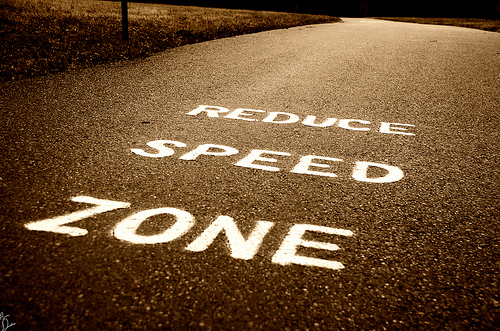
Given that speeding is a major cause for several road accidents in the city and the state, it is becoming increasingly necessary to have a speed-control mechanism installed on vehicles that speed. The state government, too, wishes to introduce speed governors in heavy vehicles to check rising incidents of road accidents. However, a government-appointed panel set up to recommend speed limits for various vehicles needs another two months to finalise its recommendations.

In the light of this development, it is obvious that speed limits will probably not be imposed this year.

A speed governor is a device that is attached to the vehicle’s gearbox. Sensors capture the speed of the vehicle, and the governor automatically slows down the vehicle if it overshoots its pre-set speed limit. The government wants buses, trucks and other heavy vehicles to have speed governors  installed – the original plan was to have this decision implemented this year, however, with the panel requiring more time, it is likely that the move will not be final before next year.

When the decision to impose speed restrictions on heavy vehicles was first announced, transporters and bus owners had strongly objected to the idea. Accordingly, the government set up a panel early this year to study the objections raised, and which was expected to submit its report by September 1 this year. However, the panel did not meet this deadline and has now asked for two more months.

If all had gone to plan, the transport department could have introduced speed limits and speed governors from September 2012 onwards.

Accidental state

As per a Government Resolution (GR) from the state’s Home Department issued last week, Maharashtra’s state and national highway see a high 70,000 vehicular accidents every year. “Arising from these accidents, at least 12,000 people lose their lives, while 40,000-45,000 people are injured every year. The rising numbers of accidents and the resultant loss to life has made it necessary to bring about preventive measures at the earliest,” the GR says.

Additionally, in order to monitor the successful implementation of all the state government decisions taken to reduce the numbers of accidents, a committee comprising Minister of State for Home, Satej Patil, Minister of State for Transport, Gulabrao Deokar, Minister of State for Public Works Department, Ranjit Kamble, and Minister of State for Health, Fauzia Khan, has been set up.

(Picture courtesy flickrhivemind.net) 

Categories
Hum log

The shoe stopper

Chondamma Cariappa’s blog, The Sole Sisters, lets you find and drool over the prettiest shoes in the country and abroad.
by Ritika Bhandari

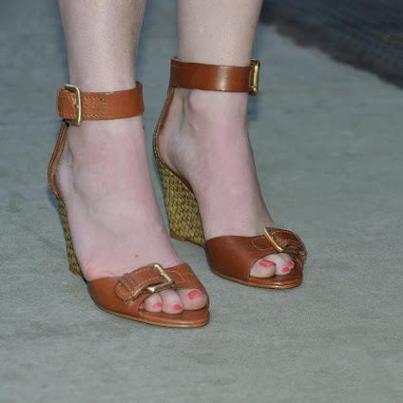
This shoe blog will have you go ‘One, two, buckle my shoe…three, four, preen and post’. Adding a fun twist to the old nursery rhyme is a unique blog for the sole which loves shoes, and is aptly titled ‘The Sole Sisters’.

Advertisers are always in search of inspiration, and Chondamma Cariappa was no different. But instead of a commercial, she started a blog titled ‘The Sole Sisters’. The 32-year old Creative Director with Bates Advertising, Mumbai, took a cue from her personal Facebook album ‘Fetish’ and decided to give women all over the world a new pair of shoes to drool on every day.

Chondamma says, “Each time I travelled, I put up pictures of shoes I had bought from various parts of the world. This led to discussions and comments from friends. So I thought, ‘Why not start a blog for women who are passionate about shoes?’ That’s how the idea for The Sole Sisters was born.”

A shoe lover, the Bandra resident talks about how the space constraint in Mumbai doesn’t allow her to keep too many pairs of shoes. Originally from Bangalore, she moved to Mumbai six years ago and owns 50 pairs of shoes.

Her blog prologue reads, “You walk in wearing a nice pair of shoes and somewhere in the room a woman wonders, ‘Where did she get them from?’ and ‘Is she thinner than me?’  Sole Sisters is a blog dedicated to answering one of those two questions.” And Chondamma answers them with pictures of shoes sent in by readers and contributors from across the globe.

From wedges to high heels to knitted ballerinas, the blog features all kinds of lovely shoes. Till date, more than 400 contributors have sent in their photographs and 70 per cent of these are from India. But she says that the international demographic, as well as posts from small Indian towns intrigue her. “Initially, it started with friends and colleagues sharing their pictures. Soon, the word spread and we started getting emails from women all over asking us to feature their shoes,” she says.

Despite the overwhelming response, she only has herself and her friend Parveez Shaikh handling the blog – Parveez handles the PR and marketing for her. But how does one get an entry into the featured posts? Chondamma says, “We give high points to pictures which are shot interestingly or artistically. Having said that, sometimes a great or funky pair of shoes shot in a simple way also makes for a great picture.”

The Sole Sisters blog is definitely growing in popularity with the presence of a Facebook page, and the tags ensure that contributors help to spread the word. “Also, while travelling in India or abroad, when we come across anyone wearing nice shoes, we take pictures right then and there, or just give them our visiting card,” says Chondamma.

There is a website in the pipeline, which will feature sections like shoe reviews, discussions and online shopping, among other things. The first step in this direction has taken place with the launch of the Neon footwear collection by a local designer through The Sole Sisters blog.

Chondamma says that the best part about running the blog are the mails of appreciation she receives from women she has not even met. And yet they connect, not over coffee or clothes but shoes.

Simply put, her blog underlines the fact that a combination of a good pair of boots and a nicely shot, clear picture, can get your favourite pair envious likes, shares and comments. After all, isn’t Cinderella proof enough that a pair of shoes can change a person’s life?

The blog is at http://thesolesisters.blogspot.in

Categories
Read

The most-read magazine in Maharashtra

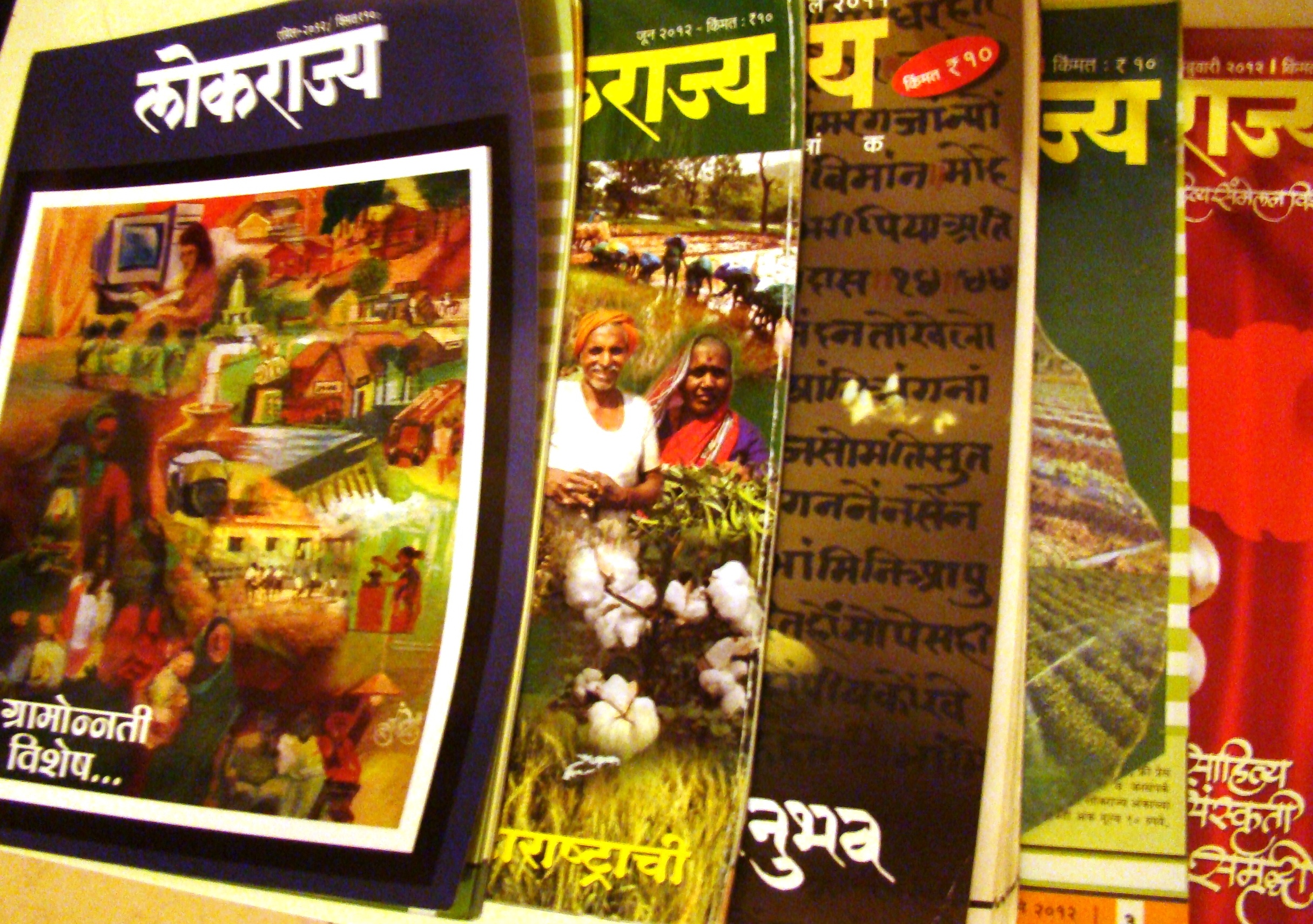
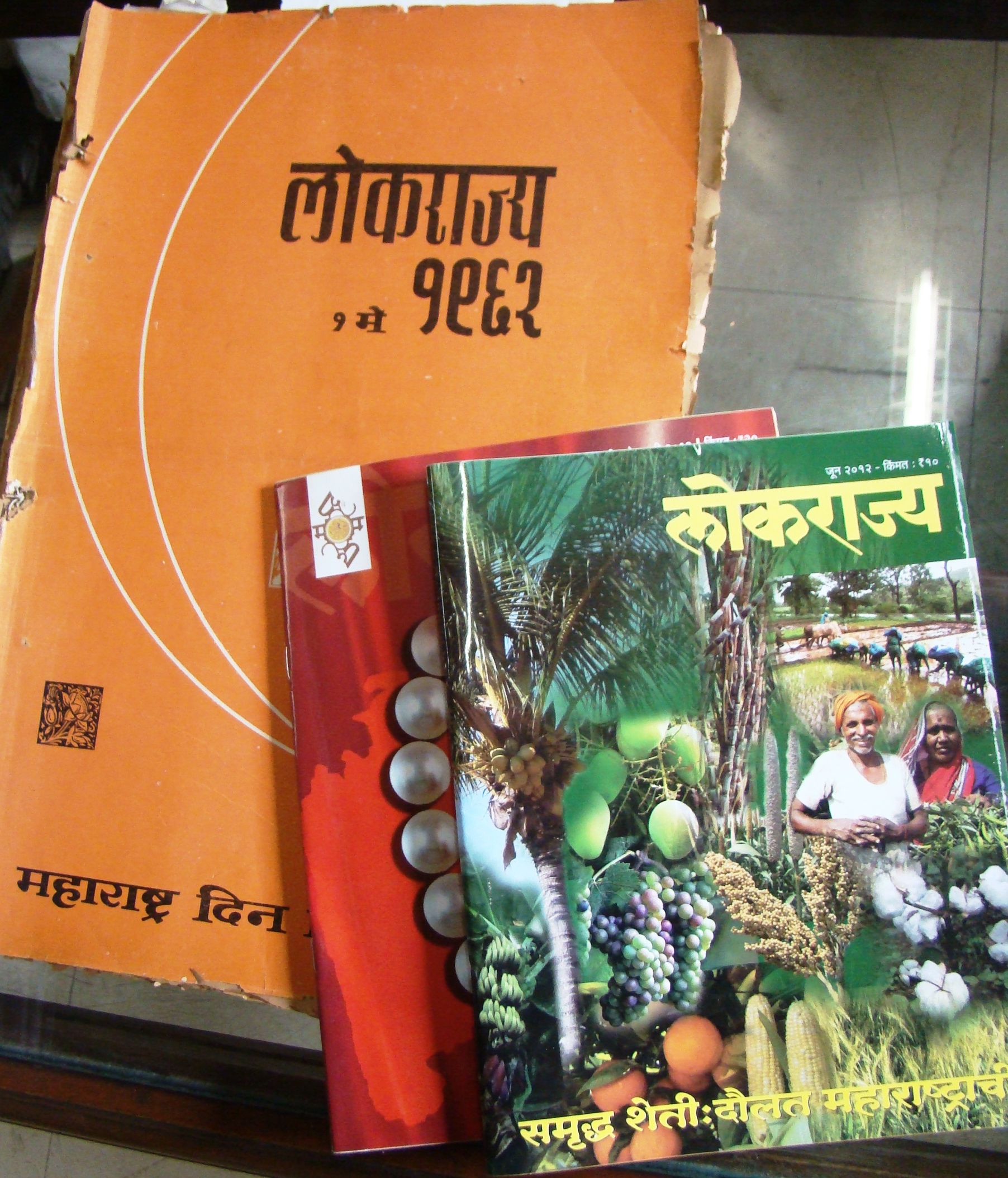
…is a government publication! Lokrajya, over 60 years old, is the country’s only government magazine with a 3,05,000 print run.
by Vrushali Lad | vrushali@themetrognome.in

A magazine prepared and printed in Mumbai, finds resonance all over the state. It is sold out within a few days of hitting the stands, and has a staggering on-stands sale of about 50,000, higher than the glossiest magazines devoted to other topics. It has a stunning subscriber base of 3,05,000 people all over Maharashtra, apart from a strong online presence. And despite its huge popularity, it is priced at a modest Rs 10 per issue, and is produced on a non-profit basis.

The magazine is titled ‘Lokrajya’, and is a Government of Maharashtra Information and Public Relations (PR) production. The entire team working on the magazine, however, mention at the start of the interview that none of their names are to be made public. “We are only doing our jobs,” they say, before an official launches into an explanation of the magazine and how it came to be so popular.

“It was started 64 years ago, as a weekly, to cater to the strong reading culture of the state,” he explains. “Three generations have come up reading Lokrajya; it is not a gazette but it is a government mouthpiece. However, we maintain the highest editorial and production qualities for each issue. The cover is very scrupulously done, and we are very meticulous about minimising errors.” The magazine is backed by a team of in-house editors, and there are edit meetings held before production of each issue begins. “We try and gauge what people would be interested in reading, what is most current at the moment. We also bring out special issues that have always been well-received – our special issue on Babasaheb Ambedkar’s birth centenary even went into a reprint!”

He mentions that the magazine’s readers, and indeed its targeted niche, are not based in Mumbai. “A very small percentage of people in Mumbai are reading it. Our base is in the other cities and towns, and especially in the villages. Our most ardent readers are UPSC students, government servants, gram and zilla panchayat workers, rural schools and colleges, tribal students and economically backward students. We feature stories and interviews that are of especial interest to these groups.”

Lokrajya is printed in Marathi, Hindi, Urdu and English, though it used to be printed in Sindhi also. “It was too taxing to print it as a weekly, so it was later made a monthly,” the official explains. “Since the periodicity is monthly, we can pack more news and features in each issue.” says Director General Pramod Nalavade. He adds, “You should see our distribution process. With such huge bundles of magazines going out to distributors and to post offices all over the state, the magazine is almost a small industry in itself!”


Exit mobile version