Categories
Big story

Nobody’s investing in Mumbai’s mangroves

Current economic state stalls ambitious mangrove centre at Bhandup – the city’s major businesses don’t want to invest in it.
by The Editors | editor@themetrognome.in

Again and again, especially when rains lash the city and submerge large areas of land, news reports remind us of how the city’s fast-depleting mangrove cover could have partly helped save Mumbai. And then we forget about the rains and, more importantly, the mangroves. If mangroves are to be sustained and protected, citizens must learn more about them, and scholars of the subject need to come up with intensive research on the topic.

Suppose you had a place that let you wander around and look at mangroves up close, stare at animals and birds that live inside them, and sit for a lecture or two? The plans and design for such a place is ready and has the Maharashtra state government’s seal of approval. But don’t get too excited just yet – the project is stalled for a lack of funds. The Mangrove Wetland Centre was conceptualised in 2006, got all the requisite approvals and permissions till date, but given the current economic scenario in the country, nobody’s willing to fund the project.

Says Debi Goenka, conservationist and one of the trustees for CAT, “Permissions were the issue at first (for the project not moving forward), but it is not the issue any more. The problem now is money. In the present financial climate, nobody actually has the money for funding the Centre.”

He says that the estimated project cost of the Centre is Rs 140 crore, spread over five years. “The Hong Kong and Shanghai Bank (HSBC) chipped in for our field studies and the making of the master plan. But finding a single donor now for the entire project is next to impossible. We’ve approached several major businesses for funds, but nobody’s willing to invest. Besides, the project needs a 100 per cent fund commitment to start, so we can’t scout for a part of the funds and expect that the rest of the money will miraculously appear,” Debi explains.

The problem is, he adds, that hard-headed businessmen will not fund the project purely out of altruistic motives. “People are not sitting around to give money unless there are assured returns,” he says.

The project

Designed on the lines of the Mai Po Marshes Wetland Park in Hong Kong, the project was ideally suited to Mumbai because it is a living example of an island that survives on its mangrove cover. It is to come up at Bhandup, along the western coast of Thane creek. An MoU was signed with the Forests Department; the project is to come up on forest land and is to be non-commercial in nature. “We are not looking for any commercial rights on the project,” Goenka says.

Conceptualised and developed by a team of architects and experts from Singapore, the Centre will allow visitors a walk through forest areas and see various flora and fauna residing there. They can also learn about the importance of mangroves for the city’s ecology and what can be done to prevent their destruction. “The Centre will also provide employment to local communities while being a prime example of green governance,” Goenka added.

Hurdles galore

The project was initially entangled in a lot of bureaucratic red tape. “In 2007, we submitted the project proposal to the state government. The government was totally receptive to the idea, and very happy with the concept because of its tourism potential and because no such Centre exists anywhere in the country,” Debi says.

However, despite receiving verbal approval, the project got stuck in Nagpur for two years. “In 2009, we finally got the approval, and it then went to the Ministry of Environment and Forests (MoEF) for a final go-ahead,” he says, adding that now the Centre has all the permissions and approvals from all the government agencies.

(Picture courtesy www.solingcute.blogspot.com) 
Categories
Hum log

‘Make men a part of women empowerment’

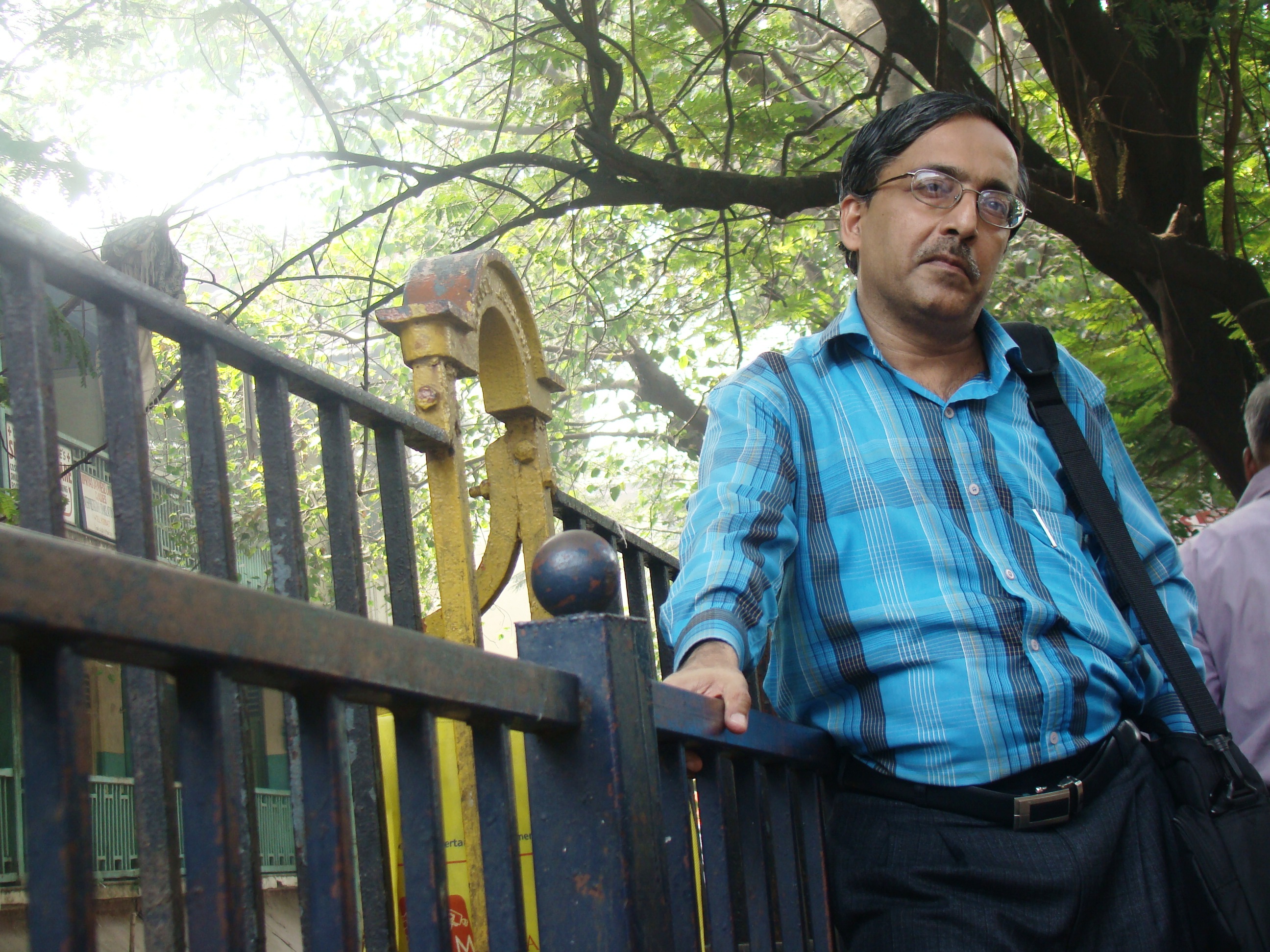
He says men’s engagement with women’s issues can bring about empowerment. Harish Sadani is truly an activist for all seasons.
by Vrushali Lad | vrushali@themetrognome.in

An ad in the Indian Express caught Harish Sadani’s eye in 1991. The Mahim resident was intrigued by the ad, an appeal that read, ‘Wanted: Men who believe that wives are not for battering. If you are a man wanting to stop or prevent violence against women, please write to Box No. _____’.

“I responded to that ad, and so did 205 others,” Harish remembers. We are at a bus stop outside Dadar station, but the unceasing traffic does not once break into his thoughts. “The ad had been put there by the Express’ journalist CY Gopinath. He analysed all the letters he received, and all of the letters were personal perceptions of the issue of violence against women and how it must stop. Of these 205 men, 99 were from Mumbai. He called all 99 Mumbai men for a meeting in early 1992.”

That meeting, and the fact that the same issue had been haunting Harish for a long time already, was to change the course of his life. “I was volunteering with a women’s rights organisation, but their manner of ‘punishing’ men who harassed their wives through public humiliation, was not something I agreed with. So this meeting came at the right time. About 25 men came for the meeting, and one of them was a 14-year-old school boy!” The meeting largely focused on the men’s opinions about how to end violence against women, and was the start of many more meetings.

“We would meet periodically to address the felt needs of men, what needed to be done to address the issue in a different, non-threatening way. We spoke to lawyers, doctors and psychiatrists, did research for a year. Then we came together and formed Men Against Violence and Abuse (MAVA) in 1993; there were about nine of us who started it.”

Harish has been MAVA’s secretary from its inception, and is the only person with a Masters in Social Work (MSW) degree from TISS, Mumbai. “What motivated me was that if I could take on the mantle of responsibility, I could be a part of a large movement for the future,” he explains. Today, Harish has won recognition for his efforts in promoting gender equality, and was the recipient of the Ashoka Changemakers award two years ago.

A ‘sissy’ writes to Smita Patil

Harish was brought up in a Mumbai chawl, an ecosystem where everybody’s homes look into your own and where nothing is really ever private. “I was witness to a lot of domestic violence, both in my joint family and in neighbours’ houses,” he remembers. “I would think about it for long, wondering why men hit women at all. My early life was shaped by my paternal aunts, who taught me that there was no shame in doing ‘women’s work’.” So he braved taunts and jibes of being a ‘sissy’ from friends and neighbours when he stood in line at the ration shop to get kerosene, or when he helped the women with their chores at home.

“I was already questioning gender roles in society. In my teens, I was very influenced by Smita Patil’s films, because she played very strong characters. I got her address from the magazine Madhuri, and began writing to her.” The legendary actress was initially taken aback by the young man’s several questions on gender issues, and what she felt about them. “She once wrote to me saying, ‘Your letters are the only fan letters I have to think deeply about before replying to,’” he grins. “She had a huge influence on my life. In fact, I decided to study MSW after watching her in Umbartha, because she also does the same course in the film!”

Involve, don’t isolate men

Throughout his journey as an activist, Harish has been insistent on one ideology – that men need to be a part of the solution. “It is one thing to identify them as perpetrators of violence, but it is wrong to exclude them. Men are not born violent, they are conditioned by patriarchal society to be masculine’ and they are trapped in this image. We must question this image and break out of it.”

MAVA started their work with street plays, counselling and awareness programmes on domestic violence. “But we did our first big job in 1995, when a student Dipti Khanna became the victim of an acid attack. Private donors gave us Rs 75,000 in two months for her plastic surgeries, but the most touching contribution came from prisoners of Nashik Central Jail, who contributed Rs 12,000 of their hard-earned money for Dipti,” Harish smiles, adding that this gesture built a lot of credibility for MAVA.

“We have always taken a stand on issues, be it the Bhanwari Devi case or the series of attacks on women arising from jilted love,” he says. “In 1996, we started the magazine Purush Spandana, a men’s-only magazine that we bring out in Diwali every year. Besides this, we have started various youth initiatives in colleges, Yuva Maitri, plus a helpline for the youth.” Harish has upscaled his efforts in Pune, Satara, Kolhapur, Bhandara, Buldhana and Nagpur as well. “We are encouraged by young boys wanting to engage with gender equality,” he says. “Their involvement and work is a throwback to the time we started MAVA, and when we took ownership of the same issues 20 years ago.”


Categories
Trends

Looking to set up business? Try Afghanistan

Afghanistan President Hamid Karzai says that Indian businesses are investing in his country. But are we game for new territory?
by The Diarist | thediarist@themetrognome.in

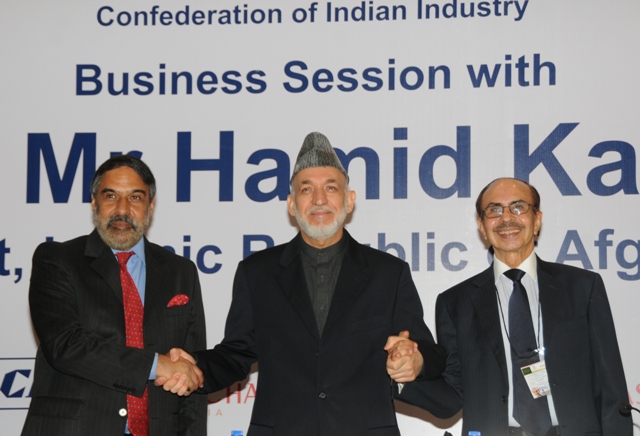
The field is set for major Indian investment in Afghanistan. Or so says its President, Hamid Karzai. At a recent business session organised by the Confederation of Indian Industry (CII), FICCI and ASSOCHAM in Mumbai, Karzai said that his country “is ripe and ready for investments from India and offers lots of opportunities for Indian industry…You need not worry about your investments. Not only will Afghan law protect you, but also Afghan people will add to your profits.”

Karzai added that Afghanistan’s forex reserves, including gold, had risen to $7 billion now from $180 million in 2002. “Those who came in the past few years like a telecom company with $5 million investment has now become $600-700 million and this applies to other sectors as well.” He spoke about the rich mineral resources in the country and said that already an Indian conglomerate is in talks for an iron ore mine and hoped a contract would be signed shortly.

The bilateral trade between the two countries is estimated to be over $600 million every year. Speaking on the occasion, CII President Adi Godrej said, “Our Government and us in the industry view Afghanistan as a key ally – This is underlined by the government of India’s announcement three days ago of $100 million to support small development projects in Afghanistan.” He outlined a five- point agenda to strengthen the ties between the two nations, suggesting that Afghanistan embrace a frugal innovation approach to help small and micro entrepreneurs and women under the small development projects in Afghanistan. He also suggested setting up an India Afghan business forum to promote economic cooperation.


Categories
Overdose

Happy Diwali in text and spirit

How about ditching that SMS you were about to send and actually calling your friends and relatives to wish them?
By Jatin Sharma

This Diwali, I want to be helpful to you guys. So I’m going to start this piece with a question that everyone must be thinking of by now: How do I wish everyone ‘Happy Diwali’?

For starters, go to your phone’s message field. Type ‘Happy Diwali’, select ‘Send all’ and click. Congratulations, you have managed to wish everyone that is in your phone book!

But have you actually managed to wish someone, or have you just completed a formality? The formality of being in touch, of wishing them on Diwali. Do you really think that that person has taken note of your wishes? Do you really think that person felt wanted this Diwali?

My father once told me, that the more modes of communication in the future, the less people will communicate with each other. Listening to him at that time, I confess, I told my father that he was wrong. Technology would just make life simpler, you could connect with anyone and everyone at any given time. I asked my father, “You must have lost so many of your friends because of less modes of communication. I am in touch with all my friends through SMS and Orkut.” My father said, “It’s just that communication, my son, is not about fake emotions and text. It’s about feeling a touch, listening to a voice, looking at an expression. But I guess I am too old!”

Every time that I receive a forwarded text message now, I remember this conversation. It reminds me of him being so right. We had this conversation when mobile phones used to come in TV remote control sizes, when outgoing call rates were Rs 18 and incoming rates were Rs 16. It was the onset of the generation that was going to take SMS packs and wish everyone in the future.

Though text messages are made of words, somehow I feel they don’t reflect the same emotion. Special days, like festivals, are about the excitement we see around us. It’s more about a shrill voice screaming ‘Happy Diwali’ at us, not a redundant text message that has been sent to millions like us. It’s about coming together, not texting together.

Celebrate this Diwali by calling up your friends and relatives. Make them feel important. Make yourself feel important about having so many people to love in your life. Create a world that is more expressive, not one where a few words that can be deleted by the press of a button on a gadget. Make this Diwali a memorable one.

And I am sorry, but I can wish all of you only in text for now. Wish you a HAPPY DIWALI 🙂

Jatin Sharma, 26, is a media professional who doesn’t want to grow up, because he feels that if he grows up, he will be like everybody else.

 (Picture courtesy www.acne-tv.com)

Categories
Big story

Don’t buy these crackers

27 brands of firecrackers tested in Mumbai; most of them violate sound limits and do not mention their chemical composition.
by The Editors | editor@themetrognome.in

The firecrackers you may have bought this Diwali might harm you and your family. Read on to know why.

On November 7, the Maharashtra Pollution Control Board (MPCB) tested firecrackers available for sale in Mumbai. The testing was done thus: samples of crackers of different types from various companies available in the market were procured. They were tested where open space was available with a concrete surface. The noise measurements were made at a four metre distance from the fire crackers.

As many as 27 brands and types of firecrackers sold in Mumbai were tested at Carter Road in Bandra, and several of the brands sold were found guilty of not mentioning the sound limit specified for that cracker on its packaging, or its chemical composition. Of the 27 varieties, 17 had not mentioned the noise level limit, while 21 had not mentioned the chemical composition.

The crackers were tested in two categories, Single and Series. In the Single category, five crackers were found to exceed permissible decibel levels of 125 dB. In the Series category, all the eight crackers tested were found to exceed permissible decibel levels.

Loud and dangerous

In the Single category, the crackers tested were Vulcano sutali bomb, Giant crackers, 7 Up shots, Saddam Dhamaka, 2 Sound Crackers, Flower lady, Gutter balls, Italy, Double Sound, Triple Sound, Nazi green, Thunder bomb, Aerial Out, Crackling king, Thriller bomb, Kargil bullet, Bada bing bada boom and Musical mala. Of these, Thriller Bomb, Thunder bomb, Nazi green, Saddam Dhamaka and Vulcano Sutali bomb exceeded permissible decibel levels. However, these five did specify the chemical composition of the bomb on the packaging, but noise level limits were specified only on Nazi green.

In the Series category, none of the eight brands tested mentioned chemical composition. The brand names were 600 wala, 1,000 wala, 2,000 wala, 50 shots marvel, Red Fort 1000 shell, Speed 100, Dilkhush 50 shots and 5000 shell.

(Picture courtesy AFP/Getty Images)

Categories
Wellness

Getting married? Exercise will help

If you’re getting married soon, you and your family need to fight rising stress. Do it with exercise and diet.
by The Diarist | thediarist@themetrognome.in

An Indian wedding is a grand affair. And a grand affair comes with its share of responsibilities, last-minute glitches, and a whole load of stress. Often, the couple to be married and their immediate families are under the most strain, which builds up till the actual day of the wedding. While the stress is inevitable, there’s no reason to not keep physically fit and mentally happy even as D-day draws near.

We caught up with fitness expert Sameer Sawant, who told us about a few tips and tricks to fight stress in the wedding season.

What should a person do to reduce/relieve themselves of stress during the wedding season?

When a person is feeling the stress, he or she can do a moderate intensity workout. Through this, a ‘feel good’ hormone (endorphin) is secreted by the human body, which lightens the person’s mood happy and helps to reduce stress. One should not do a high intensity activity, as it might exhaust him or her further and increase the stress level.

How can the parents of the couple reduce their stress?

The parents of couples can do exercises like stretching, or take up yoga sessions to release their stress. Also, a glass of fresh juice early in the morning will help them feel rejuvenated throughout the day as they help prepare for the wedding.

Are there any specific do-at-home exercises or breathing techniques?

Moderate intensity exercises such as jumping jacks, skipping, push-ups, squats, burpees and lunges are easy to do at home. They can also use therabands or resistance tubes for a home workout. Exercises like plank, Superman, cat camel, bridge and back extension on the floor should be done to increase core strength, since on the day of the wedding, they will have to stand for long hours – this needs a lot of core strength. They can also practice yoga, power yoga, tai chi and pilates, which will help them increase their mind and body awareness.

What are some interesting trends you have observed in Mumbai during the wedding season?

During the wedding season, there are many couples who join health clubs and gyms to get into shape quickly, but getting in shape is not a quick process and it takes a lot of time to get the BMR to a level where your body starts burning more calories to sustain the existing fat, muscles, organs and bones as compared to your calorie intake.

The trend which is most common is adopting a low carbohydrate diet, cutting out sugar from the diet, or going on a liquid diet, and most commonly, doing only cardiovascular training like running and cycling. People don’t concentrate on other elements of fitness like strength, flexibility, balance and core stability.

How can couples combat stress together?

An important tip for couples is that apart from vigorous workouts, couples should opt for simple

De-stress exercises like swimming, yoga and dancing. My ultimate tip, however, is to eat right, work out regularly and stay happy.

Sameer Sawant is a fitness expert specialising in functional training, martial art training and lifestyle management, among other things. He currently works with Fitness First.

(Picture courtesy www.madhvimad.wordpress.com)

Exit mobile version