Categories
Enough said

Reading does save you!

Humra Quraishi is enlightened by her recent acquisitions – three new books that shed light on our lives and times.
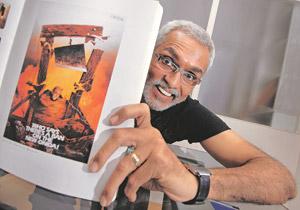
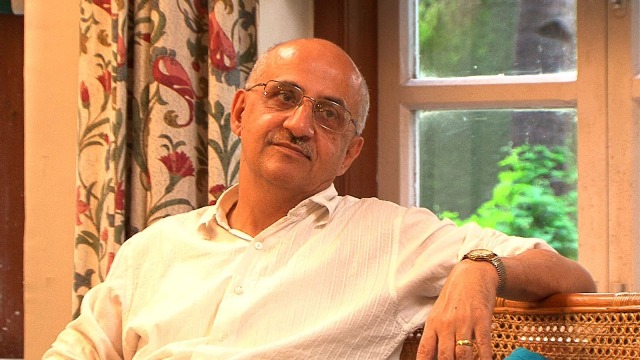
I attended two book launches this week. One was Harsh Mander’s (in featured picture) launch of Ash In the Belly: India’s Unfinished Battle Against Hunger (Penguin) where the three speakers – Dr Upendra Baxi, Mark Tully and NC Saxena – minced no words as they spoke about how a certain percentage of our population is perishing because of malnutrition and hunger.

The Government of the day is actually killing and murdering its people, slowly and methodically, by not knowing the actual ground realities and not doing enough to deal with them. Yet, its machinery continues to churn out numbers for high growth rates, replete with several exaggerated figures.

The other launch was for Professor Mushirul Hasan’s book on Mahatma Gandhi, which I wrote about last Sunday (see the piece here), where Gopal Krishna Gandhi’s talk on his grandfather, the Mahatma, was very touching. He spoke in chaste Urdu and narrated an incident which showed Gandhi’s strength of character even in the face of personal crisis: when he heard that his teenaged grandson Rasik had passed away in Jamia Millia Islamia, he said that it was some solace that Rasik had passed away in a place like the Jamia Millia, and also that he had been looked after by the well-known physician, Dr Ansari.

And I have recently received two books on Gulzar saab. One is a collection of his song lyrics and verse, titled Umr Se Lambi Sadkon Par (Vani Prakashan) which is compiled by  Delhi-based poet and doctor Dr Binod Khaitan. The other volume is titled  In The Company Of A Poet: Gulzar in Conversation With Nasreen Munni Kabir. Published by  Rupa, this volume focusses on Gulzar saab’s views and viewpoints, complete with his verse…maybe, these lines will help you wake up at dawn!

‘I wake up at five when it is still dark.

I want the sun to look for me instead of me looking for the sun.

Just as the first serve in tennis can be advantageous,

So the first serve must be mine.

The second goes to the sun.’

Humra Quraishi is a senior political journalist based in Gurgaon. She is the author of Kashmir: The Untold Story and co-author of Simply Khushwant.

(Picture courtesy citizensforpeace.com)
Categories
Learn

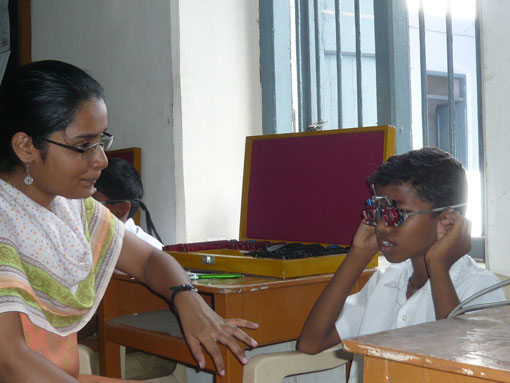
Undetected eye problems taking toll on city’s children

A field study shows that 10% of Mumbai students have undetected refractive errors. Lack of awareness is a major problem.

As many as 20 per cent school going children in Mumbai and Thane suffer from refractive errors and amblyopia, as per a field study (titled ‘Children’s Refractive Error and Eye Ailment Management, CREAM) conducted by Aditya Jyot Foundation for Twinkling Little Eyes (AJFTLE).

“Over 25 per cent of the country’s population is of school-going age (six to 14 years). Refractive errors and amblyopia (lazy eye disease) are the commonest and most serious eye diseases (153 million patients as estimated by WHO, 2006) in this age group. It affects nearly seven to 12 per cent children in the community. It is more common in urban areas and in our pilot study on 15,000 children in the schools of Thane and Mumbai, we found a prevalence rate of 20 per cent,” says their study report.

Ironically, the Foundation adds, 10 per cent of these are either not recognised or not appropriately treated. “The early detection and treatment of these eye diseases can very effectively prevent the visual impairment. The diagnosis of both these conditions is simple and the results of the treatment are dramatic.

As many as 10 per cent of the children in the schools of Mumbai were found to have uncorrected refractive errors. This is because the children usually do not complain due to lack of recognition of their poor vision and lack of awareness amongst the parents or school teachers, and a lack of a regular vision screening strategy. This is why only a handful of cases are detected at an early stage where appropriate treatment is helpful. The affordability of the spectacles is also an issue for socio-economically deprived class of students.”

The AJFTLE recently partnered with the Small Industries Development Bank of India (SIDBI) to undertake awareness building and eye screening camps for underprivileged children mainly in rural and urban slum areas for prevention of avoidable blindness, and wants many more partners to work with them on the project.

Sushil Muhnot, CMD of SIDBI, said, “As part of our CSR initiative, we are associating with Aditya Jyot Foundation for Twinkling Eyes, which is planning to work for slum children and parents in Mumbai and Maharashtra and create awareness about avoidable blindness. Today, India needs an affordable healthcare industry model. There are three growth models—primary, affordable and luxury – and in the eye care industry and finance from institutions can flow into the industry provided there is a business model with an appropriate revenue stream. The proposed Government plan to impose two per cent compulsory spending on CSR will make it easy for NGOs and Foundations to augment financial resources for social services.”

(Picture courtesy omlog.org. Image used for representational purpose only)

Categories
Trends

Fishermen can go fish

Maharashtra CM adjusts diesel rates for fishermen; the latter had been striking work since they were identified as ‘bulk consumers’.
by The Editors | editor@themetrognome.in

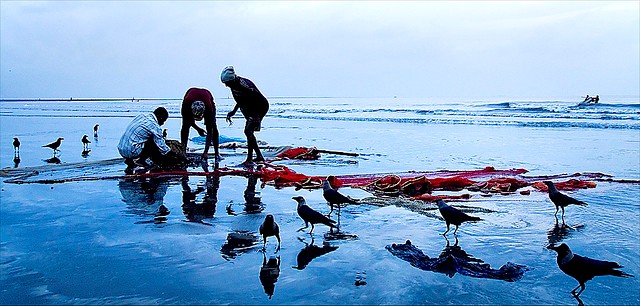
If you’re a fish eater, you probably know by now that your local fish market was very low on supply of fresh fish because fishermen had literally hung up their nets, refusing to go out to the seas. The reason behind this striking of work was that the State had recently identified them as bulk consumers of diesel – this meant that they would have to purchase diesel at an increase of Rs 11 over the previous Rs 52.

But this year being the precursor to the General Elections in 2014, naturally, the State Government would not want to appear as anything but populist. After lengthy wrangling with the Union Petroleum Minister Veerappa Moily, Maharashtra State Chief Minister Prithviraj Chavan today managed to get the State’s fishermen reclassified as ‘private consumers’.

With this, the striking fishermen are assured of being able to buy diesel for their fishing dinghies and motorised boats at the rates they have been paying as private consumers. Their strike, called since January 18 this year, has severely impacted their business, but they can now go back to work.

(Picture courtesy Akshathkumar Shetty)

Categories
Achieve

‘Onida devil’ creator felicitated

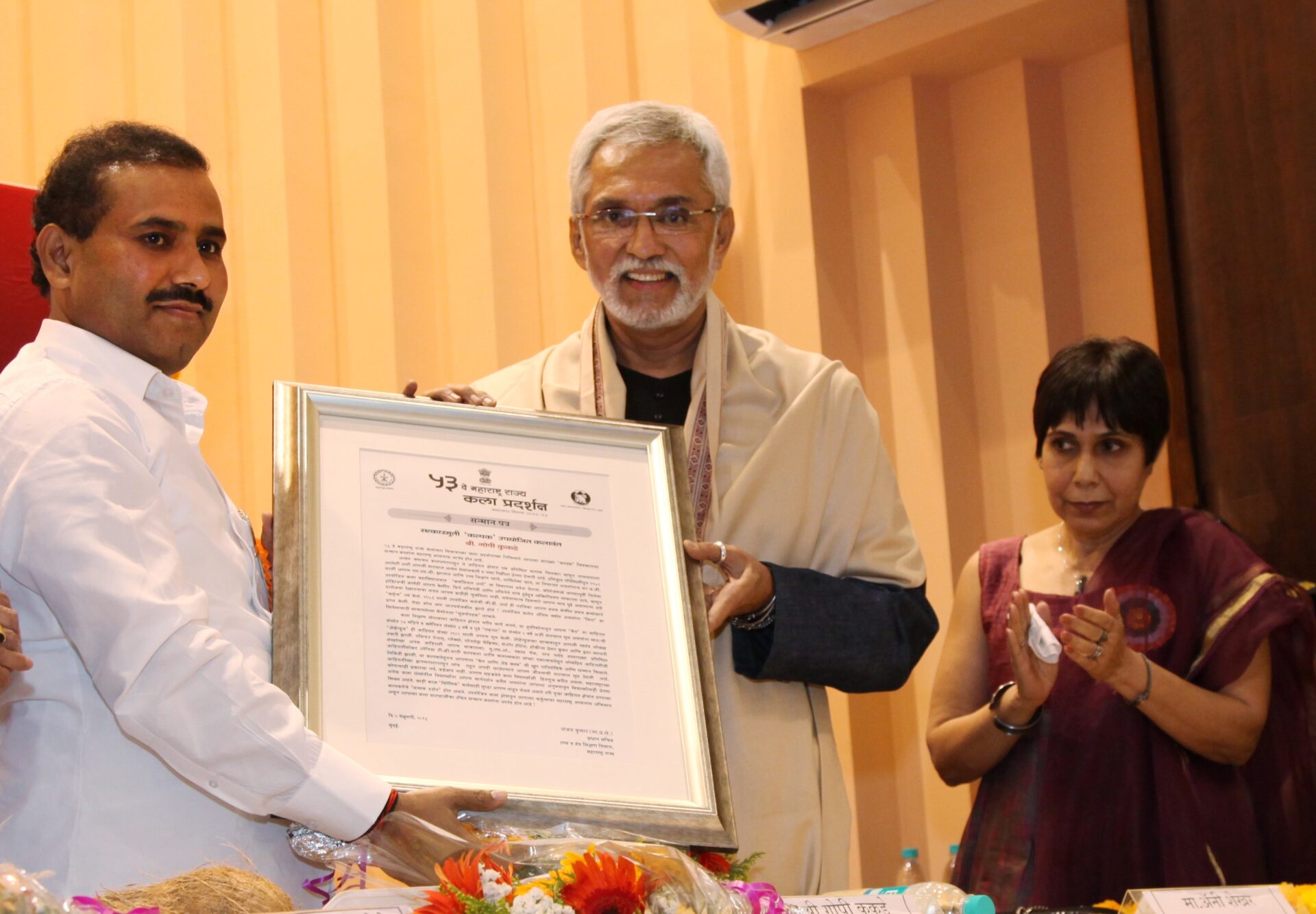
Maharashtra State Government felicitated veteran ad man Gopi Kukde yesterday for his contribution to Advertising in 53rd State Art Exhibition.

For several years starting from the 1980s, Onida TV sets were synonymous with the devil. The devil featuring in their ads, that is. Apart from the catchy ‘Neighbours envy, owner’s pride’ tagline, the devil really made the product stand out amongst its peers back then.

The creator of the Onida devil, Gopi Kukde, also dabbles in ceramics. Taking into account his immense contribution to the field of advertising, the Maharashtra Government felicitated him yesterday at the 53rd edition of the State Art Exhibition. Gopi was felicitated at the hands of the Minister for Higher and Technical Education, Rajesh Tope.

Every year, the Government of Maharashtra conducts a competition within the art circle of the State, in two categories – professional, and student. The awards ceremony felicitates a senior artist from any of art disciplines – Gopi was selected this year.

Gopi has worked with such ad agencies as Everest, Clarion, JWT and Chaitra, and also founded ‘Advertising Avenues’ in 1982. He has worked with such brands as Asian Paints, Glaxo, Paan Pasand and Hawkins. The tagline he created for Paan Pasand, “Shaadi, aur tumse? Kabhi nahin!” became an instant hit in the country. He is currently a Committee Member on the Communication Arts Guild and owns and runs a ceramics studio in the city, named Useless Ceramics.

(Picture courtesy livemint.com)

Categories
Listen

Rekha Bharadwaj and ‘Mehrooni’

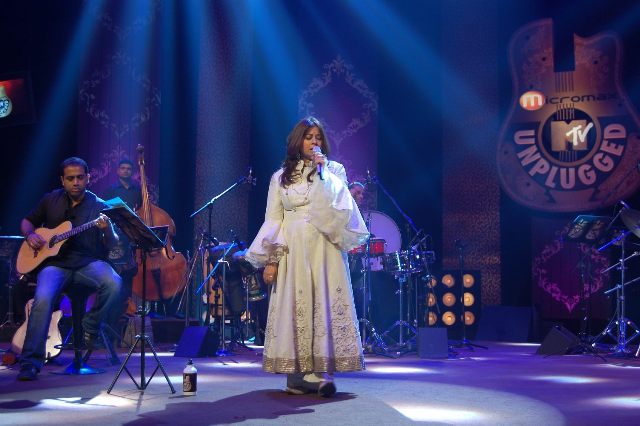
We thank Sapna Bhavnani for sending us this video of Rekha Bharadwaj in truly sublime form. Listen, and be spellbound.

(Featured image courtesy avmax.in. Picture is a file image.)

Categories
Event

‘Drop gory details, start being constructive’

This was lawyer Flavia Agnes’ advice to the media at the 10th annual meet of women journalists that concluded recently.
by Shubha Khandekar

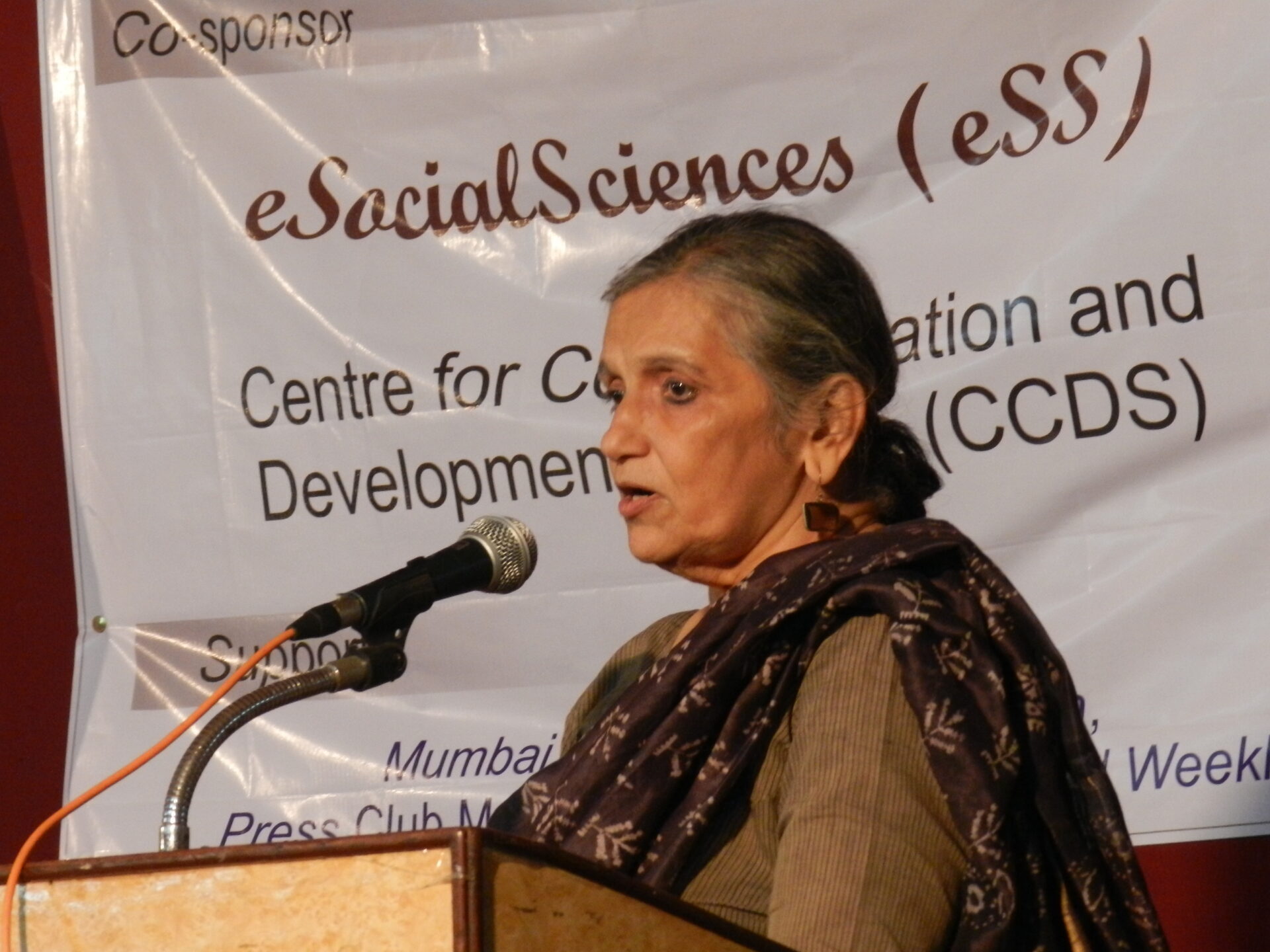
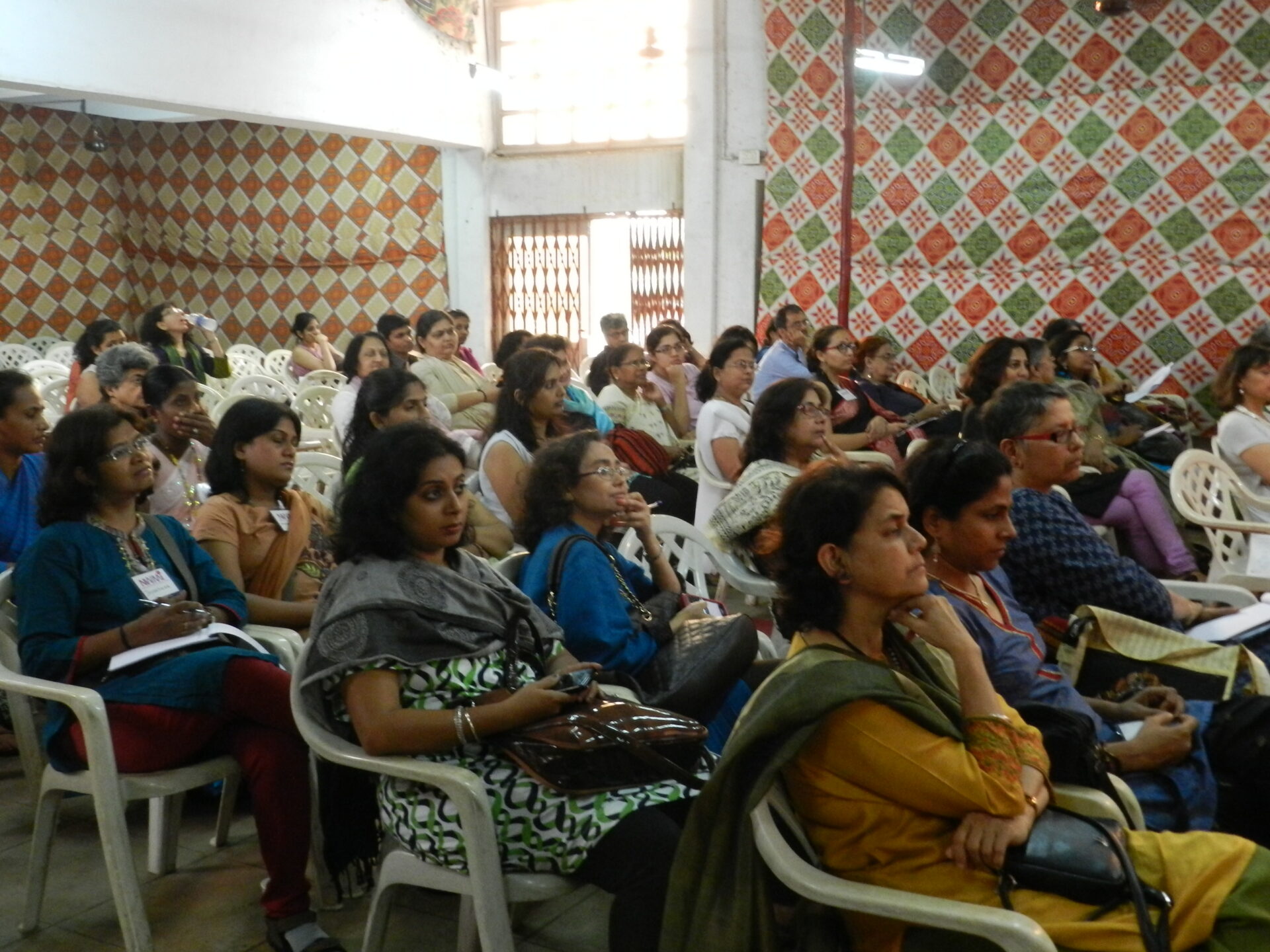
Over 80 women journalists from different media and languages across the country went into introspection mode for two hours of intensive debate, when a panel of six speakers from within and outside the media showed how improved coverage by media can help creating safer public spaces for women.

Offering her perspective on media’s constraints, Meenal Baghel, Editor, Mumbai Mirror, candidly admitted the lapses on the part of her publication in the past, while urging the Network of Women in Media (NWMI) to continue with its gender sensitisation training sessions for journalists in the newsroom. This was at the open session on ‘Women, Violence and the Public Space: How the media can tell that story better’ organised by NWMI in Mumbai on Saturday, February 2, as part of its three-day convention to celebrate a decade of its birth.

“Media’s voyeuristic appetite for gruesome details is insatiable,” pointed out Flavia Agnes, eminent lawyer at the forefront of the women’s movement. “This does nothing to help the victims, who do not wish to be labelled as victims all their lives. Media should end the hypocrisy of naming every single detail of the victim’s life except her name, and must help her in rebuilding her life after the trauma.”

The overall theme of the convention was ‘Women, Violence and the Media’, chosen for its topicality against the backdrop of the recent brutal rape-murder of a young woman in Delhi, which triggered unprecedented public outrage across the country.

The statement issued by the NWMI at the conclusion of the convention strongly calling for more sensitive reporting, urges the media to be a part of the solution and not of the problem of women already traumatised by violence. The statement makes a special note of the thousands of girls and women all over the country who have been physically, sexually, psychologically abused and injured or killed, and appeals for due media attention to sexual violence perpetrated on dalits and adivasis, as well as women in militarised zones, where security forces are granted impunity by law.

At the public event on Saturday, Harish Sadani, who heads the NGO Men Against Violence and Abuse (MAVA), Nandita Gandhi, Co-Director of Akshara, Lina Mathias, Senior Assistant Editor with EPW, and Anandita Sengupta, feminist blogger at Ultraviolet, offered guidelines and practical suggestions on how the media can help a survivor of violence cope with and overcome the trauma , rather than titillate and pry into private lives which intimidate and alienate the victim.

The convention also held discussions on ‘Struggles for survival and violence against women: the role of the media’. Lina Mathias drew attention to the steady erosion of Mumbai’s robust  tradition of collective action to demand accountability, and pointed out that women cannot possibly remain safe if the social and political culture has degenerated, making everybody unsafe. In a session on ‘Revisiting media coverage of the 1992-93 Mumbai riots’ explored Pratap Asbe, former Political Editor, Maharashtra Times, Meena Menon, Chief of Bureau, The Hindu, Mumbai, and author of Riots and After in Mumbai, Jyoti Punwani, who has done extensive reporting on the riots and their aftermath over  the past 20 years, Shahid Latif of Inquilab and Sukanya Shetty from the Indian Express explored nuances of coverage by the English, Urdu, and Marathi media and discussed learnings for the future.

The session on ‘Virtual Violence: Are Sections 66A and 67 of the IT Act the answer?’ discussed such forms of violence on the Internet as virtual stalking, harassment, abuse, impersonation, or unauthorised transmission of private photographs, and whether the legal remedies available are useful and adequate.

Exit mobile version