Categories
Beauty

The big bangs theory

Trimming your bangs is as easy as our 1-2-3-4-5 tutorial. Follow these steps to get the bangs without spending the bucks.
by Beverley Lewis

If you’re the kind of girl who chooses  ‘dare’ over ‘truth’ and has no problem talking to strangers, then you’ll have no qualms about grabbing a pair of scissors and trimming your own bangs. While we love the look of a full fringe, we hate how high-maintenance it can be.

Bangs have a tendency to grow out very quickly, so you have to make frequent trips to the salon to get them trimmed. But, what if you could skip the hassle of heading into the salon every few weeks and just trim your overgrown bangs at home?

We give you a step-by-step tutorial on how you can trim your unruly bangs.

Step 1: Tools of the trade: Comb and a pair of hair-cutting scissors

Step 2: Comb through: Tie your hair in a ponytail to get it out of the way, comb your bangs so they lay flat (see pic on right for reference). This makes it easier to focus on your fringe and helps you see where they need trimming. Always trim your bangs when your hair is dry. Otherwise, you may end up cutting your bangs shorter than you expected.

Step 3: Get trimming: Clamp the section with your index and middle finger and move it to either side to see how long you want the fringe to be. A safe length is under your eyes, in the centre of the nose. Place the comb underneath your bangs and pull it down before you start snipping away.

Step 4: Easy does it. Point the scissors into your hair and snip vertically (see pic on left for reference). This will give you a feathered finish rather than a flat one. Start low and work your way up to reach required length. It is best to start at the middle of your fringe and work your way toward the outer left corner. Then, trim the bangs toward the right side.

Step 5: Grand finale: Keep checking the length intermittently and even out the hair when you reach the desired length. If you want to go shorter, end under the eyebrows, but remember to leave the hair longer than the desired length because you will lose about an inch or half an inch as dry hair tends to jump up.

Beverley Lewis has been a writer for beauty magazines and has amazing tips to share. Have you ever given yourself a haircut? Tell Beverley about it in the comments section below.

(Pictures courtesy www.wikihow.com, www.hercampus.com,

Categories
Read

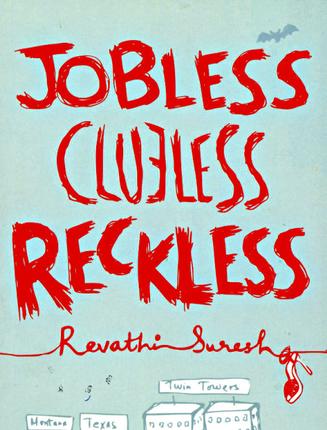
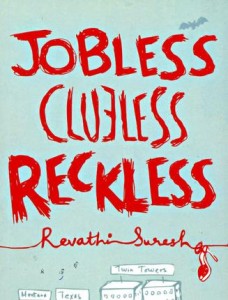
Review: Jobless Clueless Reckless

Debutant novelist Revathi Suresh tells us about writing a book for young adults ‘with exactly no story in mind’, among other things.
by Vrushali Lad | vrushali@themetrognome.in

Writer Revathi Suresh’s book, Jobless Clueless Reckless, was released very recently. It’s a sweet little story of a teenaged girl living in an (apparently) dysfunctional family  her father and mother are almost separated, neither have enough time for their two children, her brother is strange, to put it mildly, and her life is as different from her friends as could possibly be. (see review at bottom).

In an interview, the author tells The Metrognome about  writing her first novel, how a story was born out of nothing at first, why she thought writing would be ‘easy-peasy’ and why the suspense of not knowing what she’ll write next is killing her.

Excerpts from the interview:

What inspired this story?
I don’t know about inspiration, it was more that I was at loose ends. Or at least that’s what the people around me seemed to think and I sort of fell in with their idea of me, you know? I had quit my last part-time job and had plans to retire and be a stay at home mom-wife and swing on a swing because housework gets done on its own magically, right? Luckily for me, everyone else around me had better plans for me and kept going, ‘So what are you planning to do now?’, and brushing aside my claims of being a homemaker.

I guess their hopeful looks got to me at some point until I gave in and decided one fine day that I would write a book because that’s what the whole world and its mom are doing right now. Have you been to bookstores lately? (There are) So many new books by so many new authors. I think even the guys who work there moonlight as novelists. So what I’m saying is, I thought writing would be easy-peasy and so cool because I wouldn’t even have to change out of my night clothes to open my laptop. And that’s how I started banging away at my keyboard one fine day with exactly no story in mind. Somewhere along the line it became a book, so I guess magic does happen after all.

How long did you take to write this book?

Two years. Mostly because I didn’t write for a good part of that time. About 40 pages into the first draft I gave up and decided I was never going to finish it, so what was the point. It took me around six months to get the courage to open that particular Word file again. Then I took another I-can’t do-this-anymore break around page 117 or 118 and returned after many months. I’ve figured out that’s my style. Ditch, don’t write. I must say it works spectacularly well.

How close is the central character to you or someone you know?

Kavya is no one I know and she’s every teen I know, if you get what I mean.

The Manisha angle is very interesting, especially since there is no happy ending to it. What was the inspiration for this part of the story?

Again, no inspiration as such. I wanted a first chapter that would suck a reader into the book right away. Only, having created that mysterious opening I struggled for a bit to close that story. I had a few options and I tried them all out. One was that I leave it open-ended but that did not go down well with some of my draft readers. Two was to make her out to be what all Kavya’s friends think she is. But that would mean agreeing that Kavya’s delusional and I wasn’t happy with that at all.

Three was to actually follow through and write a mystery, but that requires some clever planning and plotting and I wasn’t up to that. Finally, I managed to conclude the Manisha story with the help of another hanging thread I need to tie up  Kiran. In an earlier draft, Kiran kind of faded away but that wasn’t working out either, so it’s nice that one chapter took care of the two of them in the end.

What are you working on next?

Nothing right now. But who’s to say what I might cook up in a year or two from now? It might just be the family dinner or another of these I-want-to-escape-writing-so-badly-that’s-why-I-keep-going-back-and-doing-it-all-over-again-books.The suspense is killing me.

What have you written prior to this book?

This is not the first book I’ve written but this is my first novel. I have written commissioned books for IETS and a few years ago I worked with them on this really exciting UNICEF-Karnataka government sponsored Sarva Siksha Abhiyaan project for reluctant readers in rural Karnataka. Many years ago I also wrote a commissioned biography of an industrialist (and it wasn’t as boring as it sounds) which was particularly challenging because he’d been dead twenty years and trying to get a picture of his childhood and early life was pretty difficult because none of his contemporaries were around. In another lifetime (I really am a relic) I was an editor at a Chennai-based publishing house where I worked with Subashree Krishnaswamy to bring out a magazine called Indian Review of Books. The two of us also edited fiction (mostly translation) and non-fiction for an EastWest imprint called Manas.

Why I suddenly became a teen, I don’t know.

Review of Jobless Clueless Reckless:

Not being a writer myself, I’ve always wondered about something: how does one write about a subject or develop a story around a character without a) The subject being autobiographical and b) The writer being even a little bit like that person.

I wondered this especially after I read books like Khaled Hossaini’s A Thousand Splendid Suns, the story of which revolves exclusively around women. Hosseini’s written that story with such sensitivity and dignity, it seems astounding that such a tale – of suffering in silence, of hiding great secrets in an aching heart, of gracefully submitting to a terrible fate, all because one is a woman – could be told by a man. That might sound childish in an increasingly gender-neutral world, even insensitive to some, but that’s just my opinion.

I wondered this again while picking up Jobless Clueless Reckless by Revathi Suresh. By her own admission, Revathi is ‘well into her dotage’. So how has she written about the life of a teenager?

The answer? Quite well.

The book is about Kavya, a teenager living at an embarassing address – Kansas, Grand Canyon, Bangalore, India – with, according to her summation of the matter, an embarassing brother and workaholic mother. You expect a teenage crush, some catty friends, trivial incidents blown out of proportion, and even a ditzy pair of parents, and Revathi gives the reader all of these and more.

Kavya’s parents have very decided ideas for their children, one of which includes homeschooling Kavya and Dhrittiman, her younger brother. The parents have all but divorced each other, and the two children live with their mother in a home that doesn’t encourage much intimacy – largely owing to the fact that Kavya’s mother has seemingly abandoned her earlier, jollier self for a career-driven woman who works at all hours to the exclusion of everything, even her children.

Several twists and turns later, while Kavya battles the ‘weirdo’ label imposed on her by peers who think she is quite possibly dangerous, to a wild night out with a seemingly demure behenji types who shows Kavya a wild night on the town, to finding out who her real friends are and what her heart tells her about Kiran, the big crush of her life, the story resolves itself to an almost satisfactory (for Kavya) end.

I thought some parts of the story dragged on a bit – the bitchy interactions between the girls, for instance – and the characters of Lara (Kavya’s best friend) and even Drittiman are slightly hazy around the edges. But I thoroughly enjoyed Kavya and Drittiman’s relationship – it is both gruff and touching – especially the way they unconsciously cling to each other in a crisis, and the missing Manisha, who Revathi opens the story with (plus the unresolved nature of her disappearance) is all too real. After I finished the book, I realised I actually didn’t want to know where and why Manisha vanishes, though I wanted to know at the beginning.

Revathi also touches on the subject of older children becoming unwitting ‘parents’ to younger siblings, the pitfalls and pleasures of homeschooling a child in system-obsessed India, and how it is possible to lead a double life and keep the two comfortably separate. All of this is done very well, without sermonising.

All in all, this is a good book to recommend to young adults, especially if you’re trying to wean them away from such horrors as the Twilight series. Jobless, Clueless, Reckless is a good read because it is frank, humorous and does not pretend to be something it is not – much like its heroine.

Duckbill Books, Rs 175

(Pictures courtesy Revathi Suresh, thehindu.com)

Categories
Do

Asha Bhosale gives Rs 5 lakh for drought relief

The Maharashtra State Government has already received upwards of Rs 116 crore via donations from within the State and without.
by The Editors | editor@themetrognome.in

The State of Maharashtra has responded well to the Government’s call for help to supplement its efforts in combating the drought situation that the State is currently facing. Hearteningly, a little over Rs 116 crore has been collected already, via donations from students, artists, businesspersons, banks, NGOs and Trusts, and private individuals.

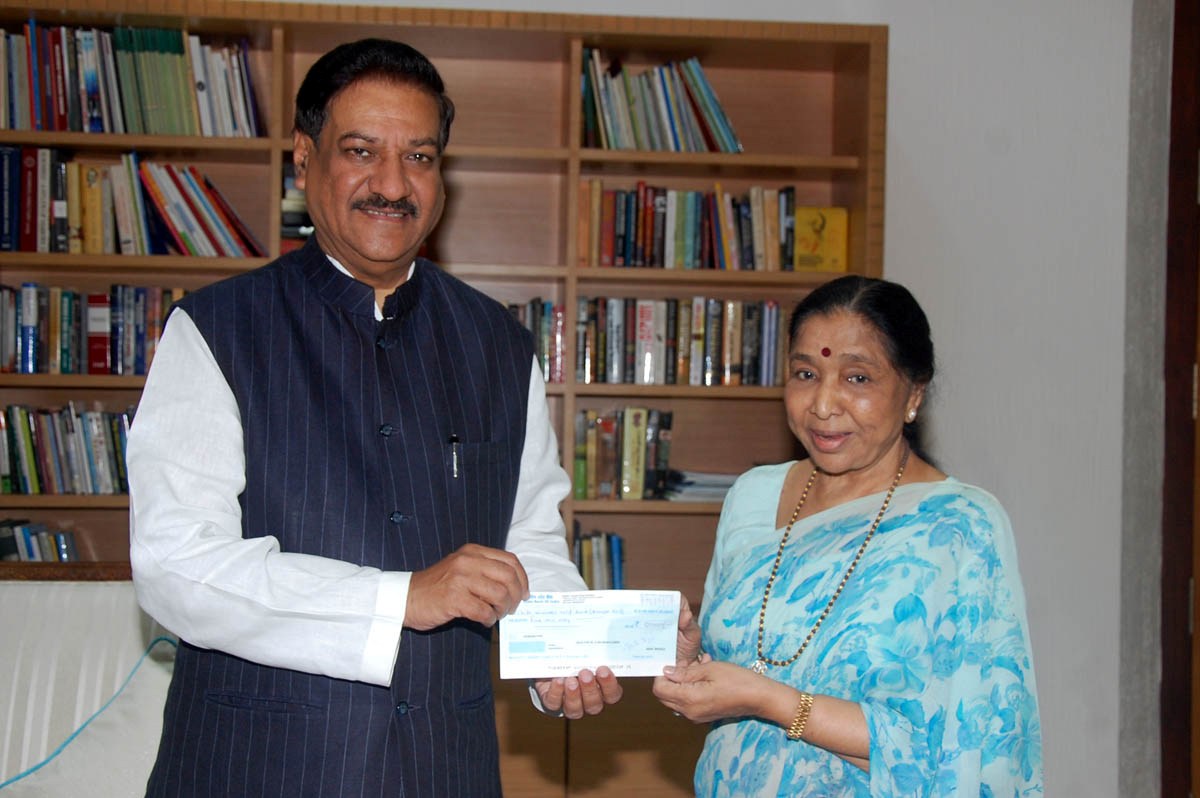
Today, noted playback singer Asha Bhosale visited Maharashtra CM Prithviraj Chavan at his official residence, Varsha, to hand over a cheque of Rs 5,00,000 towards drought relief. Of this, Rs 1,00,000 was the prize money she won at the recently-held Hridayesh Arts event, which commemorated her contribution to the film industry. The rest was contributed by Bhosale.

“It is our fundamental duty to contribute for those who are affected by the ongoing drought crisis in the State. All of us must help the Government in the relief efforts it is carrying out,” she said while handing over the cheque to Chavan.

The biggest donations thus far – both Rs 25 crore each – have come from the Mumbai-based Siddhivinayak Trust and the Shirdi-based Shri Saibaba Sansthan.

(Picture courtesy DGIPR, Mantralaya, Mumbai)

Categories
Event

Saints and poets at NCPA

Two must-watch events happen in Mumbai today, both at NCPA, and both based on the lives and works of saint-poets.
by Medha Kulkarni

You know what’s so great about some Wednesdays? That you have the choice to attend one of two excellent events. Today is one such Wednesday.

Two great events will take place today in the NCPA premises. The first is a film that will screen at the Dance Theatre Godrej, NCPA, while the other is a talk and poetry session about the lives of Marathi saints and poets, followed by a play by Anahita Uberoi.

Scribbles On Akka, Dance Theatre Godrej, 4 pm

India has a long tradition of strong, fearless female poets who have used their art to push into the mainstream consciousness, with issues they deemed important. Unfortunately, our education system is such that most of us have never heard of them or had the opportunity to even get acquainted with their work.

In this scenario, it becomes important to support the people who work to get society acquainted with them, while we learn of our own wonderful literary heritage. The film Scribbles On Akka is one such effort – directed by filmmaker Madhushree Datta, the film is based on the life and work of the 12th Century Kannada saint-poet Mahadevi Akka, a strong personality who wrote radical poems using the female body as a metaphor. These works have been composed and given a visual form against the backdrop of a contemporary musical narrative. The film is a celebration of rebellion, the meaning of femininity and a legacy that’s over nine centuries old.

Mahadevi left the domestic arena in search of God and abandoned all the norms that society imposes, including that of clothing. The film tries to articulate the meaning of this denial through the work of artists, writers and people who have kept Mahadevi’s image alive and dynamic, whether through folklore or art.

The film screening is free but admission is limited and on a first-come-first-serve basis. Do reach early as NCPA has a strict punctuality policy.

Poetry reading and play, Theatre – Sunken Garden, 5.30 pm

It is known fact that India is home to a rich literary heritage that is centuries old. Each State in the country boasts of several saint-poets who have created stunning works in their quest for God.

A celebration of this very legacy is planned tomorrow evening at the NCPA, through a talk and poetry reading session centred around the works of Marathi saint-poets. Renowned poet Prabodh Parikh will introduce the work of several Marathi saint-poets with a specific reference to Dilip Chitre’s translations of the works of sant Tukaram.

This reading will be followed by an interesting play directed by Anahita Uberoi, in which a group of Mumbai theatre actors will read the English translations of poetry by Tukaram.

(Picture courtesy tedxgateway.com)

Categories
Deal with it

No going back for suspended Government employees

Keeping in mind the ‘tarnishing’ of its image when suspended officials are reinstated, State draws up tough rules for reinstatement.
by The Editors | editor@themetrognome.in

Activists and citizens, please note. If you’ve been wondering and agonising over how those in Government service caught and suspended from duty after being part of wrongdoing, are reinstated after a while, take heart: the State Government of Maharashtra is taking steps to see that things change, at least slightly.

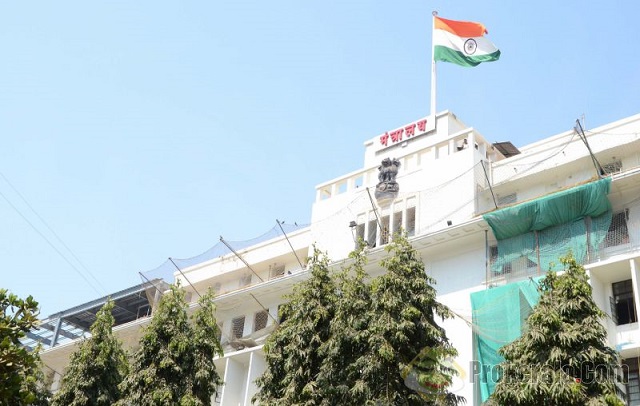
As per a Government Resolution (GR) dated April 20, 2013, the Government feels that the prior (albeit unofficial) system of reinstating a Government employee in the same position after he/she has been cleared of charges, or after he/she has carried out whatever punishment was meted out to them, shows the Government in a poor light. “Officials suspended on grounds of criminal offences or disciplinary grounds are reinstated as per a Government decision dated October 14, 2011, which clearly states the terms under which such officials may be reinstated to work. However, reinstating such an official at the same designation and place of work as before, maligns the image of the Government,” the GR states.

“Hence, the General Administration Department clarifies that in the event that a Government employee is to be reinstated to work following a spell of suspension from duty, he/she may not be reinstated in the same position, division, taluka or zilla as before. Further, he/she may be accorded a non-executive post.”

This new set of rules is to be complied with across all departments; clearly, these amendments mean that a reinstated Government official stands every chance of being transferred, apart from being posted to a job that keeps him/her away from further wrongdoing and controversy.

(Picture courtesy prokerala.com)


Categories
Places

What lies beneath Paris

A Mumbaikar discovered Paris’ catacombs – those dark winding tunnels that hold the bones and skulls of about six million Parisians.
by Beverley Lewis

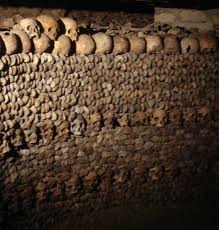
Underneath the bustling city of lights, you’ll find a maze of tunnels the Catacombs. Like the Eiffel Tower and the Louvre, Paris’ dark alter ego lies 30 metres underground and has a history of its own. Today, visitors can walk through the catacombs looking at the remains of human skulls and bones arranged in shapes like hearts and crosses. This ‘macabre’ exhibition, while chilling, makes for a fascinatingly unique look into the history of Paris, and is a must-see tourist attraction definitely not for the faint of heart.

Our destination on an early Saturday morning in Paris are the catacombs, the entrance of which is across the street from the Denfert Rochereau station, which is on both lines 4 and 6 of the Metro. As we make our way, we notice that the great avenues are silent, the shops closed.

From a bakery comes the scent of fresh bread. At a stoplight, a blur of movement draws my attention. A man in blue coveralls is emerging from a hole in the sidewalk. His hair falls in dreadlocks, and there is a lamp on his head. The man shoves the iron cover back over the hole and walks away, grinning, down the street. The line moves relatively quickly, even with nearly 25 people in front of us, we only wait 20 minutes. The entrance price is eight Euros.

Once paid, you descend 130 steps and then walk through tunnels for several hundred meters before reaching the catacombs themselves. The ceilings are low, the floors uneven and wet, and the temperature, cool. This is so great, a chance to delve into this rarely-seen aspect of French history and learn about lives cut short by horrific diseases, revolution and the razor sharp edge of a guillotine. If you’re planning a visit, a word of caution, though: after experiencing this dark underbelly of the city you may never look at Paris in the same light again.

What really are they?

At the end of the 18th century, Paris was an overcrowded city and so were its cemeteries. In an attempt to solve the growing real estate and public health problem, city officials decided to utilise the abandoned network of limestone quarries underneath the city for graveyards. In 1786, workers began transferring bones of the deceased into the underground tunnels. By 1860, some six million departed Parisians had found their final resting place in the Catacombs.

While they are an unlikely tourist attraction, the tombs began attracting curious visitors in the late 1700s. French royalty also had their curiosity piqued and were some of the first to descend into the depths to see the winding maze of bones stacked meticulously into macabre designs, some arranged in heart formations, others in crossbones. The French resistance used these tunnels during World War II, and rave parties flourished there during the 1990s. Victor Hugo used his knowledge about the tunnel system when he wrote Les Misérables. In 1871, it is believed that communists killed a group of monarchists in one chamber.

Officially known as the l’Ossuaire Municipal, the Catacombs continue to fascinate tourists and locals alike. Visitors must descend a spiral staircase twice as deep as the Metro to begin a 45-minute self-guided tour through the damp and dark quarters. At the entrance hangs a sign warning all those about to pass through, “Arrete! C’est ici L’Empire de la Mort (Stop! Here is the Empire of the Dead.)”. Today, the Catacombs are  home to urban explorers who use the tunnels as an art space, a music venue or even a clandestine meeting point for secret societies.

The Catacombs are located in the 14th arrondisement of Paris, accessible by the Denfert-Rochereau station. The museum is open from 10 am to 5 pm every day except Monday, though the last admission is at 4 pm. Price of admission is eight Euros. Check out their website before you plan on visiting because they are sometimes closed without warning or explanation.

Did you like this story? Tell us about a bizarre travel experience you’ve had in the comments section below.

(Pictures courtesy Beverley Lewis)

Exit mobile version