Categories
Swaad 'Anu'saar

Eating out, Mumbai ishtyle – Part I

What makes Mumbai’s tummy tick? Presenting five special, unique cooking styles that make the city eat out with a vengeance.
anurita guptaby Anurita Gupta

“Mumbai ki bhelpuri ka jawaab nahin!” exclaims everyone who visits or proudly stays in this fast paced, glittering Bollywood town. The corners of Mumbai streets are ensconced in history with Irani cafes still serving up their trademark brun maska and kheema pao.  Mumbai has evolvedi in all its glory over the years, thanks to the mixing pot of inhabitants who came to this sapnon ka sheher and got along their gastronomic treasure trove as well. No wonder then, we have a special variety of food places satiating our unique Mumbaiya hunger for the food that is ‘exclusive’ to us.

Gujarati Thali restaurants Before the dissolving of the ‘Bombay’ State on May 1, 1960, Gujarat and Maharashtra were one. This pretty much explains the presence of the colorful Gujarathi community in Mumbai and the city’s love for Gujarati food. From khamman dhokla and farsaan to aamras puri, the legendary Gujarati thali is not just a gujarati thalifavourite with the ghee-loving foodie Gujaratis but everyone in Mumbai as well. Sweet on the palette, Gujarati thali comprises of starters in the form of sev, gathiya, patrel and chhunda achaar and the mains of dal-bhat-rotli-shaak (lentil-rice-bread-vegetable). This pretty much means three kinds of bhaaji (with special emphasis on batata bhaaji), puri, kadhi, meethi dal and khichdi.
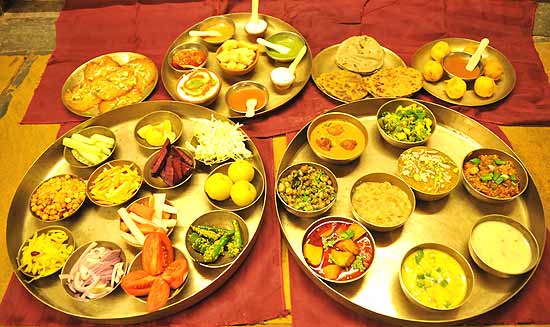
The desserts follow in the end with a bowl full of sutarfeni, sheero (halwa) and gulab jambu. The specialty is not just the food but the service as well. This eat-all-you-want feast has waiters drizzling liberal amounts of ghee on rotli and khichdi and refilling vaatis without you asking for it.

Hot tip: You can enjoy sumptious Gujarati thalis at Preeksha, Shantidoot Hotel in Parel, and at Status Hotel, Nariman point, next to Trident hotel.

Malvani and Konkani cuisine restaurants – Tracing its roots to the mid-17th Century, when the history of Mumbai started out as a mass of Koli fishing villages, Malvan and Konkan region’s style of cooking have been extremely popular preparations for sea food. That is the reason why Malvani food joints are exclusive to Mumbai (and Maharashtra) and a foodie’s delight.
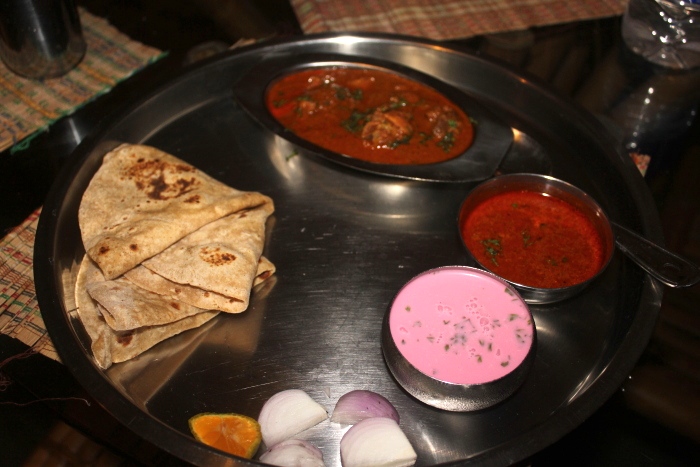
malvani cuisineThe most popular dish on the menu is Bombil fry. Bombil is a fish which is also commonly known as ‘Bombay Duck’. While there are some who like its dehydrated version with sticky rice (it stinks!), the fried form is a hot favourite!

Bombil is dipped in gram flour (besan) batter, rolled in semolina (rawa) and deep fried. It’s special because it’s crisp on the outside and soft inside, and makes for a brilliant appetizer. In the same list, there is kothimbir vadi’ (fried cakes of coriander and gram flour) and a hit appetizing drink is sol kadhi (a pink concoction of kokum and coconut milk). The most popular non veg dish after Malvani fish curry is Kombdi Vade. Also known as ‘Murgh Malvani’, it’s a conventional Malvani chicken curry served with vade which is like a puri made with ragi and wheat flour.

On the vegetarian side there is phanasachi bhaaji that has phanas i.e. jackfruit, chillies and spices.

Hot tip: Personally, I love the kombdi vade at Malvan restaurant at Thane, Paanch Rasta; Bombil fry at Jai hind, Parel and Bandra; Sol kadhi and lots more is brilliant at Gomantak, Dadar (West); Basa Fry at Gajalee at Phoenix Mills and Vile Parle; Mutton sukka, Prawn koliwada & non-veg thali at Sadeechha, Bandra (East) next to MIG club.

Irani Cafes: Originally started by the Persian and Iranian communities in Mumbai in the early 19th Century, the eeroon or Irani cafés have their own old world charm. It’s amazing how most of them retain the same kind of colonial look that is marked by high ceilings, with checkered table cloths and antique look furniture.

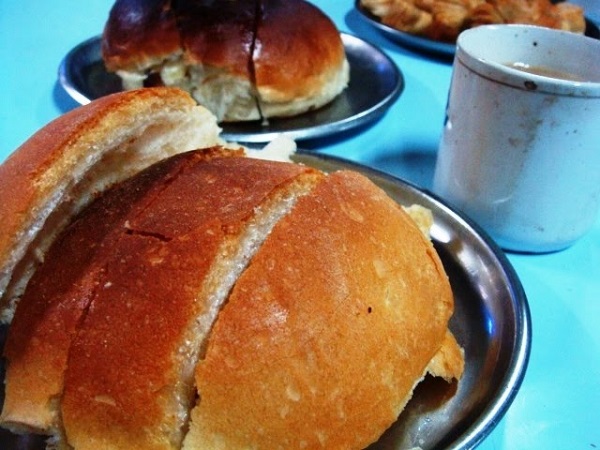
The glass jars holding jam tarts and rusks are also a classic. Along with that what’s most cherished is the food on the menu (which is also typically stuck under the glass table top) – brun brun-maska at Yazdani Bakerymaska (see pic on right), kheema or chicken patties, ‘Wrestler’s omelette’ (of five eggs), and the very famous Parsi breakfast of akoori. Akoori is the Persian, masala version of scrambled eggs which you can wallop with a dollop of butter and chopped kothmir on top.
For drinks there is the ‘phudina leeli choi’ and ‘Rogers raspberry’. While paying the bill, your pleasure of having a good meal may just be enhanced with a bawa anecdote from the owner himself. Dwindling in number, there are only 25 Irani cafes today in the city in comparison to 350 about 65 years back.

Hot tip: Enjoy the jam tarts and mutton patties at the 102-year-old Kayani & Co. café in town, wrestler’s omelette at Coolers at Kings Circle, the unique berry pulao and sali chicken at Brittania, Kala Ghoda and relish the best mawa cakes at B Merwan’s, Grant road.

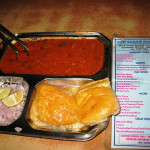
– Poli bhaji kendra– Catering to the typically fast life of Mumbai, the purpose of these food hubs is to serve cheap, homemade food on the go. If you travel long distances by train, you can hop into a poli bhaji kendra strategically placed right next to the railway station and pick up fresh food of your choice for office or back home.

Typically put in big tagaras (vessels) in a row you can pick from dal, chawal, roti and bhaaji of the day for a nominal price. Although there is nothing fancy on offer, the vegetarian food is very high on the ‘home feel’ quotient. The popular ones are Annapurna poli bhaji kendra in Thane (West), Zakas and Yash in Kandivali, and Om Chetanya in Parel.

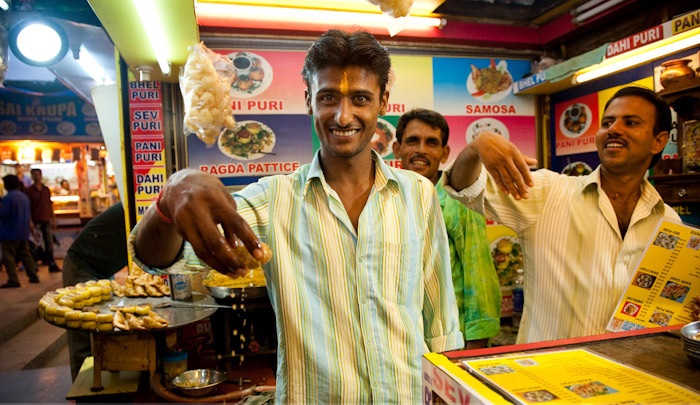
– Street-side chaat corner – Mumbai ki bhel, sev puri, dahi batata puri and the super famous, talked-about in Bollywood films – ragda ‘pattice’ – are unmatched. While Delhi may take pride in its golgappas, papdi chaat and tikki chhole, it can never make a mean bhelpuri like you find on Juhu chowpatty.

dahi batata puriThere is probably no street in Mumbai that doesn’t boast of a patented bhelwallah who does his maximum business in the evening when everyone is looking for a quick chatpata snack. Made from murmure (puffed rice), fried puri, chana daal, onions, boiled potatoes, raw mangoes and red and green chutney with a liberal sprinkling of sev, the Mumbai bhelpuri is a must to close the hectic day before dinner.

Hot tip: While you can’t quite go wrong with the bhelpuri in the city, you must try the ragda patties of the chaat centre next to Matunga Station. Khau galli, Ghatkopar has the most delicious, butter-soaked pav bhaji and  you have to try the batata vadas at Shrikrishna, near Chabildas High School, Dadar Market. The stalls at chowpatty have the best sev puri and kaala khatta. Juhu beach promises the ultimate dahi puri if you can fight the traffic leading to it and the crowds there as well.



Next: South Indian tiffin and Udipi joints, Maharashtrian bhojanalays, Mangalorean lunch homes, Mumbai’s galla Chinese and street-side Mughlai food hubs.

Anurita Gupta is a media professional who is passionate about two things – food and radio. Her love for all things food makes her a foodie with a cause.

(Pictures courtesy www.outlookindia.com, redscarabtravelandmedia.wordpress.com, amirashah.wordpress.com, www.sephi.com, www.in.com, www.outlookindia.com, innainindia.blogspot.com, erecipeguide.com, www.akshayapaatram.com, www.monsoonspice.com)

Categories
Beauty

Fuss-free hair for the monsoon

The rains are upon us, so spruce up your limp locks with some smart cuts and care for the season.
by Beverley Lewis 

The monsoon will soon be upon us. And while that is great news for a city wilting under terrible heat, it’s bad news for your hair.

Frizzy hairWhether you have short, long or medium-length hair, being caught unawares in a passing shower can wreak havoc on the tresses you work so hard to keep well-groomed.  Limp locks, frizzy halos and even scalp infections can prove extremely troubling, so be sure to give your locks a little TLC and you will be the belle of the ball.

Having lustrous and healthy hair is the dream of every woman.  However, in the monsoon season, extra care should be taken due to atmospheric conditions. The onset of the monsoons leads to hair care problems like stickiness, greasiness and dandruff. The heightened moisture makes your hair flat and its texture, dull. The result? You end up with dull, lifeless and frizzy hair.

Regain your crowning glory with these tips for great hair in the rains:

Head turner

The monsoon season can play havoc with your mane. Getting caught in a cloudburst is bound to wreck your well-coiffured hair.

In order to prevent such a mishap, tie your hair into a ponytail while traipsing about in the rain.  Hair is a lot easier to maintain when it is tied up. You could also get a little creative and leave a few strands loose around your face, to give that sexy siren look.

braidsAnother favourite that is making a comeback is braids. One can opt for a loose braid to achieve the out-of-bed look. This look can be used both in the boardroom and the bedroom.

A great trend this season is the pixie haircut. It is a little adventurous, but you only have to style it once in the morning, leaving you time to grab your cuppa and head out the door.

Or just leave your hair loose and long. Style it to look messy, and then let the weather take its course over the rest of the day. Your hair will look tousled and fantastic and no one will know how little effort it took.

Layered hairstyles are also becoming quite popular. For instance, a brilliantly-razored, many layered haircut for medium length hair with a few bangs that can be tied and combed on monsoon hair careto the side of the head with a dainty hairclip, is a great and ideal hairstyle for medium-length hair.

If you prefer the schoolteacher look, you can tie your hair in a bun. You can also complete this look with a pair of funky glasses, making it a good look for the monsoon.

Colour me bad

Vibrant shades such as purple, blue, pink or red, green are gaining popularity on and off the catwalk this season. However, coloured hair tends to lose moisture, and gets dry and frizzy. To avoid this, it is important to use a good colour care shampoo and conditioner. Also, use a serum or a leave in conditioner and go for regular hair spa or deep moisturising washing coloured hairtreatments. If you follow these tips you could end up with sassy, glossy tresses.

Get your swag on

Skip the styling products and go natural during the monsoons. This means that you must avoid using excess hair styling products such as mousse, hair gels, styling and fixing sprays and wax. These tend to clump up and become rather useless when they come in contact with air packed with moisture. If you must use a product to control the frizz, use a light slick of anti-frizz or shine serum and soon you and your tresses will be singing in the rain.

How are you getting your hair ready this monsoon? Share your tips with Beverley in the comments section below.

(Pictures courtesy blog.snapdeal.com, www.collegegloss.com, www.byouthiful.com, www.deal.com.sg)

Categories
Cinema@100

The man behind the genius

Satyajit Ray, for all his fame, was seldom written about in detail. Biographies reveal bare details about the maverick filmmaker.
by Humra Quraishi

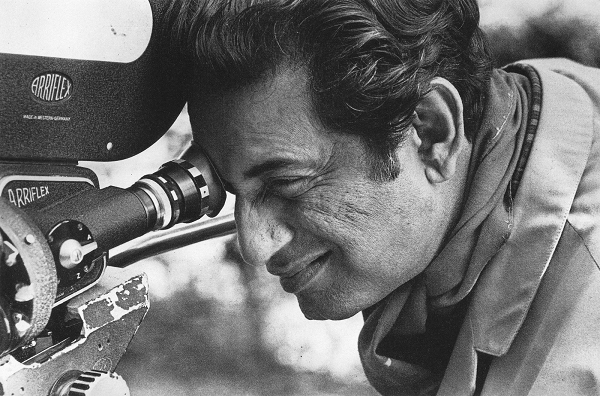
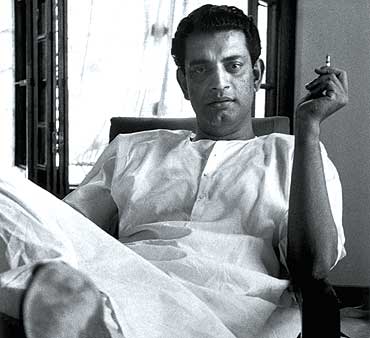
satyajit raySatyajit Ray remained an enigma all his life. Even today, not much is known about the extraordinary filmmaker, India’s first recipient of the Lifetime Achievement Academy Award in 1992, apart from the bare facts that he is survived by his wife Bijoya, son Sandip and grandson Sauradeep.

It’s a bit disappointing, not having reams to read about the man who redefined Indian cinema. His handsome looks, his rich booming voice, the classy sophistication that stood him apart from his contemporaries…there could have been much fodder for sensational scandal, for stories of unsavoury escapades away from the eyes of the world.

Instead, his name was never linked to any woman. He was a very happily married man, married to his first cousin and best friend, Bijoya. The only nugget of information to come out about their marriage was that Bijoya had pawned all her jewellery to help finance Pather Panchali, his first film.

But the relationship must have been sweet and a mutually beneficial one. Satyajit was barely two years old when he lost his father, and his mother took him to live with her brother. Bijoya was his uncle’s daughter, and the two became very good friends because she was of a musical bent of mind, and he was greatly attracted to music. Not many know that Bijoya enjoyed a brief spell in the Hindi film industry before she quit acting for marriage to Satyajit.

Her presence was invaluable to her husband. In his biography (by Marie Seton), Satyajit says, “She is always the first person to read my scripts. Her comments are often pertinent and sometimes, ruthless. She always has very instinctive, feminine reactions to certain things, which I find very useful. And I almost always incorporate her suggestions.”

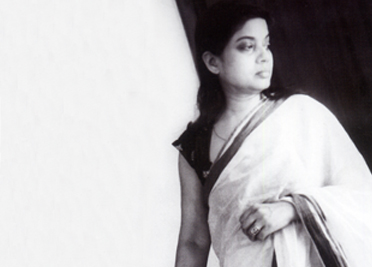
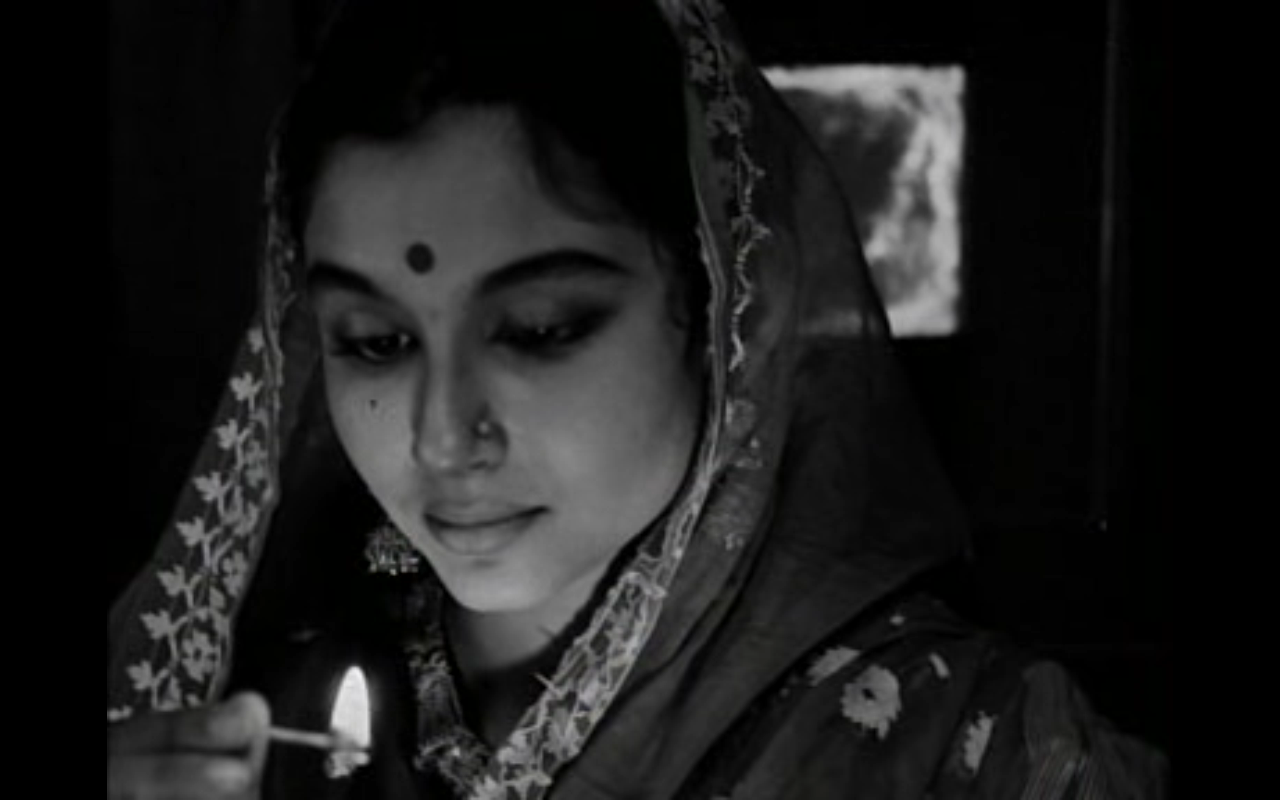
What did Bijoya (in pic on right) feel about her husband, the genius Satyajit Ray? In her biography (penned by Andrew Robinson), she says, “What I admire about Manik (as Ray was called) is his Bijoya Raysimplicity, his honesty, his generosity, his kindness, and above all, his ability to mix with people from all walks of life. He is at home with everybody. This is the hallmark of all great men.”

Another biography on Ray, The World of Satyajit Ray, written by veteran journalist Bidyut Sarkar, was to be released on April 24 in Calcutta, but Ray’s death overtook the release by a few hours. Sarkar spoke of Ray and his association with him thus: “In 1958, when I was in New York, I got the news that Ray was planning to visit New York on the occasion of the release of Pather Panchali. I wrote to him, inviting him to stay with me. I could feel that as a man of domestic habits, he would not be comfortable in impersonal hotels, and he wrote back accepting my offer.

“Whilst he was there, I’d see him sitting and looking at the gorgeous view of Central Park facing his room and the apartment, but it seemed as though the Park seemed to magically vanish from his horizon when he would look out and conjure up in sketches the sequences and settings of his next film set in Bengal…”

Sarkar writes on the lesser-known Ray thus: “Only two women appeared to have influenced him – his mother and his wife. His mother, a remarkable woman who was widowed early in life, played a key role in Ray’s growth. Bijoya, his wife, took over the role so far as Ray’s artistic development was concerned.”

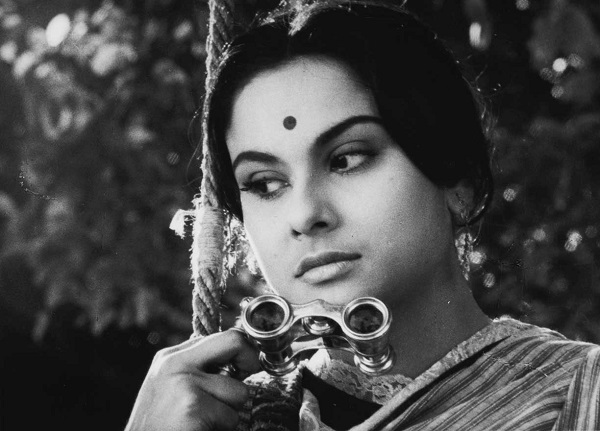
Even in his leading ladies, Ray never looked for dolled-up glamour, but for intelligent beauty. Madhabi Mukherjee, Sharmila Tagore, and in his last three films, Mamata Shankar, best fitted this description. Ray’s biographer, Andrew Robinson, throws more light on the pains Ray took to project Madhabi Mukherjee (in pic on left) as aesthetically as possible in Charulata. “Madhabi charulatahad bad teeth as she was addicted to eating paan, just like the character Charulata, which destroys the gums and stains the teeth black,” Ray said. “I had to photograph her very carefully so as to not show that side of her.”

“The lower set of teeth was bad. I had to put the camera at a low angle, so that even when she spoke, the lower set of teeth wouldn’t show. I suggested taking out her teeth, but her mother objected, it was too early for that. But I knew the camera could manage it.”

Ray was also a teetotaler. Sarkar writes, “Ray was a man of very simple habits…only once I was put in a situation of embarrassment with him. I had written a cover story on Ray for the Gentleman magazine. In Bombay, the stereotypical editorial picture of a cosmopolitan man was suave and sophisticated, and it led to Ray’s identification in the introduction of my article as ‘a connoisseur of fine food and wine’. He said I’d made a closet drinker out of him. Fortunately, Gentleman magazine, in the next issue, published his rejoinder that ‘his eating and drinking habits probably made him only half a gentleman, but there it was.’”

Not many also know that Satyajit Ray could have been the President of India, according to the strategy of the Opposition parties and if he had agreed, or that he could have easily been in the Rajya Sabha if he had accepted Prime Minister Indira Gandhi’s invitation. “But he was not the man to be led into temptations or compromises of any kind,” said Sarkar.


(Pictures courtesy paragraphpost.blogspot.com, satyajitrayworld.com, raylifeandwork.blogspot.com, 7-art.blogspot.com, lalitkumar.in, www.gonemovies.com, www.desitorrents.com)

Categories
Guest writer

Mumbai is my lover

What makes all of us fall in love with this city? And is there a simple answer to this question?
Purva Desaiby Purva Desai

I’ve often wondered what’s kept me stuck to a city like Mumbai, to the point where I’m hostile about the idea of moving any place else. Wherever I go, I invariably begin to compare it to Mumbai.

Maybe I got Bombay-genised long ago, in the days when we partied till 5:00 am and going to J49 toh boss banta hi banta tha. I can’t pinpoint and explain to perplexed lovers of open spaces and believers of a quality life that for me, this is the best place to be. They keep asking ‘Why?’

Why? Because of everything. Terminology, food, places, people…I can go on and on.

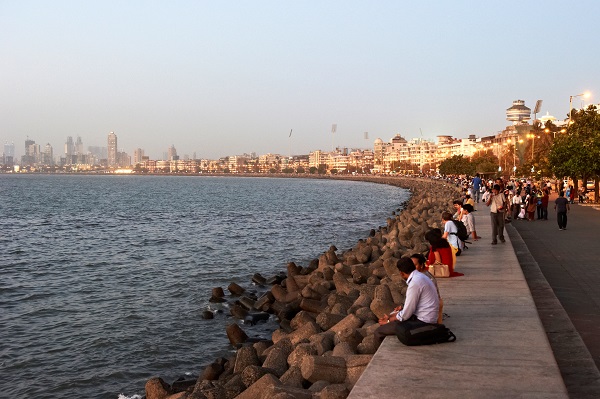
I’ve observed on my travels that I’m a hopeless homesick who finds something missing in most places and which I feel Bom-Mumbai has – a vibrating, pulsating, encompassing heart!

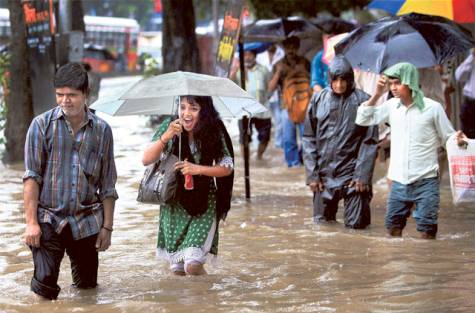
I find it in the midst of a flood when the whole city is swimming and strangers parade in complete darkness, holding your hand and singing songs to cheer you and ensure you reach home safely.

I find it in the midst of a terrorist attack where the whole city marches courageously to Colaba to show that we love one religion: humanity.

I find it at a cricket match at Wankhede Stadium where everybody is cheering Sachin Tendulkar – then there’s no Gujarati, Maharashtrian, Punjabi, Sindhi, Parsi. We all belong to one caste. And when the whole city is out on the streets, celebrating and cheering till the wee hours of morning.

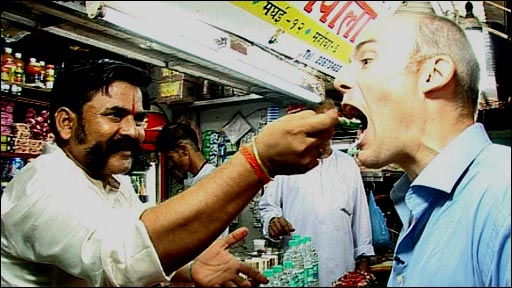
food in mumbaiI find it in the food – in the vada pavs, dabelis, pav bhaji, sev puri, ussal, missal and bhajjiyas. Here aloo pyaaj becomes kanda batata.

I find it in people even though you live alone – no one can be a stranger here. Your tai, bai, dhobi and bhajiwallah become the friends you talk to daily.

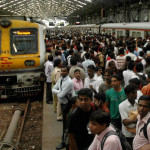
I find it in the chaos- the fast pace, lack of living space, the hurry to catch that train or run after that BEST bus. But in the end, you’ll always make it.

I find it in an autorickshaw where you are safe and secure in the hands of a rickshawwallah even at 2:00 am. Never mind his spitting (mostly paan) or the race he’s having with the BEST bus. Ignore that and you’ll survive.

I find it in Colaba where you realise that Shantaram makes you see the place in a whole new light and you wonder if foreigners know Mumbai more than you do. Maybe they do…heavy rain in mumbai

I find it on the streets where Zara, Forever New, Mango, Ann Taylor and FCUK all come under one roof for cheap – it’s surplus but still ORIGINAL.

I find it in the bars, clubs and restaurants where you’re as valued as a Bollywood star or celebrity.

In the end, maybe I’ve said too much or maybe I have not said enough. I can make endless comparisons, use metaphors, similes and give ‘hajjaar’ explanations, but the realisation is always one and always the same – I’ll have an eternal love affair with this city.

More things to love about Mumbai:

Purva Desai is an entertainment journalist with The Times of India (online). The Santacruz resident says she is up for anything spontaneous but that apart, she loves traveling, exploring different cultures and cuisines and meeting new people, apart from having a passion for yoga, dancing, reading, cooking and films.

(Pictures courtesy www.guardian.co.uk, www.bbc.co.uk, gulfnews.com, creative.sulekha.com, www.arrivalguides.com, blogs.wsj.com, winnersdelhinews.com, postnoon.com, www.indianaturewatch.net, kaapiandart.blogspot.com, www.buzzintown.com, www.desicolours.com, goindia.about.com)

Categories
Learn

Three suicides happen every day in Mumbai

Statistics for the country’s financial capital are grim, with most suicides found to occur in the 18-45 years age group.
by The Editors | editor@themetrognome.in

Actress Jiah Khan killed herself at her home on Sunday. She was 25.Actress Jiah Khan (see pic on left) committed suicide at her Juhu home late on Sunday evening. The country woke up to the news of her shocking death, even as the inevitable question cropped up yet again – what drives somebody so young to suicide?

There were three suicides in Mumbai in the last two weeks, all of them publicised in the news. However, what is not known widely is that the malaise runs quite deep – as per data sourced from a comprehensive suicide watch study released for India by the World Health Organisation (WHO) for 2006-2007, police statistics said that three lives were lost per day in Mumbai due to suicide. As against this, Navi Mumbai registered two deaths by suicide per week.

All over the country, as per statistics from the National Crime Records Bureau (NCRB), a suicide takes place somewhere in the country every five minutes. “Seven times that number attempt to take their lives and as for those who feel desperate and unable to cope, the number is mind boggling. More suicides occur between (the ages) 18 and 45 – in other words, in the most productive age group of our society,” the report says.

What is it about Mumbai that is claiming more lives by suicide than other factors such as accidents and disease?

The Mumbai conundrum

self mutilationDr Harish Shetty, renowned city-based psychiatrist, said in a newspaper interview recently, “In a city like Mumbai, people suffer from loneliness. We are getting at least eight people with suicidal thoughts. You have to be alert in case somebody you know gets angry on little matters, or uses words like ‘I am not worth it’ or ‘My life is finished’ every time he or she is under stress.”

A major point to ponder for our city is that with our fast-paced lives, there is constant competition to get ahead and stay ahead. “In this city, you are constantly racing against the clock to finish projects, earn more, get a better life. Rising inflation, growing peer competition, not as much opportunity to succeed as one would like…all of these begin to prey on the mind and cause a tremendous amount of stress,” says Dr Varsha Thakker, a private practitioner. “While most people are able to channel their frustrations into positive outlets, there are some who may not be able to cope. This class of people may not even acknowledge that there is a problem, that they may need help.” She adds that often, with an existing burden of problems, it sometimes takes just a little trigger to set a person on the path to suicide. “We hear of children killing themselves after a petty dispute with their parents. It may seem like a small issue to anyone else, but it is possible that that child was carrying a huge amount of stress all along, and one harsh word probably pushed him over the edge,” she says.

Suicides are not rampant only among students and young professionals in the city, but among the city’s police force as well. A recent The Times of India report says that there were 168ask for help  suicides in the Mumbai police force in the years 2002 to 2012. “Let’s face it – this is a tough city to live in, and the pressures of daily life are immense,” says Dr Shetty. “However, people must seek help if they are depressed often or find themselves increasingly thinking of ending it all.”

Some statistics to ponder:

– Every 3 seconds, a person in India attempts to die.
– Suicide is one of the top three causes of death among the young in the age group of 15-35 years.
– About 1 lakh people die by suicide in India every year.
– 3 people in a day in Mumbai commit suicide.
– A study says 72 per cent writers, 42 per cent artists, 41 per cent politicians, 36 per cent intellectuals, 35 per cent musicians and 33 per cent scientists are prone to stress-related disorders.
– Suicide estimates suggest fatalities worldwide could rise to 1.5 million by 2020.

(Statistics courtesy AASRA, the helpline for the distressed. Pictures courtesy www.india-forums.com, suicidal-lovez.blogspot.com, celiacdisease.about.com, www.sailorspouse.com)

Categories
Cinema@100

The secret world of Shahrukh Khan

One of Hindi cinema’s megastars has unfulfilled dreams – impossible as it sounds – and they involve guitars and women.
by Jatin Sharma

While producing a show for UTV Stars, Live My Life, I was meeting people close to Bollywood superstar Shahrukh Khan to get some insights into his life. We were looking to get a glimpse of this Khan’s life away from the arc lights. Does he do normal things like the rest of us? What does he do to unwind? What makes him laugh?

shahrukh khanMost importantly, what does one of Hindi film industry’s most powerful men dream of? We were trying to get all this and more.

After the work wrapped up, in my head, I started calling SRK ‘Dream Khan’. There is something about this star that is different and enchanting.

Those who know him say that his habits and preferences are like that of a child. But he deals with situations like a master. He is disarmingly honest, and he has a wicked sense of humour that catches you off-guard. Proud of his Delhi origins, he is equally at home in Mumbai. And on the subject of home, what we learnt during the shoot was that one could catch this Khan at his honest best in his home surroundings.

We shot a volley of questions at him, he retorted with several smart answers.

Phone disturbing you? Keep it in the bathroom! 
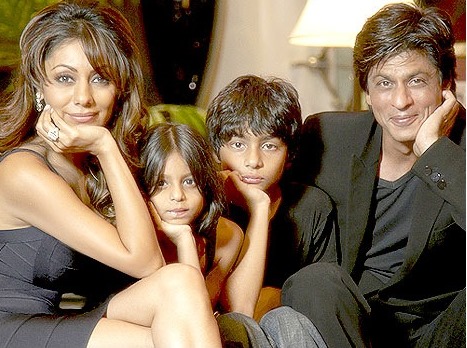
The first thing we understood about him was that he is a family man in the real sense of the term. He would shoot till late at night, sometimes pull an all-nighter, but he would still be up early to drop the kids off at school if they had an examination. He loves spending time with his family so much, that to avoid distractions, he is known to keep his mobile phone in the bathroom! It’s weird to some people, but it helps him Shahrukh khan with his family at his home Mannat 1_thumbnot check on his phone all the time.

Sleep-walking with fairies
Another thing we learnt about him was that he won’t get into his night clothes till they are perfectly ironed. Yes, he sleeps in crisply-ironed clothes. Apart from this, he liberally douses himself with perfume before going to bed. Reason? He feels that if the fairies come to him while he sleeps, he should smell nice.

Dreams unlimited
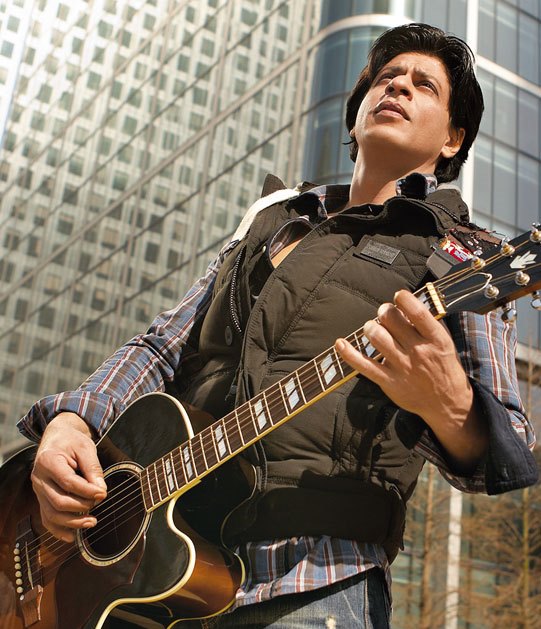
When I asked him what his real dreams were, dreams that kept ticking away in his waking thoughts, he confessed to a few things. “I want a jeep like the one in the song ‘Mere sapnon ki rani’ from the film Aradhana.” And then he said, “My dream is to learn to play the guitar.” This Khan has strummed the guitar and charmed several of his leading ladies in his films, but in real life, he doesn’t know the first thing about playing the instrument. He added that his dream for several years was to learn to play the guitar, and then find women and children (not men) and play for them. “I would just need fuel for my jeep and I would go all over the place playing my guitar for them.”

Shah-Rukh-Khan-playing-a-guitarAnother dream, he said, was to have a lot of public toilets for women. “I think sanitation for women is grossly overlooked in our country. I want to correct this. And if I can combine two dreams – I would play the guitar outside women’s toilets!”

Endorsing Videocon
“As a child, I wanted to watch the football World Cup (he used to be an avid footballer himself). My mother bought the first TV in our house; it was a Videocon TV set. I would watch the World Cup while pressing her feet. So the brand is very special for me.”

His other home in Bandra
Not many people know that he owns a penthouse on Carter Road in Bandra, with stunning all-round views of the sea. He told me a story about this house. “It’s a lovely house, and you can see the sea from all its windows. It’s a stunning place. When my mother-in-law first visited us, she looked at the views and said, ‘What’s this?’

Very humbly I replied, ‘Yeh mera ghar hai (This is my house).’

Yeh ghar hai? Yeh toh jahaaz hai! (You call this a house? It’s a ship!)’ she said. I resolved to move Gauri to a house that would remove all misgivings from her mother’s mind.” And he later bought Mannat.

(Pictures courtesy bestfwallpapers.blogspot.com, donshahrukhkhan.blogspot.com, www.koimoi.com, www.upperstall.com)

Exit mobile version