Categories
Beauty

Have a good-looking vacation

It’s easy enough to care for your skin at home. But what do you do when you’re out on vacation? We bring you tips to look beautiful even on your vacation in the rains.
by Deepa Mistry

Indian monsoons are truly beautiful; the green spread soothes the stressed mind; dust is washed away, as is the heat-induced weariness of people, but when it pours cats and dogs, some might prefer to cosy up in the house and enjoy the rains. But we also love to be adventurous in this season and take mini breaks.

However, the monsoon plays havoc with your skin and hair. Add to that the change in climate and location on your holiday, and you end up looking like something the cat brought in. But if you follow some simple tips, you can look pretty on your vacation and enjoy great skin and hair, too.

Manage those tresses

– Climate change can cause hair to go limp. Avoid tying them for too long, especially if they are wet. Wet hair can cause dandruff and itchiness, which causes hair fall. Carry a handy towel and a wide-toothed brush to avoid tangles. Add a playful look to your hair by using accessories like hair bands, colourful clips and pins.
– Good cleansing and conditioning is essential, so make sure you carry a mild shampoo and conditioner.
– Try a loose bun, loose hair, loose side pony tail and protect your hair from exposure to humidity. Rains can dampen your hair but avoid using hair styling products like blow dryers or styling iron. Let your hair dry naturally.
– If you decide to walk in the rains, wear a jacket with a hoodie or carry a trendy and colourful umbrella to add a glam touch.

Footloose
– Avoid wearing closed shoes. Skip the leather boots and high heels and opt for colourful rubber flip flops, but avoid walking in dirty water as it might cause fungal infections. Open footwear makes it easier for water and dirt to seep out, keeping feet still fresh.
– Make sure you wash your feet with clean water after you get indoors. Pat feet dry. talcum powder on feet

– After drying your feet, apply some talcum powder and air your feet for a while.
– Before going to sleep, apply moisturizer on your feet. This helps you get rid of the dead skin and keeps feet clean, smooth, and allergy-free.
– Get a pedicure before your trip. Keep nails trimmed.
If your footwear is soaked in rainwater, make sure you dry it before use the next day. Damp shoes offer a breeding ground to bacteria and germs, which ultimately lead to infection.
– If you are headed for the mountains, you might have to wear socks and shoes. Apply talcum powder inside your socks before you wear them, this will help feet stay fresh and help avoid smelly feet.

Skin care
– Drink as much as water you want, don’t worry about the frequent urination. Water will keep your body hydrated and add a freshness on your face.

moisturise skin– Moisturising is very essential, so before you sleep also apply lots of moisturiser to keep skin soft.
– Use lots of sunscreen before you head out, even if it’s pouring outside.
– Go easy on the makeup. If you must use a lipstick, we recommend a long-stay water resistant one. Opt for bright pinks or coral and avoid lip gloss. Add a dramatic touch to your eyes by opting for colours like blue, purple and green as they are the best colours this season.
– Stay away from heavy and creamy skin products. Go for a good quality oil-free matte primer, and a light oil-free base.
– Sheer film of light brown, beige, pastel or pink cream eye shadow can be used along with a thick line of eyeliner. Avoid liquid liners; opt for a pencil eyeliner or kajal instead.

We hope our tips help you on your monsoon break. But remember to also eat and drink right for an extra fabulous monsoon vacation!

(Pictures courtesy www.personal.psu.edu, him.uk.msn.com, www.eveorganics.com.au, blog.docsuggest.com)
Categories
Bombay, bas

The 1992 riots: a memoir

It was the worst of times, but yet, it may have been the best of times for a fourteen-year-old boy.
by Abbas Bagasrawala

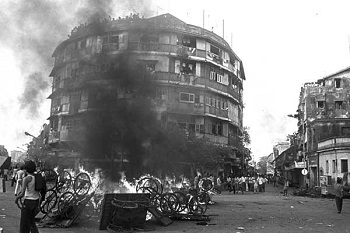
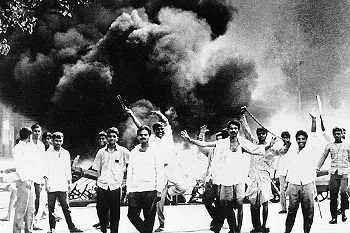
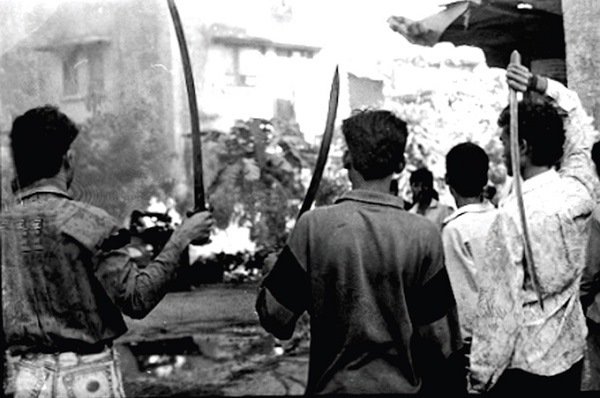
I don’t remember the hatred. I do, however, remember the fear in my parents’ eyes as we were laid under siege in my all-Muslim building in Mazagaon, waiting up on our terraces for marauders that may have come, but never really did, probably more because of sheer dumb luck than anything else. I remember watching the city burn. Even at the age of 14, I realized that there was something wrong with the world if your city burned.

Mumbai riotsI remember being a little pissed off that, when the violence got too much for the pussy footing police, an army platoon or whatever was brought in and it encamped in St. Mary’s ICSE, foregoing my school, St. Mary’s SSC, which was just across the road. I reasoned it must be because they had ‘all those rich kids’, and was more bitter about this insult than any Ramjanmabhoomi issue anywhere.

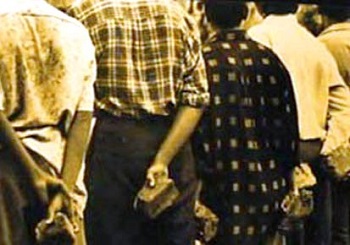
I remember seeing a mob armed with swords chasing down some guy on the bridge near our home and I remember the next scene as if it was in a B-grade movie, where the guy escaped by running and leaping with a grace and an élan that didn’t belong to those gauche times, into a BEST bus that was at that opportune moment passing by. The technique that saved his life could have only been learned after a lifetime spent training in the kung-fu art of running by the side of a bus before leaping into it. It was a technique that could only have been learnt in middle-class Bombay where those buses not just ferried you towards your hopes and dreams but also in most cases got you back home to your loved ones after situations that could only be described as murderous.

I remember my friend Murtuza being slapped across the face by an uncle in our building to save him from being picked up by that same army platoon because he burst some leftover Diwali crackers in mischief (the Army thought it was disturbing the peace) that arose from the boredom of being confined to our building playground that long holiday from school. Riots are not just destructive to life and limb, to person and property, but also to kids at home with nothing to do except wait for the rapture that is the break in the curfew. There was no cycling in the gullies, no cricket in the driveway, and no football in St Mary’s ISC. There was not even the remotest possibility of sailing, of catching a movie or walking to a dingy videogame parlor to blow pocket money on the Mario Brothers and Contra. Even our windows were kept closed because my parents took the shoot-at-sight orders way too seriously.

Time passed excruciatingly, mind-numbingly slowly. The riots had taken all that was good about life, and turned it to squalor.

Also while we were imprisoned in our building I remember hating the fact that I had to part with my cricket bat, my hockey stick, and some stumps to some of the older kids who were Mumbai riots 1apparently collecting sports goods for some grand sporty defense of the building, in case people decided to attack us. I was certain this was just some elaborate scheme to merely get their paws on our stuff. But most of all I remember the people who took the riot and made it something that I learned from, something that made me more secular, something that make me love Bombay more. They were the people who rescued Bombay from the riots, from the self-immolation that it seemed to be hell bent upon.

I remember the neighborhood pavwalla (I called him the guy who really brought home the bread and butter in a private joke on my dad) who, when the curfew broke, delivered bread from his hole-in-the-wall-shop to the entire Lower Nesbit Road area where I lived. I remember how he used a quintessentially Bombay move on a rich prick who tried to jump the bread queue by stating in almost Delhi terms about how he was too important to wait in a line like everybody else. The move, which should be called The Pavwalla Checkmate, was to give that dude the bread first but he made that bastard wait, and wait, and he made him wait till the very end to accept his money. Rich prick could not walk away without bread because they were curfewed times and therefore bread was not easy to come by. Also rich prick could not simply walk away without paying for the bread because that would be cheap, which would defeat the very credo of being rich and being a prick. In a time of grave injustices, this was justice at its very best, doled out in the language of money, a language that was more Bambaiyya than any of the vernaculars used within.

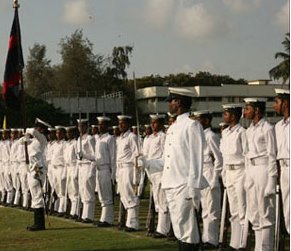
If times of crisis differentiate men from the boys, then crisis merely forges legends into beings of even more awesomeness. This was the case with Rabi Ahuja, the erstwhile Commodore of the Sea Cadet Corps where I went for my bit of extra-curricular activity. I loved the Sea Cadets, mostly because they introduced me to sailing, which to do this day is an infatuation of mine, but also because they wielded words like ‘honour’ and ‘integrity’ to my upbringing of the time.

sea cadetsI loved the Sea Cadets so much that I managed to convince my parents to go for our usual Sunday Parade at TS Jawahar, Colaba despite the fact that people were killing people and the world had essentially gone mad. My arguments of the time were that rioters won’t be doing said rioting on Sundays cause that was arguably the day even the Gods rested and even rioters need a break. Also whilst at TS Jawahar we were safer than money in the bank. Besides, I argued, Captain (he was Captain Superintendent then) would make even the worst rioter literally shit his pants if they tried any funny business with the Corps. Of all my arguments, I think that the last one was the clincher for my parents, and I think that between the promises (had there been any) of the Indian Legal System and Captain Rabi Ahuja, they would have trusted him with us more without a moment’s hesitation. That was the nature of the man. That was the nature of his legend.

And boy, he did not disappoint, for when we did get to TS Jawahar at 7 am, he made us parade in the hot sun in a manner not too divorced from the times when everything was normal, as if everything had not gone to pieces like that mosque in Ayodhya, as if Bombay and India had not inexorably been changed for the worse. He stood, a fountainhead, for a better, less revolting time. He even staved off phone calls of petrified parents who by now were informing us that the rioters had not taken the day off and who were, in all earnestness, carrying on the glorious tradition of communal riots in this country. He assured those doubting parents that if needed he would personally people drop home if the situation required. To me, this was the epitome of taking ownership for your fellow Indian much more than any politician’s speech ever could. But even more than that, it represented an exciting prospect as being dropped home in Captain Ahuja’s Blue Premier 118 NE was akin to having the President of a country drop me home with full State honours. In my mind’s eye, I could see him driving us past problem areas and rioters, whoever they were, automatically stopped whatever they were doing to this city, and stopped to stare at a sight as rare and magnificent as this. After staring for a bit, I was sure that they would go straight home because no one, and I mean no one, had the cajones to kick up the dirt when the Captain made the rounds. After that my bro and I would have our glorious homecoming with all the neighbours looking on as a brilliant man, in a brilliant white uniform with a peak cap that the sun would be proud to be above, would stop at my gate, and we would salute him, because he stood for all that was the best of India, all that was 1992 riots A memoirthe best of this city and that would be just right, in a time of copious wrongs.

But alas, it was not meant to be. We never got that ride with the Captain, for we lived in a relatively safe neighbourhood, one which wasn’t so high up on the danger scales which meant that we caught the usual No. 3 bus home unescorted, returning to being merely children of the lesser God of the times.

Bombay, bas is a weekly column on getting around the madness of Mumbai and exploring the city with a fresh perspective. This column tells it like it is.

(Pictures courtesy www.outlookindia.com, www.indianexpress.com, asianetindia.com, www.seacadet.in, www.tehelka.com)

Categories
Tech

Seven apps for women’s safety

In today’s times, women need some handy help – and it can come via their smartphones, through seven wonderful apps.
by Manik Kakra

Most women must carry a smartphone or tablet with them wherever and whenever they travel. As crimes against women increase all over the country, it is up to women to provide the first ring of security to themselves. Usually, the phone they carry can help establish contact to get immediate aid.

But how can you make sure the device is actually ‘smart’ and useful to you in many more ways than just the conventional ones? Having smart apps is an answer. Let’s take a look at some handy apps and services aimed at women’s safety.

Damini appDamini: Launched after the horrifying Delhi rape case in December 2012, this app allows you to send your location data and video as soon as the person starts the app. You can form a group from your contacts list to whom this app sends data whenever required.

FightBack: Available for almost all smartphone platforms, this app not only uses your phone’s GPS, SMS, and Maps, but also your Facebook account in order to alert your near and dear ones in an emergency.

Cab4me: This is a very useful app even for your day-to-day use. Its database allows you to quickly search through taxi stands near your location and you can book a cab right on it. In case of any emergency, you can quickly glance through your self-made favourite list, so that you can book a cab or inquire about services without wasting too much time looking for a cab on a deserted road. It’s available for Android and iOS.

SafeBridge (also available on Google Play): In case your phone doesn’t have any way to access the Internet at the time, this service has got your covered. It uses safebridge appyour phone’s SMS to send your location quickly to somebody pre-selected from your contact list.

iFollow: This is another smart app. In case you’re running out of time to make a call or do little else, all you have to do is shake your phone thrice and this app will get started. Next, it will make a call to a contact, and further an SMS, if the call doesn’t get answered.

Scream Alarm: As the name suggests, a loud voice comes from your phone as soon as your press the scream button in the app. That’s about it, however.

YWCA-Safety-Alert-Apps-3YWCA Safety Alert: This app not only can make a loud scream from your phone, but can also send your location data as well as email the selected contacts, when you simply shake your phone or tap its alert button.

Apart from these, there are a few apps which send your location data to a particular contact stored on your device, such as SafeTrac and inE.

(Pictures courtesy yourstory.in, play.google.com, itunes.apple.com, techtips9.com)

Categories
Overdose

Bar bar dekho…

What did shutting down of dance bars accomplish? Since when have laws determined what society will or will not do?
by Jatin Sharma

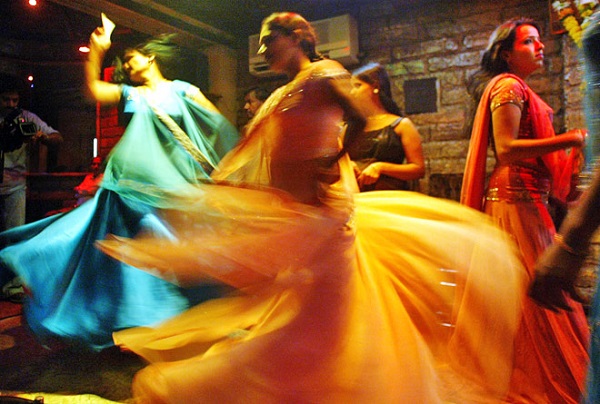
Jatin SharmaA recent Supreme Court judgement now allows dance bars to be run in Maharashtra. Needless to say, several bar dancers and bar owners rejoiced at the judgement – bar dancers and activists have constantly been alleging that dancers were forced into prostitution because of the Government’s decision to close down dance bars. However, the State Government alleged that dance bars were the operating units of the flesh trade. But now that the SC verdict is out, it’s going to be the Supreme court v/s the Maharashtra Government. Whatever the end result may be, the Government is not going to make it easy for the dance bars to operate in the state.

I am very interested in the politics of moral policing. How every time our netas stand up to make our society better, tell us how we should behave and how they know what a perfect society is. As an aside, isn’t stopping corruption and not laundering money also something that speak of an honest society?

However, what’s funny is that these kind of judgements neither create nor dismantle a society. Every time the Government makes a decision bar dancersthat is repressive (or liberating, according to the Government) we see the country go up in arms against it and celebrate when the decision is knocked down. I feel that decisions like these are nothing but just a temporary flutter. A measure of a strong society is not made by how many dance bars it has or how people are being forced to stay out of them. A strong society is determined by how many repressive laws it has to follow, where people don’t have to be told at every step about what is right and wrong.

Even now, the decision is quite convoluted as the Supreme Court has set certain conditions for dance bars to run:
1) Dancers should not wear tight or provocative clothes. (no Mallika Sherawat-type clothes, those are exclusive to her)
2) The clients should not throw money notes on the dancers (so no Vaastav movie repeats on the dance floors)
3) There needs to be a railing behind which the dancers will dance (now this is interesting, an added dimension to the see-but-don’t-touch rule of dance bars)

Our politicians need to understand that everything need not be caged and guarded by rules for it to work. What is the point of our democracy if one section of workers has to wait for a Supreme Court judgement for them to go back to work? And who are we kidding? India has been extremely progressive in the past, but now due to the controlling nature of our Governments, we are turning into a crazed, backward nation. We are making a mockery of our citizens every time we ask them to not kiss, not to have sex or not to even think about it. Emotions are like springs, the more we are trying to suppress them, the more they spring up from somewhere else.

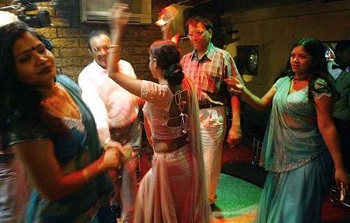
bar dancers and clientsThe Government has a huge task to lead society by example and educate people with their own actions, rather than spoonfeed every thought that was born in some regressive era. Can they really claim that shutting down dance bars made men less sleazy? Can they really claim that shutting down dance bars made eve-teasing and human trafficking diminish? Can they really claim that shutting down dance bars did not further drive antisocial elements into the market, as there was more money to spend?

Just like in Gujarat, where alcohol is available despite all ‘Dry State’ claims, it’s a proven fact the moment something is banned, miscreants become more powerful by taking advantage of the ban and entering the banned business, as they become more profitable with the help of a few corrupt police officials. We need to remember that none of the ‘bad’ things that the society gravitates towards will go away by a simple judgement or a ban. A judgement or ban only decides whether it will benefit the Government, and whether an activity will run in the open or once the shutters are down.

Jatin Sharma is a media professional who doesn’t want to grow up, because if he grows up, he will be like everybody else.

(Pictures courtesy indiatoday.intoday.in, thehindu.com, in.reuters.com)

Categories
Cinema@100

‘Bollywood cannot contain the complexities between India and Pakistan’

In conversation with Mahesh Bhatt, on building bridges with Pakistan and talking peace and art with the neighbours up North.
by Humra Quraishi

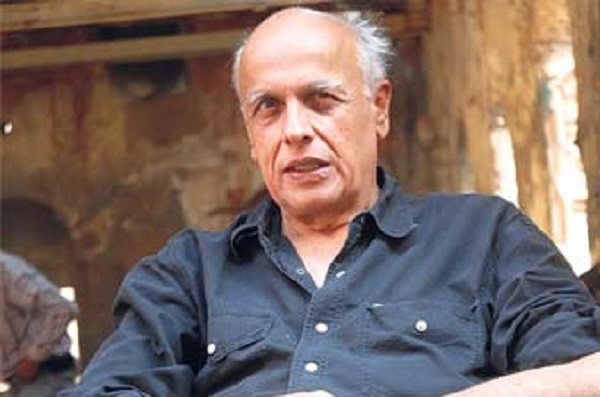
He is perpetually in the news, and most recently, he has been embroiled in a controversy over his film Arth (starring Shabana Azmi and Kulbhushan Kharbanda) and his decision to give Pakistani actor-director Shaan the rights to remake the film in Urdu. But this isn’t the first time Mahesh Bhatt has shown an affinity with Pakistan – he is probably Bollywood’s only producer to have given several Pakistani artistes a break in Hindi films.

mahesh-bhattI met him just after the end of the Kargil War, and tensions between India and Pakistan were at an all-time high. And it was around this time that a handful of artistes from India, most notably Mahesh Bhatt, came to be known as Pak sympathisers, because they relentlessly espoused the cause of an artistic collaboration between India and Pakistan, be it in films or music. I interviewed him in 2009. This is the piece that was published post this interview.

‘Even in these surcharged times, a small group of enthusiasts travelled from here to across the border, to try and bridge gaps, and get people-to-people contact going. And film-maker Mahesh Bhatt was one amongst them, and spoke out on his return from Pakistan.

I heard him talk at the IIC but there seemed little time for an elaborate interview as he had to catch the next flight to Mumbai; so I did the next best thing: a telephonic interview with him. These are the excerpts from the interview:

Do you feel that these people-to-people contact travels do actually help in lessening the ongoing strain between the Governments of the two countries, India and Pakistan?

We underestimate the contribution of a few sane people…of their relentless commitment to the peace process. Also, the history of any nation is always carved by a handful of people.

What’s been actually happening in Pakistan? Can you tell us your own observations whilst you were there?

Pakistan is going through birth pangs. The old is not dead and the new is not born. It is going through a painful process, but anything that is painful is creative…its urban population has this thirst for the rule of law and there is that spirit which is vibrant. I saw it in that ‘long march’…

In your opinion, why is there a growing anti-Pakistan stand here in India, not just at the political level but even amongst the bureaucracy?mahesh-bhatt-read

That is because a hate industry is on, the hate mongers are interested in creating an enemy and there is active politics on both sides. It is sad, because the problems are similar in both countries; yet so much of hatred is being generated by a full-fledged hate industry.

Have you been worried about being questioned by the IB (Intelligence Bureau) or any other intelligence network, because of your frequent visits to Pakistan and your friends and contacts there?

No, I’m not scared… after all, I’m born in this country created by Nehru, Gandhi and Maulana Azad. To see peace prevail here and in this subcontinent is my birthright. This is what Gandhiji believed in…No, I don’t fear at all and I would never buckle down.

Do you feel that SAARC (South Asian Association for Regional Cooperation) has been a flop show in this context of the growing tensions in the subcontinent?

Yes; for it hasn’t delivered anything, and hasn’t lived up to what it was created for.

In your opinion, what’s to be the fate of this subcontinent? Are the Governments of the countries of this region (including ours) swayed by the US policies and its dictates? Will the situation get more complex?

We have to seek a regional response to our problems and we will be doomed if we rush to Washington. We will be doomed if such a day comes when we rush to Washington for seeking an approval for this or that. Right now, there’s some sort of a high and low going on (with respect to Washington).

Do you think that Kashmir is the only cause of friction between India and Pakistan or do the problems run deeper?

You cannot look away from the Kashmir issue and a solution has to be found. The problem has to be seen, and you cannot pretend that there’s no problem.

Are you planning to make a film on the situation in this subcontinent?

No, because I don’t think that Bollywood can contain the complexities in the relationship that exists as of today between India and Pakistan

(Pictures courtesy www.hindustantimes.com,  www.starbuzzonline.com, movies.ndtv.com)

Categories
Learn

Privatising BMC schools an assault on education: Experts

BMC’s proposal to allow privatisation in its schools will only worsen its flaws and introduce new ones, some experts feel.
by Nidhi Qazi

“World Bank’s agenda is demolition of public-funded school system and open gates for privatisation and commercialisation.”

“Education is not a component of social development but an investment for information society and market competition”- Ambani-Birla Report (2000)

These statements laid the tone for an evening dedicated to the current mess that our education is in. In a panel discussion titled ‘Neo-liberal Assault on India’s Education System and Corporatisation of Mumbai’s Municipal Schools under PPP’, Dr Anil Sadgopal and Simantini Dhuru, both educationists, spoke at length about the education system in India in general and of Mumbai in particular. The speakers also spoke against privatisation and how it is only going to worsen the system.

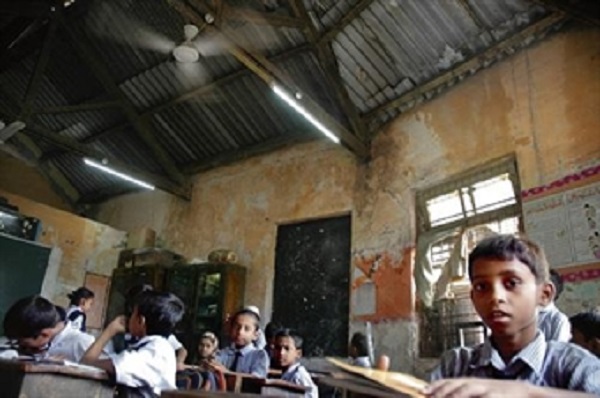
The talk came in the context of BMC’s recent proposal to allow public-private partnership (PPP) in the management of civic schools. The Brihanmumbai Municipal Corporation (BMC), on January 23, 2013 took a decision to hand over all of its 1,174 schools to private organisations and companies under a ‘Public Private Partnership’ scheme of ‘School Adoption’.

At present

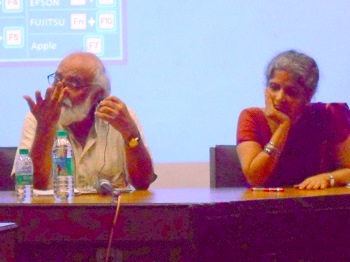
Dr Sadgopal and Ms DhuruSimantini Dhuru, Director, AVEHI ABACUS Project and member of Mumbai Samaan Mulbhoot Shikshan Hakk Samiti, talked of the present scenario of BMC schools.

She said, “The number of children going to non-BMC schools has been on a rise for a long time and thus, there has been a decrease in the number of teachers and children going to BMC schools. Also, the number of students going to English-medium schools has increased even though the percentage of English-medium schools remains low.”

There are two main reasons attributed to the decline in the number of students going to BMC schools. First, there has been a lack of secondary BMC schools for the past 25 years. Second, a large number of students drop out after Class 7.

Some concerns
Coming to the BMC’s proposal, Dhuru raised questions and concerns over the conditions under the Public Private Partnership Model.

There are four models of partnership: Type-i is Full School Management with Private Partner Teachers; Type-ii is Full School Support; Type-iii is Specific Services Partnership and lastly, Type-iv is School Input.

Dhuru pointed out that under the objective of PPP, there has been no mention of ‘Right of Children to Free and compulsory Education’ Act 2009. Also, the period of the PPP arrangement is 10 years, which Dhuru said “could ensure that the handover will acquire permanency.”

Dhuru also critiqued the arrangement for the proposed ground checks, under which supervisors of the Education Department are to visit the handed over schools four times a year. “This condition is contrary to the present practice wherein Government officials walk in to the schools as and when they feel like throughout the year. Why should the PPP schools  be visited by officials only four times?” said Dhuru.

Further, the clause that ‘Teachers appointed by the PPP schools will not do any administrative work and will not leave school for any work’ is contrary to the present practices in our schools.

For Type-ii of the model where NGOs appointed and BMC teachers work in combination if the BMC fails to appoint staff by August 31, the NGO may appoint its own staff. “This amounts to systematically disbanding BMC permanent staff and creating another layer of contractual teaching staff,” said Dhuru.

She also pointed out some clauses as a means of coercion: The first clause mentions that the PPP partner organisations will be allowed to evaluate the performance of the teachers appointed in their school and can demand that non-performing teachers be sent/transferred to another MMC school. Second clause mentions that the PPP organisation will have the right to record its remark in the teacher’s confidential report along with the head teacher.

“Besides coercion, the NGOs/Corporate houses will be allowed to lure teachers monetarily into supporting and continuing the PPP arrangement,” she said.

The overview of education

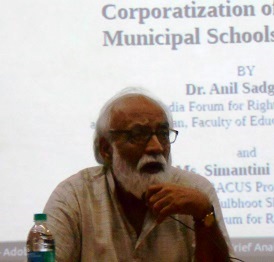
Dr Sadgopal (in pic on right), of the All India Forum for Right to Education (AIFRTE) and former dean, Delhi University, gave a critical overview of how the education system has deteriorated over Dr Sadgopaltime.

“In the last two years, expenditure by BMC schools has increased. That may be good news but do we question why or for whom has it been increased? It is simple. Funds are given to deck up these schools for corporates so that they don’t have to spend from their pockets,” he opined.

According to Dr Sadgopal, these private players comprise NGOs, corporates and religious bodies who will “worsen the disparity in education by increasing the cost of education under the garb of improving quality.”

Dr Sadgopal is a pioneer in the field of education and has been instrumental in successfully running the Hoshangabad Science Training Programme (HSTP), a first-of-its-kind national-level initiative for pedagogical improvement. Having been part of various government bodies like Central Advisory Board on Education (CABE) and NCERT, the septuagenarian views education through the Constitution. “The BMC, due to its failure has decided to abdicate the entire constitutional responsibility in order to improve the quality of education, but how can it do that when the Constitution of India mandates it to run good schools and not bad schools?”

He talked of how this move is nothing but brushing off one’s responsibility. “The onus of improving Government schools lies with the Government but it seems to have given up before even trying.”

A supporter of the ‘Common School System’, Dr Sadgopal added, “Such a system is the most feasible system in our country which suffers from huge disparities. With such a system, all the students, irrespective of class and caste can study together. Besides, when schools ask fees, the very idea of equality gets violated and that is contrary to what the Preamble stands for.”

Referring to the Bihar tragedy where students of a primary school died after consuming food under the Mid-Day Meal Scheme, Dr Sadgopal critiqued the many school systems India has. “Such tragedies strike the poor. Media editorials suggest better participation of parents and teachers, better transparency, etc. But none of them question the layers having been created in this unjust system,” he said.

“The common refrain is that policies are good, their implementation is bad. On the contrary, I say policies are bad, they are anti-people but their implementation is good and with all dedication.”

 (Pictures courtesy www.afternoondc.in and Nidhi Qazi)

Exit mobile version