Categories
Watch

Watch: ‘Outsider’, a play in Hindi

Today, ‘Outsider’ plays as part of NCPA’s Hindi play festival, at 7 pm. The festival concludes tomorrow. Don’t miss it.
by The Editors | editor@themetrognome.in

Vacation time is ideal for movies and plays. If you’re free today, you might want to check out the Hindi play Outsider, as part of the NCPA’s Ananda Hindi Natya Utsav.

Based on L’Etranger by Albert Camus, the play is about M, a free man who gets involved in a violent murder. As his story unfolds, we see the journey of a man as he struggles against an indifferent world. A stranger on the beach picks up a stranded shell and hears in it the secrets of the ocean. He is returning home after 20 years, remembering along the way all the secrets he uncovered that were hidden away in those grains of sand. Two stories and two lives that flow in and out of each other to represent that one life is good as another, is the basis of this play.

Written and directed by Gouri Dutt, the play stars Kumud Mishra, Ujjawal Chopra, Narottam Bain, Dilshaad Edibum Khurana, Jaihind Kumar and Ghanshyam Lalsa.

In 2011, the NCPA created and hosted its first-ever Hindi theatre festival NCPA Ananda Hindi Natya Utsav. The festival, held in May every year, showcases original Hindi plays that have strong literary roots. Ananda means happiness or pleasure.

Further, Ananda Hindi Natya Utsav presents a small selection of Mumbai’s Hindi theatre at its most joyous and original best. Mumbai groups such as IPTA, Ank, Ekjute and Yatri have performed, along with new and budding companies, in previous editions.

For more information and booking, look up the NCPA Mumbai page.

(Picture courtesy ncpamumbai.com)

Categories
Enough said

Being a Muslim in today’s times

A book on Muslims in South Asia and an attack on a Muslim woman bring burning issues to the fore.
Humra Quraishiby Humra Quraishi

New Delhi is currently the stage for several heated political debates, even as the summer rages on. Unlike the elections of yesteryears, however, there are less intellectual discussions on parties and their politics, and more debate along two extremes – either you are Right Wing or you are not!

This week I attended the launch of Being A Muslim In South Asia, a new book launched by the Vice President of India, Hamid Ansari. The volume, edited by Robin Jeffrey and Ronojoy Sen, published by Oxford University Press, focusses on the Muslims of the subcontinent – the 500 million Muslims who live in Pakistan, India, Bangladesh and Sri Lanka, and who constitute roughly one-third of the world’s Muslims.

The book takes a look at the everyday lives and aspirations, also the challenges and struggles that Muslims face. There is a look at routine aspects of daily life, to a focus on stark ground realities. I quote this line from the book, “Too often in recent years, they have been unfairly associated with terrorism, as anyone with a Muslim name who has passed through a Western airport will attest.”

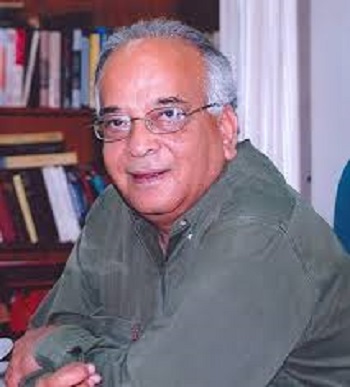
Speaking at the launch was the well-known historian, Professor Mushirul Hasan (in pic on right), who spoke of the present-day political realities that Indian Muslims face, and the possible dangers Mushiral Hasanthat could abound in case a Right Wing-backed Government takes centrestage. He spoke about some of those apprehensions and fears that the minority community of the country is experiencing and could face in the coming months, as the winds of change sweep the politics of the country…

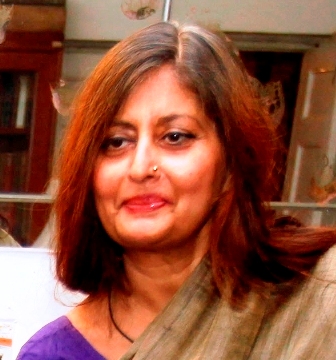
Last Monday, on the afternoon of April 28, the well-known activist Shabnam Hashmi and her team were attacked in Rae Bareli when they were distributing leaflets brought out by JAVAB (Janvadi Vichar Andolan Bharat), barely 100 metres from the Gadaganj Police station. Shabnam and her associates were attacked by a gang of about 20 hoodlums who snatched all the leaflets and abused Shabnam in the most foul and sexist terms.

At the police station, Shabnam had to argue with the SHO, telling him that nobody can be stopped from exercising their right to free expression and that he had to file an FIR against the attack on her and the threats of rape and sexist abuses. The SHO did not register an FIR and did not give her a copy of her complaint.

And this is what happens every day in the country!

Humra Quraishi is a senior political journalist based in Gurgaon. She is the author of Kashmir: An Untold Story and co-author of Simply Khushwant.

(Pictures courtesy www.pakistankakhudahafiz.com and www.rina.in)

Categories
Event

Eight weeks of eating right

PD Hinduja Hospital will organise a free ‘Mindful Eating’ seminar from May 6, to introduce Mumbai to innovative eating approaches.
by The Editors | editor@themetrognome.in

We all want to eat the right things and follow a diet that suits us, but where does one get reliable information from? For starters, PD Hinduja Hospital is happy to help.

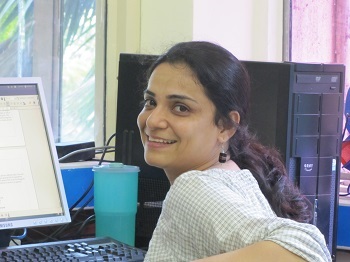
Dr Roshani SanghaniThe Hospital will organise a free mindful eating seminar in its premises on May 6, 2014. The workshop will give an insight into the 8-week ‘Mindful Eating’ workshop being launched by PD Hinduja Hospital headed by Dr Roshani Sanghani (in pic on left), Consultant Endocrinologist. “The workshop will introduce you to an innovative eating approach through interaction with a compassionate facilitator, and the motivation and support of a group that faces the same challenges as you. The difference between this approach and conventional ‘diet’ approaches is that this approach helps you get in touch with your own body’s wisdom and helps you manage your eating over the long term from the inside out, rather than following ‘diet rules’ coming from the outside, which is difficult to sustain long-term,” explains Dr Sanghani.

To register and know more details about the workshop, call +91-9757262570/022-2444 7167, or email faculty@hindujahospital.com.

(Pictures courtesy standingsittinglying.wordpress.com and PD Hinduja Hospital)

Categories
Beauty

Why you need to switch to organic skincare

Opting for eco-friendly and chemical-free skin products will do you a world of good. Start by using these products today.

Taking the eco-friendly path has become more or less the ‘in’ thing. Nonetheless, when it comes to a skincare routine, organic beauty products are the hot new trend. When it comes to skin, there are a whole stack of reasons as to why organic skincare products are something that you should opt for.

We list a few reasons that will tell you why you need to opt for organic skin care:

Scientifically proved healthy. Expert researchers in the field of skincare hold the theory that your skin absorbs 60 per cent of anything you apply. This means using synthetic cosmetic products will have your skin soak in all the chemicals that could lead to an allergic reaction.

Assures a natural approach. People with sensitive skin find it difficult to adjust to any and every skincare product. That’s when organic products come into the picture, as they are known to be much gentler when compared to the host of conventional products available in the market.

organic skincare productsOffers skin solutions. Another benefit of making the switch to organic products is that they offer skin solutions that no artificially-manufactured product can compete with. They have been recognised to nourish your skin, fight the signs of aging, and give a natural glow at the same time.

Easily available online. The organic skincare sect is gaining momentum slowly yet steadily; however, you could get your hands on some of the best natural bathing soaps, organic body wash gels, and organic moisturising creams online.

Know more, do more. When making the switch to organic skincare line, be sure to learn enough about some of the ingredients that are good for your skin. To give you a head start, opt for products that are gluten-free, vegan and 100 per cent organic.

Each one of us wants to protect our body from harmful ingredients; therefore, it is important to get into the habit of reading product labels. The innumerable brands available in the market make it difficult to choose a particular variety. However, whatever brand you pick, make it a point to treat your skin with the best organic products available. Buy an organic moisturizing cream to ensure your skin stays in harmony with the nature.

Always remember, being proactive rather than reactive is a better choice, especially when it comes to caring for your skin. Go organic for a beautiful you!

(Pictures courtesy www.bizcrowd.com, www.wellbeing.com.au)

Categories
Bombay, bas

How summer has changed!

The vacations of our childhood were very different from those of our children today. All that remains is fond nostalgia.
Pooja Birwatkarby Dr Pooja Birwatkar

‘Summer holidays’. The term itself makes most of us nostalgic. There is a lazy tone that attaches itself to the term even as we speak of it. You tend to go back in time and see old memories flash in front of your eyes.

The summers of my childhood were pretty special. Summers were like a king in shining armour, saving us from the monster named ‘school’. ‘Do nothing’ was the mantra we followed in the holidays. Lazy afternoons were spent playing ghar ghar or board games. Summers also meant the advent of the divine frut – mango. Sure, there were water melons, jamun and sugarcane, but none could ever threaten the supremacy the king of fruits enjoyed.

There was a peculiar method to eating mangoes at our household, as I’m sure there was in yours. One, mangoes would be served Eating mangoes in summeronly after lunch. Two, we had to wear minimal clothing before we ate them. Three, we had to eat them sitting on the floor 🙂 

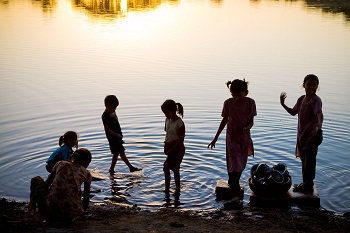
The once-a-year affair with Rooh Afza would begin. Who can forget the rose-flavoured cold milk shakes that replaced the routine hot glass of milk, or the ice candies we used to make of it?  The house would burst with relatives and friends or we would go to nani’s or dadi’s house, while a privileged few would go to hill stations for the holidays. There were no evening curfews to interrupt our playing sessions. We learnt most things like cycling, swimming, craft, needle work and other creative things in the most playful manner as the days wore on.

Those of us who have lived outside Mumbai would surely remember the times they’ve splashed water on the hot verandas to cool them down. The slight dip in temperature as the water evaporated from the hot ground was a feeling that words simply cannot describe. Filling water in air coolers and earthen pots were duties we were given, and we did them with the utmost sincerity.

From amongst the aromas of summer, my favourite one is that of the achaars that were made. Stealing the kachcha aam  meant for achaar and eating with salt was a joy that justified the guilt of stealing. Another memory of summers is that of the electricity going away for most part of the day, and people fanning themselves with handmade fans. And oh the joy, when the lights would come back on and the fan would dry the sweat from our bodies!

children play in water in the summerAnd of course, the last day of summer vacations would suddenly remind us of untouched homework, which we would try to complete (unsuccessfully) in one day.

But the summers I see now are way different from those of my childhood. Summers in Mumbai start with the sighting of alphonso mangoes at traffic signals. We still begin our summers with this fruit, but now the cost of the fruit has resulted in us rationing it. And children here don’t have the luxury of watering the lawn or playing with water pipes. Working parents make a beeline for summer activity camps to keep their children ‘occupied’, at a price. Children don’t drink Rooh Afza, but packaged juices and colas. Children are mostly indoors, in front of the television or playing games on their computers or cell phones. If relatives do come to stay, it is for a brief period, and most working parents can’t make the time to visit grandma’s.

I wish summers had retained their old charm and my children could experience what I have seen and enjoyed as a child. But with the passage of time, there has been a paradigm shift. We have to accept the changes that come and accommodate them. But still, some part of me still yearns for simpler times. 

I echo what Geroge RR Martin (of A Game of Thrones) says, “Summer will end soon enough, and childhood as well.” 

‘Bombay, bas’ is a weekly column on getting around Mumbai and exploring the city with a fresh perspective. 

(Pictures courtesy www.improvisedlife.com, www.annabellebreakey.com, plus.google.com)

Categories
Tech

Review: Oppo N1 phone

We take a look at the Chinese entrant’s new phone in the Indian market and come away more than impressed.
by Manik Kakra | @Manik_K on Twitter

Oppo has entered the Indian market this calendar year, and we have seen a few other Chinese manufacturers foray into India recently. The N1 is company’s first flagship device launched here, and it has quite a few firsts. This Oppo phone has a swivelling 13 MP camera that rotates 207 degree, it also comes with an accessory called O Click (more on that later), and it also packs a touch-sensitive back panel with control capabilities. So, let’s get started with our review.

Hardware and design
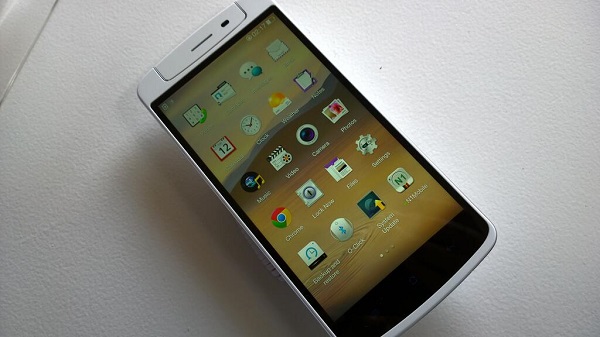
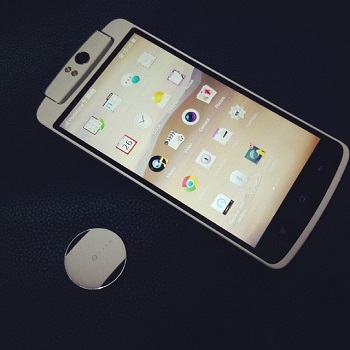
N1 and O ClickThe Oppo N1 sports a 5.9-inch full HD display, and follows a similar phablet (larger phones) form factor. With a slightly curved back and rounded edges, the device does fit quite well in the hand, if you have a bit large hands, but it is, without a doubt, a bit on the large side. Many people may feel uncomfortable handling it for their day-to-day usage, but then you would have bought one already knowing its size and weight. The build quality and finish is actually pretty nice. The phone doesn’t creek or produce any weird sounds and I didn’t notice any bendable or loose parts anywhere on the body, and thanks to ceramic finish, there’re almost no fingerprints to be seen on the body. Coming to the right sidepanel, it sports the Power/ Sleep button, and volume rockers below them. On the left sidepanel, there’s only the SIM tray to be seen. On top, you have the camera module and two LED flash; while the 3.55mm headset jack and loudspeakers are placed right at the bottom.

The phone’s 5.9-inch full HD IPS display, which dominates the front, is crisp to look at. The colours come out vibrant, and it is decent for outdoor usage. Viewing angles are good, and there isn’t any loss while viewing HD videos or playing graphic intensive games on it. While the PPI count may not be the highest out there, it is definitely a good screen.

Camera

The 13 MP f/2.0 camera with two LED flash and swivelling mechanism in place is certainly one of the USPs of this device. You can rotate the camera to use it has the front-facing camera, or just adjust its angle as per the subject of your photo. The rotating module is fitted well and doesn’t give any problems. The company says it has been tested for 1,00,000 rotations. The camera takes sharp and very nice photos. I got well-contrasted and clear photos pretty much every time.

The only time you feel that the camera could have done better is when used in low-light or indoors, when you get some noise. And because it doubles up as the front-facing camera, you get higher quality video calls and selfies (if you’re into them). Also the camera app is very nice and simple to use. The settings options are clear and there’s a lot to choose from. All in all, this camera is one of the best things about the phone, delivering good shots majority of times.

Audio quality and battery

The in-ear audio quality is clear, though it could have been a bit on the louder side. Use your third-party headset and then the phone delivers. Call quality is very good, and I didn’t notice any abnormal or strange network reception issues throughout my usage of the phone.

The N1 comes packed with 3,100 mAh battery, and it lasted me a full day on a single charge, like, 8 out of 10 times. I was less and less worried about the battery life the more number of days I used the device, meaning its battery is not bad at all. The usage mainly includes lots of Emails, Twitter, a few videos and games, one or two calls and a bit of Web.

O Touch

The phone is also equipped with something called O Touch. Basically, there’s a small square on the back that has is touch-sensitive, and you can scroll the screen using your finger OPpo N1_ (2)on the O Touch area. It works but not very neatly and accurately; not something you would use frequently.

O Click is a fancy accessory that you get along with the phone. It can be paired with the phine via Bluetooth – and can be used to do a few things. You can, using the available settings options, use it to click a photo on clicking the O Click; program it to alert you when the phone is away (pre-specified distance) from your O Click.

Software and performance

Running on Android 4.2.2 with the company’s own ColorOS, the Oppo N1 has hardly any stock Android feel and design intact. ColorOS is quite different and looks nothing similar to stock Android. With three Home screens in place by default, you also get a separate screen for Camera. When you plug in your headset jack, you automatically get another screen with Music player widget in place. There are few added Settings options to like here. It allows you to choose from your network carrier’s logo or name on the notification; you can add custom gestures to a separate notification centre, which can be pulled down from either left or right hand top side of the screen (conventional notification centre from the rest of the screen’s top). Notification centre gives you a lot of options to select from, including an ‘End All’ option, which ends Sync, WiFi, etc, just about every connectivity option, except voice calling.

Under the hood, there is a Snapdragon 600 SoC (1.7 GHz quad-core processor and Adreno 320 GPU), along with 2 GB of RAM. The phone, with its ColorOS, runs smoothly and doesn’t lag in almost any department.  Apps run and open without any glitch and you get a very buttery, responsive experience. It comes in 16 GB storage option for Indian customers (around 9.5 GB of available storage space) with no expandable microSD storage option.

Another USP of the device is that it’s the first phone to be officially available on CyanogenMod. Any user, whether using this ColorOS model, can flash CyanogenMod on the device without havin to worry about losing the phone’s official warranty. CyanogenMod is one of the most popular custom ROMs in the Android community. You can flash it using the stock recovery in place. If any of you would like to know, the latest stable CyanogenMod for the phone runs very wel and supports O Click to be used with the device. And going back to the original ColorOS firmware is also a convenient thing to do. PS: Try a custom ROM only if you’re familiar with this stuf about flashing and moding before.

Concluding the review, the Oppo N1 is indeed a step in the right direction from the company to foray its business in the Indian market. Two things, I think, are very much required for the company to make their mark in the Indian market today – price according to the available devices and what their own devices offer, and try to provide software and firmware upgrades to their existing phones, which could give them an edge over some of the other players. The N1 is one of the recommended devices to use for camera, watching videos and just about every general use from your phone for people who prefer smartphones with larger screens, and gives the company a solid start in the Indian market.

Will you try out this device? Let us know your thoughts in the comments section below.

Exit mobile version