Categories
Bombay, bas

A bit of patience, with a side of tolerance, please…

At what point did we lose our manners, our patience, all our courtesies? And when will we get them back?
Pooja Birwatkarby Dr Pooja Birwatkar

The other day, after a long day at work, when I finally managed to prop my feet up and settle down for a cup of tea, my five-year-old son came running to tell me something. Looking at me, he paused and then began by saying, “Mom, I have to tell you something but when I am telling it to you, you let me complete it and listen to the entire thing and then react”.

I was taken aback. It led me to wonder: why did he say this to me? And then I realised that I had started cutting down his sentences even before he completes them and proceed to have my say. My lack of patience in hearing him out had been duly noted and this was his solution to tackle it. It led me to wonder about how seldom we reflect on two most important virtues in our life – patience and tolerance. Both seem to be doing a vanishing act lately.

Patience is the ability to tolerate any kind of delay, waiting or situations that frustrate us because things are not moving ahead, or not moving as anticipated. This tolerance has to be accompanied by non-agitated feelings or chances of not being upset. Of course, most of us have to learn to be patient as it does not come naturally to us.

So what has caused us to become intolerant and impatient? Much could be attributed to the technical age we are living in, where instant gratification is the motto. We live in a world where things look and appear easy to obtain, and hence we don’t realise their value. Since most of us treat our own lives as some sort of race that one has to run in and win to succeed, we are going to look at ‘patience’ and ‘tolerance’ as hindrances in our path.

The local train will teach you a thing or two about patience. If you accidentally step on someone’s foot or abruptly invade their space, you either get a scornful glance or a volley of abuse (or both). There is no common sense or logical thought at play here – why do we automatically assume that the push or stepping-on-toes act was a personal attack? It is the easiest thing in the world to be pushed or shoved around in a Mumbai local train. Nobody plans to hurt anybody else, so will we all just chill? Instead, try smiling at the person who accidentally hurt you and say, “It’s okay.”

It’s actually that simple.

I also see people frantically pushing buttons of their cell phones and I marvel at the amount of exercise they give their fingers. A few years ago, when mobile phones were still not the ‘in’ thing, people were not so anxious to communicate with others all the time. Now, of course, things are much different.

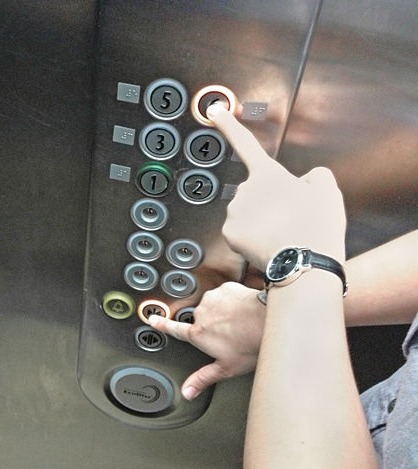
We also show impatience when we wait for the lift. Every person will press the button to call the lift, and if the lift takes time to appear, we show our frustration by pressing the Pressing lift buttonsbutton fiercely and repeatedly. Once we step in, we see that another person has already pressed the button for the floor you will be alighting at. But will we wait? No, we will go ahead and press that same button again.
The same impatience manifests itself at the traffic signal. The signal may still be red, but we keep honking our horns at the cars ahead of us. Do we expect these cars to sprout wings and fly away, leaving the road clear for us?

It’s about time we Mumbaikars learnt to just relax and be patient.

The positive side of developing patience is that it makes your life easy – your anger loses its edge and your emotions are more balanced. You learn to deal with your problems in a more constructive  way. Plus, you learn to be happier about yourself and others. A little patience goes a long way in sharpening our decision-making abilities as one not only deliberates on an issue but also avoids hasty mistakes. The empathy and compassionate virtues that grow with our patience affect our interpersonal relations to the maximum.

The commonly used word in our city to describe something good is ‘cool’. But are we actually ‘cool’ about things? We should be cool about the things that are tiny in magnitude, which unnecessarily stress us out. But instead, we choose to blow them out of proportion and say nothing about much bigger issues. There should be zero tolerance for injustice against women, children and senior citizens, against corruption and poverty, the way we have exploited natural resources and degraded our environment – but we show tremendous tolerance towards all these. So are we intolerant and impatient about everything, or selectively tolerant and patient? Think about it.

Dr Pooja Birwatkar is currently pursuing post doctoral research and working in the area of science education. She has been associated with the field of education in the past as a teacher educator, and her area of interest is research in education. 

 (Pictures courtesy www.carwale.com, www.wikihow.com)
Categories
Event

Theatre comes alive on the Internet

Here’s some good news for theatre: Astitva and Mumbai Theatre Guide launch eNatya Chaupal, a web hangout for theatre lovers.
by The Editors | editor@themetrognome.in

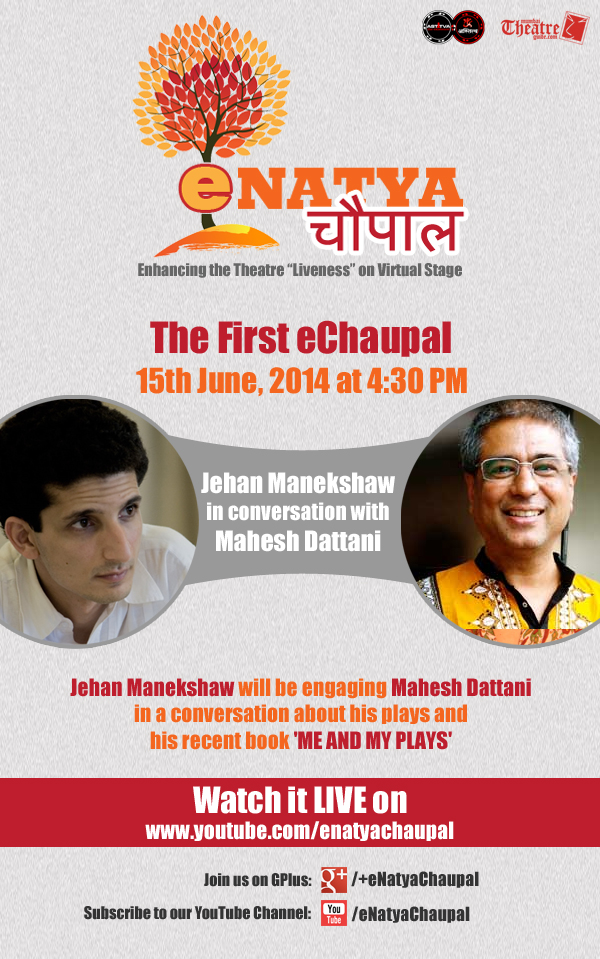
Astitva and Mumbai Theatre Guide have recently launched ‘eNatya Chaupal’, a unique web hangout for all those who love and enjoy theatre. This initiative aims to bring the ‘liveness’ of theatre online. 

The first e-chaupal will see Jehan Manekshaw of ‘Theatre Professionals engage noted playwright and director Mahesh Dattani in dialogue about theatre and a discussion on the latter’s recent book, Me And My Plays.

“eNatya Chaupal will enable all those interested in theatre to participate in a manner that’s engaging, convenient and interactive. It will host play readings, conversations and talks related to theatre. ‘Chaupal’ is a meeting place where it’s possible to engage in debate and in discussion and this is what we hope eNatya Chaupal will facilitate. Given its format, eNatya Chaupal will not only easily connect theatre lovers in India and from around the world, but will also bring an added value to the ongoing discussions about theatre in India. We strongly believe in strengthening the online resources that our theatre community in India can avail of. We hope that eNatya Chaupal will be a significant step in that direction,” says a release from Mumbai Theatre Guide.

The first ‘chaupal’ will take place on June 15, 2014 at 4.30 pm and will feature Jehan Manekshaw in conversation with Mahesh Dattani at www.youtube.com/enatyachaupal

Categories
Eat

Street food and the Mumbai diabetic

Are you a diabetic looking for a snack on the street? There aren’t many options, but here’s presenting seven items.
by Mamta D | @silverlightgal on Twitter

Indian food is considered to be among the best in the whole world. While many countries are content to consume meat, fish, and vegetables in bland form, India prides itself on its rich, tasty and spicy cuisines. Owing to the diverse communities inhabiting India, our food has become all the more rich, sometimes even fusing two or more cuisines together. Besides the regular home-cooked varieties and food that is available in hotels and restaurants, India is also famous for its street food.

From the chhole bhatures of Delhi’s streets to the aloo paranthas of Chandigarh, to the dosai of Chennai and the ubiquitous vada pav of Mumbai, you will find sumptuous spreads right on the street, all at throwaway prices.  Moreover, the roadside stalls are open most of the day and people from any walk of life can consume their wares. Thus, you have a daily wage laborer eating steaming hot vada pavs alongside a well-dressed office-goer. Street food stalls don’t discriminate between their customers.

If at all there are any drawbacks to street food, it is that of hygiene and that they are not diabetic-friendly. The matter of hygiene is a controversial one, but once you have taken the plunge, there’s no looking back. People often jokingly claim that eating street food over the years has made them more immune to illnesses.

As for diabetic-friendliness, sadly there’s not much to cheer. Most of the popular street food is loaded with carbohydrates and/or sugar. For instance, a single vada pav serving is packed with 300 calories and includes 55 gms of carbs. The dabeli which is an import from the street sides of Kutch has approximately 197 calories and 26.5 g of carbs.

Besides vada pav, samosas, and dabelis, there are umpteen roadside idli and dosa stalls. Idlis are high in carbs and have a high glycemic index of 77, so they can hike your blood sugar. Likewise for dosas. If you’re a diabetic, stay away from the nimbu pani and gola carts and the sweet lassi counters.

Neither can you indulge in the paani puri. Even if you bravely attempt to consume the paani puri foregoing the sweet chutney, you will not be able to go beyond one attempt. The sweet chutney is meant to serve a purpose and doing away with it does not make sense.

But being a diabetic doesn’t have to mean giving up on your taste buds, especially, if you are prone to hypoglycemia and there’s no homemade food at hand.

So what are the good street food choices for a diabetic? Try these:

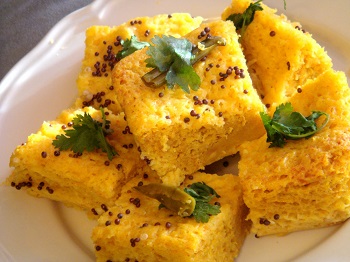
dhokla#1) Dhoklas: Dhoklas are made of besan (Bengal gram flour) and so offer a decent alternative to the carb-and glucose-rich foods. Dunk them in the fiery green chutney and voila! You have a tasty healthy snack.

#2) Kanda pohe: Made of flattened or beaten rice and often served warm or hot, this street side food is mostly available during the morning hours as a quickie breakfast. Ensure, however, that there are no potato slices or wedges in the pohe.

#3) Bhel puri: Bhel puri that is mixed without the sweet chutney can be a tasty and yet healthy snack. It has puffed rice, peanuts, finely chopped onions, tomatoes, green chillies, and coriander leaves.

#4) Upma: This rava dish is a perennial favourite across many communities. From South Indians to Maharashtrains, everyone loves upma for its taste value and simplicity. A simple onion upma can be ravishing when you’re super hungry.

#5) Misal/Usal Pav: Dipping thick chunks of bread or pav into the fiery red steaming missal that has an array of boiled sprouts floating in it and consuming it before the missal cools down can either be a blissful or a scary experience, depending on how weak or strong your stomach is.True blue Mumbaikars swear bythe missal pav.

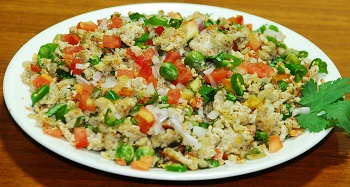
#6) Egg bhurji and other egg items: Many roadside corners boast of an anda pav or bhurji pav stall. The bhurji is made in a jiffy with finely chopped tomatoes, onions, slit bhurjigreen chillies and scrambled with raw eggs. The hot bhurji is then slid on to your plate with a slick movement and a slice of pav is scraped on the tava, finally landing on your plate on top of the bhurji. On a cold winter evening, taking quick bites of this hot and spicy combination can be quite orgasmic. These stalls also serve boiled eggs and omelettes with pav.

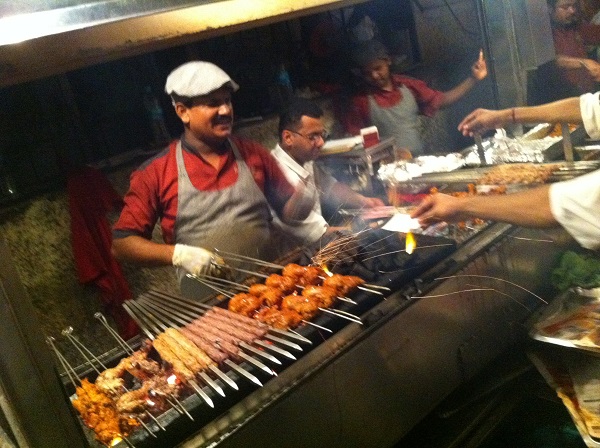
#7) Kebabs and other items: Street food is not limited to the vegetarian varieties alone. There are kebabs, shawarmas, tandoori nuggets, and so on. Bade Miyan’s at Colaba, the umpteen stalls at Mohammed Ali street or Abdul Rehman street are the places to go to for these.

As you can see, unfortunately, the number of street food choices for a diabetic are quite low in number.  ‘Make do with what’s available’ will be the best policy here than to give in to temptations and have your blood glucose levels shooting up sky high!

(Pictures courtesy asiaexpatguides.com, kiransrecipes.blogspot.com, www.mapsofindia.com)

Categories
Deal with it

A dream football space in Borivli’s backyard

‘Feet For Foot’ initiative seeks citizens’ help in setting up artificial grass for young footballing talent to train on, at Borivli.
by The Editors | editor@themetrognome.in

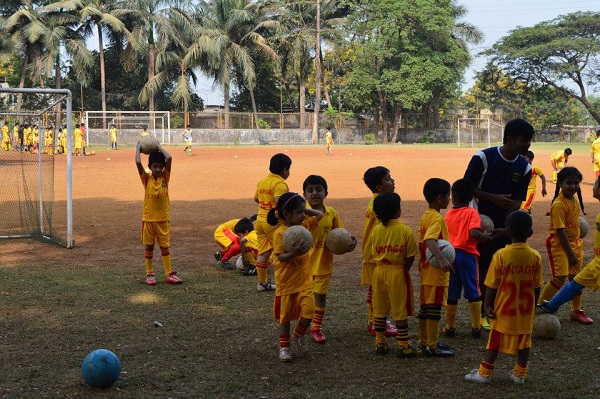
It sees several budding footballers train on its premises regularly, and is a popular sporting hangout for children and adults alike. But now, the Vintage Football Club ground at IC colony Link Road, is embarking on a very special mission – to install artificial grass on about 4,000 sq feet of the ground’s surface for young footballers to train on. This, believe its patrons, will go a long way in training young talent to play on an international stage.

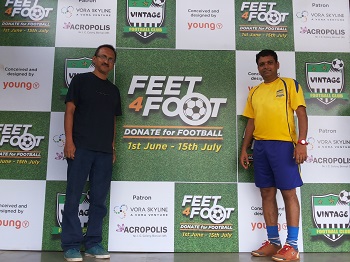
The initiative, titled ‘Feet for Foot’, is asking for donations of Rs 999 per square foot of the proposed area to be developed, and is slated to be fully operational by December this year. Once operational, this will be Borivli’s only international-level football training space.

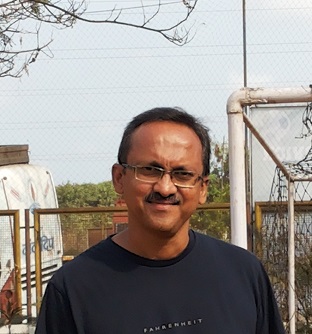
Says Conrad Pinto (50), one of the coaches at the ground and part of the initiative (in pic on left), “The ground currently has natural grass, which is not very good for playing on. What’s more, the grass dries up and withers away in the summer months, so the surface becomes very hard, especially with the gravel lying exposed. It is essential to train young talent on artificial grass, which will help prepare serious footballers for the international stage.”

What’s at stake

Children from the neighbouring Ganpat Patil Nagar slum play at the ground, as do others from adjoining areas. “The Club runs free training camps for children in the 6 to 9 years age group, with one coach catering to about 25 children per camp,” Conrad explains. “We are especially tuned in to children from underprivileged backgrounds – if the child is willing to play, we ensure we put a ball to his foot.”

The ground was initially in a shambles – it doubled up as a debris dumping ground and parking space for buses. “We got it cleared up in phases and then covered it with mud. We needed about 290 trucks of mud to layer the 8,155 sq metres of total area,” Conrad explains. “We formed the Vintage Football Club about 10 years ago. There are four trustees and currently 200-odd members, but over 1,000 parents are also active supporters. We impart training for free, and only charge corporates or professional teams wanting to train at the ground,” he adds.

Once ready, the ground will cater to the suburb’s urgent need for a world-class training space. “The costs of preparing such a facility are enormous,” says Wilfred Fernandes (44), also associated with the Club. “India needs training at the grassroots for football. See the current condition of football training in the country – it’s pathetic. Our children should be trained to represent India. Football instills confidence and team spirit, and we are always working towards reaching more and more children. Our activities here are driven by passion, not commerce – we never let the ground out for events or weddings or rallies. We are proud to say that since we have been associated with the ground, it has been used only for sporting activities,” he beams.

The costs involved

The cost of installing artificial grass is enormous, and they’ve worked out the total cost to about Rs 40 lakh for about 4,000 sq feet of area. “We cannot possibly cover the entire ground, because that would be too expensive,” Wilfred says. “Besides, we plan to develop the other portions of the ground for separate activities – a tennis court at the back, a walking track, a senior citizens’ space, a small play park for children. The football area will be at the centre, and will be cordoned off with nets,” he explains.

But why launch the initiative now? “We started the project on June 1,” he says. “Currently, there is a lot of hype around the upcoming football World Cup in Brazil, and interest in the sport is at an all-time peak. We will wind up the collection (of funds) process by July 15, when the World Cup will end,” he adds.

Already, donations have started coming in. “We’ve got donations from all over Mumbai, as well as from Delhi and even Muscat. Till date, we’ve managed over Rs 3.2 lakh from June 1, when we launched the initiative,” Conrad says. “Several more people have committed funds for the cause. One gentleman works in a company that manufactures lighting equipment, and he has pledged that the lighting for the ground would be done by his company. Even our trustees are donating money. Help is coming from everywhere,” he says.

The Club will shortlist a vendor by a tendering process in August this year, and the actual work of preparing the ground and laying the grass should be finished by November. “We hope to be fully operational by December 2014,” Wilfred signs off.

Do you want to donate for ‘Feet for Foot’? Log on to vintagefeet4foot.com or check out their Facebook page at www.facebook.com/VintageFootballClubMumbai for details. Call 9022420053 for more information.

Categories
Overdose

Such a forgiving nation

Since when do we forgive criminals and cry for them? Why don’t we extend the same courtesy to other criminals?
by Jatin Sharma | @jatiin_sharma on Twitter

Once upon a time someone had said to me, “Indians are born hypocrites!” I remember fuming at the time, wanting to take the man to the top of the tallest building and give him a nudge, so that he would feel the fresh air on his way down.

Don’t think badly of me – all of us have killed at least one person in our heads at least once in our lives. But why do I remember this incident today? Because, if I met that same man who said what he said, I would agree with him. I would even shake his hand.

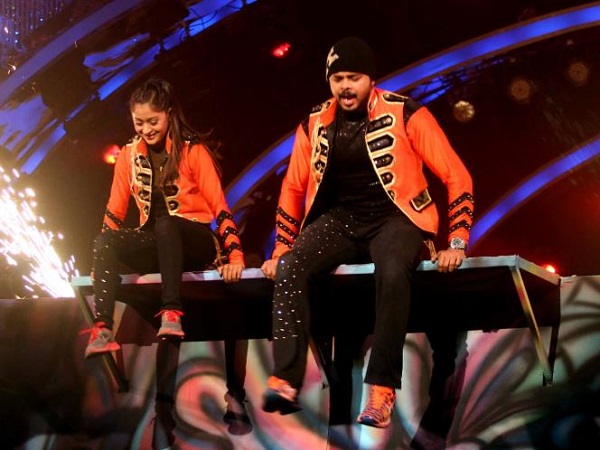
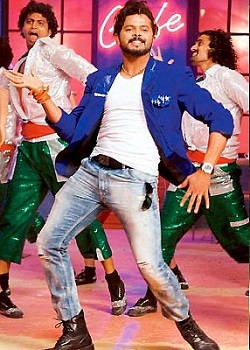
What has really irked me is how ‘forgiving’ we have become, and in matters that should not be forgiven. Sure, we come from the land of the Buddha and Gandhi, and I am not asking anyone to be violent. I’ll tell you what got to me – I saw promos aired by an Indian TV channel, where they showed ex-cricketer Sreesanth dancing away to glory. As per the format of this show, in a few weeks, he will be seen crying on air for votes, there will be a few questions asked hinting about his recent cricket controversy, he will give an ‘honest’ confession on air, and bingo! All will be well and he will come off looking like a nice guy caught in the wrong place in the wrong time.

How is it logically possible for somebody to be a disgrace one moment, and a TV celebrity the next?

Monica BediCynical, much? Not really. Remember what happened with Monica Bedi’s appearance on Bigg Boss? Didn’t her involvement with gangster Abu Salem acquire a different sheen in our eyes after the show? Today, Monica works in Indian TV soaps, and nobody speaks of her past any more. All is forgiven.

So Sreesanth, after his infamous match-fixing scandal and the subsequent confession (which he later said was given under duress) and then, his cries of innocence, was banned for life from cricket and from representing the country. The matter is now subjudice. He has since got married and is now embarking on a reality TV show stint.

Pardon me, but wasn’t this the same guy who was taken to the cleaners by the Indian media when the controversy was at its peak? He was labelled a disgrace, he was completely left out in the cold, nobody had a kind word to say about him, and what’s more, all of us collectively revelled in his vilification. And now he’s on a TV show. He will surely also make it to Bigg Boss.

And then I ponder the matter some more, and I am less surprised. Sreesanth’s career from now on will most likely follow the graph of such other worthies as Ajay Jadeja, Nayan Mongia, and Nikhil Chopra – just some of the names found guilty of match-fixing. They are, however, the most visible faces on TV today when a cricket tournament is underway. Yes, they’ve done their time, but they were also labelled as a ‘disgrace’ to cricket. How is it logically possible for somebody to be a disgrace one moment, and a TV celebrity the next?

Entertainment channels will argue that they are not in the business of nation-building. They will always find legal loopholes and ensure that controversial personalities feature on their shows to help garner more ratings.

But, don’t the heads of these channels think that somehow, by allowing these match-fixers to rejuvenate on their channels, they are actually supporting past acts of crime? Don’t Sreesanththey consider that they are providing a platform for these criminals to try and garner sympathy for themselves? What gives these channels the right to glamourise a crime, present a person as a victim rather than an accused, and try and change the complexion of the crime with added drama thrown in? Is this a good lesson to teach our children – do what you want, and if you get caught, lay low for a while and then show your jhalak in public, amidst tears and applause?

It’s utterly sad that as a society, we watch shows that feature these controversial characters and worse, that we look for reasons to forgive them. I am sure Sreesanth must have signed a three-show contract with the channel and he would be looking forward to being trapped in a house with other roommates later this year. I am sure that we Indians will watch his side of the story then too, and have tears in our eyes that we will wipe with a ‘towel’. What’s more, he will receive many votes from a sympathetic audience.

This is what we’ve been doing for long – not rewarding the good, and letting the bad go unpunished. Achche din aanewale hain? May be. But for that to happen, we have to stop forgiving criminals, and focus on the good parts of society. If we’re letting match-fixers go unpunished today, we might as well let other criminals off the hook, too – like rapists and murderers.

Jatin Sharma is a media professional who doesn’t want to grow up, because if he grows up, he will be like everybody else. ‘Overdose’ is his weekly take on our quirks and quibbles.

(Pictures courtesy tellynewsindia.com, indiatvnews.com)

Categories
Enough said

When protectors turn rapists

Where are we supposed to go for help, if cops themselves are involved in rapes, or in covering up crimes?
Humra Quraishiby Humra Quraishi

Rapes and gang rapes. Sexual maniacs on the prowl. Perversion from all quarters.

This has been the story of our country for a good while now.

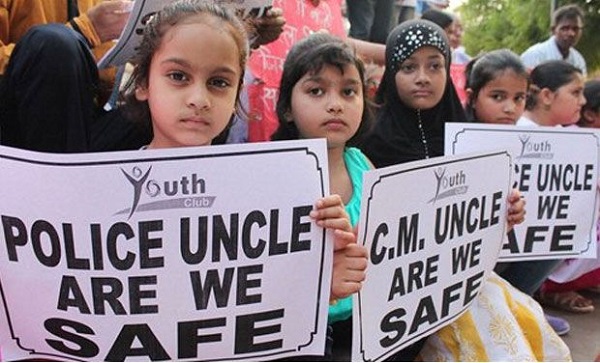
But what shocks one is this truth: in the Badaun gang rape and murder of two minor girls, cops were involved. There are increasing cases of protectors turning rapists, or helping to shield the accused. To top it all, ugly politics enters into an ugly situation.

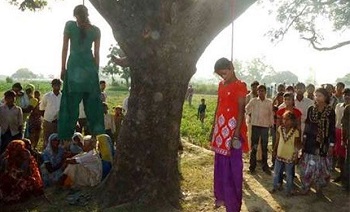
And to all those who are currently claiming that women outside UP are safer, let me say this: stop deluding yourself. Even when we were recovering from the Badaun news, came the news of a young female bus conductor in Mumbai who was beaten up and her clothesBadaun rapes torn by an irate commuter. There have been a few other rapes in other parts of the country too.

While we try to grapple with these facts, with the almost illogical desire of rapists to hurt, to wrest power over a woman by any means possible, it is becoming clear once again, that it is not about being a young woman or old, or being scantily dressed or covered from head to toe. It is not about her perceived ‘boldness’ or demureness, about her social standing or her education. Perverts and rapists don’t see all these factors.

I suppose some strict rule of law will be brought into place only when the powers that be are directly impacted in some way. Let any of our women ministers or top women cops walk alone, unescorted on the country’s streets, especially after dark, and let’s see how many make their way back home unmolested and left in one piece. And with riots breaking out sporadically in the country, the security of women and children is further jeopardised, because these two groups are targeted first.

And why won’t this perversion go unchecked, and indeed, permitted to rise? Our cops are busy shielding most of the accused, especially if they are influential persons. If not cops, some accused are shielded by politicians, who may even reward them in the future with positions of power.

And yet, our ideas of ‘progress’ and ‘development’ continue to be confined by our notions of how many skyscrapers our cities build or how many highways. Is there any sense in talking about development when our police force is so desensitised to the needs of the people it is meant to serve? Can we speak of progress when children are subjected to sexual assaults, and there’s no avenue of help for them? What gives us the right to look optimistically at our future when we pretend we can’t see beggars on the street, or hear the cries of a woman beaten on the road?

When are we going to stand up and demand that our cops protect the innocent?

Humra Quraishi is a senior political journalist based in Gurgaon. She is the author of Kashmir: The Untold Story and co-author of Simply Khushwant.

(Pictures courtesy centreright.in, www.deccanchronicle.com)

Exit mobile version