Categories
Kharcha paani

Summer camp industry to touch 1,000 cr in 2017-18

Survey reveals that the summer camp industry is growing by 25 per cent per year due to higher disposable incomes.
by The Editors | editor@themetrognome.in

You probably enrolled your child in a summer camp this year, or at least know of people who did. But while you thought your child or the neighbour’s child was simply kept occupied with fun activities in exchange for a bit of cash, did you give a thought to how much you’d contributed to the burgeoning summer camp industry?

As per a survey conducted by premier industry watchdog ASSOCHAM (The Associated Chambers of Commerce and Industry), titled the Rising Craze For Summer Camps in Metros, “The summer camps industry size is likely to touch Rs 1,000 crore y 2017-2018 from the current level of Rs 400 crore, due to working absent parents, higher disposable incomes and rising awareness.”

Why is this industry growing?
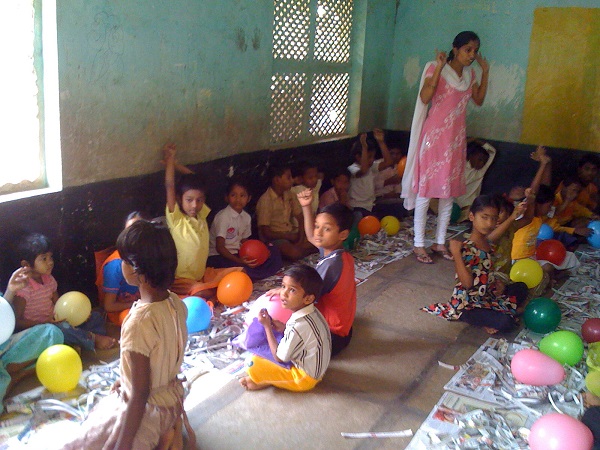
The growth in this industry is seen to take off at an annual growth rate of about 25 per cent. “The summer camps industry is closely tied to overall economic indicators such as per capita disposable income, population growth and leisure time. Over the next five years, the industry’s growth patterns will reflect substantial increase in the number of children and adolescents due to rapidly improving expenditure on recreational activities and marginal gains in sports participation,” adds the survey.

“Holidays and weekend breaks are times when parents and children are always on the lookout for activities to do at home or outside that combine fun with creativity and learning,” said DS Rawat, Secretary General, ASSOCHAM. This industry includes overnight recreational and instructional camps for adults and children. Some camps provide accommodation and other amenities such as fixed campsites, food services, recreational facilities and equipment, and organised activities.

The survey was conducted in Delhi-NCR, Mumbai, Bangalore, Ahmedabad, Cochin, Kolkata, Hyderabad, Chandigarh and Dehradun, covering nearly 3,000 parents during April 2013. Broadly, it was found that parents dish out a minimum sum of Rs. 2,000 to Rs 6,000 on a child for a summer camp. Obviously, the sum spent doubles for two children. A majority of the parents interviewed revealed that they wanted their children to learn more activities like drawing, dancing, clay modeling, art and craft, culinary skills, cooking without using a flame and sports activities, in view of the growing peer effects and also to update their children to meet the challenges of current competition.

The survey also highlighted that working parents in the capital city of Delhi spent the least amount of time daily with their children at home (less than one hour) during the vacations, while those in Bangalore spend maximum amount (four hours) followed by Ahmedabad (three  hours) and Mumbai (two hours).

The survey further reveals, about one in five parents want their children to spend more of their free time in summer camps or hobby classes. One out of two parents responded that their children spend more time inside home; while only a third of parents said that their children spend equal time at home and outdoors.  Indeed, children on an average spend 5-6 hours at home for leisure activities during holidays, compared to an average 2 hours spent in outdoor activities, says the survey.

“Nearly 72 per cent of parents said that there was no provision of summer camps during their childhood. Accompanying their wards served a double purpose – not only could they give them a chance to learn something new, it also ensured they got to spend quality time with the children,” adds Rawat. “A majority of the respondents said that learning together gave them an opportunity to be cordial, respect each other’s views and understand each other better. The organisers are encasing on this trend by giving discounts if parents join their wards at camps.”

Summer camps are relatively popular with only 65 per cent parents preferring their children to spend time at a summer camp, in comparison to 92 per cent of children surveyed preferring going to a summer camp, points out the survey.

Highlights of the survey:

– Many schools have a dedicated marketing budget for summer clubs centered on print advertisements, hoardings, leaflets and mall activations. They allocate close to 20-25 per cent of their marketing budget on summer clubs. There are nearly 30,000-35,000 camps of all kinds operating in all the tier-II and tier-III cities.
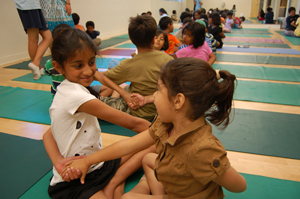
– 81 per cent of children learn a new skill like musical instrument, dancing, clay modeling etc.

– 71 per cent of children want to learn art and craft outside home.

– 65 per cent of children go out to learn different styles of dancing like Jazz, contemporary, classical etc.

(Pictures courtesy www.trekindiamanali.com, www.kinkari.com, www.indiacurrents.com, kopili.wordpress.com. Images used for representational purpose only)
Categories
Patrakar types

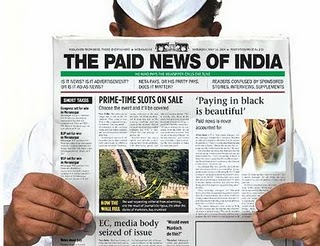
“You paid media dogs!”

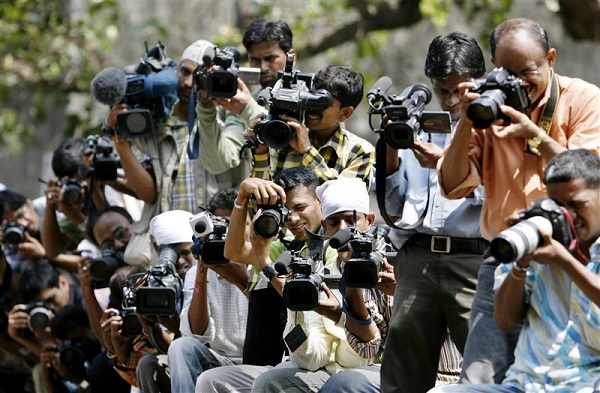
It is the age of the instant response – and the age of the crudest name-calling against mediapersons and celebrities. We are so quick to take offence at the media commenting on things that affect us, that we resort to shooting the messenger instead of debating the message.
by Vrushali Lad | vrushali@themetrognome.in

Two days ago, we ran a story on how traders in Thane and Pune had all but called off their agitation against the LBT after Sharad Pawar’s intervention, and how traders in Mumbai were about to follow suit. See the story here.

We’d got quotes from Viren Shah, President of the FRTWA, who was part of the delegation that met Sharad Pawar on Sunday at the latter’s residence. We had excerpts from the press note that the FRTWA later issued, outlining the points discussed. Viren Shah even went on record to say that, “The FRTWA is against the LBT but our retailers will not down shutters. Business will go on as usual while the protest is on.” The story went live on Sunday evening, and Monday’s newspapers carried the same news with varying degrees of detail.

But on Twitter, at least five tweeters called us several names, the substance of their remarks being that we, like other media outlets in the country, were “paid media dogs” who were bribed by the Congress to spread rumours. “Pls do not spread rumours. Do u have a signed letter to confirm this?” asked one, the mildest of the lot, while another tweeted, “chal jhota, congress ne paisa diya hai kya rumours felane ka? #PAIDMEDIA #LBT” with an entertaining cartoon showing the Congress scamming everyone in sight. A little digging by our social media team found that this latter guy had been on a name-calling spree all afternoon, tweeting at every mediaperson on Twitter and calling them all #PAIDMEDIA. Some of these luminaries included journalists Rajdeep Sardesai and Barkha Dutt.

I wonder if people really understand what this ‘paid media’ thing really is, though all and sundry use this phrase as freely as they use public streets as their personal dustbin. I always imagine this paid media business to be a situation where somebody comes to a media office with bags of money, plonks them on the editor’s desk and says, “There, I paid you. Now write nice things about me.”

I’m not saying things don’t necessarily pan out like that, either.

In recent times, we’ve been seeing a growing tendency in the country to take offence at everything. And, not content to merely take offence, we’re outraging all day about things that, in hindsight, were meant as a joke, albeit a not so funny one. Some of us are so outraged, we form packs of similarly-outraged persons and attack the offender all day.

Recently, a sarcastic tweet from stand-up comic Rohan Joshi, who was responding to a self-proclaimed feminist who’d accused him of being a male chauvinist, took up the Twitterati’s time for an entire day. And he wasn’t even being a chauvinist. A Firstpost.com article about how a new initiative to provide leftover food from one’s lunchbox to starving slum and street children was most likely a sham, prompted all and sundry to address the article’s writer with every possible swear word known to mankind, even as they jeered at his cynicism and asked how much money he’d been paid to write that piece.

And there’s no point responding, if you’re the writer of a particularly controversial piece, to such name-calling and trying to explain your point of view. Any such attempt only results in a bigger barrage of insults.

We didn’t know this a few years ago, safely insulated as we were in our print media offices and our TV channel stations, how much hatred there was out there. Then the media’s working changed, to the extent that every bit of news and information put out there is compatible on all forums, most significantly, the web. And the Internet doesn’t do a very good job protecting us from instant, biting feedback the way other media can. Sure, there are such things as comment moderation tools, but what does one do when an article also has Facebook-enabled comments? Who’s going to disable Facebook?

Does this hate stem from the genuine fury consumers feel at seemingly important issues not being covered by the news media? The LBT strike, for instance, is over 25 days old, but apart from snippets on how closed shops are inconveniencing the public, has there been an in-depth piece on the issue by the electronic media? Even on Sunday, as trader organisations decided to suspend hostilities for a few days, news channels continued screaming headlines about one more player arrested in the IPL spot-fixing scam. Not a single LBT-related story surfaced at all that evening.

Or could a part of this hate be attributed to the clout the big media players enjoy, of being able to function well despite its consumers not liking most of the content they put out there daily? In another business, for example, if people don’t like your product, you’re going to either take their feedback on board or shut shop. This doesn’t happen with say, The Times of India, which gets roundly criticised every single day for having more ads than news, or for biased reporting, or for peddling advertorials as news items. The TOI continues to function, and function well. Is that enough to make people so resentful that they start calling the TOI names and tell it to go to jump off a cliff?

Or is it as simple as a lack of manners, of good breeding? Sensible people, when debating a point, argue with the person’s point of view. They don’t tell the person to his face that he is a jackass, or worse. In my eyes, you have to be totally moronic to say a person is a prostitute who sleeps around with Congress politicians and writes against the BJP, when what you really wanted to say was that the writer’s views had hurt their own and they begged to differ. Say what you wanted to say, don’t get into needless side issues about a person’s parentage or background or tendency to take bribes. Apart from being moronic, it is an unnecessary exercise in wasting time when, instead of debating the message, we shoot the messenger over and over again. Tell people they are wrong, certainly, but remember that you don’t really have the right to do so. A point of view is never right or wrong; it may be contrary or controversial.

And besides, how brave would you be if you had to say half those things to the mediaperson’s face, and not from behind your computer or phone’s screen?

Vrushali Lad is a freelance journalist who has spent years pitching story ideas to reluctant editors. Once, she even got hired while doing so. 

(Pictures courtesy blogs.reuters.com, mag.bewakoof.com, pastorchrisowens.wordpress.com, www.sodahead.com)

Exit mobile version