Categories
Big story

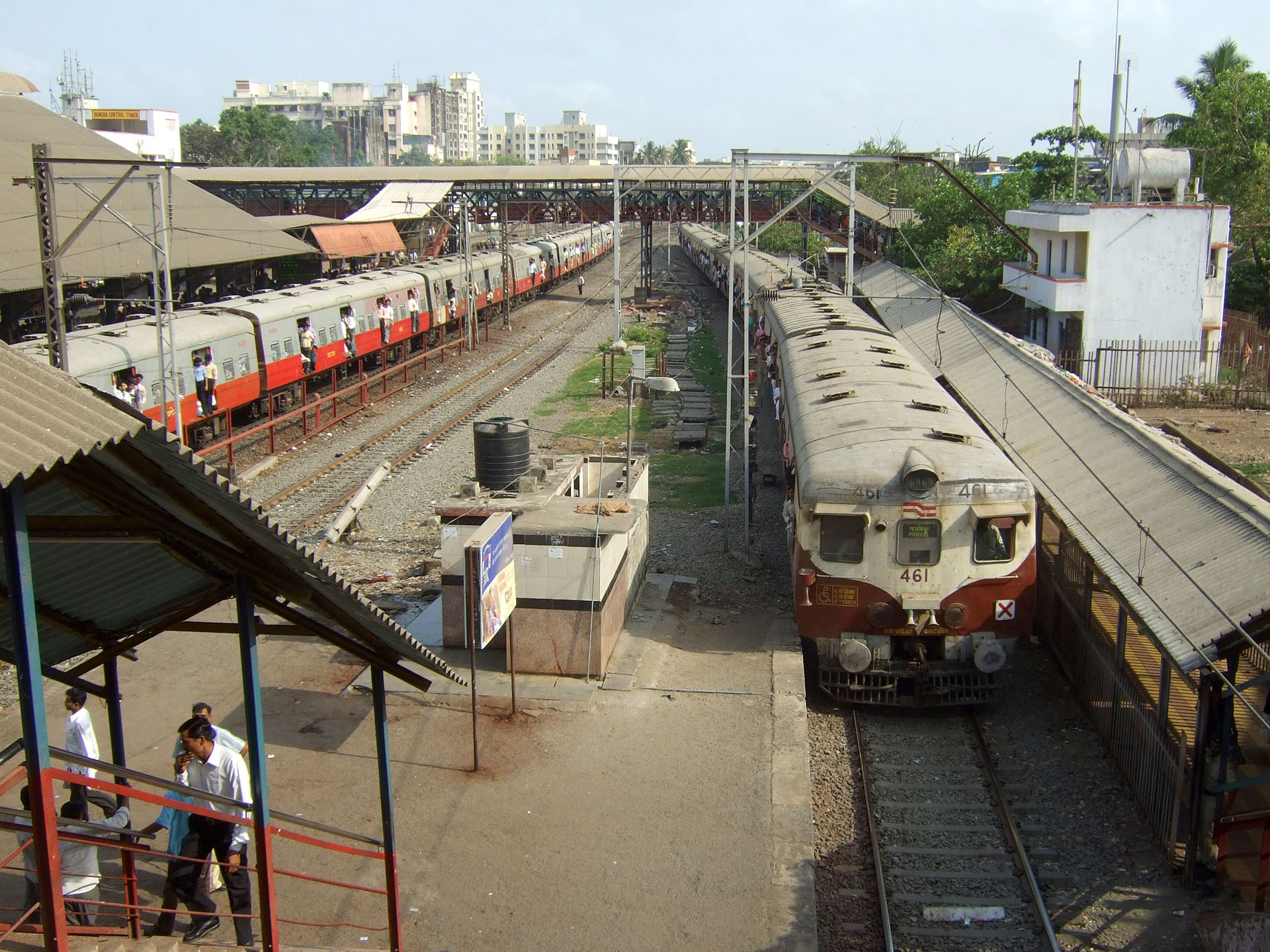
What your new rail fare will look like

Rounding off of fares and development charge removal may bring down some ticket prices after final calculations are done soon.

A new railway fare formula proposed by the Centre yesterday, in which development charges levied thus far per ticket would soon be abolished on every train ticket (whether local or long-distance) may bring down prices on the local routes in Mumbai. The final recalculations of fares are expected to be done soon.

Development charges of Re 1 are levied on second class tickets and Rs 2 on first class tickets; similarly, the charges levied on a second class pass are Rs 10 and they are Rs 20 for a first class pass. However, with the development charge now removed, ticket prices will come down by Re 1 and Re 2 respectively. Hence, a second class Borivali-Churchgate ticket, for example, will now cost Rs 10 from the earlier Rs 11. However, the fare for the same journey on a first class ticket remains unchanged.

The following are the expected (tentative) fare hikes on your commute:

WESTERN RAILWAY

FIRST CLASS monthly pass:

Churchgate to Virar: Rs 1,035

Churchgate to Borivali: Rs 650

Churchgate to Mumbai Central: Rs 285

Churchgate to Dadar: Rs 420

Churchgate to Bandra: Rs 425

Churchgate to Andheri: Rs 565


SECOND CLASS monthly pass:

Churchgate to Virar: Rs 270

Churchgate to Borivali: Rs 170

Churchgate to Mumbai Central: Rs 75

Churchgate to Dadar: Rs 120

Churchgate to Bandra: Rs 120

Churchgate to Andheri: Rs 155


SECOND CLASS suburban single journey:

Churchgate to Virar: Rs 15

Churchgate to Borivali: Rs 10

Churchgate to Mumbai Central: Rs 5

Churchgate to Dadar: Rs 10

Churchgate to Bandra: Rs 10

Churchgate to Andheri: Rs 10
CENTRAL RAILWAY
SECOND CLASS suburban single journey

CST to Panvel: Rs 20

CST to Kasara: Rs 30

CST to Byculla: Rs 5

CST to Karjat: Rs 25

CST to Kalyan: Rs 20

CST to Dadar: Rs 5
CST to Thane: Rs 15
CST to Kurla: Rs 10

(Picture courtesy en.wikipedia.org)


Categories
Trends

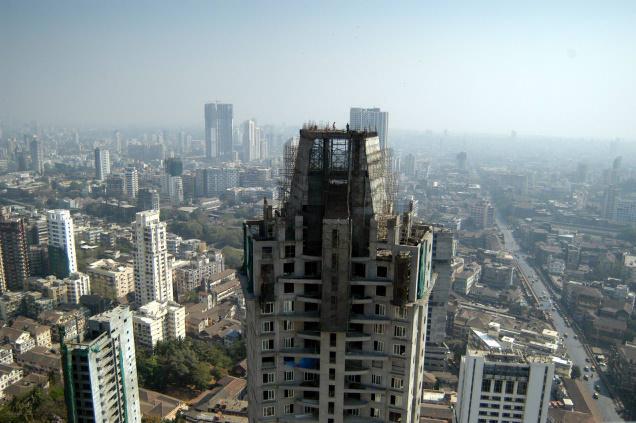
Mumbai’s real estate market takes a beating

Realty report on six cities in country; Mumbai has witnessed rising property prices, declining sales volumes in the last two years.

Mumbai is fast becoming a real estate nightmare. “The residential market has witnessed a phenomenon of rising property prices and declining sales volumes. High prices coupled with a stagnating job market have adversely impacted sales momentum. Going forward, the price growth in Mumbai will be muted on account of the unsold inventory and increasing share of peripheral markets,” says a just-released report by Knight Frank India recently.

The report, an Economy and Realty Report for December 2012, focusses on the Indian residential market scenario and the performance of the top six cities in the residential space. As per the report, “GDP growth declines from 9.3 per cent to 6.5 per cent, crippling the residential sector, launches declined by 30 per cent in 2012 compared to seven per cent in 2011 as banks’ credit exposure to developer’s falls from 23.21 per cent to mere 3.88 per cent.”

Further, the report notes that, “The residential market in 2012 was plagued by high property prices, relatively higher mortgage rates, weak business sentiments and a bleak employment scenario which is reflected in the residential launches, which declined by 30 per cent in 2012 in comparison to a fall of 7 per cent in 2011. Banks’ credit exposure to developers has fallen from its peak growth rate of 23.21 per cent in Jun-2011 to 3.88 per cent as per the latest reported data on September 2012.”

It turns out that developers are cautious of launching projects as the gap between the launch and the absorption numbers reduced to 32,000 units in 2012 compared to 82,000 and 94,000 units in 2010 and 2011 respectively. Meanwhile, on the other big market, Delhi-NCR, the report states, “Increase in supply in the NCR will primarily emanate from the opening up of new sectors in the Gurgaon market. Gurgaon, Noida and Greater Noida will continue to lead the overall NCR residential market. However, controlled new supply will keep a check on the quantum of unsold inventory. As a result we expect the NCR residential market to stabilise in 2013.”

(Picture courtesy hindubusinessline.com)
Categories
Event

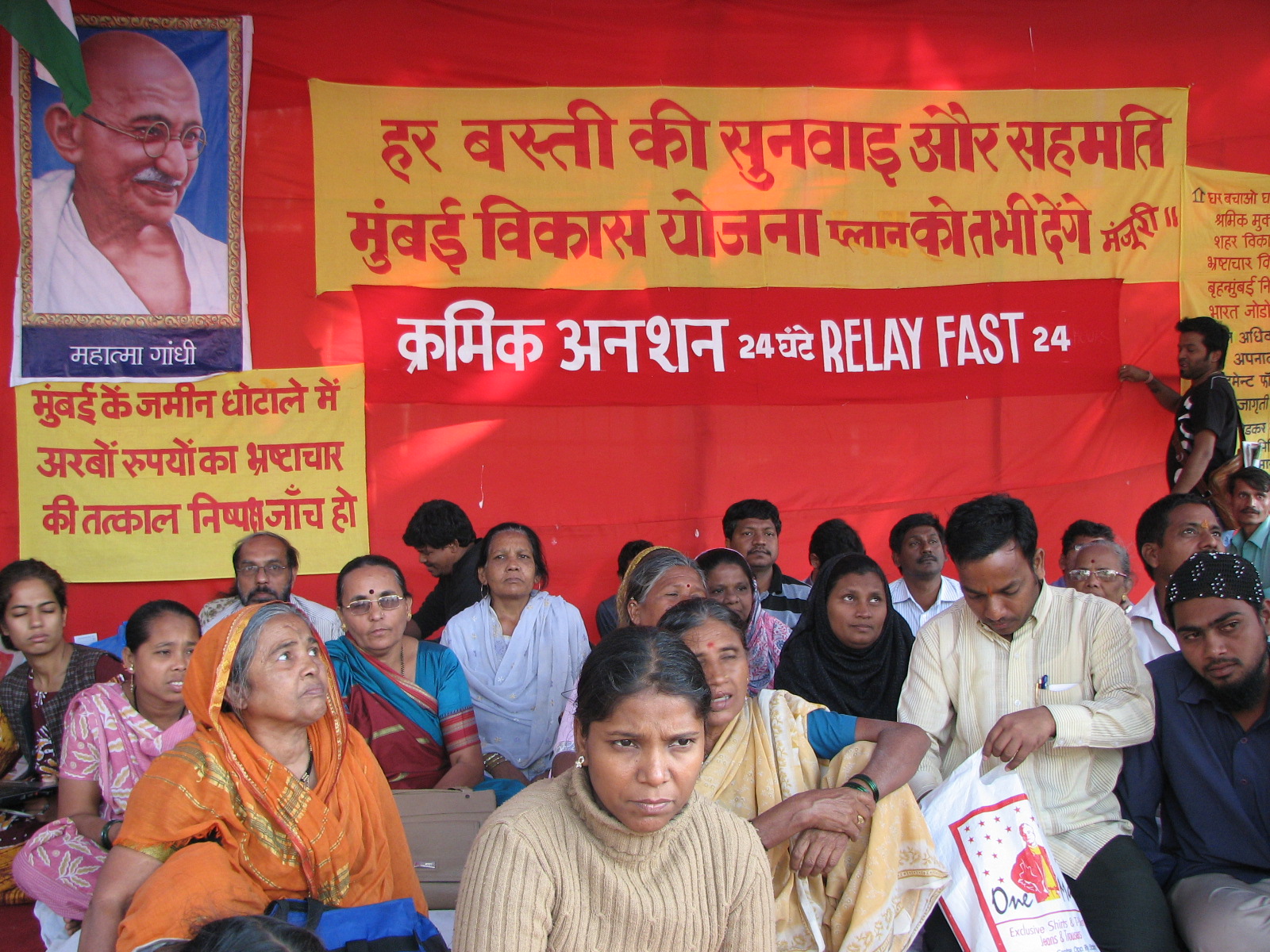
Slum dwellers’ struggle reaches Day 8

Ghar Bachao Ghar Banao struggle continues, Anna Hazare support brings media to Azad Maidan in large numbers for first time.
by The Editors | editor@themetrognome.in

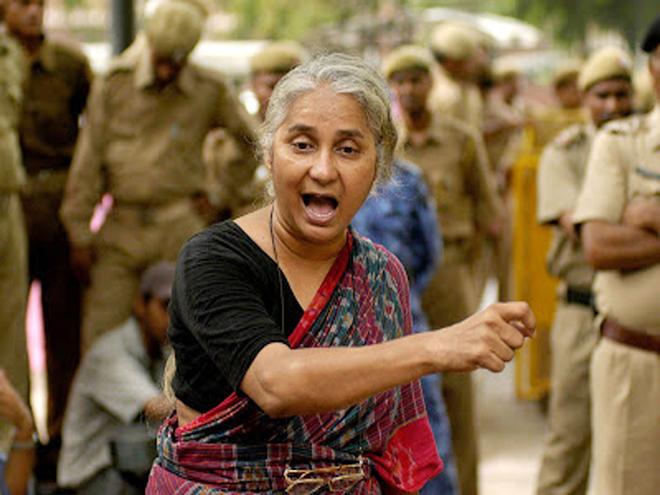
The Medha Patkar-led agitation of Mumbai’s slum dwellers and those affected by scams in the Slum Rehabilitaion Authority continued yesterday, with a major shot in the arm: activist Anna Hazare landed at Azad Maidan to pledge his support to the protest and the relay fasts being undertaken therein.

With Anna’s presence at Azad Maidan at 2 pm, media personnel descended at the venue in large numbers, probably for the first time since the agitation began.

As per a press note issued by the National Alliance of People’s Movements (NAPM), “The continuing struggle of Mumbai’s slum dwellers entered a new phase today…Shri Anna Hazare visited Azad Maidan and expressed his support to the struggle for right to shelter. In a democratic republic with the Constitution written in the name of the people, no Government has any right to evict people in a brutal manner and make them homeless, he said, calling a halt to the atrocities.”

Earlier, Mankhurd MLA and Samajwadi Party honcho Abu Azmi visited Azad Maidan to express solidarity with the protesters; he was initially heckled and questioned about his absence from the start of the Andolan. Eventually, he agreed to support the protest and join the delegation that meets the Chief Minister at Mantralaya today.

“The GBGB Andolan received the minutes with decision by the CM and the Mantralaya, yesterday night. We, from Azad Maidan, sent a reply demanding certain clarifications and suggestions,” Patkar said. The Andolankars have, however, forwarded a set of demands, some of which are: the Government must provide a written assurance of no further evictions till enquiry reports into the first group of SRA projects are out, a GBGB representative should be part of the enquiry process, and that slums must be declared within a month and provided with all basic amenities, among others.

(Picture courtesy pardaphash.com. Image is a file pic) 


Categories
Patrakar types

Who have you ignored today?

The media that complains of a Government ignoring its citizens can’t really talk, since it deliberately, subtly ignores certain ‘others’.
by Vrushali Lad | vrushali@themetrognome.in

Oh yes, the Government’s a bi**h. It doesn’t care about you, it doesn’t want to hear your views, it steadfastly ignores your protests and it sweeps every matter, however monumental, under the rug. It doesn’t care if you’re dead or alive, as long as you rally around and vote it back to power in 2014.

There has been a round of protestations against the severe (mis)handling of things by the Government with regards to the Delhi gang rape issue. The country’s newspapers and channels have gone all out in their criticism of the Government’s workings, and several media houses have launched campaigns for justice, organised self defence camps for women, dug out old compilations of rape statistics all over the country, and stepped up their coverage of every crime happening against women.

In the midst of this noisy reportage of the state of affairs in this supposedly rape-happy nation, the media continues to turn its back on those it has always turned its back on.

Since the New Year, there has been a huge bunch of people protesting at Azad Maidan, Mumbai. This group comprises displaced slum dwellers and those affected by the decisions of the State Government, a group that is on a relay fast till its demands are met and its leaders given adequate time for a meeting with the higher-ups. The group marched to Azad Maidan in huge numbers, prevented from advancing at several stages by cops, denied a meeting with the CM more than twice, but it still camped out at Azad Maidan, and is still there. Headed by fiery activist Medha Patkar, this group is gathering strength with each passing day, and at least 30 of its members, at any point of time, are on a fast.

Did the papers and channels cover this momentous protest?

Slum dwellers in Mumbai are an active lot, forever demonstrating against demolition drives and demanding meetings with authorities. As the population of slum dwellers in the city swells and they get official sanction as vote banks, what logic dictates that their issues, their demands, indeed their existence, must be denied by the media?

One reason for this studied silence, and this is a reason propagated by managements and editorial staff in almost every city media house these days, is that the media must cater primarily to those who read their papers or watch their channels. “We are catering to the South Bombay crowd,” my chief reporter told me during my orientation at a city tabloid years ago. “You are on the health beat. You should get news from private hospitals, not civic or government hospitals.”

I can agree in part, but are we journalists or middlemen for business houses? If we are one but not the other, why pretend otherwise?

This same arrogance was the reason why several media were slow to pick up the pulse of the Anna Hazare-led agitation for the Jan Lokpal Bill last year. It was an agitation led by a little villager, so what? But when the numbers began to align with the same man, the media pounced. Even yesterday, at the ongoing Azad Maidan agitation, the media deigned to cover the proceedings only when Anna Hazare landed at the spot to offer his support. And even then, the questions remained largely restricted to his views of the Delhi rape case. As journalist Javed Iqbal, who is covering the agitation tweeted yesterday, “Anna holds press conference. More media today than all the media I have seen @ demolition drives in past 3 yrs…And during press con, not a single question abt Rajiv Gandhi Awas Yojana, SRA scams, only questions about Delhi rape, irrigation scam & Anna’s anti-corruption campaign.”

In its bid to cater to the ‘upper’ classes of society, the media willingly ignores the poor and the marginalised, in fact those same people who are genuinely in need of the media’s help. It assumes that the poor are not reading the papers that the rich are buying. In demarcating readership thus, the media creates a clear ‘Us v/s Them’ divide, it sees development only in the building of glass pyramids and gorgeous townships for the elite, not in the housing of the city’s poor and the generation of employment for them. This divide further points at the poor being the enemies of development, and hence, the elite. This explains why you will see lengthy stories of new slums being recognised, of water connections being granted to certain slum pockets, but not much about deliberate irregularities committed by the builder lobby (or the advertising lobby). Several editors are known to address issues such as an entire area receiving muddy water only when the taps in their own homes spew smelly water and the domestic help (who stays in the neighbouring slum) tells them that she has clean water in her shanty.

In its flawed reasoning of what constitutes development, the media inadvertently and, sometimes subtly, blames the poor for whatever backward spirals our cities occasionally fall into. For rising crime. For increasing poverty. And to complete this pretty picture, it goes and ignores the poor some more, choosing instead to outrage for days on end over rubbish statements made by the country’s politicians and spiritual gurus. It’s almost like an entire class of people just does not exist in our collective conscience. The only times ‘they’ are receiving any coverage these days is if ‘they’ annoy ‘us’ in some way. And then all of us yell ourselves hoarse for being ignored.

Vrushali Lad is a freelance journalist who has spent several years pitching story ideas to reluctant editors. Once, she even got hired while doing so. 

(Picture courtesy youthrelationships.org)



Categories
Big story

Mumbai’s municipal schools are pathetic

…so says a Praja Foundation survey conducted in 2012. Survey results for the city’s BMC schools are far from encouraging.
by The Editors | editor@themetrognome.in

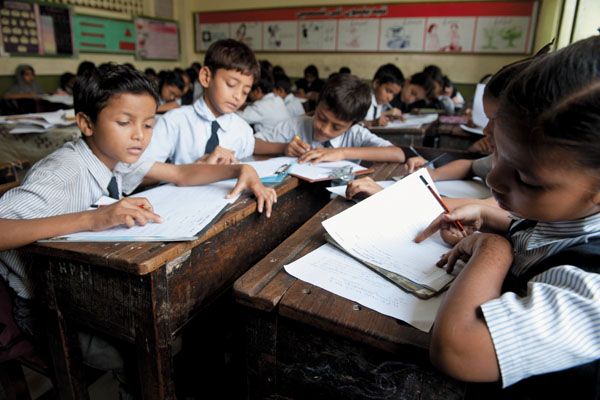
Education is a free right for every child, and for a city like Mumbai, which has the richest municipal corporation in the country, the quality of education imparted to children in the Brihanmumbai Municipal Corporation (BMC)-run schools should be anything but mediocre, its results nothing short of excellent.

And yet, the actual realities are quite different. In a survey conducted across 15,191 households in Mumbai, 5,167 households had children going to school. Of the children surveyed in these households, 19 per cent children went to municipal schools. The survey was conducted in March and April of 2012, with Hansa Research. The research document is titled ‘White Paper on State of Education in Municipal Schools of Mumbai.’

As per the survey, “Between the years 2008-2012, the average percentage of students passing SSC from private schools was 82 per cent, while the average number of students passing from municipal schools has been a mere 58 per cent. This is after 61 per cent of BMC school children have been sent for private tuitions as well, another revelation from our city-wide survey this year. Of the 100 students who received a Government of India scholarship, only 9 were from BMC schools.”

The white paper goes on to reveal that the BMC actually spends more money on each child in municipal schools as compared to the fees charged by private schools – the BMC’s yearly spend on each municipal school child is upwards of Rs 50,000, while most private schools surveyed were charging students between Rs 15,000 to Rs 30,000. However, this does not promise quality teaching, as the survey found out. “In a School Inspection Report for D Ward (Malabar Hill, Grant Road, Napeansea Road), over 85 per cent of teachers received good to excellent report on most teaching attributes like explaining the subject matter, teaching methods, etc. The passing percentage in D ward municipal schools is a mere 51 per cent and has one of the highest dropout rates at 11.5 per cent. Most inspection reports appear to be a mere formality as most teachers are rated good to excellent in most inspecting parameters.”

Even worse, the gap between performance of BMC schools and private schools in the last four years has been 24 per cent – a clear indication of this is the statistic that if 10 students appeared for SSC exams from BMC schools, six cleared the exams; this latter figure was eight for private schools.

Interestingly, even parents wished to send their wards to private schools instead of BMC schools – almost 89 per cent of families surveyed wanted to send their children to private schools, but the expenses inhibited them from doing so.

(Picture courtesy forbesindia.com)

Categories
Learn

Relay fast continues at Azad Maidan

Ghar Bachao Ghar Banao Andolan continues despite no response from Government. Several slums and activists are united in the cause.
by National Alliance of People’s Movements

The Ghar Bachao Ghar Banao Andolan agitation entered its seventh day yesterday, with 30 representatives from various slums of Mumbai, who had been fasting for the last 24 hours, breaking their fast and the next 30 representatives beginning their fast in their place. People who observed the fast only drank water, but spoke passionately about the need to struggle against injustices happening to them in their bastis.

Ajay Palande, from Jogeshwari Indira Nagar, while breaking his fast, shouted the slogan “Bhooke pyaase ladenge, Andolan chalayenge.” Added Kantabehen from Chandiwali, “We are trapped in the cruel web of SRA-builders-duplicate notices-lack of basic amenities-fake allotments and have been fighting for the last 12 years. Now we won’t go anywhere, they (the Government) have to come to hear us.”

Two days ago, Rashi Azmi from the All India Milli Council, Anita Vyas from Ambujwadi, Sabrunnisa Saha from Adarsh Nagar, Lakhan Mandal from Mandala, Gauri from Malwani 8, Shamim Ansari, and 24 others from different slums and middle class localities were fasting for their land rights and right to dignified housing.

While there as been no response from the Government as yet, people are determined to continue their agitation. Letters of appeal are being drafted by the people and the supporters to take immediate decisions on the demands of the Andolan. Support from various organisations, senior activists and students is coming from all over the country, which has intensified the energy and increased the enthusiasm of Andolankaris here at Azad Maidan.

Surekha Dalvi, Indavi Tulpade, Rambhau Wadu from Adivasi Sangathan and Shoshit Jan Andolan, Byaneshwar Shedge and Gyanoba Bhikule from Mosekhore Bachao Jan Andolan (which is fighting Lavasa), and many others came to show their solidarity with the Andolan.

Read the story of Susheela, who has faced demolition of her home several times and who is part of this Andolan, here

(Picture courtesy unitedblackuntouchablesworldwide.blogspot.com)

Exit mobile version