Categories
Big story

Say hello to Magnetic Maharashtra

State Government launches a counter-tagline to ‘Vibrant Gujarat’. New industrial policy to focus on making Maharashtra a premier investment destination.
by The Editors | editor@themetrognome.in

It’s a bit strange-sounding, but we can make do with it if it brings results: like ‘Vibrant Gujarat’, the catchphrase that signifies all things Gujarat, from investment to tourism, we will soon have our own catchphrase. It is ‘Magnetic Maharashtra’.

The State Government unveiled its new industrial policy yesterday. Aimed at maximising the State’s investment potential by attracting investors and promoting overall growth, the policy provides for incentive packages that will attract major industrial investments, and also accounts for provision of fiscal and land incentives to medium, small and micro industries. Further, there are incentives for those wishing to invest in less-developed and Naxal-infested areas in the State.

All of this will collectively be ‘sold’ under the catchphrase ‘Magnetic Maharashtra, Attractions Unlimited’.

The last industrial policy for the State was announced in 2006, and it mainly focussed on investment from major industrial houses. The new policy aims at an investment of Rs. 5 lakh crores and an employment generation potential for 20 lakh people. 60,000 acres of land will be set aside for setting up industries. Additionally, the Government will offer special rebates, waivers in electricity and stamp duty, and relaxation in VAT for units planning to set up shops in under-developed areas of Marathwada, Vidarbha and tribal districts.

The State plans to boost these plans further with increased intracity and interstate connectivity. The policy mentions the  development of the Mumbai-Pune-Solapur, Mumbai-Nashik- Aurangabad-Amravati-Nagpur, and Mumbai-Ratnagiri-Sindhudurg corridors, in addition to the Delhi-Mumbai Industrial corridor.

Other initiatives include providing for a single window clearance portal to build an investor-friendly climate. The policy’s mission is to “place the State amongst the most preferred investment destinations in Asia for global investors,” says Chief Minister Ashok Chavan.

If you want to read up on the new industrial policy:

The Times of India…CII welcomes Maharashtra’s new industrial policy

The Business Standard…Maharashtra’s new industrial policy to be announced today

MSN.com…Maharashtra’s new industrial policy on Thursday

 (Picture courtesy hindubusinessline.com)
Categories
Achieve

It’s a Mirakle!

This courier company employs hearing and speech impaired persons, thus giving them a good shot at building a stable future.
by Nidhi Qazi

It’s a pleasant morning. Mumbai is in its usual busy mode – office-goers rushing to their respective workplaces, food vendors  serving breakfast, taxiwallahs ferrying people to work, youngsters chirping at kiosks. A lot of early morning energy that the city bustles with is at display. Amidst all this, there is another place that’s as busy – the office of Mirakle Couriers.

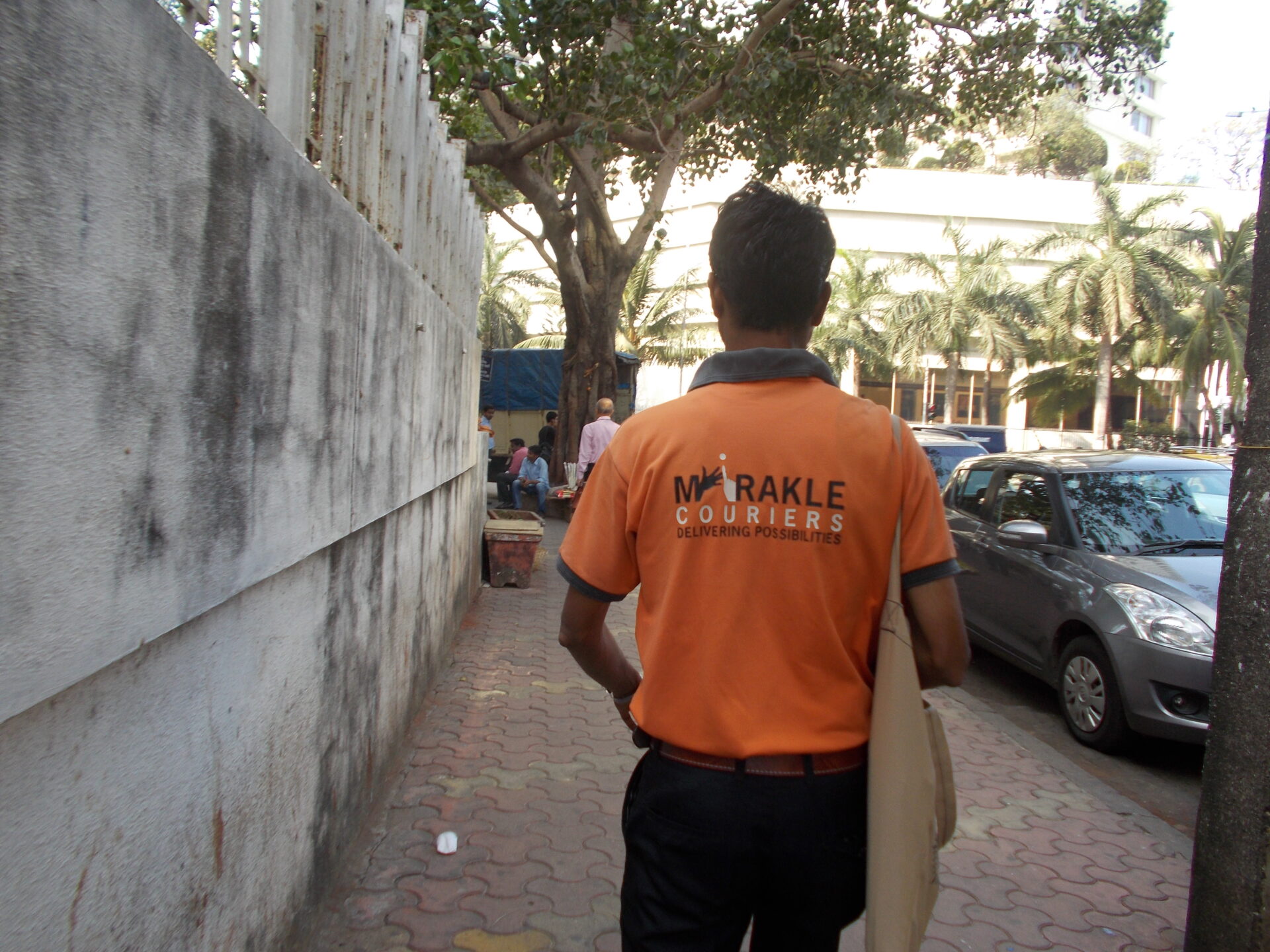
Cut to its Churchgate branch office and one finds all the employees busy sorting couriers, Googling destinations for delivery. These are employees busy making their lives meaningful and busy building their lives by overcoming their physical weakness: hearing impairment.

Started in 2010 with just one employee, Mirakle Couriers today employs around 44 hearing and speech-impaired adults in its centres at Andheri and Churchgate. While men are allocated areas for delivering in Mumbai, women look after the sorting, data entry and record-keeping. Although there is no qualification needed, the company looks for those with a basic understanding of English.

I meet Rinku, a young chap who hails from Gorakhpur, Uttar Pradesh, who is in his late 20s. Rinku’s designated area of delivery is Nariman Point. So I set off with him on his rounds.

The moment we step out of the office, he uses sign language to explain the surrounding areas. After his explanation, I now know the LIC building, the Air India office, Nariman Point, Fort city, the various public parks, prominent office buildings, and other landmarks. In between, I offer him a pen and paper when I’m unable to understand certain things, but he makes it a point to not use the proffered materials. Instead, he tries and succeeds in expressing his point using sign language.

We reach our first destination. The receptionist and Rinku exchange smiles. The former accepts the package from Rinku, and we move to the next destination. Rinku walks swiftly, and it becomes difficult to keep pace with him. I take a deep breath and follow him. “You like Mumbai?” I ask, and Rinku nods an excited ‘yes’, explaining, “I can’t go back to my village. There is nothing to look forward to there.”

The company follows Indian sign language for all its daily transactions, ranging from pick-up, sorting according to pin codes, and delivery. The management and operations are also sign language-based.

An arts graduate, Rinku works with Mirakle six days a week. How has Mirakle changed his life? He smilingly replies, “I am confident now. I feel good about what I am doing.”

From there, we walk to some more places in the Nariman Point area, amid the hustle bustle, amid the sound of silence between Rinku and me. “When do you plan to get married?” I ask, and he chuckles. Using the signs which spell out ‘love’, he expresses, “When I find love.”

We reach some more destinations with ease. At one point, Rinku gets stuck, but only to find help in the Google Maps. He takes out his mobile phone and finds the directions to an office where he has to deliver the last courier.

Done with all the deliveries, we now head back to the office. And it’s time to say goodbye to Rinku and his colleagues.

What about the competition in the market when big players like Blue Dart, DHL exist? “We do have a very strong competition,” says Nimesh Pawar, Operations Manager, Churchgate branch. In fact not all is hunky dory when it comes to dispelling clients’ cynicism towards deaf and mute. “People do doubt if deaf people can deliver on time; whether they can deliver at all,” he adds.

But all this cynicism is countered and myths are broken as Mirakle does what it really stands for – Delivering Possibilities.

(Picture courtesy Nidhi Qazi)


Categories
Film

Bollywood returns

This year, a rash of sequels to popular Hindi franchises and remakes of classics are set to hit the screen. Rejoice! (or not)
by M | M@themetrognome.in

This is going to be another year full of Entertainment, Entertainment, Entertainment and Repeat. Buckle up, the Bollywood Express is set to take you on a joyride of sequels this year. Here is a list of sequels one should anticipate (or avoid):

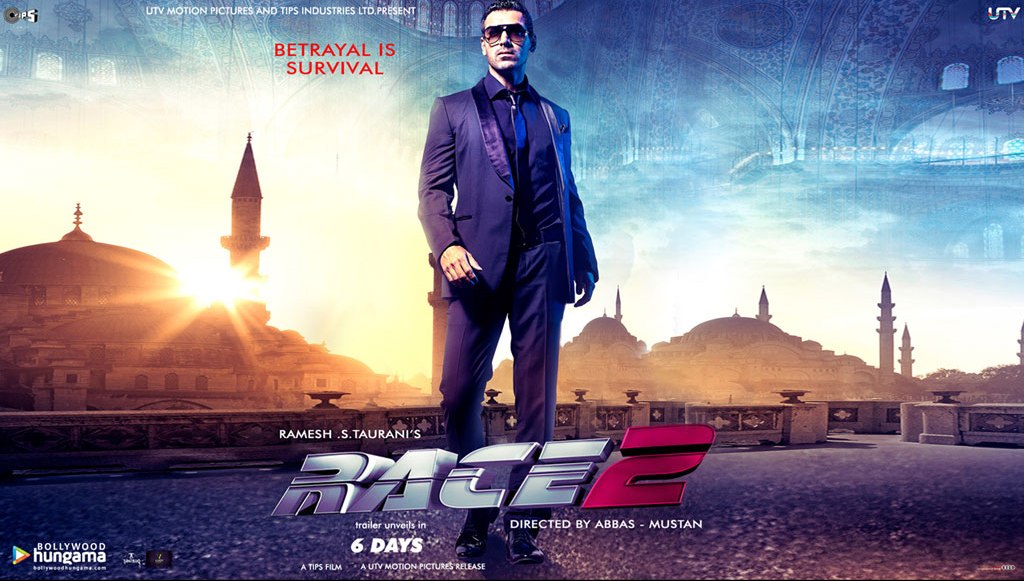
Race 2: ‘Lat lag gayi’ director ko bakwas bananeki. The songs of Race 2 are enough to make me switch off the TV for good. One would require high levels of sedation to sit through this one, and in particular, watch Saif Ali Khan dance with a Katrina Kaif lookalike…oh wait, that’s Jacqueline Fernandez.

Murder 3: I am still confused between Murder and Raaz. I’ll tell you why, with a pop quiz: Which one starred Sunny Leone? See, even you had to think! Anyway, the new girl in the latest installment of this franchise is Sara Loren. Rumour has it that she is a Pakistani actress previously known as Mona Lizza.

Saheb Biwi Aur Gangster Returns: My first reaction: What for? My second reaction: Seriously, what for? This one doesn’t star Mahie Gill, from the looks of things. It’s still got Jimmy Shergill and Randeep Hooda, though.

Yamla Pagla Deewana 2: Okay, so the first one did well at the box office. Wonder what the father-son trio has got up their sleeves this time. Watch this one solely for Dharam paaji.

Once Upon a Time Again: One point deducted for the lame title, one point bonus for the fresh casting. This one’s got Akshay Kumar and Imran Khan.

Ragini MMS 2: All the Sunny Leone fans –yes, all 10 of you – rejoice!

Krrish 3: First there was Koi Mil Gaya, then came Krrish and now Krrish 3. Where is Krrish 2? Maybe he was abducted by aliens?

Dhoom 3: Back in Action: After watching Talaash, I would avoid betting on this one. Aamir Khan as the villian? Not a very believable idea. And Uday Chopra is in this one too, which somehow makes it worse. And don’t even get me started on Bachchan Jr. Why didn’t the world just end in 2012?

Singham 2: This one retains the hit pair of Ajay Devgn and director Rohit Shetty. Expect a masala comedy with Marathi catch-phrases.

Ghayal Returns: It could be difficult to top the original effort, but Sunny Deol will surely pack a powerhouse performance.

Dedh Ishqiya: Madhuri is back! A sequel to Ishqiya, the filmmakers are unable to find a replacement for Kangna Ranaut, who was part of the cast for this film but who later backed out because of “date issues.” I wonder which other actress would brave up to sharing screen space with Ms Dixit.

Raajneeti 2: There’s no dearth of material for this one. The cast is yet to be decided, but I have high expectations from Prakash Jha.

Aashiqui 2: Mohit Suri, of Kalyug fame, is one of the youngest directors on the block. His version of the cult film will be interesting to watch. This one stars Shakti Kapoor’s daughter Shraddha Kapoor and Aditya Roy Kapoor (of Guzaarish and Action Replay); both are surprisingly pleasant on screen.

Apart from sequels, there are remakes too. Classics like Chashme Buddoor, Himmatwala and Zanjeer will be recreated with the same or adapted storylines. Eid and Diwali releases this year are locked-in as well – with Salman’s Sher Khan and Shah Rukh’s Chennai Express respectively.

Here’s a little trivia on how production houses lock the dates. The head honchos along with the marketing teams sit down with Kalnirnay calendars and mark the auspicious dates. The festive days like Ramazan, Eid, Diwali and Christmas are locked almost two years in advance. The rest of the year is filtered for Ekadashis and Amavasyas. The team then slots the film slate in order of priority. Higher budgets, bigger stars get ultra-auspicious release dates.  The auspicious days are said to bring in more box office moolah, especially from up North. And thus, deciding a release date is no rocket science.

The year looks crowded for Bollywood, I hope it’s auspicious too. If not, we will always have 2014 and a sequel to Krrish 3 called Krrish 5. Maybe the Roshans are superstitious about even numbers. Hmmm.

Sharp as a tack and sitting on more hot scoops than she knows what to do with, M is a media professional with an eye on entertainment.

(Pictures courtesy santabanta.com and koimoi.com)

Categories
Big story

It was an accident

An unexpected twist in the death of Bidushi Dash Barde reveals that she died accidentally. Case will now be closed.
by The Editors | editor@themetrognome.in

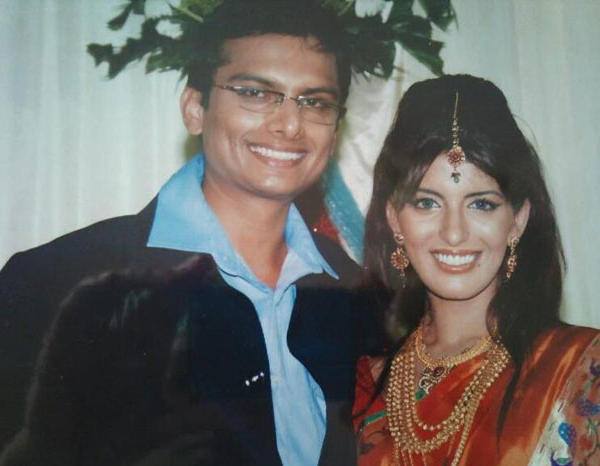
It was one of the most shocking incidents last year, adding to the numbers of women who died mysteriously or were killed in their Mumbai homes in 2011. Coming just a few months after the noted Pallavi Puryakastha case (the young lawyer was assaulted and killed by the building security guard), the mysterious death of 23-year-old model Bidushi Dash Barde in her Versova home in October pointed to foul play.

However, doctors at JJ Hospital have now concluded that the death was an accident.

The model lived in a rented apartment with her engineer husband Kedar. Bidushi had been ailing for a while before her death – she had diabetes and was prone to blood pressure problems, which caused her to faint frequently – and on the day of her death, Kedar found her with deep cuts to her neck and face, and cuts on her arm, a glass shelf shattered on the floor around her. Police instantly suspected Kedar in the death; it was reported widely that he had called her just once during that day, despite knowing that she was unwell, a domestic help working in that building had told police that she had seen a man in the flat that morning, and forensic experts said that it was practically impossible for Bidushi to sustain such severe injuries by falling on a glass shelf.

With the JJ doctors’ pronouncement, cops will now move to close the case and file a C-Summary report, ie for a case registered because of misunderstanding.

Investigations into the case did not yield any concrete clues to the mystery, from the start. There was no clear evidence to support the murder theory, and if somebody had assaulted Bidushi or pushed her onto the glass shelf, there were no clues pointing to this chain of events, either.

The doctors’ final report is awaited.

(Picture courtesy haryanaabtak.com)

Categories
Learn

‘Don’t snatch our shelter’

A woman whose home has been demolished often, tells a story of constant battle with the authorities and endless devastation.
by Nidhi Qazi

Mankhurd: The year was 2004. Susheela Patel, a resident of Sathe Nagar, Mankhurd, lost her house. “Our slums were called illegal and one day, without any prior notice, they were demolished,” she said.

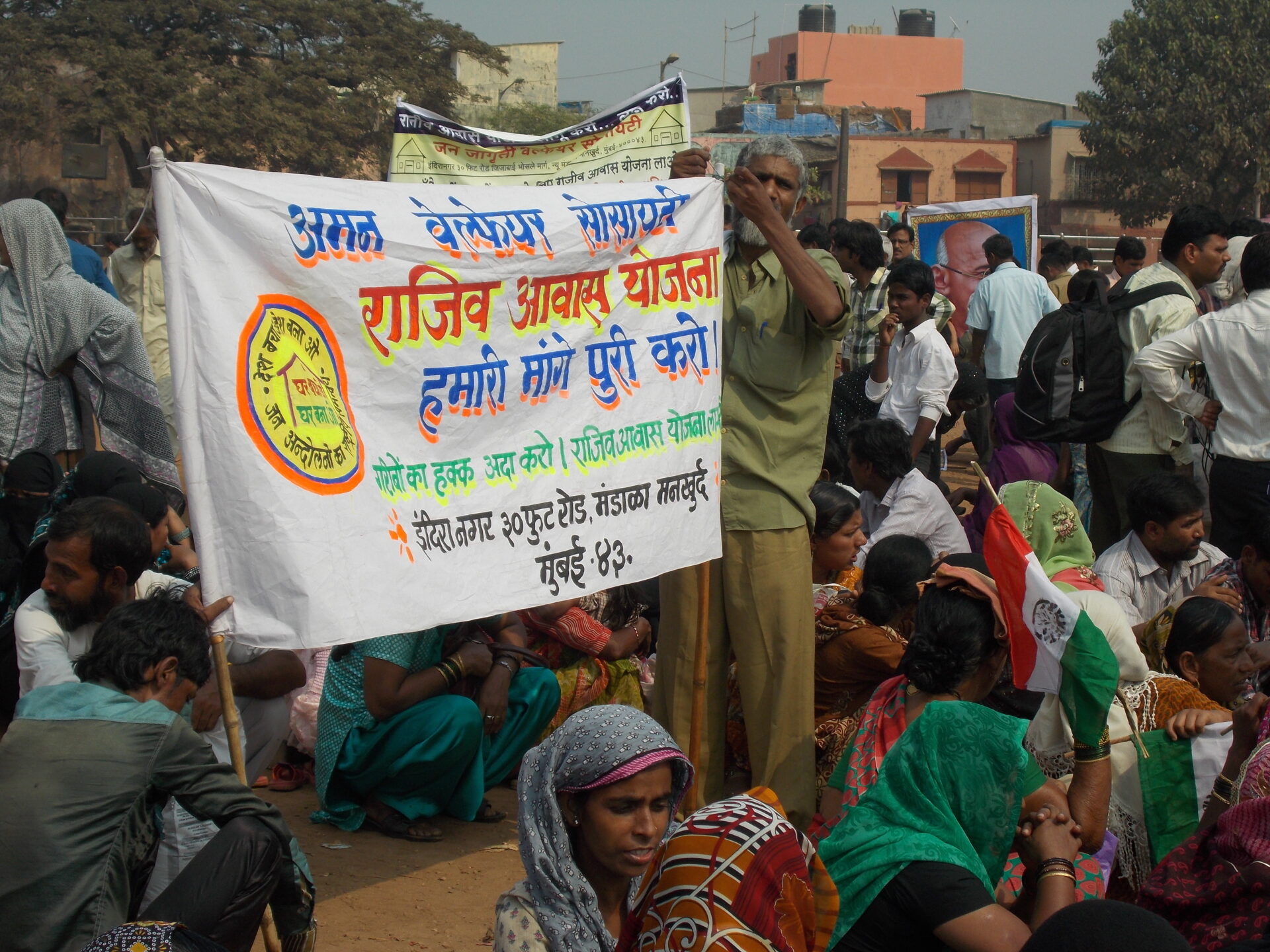
Ambedkar Ground: The year is 2013. The Ground was the starting point of a two-day road march which ended at Azad Maidan yesterday. The Ground bustled with the energetic sloganeering of more than a 100 protestors including slum dwellers, students and activists.

Susheela is high on energy too, as she continues to battle it out with the authorities who come, demolish homes, and go. The only difference is that this time, she is not alone. Susheela is part of a larger agitation called the ‘Ghar Bachao Ghar Banao’ Andolan (GBGB) under the aegis of the National Alliance of People’s Movement (NAPM).

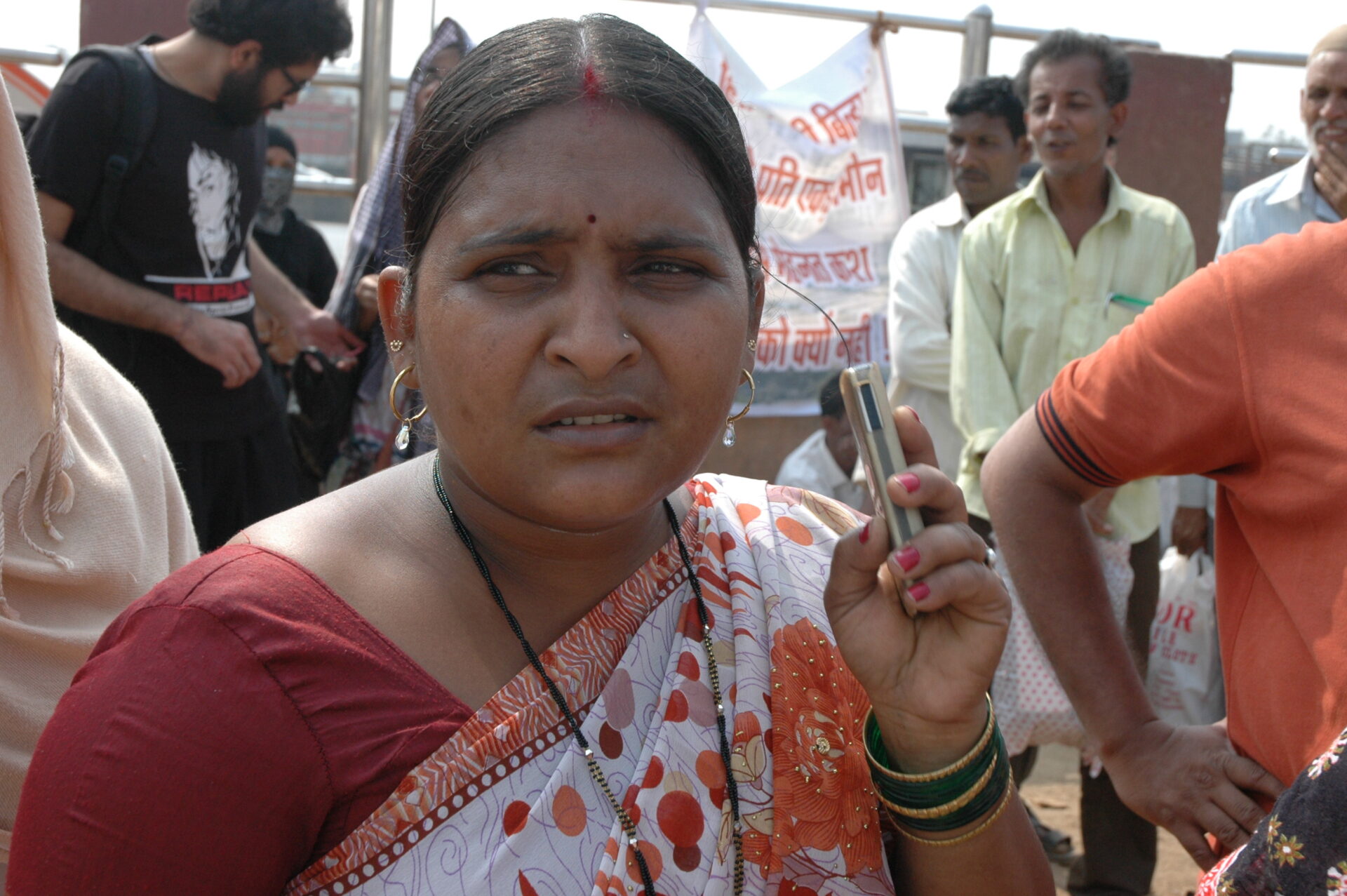
Dressed in a sari, hair neatly plaited, the 40-something Susheela greets me with a smile, holds out her hand in an excited handshake and tells me her story with all the enthusiasm and grit of a seasoned activist. “In the last one decade, our houses have been demolished more than thrice. They (the demolitions) continue to devastate us. This is despite the repeated requests to give us notice,” she says. A part of the movement since 2004, Susheela has been there, seen that. “We are always under the fear of demolition. They (the authorities) don’t even bother to listen to us. They throw away our belongings, too.”

Susheela’s problem points to a bigger issue which the city is currently engulfed in: the State-builder nexus. Activists openly allege that Mumbai is one of the hubs of corruption perpetrated under the garb of infrastructure development projects. “The big players of this nexus include MHADA (Maharashtra Housing & Area Development Authority), MMRDA (Mumbai Metropolitan Region Development Authority), Adarsh housing, Hiranandani group, developers in areas like Golibar, Sion-Koliwada. A number of irregularities happen in the name of slum eviction drives and slum rehabilitation projects,” a housing activist says.

The Andolan has started a renewed agitation called ‘Mumbai Ke Gareebon Ki Nayi Jung’ which began on Tuesday, the first day of this year. Susheela is one of the members at the front. “We not only want freedom from the ever-lurking fear of our houses getting demolished any time, we want the Rajeev Awas Yojana to be implemented,” she says. The scheme has already been approved from the Delhi government, but the Maharashtra government is still sitting on it, informs Susheela.

The Andolan has raised these issues along with other peoples’ organisations in Mumbai, and demanded Rajeev Awas Yojana (RAY) as self-development towards right to shelter. However, it is the builders-politicians nexus, with bureaucrats and police force to support, that is preventing RAY from being implemented.

The area near Mankhurd is home to a large number of rag pickers who earn their livelihood from the Shivaji Nagar dumping ground. Because of the everyday fear of slum eviction, people like Susheela, many a days have to miss work (rag picking) and thus their livelihood suffers. “Most of the people here are daily wage earners but are not able to earn a decent living thanks to these authorities,” she alleges. The livelihood problem apart, the children’s education suffers, too. “We have to start from scratch; from collecting material for a new house, to building it. In all this, our children suffer.”

She breaks away for a while to join small clusters of women to help them raise a voice. While everyone assembled there is equally angry and agitated, people like Susheela help them channelise their distress during protests like these. I watch as Susheela rushes to a group of volunteers, helping them with simple logistics such as microphone arrangement, banners and placards.

Moving away after helping others, she then barges into another cluster of people surrounding activist Medha Patkar. They both whisper to each other, and Susheela comes away.

She greets me again with the same enthusiasm and chats awhile before concluding, “We don’t want big buildings. We don’t want anything. But don’t snatch our shelter. Just assure us a simple, decent life which is free of fear.”

(Pictures courtesy Nidhi Qazi)


Categories
Big story

25 fast track courts for rape cases?

Chief Minister Prithviraj Chavan feels chemical castration is not a good idea, but speedy justice will bring rapists to book.
by The Editors | editor@themetrognome.in

Chief Minister Prithviraj Chavan is seemingly quite proactive on the issue of rape in the State of Maharashtra. But while some of his party workers and even such luminaries as Tamil Nadu Chief Minister J Jayalalithaa have demanded chemical castration as a punishment for rapists, Chavan is not in favour of the idea.

However, the Government is seriously looking into speedy disposal of rape cases. To this end, Chavan had a meeting with Bombay High Court (HC) Chief Justice Mohit Shah yesterday. The meeting centred around the Government’s plans for setting up 25 fast track courts to deal with rape cases. During the meeting, Chavan is said to have requested CJ Shah to expedite the filling up on 26 vacant judges post in the State’s courts.

As with other major States in the country, Maharashtra has a very high pendency rate for rape cases. “Rapists should be dealt with severely and swiftly. Pendency (in rape cases) is unacceptably high (in Maharashtra,” Chavan told a newspaper, adding that justice in rape cases must be meted out swiftly; there was no logic to the punishment if it was handed out years after the incident had occurred.

Chavan is likely to have another meeting with CJ Shah next week, when the Government will have a clear action plan in place as regards the fast track courts.

However, the amendments in rape punishment laws cannot be done at the State level – it is for the Parliament to suggest and make any suitable amendments, which the country’s States will then follow.

(Picture courtesy indiatvnews.com)

Exit mobile version