Categories
Hum log

In a crisis? Presenting Doctors For You

This group of city-based doctors can be counted on to reach crisis-ridden areas of the country and offer medical aid.
by Nidhi Qazi

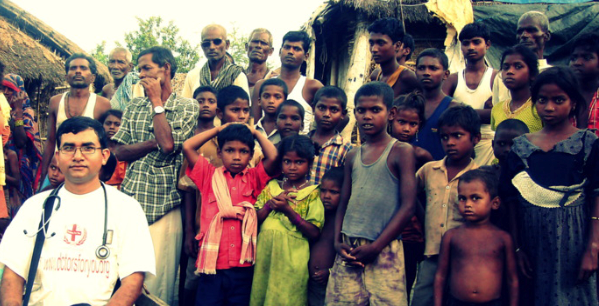
The year was 2008. A group of doctors reached Bihar in the aftermath of the Kosi river flood, one of the most disastrous floods in the State’s history which affected around 2.3 million people. People were in dire need of aid. This group of doctors worked day and night, helping the flood-stricken people.

Then came the Kokrajhar riots in Assam this year – the worst-ever case of ethnic violence in the country. Our group of doctors reached the area and started relief work there after a rapid assessment of the affected areas followed by the necessary relief and rehabilitation work.

What started as relief work in crisis situations continues today in other parts of the country as well, under the name Doctors For You (DFY). As the name suggests, DFY is a group comprising medical practitioners, youth and like-minded people who care for fellow human beings, in crisis or otherwise.

In Mumbai, DFY has established a sustainable project in Natwar Parikh Compound, a resettlement colony in Govandi. The project started in 2010 in collaboration with the Mumbai Metropolitan Region Development Authority (MMRDA). The centre is housed on two floors of a building in the Natwar Parikh compound with separate rooms for various departments.

Dr Ravikant Singh, President, DFY, says, “Our project is a comprehensive health project which focusses on preventive, promotive and curative health services.” Simply put, the DFY provides curative and preventive service for oral health, paediatric care, antenatal and post- natal care in addition to a general OPD, a minor OT (Operation Theatre) and DOTS (Directly Observed Treatment Short course) centre for TB. Its promotive services include regular camps and awareness workshops on immunisation, family planning, breast feeding and STDs (Sexually Transmitted Diseases).
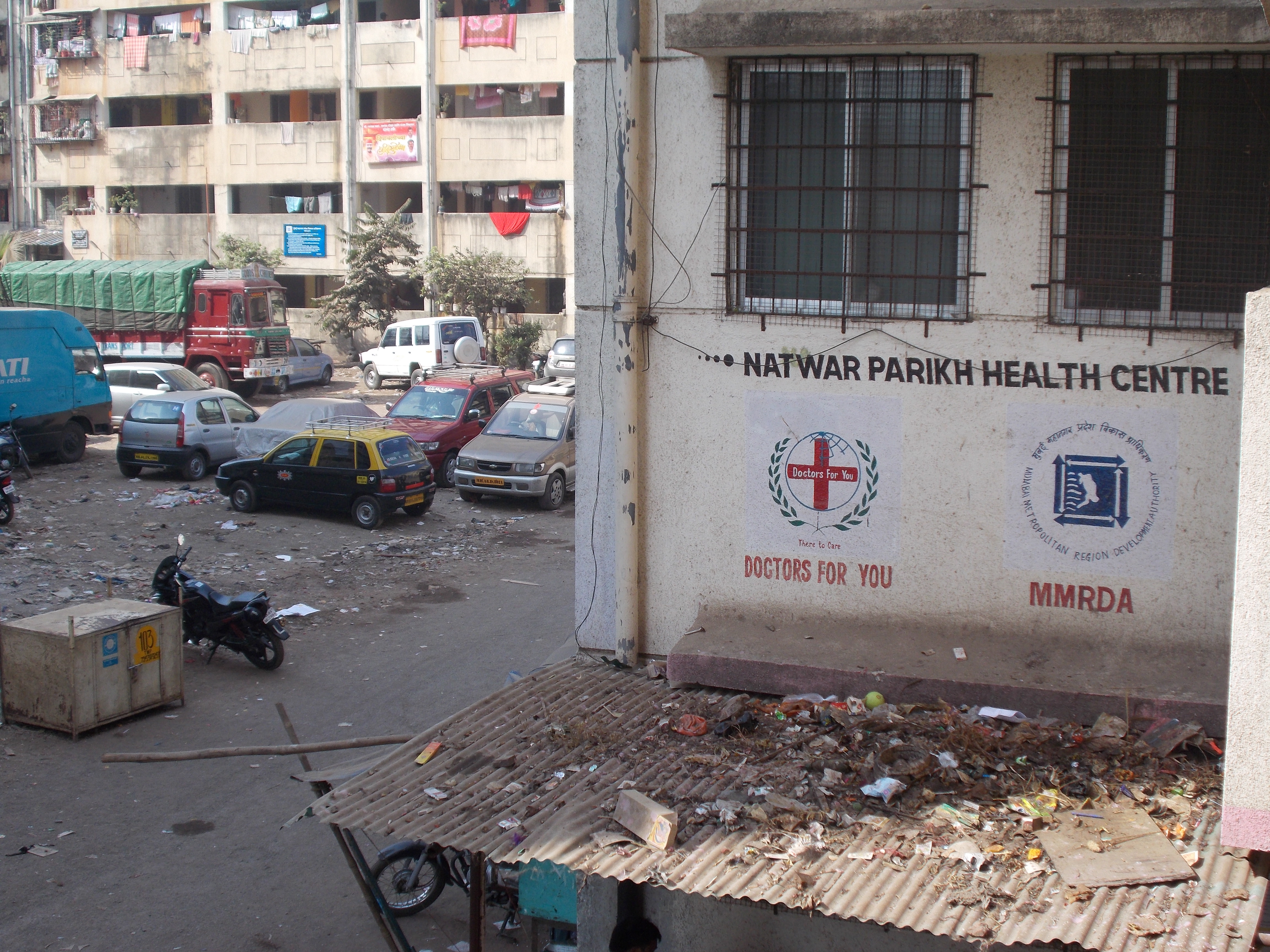
The doctors visit the Natwar compound every alternate day and the Lallubhai Compound (also a resettlement colony) and Ambedkar Nagar on the other days. Health services are free for infants up to age 1, pregnant women and adults above 60 years. For the rest, DFY charges a nominal Rs 10 consultation fee on a weekly basis.

DFY’s Mumbai chapter, which was earlier funded by MMRDA, is now funded by Mumbai Railway Vikas Corporation (MRVC). The organisation also imparts disaster management training, capacity building and response training in five other states namely, Maharashtra, Delhi, Assam, Bihar and Jharkhand.

So what sets DFY apart from other agencies involved in relief work? “It is the fact that we are doctors. Simple. In any crisis situation, be it a natural disaster or riots, doctors are seen from a lens of trust and hope. We become an entry point for social workers who would otherwise be under the suspicion of the local people,” says Dr Singh.

The DFY team also has a few awards in its kitty – the SAARC Youth Award to Dr Singh and the British Medical Journal (BMJ) award for ‘Medical Team In A Crisis Zone’ category.

(Pictures courtesy doctorsforyou.wordpress.com and Nidhi Qazi)
Categories
Event

Ghashiram Kotwal is 41 years old

A response to the rise of the Shiv Sena in the ’60s, controversial play celebrates 41 years of stage time.

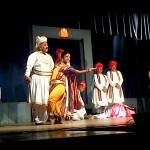
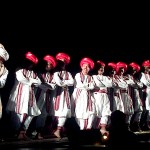
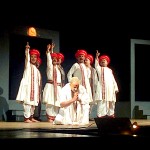
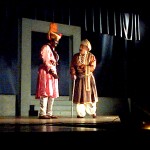
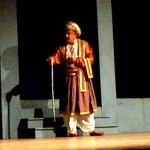
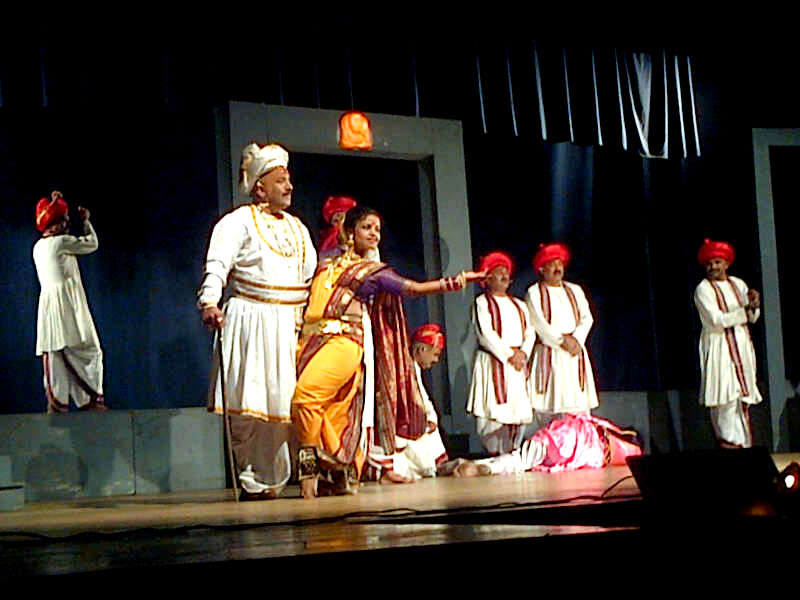
The Marathi theatre scene of the 1960s and ’70s was known for its bold, contemporary and often brutal analyses of dominant social themes of the time. And one of the foremost writers and playwrights of the time was the late Vijay Tendulkar, who penned some of his masterpieces during this time, such as Shantata! Court Chalu Ahe, Gidhade and Ghashiram Kotwal.

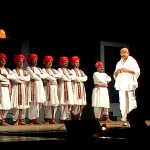
This last celebrated 41 years of being on the Marathi stage on Sunday, December 16. Originally directed by Jabbar Patel, the play boasted some truly excellent music by the late Pandit Bhaskar Chandavarkar and choreography by Krishnadev Mulgund. The play is based on the life of Nana Phadnavis, who was a prominent minister in the court of Peshwas of Pune, and it talks about  men in power who give rise to certain ideologies to serve their purposes, and later destroy those ideologies when they become useless.

Reproduced below are late music director Bhaskar Chandavarkar’s thoughts on the play:

Ghashiram Kotwal was first staged in December 1972. Within a span of ten shows (a short period of some weeks) it became a controversial play. Vijay Tendulkar, the playwright, has already faced severe, some times violent opposition to his earlier plays. He was subjected to a humiliating  ‘manhunt’ because of Ghashiram. The controversy revolved around two points. The first was that he has misrepresented history and the other was that he had trivialised and defamed Nana Phadnavis.

Actually, the points were political. The play has, to this day, remained extremely relevant because of the measured political statement it makes about fascism. The a-historic legend or myth, around which the playwright weaves his plot, seems to surface in many parts of the world. Violence, political manipulations, and the nexus between crime, sex and power is what Vijay Tendulkar explores. The historians may not agree with the interpretation of history that the playwright visualises. But the
playwright asks if there is any objectively ‘true’ history? And do we learn from history at all?

Ghashiram Kotwal became a path breaker because of the form of presentation. ‘Dashavtari Khele’ a folk theatre form like the Tamasha, Lavani, Gavlan etc. that have found their way into the presentation. The play therefore becomes a musical. It is not a musical comedy that has been modeled on the American Broadway type. In an innovative way, the folk sensibilities and basic
political awareness have been woven together in a typically Indian setting.

Songs, dance and music have to shoulder responsibilities other than that of being merely entertaining numbers. They are here to bring out the strong feelings, the undercurrent of the social protest. If the establishment uses the established music as its political tool to perpetuate power, artists must use non-established forms of art to rebel and revolt. Ghashiram Kotwal thus becomes a political statement.

The presentation and staging will hopefully transcend the language barrier because, tragically, we still have Ghashiram-like situations happening all over the world.’

(Pictures courtesy Yaashee Entertainment)


Categories
Trends

The heat is on. Again.

City’s weather seesaws yet again, with the mercury rising to 34 degree Celsius. Minimum temperatures will be 19 degree Celsius.
by The Editors | editor@themetrognome.in

Don’t expect cool and pleasant mornings of last week to continue into this one. In yet another turnaround, temperatures have risen from yesterday and the city is expected to clock in a maximum temperature of 34 degree Celsius, while minimum temperatures will be in the 18 to 19 degree Celsius range.

As per the Indian Meteorological Department (IMD), Mumbai, this forecast is applicable for the next 48 hours. However, accuweather.com, one of the world’s premier and most reliable weather monitoring systems, shows this forecast for the entire week, apart from overcast skies. However, as per graphs for Mumbai on the accuweather.com site, maximum temperatures will dip next week to hover at 32 degree Celsius, while minimum temperatures will remain largely unchanged.

(Picture courtesy earthtimes.org)


Categories
Big story

Maximum AADHAR enrollments in Mumbai

Most enrollments have happened in 31 to 45 years age group. Enrollment peaked twice this year, was lowest in December.
by The Editors | editor@themetrognome.in

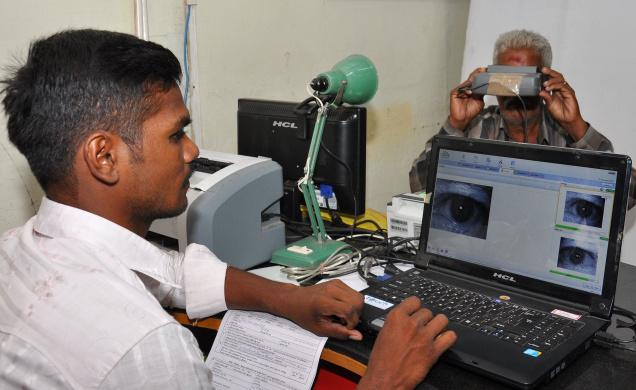
Mumbai leads the state of Maharashtra in the numbers of people enrolling for the AADHAAR cards, as per data published by the Unique Identification Authority of India (UIDAI) figures compiled up to December 15, 2012. Mumbai has seen 62,45,862 enrollments thus far.

Up to December 15, Mumbai has had 62,45,862 enrollments in all. This number accounts for Mumbai Suburban, Mumbai City and Navi Mumbai. However, figures for Mumbai City are low; as per UIDAI figures, there have been only 43,299 enrollments in Mumbai City.

In the Mumbai Suburban zone, Kurla has the maximum numbers of enrollments at 1,26,877, while Borivali has had only 19,626 ernollments.

The most numbers of enrollments come from the 31 to 45 years age group, with second largest numbers coming from the 16 to 30 years age group. More males than females have registered for the UID cards in Mumbai. Enrollments peaked during March and November this year.

Elsewhere, Thane follows Mumbai in the total number of enrollments, with Thane’s figure pegged at 35,50,601.

See the statistics for Mumbai and Maharashtra here.

 (Picture courtesy thehindu.com)

Categories
Event

Tickets still available for Ind-Eng T20 match

The India-England T20 match is scheduled for December 22. The State Government has allowed the MCA to sell tickets online.
by The Editors | editor@themetrognome.in

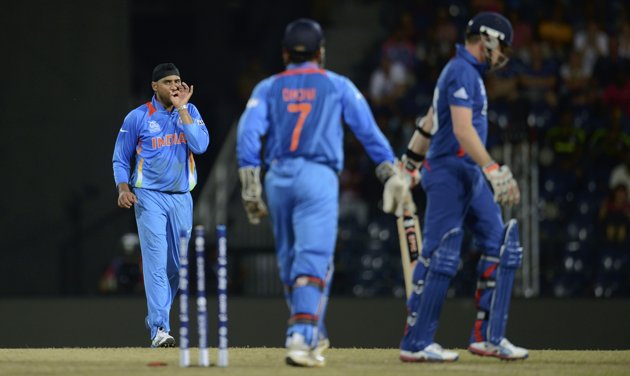
The Maharashtra State Government decided on December 13, after a request from the Mumbai Cricket Association (MCA), that tickets for the T20 match between India and England on Saturday, December 22, would be allowed online, provided certain conditions were followed. Tickets for the match are currently being sold through bookmyshow.com. The match is to be held at 7 pm.

While tickets in Block T L1, U L1 and V L1 in the Sachin Tendulkar stand have been sold out, as have tickets in the I L3, M L2, L L2, W L1, X L1, Y L1 (tickets priced at Rs 1,500 each) and L L1, K L1 and J L1 (tickets priced at Rs 300 each) from the North and Sunil Gavaskar stands have also been sold out. As per the booking site, tickets are still up for grabs in the Grand Stand, Block L4 (Rs 7,500) and in the Gavaskar Stand A L2, B L2, C L2, D L2, E L2 and F L2. Each person will get a maximum of two tickets only.

Online booking okay, but with riders

If you’re buying tickets online, remember these Government stipulations on online sale of tickets and check the ticket you purchase for these:

– The tickets must be printed in rolls serialised from A to Z, and starting from the number 1.

– All those booking tickets online must be notified of the ticket sale confirmation before the match.

– Each ticket must bear a unique bar code that will serve as a security check while entering Wankhede Stadium and passing through a metal detector.

– You are not allowed to make multiple purchases of tickets at different times. Even if you do, you will be given a maximum of two tickets at the venue on showing valid proofs.

(Picture courtesy cricket.yahoo.com. File picture, used for representational purpose only)


Categories
Places

An ancient ecosystem locked in time

The fossil-rich Manjra Valley near Latur is one of three regions in India which shows human presence 50,000 years ago.
by Dr Vijay Sathe

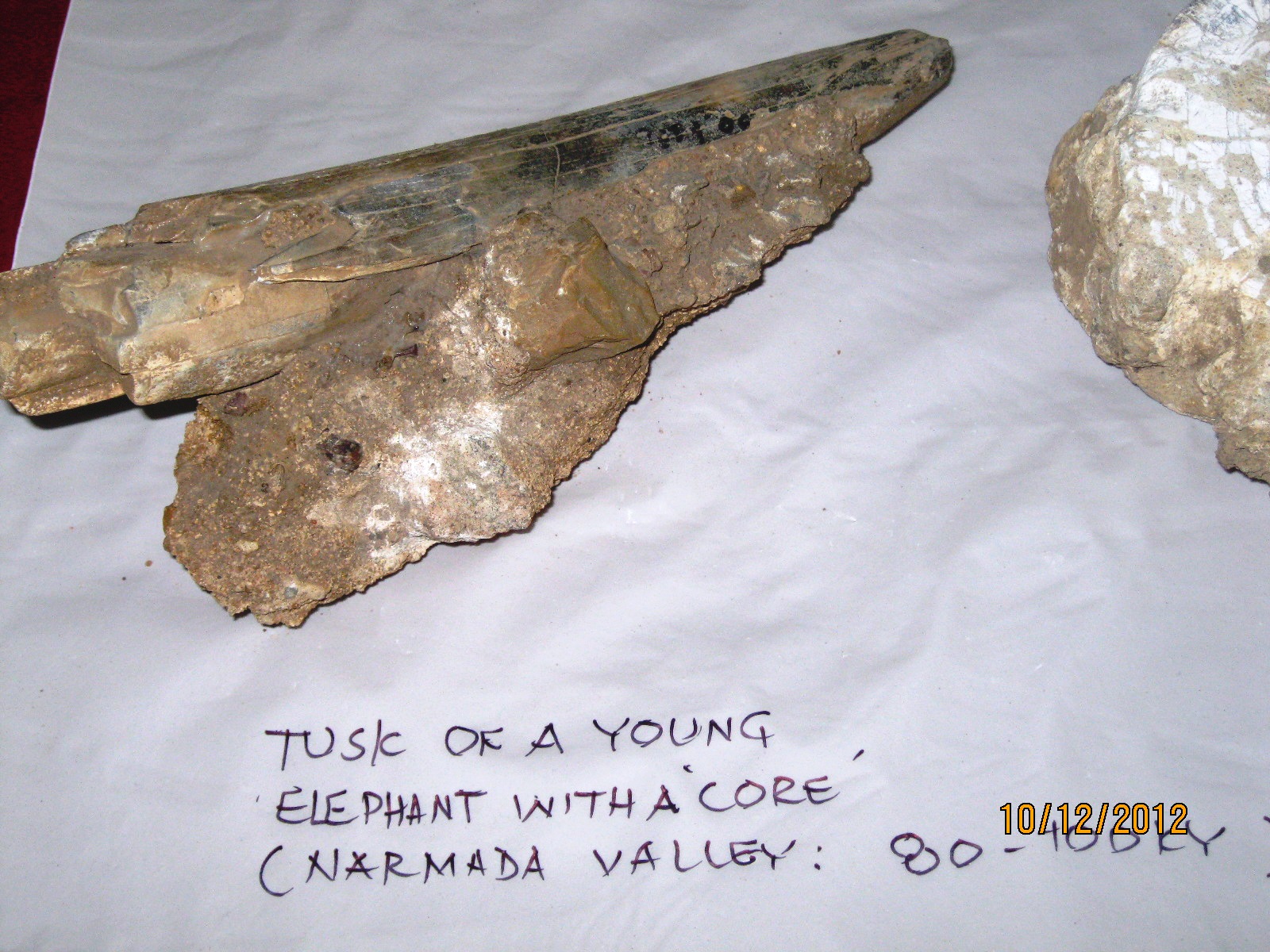
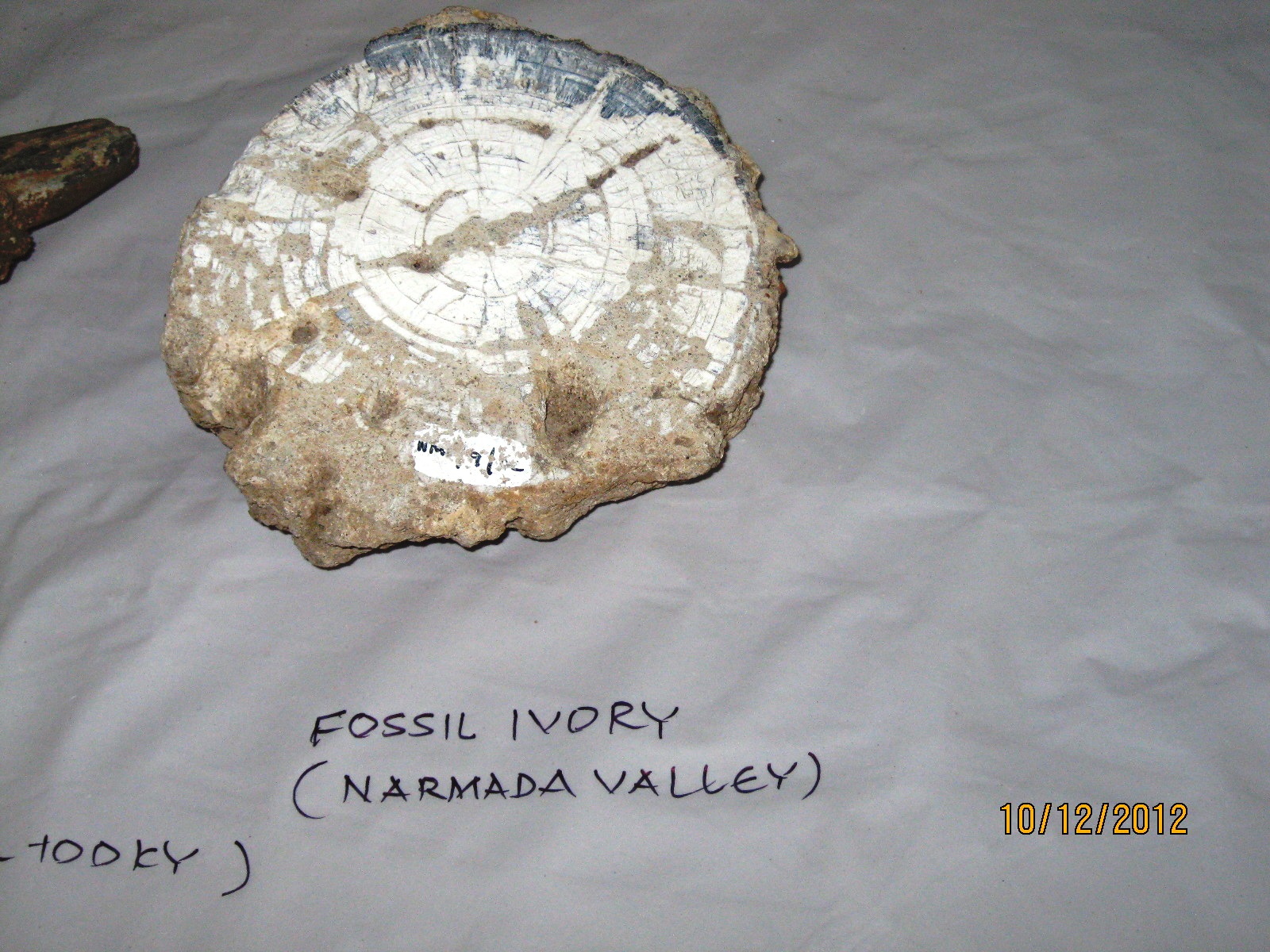
A 10 minutes’ drive from the city of Latur on the Latur–Ambajogai state highway takes us to the Manjra valley, the one and only record of fossils in a primary context in peninsular India, comparable in richness of skeletal and species diversity to the Siwaliks of the North West and Central Narmada Valley in Central India. The miracles of fossil preservation within a stretch of a couple of hundred metres, the fossil bone bed on the left bank of the Manjra river, unfold an unbelievable story of the palaeo-environment of the region which was dramatically different from the drought-stricken landscape that it is today. The Valley is an ancient ecosystem locked in time, since in the present scenario it is inconceivable that such animals inhabited this landscape.

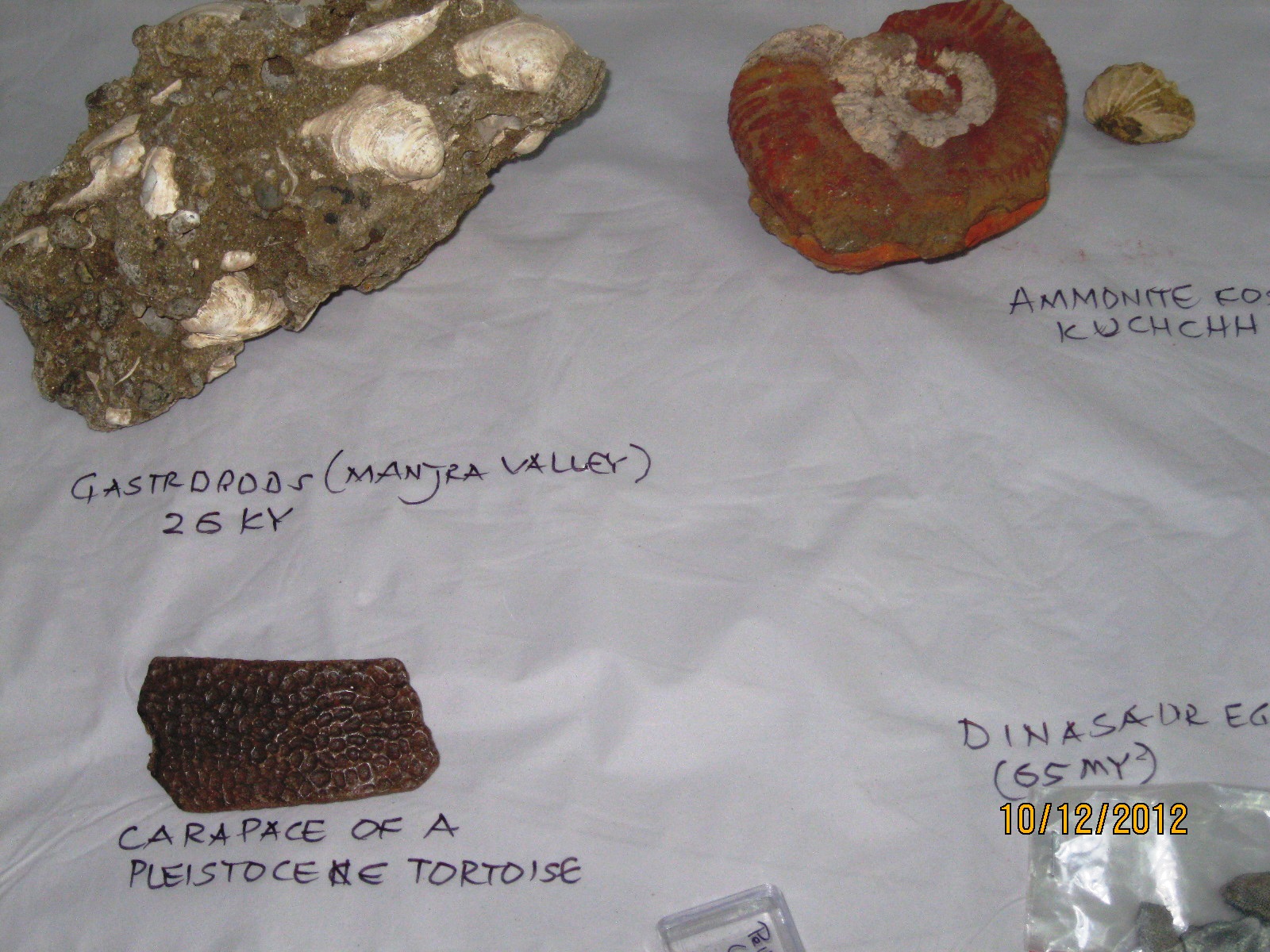
Today’s dry river bed, with pits dug into it to draw water for irrigation and drinking purposes, belies the existence of a wide variety of past fauna, indicated by the fossilised remains of animals ranging from large ones like elephants, rhinos and hippos to smaller ones like tortoise and even the large cats, which probably enjoyed supremacy in the prehistoric jungles!

After I discovered this remarkable fossil-rich horizon in the year 2003, I led several expeditions of the Deccan College team to explore and study the fascinating faunal remains. The only thing missing from it was the evidence of human presence. And then, in 2009 came the startling discovery of Acheulian artefacts  right next door in the ossiferous gravels, barely a 100 meters away from the prehistoric tomb of large mammals, confirming that human being shared this habitat with the animals as far back as 50,000 years ago!

This finally completed the circle, confirming that the region was throbbing with ancient human activities and these animals must have played the pivotal role of a rich source of sustenance.

The region captures an interesting moment in the history of life in this part of Maharashtra. Fossilised remains show that tiger, rhinoceros, horse, elephant, hippos, cattle, buffalo, spotted deer, swamp deer, sambar, black buck, tortoise and hundreds of gastropods (mollusca) lived and perished along the stagnant water bodies that were the ‘aquatic dens’ to amphibians like hippos along the course of the river Manjra.

There has been no displacement of these bones from their actual place of burial, indicating that life, death, burial and fossilisation of these skeletal remains were confined to the Valley. Even though the region is semi-arid today, the presence of the hippo, an amphibian, shows that the region once had a wet climate. Even elephants, rhinos and deer could feed adequately on the sheets of grasslands and vegetation in the galleria forests along the banks of the meandering course of the Manjra. The presence of tiger completes the pyramid!

However, today when we walk along the fossil bed, we are woken up to the rude shock of the sudden disappearance of this treasure trove of natural history. Severe water scarcity leaves the crops, livestock, people in villages as well as surrounding towns high and dry for decades together. A series of small dams on the river Manjra  following the recent monsoons, became active bunds a year ago and finally swallowed one of the richest fossil beds of peninsular India permanently. The dams have  been a major respite for the local farmer and his livestock. But the price the heritage has paid is enormous!

The river basins of Western Maharashtra yield vital clues for understanding patterns of cultural evolution of prehistoric man and his biological landscape, especially with respect to contemporary animal diversity as a rich source of subsistence. The stone tools found among the fossils fall into the time bracket between 25,000 and 1.2 million years ago. The fossilised remains of prehistoric animals like carnivores, horses, rodents, elephants, hippopotamus, cattle, buffalo, etc. found embedded in ancient gravels in the Godavari-Pravara basin, Mula-Mutha, Ghod and Bhima river valleys suggest a   picture of adequate vegetation cover interspersed with swamps and perennial water bodies along the drainage systems. It is hardly surprising that prehistoric man found the landscape congenial for the exploitation of natural resources, including the raw material available in close proximity for making a variety of artefacts like handaxes, cleavers, scrapers etc.

Manjra Valley is the only site in peninsular India that has yielded near-complete skeletons of a wide diversity of animals. It is a model site because the fossils and stone tools here are undisturbed in their original context and not a product of erosion and reburial. Hence it is of critical importance in the reconstruction of the paleo-environment of the region.

Dr Vijay Sathe is a researcher in vertebrate palaeontology, palaeoecology, and prehistoric rock art and teaches at  the Deccan College Postgraduate and Research Institute, Pune. 


Exit mobile version