Categories
Hum log

‘I love working for the CM’

Maharashtra CM Prithviraj Chavan’s chief PRO Satish Lalit talks about his job, his boss and dealing with the media daily.
by Vrushali Lad | vrushali@themetrognome.in
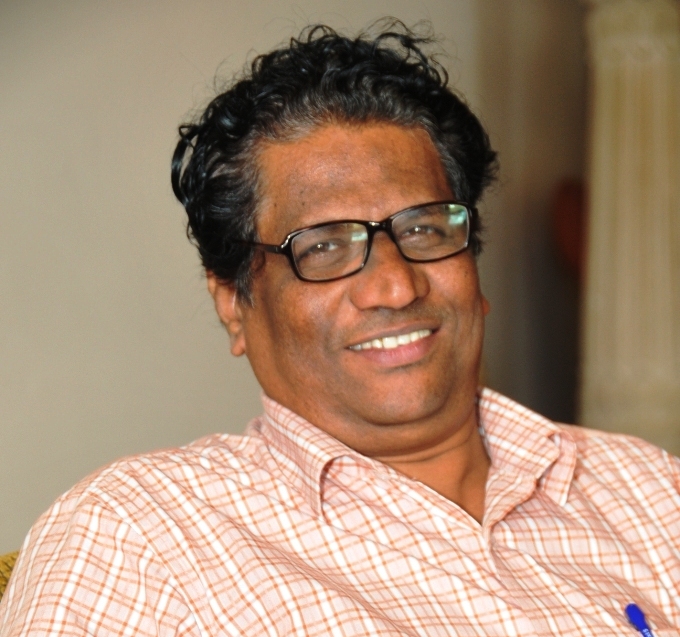
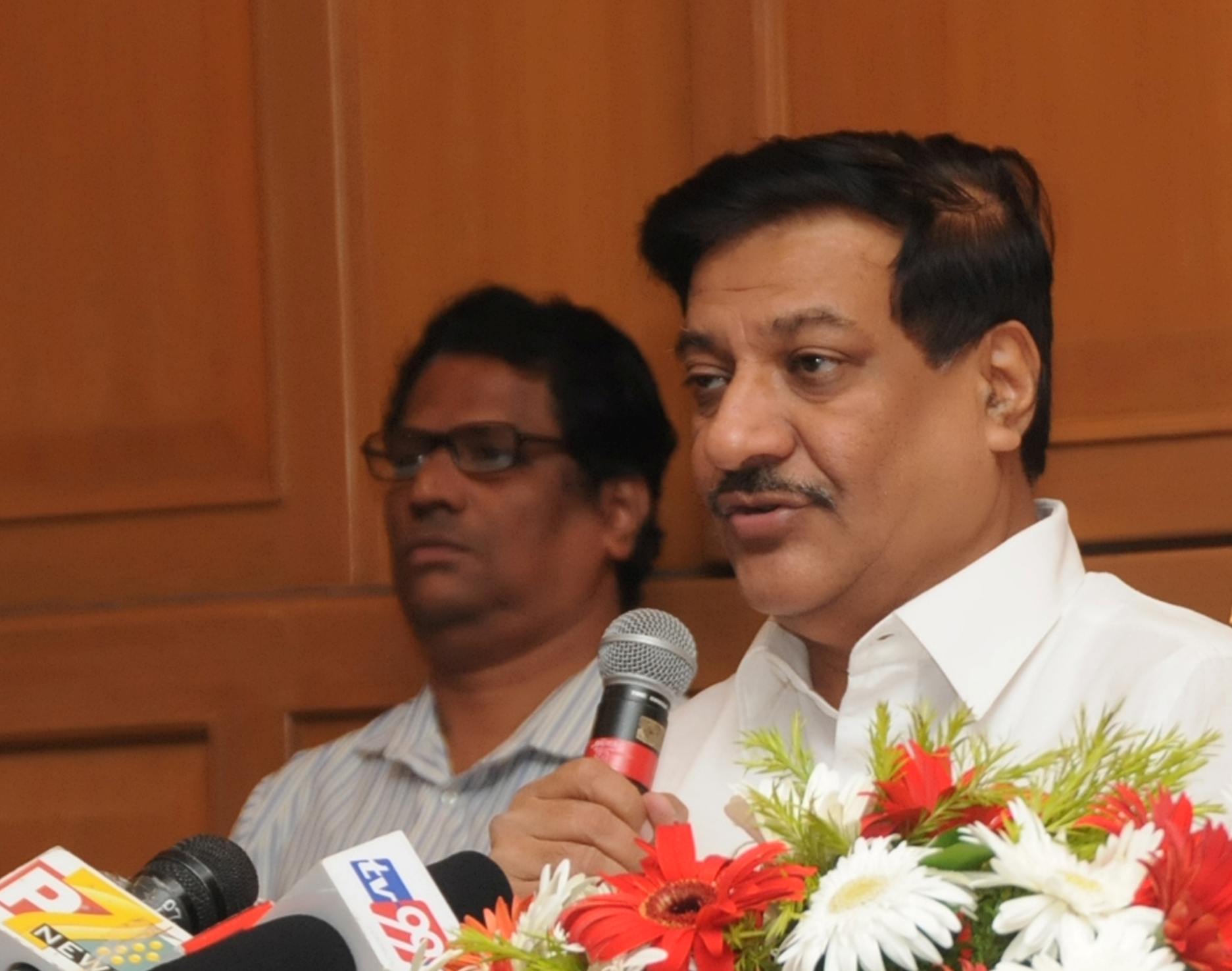
It must be wonderful being the public relations man for the most powerful man in Maharashtra. But Satish Lalit (52), chief PRO for Chief Minister Prithviraj Chavan, says he has his good and bad days. He was born 12 years after his boss, but they have a lot in common, apart from their long working hours and a love for reading and research; they even share a birthday, March 17. “I go to his house in the morning to wish him, and he wishes me in return!” laughs Satish. “Our job is a 24/7 one, and the CM works really long hours. He lets me go by 10.30 pm, while he works till 2 am every day.”

It is Satish’s job to monitor what the media is writing and speaking about his boss, how to bring about (or decline requests for) media interactions with the CM, write press notes after Cabinet meetings, write speeches for the CM’s public appearances and rallies, and be ready to brief him on any subject at a moment’s notice.

Satish became chief PRO under the other Chavan – Ashok – who was the CM of the state till November 2010. So how did Prithviraj Chavan, who became CM right after Ashok Chavan and who had come from Delhi reportedly with no idea about the state’s style of working,  get around to learning the ropes in Maharashtra? Satish says, “For the first two weeks, we would be with him all through the day, helping him meet people he had never seen in his life, rapidly briefing him about every meeting and the subjects that would come up in them. But he is a really fast learner – he picked up names and issues really quickly,” Satish says.

But Chavan was in for several culture shocks; he was particularly peeved at how people simply waltzed in and out of his office without prior appointments. “He said to me, ‘In Delhi, if anybody had to meet me, they had to have an appointment. And even then, they would pass through three rings of security.’ But he soon understood that with a state of this size, and with all its issues, he would have to meet people at a moment’s notice.”

Satish says that for a job like his, trust between his boss and him is of the essence. “I also have to write well and quickly, because I issue daily press releases and compose the CM’s speeches. Plus, I have to be on excellent terms with the media, especially when asking them to rectify mistakes made, or while suggesting a news angle.”

Writing and research come easily to Satish – a former journalist with the Marathi newspapers Sakal, Kesari and Maharashtra Times, he joined the Maharashtra government in 1991 as a Class I gazetted officer. “I’ve worked in the state’s District Information offices and even in Goa, before I came back to head the news department in Mumbai in 2000,” he says. A fruitful stint with the Mantralaya DGIPR (Director General of Information and Public Relations) in two phases and intermediate postings to Kolhapur later, Ashok Chavan appointed him chief PRO in 2010.

“Luckily for me, Prithviraj Chavan retained our team when he joined office, so I’ve been with him since his first day as CM,” Satish says. His days revolve around briefings, meetings, writing articles for the CM, and reading and keeping tabs on TV news. “I go to Varsha (the CM’s residence at Malabar Hill) at 9 am for his morning media briefing. We discuss the press coverage for the day, any incorrect reportage and what to do about it. My day is structured around the CM’s schedule. The busiest days are Wednesdays, when Cabinet meetings happen. It is a big event for us,” he explains.

When writing press notes, he is careful to state only facts and figures. “Journalists keep hounding me for ‘who said what’ details, but I only state the decisions made, the financial burdens of those decisions and how they will be implemented. If I feel that the CM needs to hold a press conference, I advise him so and release the press notes later,” he explains.

In recent times, with so much media proliferation and every political reporter clamouring for a bit of news, Satish is subject to various harrowing and comical moments. “The worst is when an incorrect news is published. I have to ensure that the mistake is set right; one slip-up can have bad repercussions for the CM’s office. And mistakes are happening all the time, every day, because everybody is in such a hurry to put news out there.”

He recounts the time when the CM, glancing at the TV screen in his office, was stunned by a news flash claiming that he had left for Delhi on an urgent summons. “I immediately called the reporter and told him that the CM was sitting in his chair in front of me and that he was not going to Delhi soon. They took the item off air, but I had to field calls from other irate reporters demanding to know why I didn’t inform them of the CM’s trip,” Satish laughs. “But the CM never loses his temper, a rare quality for a person in his position.”

What many outside the Mantralaya and journalistic circles don’t know, is that Satish and his team were the heroic few to escape the recent Mantralaya fire via window ledges and drain pipes. Satish’s trekking hobby – he has seen more than 80 forts in Maharashtra – could have saved him that day. He laughs at the suggestion. “I was lucky to get out in time. Another minute, and I would have collapsed.” He is also an avid photographer, is the first government PRO to maintain a daily blog on the state’s workings, has published a book and is working on another, and has made five documentaries on Sindhudurg, where he comes from. “I have six more years of government service left. The media is expanding, and so is our work. Sometimes, I feel that this is a thankless job. But if you have a good person to work under, it becomes easier,” he smiles.
Categories
Learn

Your fingers tell your secrets

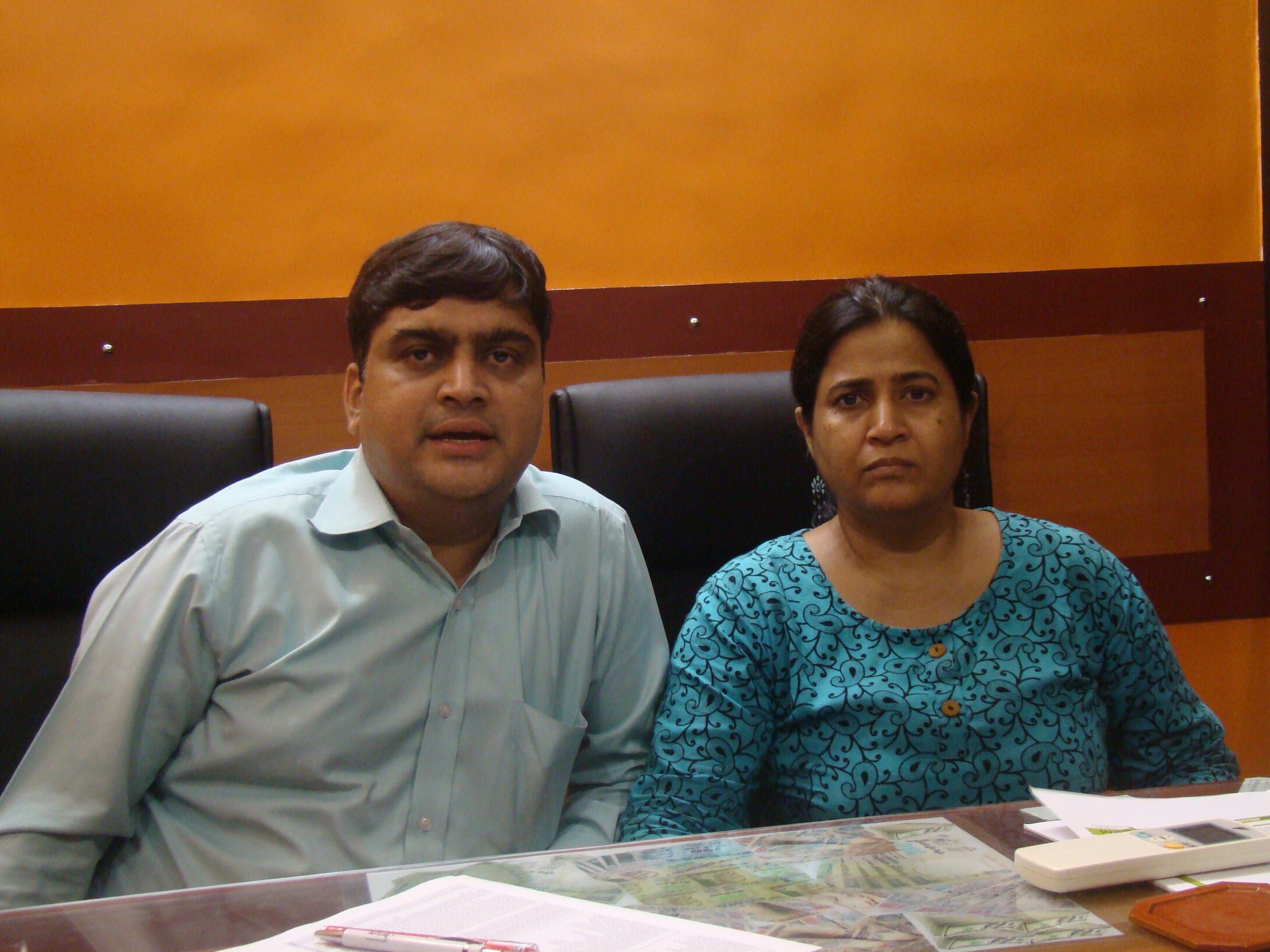
Sudhir and Shweta Hattangadi can tell if you’re a compulsive liar, or if you’re better off pursuing sports than academics. A science called dermatoglyphics reveals all.
by The Editors | editor@themetrognome.in

Imagine having your thumb print reveal the best and the worst about you. What’s more, under the right conditions and with accurate equipment, it probably will. For over two years now, former teachers Sudhir and Shweta Hattangadi have tested over 1,000 children and adults in Mumbai and other Indian cities, and come up with brain pictures that gave away the most intricate personality traits in 10 areas of human intelligence.

“We’ve been able to tell if a person can be easily influenced, or is a compulsive liar, or such factors as being better at research than analysis. We use a thumb print that helps map the person’s brain. We come to know what the person’s strengths are, and his or her weaknesses. Based on the inputs, we give an impetus to the strengths and help minimise the weaknesses. This is helpful especially for very young children, much before they are forced to make career choices that may not be suited to their natural aptitudes,” says Shweta.

If you think this seems a bit far fetched, think again. Sudhir and his wife Shweta are actually practicing a science known as dermatoglyphics – the scientific study of fingerprints. “The brain and fingerprints start developing at the same time at about 13 weeks for the foetus,” Sudhir explains. “The ages zero to six years are known as the ‘golden age’ for a child, because the brain is still developing and any corrective ideas can be implemented at this time. Ages six to 12 are when reformation happens, when ideas can be cemented. After 12 years, we concentrate on the strong areas only.” He says that behavioural alterations are possible in children up to 12 years old. “However, nutrition also plays a big part in correcting certain anomalies,” Shweta says.

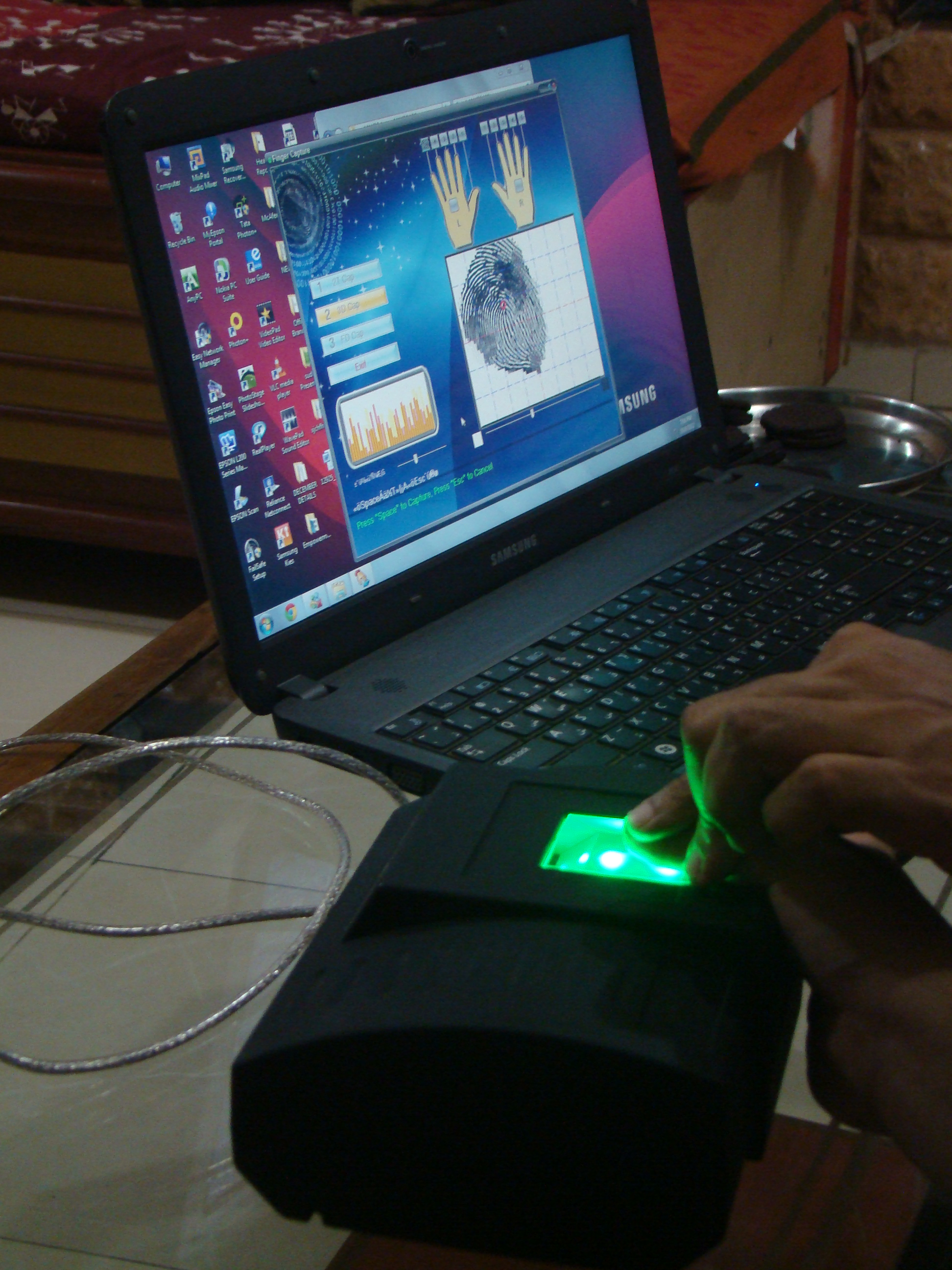
This is how your brain can be mapped: your fingerprint is taken on a biometric device. Then it is recorded on a computer and relayed to a server in Thailand. The fingerprint is then classified into one of four types – whorl, loop, reverse loop and arch – and the final analysis is then generated back. “The analysis is quantitative, and Shweta then exhaustively makes notes on each case. We have about four to five sessions per person.”

Shweta recounts how the analysis may even give early warning signs of things to come. “We had analysed this boy who showed the tendency to be easily influenced by others. We told his parents this. Later, he and a friend killed his grandmother for money to buy a bike. We were stunned to learn of this,” she says.

The couple has tested close to 1,000 persons so far, most of them children. “However, this science can really come in handy for corporates, when they want to employ the right people. But the idea has not yet caught on amongst people. Even the children who come to us are brought by their parents because they exhibit some worrying symptoms. However, getting this test done at an early age helps children chart out their future better,” Sudhir says. “And why just children? Even couples can get their compatibility tested. Or employers can test potential employees for reliability, loyalty to the company, whether they can be trusted with money, and so on.”

The test costs Rs 5,000 and comprises of exhaustive discussions and analyses over five sessions. “Many parents are satisfied with just two sessions also. But I give them my notes to keep so that they have all the material about their child handy. Generally, students who are about to make a career choice come to us for testing. Our teaching experience and the training we’ve taken (from their Hong Kong-based trainer) helps us minutely analyse each case and offer solutions,” Shweta says.

Categories
Read

Working better in Mumbai: A special analysis

Clyde D’Souza (author of Kissing Ass – The Art of Office Politics) lists five ways to improve your working conditions.

1. Spondylitis chhutti

Stop cribbing about the potholes in Mumbai and make them work for you! Use them as a valid excuse to cash in on unscheduled spondylitis leave. Then head to Goa and drown yourself in Kingfisher beer. When you do return with a hangover, just ensure you wear a neck brace. Your boss will be forced to go easy on you.

2. Flirt jam

So there’s a hot chick in the office but there’s no way you can get her to yourself thanks to all the other despos around. Asking her out would only make her think you’re a pervert (which you are). So the only thing you can do is offer to drop her home – even if she lives in Dombivali. Then sit back in the rick and use the never-ending jam to get to know her better.

3. Mid-week partying

A five-day week is totally unfair but there’s nothing stopping you from mid-week partying. Head out to a stand-up act, karaoke or late night movie. If your boss is cool enough, take her along so she won’t give you grief when you show up late the next day.

4. Bonding over Bollywood

Making small talk with the boss in Mumbai is a little bit better than bonding with the boss in Delhi (political bullsh*t), or Kolkata (more political bullsh*t). Because we live in Mumbai, we can totally ditch boring conversations and make small talk about Sallu’s latest fight with SRK or Ranbir’s latest girlfriend.

5. Mall meetings

Office meeting rooms are boring because they are filled with ugly colleagues you want to punch in the face. So why be stuck in hell when you can use legal means to escape? Mumbai offers a variety of malls with great air conditioning and killer restaurants. Schedule a meeting with a client over a working lunch and spend the rest of the day window-shopping!

About Clyde’s book

Kissing Ass The Art of Office Politics is a non-sloppy guide to surviving and succeeding at the workplace. In it, you will find answers to such critical issues as:

Have you ever wondered what to say to the CEO in the loo? Or how to leave work early or bunk on a Monday?
Or maybe you want to spot the cool guys in the office or are wondering how to cover your ass in an email?

If you’ve been working (as I have) for a number of years, I’m sure you’ve already done some of the above  and played the great game of office politics.

Massaging your boss’ ego

Who to CC and BCC in your emails

How to get away with sex at work

Writing a farewell mail

Clyde D’Souza is the author of Kissing Ass – The Art of Office Politics. He is currently stuck in a traffic jam.


Categories
Big story

Ab bus karo

A point-to-point bus service aims to solve your commuting woes, when autos and taxis are just too expensive to hire.
by The Editors | editor@themetrognome.in

The recent revisions in auto and taxi fares have probably sent your monthly budget straight to the cleaners. And nobody’s really willing to wait for crowded BEST buses to lumber up and take them on board. But come to think of it, buses are actually a better road transport solution – they take a lot of people from place to place, and they don’t cause as much congestion as smaller vehicles do.

Which was what prompted Siddharth Sharma (37), a computer programmer who is an IIM alumnus, to start rBus, a bus pooling company that allows people to take a comfortable, point-to-point bus commute to work. All customers have to do is inform the company that they wish to take a bus from a certain point to a certain destination, and the bus arrives with prior intimation.

“I started rBus because in our city, there is a demand for good quality transport that saves people time and which is clean and hassle-free,” Siddharth tells The Metrognome. “BEST buses are often overcrowded and slow. Our buses reach on time, and customers don’t have to wait long hours for them to arrive or reach the destination. Also, once you have booked a seat, nobody else can take your seat.”

Additionally,  each bus is fitted with a GPS tracker, and users are informed of the bus’s location a few moments before it arrives at their requested spot. “Time is of the essence in Mumbai,” Siddharth says. “Besides, people want a comfortable commute from their homes to their offices. The way we work out the bus allocation is, we first study the demand on a particular route. If we have about 200 people on a route, we hire about ten 20-seater buses. There is no compulsion on the commuter to take a bus at a certain time, we work flexibly around the commuters’ timings,” he explains.

The buses are hired from private contractors, and payment for the service is taken on a monthly basis. “A non-AC bus would cost the commuter Rs 1,800 per month, while for an AC bus, it is Rs 3,500 per month,” Siddharth says. “So far, I have a pool of over 165 registered users. When there is a demand on a particular route, I get a contractor who provides the bus for that route.”

He says that from the time he started the company in July this year, demand is slowly going up, though consumers are often finicky about the pricing. He says he even revised his original pricing – Rs 3,000 per month for a non-AC bus and Rs 5,000 for an AC bus – because customers found the rates too steep. “But there are also various people who are interested in availing of the service. I have queries from the CEOs of certain companies, who are very interested in this project, since they are concerned about employees reaching office late owing to delays in travel,” he says.

Categories
Hum log

Coming soon: Bedardi Baalam

Harish Iyer’s ‘fun’ project for women, Khuli Tijori, will have him visit colleges and start a debate on local trains.
by Vrushali Lad | vrushali@themetrognome.in

He shot to fame when TV show Satyameva Jayate featured him on its child sex abuse episode. Viewers cried as Harish Iyer told his heartbreaking story, how the experience shaped his reality and how he took solace in Sridevi’s films. But if Harish gave you the impression that his early life must have made him a serious, constantly brooding individual who measures his words when he speaks, that impression will shoot itself in the face when you speak with him in person.

Because the man is funny and quite fun to speak with. And that forms the core of his ambitious project, Khuli Tijori, where young people of both sexes can speak about sexuality, their bodies, their ‘dangerous’ bent of mind and so on, in a light vein on a quirky blog. “Activism should be fun, then it becomes effective,” Harish says. “I am a big fan of Geet from Jab We Met, and I love the line where she says, ‘Akeli ladki khuli tijori ki tarah hoti hai. That inspired the name of the project. We are not looking at naari shakti activism. Rather than a boring (read: intellectual), Bengali activism method, I want to make it intellectually sl***y in a Tam Brahm way, like me,” he laughs.

Harish started the project in February this year, and the idea for it was probably germinating even as he started the Sita Sena in 2009 as a counter point to fundamentalist group Ram Sene’s Valentine’s Day exploits in Bangalore. “We were a group of men wearing the most obscene pair of shorts we could find, and each of us carried a whistle. Then we approached women on the street, and told them they could blow the whistle at any man in the group,” he says, adding that the blog and the project is a chance for him to present his views, which may not be the world view. “People have lost their rational thinking. Either they speak loudly in front of 10 people who share their opinion, or they act cool by not listening to other voices. There has to be a middle path.”

That middle path is what he chose for the project as well. “Women can be sexy, bi***y, sl***y and as horrible as men. We either make women goddesses or whores, so where are the normal, common women? The project will celebrate these women, the in-betweens.” He plans to do this by not intellectualising issues plaguing women, but by promoting serious activism in a logical, fun manner – and he started by adopting the name ‘Bedardi Baalam’ for the project. “So I might go to a college, hand a camera to two girls and tell them to stare at a boy’s pe*** and record his reaction. Do you know that a woman staring at a man’s pe*** is likely to embarrass him at least 10 times more than when he would stare at her body? Of course, the girls will not be shooting his pe*** on camera, but it will be a good experiment,” he explains.

Similarly, he and partner-in-crime Deborah Grey (whose moniker is ‘Maal’ for purposes of the project) will stage ‘train plays’, where they will travel by local trains in non-peak hours. “We’ll stand in the compartment and start reading out passages like, ‘Isne mujhe chheda, mujhe chutiya kaha’ and ‘Main akeli rehti hoon’. People will start listening in and a dialogue will be initiated right there,” he beams.

Harish’s plans include taking the project to college students in a major way. “By the end of this year, I will have two or three projects planned around these activities. The projects will be for women’s rights, for single women and for the right of women to have sex. We may also do basic conversations in flash mob style. And we plan to take the train plays to bus stops as well.”

Right now, he admits that he hasn’t been feeding in any posts on the project blog. “But I want it to be a place which is not just mine, though I will edit its contents to keep it non-sleazy. We will also build a team to take the project up in a big way. My end goal is to start an NGO called The Hiyer Foundation. All of this is very ambitious and it sounds great when you say it, but I know the actual implementation will be tough.” For now, though, Harish has already started visiting colleges in Mumbai “on the pretext of giving lectures” to develop “this sense of making activism fun. So the dialogue has already started.”


Categories
Places

Out with the X-Men

A scenic Rajmachi trek became a screaming free-for-all as Prashant Shankarnarayan shared his trip with the loudest people on Earth.

So I went to Rajmachi recently. It’s a village situated on a hill that is part of the Sahyadri range. The itinerary was clear – Mumbai to Lonavla by bus, then an uphill trek from Lonavla, reach Rajmachi, roam around and stay overnight in a villager’s home, next morning trek downhill to Kondivade village where the bus would wait for us, head to Mumbai.

Everything would have gone as per plan had it not been for one aspect, a pretty important one – the company. When my friend told me to hop on with him, his wife and just a few friends – the reason why I even tagged my girlfriend along for the trip – I never realised that his definition of ‘a few friends’ meant a cluster of families who will henceforth be referred to as X. (Hint to decode X: the loudest families to frequent Mumbai’s restaurants and theatres).

Anyway, we set out from Mumbai to Lonavla in a private bus and no, I am not going to share the details of my bus journey, lest you mistake me for a 16-year-old girl armed with a dairy in one hand and her teddy in another. So what hits you first in a bus filled with X? The sheer noise, damn it! How could someone be so loud?

All the way, X maintained that we will ‘trake’ from Lonavla to Rajmachi. Soon enough we arrived at the spot in Lonavla where our trek  and their trake would begin…with a prayer! Let’s not even go there – I have stopped commenting on people’s religious beliefs, but I couldn’t help but stand at a distance from the prayer session. So we started walking uphill around 2 pm. It was the usual out-of-Mumbai-everything-is-green-and-we-should-do-this-often experience. But soon I realised that it wasn’t a trek. I tried correcting the Xs by explaining the difference between a hike and a trek, but eventually trake won hands down.

After an easy hike that lasted a few hours, we reached Udewadhi village in Rajmachi at around 6.15 pm. The lone toll-collecting guy (still don’t know why you need one there) said that it was better to trek to Shrivardhan Fort atop the hill the next morning. Although I wanted to go on, I opted to stay with X just to thwart unwanted attention.

Udewadhi village has accommodation arrangements, provided that sleeping on bare floors without sanitation facilities counts as arrangements at all. Being a regular trekker, I had no issues with this aspect of the matter, although the women in our group were soon mumbling about how they wouldn’t feel comfortable about defecating in the open. Thankfully, our room owner has constructed one toilet just for women. The villagers provide homemade Maharashtrian staple food and you can have pure vegetarian as well as Jain variants, provided you inform them as soon as you reach.

So after a tiring hike, just when my girlfriend and my friend’s wife thought it was time to doze off, the X-Men uncorked their bottles and started yelling. In some parts of the world, they call it singing. Then the X-Women joined in. Then the X-Kids. Not a single person could sing in tune, and there were around15 of them. Their unflinching loyalty to Kishore Kumar songs for almost two hours moved me…to the next room. By the way, did I tell you that a bunch of youngsters from another random group were sharing the house with us, and yet the Xs kept bawling without a thought for the poor strangers?

Post a decent dinner at the villager’s home, we crashed for the night. This is where you make a note – get your own sleeping bags, bed sheets and mattresses. Post dinner, the Xs continued howling Kishore Kumar hits, while the others tried to sleep in the  heat. The great Kishore Kumar’s soul could finally rest in peace as the X-Men went to sleep.

And then…it happened. In the dead of night, we awoke to strange noises. We were exclusive witness to an orchestra featuring natural wind percussion, or farts. The X-Men just went on with their fartestra without even considering that they were sleeping in a room filled with strangers (Hint #2 to decode X: the loudest in Mumbai’s local trains.)

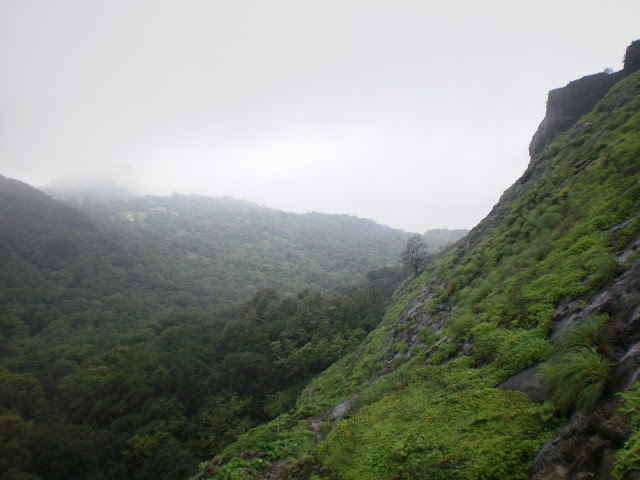
Anyway, let’s cut the crap and talk about the one that everyone takes. Like the early bird that gets the worm, the early riser gets to take a crap in the loo reserved for women, instead of defecating in the open. So if you are staying overnight at Rajmachi, the trick to evade defecating in the open is waking up early. As X stayed put in the rooms, some of us trekked to Shrivardhan Fort, and needless to say, it’s a must-visit. It just takes around half an hour to reach the top of the Fort and the view is like that from any other fort, but it is still something the serious traveller must do.

After clicking few photographs we came down and headed for a dip in the nearby pond and it was serene, especially without a single X-Man, Woman or Kid in sight. It was soon time to head back.

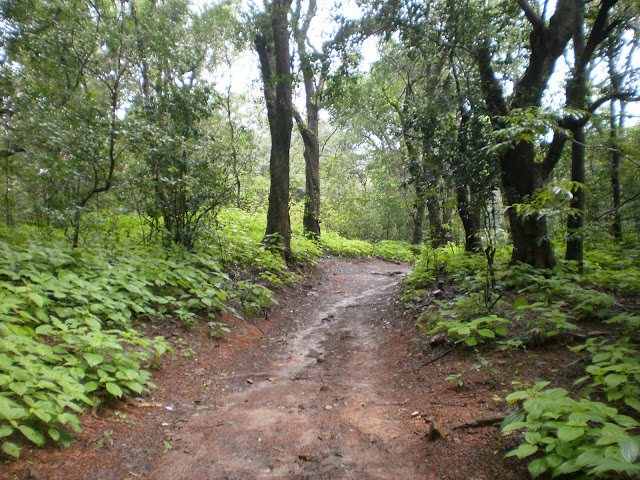
The ‘real’ trek – the descent to Kondivade village, is not easy. Okay, it’s pretty tough, and really tough if you are a novice. The downward trek includes manoeuvring uneven rocks, random thorny plants as you pass by streams and waterfalls. Do carry enough water, unlike us – we set off with just one bottle between us. Every trekker worth his/her salt would love this part of the trip.

We were trekking silently, when an X-Kid repeatedly started shouting for her papa. We trekked faster just to avoid that kid, then we added pace to avoid the entire X cluster and soon enough we were way ahead. We trekked in peace for about four hours to Kondivade, where the bus was waiting to drop us back to Mumbai.

I used to cringe on hearing clichés about how its not about the destination, but the journey and blah blah blah. But this is the first time I understood it. I am someone who prefers to trek in silence, observing keenly whatever meets the eye and exchanging gyaan with other trekkers. But on this trek, I was put outside my comfort zone, and that changed the entire perspective of my trip. Maybe if I had been with a different group, this account would have turned out different. Maybe if someone from X had written this, they would have branded me a misfit because I was aloof and never mingled with them. I guess that is the idea behind any journey – knowing where you fit in.

Do you have a travel story to tell? Write to us at thetraveller@themetrognome.in and we’d love to feature your experience.

Exit mobile version